Coat of arms of CameroonMinistry of Arts
and Culture
Republic of Cameroon
My procedures
Home
Minister’s message
News
Press releases
Cultural calendar
Official speeches
Press review
Photo library
Video library
Calls for projects
Job vacancies
Public procurement
Newsletter
Frequently asked questions
Site map
Contact
Press area
Podcast “The Voice of Culture”
Legal notices
Privacy policy
Cookies and trackers
The Ministry
Missions and responsibilities
Organisation
Organisation chart
Minister’s Office (Cabinet)
Management team
General Secretariat
General Inspectorate
Central directorates
Regional Delegations
Institutions under supervision
Legislative texts
Regulatory texts
Sector strategy
Major projects
Budget and reports
Partners
Careers
Archives
Institutional communication
Quality and accessibility
Arts
Visual and plastic arts
Visual arts
Performing arts
Theatre
Dance
Music
Literature and books
Cinema and audiovisual
Photography
Fashion and design
Digital arts
Art crafts
Artists’ directory
Residencies
Prizes and awards
Arts education
Urban arts
Heritage
Tangible heritage
Intangible heritage
UNESCO sites
National museums
Listed monuments
National inventory
Palaces and chiefdoms
Archaeology
Linguistic heritage
Oral traditions
Traditional know-how
Restitution of cultural property
Fight against illicit trafficking
Listing and protection
Conservation and restoration
Heritage Days
Cultural landscapes
Industries
Music and recording
Cinema
Publishing and books
Digital arts
Fashion and creativity
Crafts
Cultural tourism
Funding for culture
Support funds
Incubators
Cultural entrepreneurship
Culture Observatory
Vocational training
Studies and reports
Sector statistics
Export and outreach
Intellectual property
Copyright
Legal framework
Copyright and neighbouring rights
Collective management societies
Register a work
Licences
Private copying
Fight against piracy
Model contracts
Social status of artists
Mediation
Disputes
Training
Fee scales
Register of works
Contact
Digital neighbouring rights
Public domain
Festivals
National calendar
Ngondo
Nguon
Écrans Noirs
Heritage Days
Music Day
Regional festivals
Fairs and exhibitions
Biennials
National competitions
Cultural days
Organise a festival
Event grants
Ticketing
Archives
Volunteering
Diaspora festivals
Regions
Adamawa
Centre
East
Far North
Littoral
North
North-West
West
South
South-West
Cultural map
Regional Delegations
Traditional chiefdoms
National languages
Cultural routes
Decentralised cooperation
Regional observatory
Cooperation
UNESCO
Francophonie (OIF)
African Union
Commonwealth
CEMAC
Bilateral cooperation
Cultural agreements
Professional organisations
Scholarships
Artist exchanges
Cultural years
Diaspora
Funded projects
Embassies
Technical partners
International restitution
International monitoring and calls
Services
Artist card
Show authorisation
Filming authorisation
Festival authorisation
Deposit of a work
Export of works of art
Listing of a property
Grant application
Association accreditation
File tracking
Forms
Fees
Opening hours and addresses
Reporting
Online help
My account
One-Stop Shop
Home

Press review

The Ministry’s press review gathers each day what the media say about Cameroonian culture: a daily selection, a weekly summary, thematic files and searchable archives.

Updated on 5 November 20264 sub-pages
Media monitored every day4 families
Thematic files6
2026 news from the Ministry71
Publication of the reviewEvery working day
Press review

What the press says about culture

Group photo of many officials and guests in varied attire, posing on the steps in front of a building.

The press review of the Ministry of Arts and Culture gathers what the print press, radio, television and online media report about Cameroonian cultural news. It serves first the Ministry’s teams, who use it to gauge how their actions are received; it also serves artists, organisers and researchers, who find in it a record of events.

The page presents the selection method, the publication schedule, the thematic files and the conditions for consulting past issues. It does not replace the site’s news, which tell the story of the Ministry’s work from the inside: the review reports how others see it.

  • A daily, weekly and thematic selection
  • Neutral summaries, without full reproduction of articles
  • Classification by date, by medium and by subject
Read today’s review
Every morning

The daily review: selection, reading and distribution

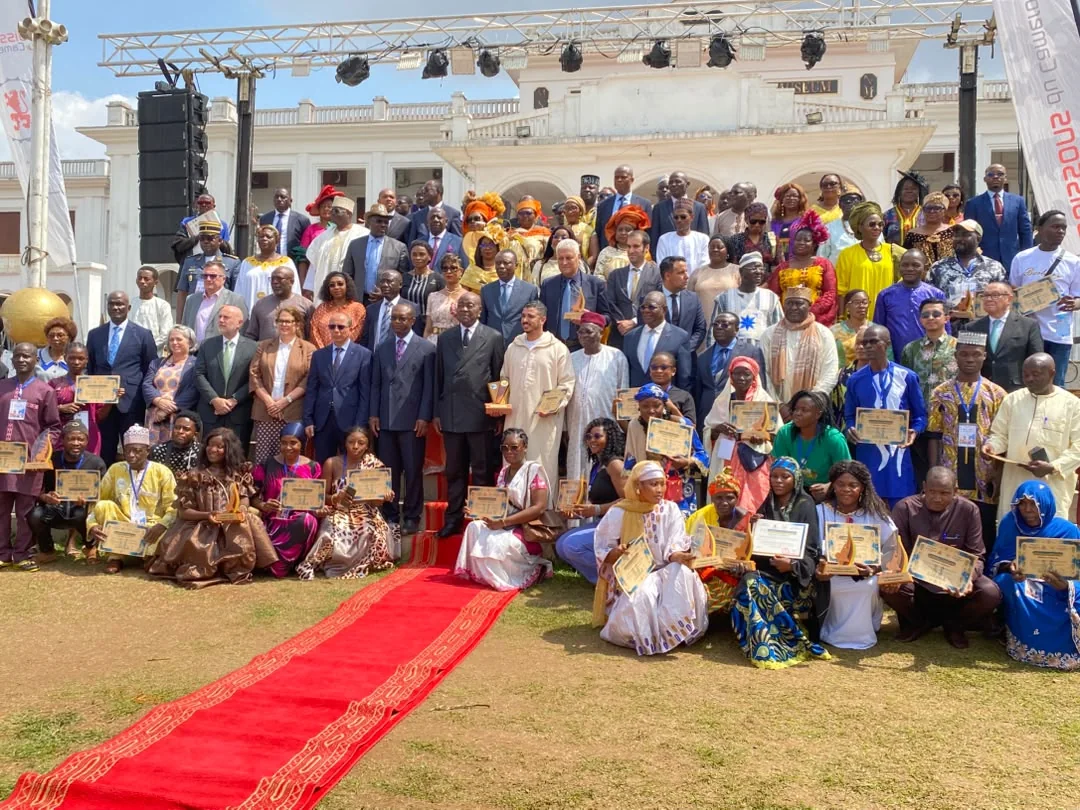
Award winners gathered on the lawn during a national ceremony

Every working day, the communication unit scans the national and international press to identify content relating to culture, the arts, heritage, the creative industries and the Ministry’s work. The reading covers daily newspapers, weeklies, radio stations, television channels and news websites.

How an article is selected

An item enters the review when it meets at least one of these criteria: it concerns an event supported by the Ministry, it cites a decision or a regulation, it is about an artist or a heritage site, or it mentions a controversy calling for a response. Content unrelated to culture is set aside.
The format of the review

  • the name of the medium, the date and the section;
  • a summary of two or three lines, written by the service;
  • a link to the source where it is freely accessible;
  • a thematic label: heritage, arts, festivals, industries, cooperation.

Who it is addressed to

The review is sent to the Minister’s Office (Cabinet), the General Secretariat and the directorates, and is then made available to the public. The most frequent subjects in 2026 were the chiefdom festivals, the Yaoundé book fair, audiences with ambassadors and the international archives week, as the festivals and books sections show. For official information, refer to the press releases.

ℹ️
A press review is not a press release

It reports what others write; the Ministry’s official position is found in the press releases and the news.

The week’s thread

The weekly review: summary and perspective

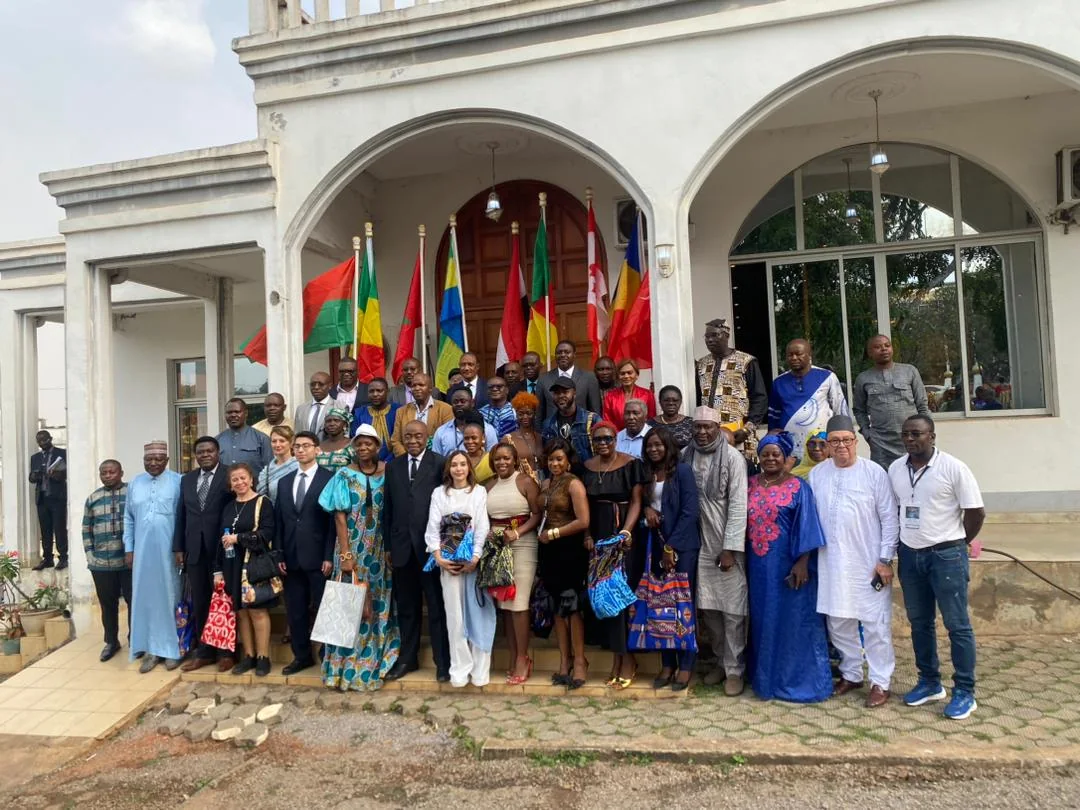
Participants in an international meeting in front of the flags, on the Ministry steps

Every Friday, the weekly review brings together on one page the highlights of the cultural press. It does not repeat the daily reviews: it links them. A festival announced on Monday, opened on Wednesday and praised on Friday appears only once, with its full sequence of events.

Three levels of reading

  1. The facts: the events, decisions and appointments reported by the media;
  2. The trends: subjects that recur several days in a row;
  3. The reactions: positions taken by artists, professional organisations and local authorities.

What the summary provides

The summary makes it possible to quickly identify the issues concerning the sector: access to funding, artists’ rights, the state of venues, the restoration of a monument. When a subject keeps coming back, the communication unit informs the competent directorate and, where necessary, prepares an explanatory piece in the News section.

At the service of professionals

Festival organisers can see how their event was covered and the angles taken by journalists; collective management societies follow the debates on piracy; young entrepreneurs discover the offers of the support fund and the initiatives of their peers. The summary is also a training tool for students of journalism and cultural management.

ℹ️
Frequency

The weekly review is published on Friday at the end of the day; on a public holiday, it is brought forward to the last working day.

By subject

The press review’s thematic files

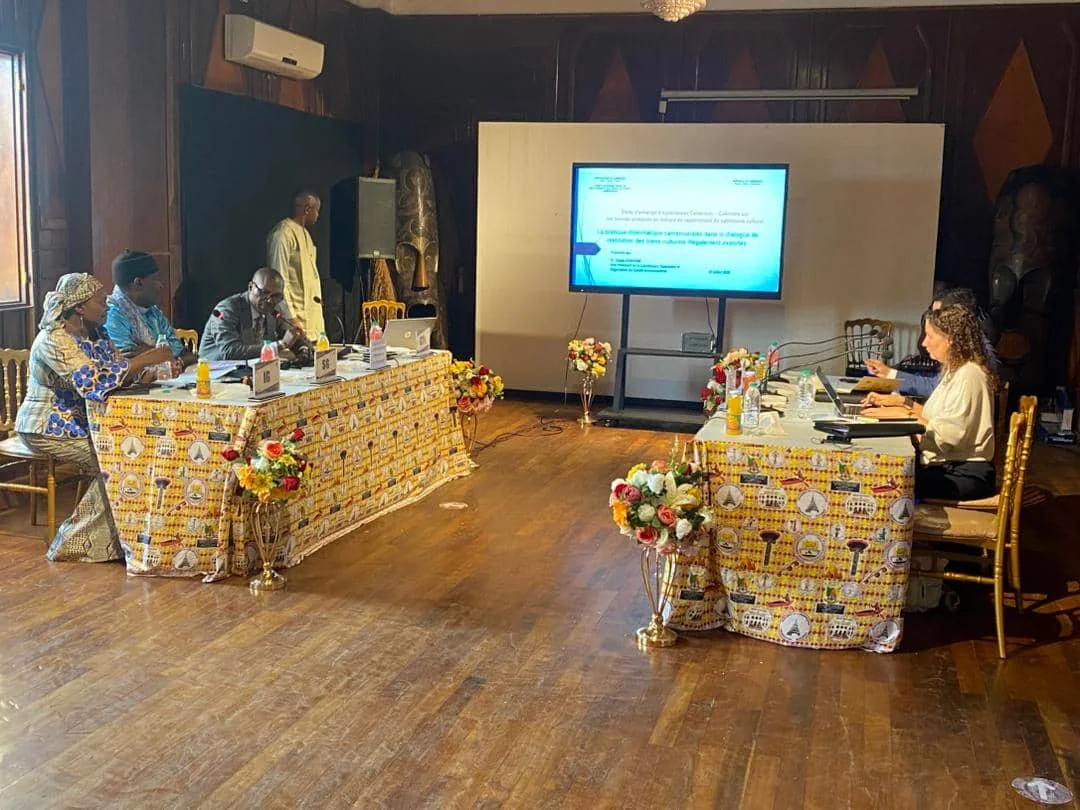
Meeting room with a projection screen during a Ministry workshop

Some subjects require follow-up over time. The press review handles them in thematic files that gather, in chronological order, media content on a single theme, with a short presentation of the context.

Open files

  • Festivals and events: coverage of chiefdom festivals, biennials and fairs;
  • Books and reading: the Yaoundé international book industry fair, publishers, mobile libraries;
  • Archives and memory: international archives week, digitisation, construction of dedicated buildings;
  • Heritage and restitution: cultural property, cooperation with Colombia, listed sites;
  • Cinema and audiovisual: reform of the legal framework, film festivals;
  • Cultural cooperation: audiences with ambassadors and agreements.

How a file is opened

A file is opened when a subject is covered by several press items within a month or when an important deadline approaches. It is closed when the subject disappears from the news; it is then transferred to the archives. Each file points to the site’s in-depth pages: restitution of cultural property, cinema and audiovisual, cultural agreements.

Suggest a file

A journalist, researcher or professional organisation may suggest a theme by writing to the communication unit via the contact form, specifying the period concerned.

ℹ️
Tailor-made file

Partner institutions may request a file targeted at a given period and theme.

Finding the past

The press review archives: past issues and searches

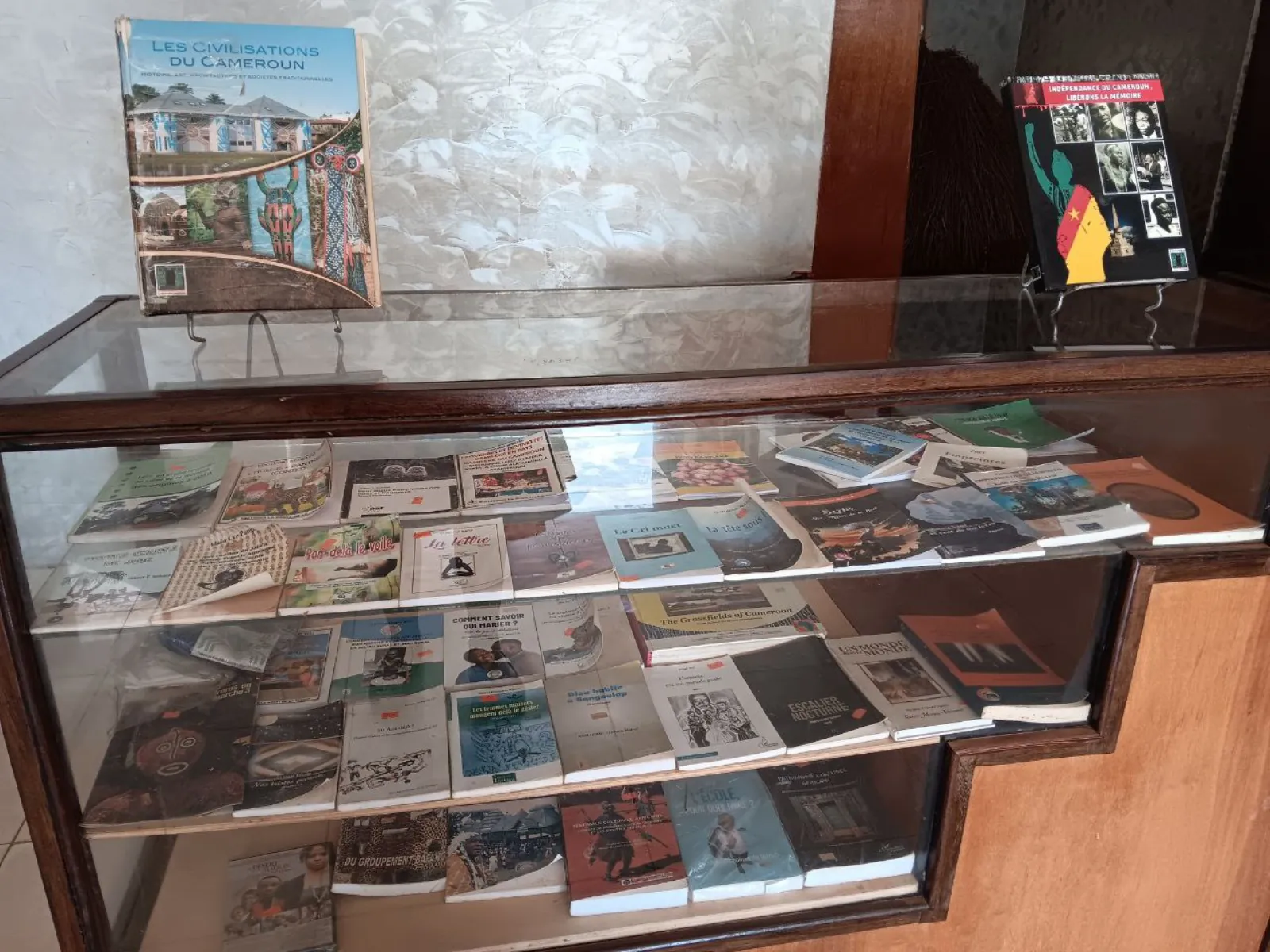
Display case of books and booklets in the library area of the Dschang civilisations museum

Every issue of the review is kept and classified. The archives make it possible to find what a region, a discipline or an event generated in the media over several years. They are valuable for documenting the history of a festival, establishing the chronology of a file or illustrating a dissertation.

Listing

Issues are filed by year, then by month, with three search entries: the medium, the theme and the region. An index by event is kept for major occasions: the book fair, chiefdom festivals, the international archives week, Ngondo or Nguon.

Rules of consultation

Online consultation of the summaries is open to all. The original articles remain the property of their publishers: the review does not reproduce them, it points to them and refers readers to the source. To consult a full article not available online, the service directs the reader to the medium’s own archives or to the library that holds it.

Request a search

  1. State the subject, the period and, if possible, the medium;
  2. indicate the purpose: academic research, article, exhibition;
  3. send the request to the archives service or via the contact form;
  4. receive a list of references and, depending on the rights, extracts.

The archives digitisation project should eventually make full-text searching across all issues easier.

ℹ️
Citing the review

State the name of the original medium, its date of publication and the mention “Press review of the Ministry of Arts and Culture”.

Method

From reading to publication online

Monitoring

From dawn, the communication unit goes through newspapers, news websites and radio and television programmes.

Sorting

Items are selected according to precise criteria: link with culture, official decision, supported event, sensitive subject.

Summary

Each item is summarised in a few neutral lines, with the name of the medium, the date and a link to the source.

Validation

The head of the unit proofreads the selection, flags sensitive subjects to the Minister’s Office (Cabinet) and checks citation rights.

Distribution

The review is circulated internally and then published online; the thematic files are updated straight afterwards.

Calendar

Highlights of the cultural press

MarchBook fair

The media cover the opening of the Yaoundé fair: publishers, authors and conferences fill several days of the review.

May–JuneCinema and festivals

The film festival, the jazz seasons and the chiefdom festivals feed the cultural press.

JuneArchives

The international archives week attracts reports on administrative memory.

July–AugustCooperation and audiences

Audiences with ambassadors and cooperation missions are the subject of in-depth articles.

SeptemberHeritage

Heritage days showcase museums, monuments and traditions.

November–DecemberReviews of the year

The media take stock of the year and of the sector’s expectations.

To act

Making the best use of the press review

Follow a subject

Subscribe to the newsletter to receive the weekly review in your inbox.

Subscribe

Report an article

Has a medium covered your project? Send us the reference so that it appears in the relevant file.

Write to the service

Accredit a journalist

Journalists may request the accreditation that gives them access to files and invitations.

See the press area

Reuse a text

Before republishing a cited article, check the reproduction rules and the publisher’s rights.

Copyright
Returns

They consult the review

“
I use it to find what has been written about a festival before putting together my application for support; the classification by event saves me hours.
A festival organiser
Littoral
“
The weekly review helps us spot recurring subjects and adjust our questions at press conferences.
A print journalist
Centre
“
My students reconstruct the chronology of a file from the archives: they learn to compare the angles taken by the media.
A journalism lecturer
University
“
For a foreign partner, seeing how the local press receives a cooperation initiative is a valuable indicator before continuing a project.
A cultural cooperation officer
Partner embassy

“A free and curious press is the best mirror of a cultural life that wants to face itself.”

An editor-in-chief of a cultural publication, Yaoundé
To download

Tools for the press reader

Key facts

The media monitored in one table

Media familyReading frequencyWhat is selectedCitation method
National dailiesEvery morningCulture, society and politics pagesTitle, date, summary, link
Weeklies and magazinesDepending on publicationFeatures and interviewsSummary and reference
National and regional radioNews bulletins of the dayCultural columns, reportsProgramme title and time
TelevisionNews bulletins and magazinesReports on festivals and eventsName of programme and date
News websitesContinuousArticles and wire itemsDirect link to the source
International mediaEvery dayArticles on Cameroon and African cultureTitle, medium and date
Glossary

The words of the press review

Press review

A commented or summarised selection of articles published by the media on a subject.

Dispatch

A brief item distributed by a press agency to subscribing media.

Lead paragraph

A summary at the head of an article giving its essentials.

Right of reply

The right of a person under criticism to have their version of the facts published.

Review of the week

A weekly summary of the most notable content.

Thematic file

A set of classified content on a continuing subject.

Quotation

A short reuse of a text with indication of the author and the source.

Accreditation

Permission given to a journalist to cover an event or access a venue.

Embargo

The date before which information may not be published.

Media monitoring

Regular monitoring of the media on a set of subjects.

On the site

Continue your reading

Resources

Useful links for the press

Stakeholders

Who produces the press review?

Explore

The press and the other sections

Questions

Your questions about the press review

Does the press review reproduce articles in full?

No. It presents a summary of two to three lines, the name of the medium, the date and a link to the freely accessible source. This rule respects publishers’ rights and directs the reader to the original article.

How often is the review published?

A daily review is compiled each working day, a weekly summary is published on Friday and the thematic files are updated as soon as a new development is reported. On public holidays, the selection is carried over to the next working day.

How can a medium be added to the monitoring?

Write to the communication unit stating the name of the medium, its frequency, its area of distribution and the address of its website. The request is considered on the basis of the medium’s relevance to the cultural sector and its regularity.

May I request the correction of a summary?

Yes. State the issue concerned, the sentence in question and the correction you would like. After the source has been checked, the summary is corrected and the date of modification is shown at the foot of the page.

Can issues from previous years be consulted?

Yes, by year, theme, medium or event. Issues not yet digitised are provided on request by the archives service, which will indicate the search time and the conditions of consultation.

Does the review express the Ministry’s opinion?

No. It reports what the media write, including criticism. The Ministry’s position is expressed in press releases, news items and official statements, presented in their respective sections.

Do foreign journalists have access to it?

Online consultation is open to all. To cover an official event, foreign journalists request accreditation from the press area, with their press card and an assignment letter.

How can I suggest a thematic file?

Specify the subject, the period and the relevance to the sector in a message addressed to the communication unit. The proposal is examined with the directorate concerned, which gives its opinion before the file is opened.

May I reuse the review on my own website?

You may cite a summary, mentioning the source and the title of the review. Systematic or commercial reuse requires the written permission of the Ministry and respect for the rights of the media cited.

Contact

Write to the communication unit

State the subject, the period and the medium concerned: your message will be forwarded to the service that maintains the press review.

Competent service

Contact the communication unit

Address

Communication Unit
Ministry of Arts and Culture
Quartier du Lac – Ministerial Zone
P.O. Box 1053 Yaoundé, Centre Region, Cameroon

Reach us

+237 6 51 70 58 41

contact@minac.gov.cm

Opening hours

Monday to Friday, 8 am to 4 pm

A subject to follow?

Receive the weekly review and the Ministry’s news in your inbox.

Subscribe to the newsletter
WhatsApp