Coat of arms of CameroonMinistry of Arts
and Culture
Republic of Cameroon
My procedures
Home
Minister’s message
News
Press releases
Cultural calendar
Official speeches
Press review
Photo library
Video library
Calls for projects
Job vacancies
Public procurement
Newsletter
Frequently asked questions
Site map
Contact
Press area
Podcast “The Voice of Culture”
Legal notices
Privacy policy
Cookies and trackers
The Ministry
Missions and responsibilities
Organisation
Organisation chart
Minister’s Office (Cabinet)
Management team
General Secretariat
General Inspectorate
Central directorates
Regional Delegations
Institutions under supervision
Legislative texts
Regulatory texts
Sector strategy
Major projects
Budget and reports
Partners
Careers
Archives
Institutional communication
Quality and accessibility
Arts
Visual and plastic arts
Visual arts
Performing arts
Theatre
Dance
Music
Literature and books
Cinema and audiovisual
Photography
Fashion and design
Digital arts
Art crafts
Artists’ directory
Residencies
Prizes and awards
Arts education
Urban arts
Heritage
Tangible heritage
Intangible heritage
UNESCO sites
National museums
Listed monuments
National inventory
Palaces and chiefdoms
Archaeology
Linguistic heritage
Oral traditions
Traditional know-how
Restitution of cultural property
Fight against illicit trafficking
Listing and protection
Conservation and restoration
Heritage Days
Cultural landscapes
Industries
Music and recording
Cinema
Publishing and books
Digital arts
Fashion and creativity
Crafts
Cultural tourism
Funding for culture
Support funds
Incubators
Cultural entrepreneurship
Culture Observatory
Vocational training
Studies and reports
Sector statistics
Export and outreach
Intellectual property
Copyright
Legal framework
Copyright and neighbouring rights
Collective management societies
Register a work
Licences
Private copying
Fight against piracy
Model contracts
Social status of artists
Mediation
Disputes
Training
Fee scales
Register of works
Contact
Digital neighbouring rights
Public domain
Festivals
National calendar
Ngondo
Nguon
Écrans Noirs
Heritage Days
Music Day
Regional festivals
Fairs and exhibitions
Biennials
National competitions
Cultural days
Organise a festival
Event grants
Ticketing
Archives
Volunteering
Diaspora festivals
Regions
Adamawa
Centre
East
Far North
Littoral
North
North-West
West
South
South-West
Cultural map
Regional Delegations
Traditional chiefdoms
National languages
Cultural routes
Decentralised cooperation
Regional observatory
Cooperation
UNESCO
Francophonie (OIF)
African Union
Commonwealth
CEMAC
Bilateral cooperation
Cultural agreements
Professional organisations
Scholarships
Artist exchanges
Cultural years
Diaspora
Funded projects
Embassies
Technical partners
International restitution
International monitoring and calls
Services
Artist card
Show authorisation
Filming authorisation
Festival authorisation
Deposit of a work
Export of works of art
Listing of a property
Grant application
Association accreditation
File tracking
Forms
Fees
Opening hours and addresses
Reporting
Online help
My account
One-Stop Shop
Festivals

Biennials

Visual arts, dance and architecture: the guide to Cameroonian biennials, from application to opening to the public, with the procedures, calendars and Ministry support.

Updated on 6 November 20264 sub-pages
Frequency of events2 years
Fields covered3
Participating regions10
Reference editions4
Cameroonian biennials

An event every two years

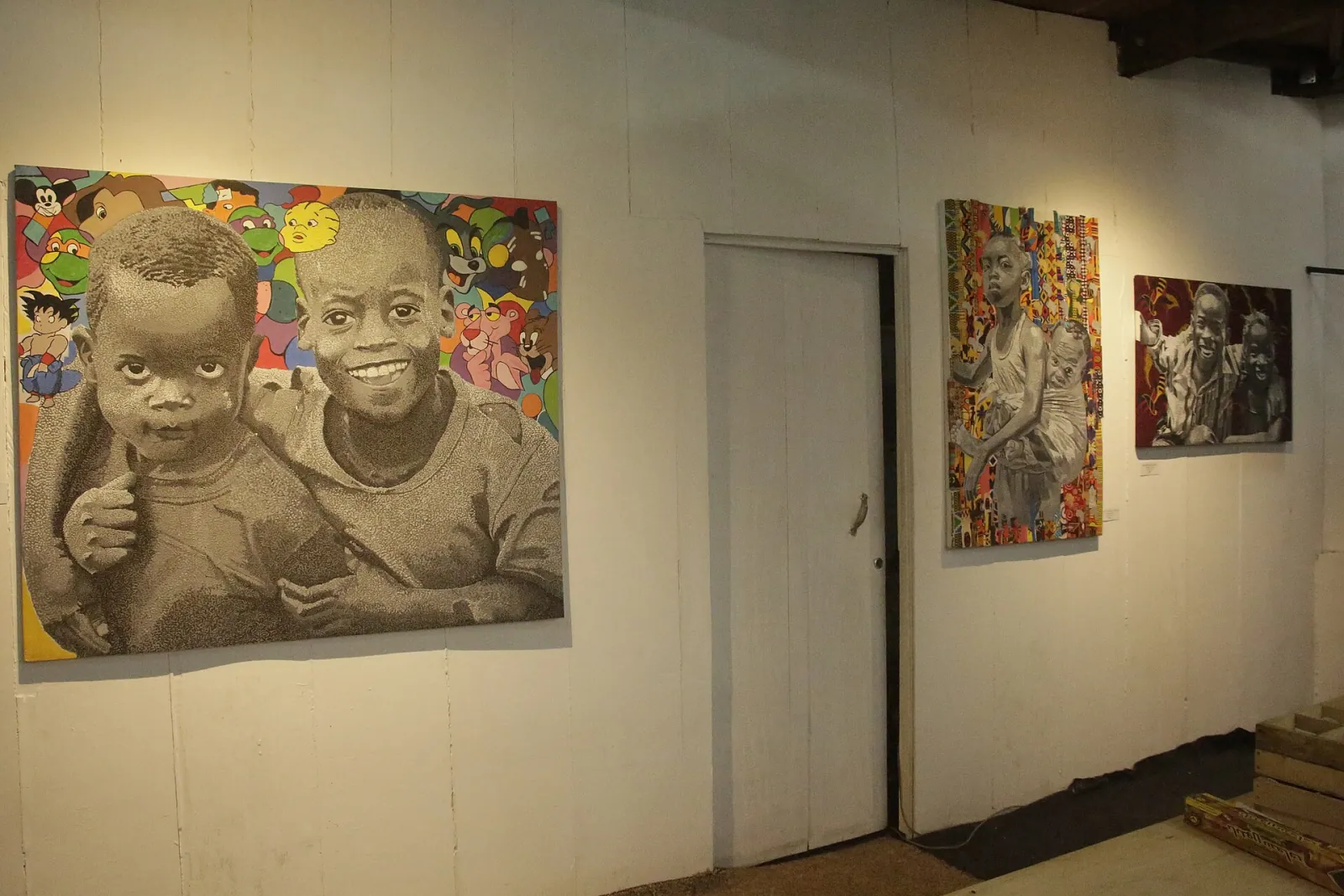
Portrait paintings of children hung in an exhibition room

A biennial is a major artistic event that returns every two years and brings together, in a single city over several weeks, exhibitions, performances, professional meetings and outreach activities. In Cameroon, three fields shape this format: the visual arts, dance and architecture.

The Ministry of Arts and Culture is the institutional partner: it authorises, advises, supports and connects organisers, artists and audiences. This page explains what a biennial is, how it is organised, how to apply and how to prepare for it alongside the other events in the calendar.

  • Three fields: visual arts, dance, architecture
  • An open call, with selection by a jury of professionals
  • Ministry support, from authorisation to outreach
See the visual arts
Visual arts

The visual arts biennial

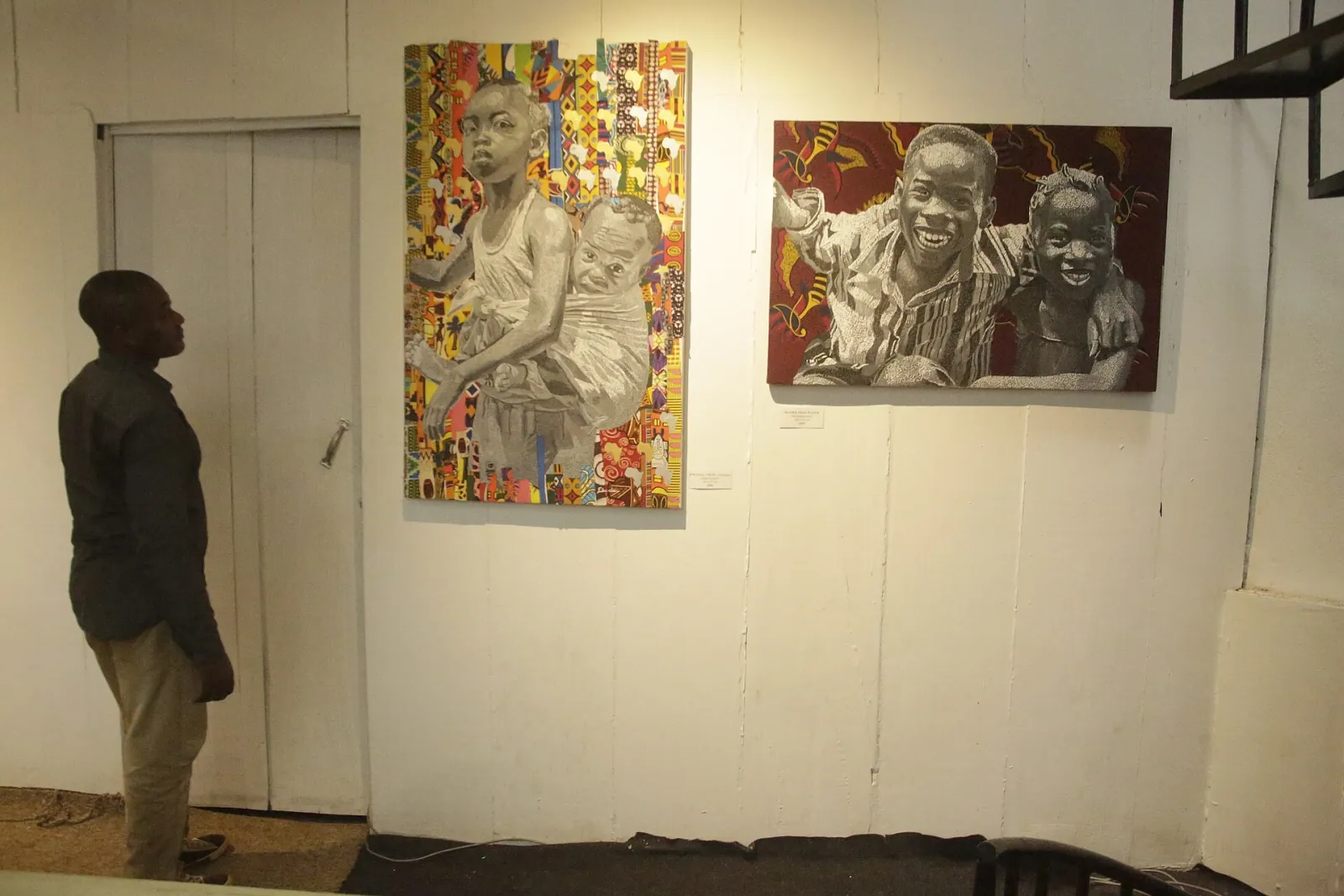
Visitor looking at colourful paintings hung in an exhibition room

The visual arts biennial is the oldest event and the easiest for the general public to follow. Painting, sculpture, photography, installation, video art, textiles and recycled art are presented in a route that combines institutional venues (museums, cultural centres, galleries) and spaces taken over for the occasion: chiefdom courtyards, covered markets and former warehouses.

An exhibition conceived as a narrative

Each edition is organised around a theme chosen by the artistic committee: the memory of water, roads and markets, the body and adornment, the city reinventing itself. Curators arrange the exhibition in major sections, commission new works and support the artists up to the hanging. A bilingual catalogue preserves a record of each edition.
Beyond the gallery walls

The biennial offers workshops in schools, guided tours, lectures by art historians, meetings with collectors and round tables on the art market. Young graduates find a first national showcase, while established artists find a place for dialogue with their peers from across Africa.

ℹ️
For artists

Artists exhibiting at the biennial can list their participation in the artists’ directory, which then makes invitations to other events easier.

Dance

The dance biennial

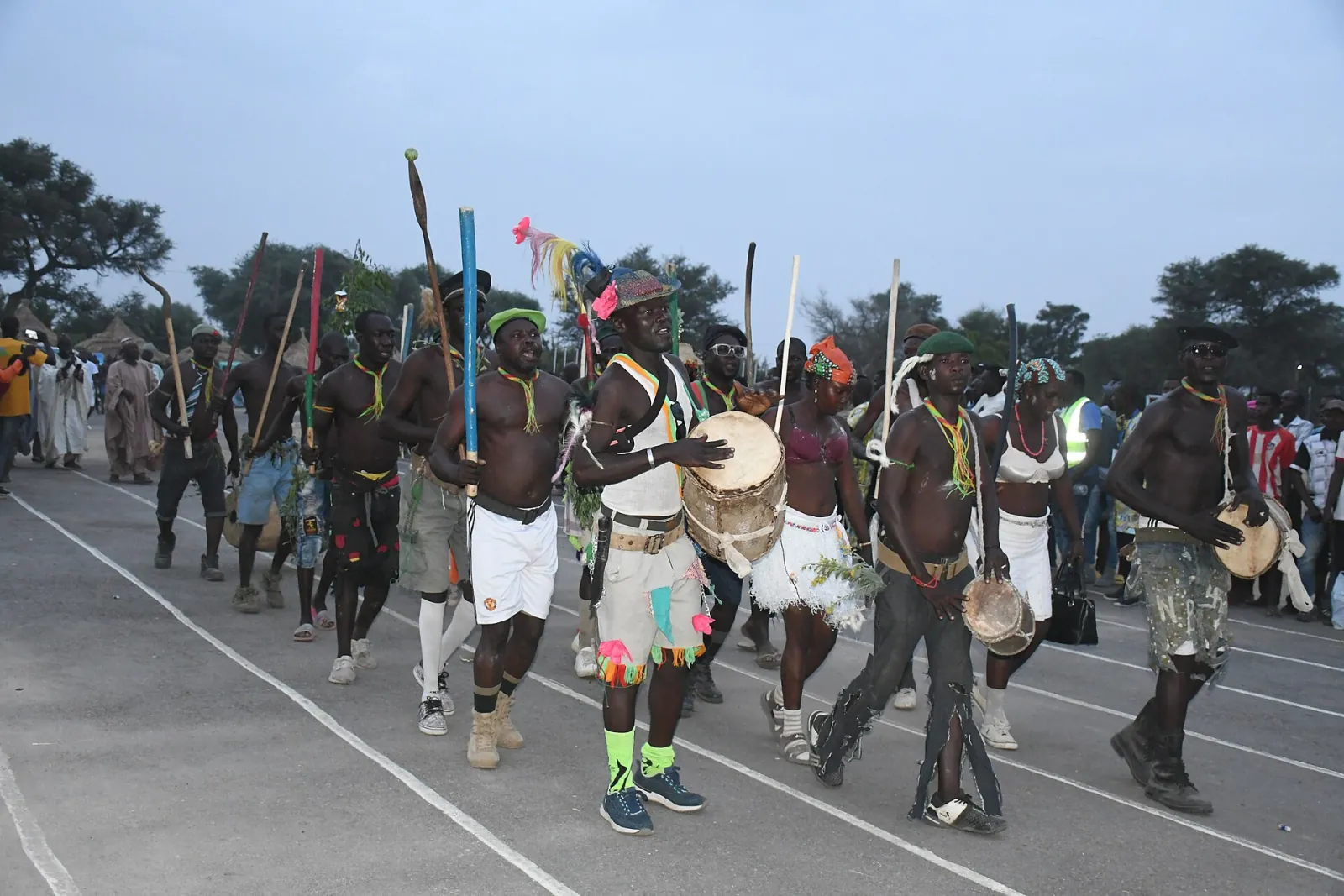
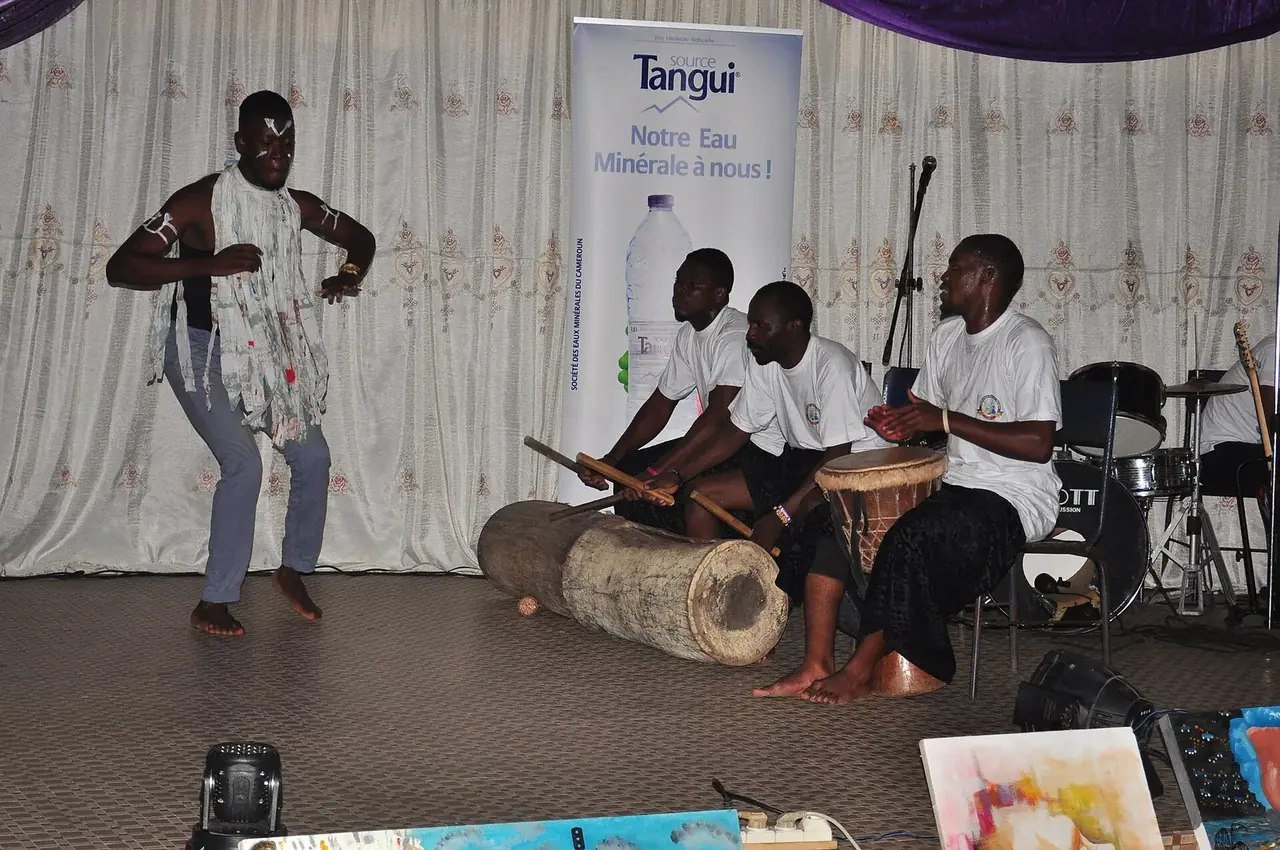
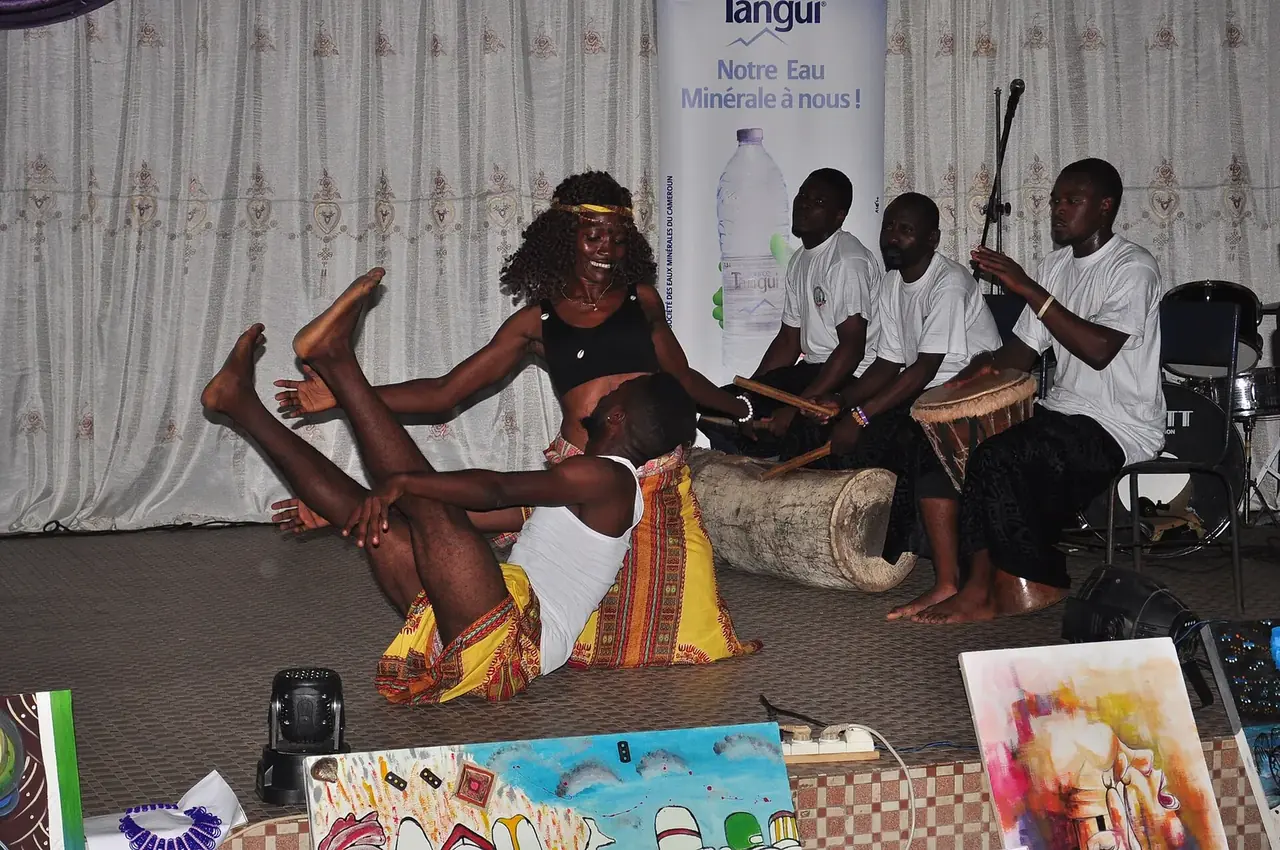
Dancer and drummers on stage during a traditional dance show

The dance biennial brings together, every two years, companies, independent choreographers, traditional dance masters and urban dance collectives. It alternates between creations presented on proper stages and open-air formats: forecourts, public squares, neighbourhood courtyards and riverbanks.

Two idioms in dialogue

The programme deliberately combines the inherited repertoire of the dances of the country with contemporary creation. A solo inspired by the gestures of coastal fishermen may thus sit alongside a group piece rooted in hip-hop, a court ballet from the West or a performance born in residency. Urban arts have a stage of their own.

Passing on knowledge during the biennial

The professional week offers workshops led by guest choreographers, project readings, meetings between companies and programmers, and a session devoted to dancers’ safety: warm-up, injury prevention and social protection. Traditional dance masters take part in evening transmission sessions open to the public.

Companies wishing to perform there must hold the authorisations required for any public performance: see the show authorisation page and the performing arts section.

Architecture

The architecture biennial

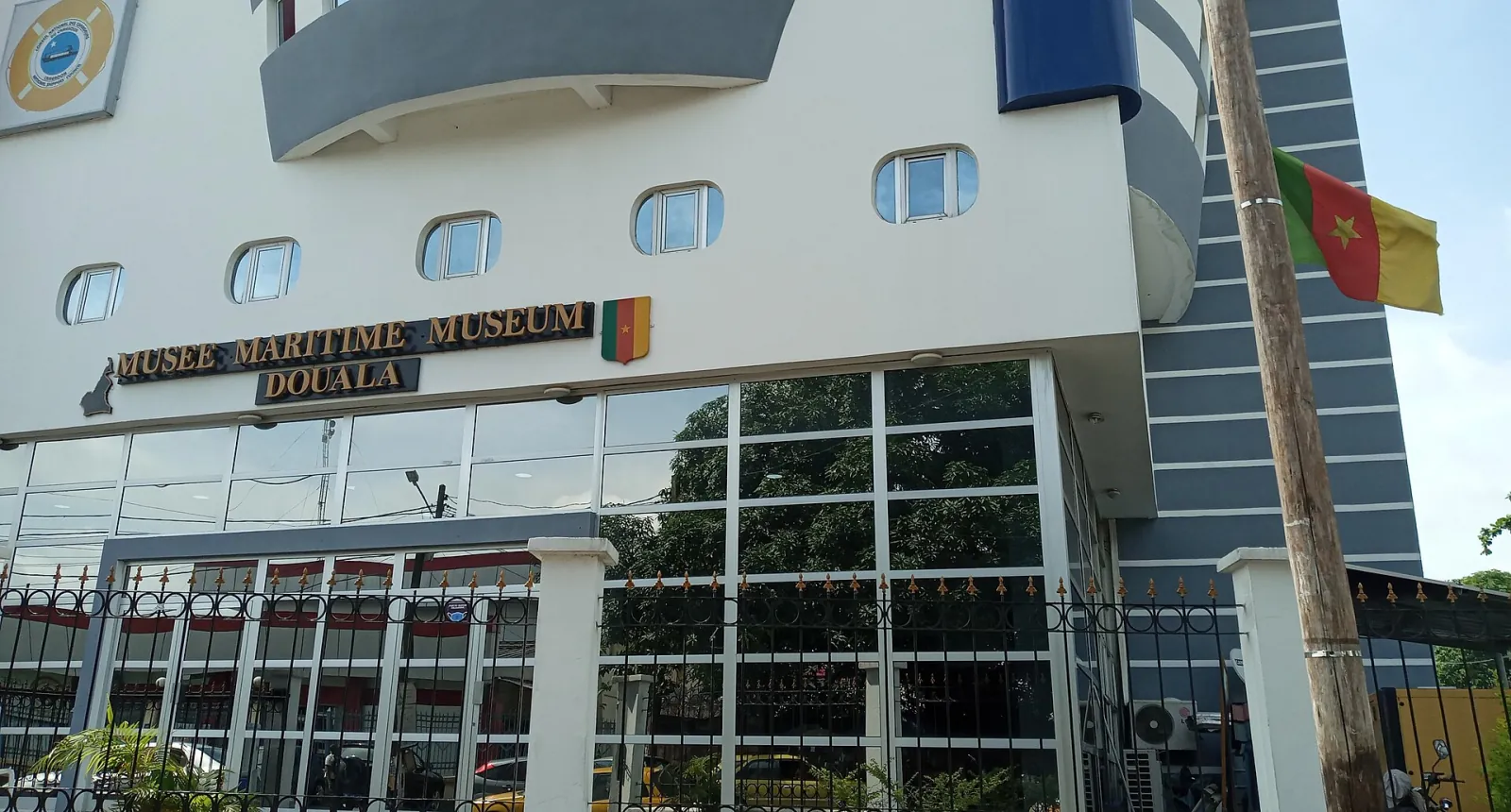
Ship-shaped facade of the Maritime Museum of Douala in Bonanjo

The architecture biennial is the most recent and the most professional of the three. It is aimed at architects, urban planners, engineers, landscape architects, students and local elected officials, but also at residents: a city is imagined together with those who live in it.

Living, building, preserving

The themes selected revolve around housing, the sustainable city, local materials (earth, wood, raffia, volcanic stone) and the relationship between architecture and heritage. Chiefdom architecture, the multi-storey huts of the North, coastal houses and large colonial buildings are re-examined in light of today’s needs. The biennial draws on the work carried out on listing and protection and conservation and restoration.

A programme for all audiences

  • exhibitions of models, plans and photographs of building sites;
  • lectures on earth construction and carpentry know-how;
  • visits to neighbourhoods, palaces and chiefdoms and monuments;
  • ideas competitions for public spaces or performance venues.

Any new or converted performance venue is subject to specific rules, set out on the Organising a festival page: prior declaration for construction, authorisation for a change of use.

ℹ️
Students

Schools of architecture and design can set up workshops within the biennial: an exchange with trades training helps to set the framework.

Applications

Applying to a biennial

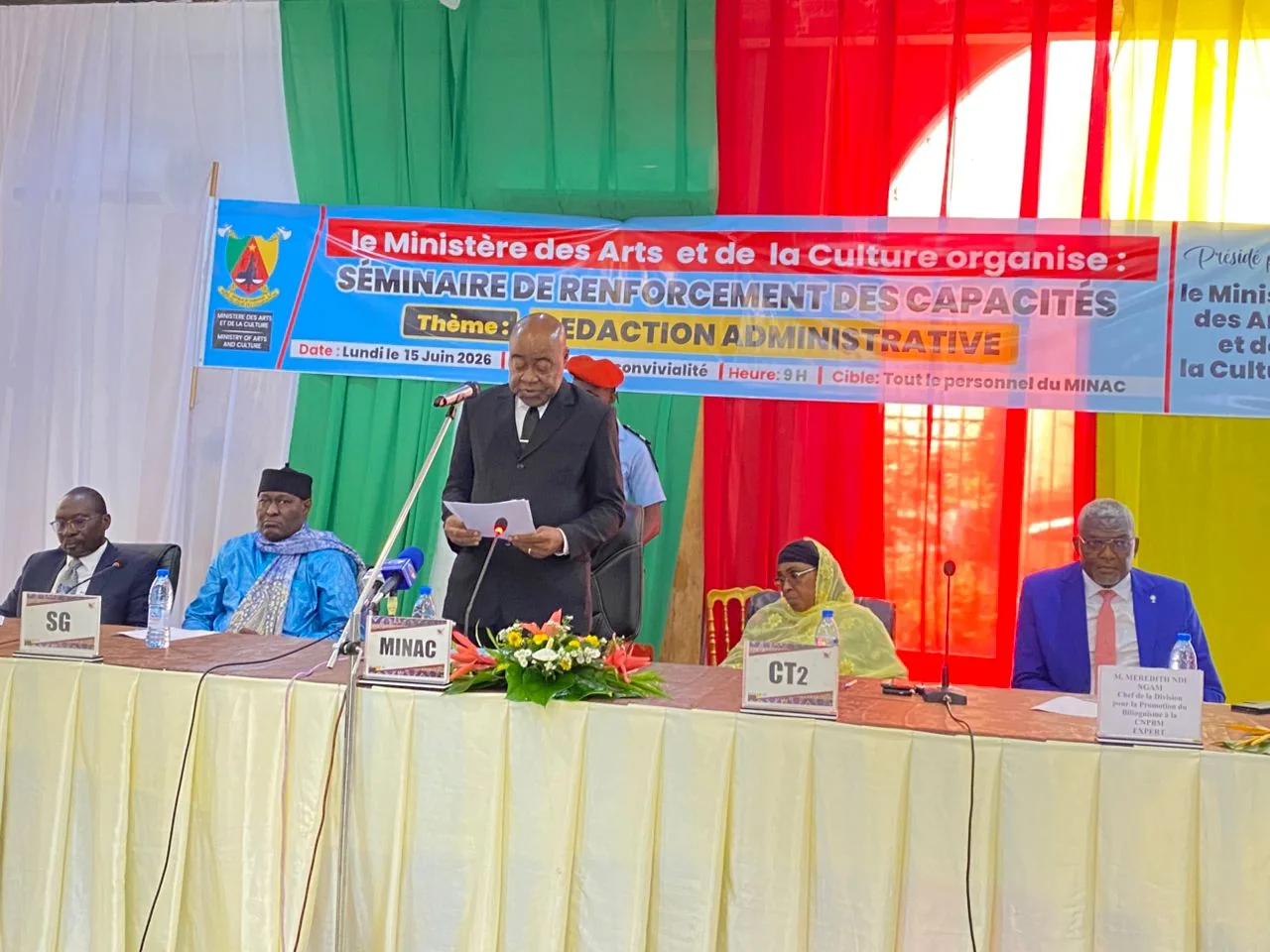
Ministry capacity-building seminar, panel table and speaker

Each biennial opens with a call for applications published several months before the event on the calls for projects page and relayed by the regional delegations. It specifies the theme, the timetable, the documents to be enclosed and the selection criteria.

Building a solid file

An application file generally includes a statement of intent of one to two pages, an artistic CV, a visual portfolio (images or video), a technical sheet, a provisional production budget and, for companies and collectives, the statutes of the organisation. Applicants should take care over the quality of their documents: sharp images, proofread texts and accessible video links.

How the selection works

A jury of professionals (curators, artists, researchers, programmers) examines the files on artistic quality, consistency with the theme, feasibility and the team’s ability to carry out the project. Selected artists receive an agreement that sets out their commitments, the conditions of reception and the rights attached to the work; the model contracts serve as a reference.

Artists seeking funding may also apply for a grant or the support funds, and organisations wishing to run an associated programme should consult the grants for events.

ℹ️
Good to know

Each artist may submit only one file per field and per edition; a collective application is submitted by a single lead applicant, who is answerable for the team.

Step by step

From the file to the hanging

Read the call

Note the theme, deadlines, required documents and criteria; check that your project falls within one of the three fields.

Prepare the file

Write the statement of intent, gather the visuals and the technical sheet, draw up a realistic budget and have everything proofread by a third party.

Deposit

Submit the file on time, to the service named in the call or to the regional delegation, and keep the acknowledgement of receipt.

Defending your project

Applicants shortlisted for the second round may be heard by the jury or invited to elaborate on a technical or budgetary point.

Producing the work

After the agreement, the artist produces or adapts the work, arranges transport insurance and prepares the wall text with the curators.

Showing and debating

During the biennial, the artist takes part in tours, meetings and debates, then contributes to the review of the edition.

Key facts

The three biennials compared

FieldMain audienceTypical venuesFormats offered
Visual artsGeneral public, collectors, school groupsMuseums, galleries, cultural centres, spaces taken over for the occasionExhibitions, installations, catalogue, guided tours
DanceFamilies, young people, companies, programmersTheatres, public squares, forecourts, riverbanksPerformances, workshops, open stages, transmission evenings
ArchitectureProfessionals, students, elected officials, residentsPavilions, former buildings, neighbourhoodsModels, lectures, urban routes, ideas competitions
ApplicationsArtists, collectives, agenciesSubmission online or at a delegationCall, file, jury, agreement
MediationSchools, associations, familiesSchools, cultural centres, media librariesWorkshops, visitor booklets, meetings with artists
Professional meetingsProgrammers, funders, criticsLecture halls, studiosRound tables, business meetings, project readings
Journey

The course of an edition

Twenty months beforeChoosing the theme

The artistic committee settles the theme and host venue, involves local authorities and sets the overall budget with its partners.

Fifteen months beforeCall for applications

The call is published in the three fields and relayed by the regional delegations, art schools and professional networks.

Ten months beforeSelection

The jury meets and draws up its list and reservations; selected artists receive their agreement and production timetable.

Three months beforeAuthorisations and safety

Submission of authorisation requests, site visits, safety plans, insurance and recruitment of reception teams.

During the biennialOpening to the public

The opening, performances, lectures and outreach activities follow one another over several weeks, with ticketing and free-admission days.

After the editionReview and archives

Activity report, catalogue, recordings and photographs are deposited in the archives and prepare the next edition.

To explore

The biennials and the rest of the site

“A biennial is the time when a country looks at itself in the work of its artists, then shows it to the world.”

An exhibition curator, Douala
Voices from the stage

They took part

“
I presented my first installation in a chiefdom courtyard; the visitors, who came as families, brought the work to life more than any review could.
A visual artist
Visual arts, West
“
The workshop led during the professional week allowed us to rework our creation and then secure a tour in three regions.
A choreographer
Dance, Littoral
“
Our workshop with students from a school of architecture turned the biennial building site into an open-air classroom.
An architect and teacher
Architecture, Centre
“
The jury sent us precise comments on our file; we applied again and were selected for the following edition.
A collective director
Applications, North-West
To act

Procedures around a biennial

Festival authorisation

Any organiser setting up an event open to the public must obtain the Ministry’s authorisation before announcing the programme.

Apply

Event grant

A grant application can help fund part of the costs: transport of works, scenography, communication and reception.

See the criteria

Calls for projects

Find the open calls, deadlines and results of previous selections.

View the calls

Artist card

The artist card simplifies procedures and certifies your professional status to organisers.

Apply for the card
To download

The applicant’s resources

Glossary

The vocabulary of biennials

Biennial

A large-scale artistic event held every two years around a theme, in a host city.

Curator

A professional who designs the concept of an exhibition, chooses the works and supports the artists.

Call for applications

A public invitation to artists and collectives to submit their projects.

Jury

A group of professionals responsible for examining files and making the selection.

Scenography

The layout of the exhibition or stage space: circulation, lighting, supports.

Private view

The opening evening of an exhibition, by invitation only or open to the public.

Catalogue

A publication that preserves the memory of an edition with images, texts and biographies.

Mediation

All the actions that help the public understand and enjoy the works.

Artist agreement

A contract setting out the commitments of the artist and the organiser.

Showcase

An opportunity for an artist to become known to a wider public and to programmers.

On the site

Extending the biennial on the site

Resources

Useful links for the biennials

Stakeholders

Who supports the biennials?

Questions

Your questions about the biennials

How often are the biennials held?

A biennial returns every two years. The three fields (visual arts, dance, architecture) may be staggered to prevent the events from competing with each other and to allow audiences and teams to mobilise in turn. The precise calendar of each edition appears in the national festival calendar.

Who can apply?

Professional or emerging artists, collectives, companies, architecture firms and final-year students, depending on the field. The call specifies the eligibility conditions. Collective applications are led by a single representative who represents the team before the organiser and signs the agreement.

Where can I find the call for applications?

The call is published on the site’s calls for projects page and relayed by the regional delegations and professional networks. It gives the dates, theme, documents to enclose and place of submission. Check it regularly: deadlines are short and are not extended.

Is an authorisation needed to organise a biennial?

Yes. An event open to the public requires the authorisation of the Ministry in charge of culture, issued under the conditions set by the implementing decree of the law on the regime governing shows. The application is submitted online to the One-Stop Shop, with the programme, venues and safety plan.

Is admission charged?

It depends on the venues and sections. Part of the programme is free, notably the open-air trails and certain days. Prices, discounts for schoolchildren and accessibility arrangements are detailed in the ticketing section, which also gives the points of sale.

Is my work insured during the biennial?

The organiser must arrange insurance for the works during their transport, exhibition and return, based on a value agreed with the artist. The agreement sets out the responsibilities of each party. The artist retains their copyright and may contact a collective management society.

Can I volunteer?

Yes. Volunteers welcome the public, accompany tours and help with installation and logistics. A charter sets out the mutual commitments, and a short training session is offered before opening. Registration is done on the dedicated volunteering page.

How can I obtain funding for my participation?

Several routes exist: a Ministry grant, creation support funds, a production residency, patronage or crowdfunding. Each has its own conditions and timetable. The cultural funding and support funds sections describe the procedures and the documents required.

Contact

Write to the Ministry: Biennials

State the festival or event concerned.

Competent directorate

Contact the performing arts and creative industries

Address

Directorate of Shows and Creative Industries
Ministry of Arts and Culture
Quartier du Lac – Ministerial Zone
P.O. Box 1053 Yaoundé, Centre Region, Cameroon

Reach us

+237 6 51 70 58 41

contact@minac.gov.cm

Opening hours

Monday to Friday, 8 am to 4 pm

A project for the next edition?

Prepare your file and submit your authorisation request online.

Festival authorisation
WhatsApp