
Coat of arms of CameroonMinistry of Arts
and Culture
Republic of Cameroon
My procedures
Home
Minister’s message
News
Press releases
Cultural calendar
Official speeches
Press review
Photo library
Video library
Calls for projects
Job vacancies
Public procurement
Newsletter
Frequently asked questions
Site map
Contact
Press area
Podcast “The Voice of Culture”
Legal notices
Privacy policy
Cookies and trackers
The Ministry
Missions and responsibilities
Organisation
Organisation chart
Minister’s Office (Cabinet)
Management team
General Secretariat
General Inspectorate
Central directorates
Regional Delegations
Institutions under supervision
Legislative texts
Regulatory texts
Sector strategy
Major projects
Budget and reports
Partners
Careers
Archives
Institutional communication
Quality and accessibility
Arts
Visual and plastic arts
Visual arts
Performing arts
Theatre
Dance
Music
Literature and books
Cinema and audiovisual
Photography
Fashion and design
Digital arts
Art crafts
Artists’ directory
Residencies
Prizes and awards
Arts education
Urban arts
Heritage
Tangible heritage
Intangible heritage
UNESCO sites
National museums
Listed monuments
National inventory
Palaces and chiefdoms
Archaeology
Linguistic heritage
Oral traditions
Traditional know-how
Restitution of cultural property
Fight against illicit trafficking
Listing and protection
Conservation and restoration
Heritage Days
Cultural landscapes
Industries
Music and recording
Cinema
Publishing and books
Digital arts
Fashion and creativity
Crafts
Cultural tourism
Funding for culture
Support funds
Incubators
Cultural entrepreneurship
Culture Observatory
Vocational training
Studies and reports
Sector statistics
Export and outreach
Intellectual property
Copyright
Legal framework
Copyright and neighbouring rights
Collective management societies
Register a work
Licences
Private copying
Fight against piracy
Model contracts
Social status of artists
Mediation
Disputes
Training
Fee scales
Register of works
Contact
Digital neighbouring rights
Public domain
Festivals
National calendar
Ngondo
Nguon
Écrans Noirs
Heritage Days
Music Day
Regional festivals
Fairs and exhibitions
Biennials
National competitions
Cultural days
Organise a festival
Event grants
Ticketing
Archives
Volunteering
Diaspora festivals
Regions
Adamawa
Centre
East
Far North
Littoral
North
North-West
West
South
South-West
Cultural map
Regional Delegations
Traditional chiefdoms
National languages
Cultural routes
Decentralised cooperation
Regional observatory
Cooperation
UNESCO
Francophonie (OIF)
African Union
Commonwealth
CEMAC
Bilateral cooperation
Cultural agreements
Professional organisations
Scholarships
Artist exchanges
Cultural years
Diaspora
Funded projects
Embassies
Technical partners
International restitution
International monitoring and calls
Services
Artist card
Show authorisation
Filming authorisation
Festival authorisation
Deposit of a work
Export of works of art
Listing of a property
Grant application
Association accreditation
File tracking
Forms
Fees
Opening hours and addresses
Reporting
Online help
My account
One-Stop Shop
Industries

Music and recording

Labels, rights, export and studios: everything you need to know to produce, distribute and remunerate music in Cameroon, from the demo to the concert, in compliance with licensing and collective management.

Updated on 6 November 20264 sub-pages
Show licenceMandatory
Penalty for operating without a licence6 months to 2 years
Collective management societies5
Supervising directorateDSIC
Music and recording

A sector getting organised

Singer crouching on stage in the lights of a large open-air concert

From the makossa of Douala to the bikutsi of Yaoundé, from assiko to the rhythms of the Grassfields and the northern savannas, Cameroonian music is among the most inventive in Central Africa. Behind every track played on the radio there is a chain of professions: authors, composers, performers, arrangers, sound engineers, producers, publishers, distributors, show promoters and collective management societies.

This page describes the economics of the sector: how a piece becomes a product, who earns what, which licences are required to stage a concert and how to export a repertoire. It is intended for artists, producers, studio managers and project leaders who wish to professionalise their activity.

  • Independent labels, studios and producers
  • Copyright and neighbouring rights managed collectively
  • Shows governed by Law No. 2004/001
Understanding labels
Labels

Labels and phonographic production

Presenters and guests around the microphones of a radio studio in Dschang

A label is a structure that finances, produces and markets the recordings of one or more artists. In Cameroon, the sector consists mainly of small independent houses, often attached to a studio, and individual producers who themselves advance the costs of demo, recording, mixing and pressing. A few larger structures also handle national distribution and promotion.

What a producer does

The phonographic producer takes the initiative and the financial responsibility for the first fixation of a sequence of sounds. They raise a budget, hire the studio musicians, choose the sound engineer, have the media manufactured and then organise the release: social media, radio, television, online platforms and stages. In return, they acquire neighbouring rights in the phonogram.
Contracts in use

  • The recording (or production) contract sets the duration, the territory, the percentage paid to the artist and the fate of the masters;
  • The publishing contract entrusts the management of the work (scores, declarations, synchronisations) to a music publisher;
  • The management contract governs the artist’s career and the manager’s commission;
  • The licence contract allows a third party to exploit a catalogue in a given territory.

Templates are available among the model contracts; artists would do well to compare them with their own contract before signing, and to consult the intellectual property section.

ℹ️
Some sound advice

Never assign all of your rights for an unlimited period in exchange for a modest advance: limit the duration, the territory and the modes of exploitation, and keep a signed copy of every contract.

Rights

The rights of authors, performers and producers

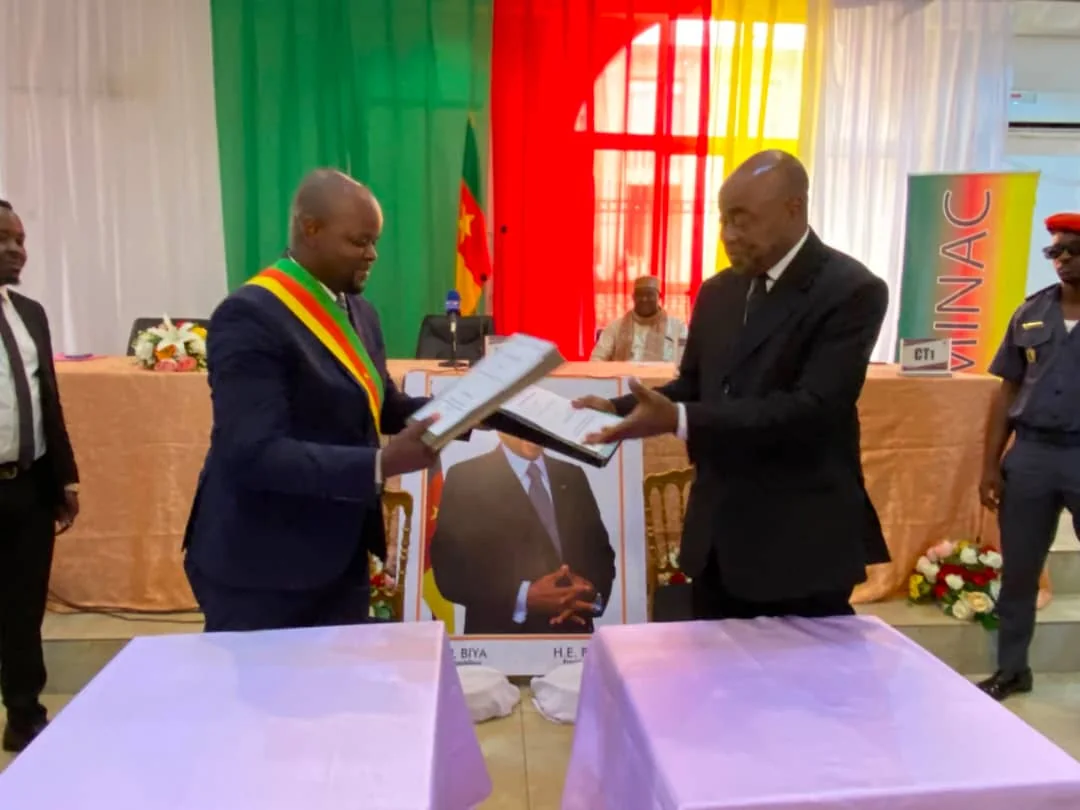
Signing of an agreement in front of the portrait of the Head of State

A song supports several rights holders at once. The author and the composer hold the copyright in the lyrics and the music; the performer and the session musician hold neighbouring rights in their performance; the producer holds neighbouring rights in the recording. Each must be remunerated when the piece is broadcast, copied or communicated to the public.

Collective management

No artist can monitor alone every radio station, every bar and every concert in the country. This is why rights are entrusted to collective management societies: they grant authorisations to broadcasters, collect royalties, deduct their operating costs and distribute the remainder among rights holders. Their operation is supervised by a specialised commission.

Sources of income

  • Performance rights: concerts, bars, nightclubs, function halls;
  • Reproduction rights: physical media and downloads;
  • Radio and television broadcasting: fees paid by the channels;
  • Remuneration for private copying on blank media and devices;
  • Income from streaming platforms.

To be paid, you must first declare your works: the declaration of a work dates the creation and enables identification at distributions. The fight against piracy, detailed in the piracy section, protects the value of the catalogue.

ℹ️
Join early

An artist who declares their tracks as soon as they are recorded avoids years of delay in distributions. Membership of a collective management society is the condition for receiving your rights.

Export

Music export and tours abroad

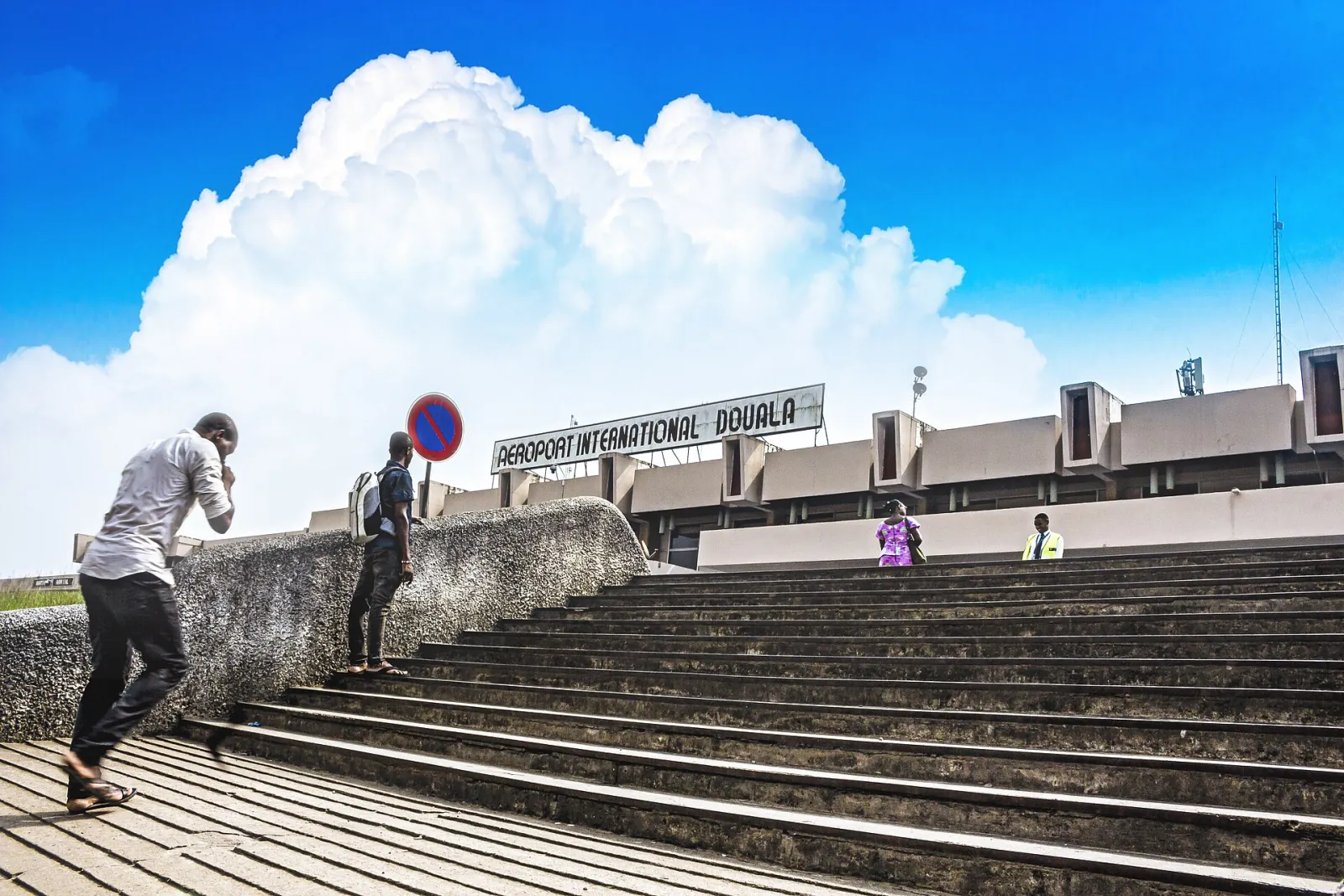
Terminal building of Douala international airport under a cloudy sky

The Cameroonian public is the country’s first music market, but the diaspora in Europe and North America, African stages and international festivals open up other outlets. Exporting a repertoire means selling concerts, catalogue licences, synchronisations for the screen and derivative products.

Preparing a tour

A tour abroad requires an artistic file (biography, technical rider, concert videos), a budget covering transport, accommodation and fees, performance contracts signed with the organisers, visas for the whole team and, when the artist performs for a foreign organiser, a valid licence. Ministry support comes through mobility assistance and the missions described in export and outreach.

Professional markets

Music fairs and markets bring together programmers, labels and distributors. An artist presents a thirty-minute showcase there, meets tour agents and leaves with leads for dates. Registrations are prepared several months in advance, with the support of the season’s fairs and trade shows.

Artist visas

The visa is often the main obstacle: planning the procedures well in advance, gathering official invitations and contracts, and notifying the competent directorate of the mission all help the processing of the file.

Studios

Recording and mixing studios

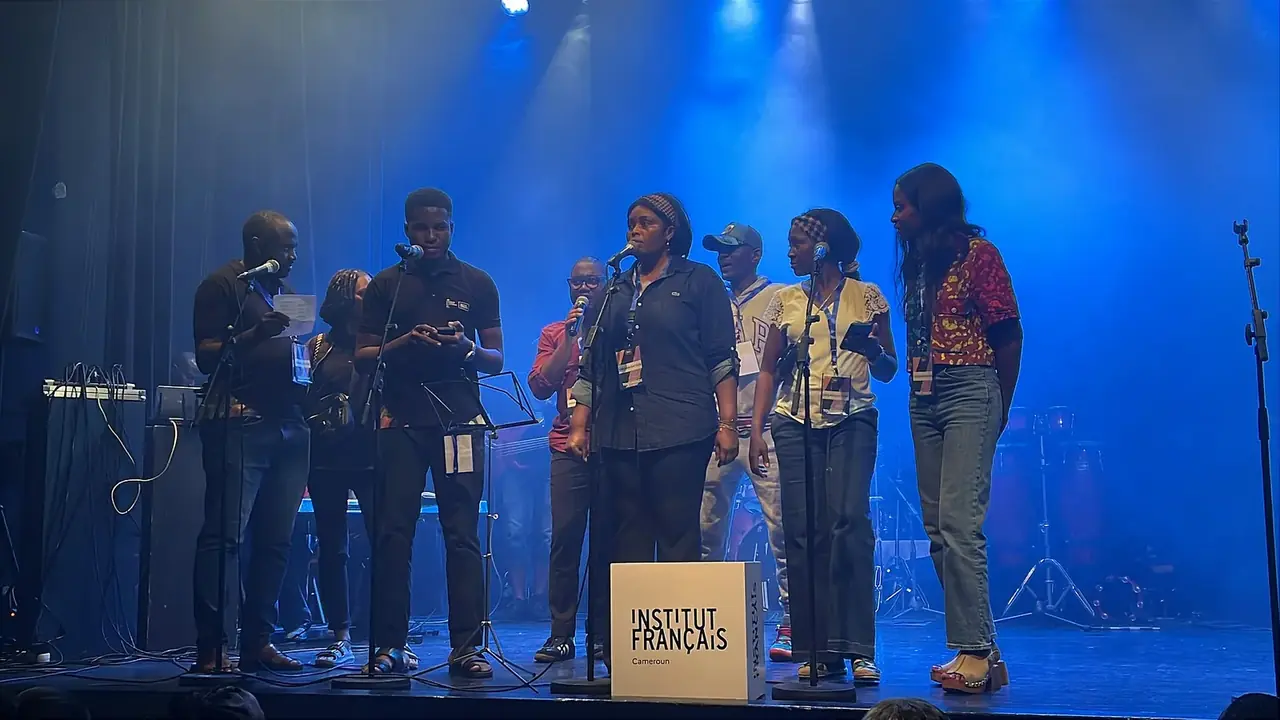
Rapper on stage with a bass guitarist during a concert at the Institut Français

The studio is the first technical link in the sector. A distinction is made between the home studio, equipped with a computer, a sound card and a few microphones, the professional recording studio with an isolation booth and control room, and the rarer mastering studio, where the mix is prepared for broadcast. The large cities, Douala and Yaoundé foremost, concentrate most of the facilities; Bafoussam, Garoua, Bertoua and Buea are gradually acquiring their own.

A studio’s business model

A studio charges by the hour, by the day or per finished track. It also sells artistic direction, arrangement production and the making of soundtracks for advertising, films and radio. A profitable studio diversifies its sources: artist sessions, jingles, dubbing, podcasts, training of apprentice sound engineers.

Quality and sustainability

  • Acoustic insulation, ventilation and a stable power supply;
  • Systematic backups of sessions on two media;
  • A written contract specifying who owns the recordings and the tapes;
  • Compliance with the regulations governing the practice of cultural activities.

Studios wishing to be listed with programmers and radio stations may contact the regional delegation for their region, and find out about vocational training in sound.

Economy

The music value chain, from demo to audience

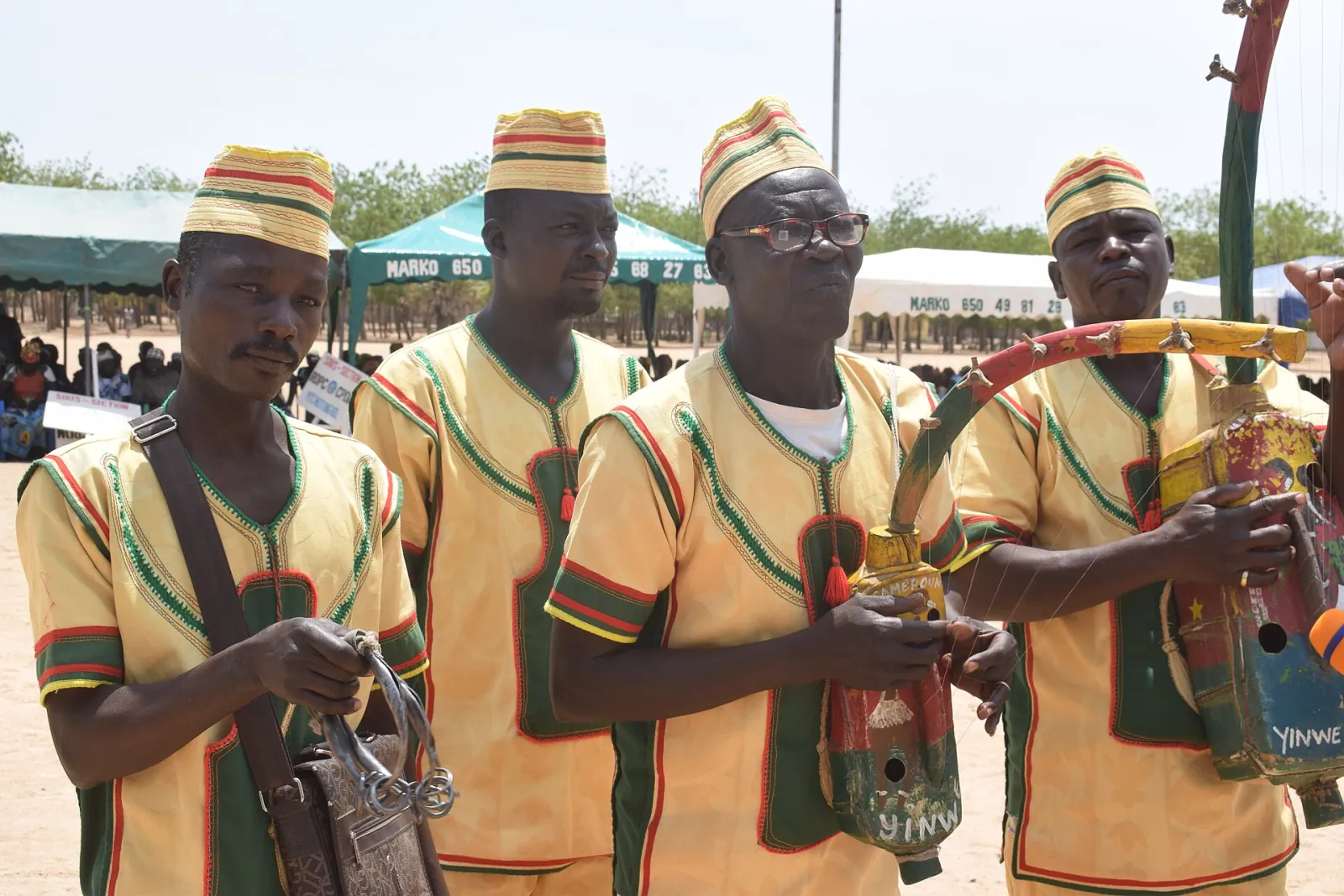
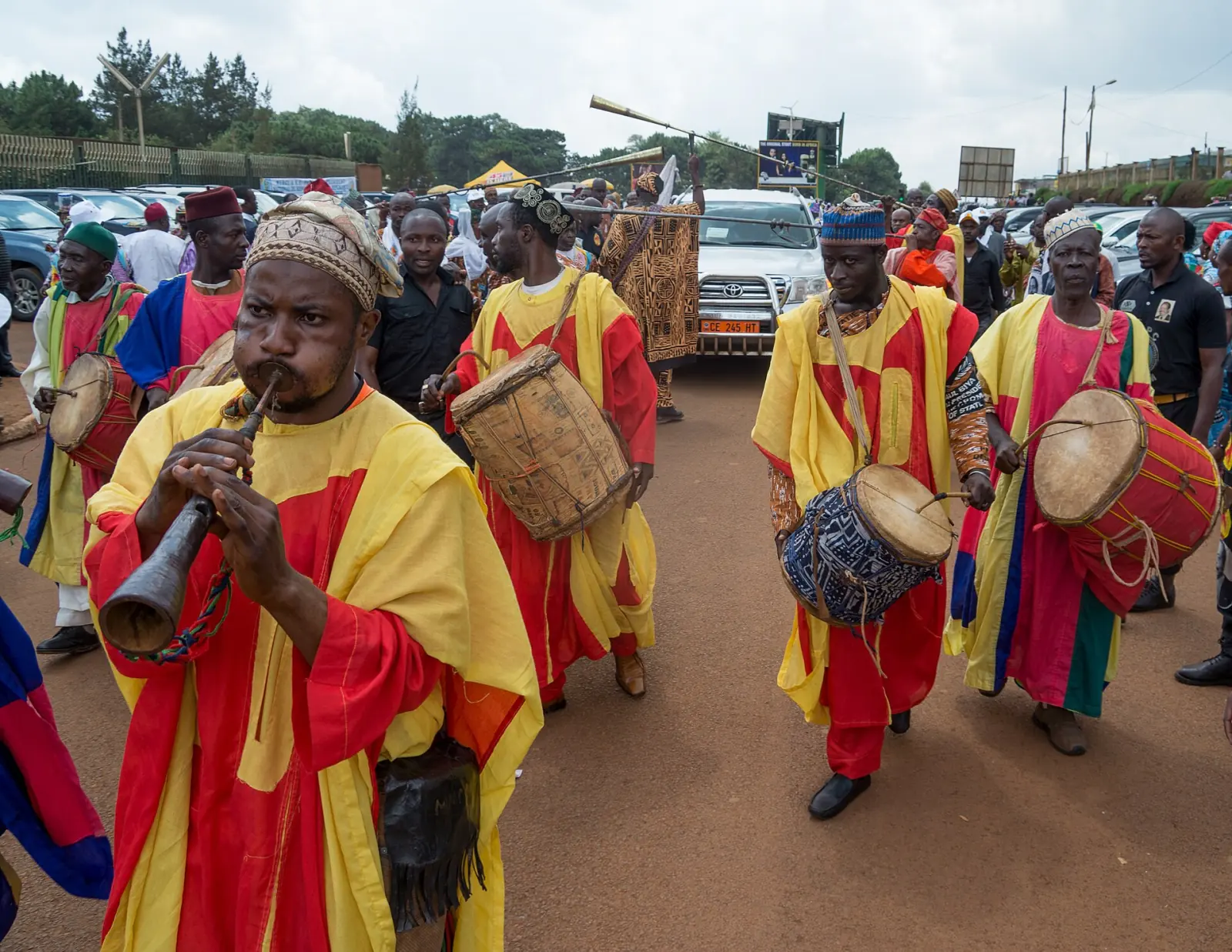
Griots in matching tunics playing stringed instruments at a public event

The music sector follows a four-stage path. Creation produces the work; production fixes it on a medium; distribution carries it to points of sale and platforms; broadcasting puts it before the public, live or remotely. Each stage generates revenue and demands it: a track that is not distributed is never remunerated, and a concert without a licence exposes its organiser to penalties.

Typical businesses

A small independent label in Douala produces about ten tracks a year, sells online and through mobile kiosks, and organises launch concerts. A studio-publisher in Yaoundé records, publishes and negotiates synchronisations for advertising. A show agency in Bafoussam books artists at chiefdom festivals and in cabarets. A cooperative of instrumentalists in Garoua shares a studio, a sound system and a booking service.

Where the money goes

On a hit track, the revenue is shared between the rights holders in the work, the performing artists, the producer, the distributor and the digital aggregator. Concerts earn the most for established artists; publishing and neighbouring rights provide the most regular income.

The sector statistics and the culture observatory publish the data that make it possible to measure these flows.

Performances

Concerts, licences and the support account

Choir on stage at a music festival in Douala

The organisation of concerts is governed by Law No. 2004/001 on the regime for shows. The show promoter and the artistic agent must hold a licence: the artistic agent’s licence is valid for one year and renewable, and every licence is personal and non-transferable. Operating without a licence is punishable by six months to two years’ imprisonment and a fine of 200,000 to 5,000,000 FCFA. Amateur shows remain free.

The support account

Show promoters contribute to a cultural policy support account, created in the form of a special appropriation account by Decree No. 2001/389. These resources finance promotion, training and equipment actions for the benefit of creation.

Procedures

Before each public performance, a show authorisation application must be submitted. The Directorate of Shows and Creative Industries oversees the implementation of this regime and that of the law on patronage and sponsorship; consult the legislative texts for details of the obligations.

Step by step

Producing an album from demo to release

Make a demo

Record working versions, test them in front of a small audience and finalise the list of tracks, authors and composers.

Budget

Cost out the studio, musicians, mixing, mastering, visuals, promotion and launch, then seek the corresponding financing.

Contracting

Sign the contracts with the musicians, the studio, the publisher and the label, and declare each work with the management society.

Record and finish

Carry out the takes, mixing and mastering, then have the final file checked before any duplication or online release.

Distribute

Choose the channel: physical distributor, aggregator for platforms, direct sales at concerts and on social networks.

Launch and tour

Organise the launch evening with the required authorisation, target the radio stations and schedule a series of dates in the regions.

Key facts

The players in the sector at a glance

StakeholderRoleMain incomeFramework to know
Author-composerCreates the lyrics and the musicCopyright, publishing advancesCopyright, declaration of a work
PerformerSings or plays the workFees, neighbouring rightsNeighbouring rights, artist contract
Label or producerFinances and markets the recordingSales, licences, neighbouring rightsRecording contract
StudioRecords, mixes, mastersBilling per sessionService contract
Show promoterOrganises concertsTicketing, sponsorshipLicence, Law No. 2004/001
Artistic agentRepresents and places artistsCommission on feesRenewable annual licence
Collective management societyCollects and distributes royaltiesManagement fees deductedSupervised by a commission
Distributor or aggregatorDelivers to points of sale and platformsCommission on salesDistribution contract
Journey

Cameroonian music through the decades

1950s-60sThe first records

Dance orchestras and the first recordings cut in the country and abroad make makossa, assiko and bikutsi known.

1970s-80sThe golden age of vinyl

Large orchestras, cabarets and the first production houses structure a national scene that shines across Africa and Europe.

1990sCassettes and piracy

The cassette democratises listening but opens the way to illicit copying; collective management reorganises to defend rights holders.

The 2000sA legal framework for shows

Law No. 2004/001 requires show promoters to hold a licence and organises the cultural policy support account.

2010sDigital technology

Home studios, social media and platforms replace the physical record; artists become their own producers.

TodayProfessionalisation

Independent labels, licensed agents and specialised training consolidate an industry geared towards export.

To explore

Music in other sections

“An artist without a readable contract, without a declaration of work and without a licence for their concert builds a career on sand: structure is the first of melodies.”

An independent producer, Douala
They produce

Voices from the sector

“
Since we have been declaring every track before release, distributions arrive on time and the studio musicians know what they are owed.
A label manager, Douala
Littoral
“
Our studio lives on jingles and dubbing as much as on albums: it is this diversity that pays the salaries all year round.
A sound engineer, Yaoundé
Centre
“
For a tour of Europe, I started the visas six months ahead. Signed contracts and a valid licence made each application easier.
An artistic agent, Bafoussam
West
“
The cooperative enabled us to buy together a sound system that no one could finance alone.
An instrumentalist, Garoua
North
To act

Procedures for music professionals

Show authorisation

Compulsory before any concert open to the public, submitted online with the programme and the venue.

Submit the application

Register a work

Date your creation and prepare your remuneration with the collective management society.

Register

Grant application

Finance a recording or a tour through open calls for artists and labels.

Request support

Artist card

Have your status as a professional musician recognised and make your procedures easier.

Apply
To download

Resources for the music producer

Glossary

The words of music and records

Label

Production house that finances, records and markets the artists in its catalogue.

Phonogram

First sound fixation of a sequence of sounds, in which the producer holds neighbouring rights.

Master

Final recording serving as the matrix for all copies and broadcasts.

Neighbouring rights

Rights of performers and producers in their performance or recording.

Licence

Personal and non-transferable title required of the show promoter and the artistic agent.

Levy

Sum due from anyone who uses a work, collected and then distributed by the management society.

Aggregator

Intermediary who delivers catalogues to online streaming platforms.

Showcase

Short performance intended for programmers and professionals.

Synchronisation

Authorisation to pair music with an image: film, advertisement, game.

Mastering

Final stage that balances a mix so that it sounds good on all media.

Fee

Remuneration of an artist for a given performance.

Support account

Special appropriation account funded by contributions from the show sector.

On the site

Continue reading on music and records

Resources

Useful links for music and records

Stakeholders

Who supports the music sector?

Questions

Your questions about music and records

Is a licence needed to organise a concert?

Yes for professionals: the show promoter and the artistic agent must hold a personal, non-transferable licence. Operating without a licence is punishable by six months to two years in prison and a fine of 200,000 to 5,000,000 FCFA. Amateur shows are free.

How long is the licence valid?

The artistic agent’s licence is valid for one year and renewable. Remember to submit the renewal application well before the expiry date, because the activity cannot continue while the licence has lapsed.

Can I assign my licence to a partner?

No. The licence is personal and non-transferable: it cannot be lent, sold or passed on. Each partner who carries on the activity must obtain their own.

What is the support account for?

It is a special appropriation account created by Decree No. 2001/389. Funded by contributions from show promoters, it finances actions supporting cultural policy: promotion, training and equipment.

How do I get paid when my song is played on the radio?

Join a collective management society and declare your works. The society collects royalties from radio stations, deducts its costs and pays you your share at each distribution.

How do I finance a first album?

Combine the team’s savings, a label advance, a Ministry grant, patronage, concert sponsorship and crowdfunding. A detailed budget and a credible schedule reassure partners.

What documents should I prepare for a tour abroad?

The artistic file, the technical rider, the contracts with the organisers, the official invitations for visas and a valid licence. Also plan for insurance and equipment export authorisations.

Where can I find a studio or a sound engineer?

The artists’ directory lists musicians, bands and technicians by region. The regional delegations can also point you to studios and training available near you.

Contact

Write to the Ministry: Music and records

Describe your activity or your project.

Competent directorate

Contact the Directorate of Shows and Creative Industries

Address

Directorate of Shows and Creative Industries
Ministry of Arts and Culture
Quartier du Lac – Ministerial Zone
P.O. Box 1053 Yaoundé, Centre Region, Cameroon

Reach us

+237 6 51 70 58 41

contact@minac.gov.cm

Opening hours

Monday to Friday, 8 am to 4 pm

A concert to organise?

Submit your authorisation application online and track it with your file number.

Request an authorisation
WhatsApp