Coat of arms of CameroonMinistry of Arts
and Culture
Republic of Cameroon
My procedures
Home
Minister’s message
News
Press releases
Cultural calendar
Official speeches
Press review
Photo library
Video library
Calls for projects
Job vacancies
Public procurement
Newsletter
Frequently asked questions
Site map
Contact
Press area
Podcast “The Voice of Culture”
Legal notices
Privacy policy
Cookies and trackers
The Ministry
Missions and responsibilities
Organisation
Organisation chart
Minister’s Office (Cabinet)
Management team
General Secretariat
General Inspectorate
Central directorates
Regional Delegations
Institutions under supervision
Legislative texts
Regulatory texts
Sector strategy
Major projects
Budget and reports
Partners
Careers
Archives
Institutional communication
Quality and accessibility
Arts
Visual and plastic arts
Visual arts
Performing arts
Theatre
Dance
Music
Literature and books
Cinema and audiovisual
Photography
Fashion and design
Digital arts
Art crafts
Artists’ directory
Residencies
Prizes and awards
Arts education
Urban arts
Heritage
Tangible heritage
Intangible heritage
UNESCO sites
National museums
Listed monuments
National inventory
Palaces and chiefdoms
Archaeology
Linguistic heritage
Oral traditions
Traditional know-how
Restitution of cultural property
Fight against illicit trafficking
Listing and protection
Conservation and restoration
Heritage Days
Cultural landscapes
Industries
Music and recording
Cinema
Publishing and books
Digital arts
Fashion and creativity
Crafts
Cultural tourism
Funding for culture
Support funds
Incubators
Cultural entrepreneurship
Culture Observatory
Vocational training
Studies and reports
Sector statistics
Export and outreach
Intellectual property
Copyright
Legal framework
Copyright and neighbouring rights
Collective management societies
Register a work
Licences
Private copying
Fight against piracy
Model contracts
Social status of artists
Mediation
Disputes
Training
Fee scales
Register of works
Contact
Digital neighbouring rights
Public domain
Festivals
National calendar
Ngondo
Nguon
Écrans Noirs
Heritage Days
Music Day
Regional festivals
Fairs and exhibitions
Biennials
National competitions
Cultural days
Organise a festival
Event grants
Ticketing
Archives
Volunteering
Diaspora festivals
Regions
Adamawa
Centre
East
Far North
Littoral
North
North-West
West
South
South-West
Cultural map
Regional Delegations
Traditional chiefdoms
National languages
Cultural routes
Decentralised cooperation
Regional observatory
Cooperation
UNESCO
Francophonie (OIF)
African Union
Commonwealth
CEMAC
Bilateral cooperation
Cultural agreements
Professional organisations
Scholarships
Artist exchanges
Cultural years
Diaspora
Funded projects
Embassies
Technical partners
International restitution
International monitoring and calls
Services
Artist card
Show authorisation
Filming authorisation
Festival authorisation
Deposit of a work
Export of works of art
Listing of a property
Grant application
Association accreditation
File tracking
Forms
Fees
Opening hours and addresses
Reporting
Online help
My account
One-Stop Shop
Arts

Literature and books

Publishers, libraries, literary prizes, legal deposit and book fair: everything about the book and reading chain in Cameroon, from author to reader.

Updated on 6 November 20264 sub-pages
ManagementDLL
Law on legal deposit2000/05
CREPLAUnder supervision
SIILY Book Fair 20264th edition, Yaoundé
Books

Reading and promoting reading

The Minister presenting books displayed on a stand, alongside officials

From the oral tradition of storytellers to the novels, essays, school textbooks and children’s books published today, Cameroonian literature is written in French, English, pidgin and many national languages. Around the writer revolve the publisher, the printer, the bookseller, the librarian and the reader: this is the book chain.

The Directorate of Books and Reading (DLL) develops Government policy on books and reading, supports publishing and coordinates the network of public libraries. CREPLA, the regional centre for book promotion in Africa, is an institution under supervision. This page presents publishers, libraries, prizes and the book fair.

  • Publishers, booksellers and printers
  • Public libraries and mobile libraries
  • Legal deposit and literary prizes
Discover the publishers
Publishers

Publishers and the book chain

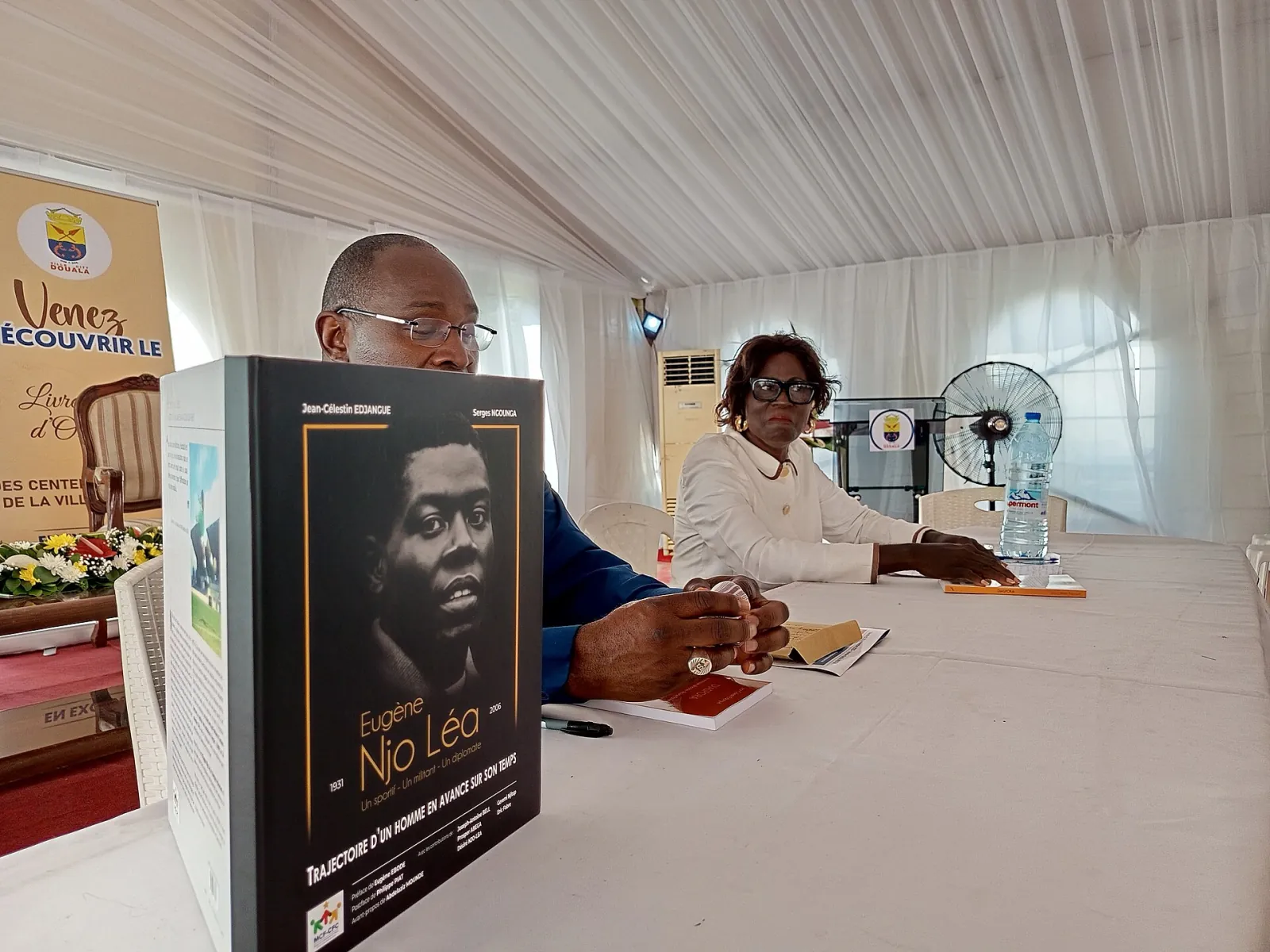
Book-signing session at a table under a marquee with the biography in the foreground

The Directorate of Books and Reading promotes the professions of publisher and bookseller and draws up the map of publishing houses and bookshops. It handles the regulation, monitoring and control of activities relating to the creation, publishing, dissemination and distribution of books. Its Sub-Directorate for the Book Economy monitors the production, dissemination, distribution and promotion of books, and organises fairs and trade shows.

Publishing professions

The publisher selects manuscripts, supports the author, finances manufacturing and handles promotion. The series editor, proofreader, graphic designer, illustrator and printer all contribute to the book as an object. The distributor and the bookseller then get the work to the reader; fairs and online bookshops widen the channels.

Publishing a book

An author can go through a publisher, self-publishing or a vanity press. The publishing contract sets out the assignment of rights, the duration, the royalties paid as a percentage of sales, the number of copies and the fate of unsold stock. Standard contracts provide a framework, and the publishing and books page presents the economics of the sector.

  • Have the manuscript proofread and corrected before any submission;
  • Keep a dated record of the text before sending it;
  • Demand a written contract before any assignment of rights;
  • Obtain an ISBN and ensure legal deposit for each publication.
ℹ️
For authors

An author can declare their work to date it and rely on a collective management society to collect their rights.

Libraries

Libraries and public reading

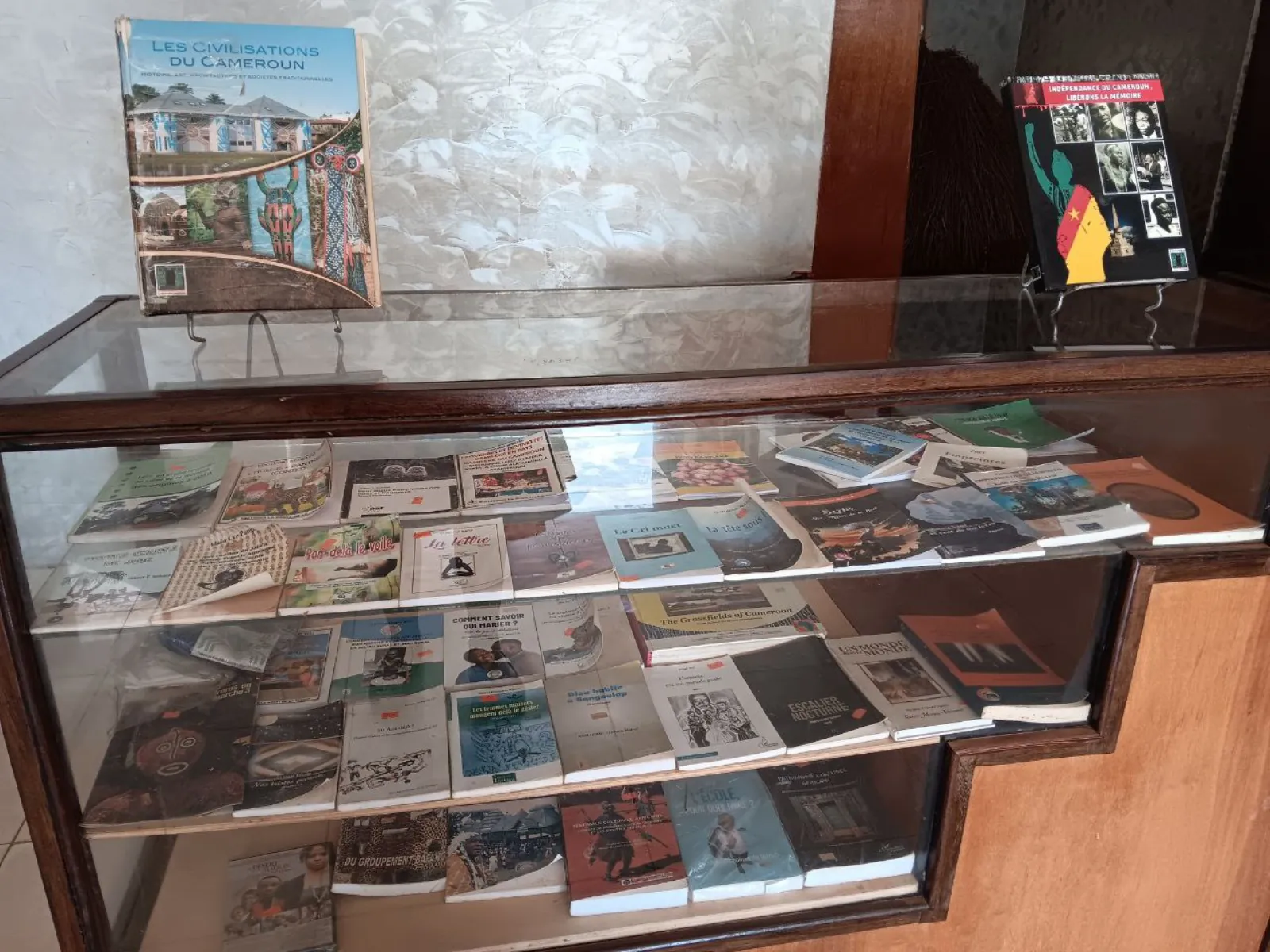
Display case of books and booklets in the library area of the Dschang civilisations museum

The Ministry develops and coordinates the national network of public libraries and reading centres. The directorate handles matters relating to the operation and equipment of libraries, as well as the activities of the national library and the libraries of decentralised local authorities. Its Sub-Directorate for the Development of Reading and Libraries runs this network.

The mobile library, the library that comes to you

Where there is no library, the mobile library brings books, reading workshops and activities. In July 2026, it served the town of Mengong: read-aloud sessions, book lending, writing games and meetings with teachers. These tours bring children and adults closer to books and strengthen national integration through shared reading activities.

Creating or equipping a library

A commune, a school or an association can open a reading point: a room, an initial collection, lending rules and a trained librarian are enough to get started. The Ministry promotes the professions of librarian and documentalist and monitors training and entry into the book professions. It also draws up the map of the country’s libraries.

Find the network’s news in the news and, for administrative archives, on the archives page.

ℹ️
For schools

Schools can request a visit from the mobile library; see arts education for reading projects.

Literary prizes

Literary prizes and recognition of authors

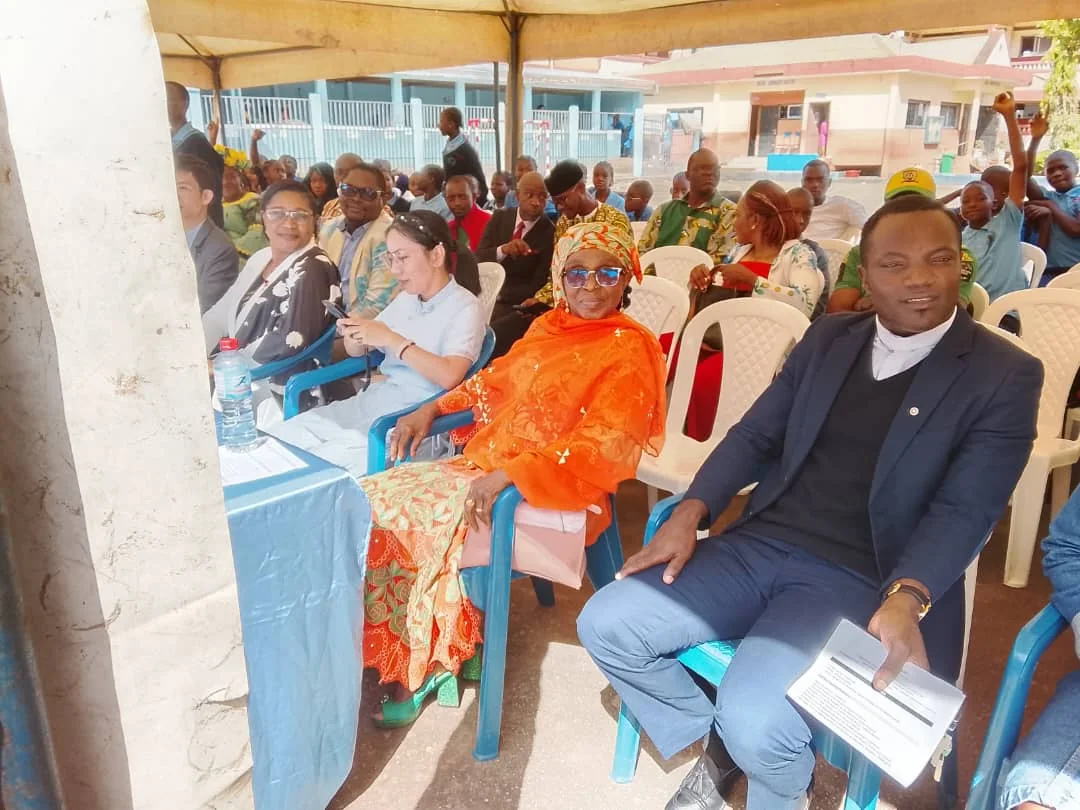
Award winners pose with their trophies and certificates on a red-carpeted stage, alongside two dignitaries.

Literary prizes reward novels, poetry collections, essays, children’s works and translations. They offer immediate visibility, additional sales and sometimes an endowment or a writing residency. They are awarded by juries of readers, writers and booksellers, from a list of candidate books submitted by their publishers or authors.

How to apply

The call for entries specifies the publication period, the language, the genre and the number of copies to be sent. The file includes the book, a short biography of the author, a summary and an ISBN certificate. Results are published at a ceremony, relayed by the press and social media. Dates are published in the cultural agenda.

From prize to career

A prize opens the way to invitations to meetings, fairs and residencies, and to the sale of translation rights. National distinctions are presented on the prizes and distinctions page; national competitions, on national competitions.

  • Watch for calls in the agenda and calls for projects;
  • Strictly observe submission dates and the number of copies;
  • Attach a press kit and links to reviews;
  • Showcase the prize on the cover and in communications.
Book fair

The Yaoundé book fair

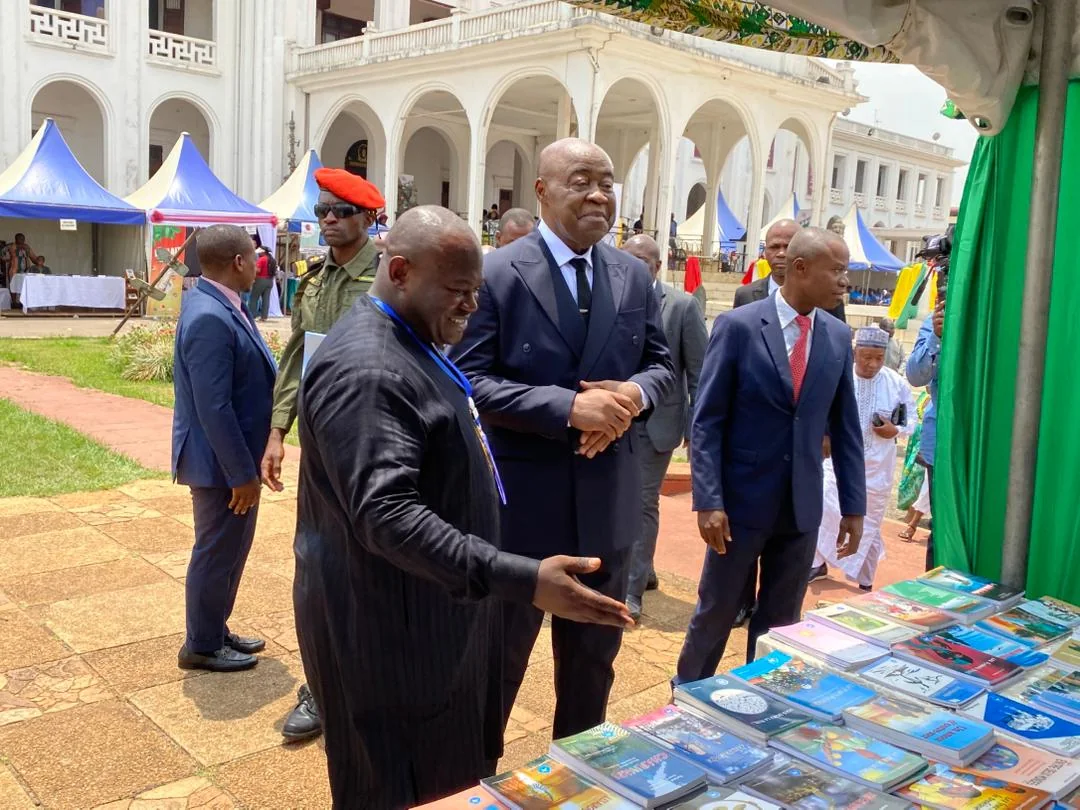
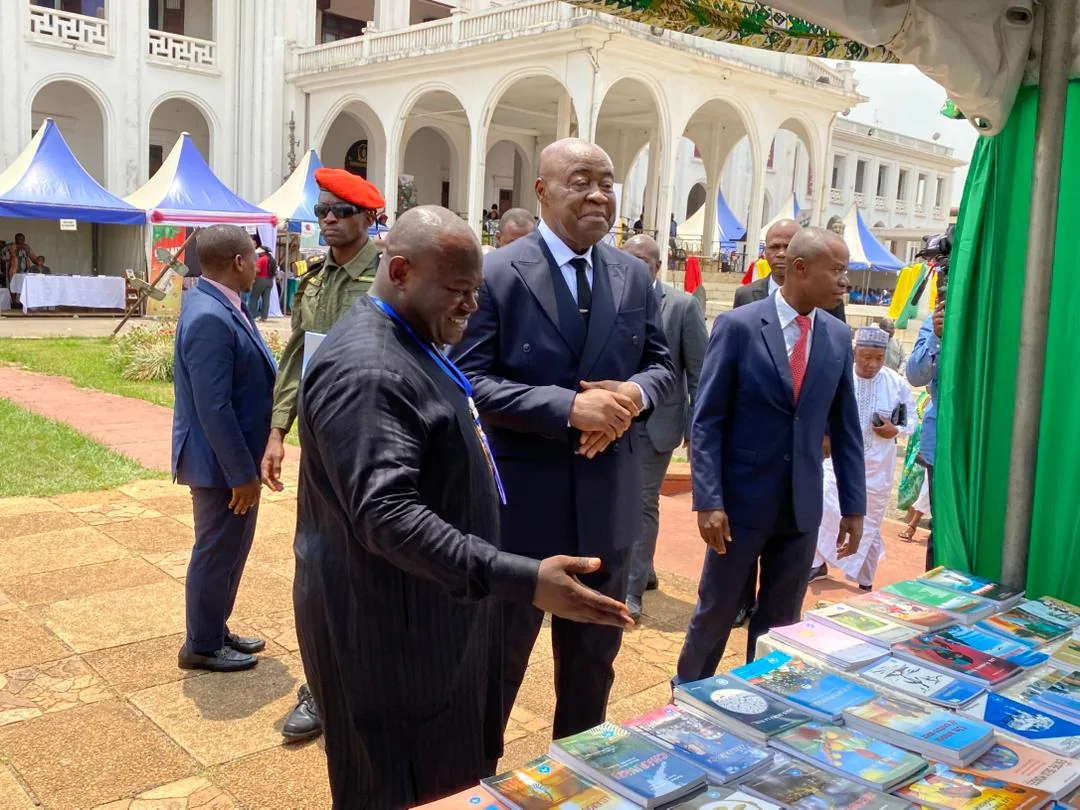
The Minister and officials in front of books displayed on a stand in the courtyard of a colonial-style building

The Ministry takes part in the Yaoundé International Book Industry Fair (SIILY), whose 2026 edition, the fourth, is held in Yaoundé. On 12 March 2026, the Minister received in audience at the fair, in the artists’ hall of the National Museum, the president of the Association of Book Industry Promoters (APIL), promoter of SIILY, accompanied by a delegation of about ten participants from several countries. The National Orchestra was present to welcome the guests.

What the fair offers

A book fair brings together publishers, booksellers, authors, librarians, illustrators and readers: stands, book signings, round tables, writing workshops, readings for children, professional meetings, prize ceremonies. It promotes book sales, the discovery of authors and the conclusion of contracts between professionals.

State support

At this meeting, the Minister thanked the organisers for their perseverance and reaffirmed the Government’s commitment to supporting those working to promote culture and to develop the cultural and creative industries. Find the general calendar of fairs and trade shows, as well as reports in the video library.

Publishers and authors can exhibit there; the organisers section describes the procedures common to all events.

ℹ️
Exhibiting

A publisher or bookseller wishing to hold a stand should contact the fair’s organisers and may request support via the grant application.

Legal deposit

Legal deposit and ISBN

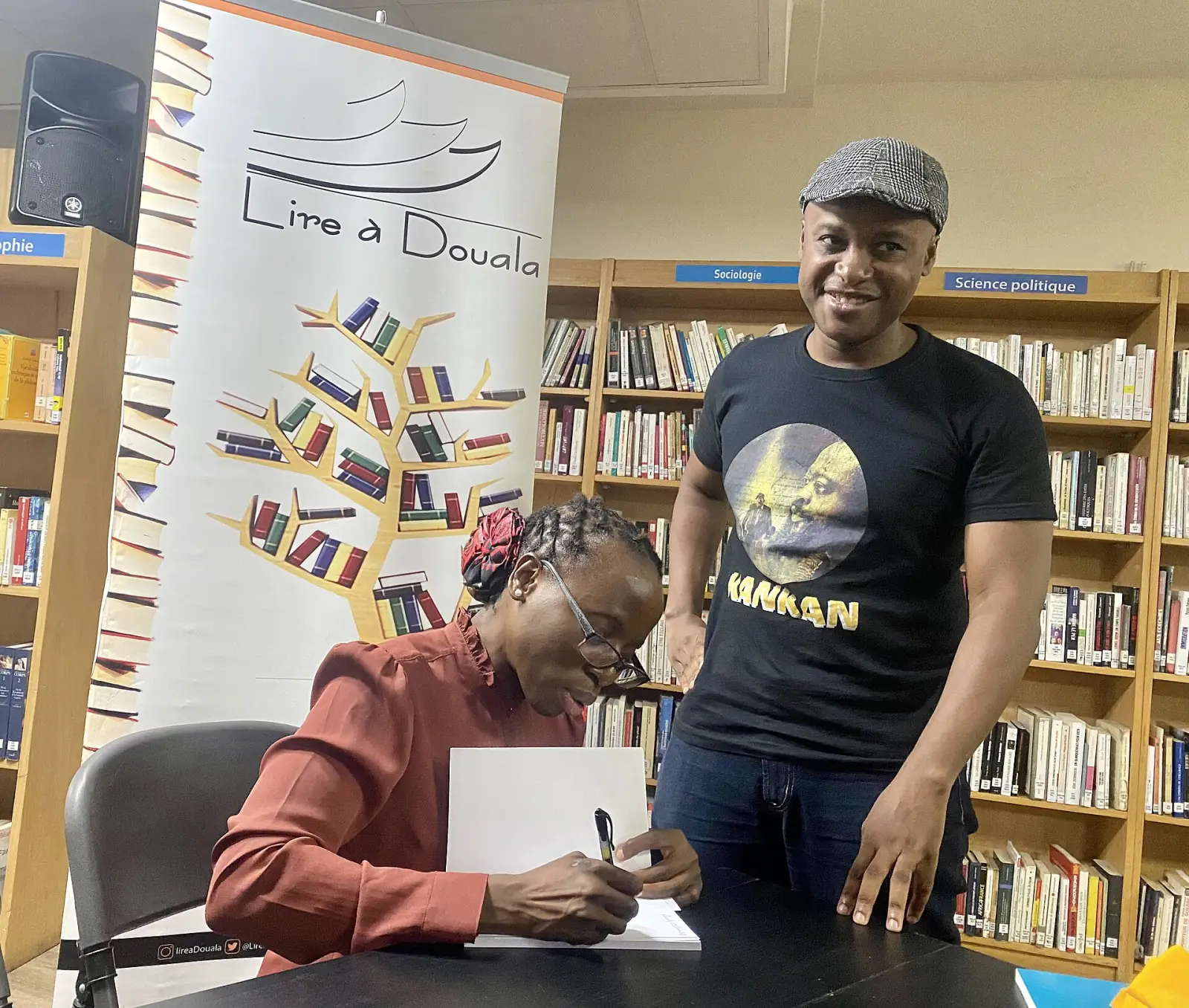
Author signing a book in a Douala bookshop in front of shelves

Legal deposit is the compulsory submission of copies of each published work, under Law No. 2000/05. It makes it possible to build the country’s written memory and to produce the national bibliography. The Directorate of Books and Reading is responsible for monitoring the application of legal deposit legislation; the publisher or printer deposits the required copies before the book goes on sale.

Economy

The book economy: manufacturing, distribution and readers

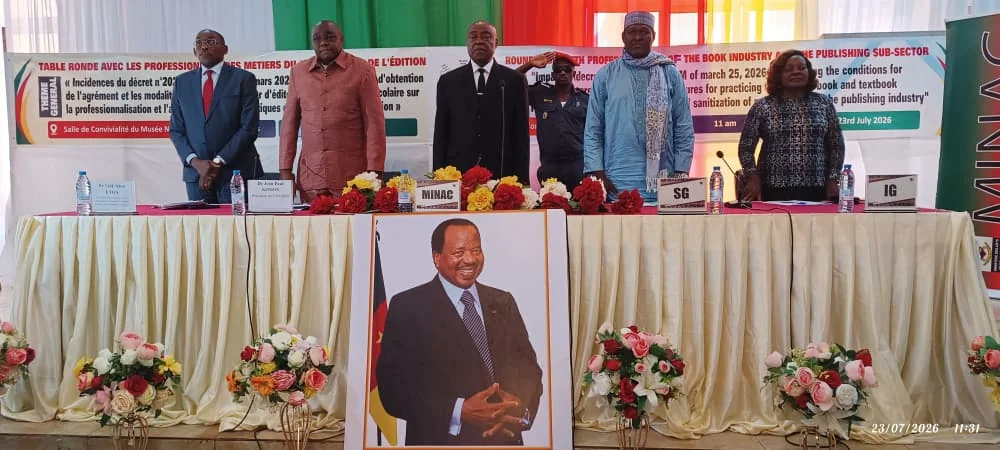
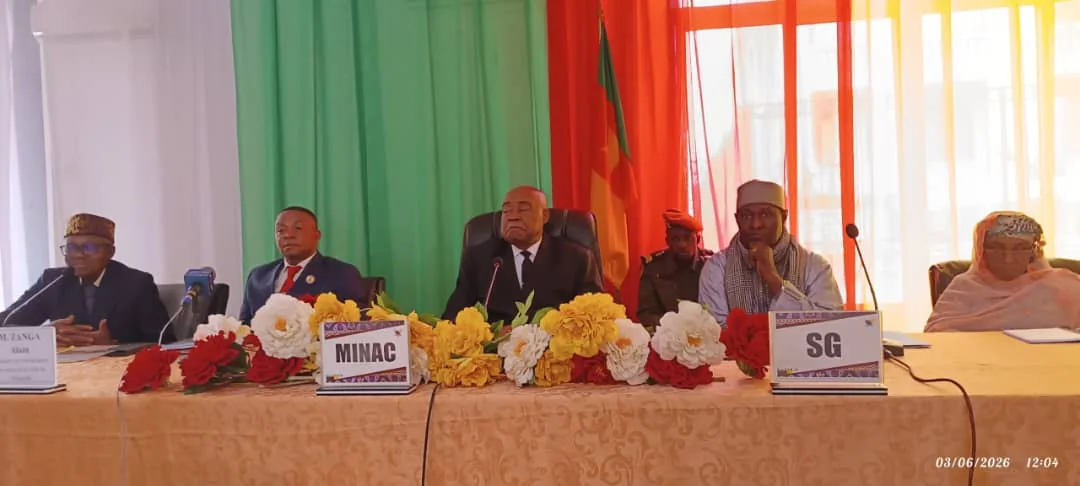
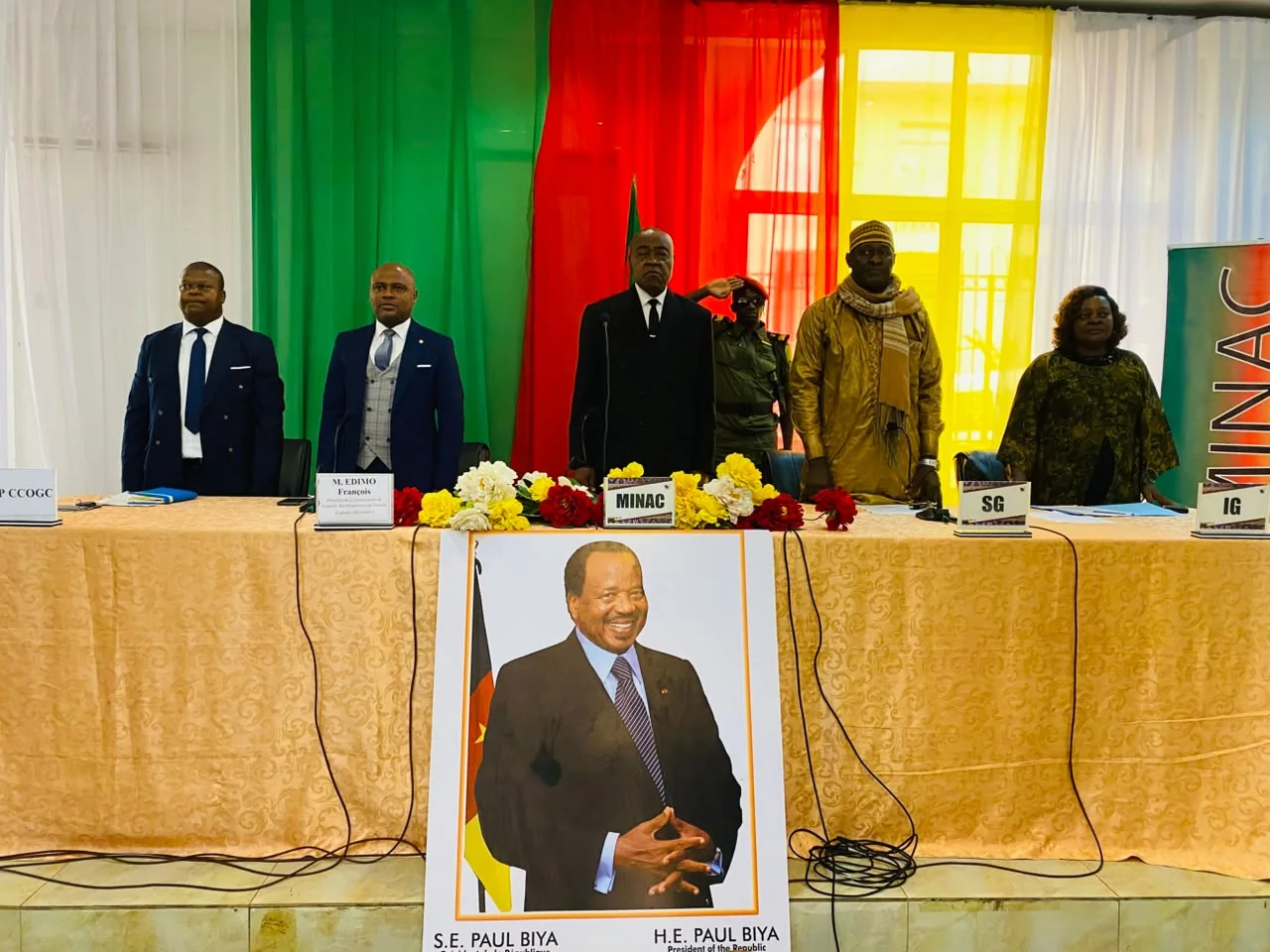
Five officials stand behind a conference table decorated with flowers and a portrait of the Head of State, at a round table on the publishing sector.

The Cameroonian book faces well-known challenges: the cost of paper and printing, a limited number of booksellers, irregular distribution channels, competition from imports and piracy. On the other hand, school demand, the rise of digital and the dynamism of young readers open up prospects. The directorate conducts studies on reading and the book economy and supports production, dissemination and distribution.

Publishing support funds, sector statistics and the fight against piracy are the main levers. Publishers would do well to diversify: e-books, audiobooks, regional co-publishing.

Step by step

From manuscript to reader

Write and proofread

Finish the manuscript, have it proofread and corrected, then keep a dated version to prove your priority.

Find a publisher

Send a short file: letter, summary, excerpt and biography; target houses whose catalogue suits you.

Sign the contract

Read the assignment clauses, the royalty rate, the duration and the print run carefully before signing.

Produce the book

Corrections, layout, cover, printing: the schedule is set with the publisher and the printer.

Comply with legal deposit

Submit the copies required by law and assign the ISBN before the book goes on sale.

Distribute and meet readers

Present the book in bookshops, libraries and at the fair, then build a press kit.

To explore

The book in other sections

Testimonials

The voices of books

“
The bibliobus arrived in our village one morning; the children read until evening, and the school has since set up its own reading corner.
A school headteacher, Mengong
Libraries
“
Publishing is a profession: proofreading, layout, printing, distribution. Legal deposit is part of the routine of the house.
An independent publisher, Yaoundé
Publishing
“
The fair allowed me to meet booksellers from several countries and to sell my first copies beyond my own town.
A novelist, Douala
Book fair
“
Our bookshop now offers online orders, but the bookseller’s advice remains what readers come looking for.
A bookseller, Bafoussam
Bookshop
To download

Resources for authors and publishers

“Overseeing the enforcement of legal deposit legislation.”

Missions of the Directorate of Books and Reading
Glossary

The words of books and reading

Legal deposit

Compulsory submission of copies of every published work.

CREPLA

Regional centre for the promotion of books in Africa, an institution under the Ministry’s supervision.

Mobile library

Mobile library serving remote areas.

ISBN

Standardised international number that identifies a book.

Publisher

Professional who selects, produces and promotes books.

Bookseller

Trader who sells and advises on books.

Self-publishing

Publication of a work by the author himself or herself.

Series editor

Person in charge of a series of works in a publishing house.

National bibliography

List of works published in the country, compiled through legal deposit.

Print

Number of copies printed in one edition.

To act

The schemes for books

Register a work

Date your manuscript or published work and make it easier to collect your rights.

Register

Publishing support fund

Support for publishers for production, distribution and participation in fairs.

See the funds

Model contracts

Publishing and assignment contract templates to secure the author-publisher relationship.

Consult

Deposit of a work

An online procedure to deposit your work and receive an acknowledgement of receipt.

Deposit
On the site

Extend your discovery of books and reading

Resources

Useful links for books

Stakeholders

Who supports books and reading?

Key facts

Book missions at a glance

FieldDirectorate actionToolsWho it is for
PublishingSupport and control of publishing activitiesMap of publishing houses, advicePublishers, printers, authors
BooksellingPromotion of the profession and monitoring of distributionMap of bookshops, trainingBooksellers, distributors
LibrariesCoordination of the national networkMobile libraries, reading centres, equipmentCommunes, schools, readers
Legal depositControl of the application of the lawDeposit of copies, national bibliographyPublishers, printers
CareersPromotion and trainingInternships, integration, further trainingLibrarians, documentalists
FairsOrganisation and supportFairs and trade shows, SIILYProfessionals and general public
Journey

The book through the decades

Before writingStorytellers and the spoken word

Tales, epics and proverbs are passed down orally, forming the foundation of literature.

1960sThe first novels and textbooks

The first publishing houses and school textbooks establish the book in national life.

2000The legal deposit law

The 2000 text organises the submission of works and the building of the country’s written memory.

2010sThe public reading network

Libraries, reading centres and mobile libraries expand, notably in remote areas.

2026SIILY and the mobile library

The Yaoundé fair holds its fourth edition; the mobile library serves the town of Mengong in July.

Questions

Your questions about books

Where do I obtain an ISBN?

The ISBN identifies your book. Contact the Directorate of Books and Reading, which will indicate the body and the documents required. Plan for one ISBN per title and per format (print, digital).

What is legal deposit?

It is the compulsory submission of copies of every published book, organised under Law No. 2000/05. It feeds the national bibliography and the country’s memory; the directorate monitors its application.

Where can I find a library?

In the public network: municipal libraries, reading centres, the national library, and bibliobuses in remote areas. The map of libraries is kept by the directorate and the regional delegations.

How can I get the mobile library to visit my commune?

Write to the directorate, indicating the commune, the school or relay association, the desired dates and a local contact. In July 2026, the mobile library served Mengong; each tour requires preparation with the relays.

How do I publish my first book?

Have the manuscript proofread, target suitable publishers, and demand a written contract. Self-publishing remains possible, but you must handle manufacturing, the ISBN, legal deposit and distribution yourself.

How can I take part in SIILY?

Contact the fair’s organisers, who publish the conditions for participation: stand, book signing, round table. The fourth edition takes place in Yaoundé in 2026; professionals can also meet the Ministry there.

How can illegal photocopying be countered?

Report illicit copies, inform your readers and get in touch with a collective management society. The page on the fight against piracy details the reporting procedure and the penalties.

Who supports publishers?

The Directorate of Books and Reading supports the production, dissemination and distribution of books. Publishing support funds and presence at fairs complete this support; CREPLA operates at regional level.

Contact

Write to the Ministry: Literature and books

Specify your question or your project.

Competent directorate

Write to Books and Reading

Address

Directorate of Books and Reading
Ministry of Arts and Culture
Quartier du Lac – Ministerial Zone
P.O. Box 1053 Yaoundé, Centre Region, Cameroon

Reach us

+237 6 51 70 58 41

contact@minac.gov.cm

Opening hours

Monday to Friday, 8 am to 4 pm

Read the legal deposit law

Consult all the Ministry’s legislative texts, including the one on legal deposit.

Legislative texts
WhatsApp