Coat of arms of CameroonMinistry of Arts
and Culture
Republic of Cameroon
My procedures
Home
Minister’s message
News
Press releases
Cultural calendar
Official speeches
Press review
Photo library
Video library
Calls for projects
Job vacancies
Public procurement
Newsletter
Frequently asked questions
Site map
Contact
Press area
Podcast “The Voice of Culture”
Legal notices
Privacy policy
Cookies and trackers
The Ministry
Missions and responsibilities
Organisation
Organisation chart
Minister’s Office (Cabinet)
Management team
General Secretariat
General Inspectorate
Central directorates
Regional Delegations
Institutions under supervision
Legislative texts
Regulatory texts
Sector strategy
Major projects
Budget and reports
Partners
Careers
Archives
Institutional communication
Quality and accessibility
Arts
Visual and plastic arts
Visual arts
Performing arts
Theatre
Dance
Music
Literature and books
Cinema and audiovisual
Photography
Fashion and design
Digital arts
Art crafts
Artists’ directory
Residencies
Prizes and awards
Arts education
Urban arts
Heritage
Tangible heritage
Intangible heritage
UNESCO sites
National museums
Listed monuments
National inventory
Palaces and chiefdoms
Archaeology
Linguistic heritage
Oral traditions
Traditional know-how
Restitution of cultural property
Fight against illicit trafficking
Listing and protection
Conservation and restoration
Heritage Days
Cultural landscapes
Industries
Music and recording
Cinema
Publishing and books
Digital arts
Fashion and creativity
Crafts
Cultural tourism
Funding for culture
Support funds
Incubators
Cultural entrepreneurship
Culture Observatory
Vocational training
Studies and reports
Sector statistics
Export and outreach
Intellectual property
Copyright
Legal framework
Copyright and neighbouring rights
Collective management societies
Register a work
Licences
Private copying
Fight against piracy
Model contracts
Social status of artists
Mediation
Disputes
Training
Fee scales
Register of works
Contact
Digital neighbouring rights
Public domain
Festivals
National calendar
Ngondo
Nguon
Écrans Noirs
Heritage Days
Music Day
Regional festivals
Fairs and exhibitions
Biennials
National competitions
Cultural days
Organise a festival
Event grants
Ticketing
Archives
Volunteering
Diaspora festivals
Regions
Adamawa
Centre
East
Far North
Littoral
North
North-West
West
South
South-West
Cultural map
Regional Delegations
Traditional chiefdoms
National languages
Cultural routes
Decentralised cooperation
Regional observatory
Cooperation
UNESCO
Francophonie (OIF)
African Union
Commonwealth
CEMAC
Bilateral cooperation
Cultural agreements
Professional organisations
Scholarships
Artist exchanges
Cultural years
Diaspora
Funded projects
Embassies
Technical partners
International restitution
International monitoring and calls
Services
Artist card
Show authorisation
Filming authorisation
Festival authorisation
Deposit of a work
Export of works of art
Listing of a property
Grant application
Association accreditation
File tracking
Forms
Fees
Opening hours and addresses
Reporting
Online help
My account
One-Stop Shop
Arts

Music

Traditional music, contemporary music, orchestras, studios and rights: everything you need to know to compose, record, perform and make a living from music in Cameroon.

Updated on 6 November 20264 sub-pages
Collective management societies5
National Ensemble (decree)2014
Major music genres recorded12
Recording studios listed85
Music in Cameroon

A country that resonates with a thousand rhythms

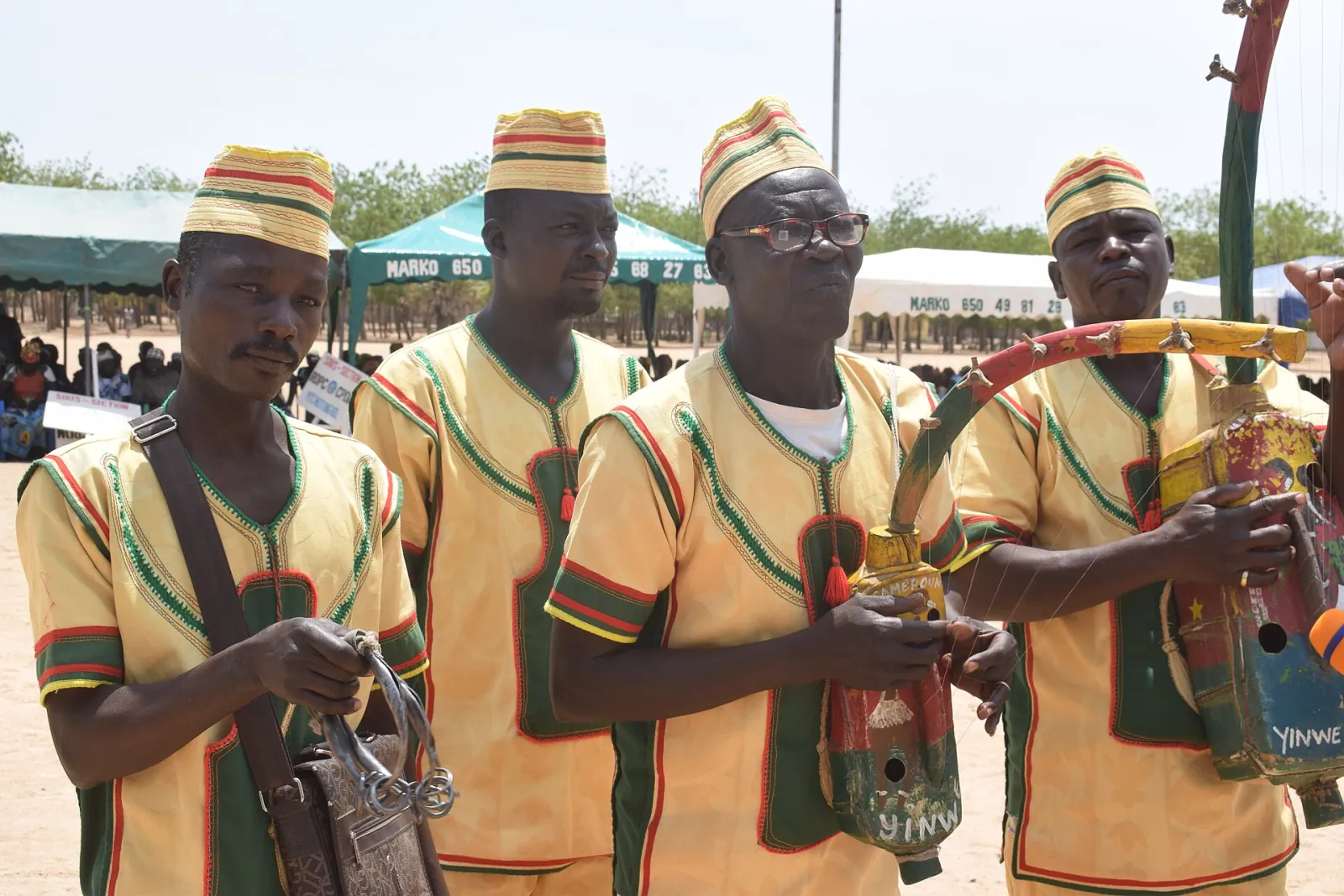
Griots in matching tunics playing stringed instruments at a public event

The makossa of the Duala, the bikutsi of the Beti, the assiko of the Bassa, the flutes of the Mandara Mountains, the horns of the lamidate courts, the balafons of the forest: Cameroonian music is a mosaic of more than two hundred and fifty traditions. It accompanies births, mourning, enthronements, football matches and neighbourhood evenings, and today it travels well beyond the borders.

The National Ensemble, created by decree in 2014, has the missions of rehabilitating, enriching and promoting Cameroon’s artistic heritage and of spreading national culture through festivals and shows. The Ministry also protects the rights of authors-composers and performers, managed collectively, and supports orchestras, studios and festivals.

  • Traditional music inventoried by region
  • A contemporary scene ranging from makossa to hip-hop
  • Copyright managed by five collective management societies
Traditional music
Sound heritage

The traditional music of the ten regions

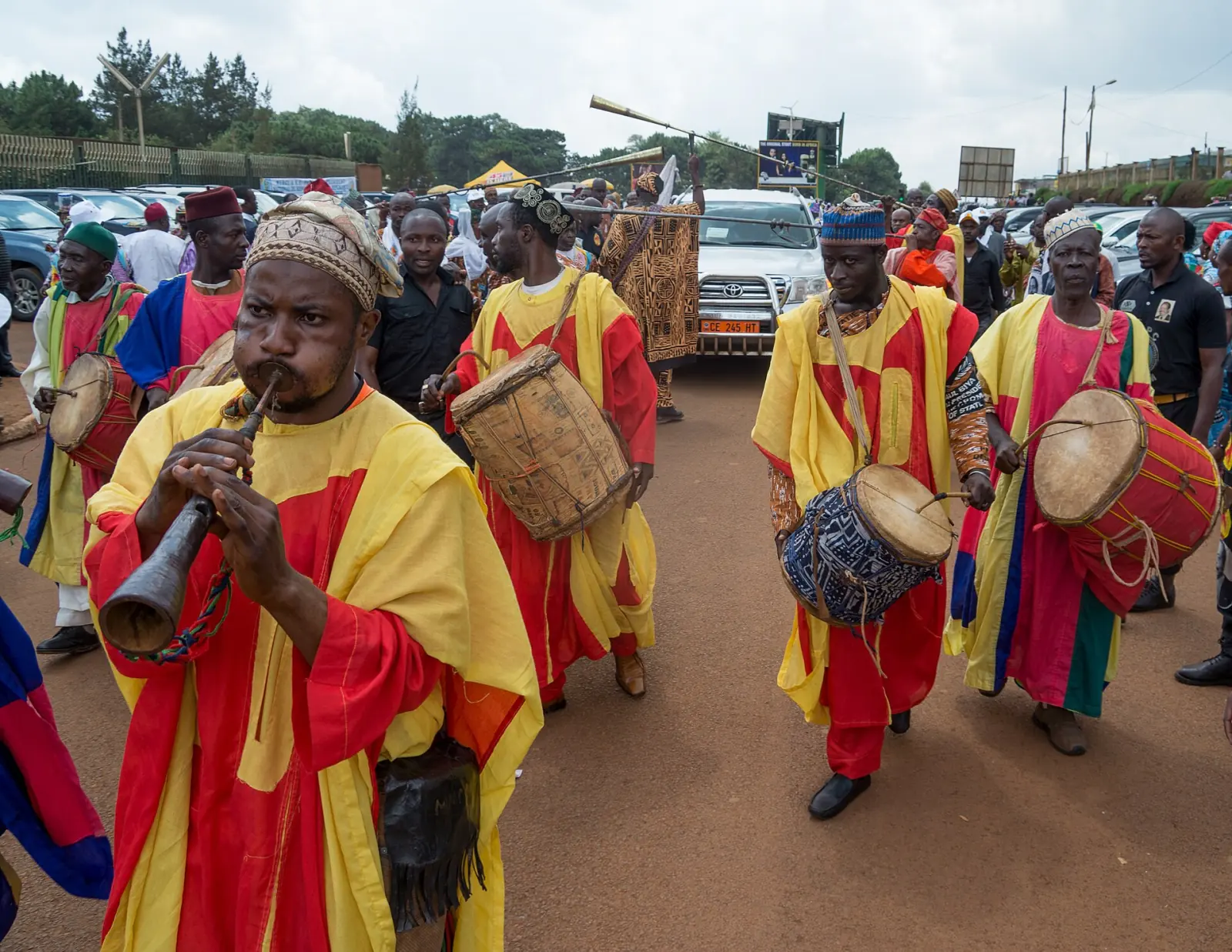
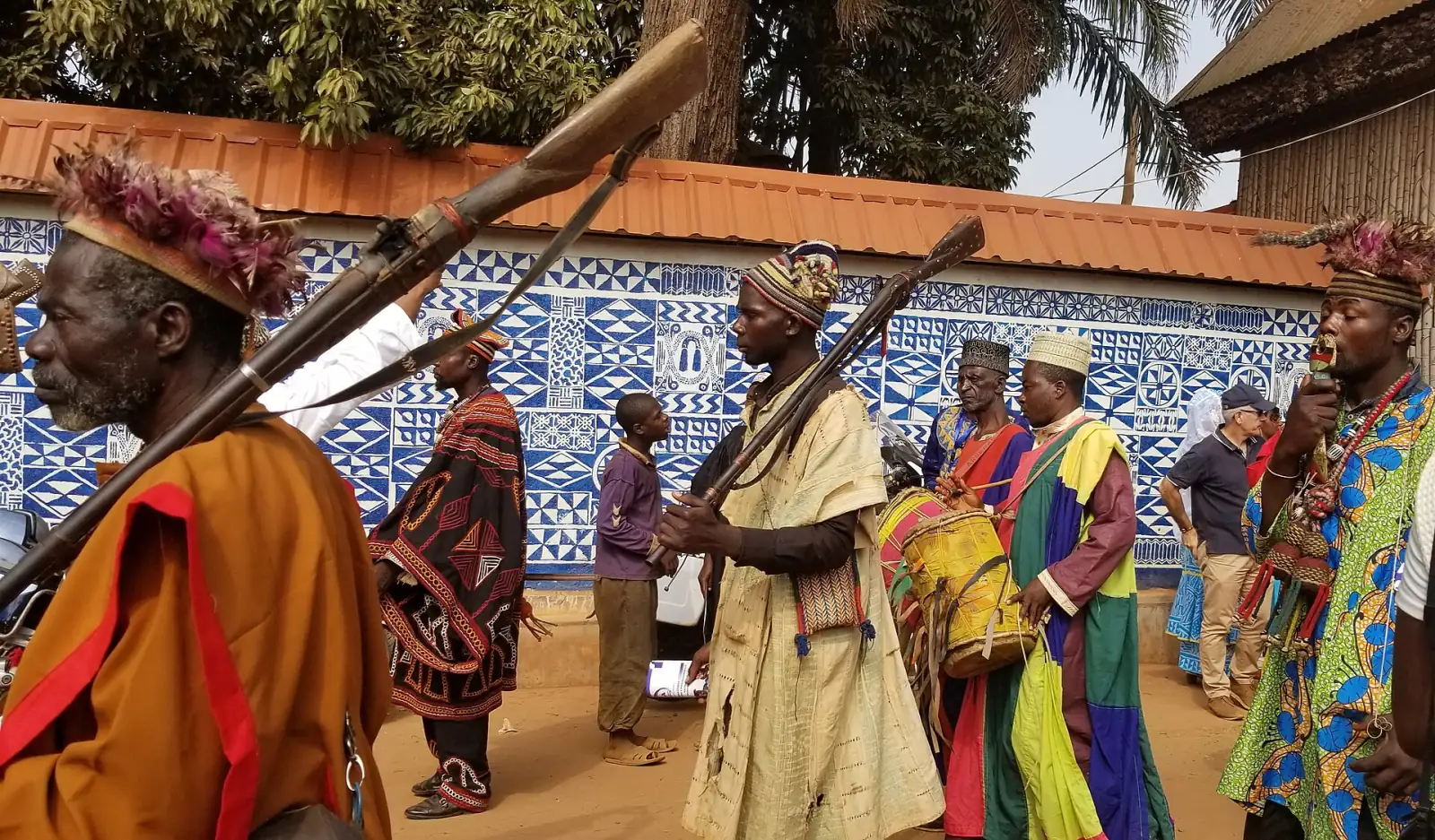
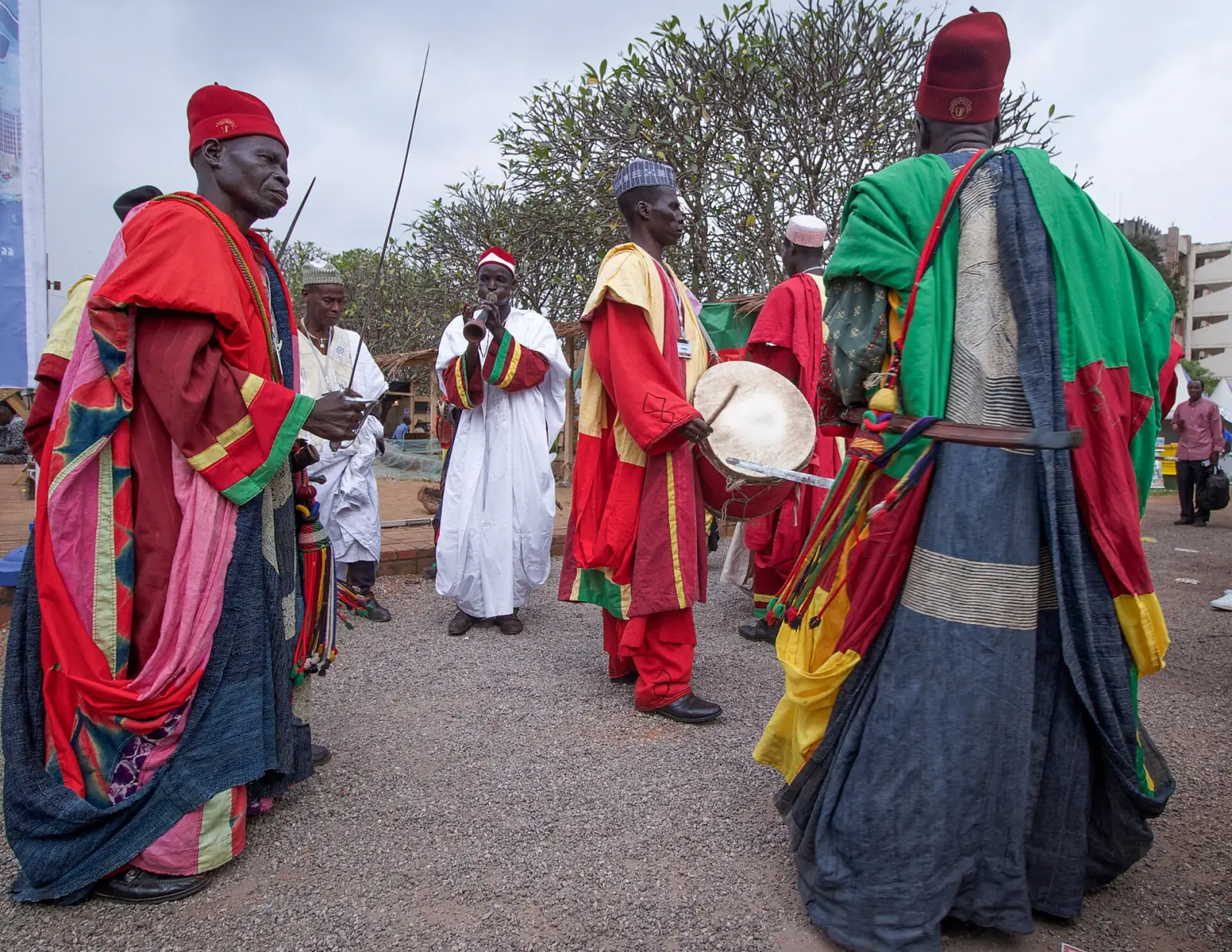
Procession of musicians in red and yellow robes with horns and drums

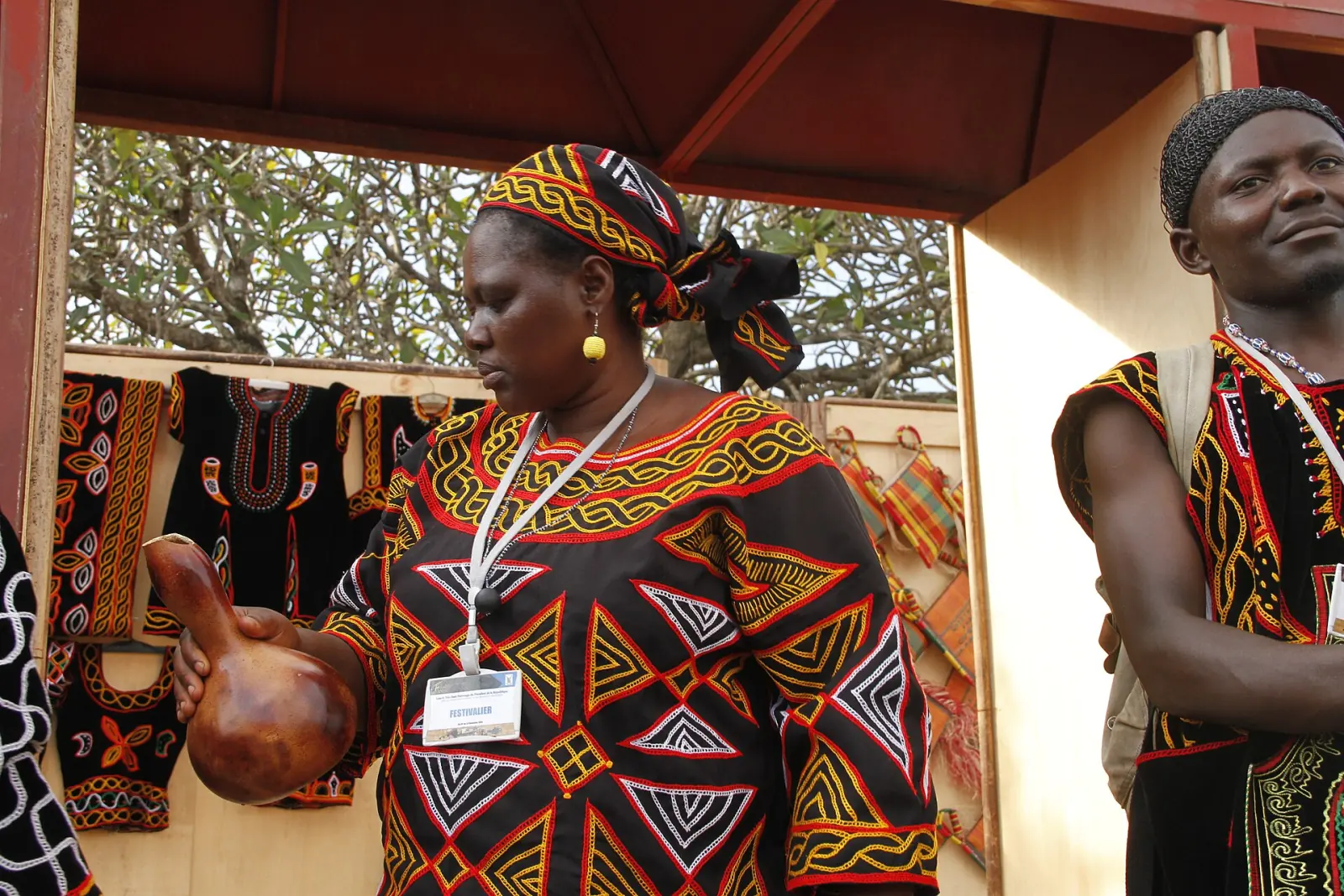
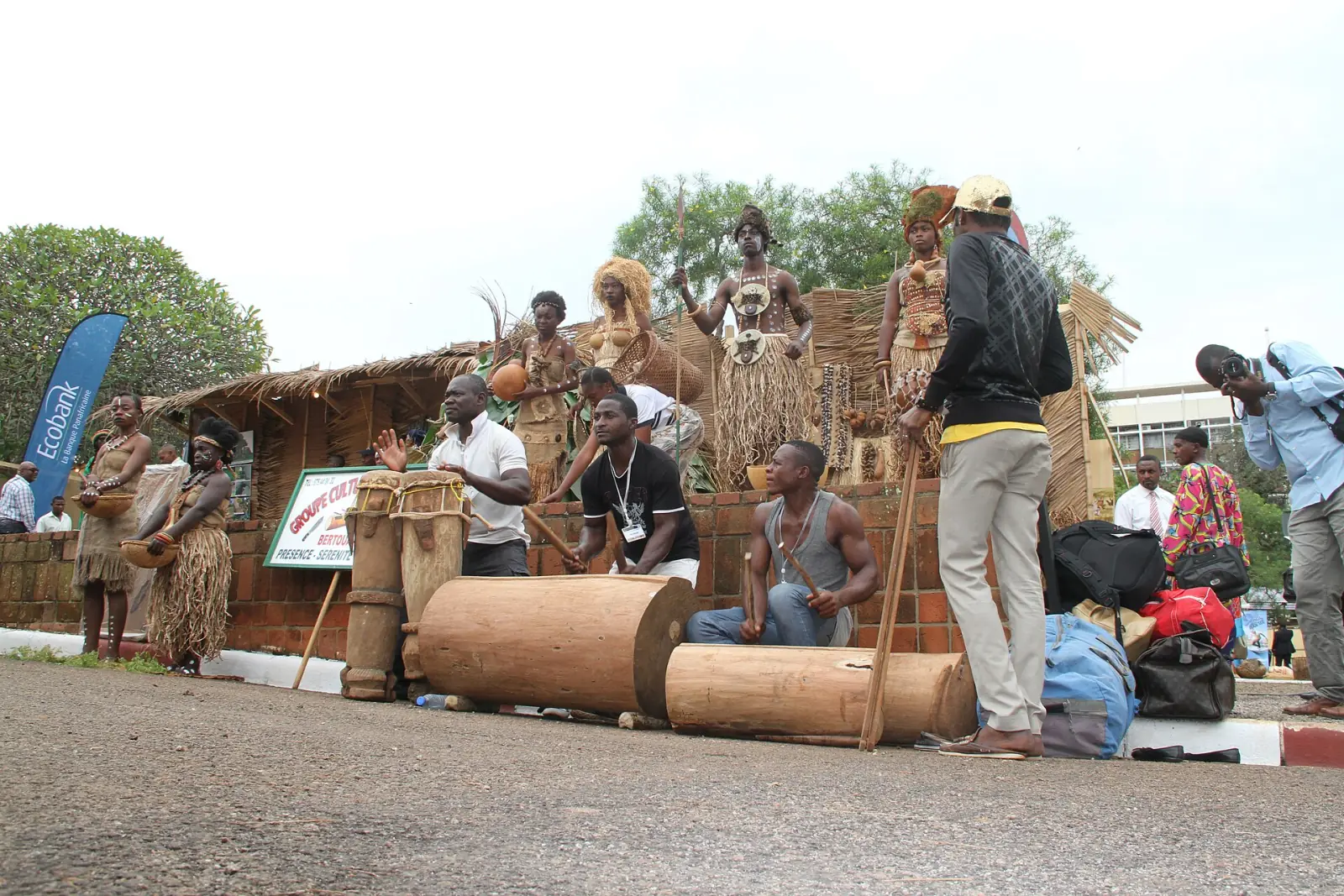
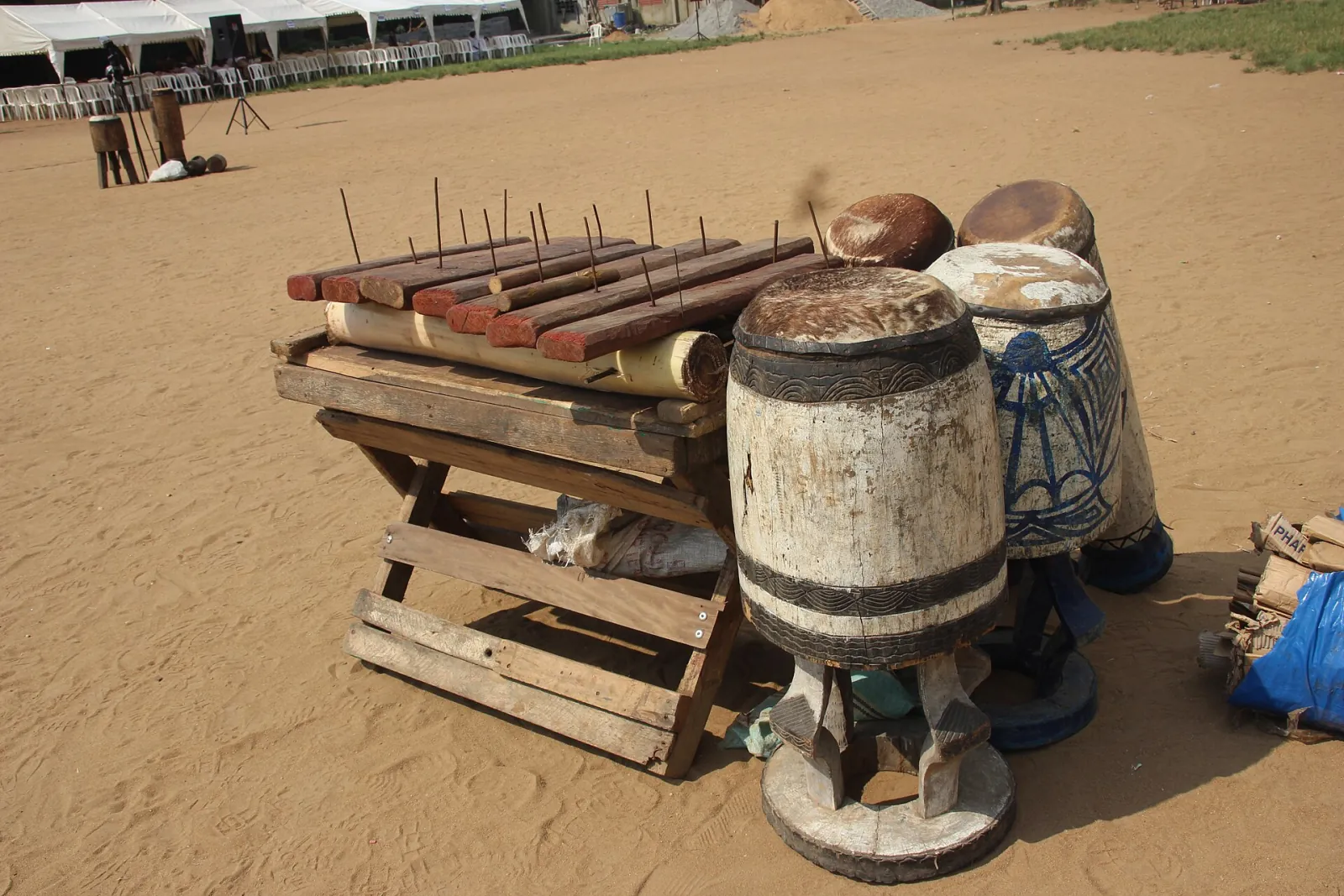
Each cultural area has its own sounds. In the Centre and South, the Beti, Bulu and Fang peoples play the mvet, a stringed instrument associated with a sung epic, as well as the balafon, slit drums and rattles. On the coast, the Duala, Bakoko and Bassa use drums, bells and fishing songs; the music of the Ngondo accompanies the great annual festival. In the Grassfields, courts and mask societies use drums, horns, double bells and xylophones, while the Bamoun kingdom preserves a highly codified court repertoire.

The North and the Far North

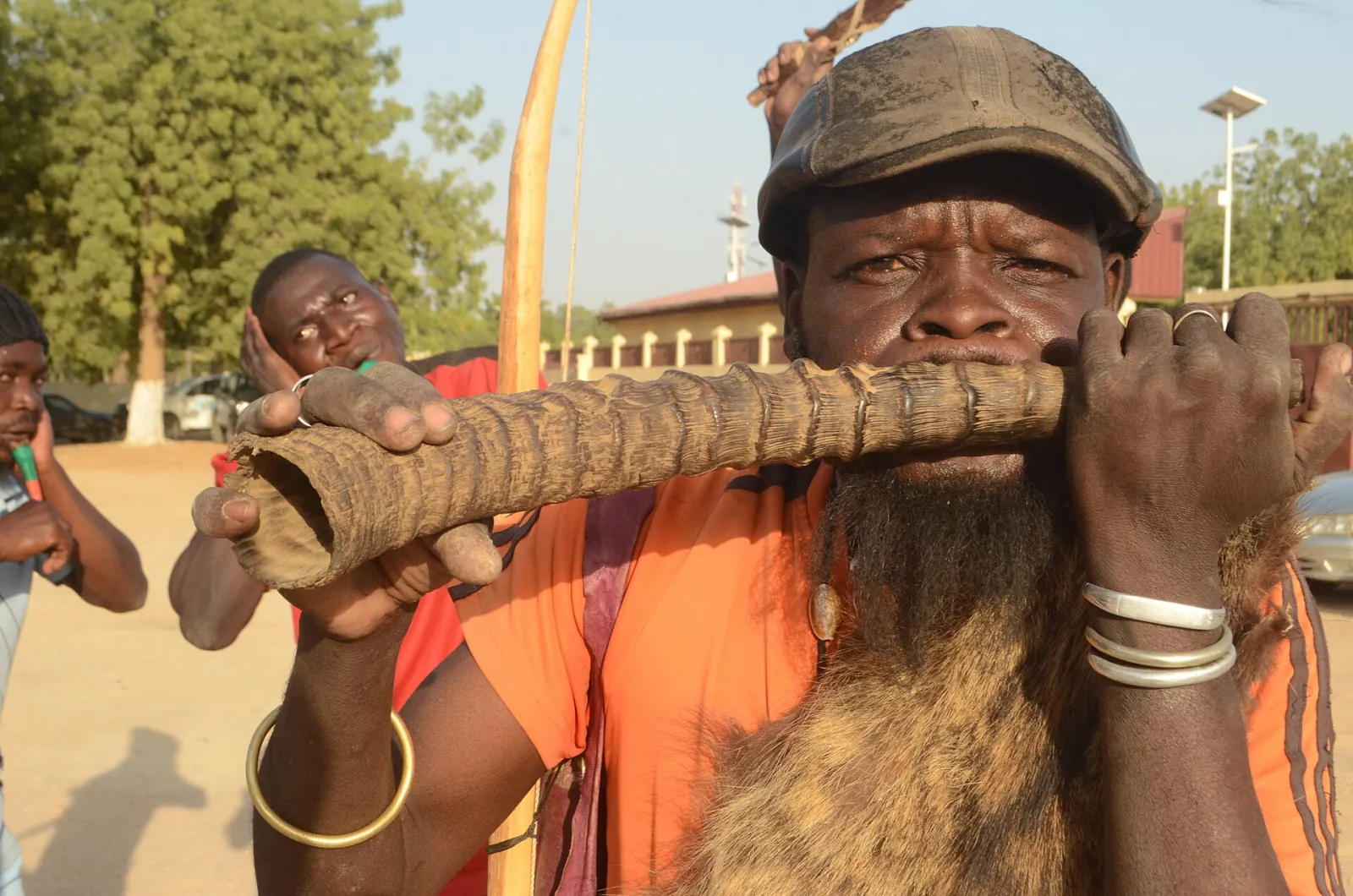
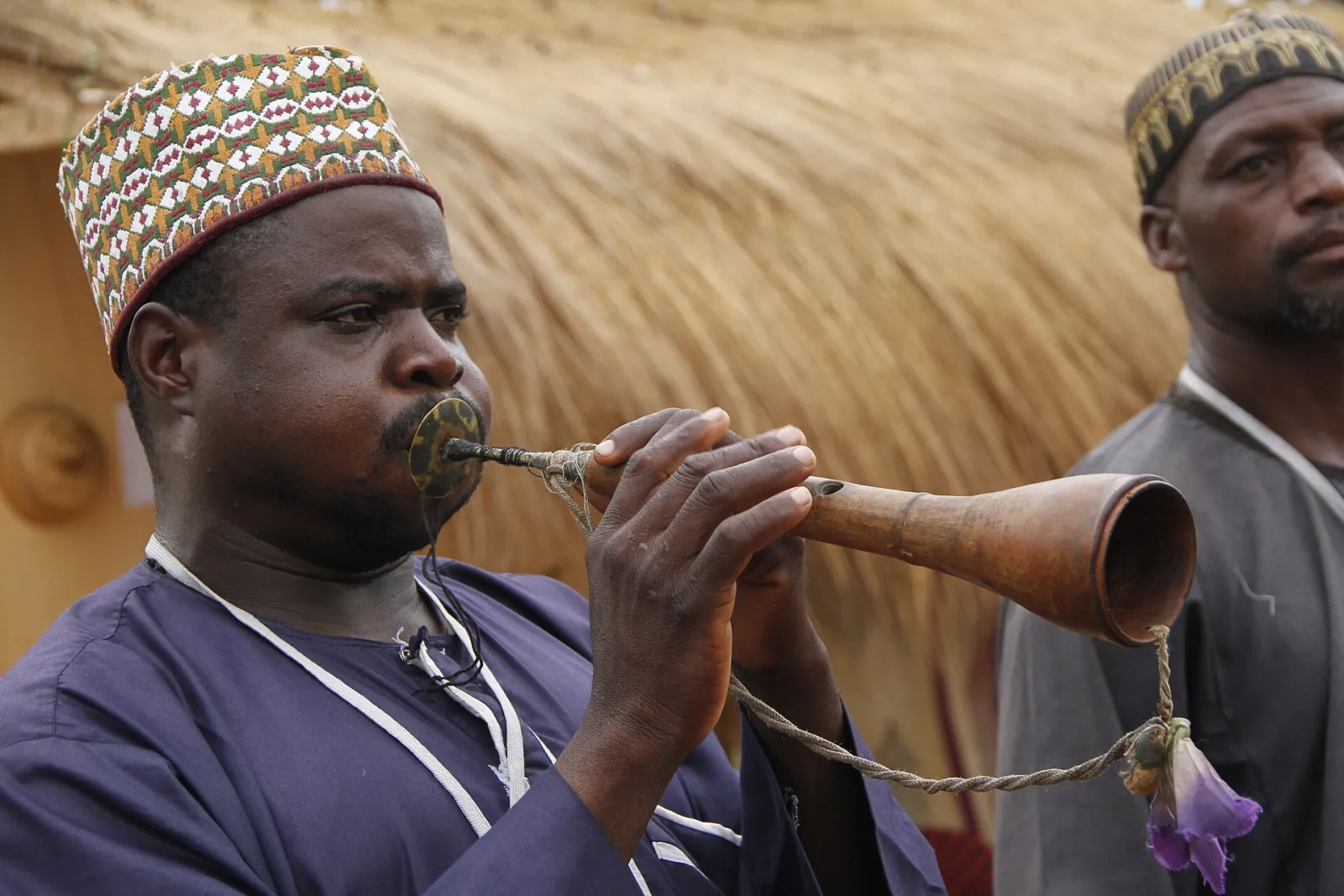
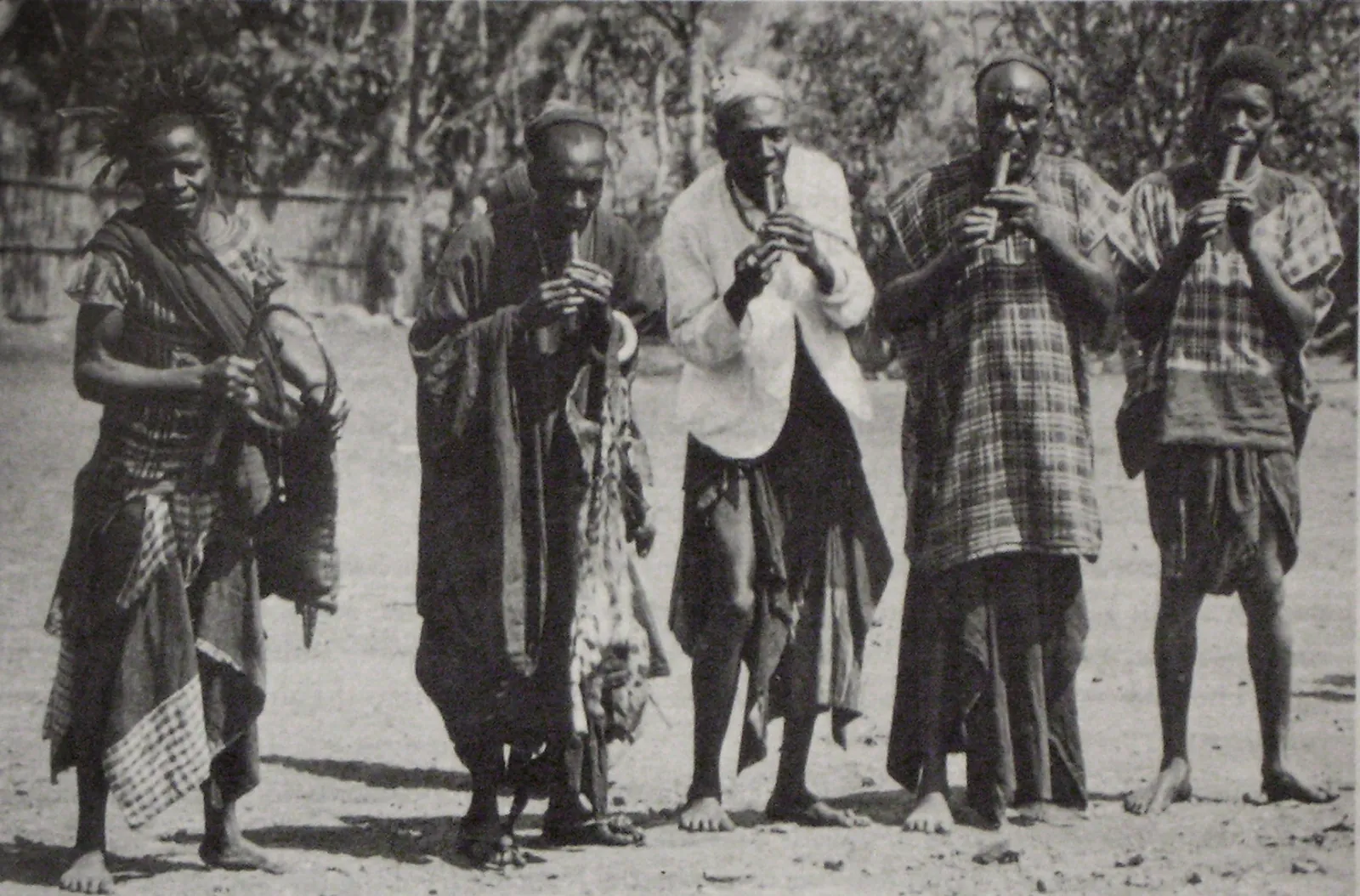
In the plains and mountains of the North, the lamidates have their horns and oboes, the peoples of the Mandara Mountains their flutes and stone drums; praise-singers, accompanied by a plucked-string lute, pass on the memory of families.

Social functions

Traditional music is never merely entertainment: it announces an event, serves as a drummed language between villages, structures an initiation, sets the rhythm of collective work. The custodians of this knowledge are often master musicians recognised by the community.

ℹ️
Custodians and communities

A master musician, a village association or a chiefdom can request the inclusion of its repertoire in the inventory by contacting the regional delegation of its region.

Contemporary scene

Contemporary music, from makossa to hip-hop

Rapper on stage with a bass guitarist during a concert at the Institut Français

The contemporary scene is one of the most dynamic in Central Africa. Makossa, born in Douala, and the ambasse bey of the coast have conquered African dance floors; bikutsi, which grew out of Beti women’s singing, was electrified in Yaoundé before becoming a national genre; Bassa assiko and mangambeu, the rhythms of the Grand Nord, bend skin, afro-pop, gospel, rap and hip-hop in French, English or pidgin make up a teeming landscape.

Music venues

Cabarets, concert bars, cultural centre halls, festival stages, churches (very important for gospel), neighbourhood squares for open-air concerts: each venue offers a different audience. Every public concert requires a show authorisation.

Making a living from music

An artist combines concerts, copyright, digital sales, event sound systems, teaching, film or advertising music. The Music and records section details the industry’s value chain; the export page presents schemes for touring abroad.

Ensembles

Orchestras and musical ensembles

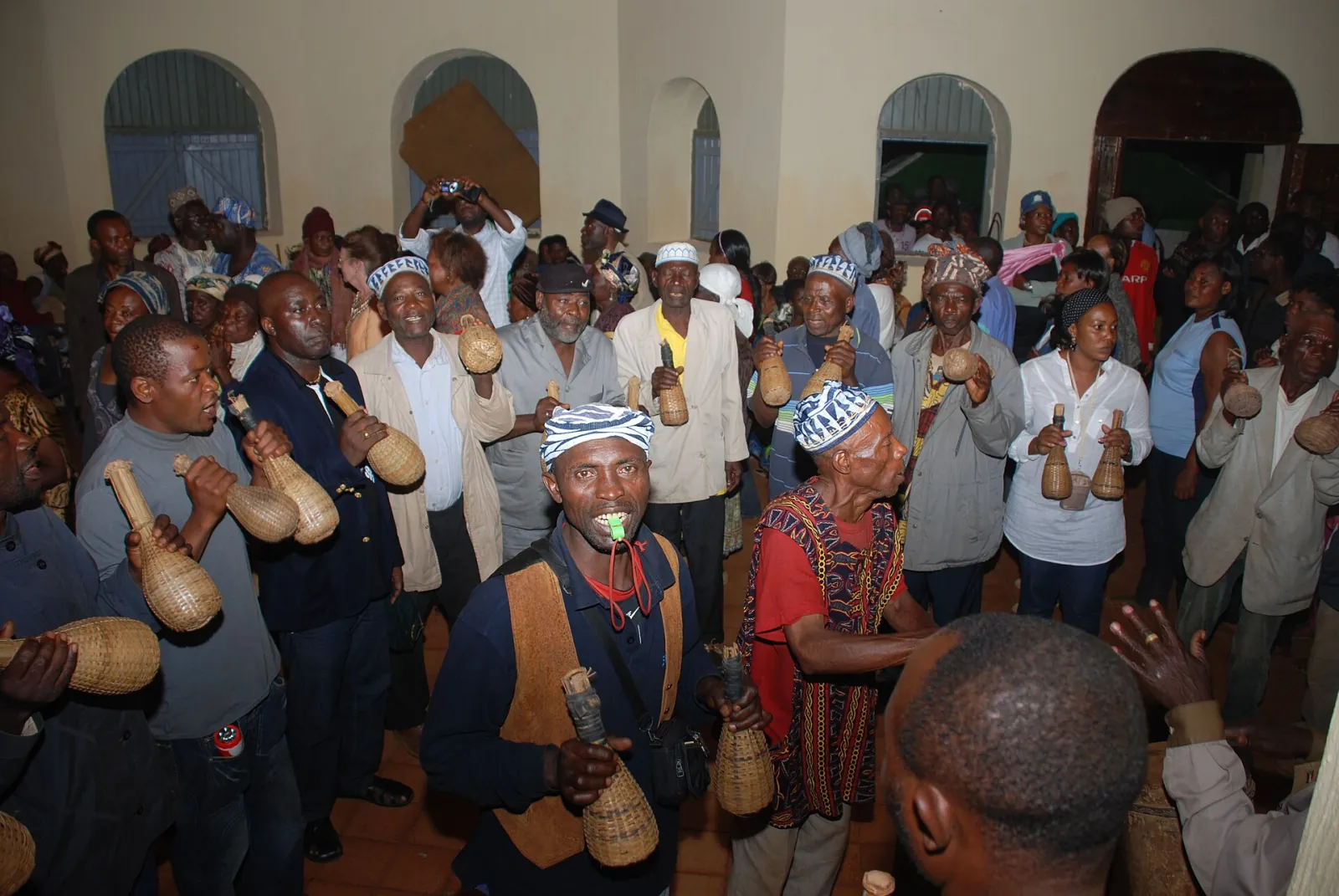
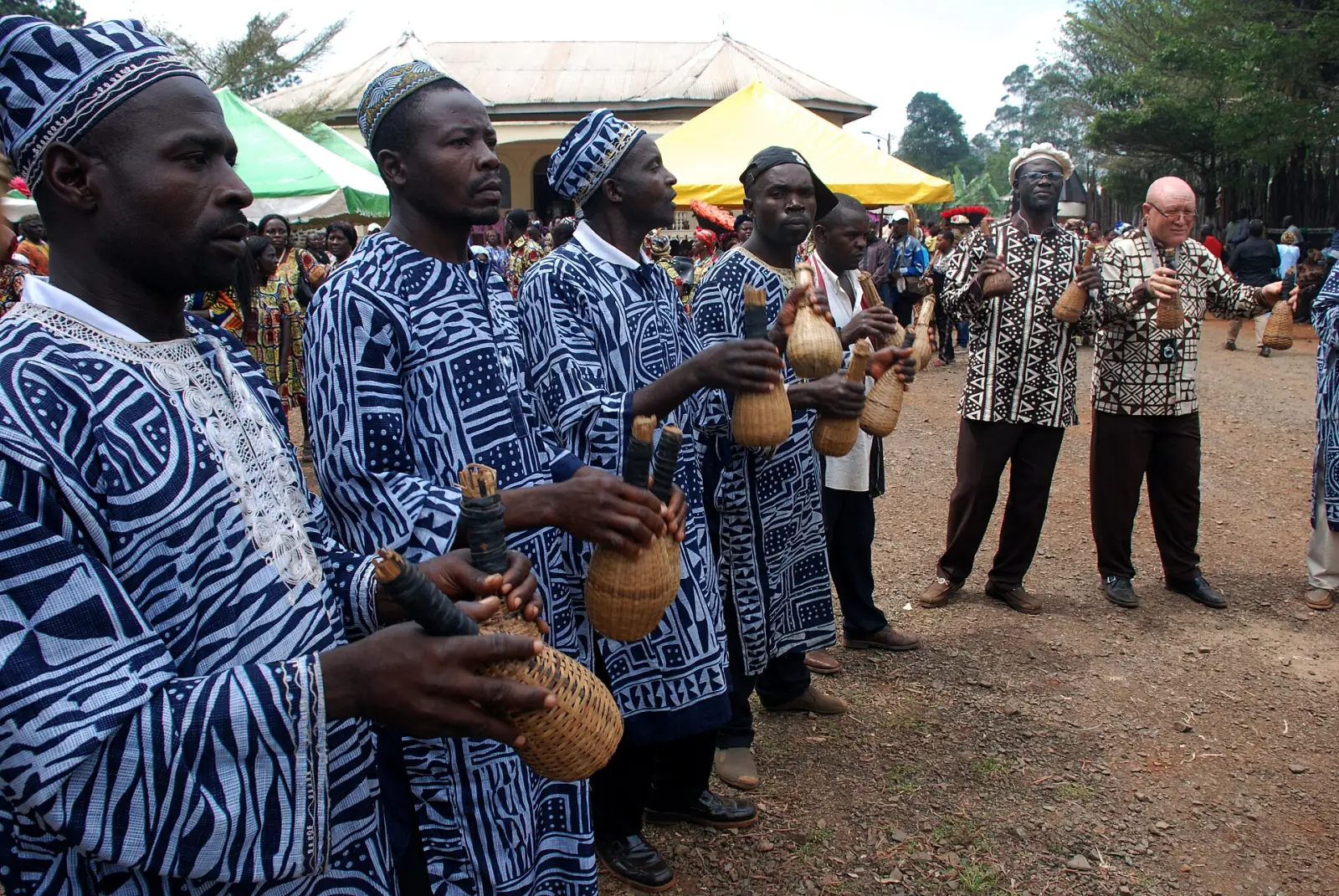
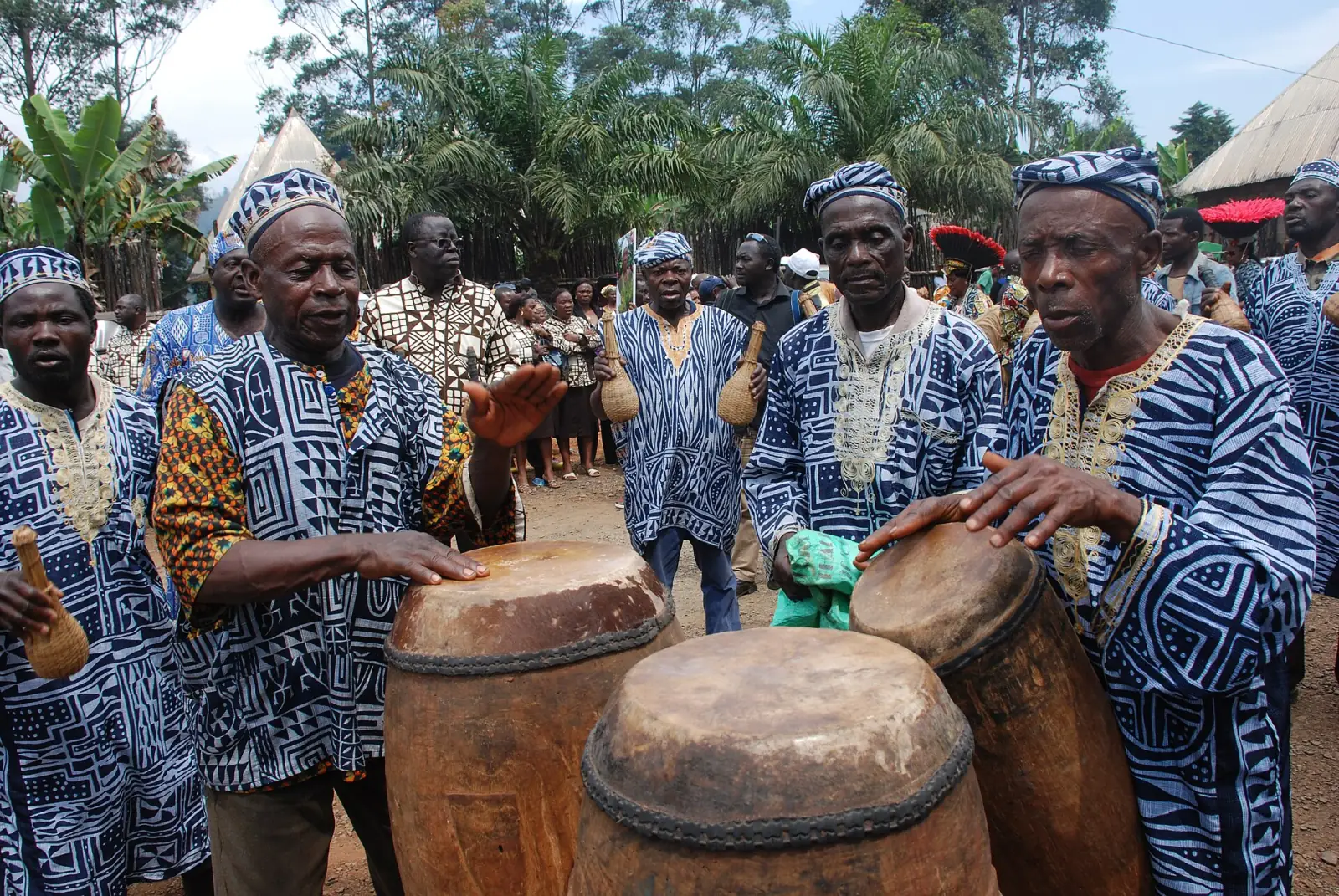
Crowd of musicians playing resonant gourds in a large hall

Cameroon’s orchestral landscape is rich and varied. The National Ensemble, a public institution with management autonomy, is the reference ensemble: it rehabilitates and enriches the country’s artistic heritage, enlivens official ceremonies and spreads national culture through festivals and shows. It is among the institutions under supervision of the Ministry and is based in Yaoundé.

Orchestras and brass bands

Alongside the National Ensemble there are variety orchestras, jazz big bands, military, school and gendarmerie brass bands, polyphonic choirs very present in churches, and traditional chiefdom orchestras.

Roles and professions

  • Conductor, musical director, arranger and composer;
  • Instrumentalists, choristers and solo singers;
  • Tour manager, sound engineer and stage technician;
  • Manager, distribution officer and producer.

Orchestras need rehearsal spaces: houses of culture can make some available. Professional musicians can apply for the artist card.

Production

Recording studios and the record value chain

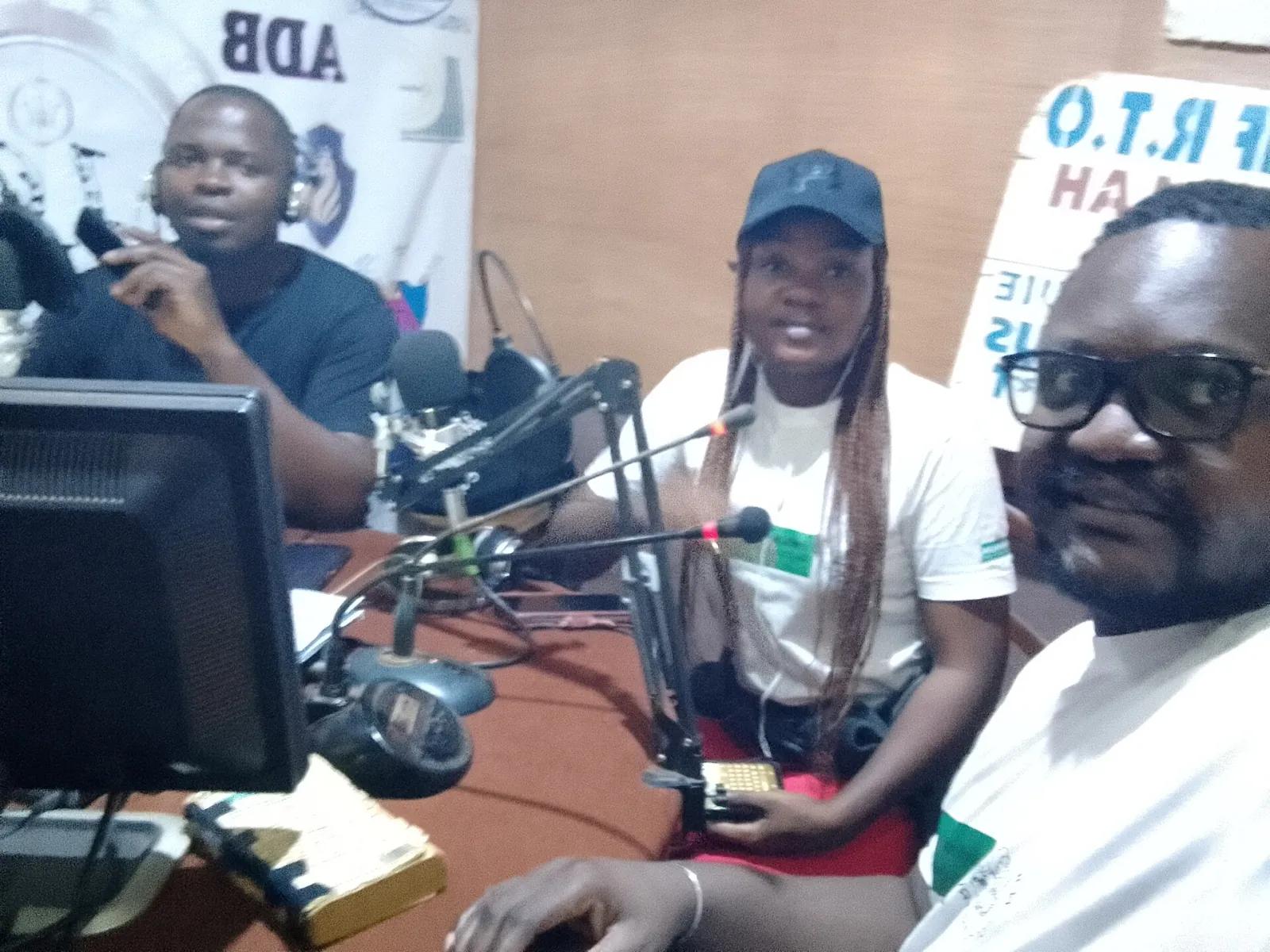
Presenters and guests around the microphones of a radio studio in Dschang

Studios are the heart of the music industry. From the small neighbourhood booth equipped with a computer to the professional studios of Douala and Yaoundé, they produce demos, albums, theme tunes, jingles and film music. Many studios are also informal schools where young people learn mixing, programming and arrangement.

From studio to distribution

A recording becomes a phonogram as soon as it is fixed. It then goes through mixing, mastering, pressing or uploading, then broadcast on radio, in concert and on platforms. Recordings fall under copyright and neighbouring rights; the work is declared, as explained on the declaring a work page, and legal deposit applies to the media.

Choosing a studio well

  • Check the equipment, the quality of soundproofing and technical follow-up;
  • Ask for a written quotation and a contract specifying ownership of the tapes and files;
  • Plan the sharing of rights between author, composer, arranger and producer;
  • Make sure the samples used are cleared of rights.

A sector to be structured

The Ministry encourages studios to declare themselves and register in the artists’ directory, and support funds can help with their equipment. The fight against piracy protects creators’ income.

Rights

Musicians’ rights and collective management

Small band of musicians and singers in matching outfits on a cabaret stage

Each track involves several rights holders. The author and the composer hold the copyright; the performer and the phonogram producer have neighbouring rights. Each time a work is played in public, broadcast on radio, television or online, a fee is due.

Collective management societies

Five societies are responsible for collecting and distributing these fees, by category of works. A musician joins the society matching their activity, registers their titles and receives periodic distributions. The collective management societies page explains the procedures.

Step by step

From composition to listening audiences

Compose and write

Finish the track, note the credits of each contributor (author, composer, arranger) and agree each person’s share in writing.

Declare the work

Submit your work declaration to date your creation and join the collective management society of your category.

Record

Choose a studio, sign a quotation specifying ownership of the files, record, mix and have your track mastered.

Produce and distribute

Decide on the format (single, EP, album), organise physical and digital distribution, and deposit the media with legal deposit.

Perform

Prepare your technical sheet, apply for show authorisation and schedule your concerts with venues and festivals.

Collecting your rights

Send your concert programmes and radio plays to your society to be paid at distributions.

Key facts

Major genres at a glance

GenrePeople or region of originCharacteristic instrumentsUsual occasions
MakossaDuala, LittoralBass, guitar, brass, percussionDance evenings, concerts, weddings
BikutsiBeti, Centre and SouthFast guitars, electrified balafon, percussionFestivals, evenings, night gatherings
Assiko and mangambeuBassa, Centre and LittoralDrums, guitar, brassFunerals, village festivals
Ambasse beyLittoral, South-WestAcoustic guitar, percussionNeighbourhood festivals, weddings
MvetBeti, Bulu, FangMvet harp-zither, voiceNight gatherings, epic narratives
Court musicWest, North-West, BamounHorns, bells, drumsChiefdom ceremonies
Lamidate musicAdamawa, NorthHorns, oboes, drumsReceptions, religious festivals
Gospel and choral songsAll regionsChoirs, keyboards, drumsServices, concerts, festivals
Hip-hop and rapMajor citiesTurntables, machines, voiceBattles, concerts, studios
Musicians’ voices

They live music

“
I learned the balafon from an elder of the village; today I teach children who had never touched a traditional instrument.
A balafon player
Eastern Region
“
Joining a management society finally allowed me to receive the royalties for my tracks played on the radio and in bars.
A singer-songwriter
Douala
“
Our neighbourhood studio has launched more than sixty groups; with approval and legal advice, we now work with clear contracts.
A sound engineer
Yaoundé
“
Gospel gives us a stage every Sunday, but the Music Festival opened up a wider audience in the city.
A choir leader
Bafoussam
To download

Resources for musicians

“Spreading national culture through festivals, shows and exhibitions: such is the course set for the National Ensemble.”

Mission of the National Ensemble
Glossary

Music vocabulary

Phonogram

Sound fixation of a performance or other sounds, on a physical or digital medium.

Performer

Artist who sings or plays a work; they benefit from neighbouring rights.

Author-composer

Creator of the lyrics and music of a work, holder of the copyright.

Neighbouring rights

Rights of performers, phonogram producers and broadcasting organisations.

Mvet

Stringed instrument of the Beti, Bulu and Fang peoples, associated with a sung epic.

Balafon

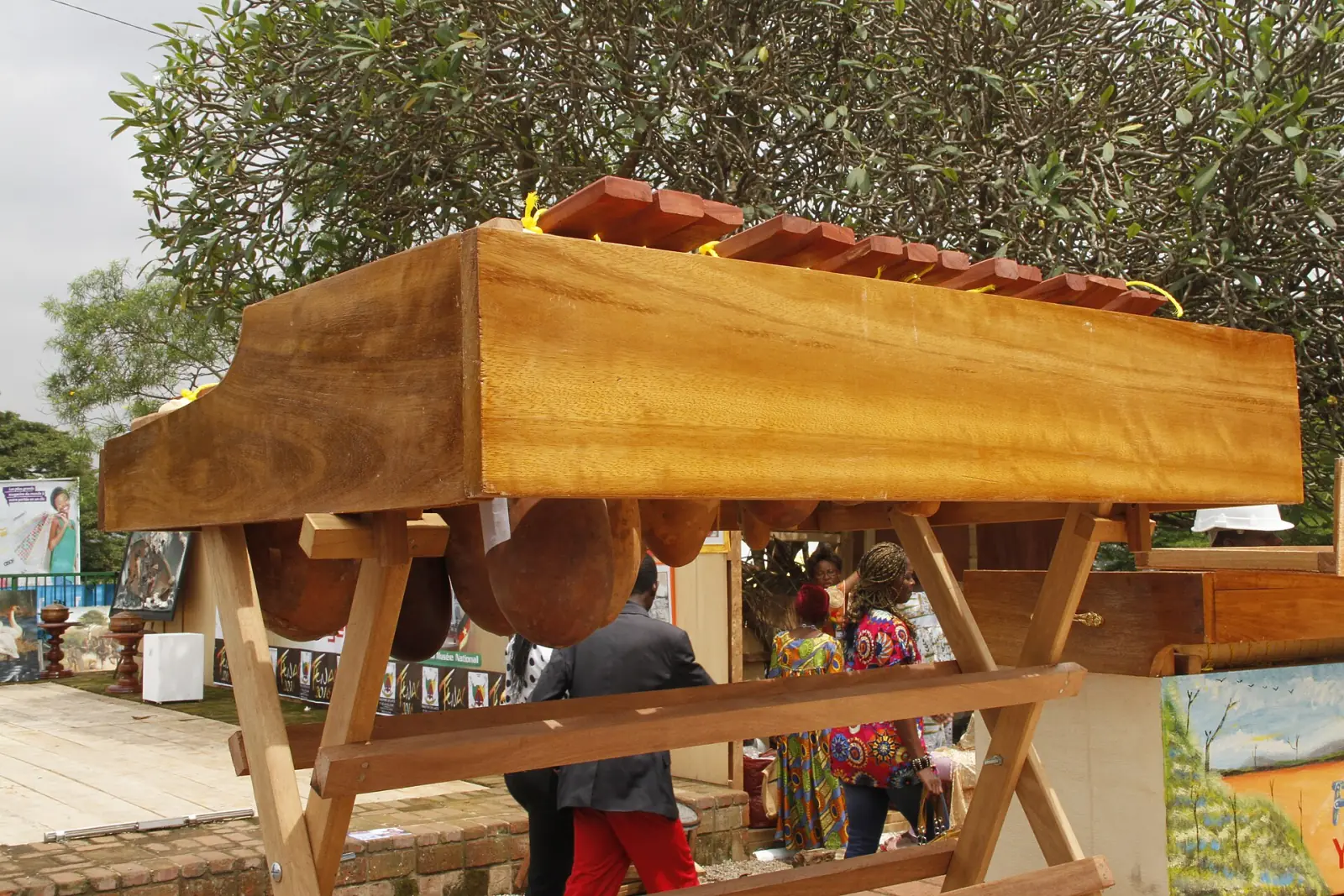
Wooden-bar xylophone mounted on resonators, played in many regions.

Bikutsi

Genre born among the Beti, characterised by fast guitars imitating the balafon.

Makossa

Dance genre from Douala, blending bass, guitar, brass and singing in the Duala language.

Mastering

Final production stage that evens out the volume and sound of a recording.

Rider

List of an artist’s technical and hospitality requirements for a concert.

Collective management

Collection and distribution of fees by a society on behalf of its members.

To act

Music schemes to know

Register a work

Date your musical creation and prepare to join a collective management society.

Register

Show authorisation

Mandatory for every public concert, indoor or outdoor, to be submitted several weeks before the event.

Submit the application

Support for music projects

Support for recording an album, a tour or equipping a registered studio.

Request support

Artist card

Have your status as a professional musician, singer or sound technician recognised.

Apply
On the site

Extend your listening and discovery

Resources

Useful links for music

Stakeholders

Who supports music?

Journey

Cameroonian music through time

Before 1950Village and court music

Drums, horns, harps and songs set the rhythm of rites and chiefdoms; the first choirs appear in the missions.

1950s-1960sCity orchestras

The orchestras of Douala and Yaoundé blend local rhythms, guitar and brass, and enliven the cabarets of the young nation.

1970s-1980sThe golden age of makossa and bikutsi

Studios, records and tours make Cameroonian genres known across the continent and in Europe.

1990s-2000sHip-hop, gospel and new voices

Rap, gospel and afro-pop develop as cassettes give way to CDs and then digital files.

2010sThe National Ensemble decree

In 2014, the National Ensemble is created to rehabilitate, enrich and promote Cameroon’s artistic heritage.

TodayA digital scene

Platforms, music videos and social networks open new audiences to artists; the structuring of the artistic movement continues.

To explore

Music in other sections

Questions

Your questions about music

How can I protect my music tracks?

Declare your works with the Ministry to date your creation, then join the collective management society of your category. Keep your demos, scores and source files, and state clearly each co-author’s share before going online.

Where and how can I perform in concert?

Consult the cultural agenda and festival calls, contact venues and cultural centres, then submit a show authorisation application to the One-Stop Shop. Prepare a technical sheet, a press kit and a presentation video of a few minutes.

Who manages my copyright?

A collective management society, chosen according to your activity (author-composer, performer, producer). It collects fees from radios, televisions, venues and platforms, then pays them to you periodically after deducting its management costs.

Do I need to declare my recording studio?

Yes, it is strongly recommended to declare your activity, keep simple accounts and offer clients written contracts. Registration in the directory makes it easier to connect with artists and opens access to certain training support.

How can I have a traditional repertoire of my community recognised?

Contact the regional delegation. An officer helps describe the repertoire, its occasions, its instruments and its custodians, obtains the community’s consent and adds the entry to the intangible heritage inventory.

Can I sample an existing track?

Only with the written consent of the author, the composer and the producer of the original track. Without authorisation, using an excerpt constitutes infringement. Keep a register of the samples used and retain the licences obtained for each recording.

What should I do if my tracks are pirated?

Gather evidence (screenshots, links, dates), notify your management society and report the facts to the Ministry. Mediation is possible to obtain the removal of content; as a last resort, legal action can be taken.

Can a musician obtain the artist card?

Yes, musicians, singers, composers and sound technicians can apply for it online with supporting evidence of activity: concert contracts, programmes, work declarations or certificates from their management society.

How can I join the National Ensemble?

The National Ensemble recruits according to its artistic needs through auditions and competitions announced on the site. Candidates follow the notices published in the careers and calls for projects sections, and prepare a short programme and an artistic curriculum vitae.

Contact

Tell us about your music project

Describe your organisation, your project and the region concerned: your message is forwarded to the competent directorate, which replies by e-mail.

Competent directorate

Write to the directorate for music

Address

Directorate of the Development and Promotion of the Arts
Ministry of Arts and Culture
Quartier du Lac – Ministerial Zone
P.O. Box 1053 Yaoundé, Centre Region, Cameroon

Reach us

+237 6 51 70 58 41

contact@minac.gov.cm

Opening hours

Monday to Friday, 8 am to 4 pm

A concert to organise?

Submit your show authorisation application online and track it with your file number.

Request an authorisation
WhatsApp