
Wood and sculpture
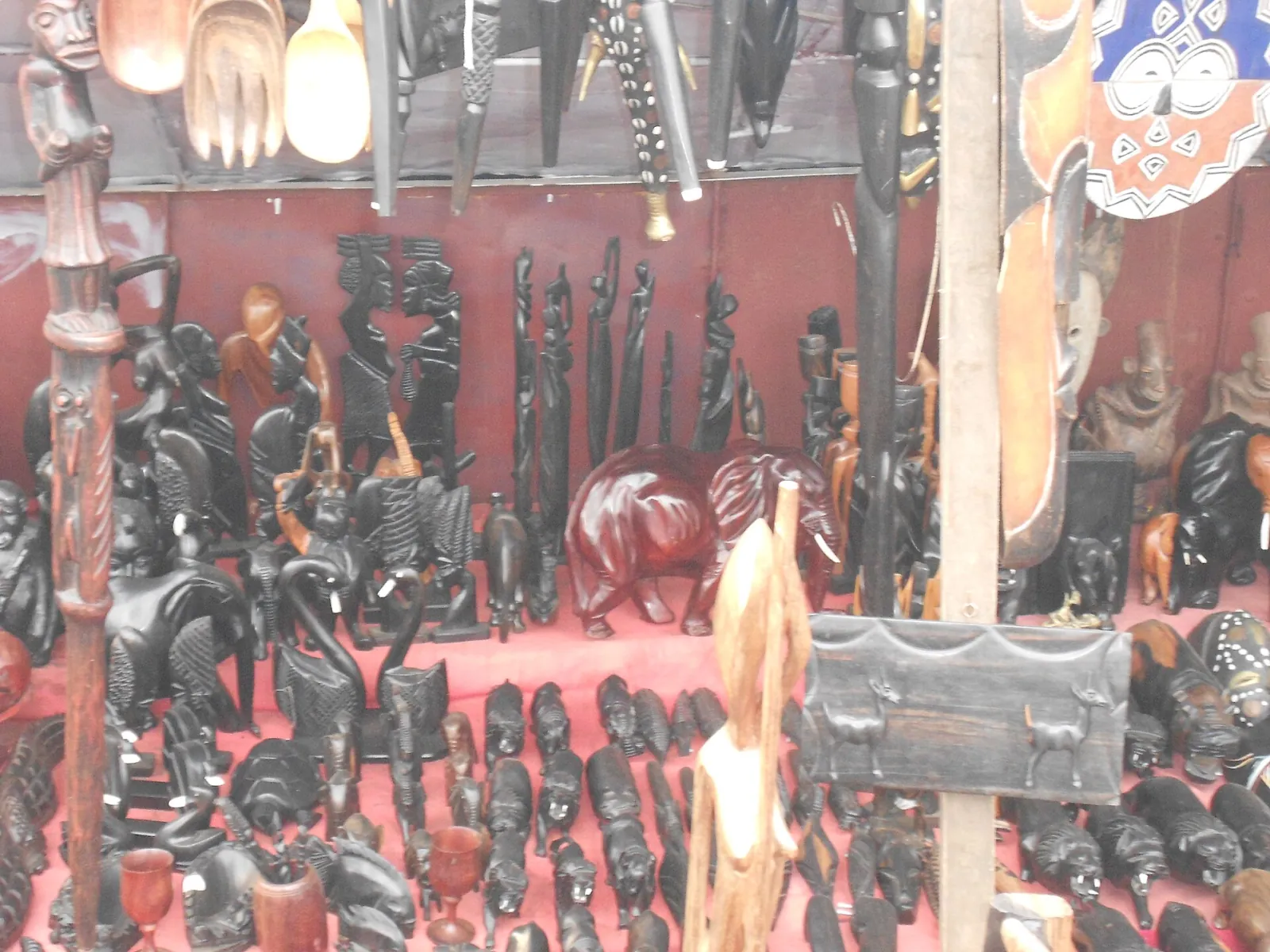
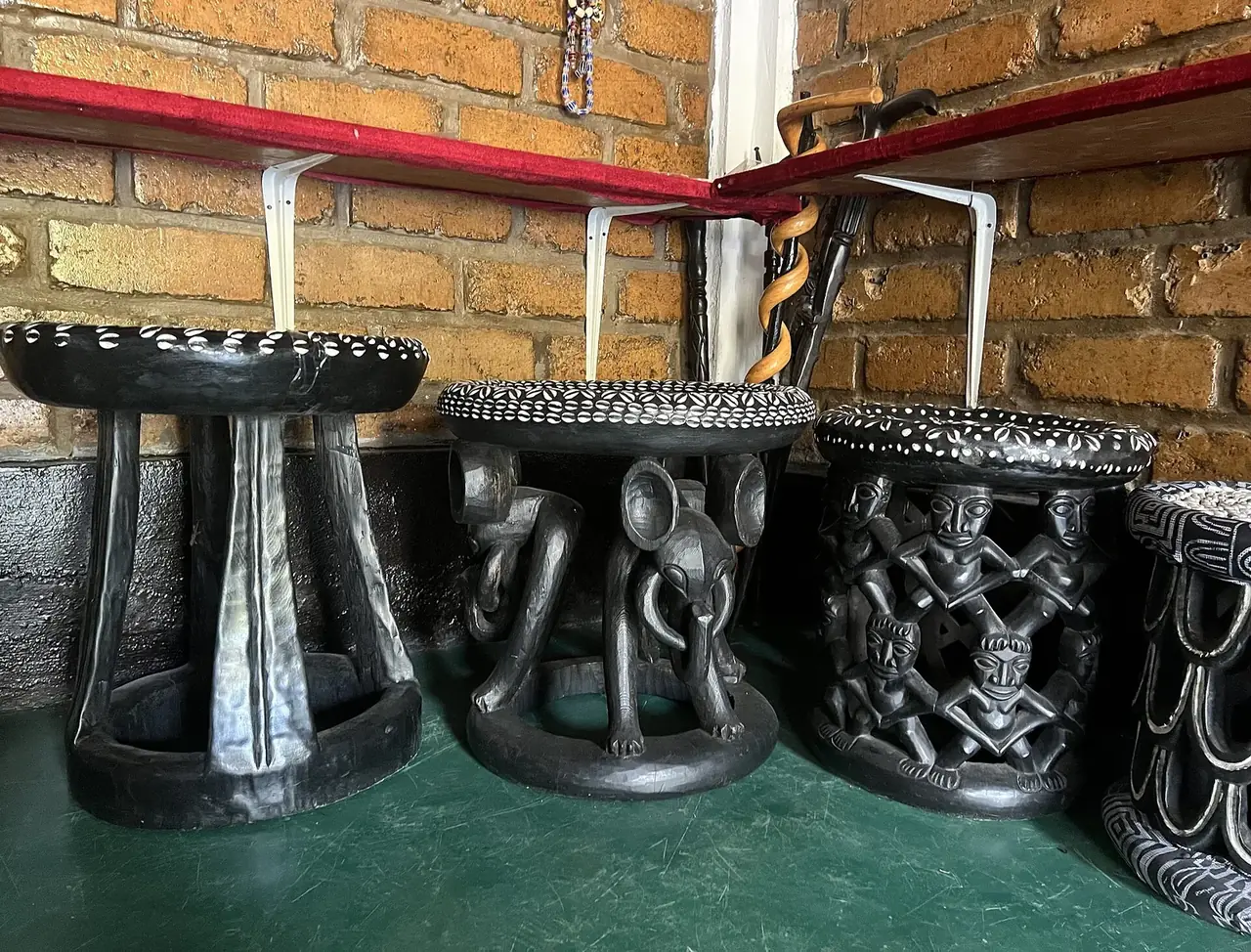
Masks, chiefdom stools, carved doors and statuettes are cut from local woods. The scarcity of some species requires legal and sustainable sourcing.
Sectors, labels, markets and export of Cameroonian artistic crafts: the trades, business models, sales channels and support available to craftspeople and their groups.
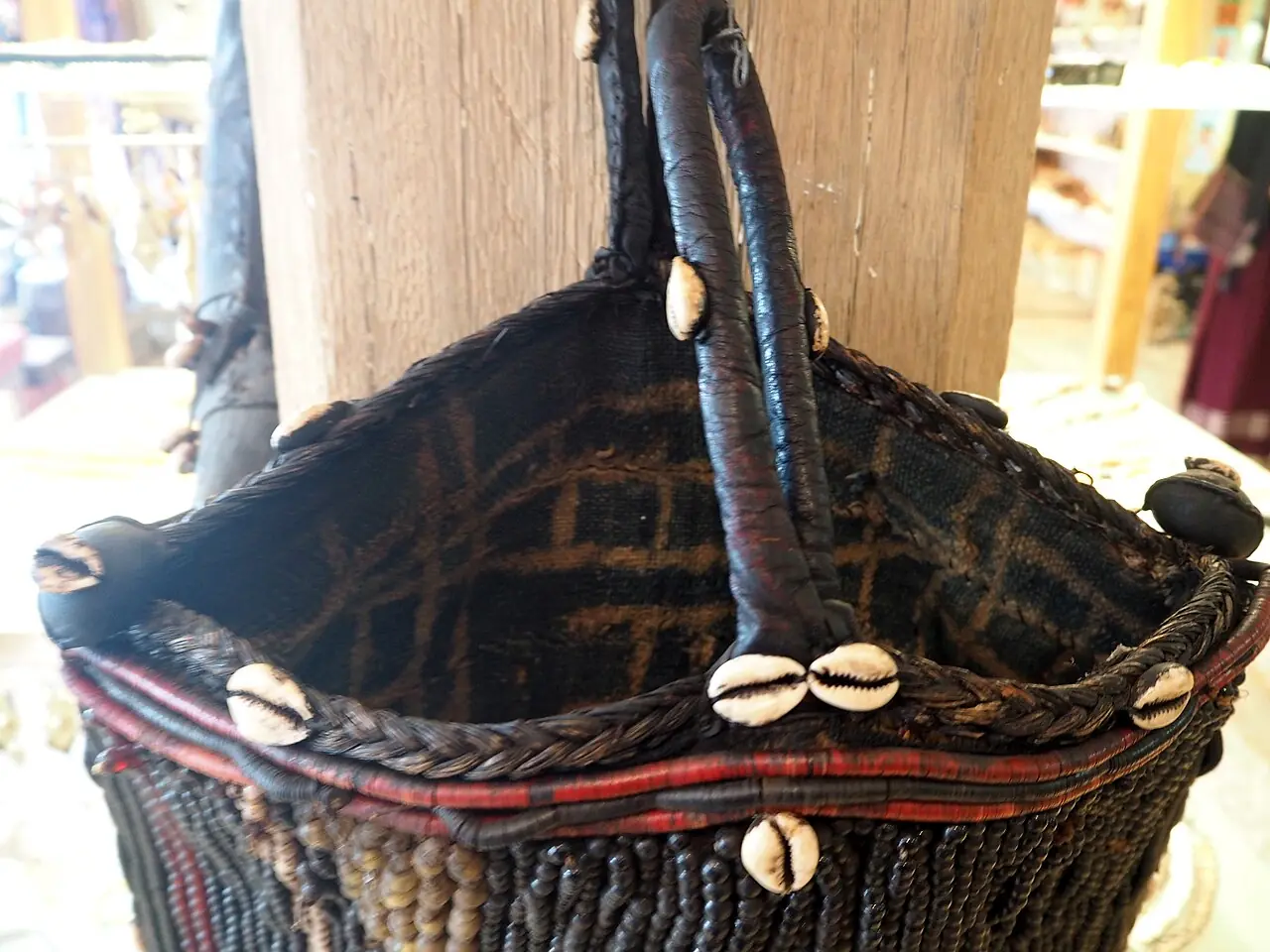
North-West basketry, East forgework, West weaving, Grassfields wood carving, savannah pottery, beads and copperwork from the chiefdoms: Cameroonian artistic craft is an NDS30 sector and one of the country’s leading informal employers. Behind every object lie know-how passed down from generation to generation, a family of craftspeople and a market to be structured.
Heritage promotion activities benefit from tax advantages provided by law, which entrepreneurs can combine with the aid detailed in the funding of culture. This page describes the sectors, labels, sales channels and export routes, with the useful procedures.
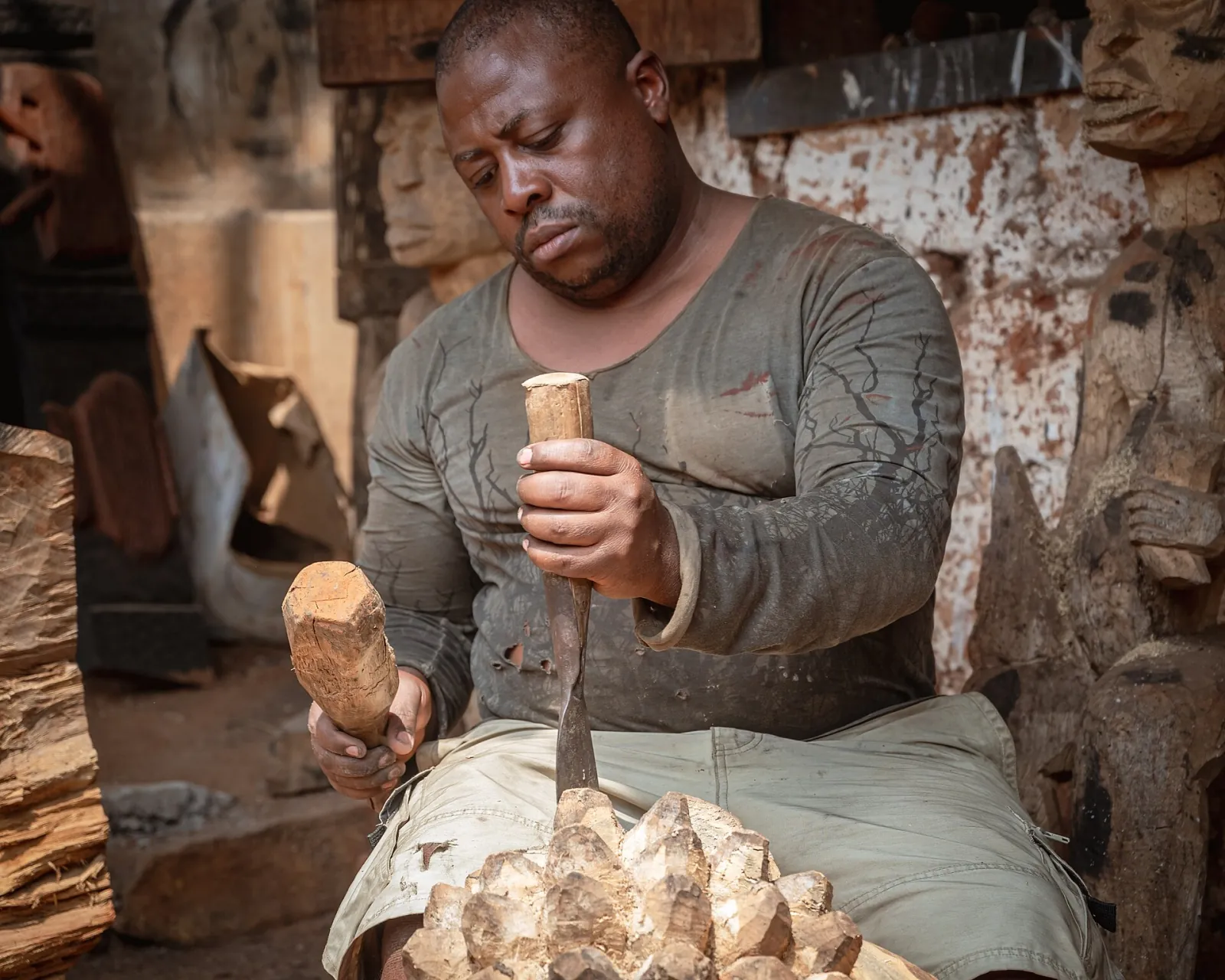
Wood, fibres, metal, clay, textile and beads structure Cameroonian crafts. Each sector has its own techniques, tools, raw materials and production areas, and raises its own economic questions. The artistic crafts page presents the trades from the angle of creation; this one examines them as value chains.
Masks, chiefdom stools, carved doors and statuettes are cut from local woods. The scarcity of some species requires legal and sustainable sourcing.
Raffia, rattan, bamboo, cotton and palm fibres produce baskets, mats, hats and fabrics. This sector employs mainly women and lends itself well to cooperatives.
Blacksmiths, bronze and brass founders, potters and bead-makers work with materials that require specific equipment: kilns, moulds, tools.
Craftspeople can also consult the intangible heritage section to document their techniques.
A cooperative or association of craftspeople shares the purchase of materials, tools and sales stands. Association approval is the first step.
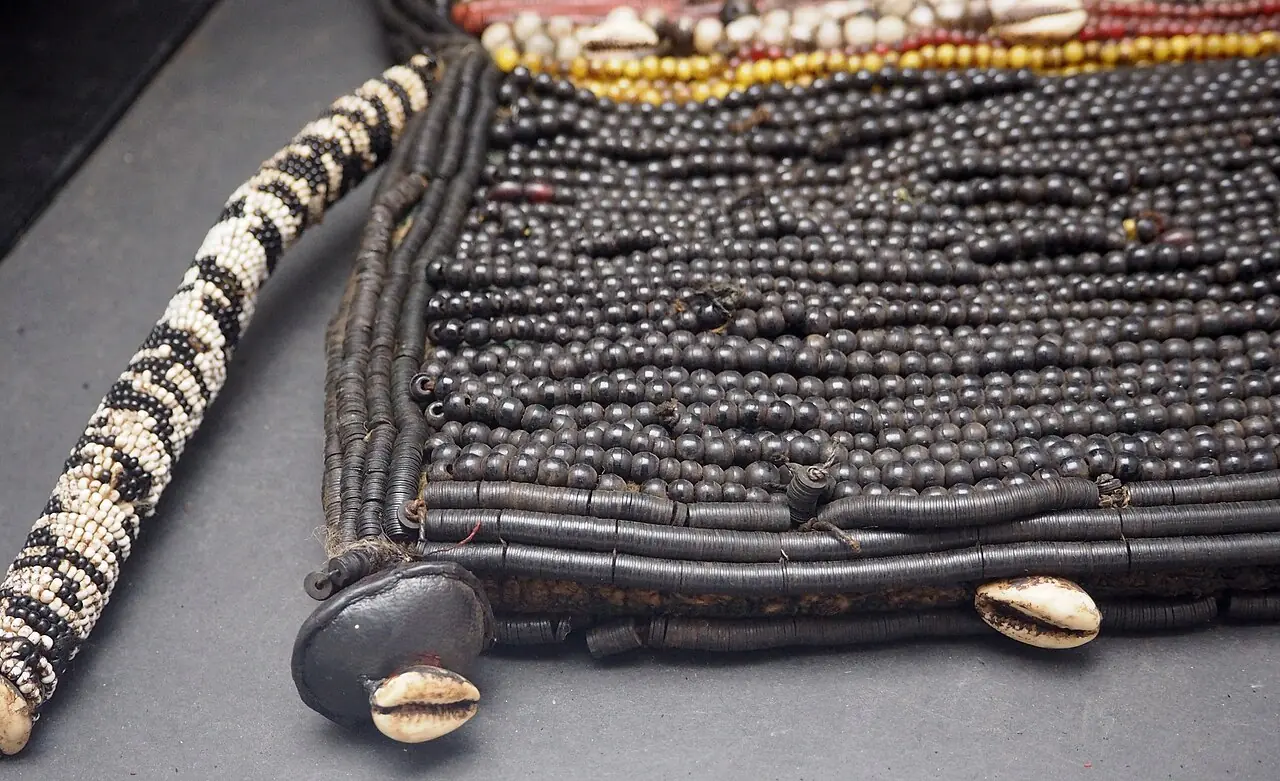
A label is a guarantee: it certifies that an object is handmade, in a given territory, using recognised techniques. For the buyer, it reassures; for the craftsperson, it justifies a higher price and protects against imported industrial counterfeits. A national artistic craft label is being studied with the professional organisations, on the basis of common criteria.
Pending the national label, craftspeople can rely on the collective mark registered by a group with OAPI, which plays the same guarantee role; see the intellectual property page. The products of a chiefdom, a village or a valley may be the subject of an indication of origin procedure, supported by the regional delegation.
The fight against imported copies protects craftspeople’s income. The rules on combating illicit trafficking also govern the removal of antique or ritual objects.
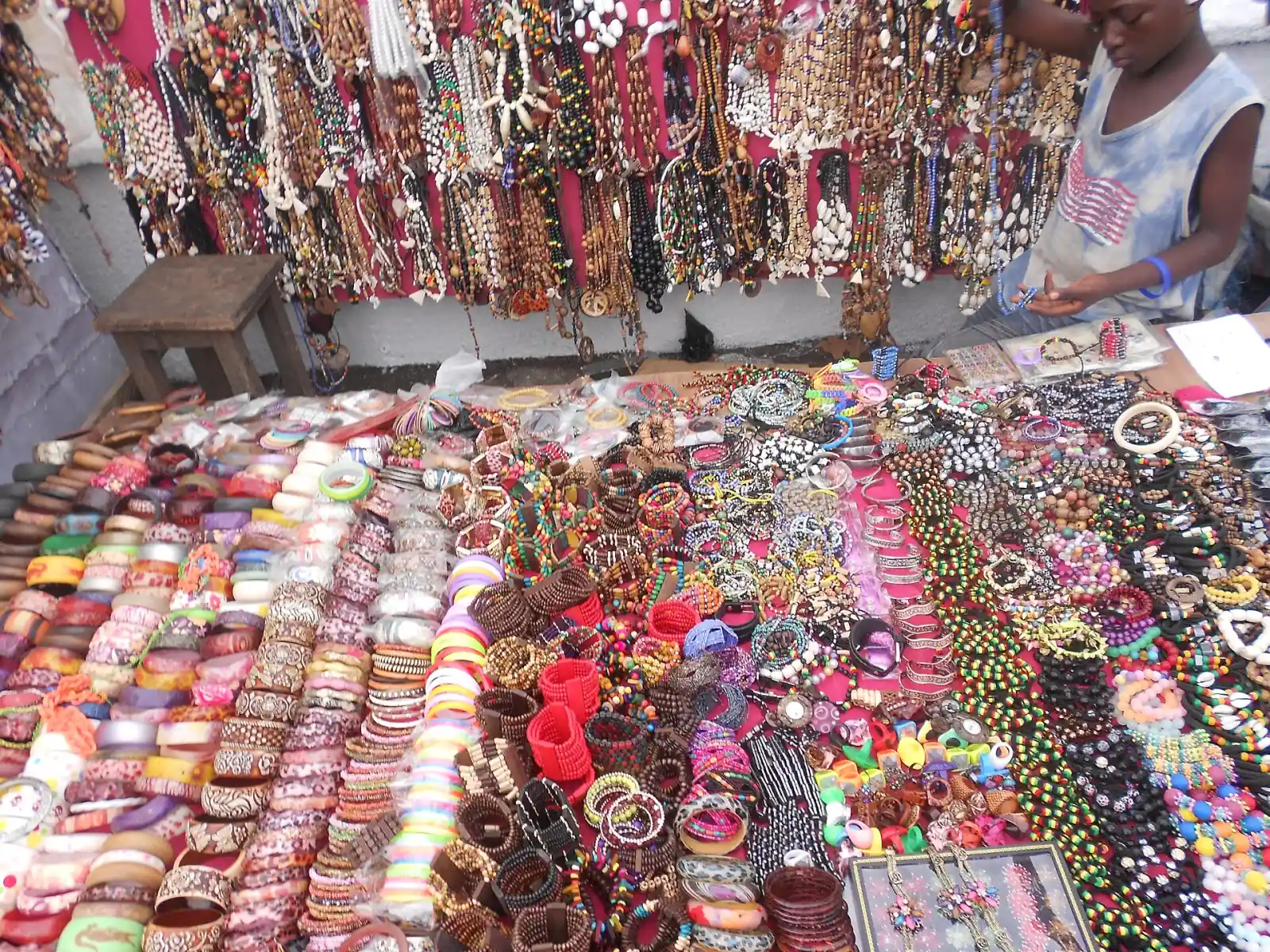
A craftsperson sells through several channels, and each addresses a particular clientele. The local market brings daily income; craft villages and museum shops reach visitors and tourists; fairs and trade shows put makers in touch with professional buyers; online sales open up the diaspora and foreign markets.
The major cities have a craft village or centre where workshops are grouped: Yaoundé, Douala, Bafoussam, Foumban, Bamenda, Garoua, Maroua. The national museums and the palaces and chiefdoms host shops that sell quality pieces to visitors.
Craftspeople exhibit at fairs and trade shows, heritage days and festivals such as the Nguon, which attracts large crowds in Foumban. Stands are allocated on the basis of a file, with photographs and a description of the products.
The price of an object must cover the material, labour time, tools, packaging, the reseller’s commission share and a margin. Many craftspeople undervalue their time: a simple calculation table, offered in the entrepreneurship resources, helps correct this bias.
Ticketing and pitch fees are governed by the ticketing rules.
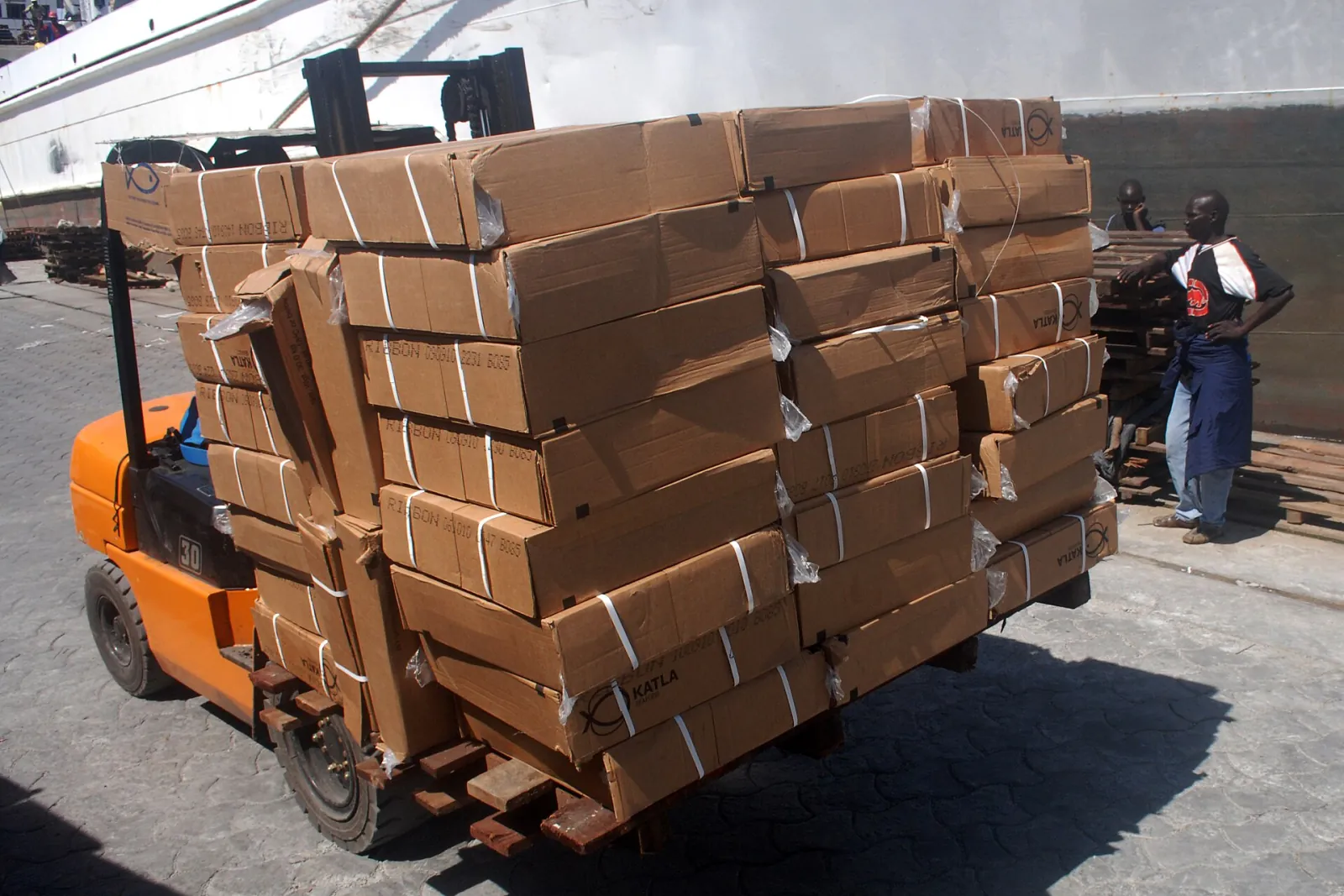
Craft pieces sell well outside the country, to the diaspora, collectors and decoration shops. To export, the craftsperson or their group must provide a regular product, sturdy packaging, a clear delivered price and proof of origin. The export and outreach page presents the missions and fairs abroad.
Groups of craftspeople go through purchasing centres, fair-trade shops or diaspora markets. Cultural agreements and international professional organisations also open doors. During a cultural year abroad, see the scheme for cultural years.
Carefully taken photographs, a description of how the item is made, the story of the workshop and a returns policy are the ingredients of a successful online sale.
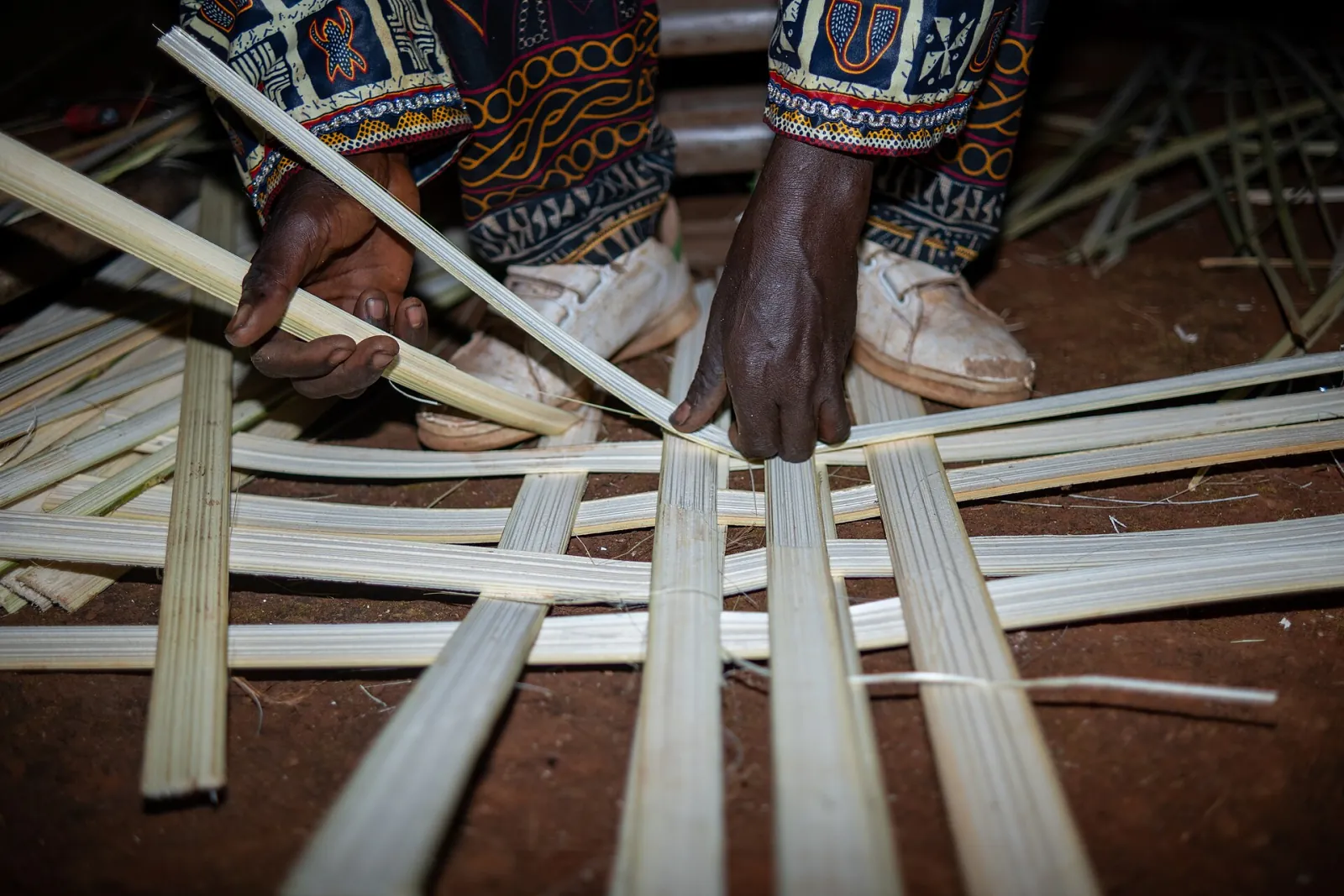
The craft chain is short, but it has fragile links. Upstream, suppliers of material (loggers, raffia gatherers, scrap blacksmiths, clay extractors) supply the workshops. In the middle, craftspeople produce, sometimes with an apprentice or a journeyman. Downstream, resellers, museum shops, galleries and platforms sell the objects.
In many channels, the craftsperson receives less than a quarter of the price paid by the end customer. Shortening the chain through direct sales, cooperatives or online shops improves their share. The Ministry’s policy encourages the grouping of producers and direct access to markets, in line with the sectoral strategy.
The independent craftsperson works alone or with family, selling to order and from a stall; their strength is freedom, their weakness irregular income. The cooperative pools the purchase of materials, training and commercial representation, at the price of demanding governance. The workshop-enterprise employs staff, invests in tools and aims for series production. Finally, the collection house brings together a designer and several workshops to produce original lines of objects.
A cooperative of twenty basket-makers in the West buys raffia in bulk, shares a drying workshop, presents a common catalogue and supplies two hotels, a museum shop and diaspora customers. It pays each member the price of the pieces delivered, less a contribution to a working capital fund.
The support funds specify the eligibility conditions.
List your products, your costs, your current customers and your production capacity, and calculate the cost price of each piece.
Join or set up an association or a cooperative, have its statutes approved and appoint a sales manager.
Define specifications, an origin label and, if possible, a protected collective mark.
Combine local market, museum shop, fair and online sales, setting a sales target for each channel.
Submit a grant application or approach a patron for tools, drying or a training workshop.
Put together a catalogue, check the regulations on materials, draw up the shipping documents and test a first parcel.
Artistic crafts, workshops, markets and labels from a creative perspective.
Discover →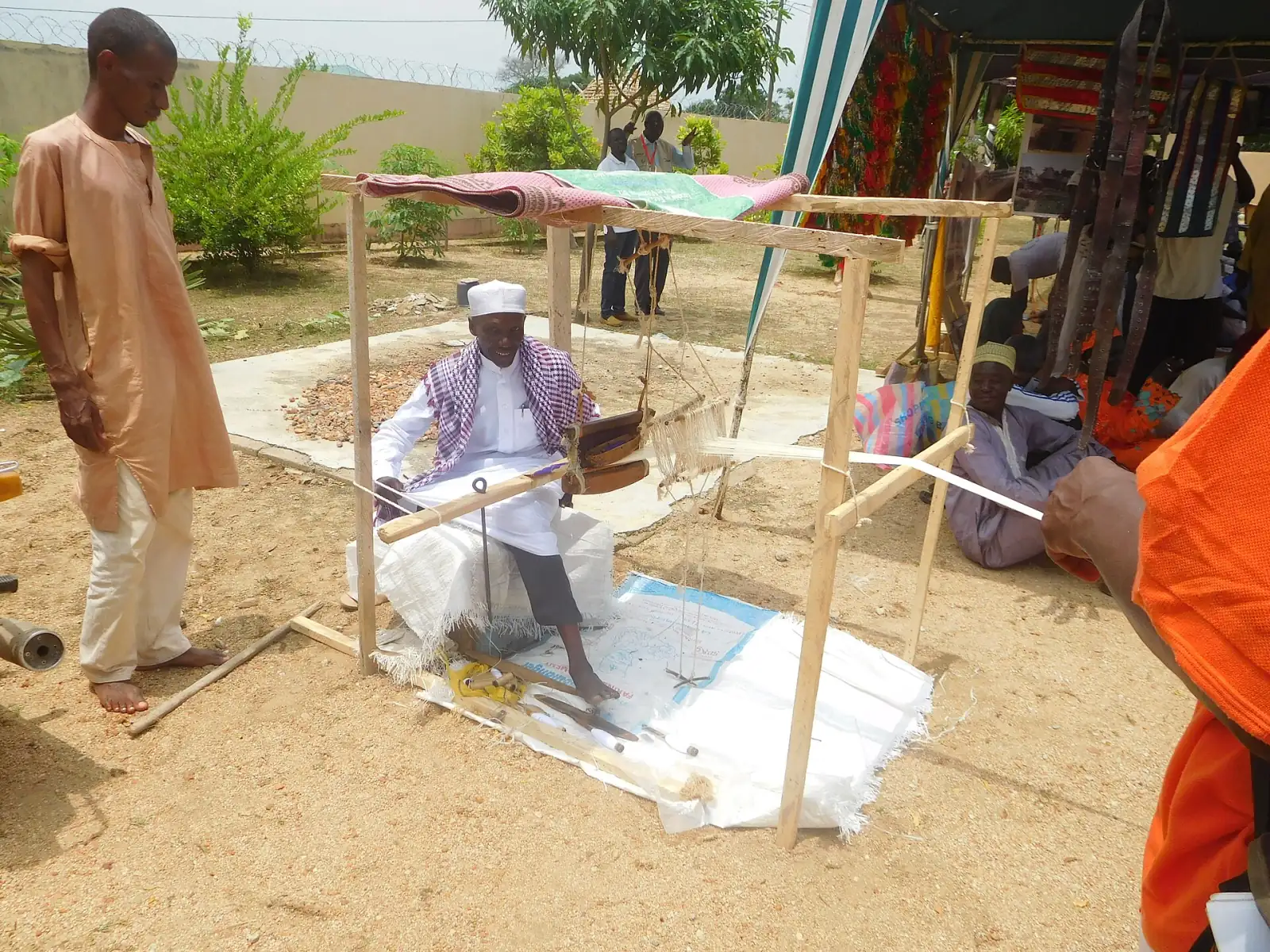
Techniques, master craftspeople and the transmission of skills.
Discover →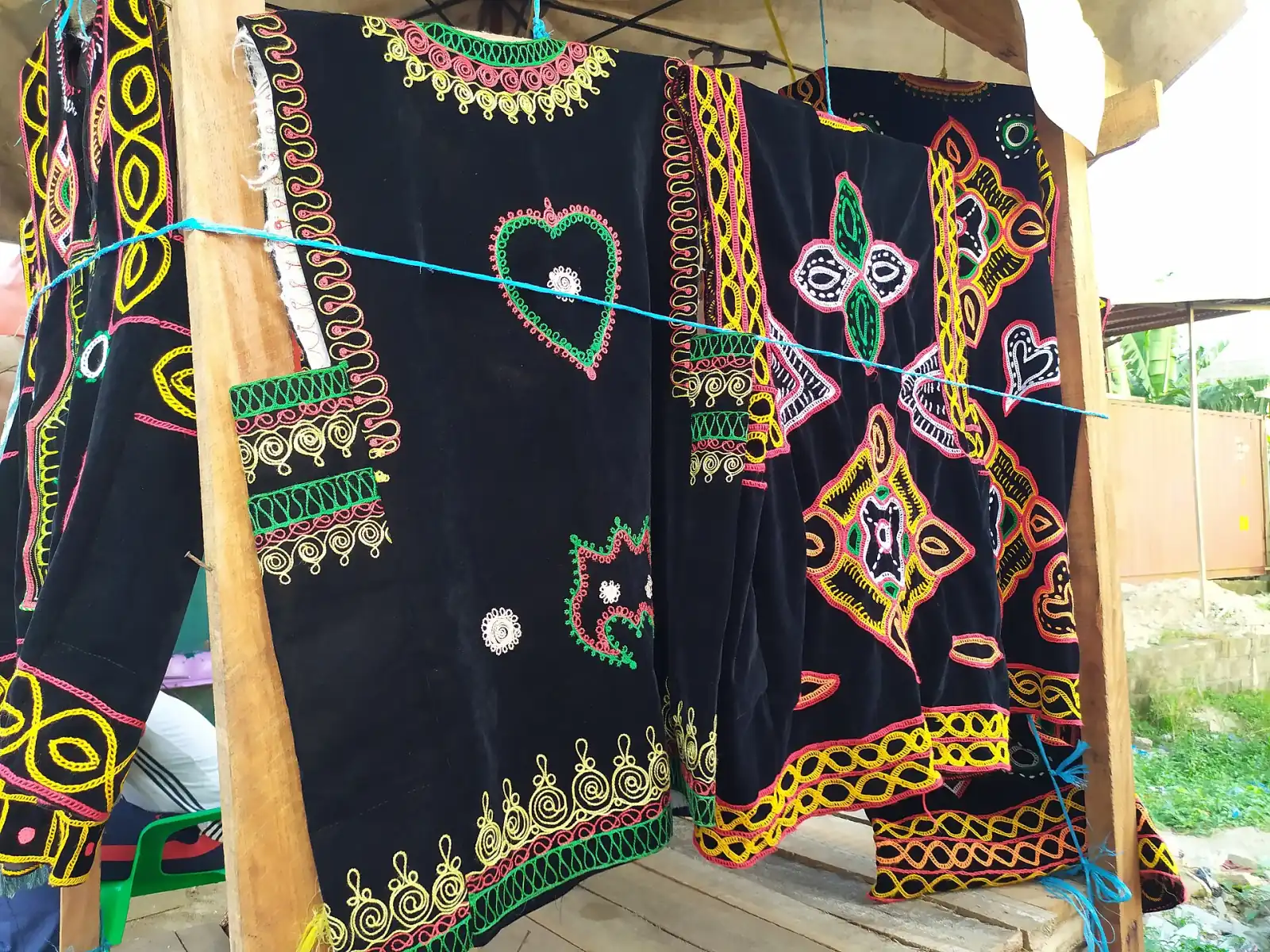
When weaving and embroidery feed fashion design.
Discover →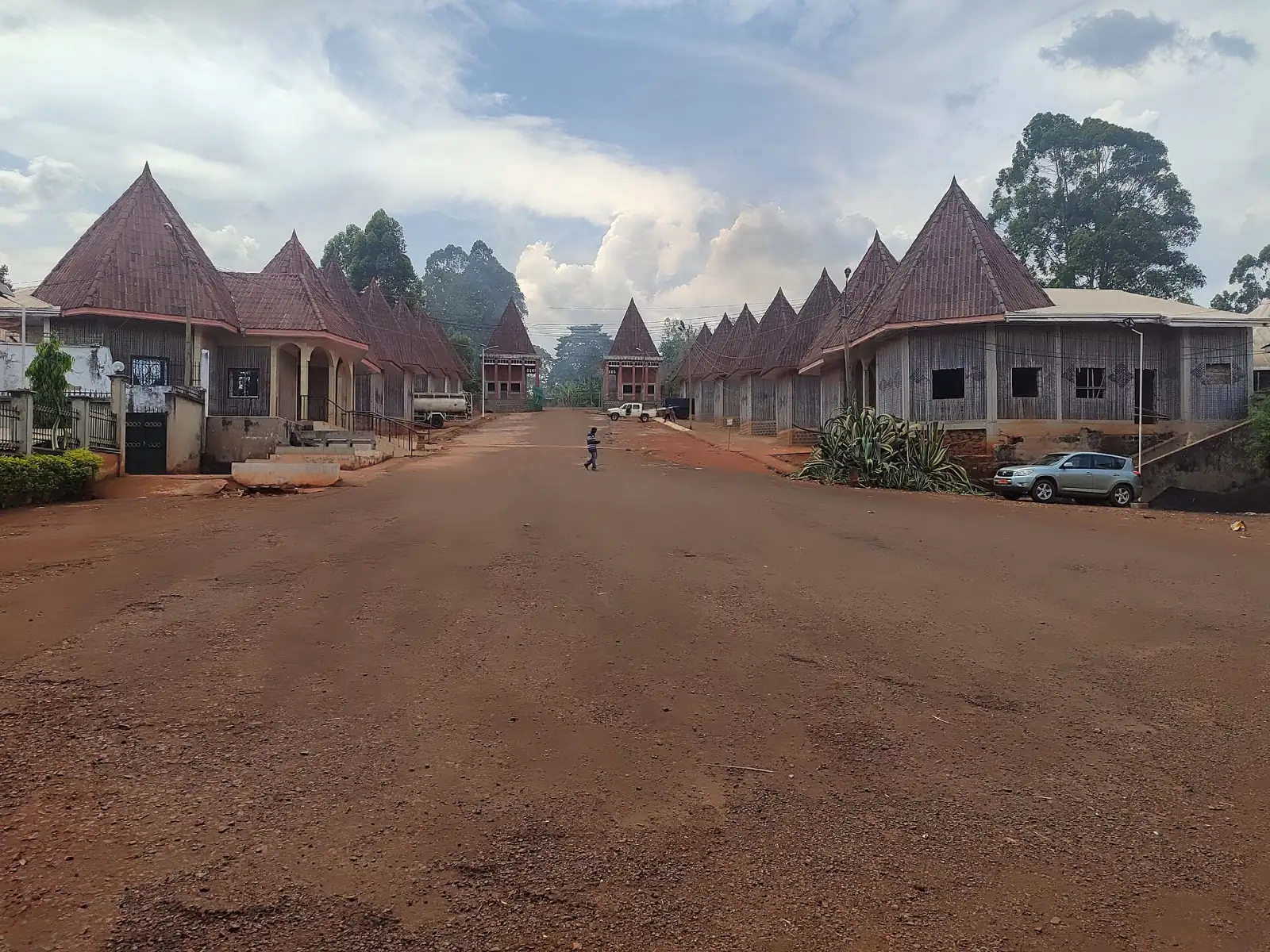
The routes that lead visitors to the workshops.
Discover →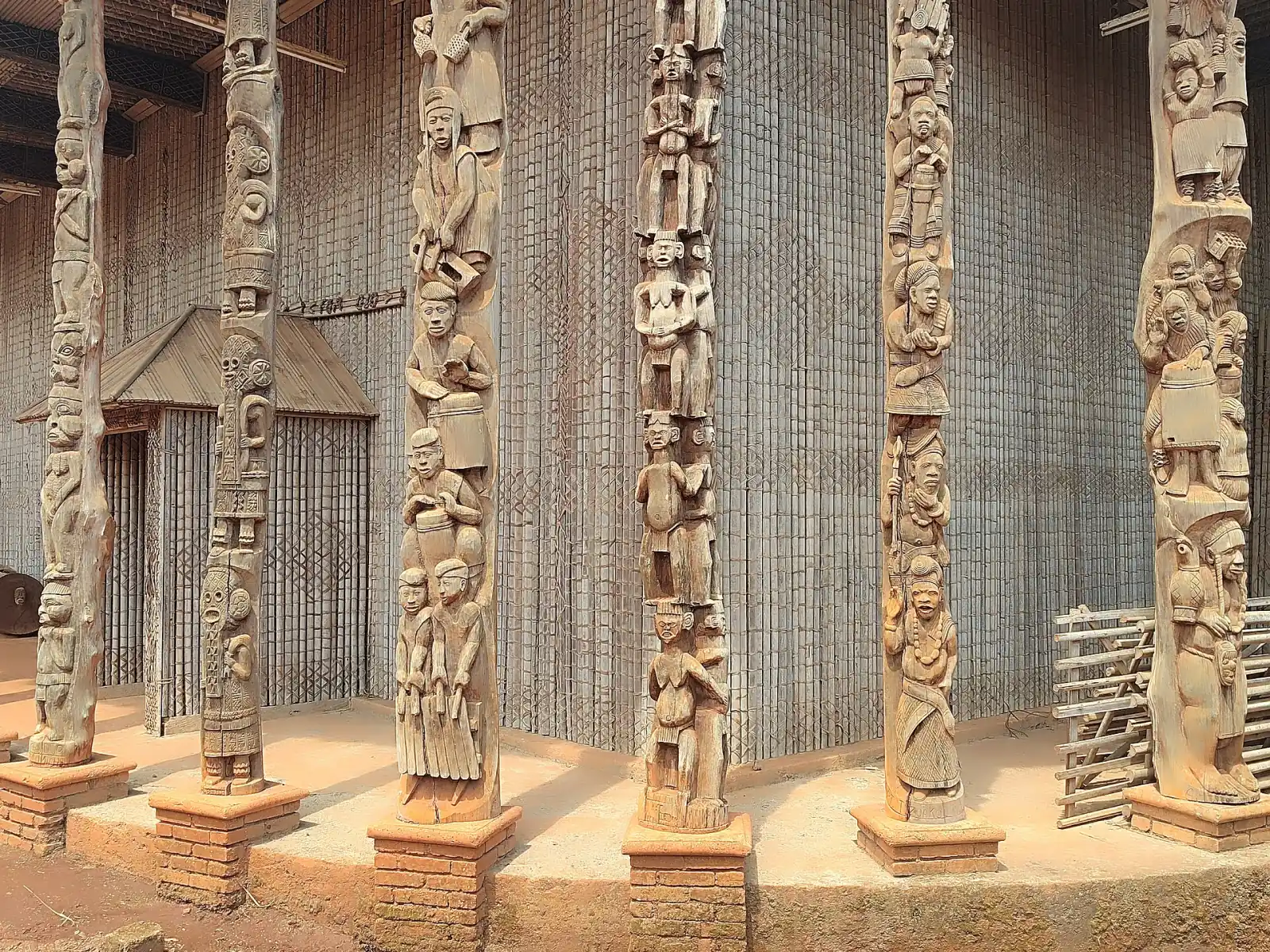
Palaces, guardians of traditions and places of production.
Discover →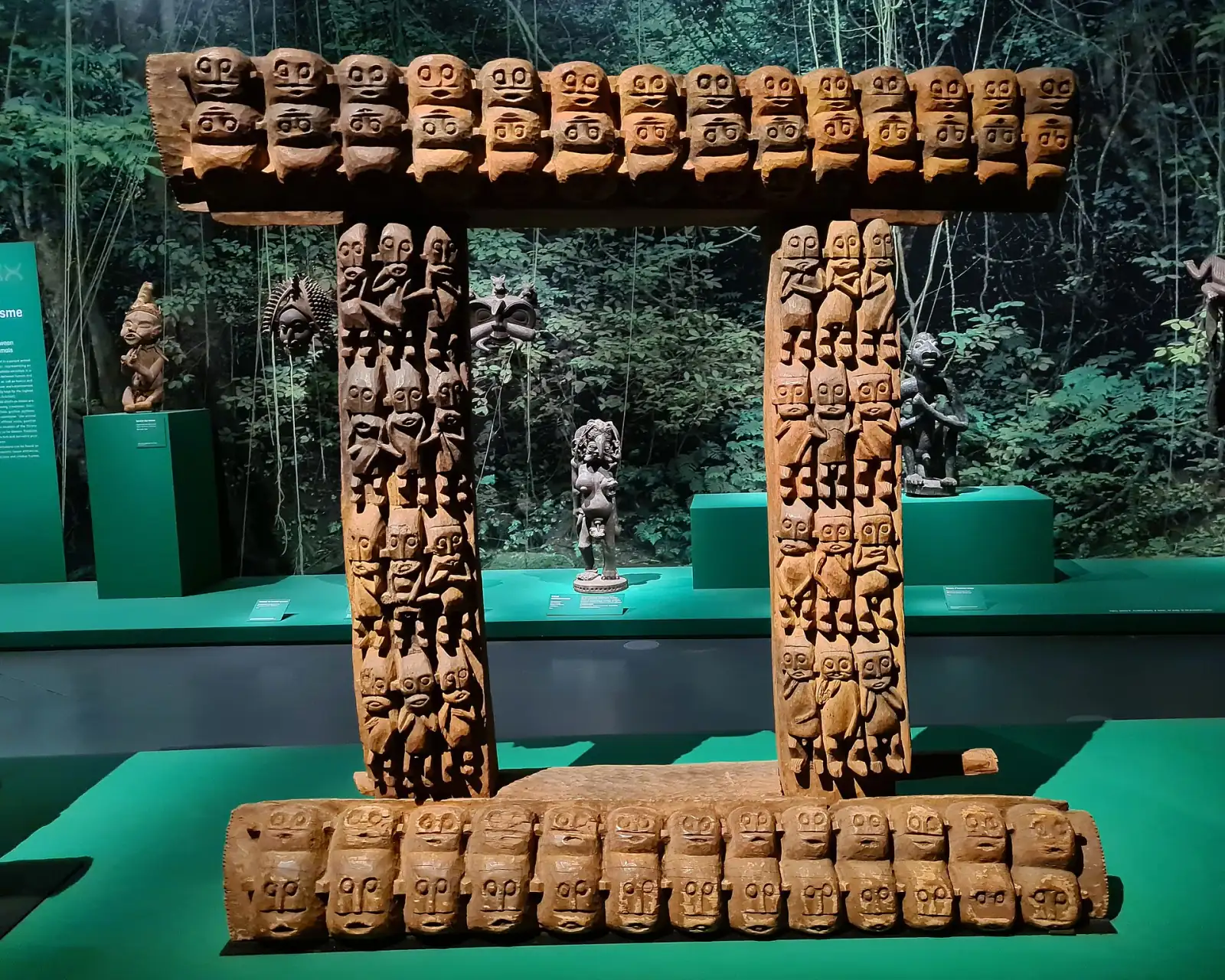
Collective marks, designs and contracts for workshops.
Discover →Professional who makes objects of aesthetic value by hand, using a transmitted skill.
Guarantee mark certifying the origin, manufacture and quality of a product.
Mark registered by a group and usable by its members according to specifications.
Company of craftspeople who pool purchases, tools and sales, with democratic management.
Site bringing together workshops and sales outlets to welcome visitors.
Training of a young person with a master craftsperson, through practice.
Document setting out the manufacturing rules for a labelled product.
Mention linking a product to a territory from which it draws its reputation.
Sum of the costs of material, time and tooling for a piece.
Cash reserve that allows materials to be bought before the sale is paid for.
Palm fibre used for basketry, weaving and ornaments.
Metal casting technique from a wax model, replaced by bronze.
“A handmade object is not a souvenir: it is the result of a thousand learned gestures, and it deserves a price that recognises them.”
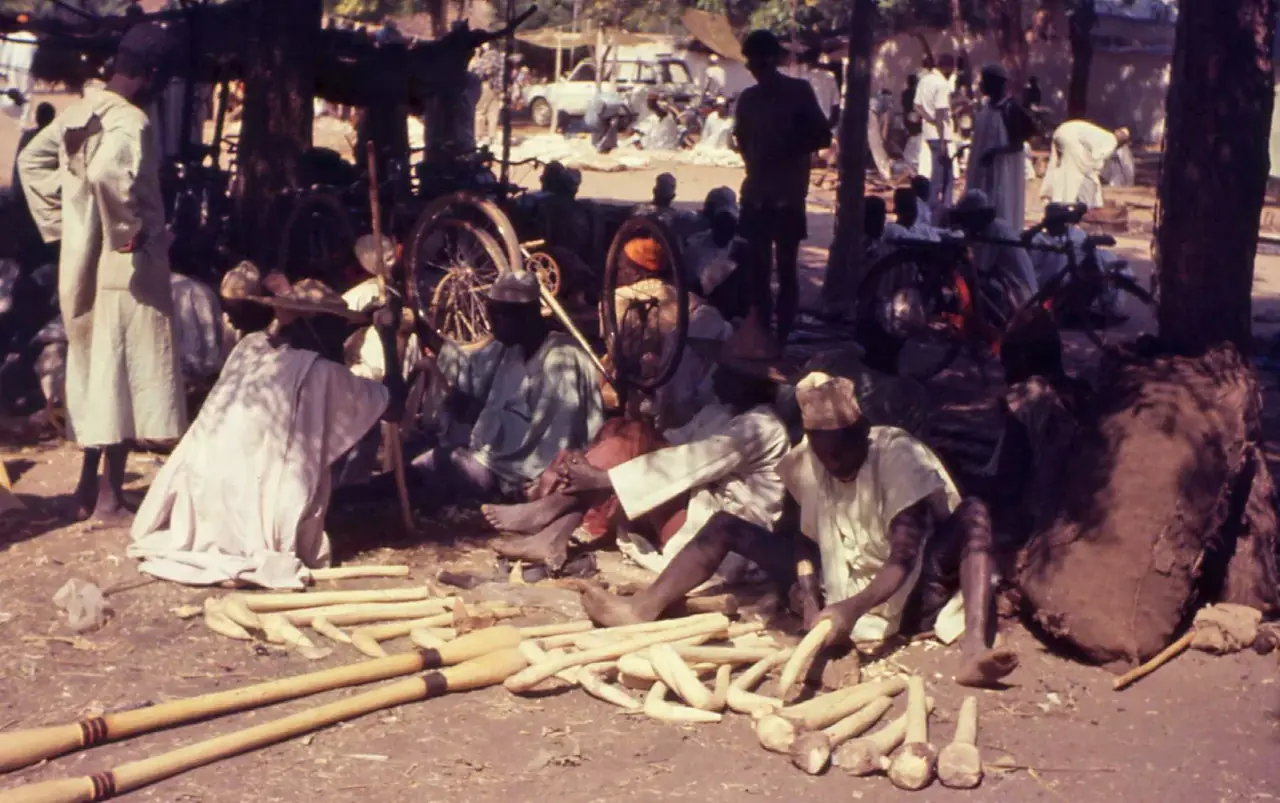 / Foumban
“I train two apprentices a year and I now sell to galleries thanks to a photographic catalogue.”
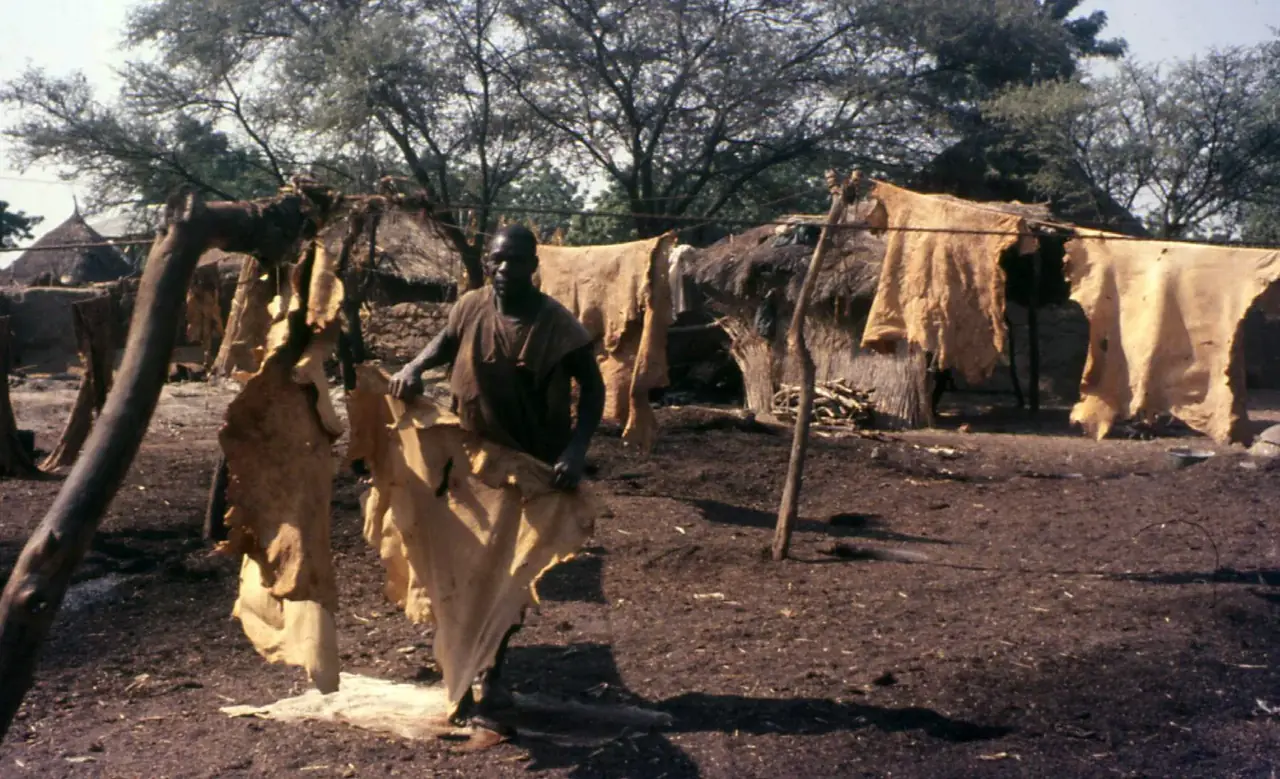 / Maroua
“Our group bought a shared kiln; production has doubled and breakages have fallen.”
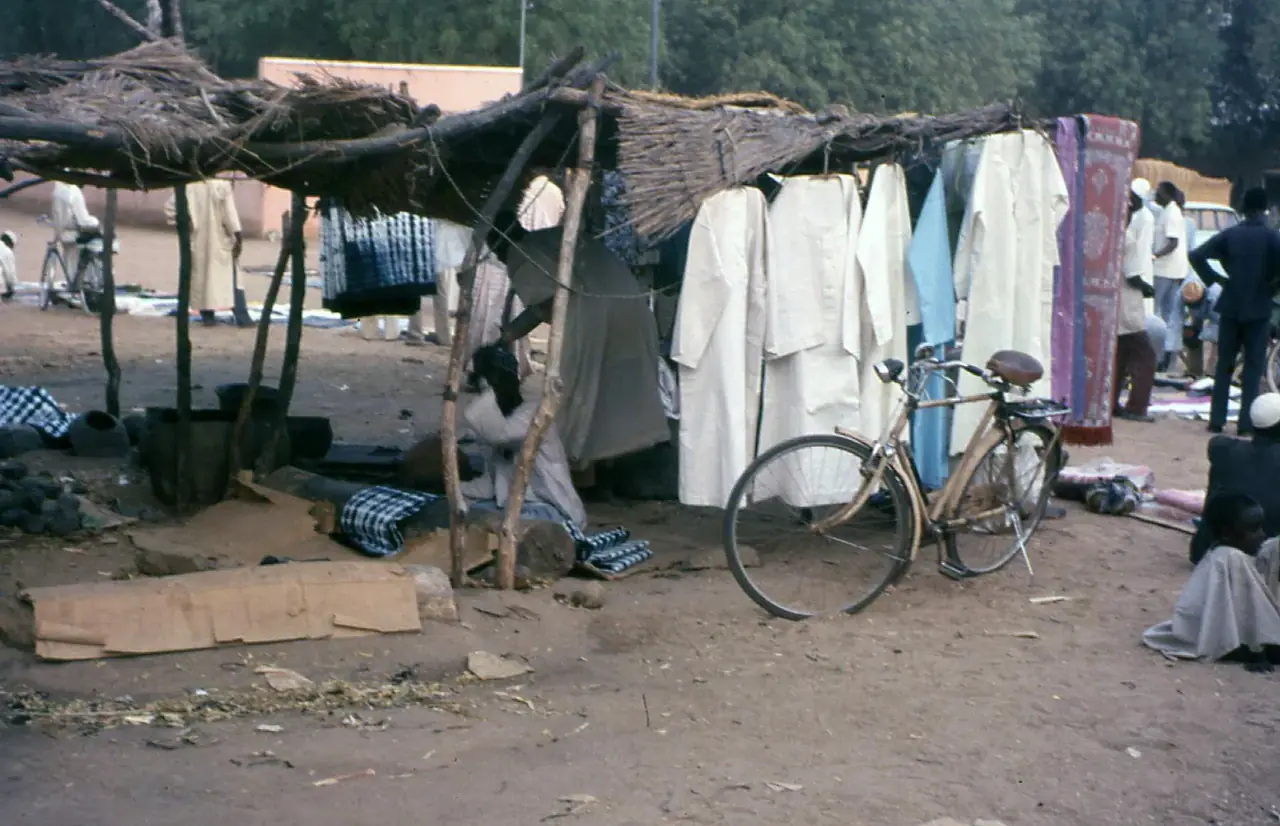 / Dschang
“The collective mark protects us from imitations and allows us to supply hotels.”
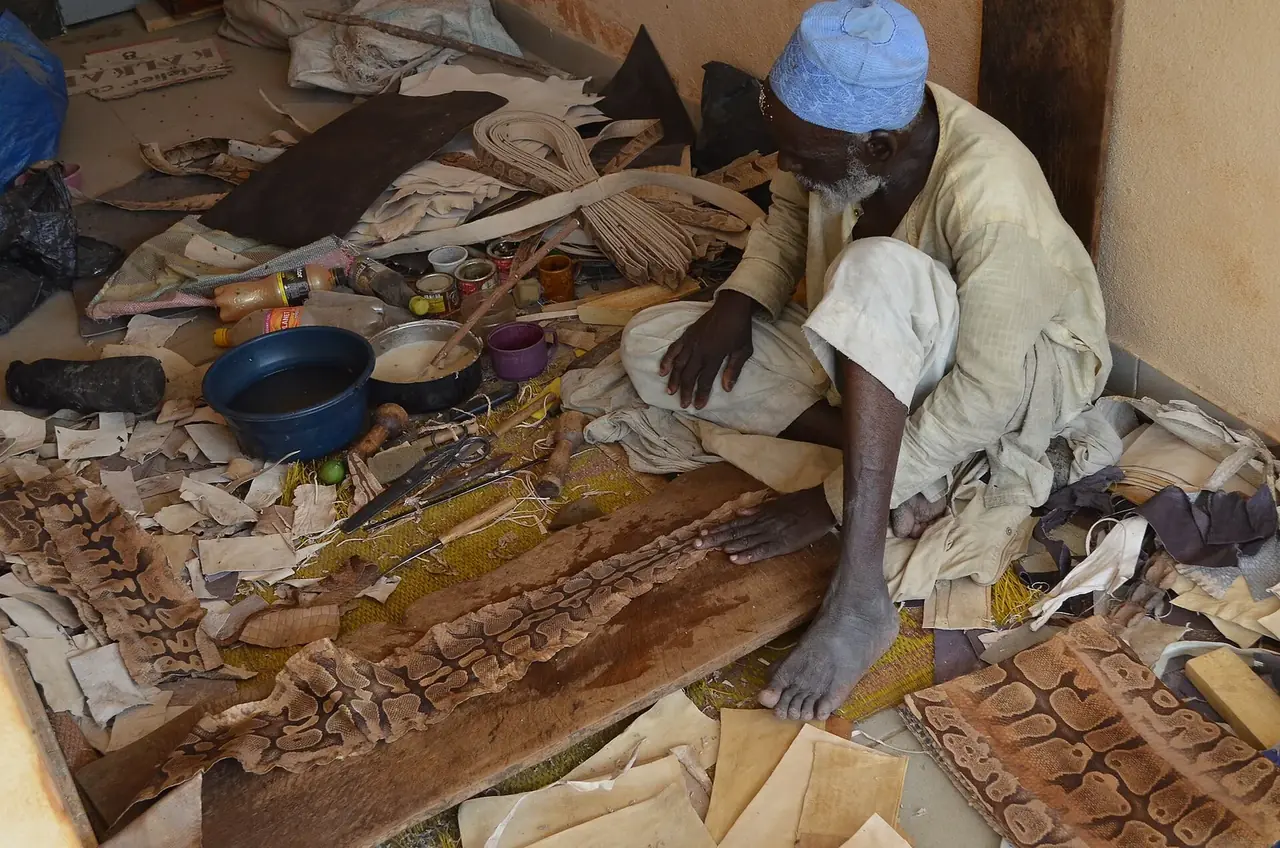 / Bertoua
“The fairs made me known; I now receive decoration orders from the capital.”
Fund equipment, a transmission workshop or a stand by following the online procedure, with quotes and budget.
Request supportSet up a group of craftspeople or a recognised cooperative, the starting point for any pooling of resources.
Approve my statutesCheck the rules before shipping a piece out of the country, especially an old object.
See the procedureHave your activity as a professional artistic craftsperson recognised by the authorities.
Apply
Creation, cinema, publishing and mobility: the support open to project leaders, including artistic craftspeople.
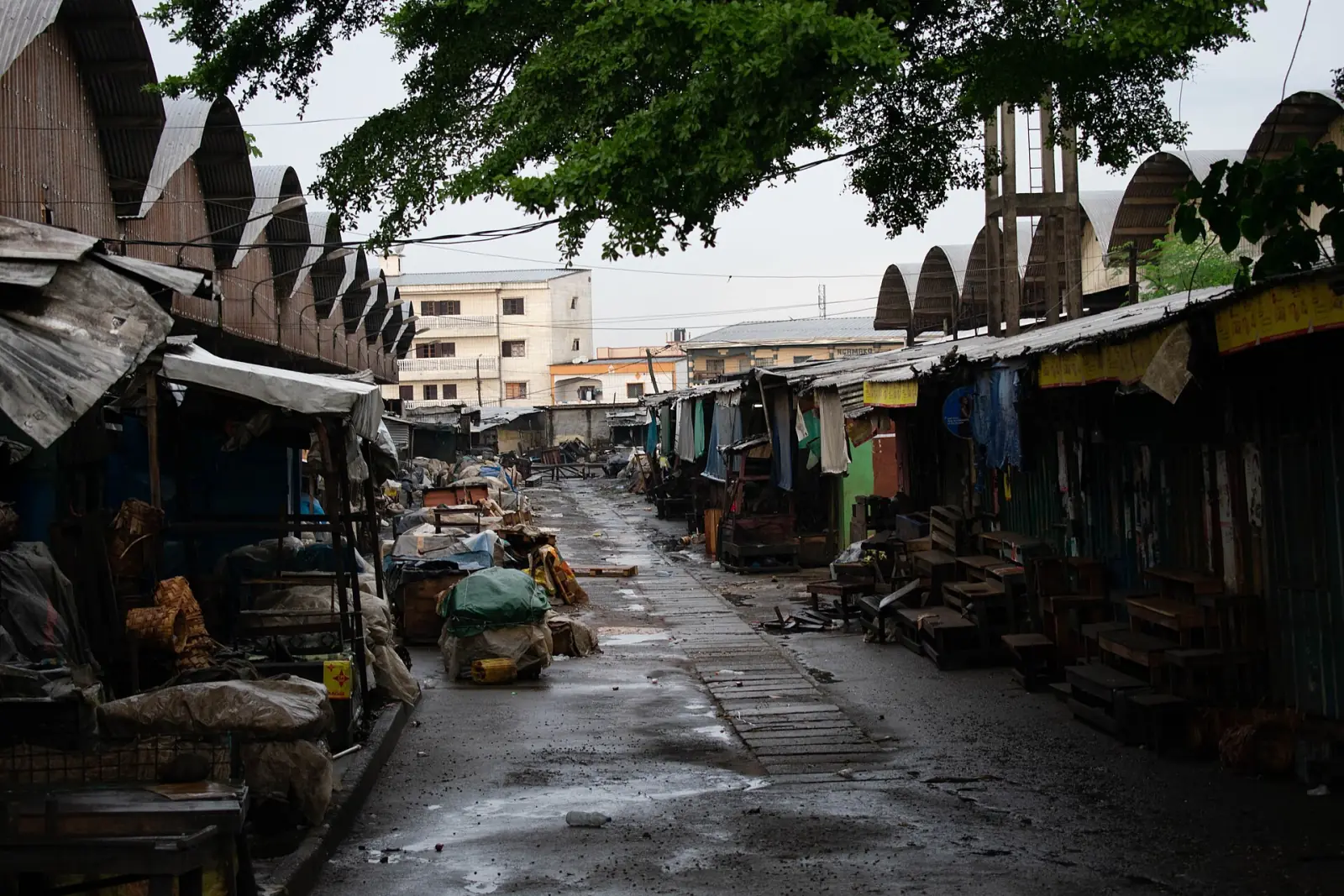
Set up your structure, choose your status, understand taxation and join a professional network.

Courses, schools, apprenticeships and scholarships for careers in culture and heritage.
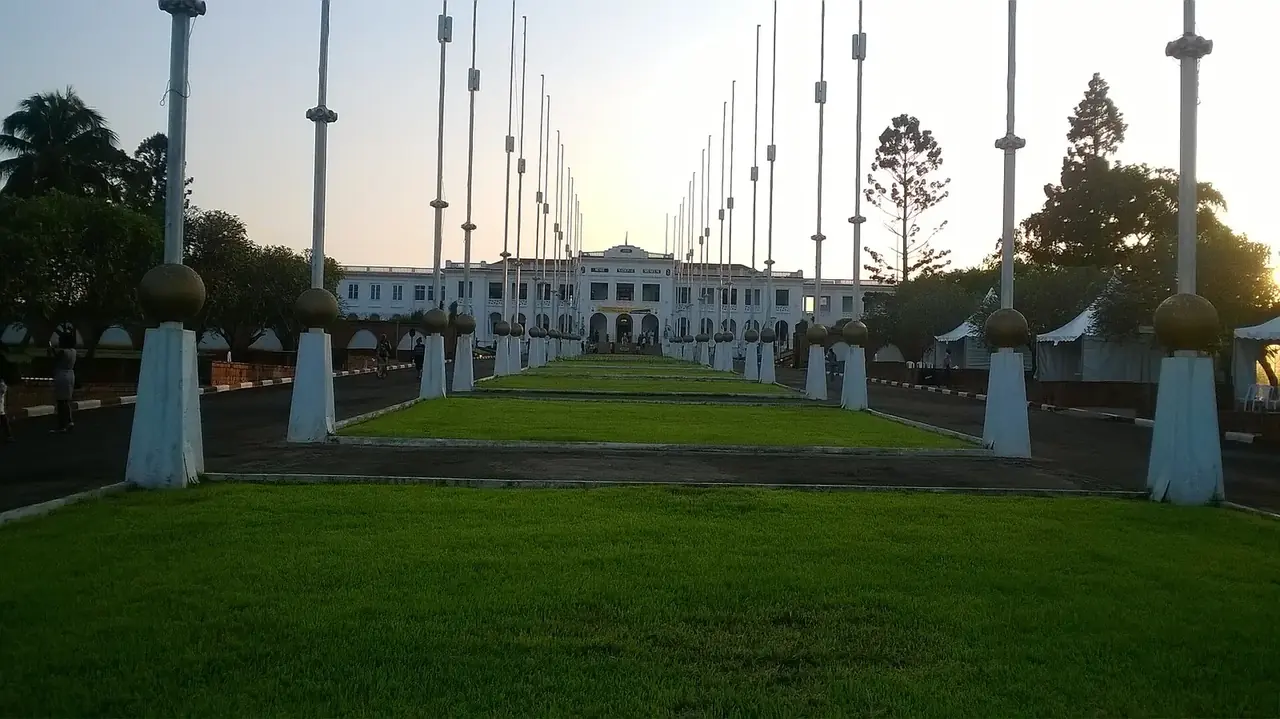
Open workshops, demonstrations of techniques and sales of objects in all regions.
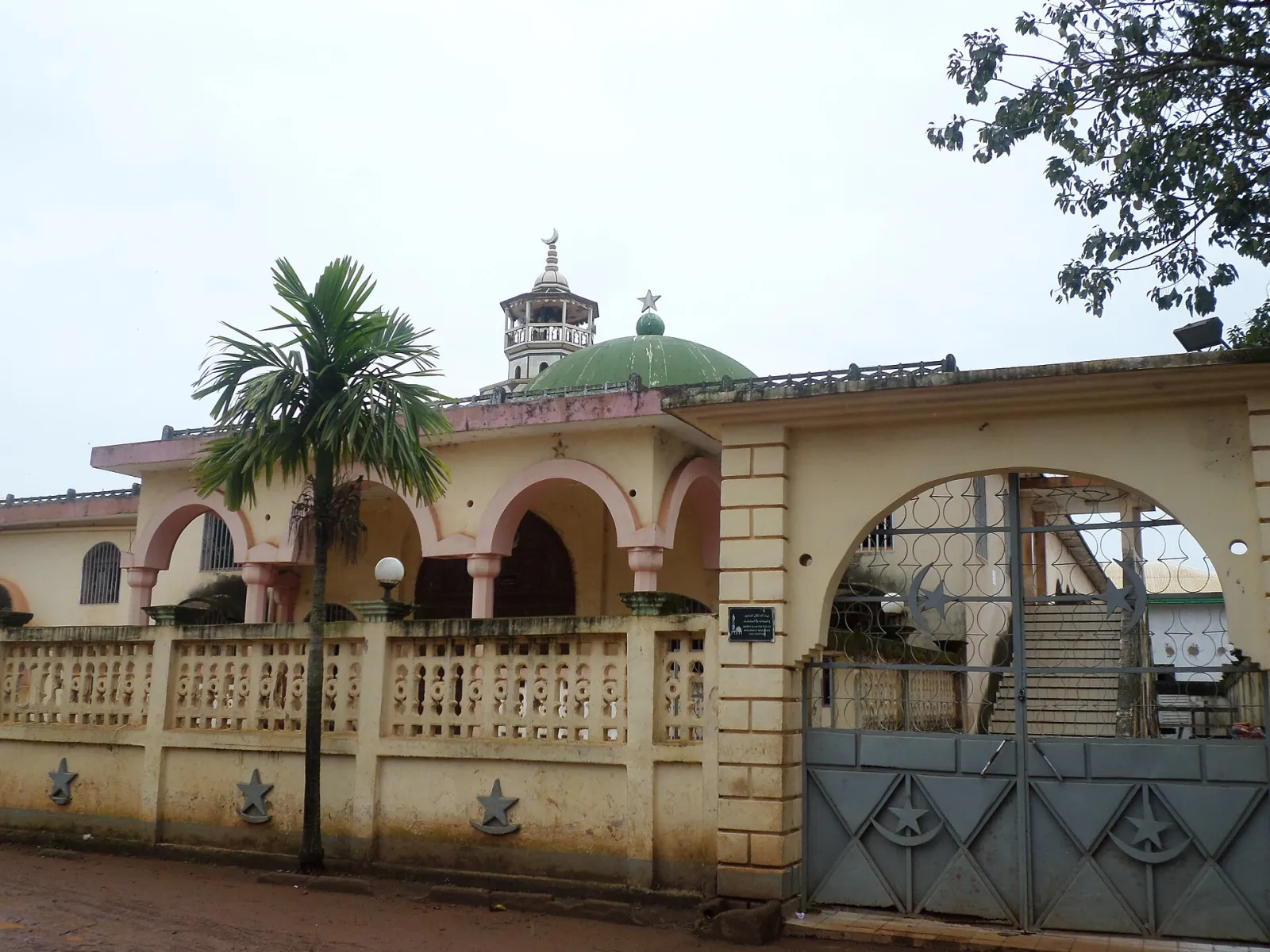
Regional routes that take in workshops and craft markets.
Employment, economy and regions: the figures of culture.
| Sector | Materials and techniques | Production areas | Main outlets |
|---|---|---|---|
| Wood and sculpture | Carving of local woods, masks, stools | West, North-West, Centre | Galleries, decoration, collectors |
| Basketry and fibres | Raffia, rattan, bamboo, mats, baskets | West, South-West, East | Hotels, shops, online sales |
| Weaving and textiles | Cotton, indigo, embroidery, wrapper cloth | North-West, West, North | Fashion, ceremonies, export |
| Metalwork and foundry | Forge, bronze, brass, copper | West, Adamawa, East | Chiefdoms, decoration, museums |
| Clay and pottery | Modelling, firing, slips | North, Far North, Centre | Domestic use, hospitality |
| Beads and jewellery | Glass beads, cowries, braided threads | West, North-West | Ceremonies, fashion, diaspora |
Craftspeople work for palaces and ceremonies, according to strict rules of transmission.
Public craft centres train apprentices and open sales outlets in towns.
Imported products upset prices; craftspeople band together to defend their skills.
Artistic crafts enter cultural policies and training programmes.
Artistic crafts, design and creative services are the subject of integrated development, with tax advantages for heritage.
Register a collective mark with OAPI and draw up specifications setting out the materials, techniques and controls. The mark guarantees origin to your customers and allows you to take action against imitations.
A national label is being studied with the professional organisations. In the meantime, the collective mark, the indication of origin and handmade labelling already make it possible to identify a quality product.
The law provides tax advantages for heritage promotion activities. Their application depends on the nature of the activity and the situation of the business: enquire with the One-Stop Shop and the tax services.
Submit a grant application, approach a patron or apply to an incubation programme. A detailed budget, quotations and a marketing plan make the file convincing.
Antique, ritual or listed objects fall under a specific procedure for the export of works of art and may be banned from leaving the country. New objects made for sale follow the general export rules. Seek advice before any shipment.
In local markets, in craft villages, in museum and chiefdom shops, at fairs and trade shows, and online. Combine several channels to reduce dependence on a single customer.
Respond to the organiser’s call with a file: presentation of the workshop, photographs, price list, space requirements. Calls appear on the calls for projects page and in the calendar of fairs.
Organise a structured apprenticeship with a contract, a schedule of skills to be acquired and an assessment. You can request the support of a transmission project and have your status as a master craftsperson recognised.
Describe your activity or your project.
Directorate of Shows and Creative Industries
Ministry of Arts and Culture
Quartier du Lac – Ministerial Zone
P.O. Box 1053 Yaoundé, Centre Region, Cameroon
Monday to Friday, 8 am to 4 pm
Submit your grant application online and track it with your file number.