Coat of arms of CameroonMinistry of Arts
and Culture
Republic of Cameroon
My procedures
Home
Minister’s message
News
Press releases
Cultural calendar
Official speeches
Press review
Photo library
Video library
Calls for projects
Job vacancies
Public procurement
Newsletter
Frequently asked questions
Site map
Contact
Press area
Podcast “The Voice of Culture”
Legal notices
Privacy policy
Cookies and trackers
The Ministry
Missions and responsibilities
Organisation
Organisation chart
Minister’s Office (Cabinet)
Management team
General Secretariat
General Inspectorate
Central directorates
Regional Delegations
Institutions under supervision
Legislative texts
Regulatory texts
Sector strategy
Major projects
Budget and reports
Partners
Careers
Archives
Institutional communication
Quality and accessibility
Arts
Visual and plastic arts
Visual arts
Performing arts
Theatre
Dance
Music
Literature and books
Cinema and audiovisual
Photography
Fashion and design
Digital arts
Art crafts
Artists’ directory
Residencies
Prizes and awards
Arts education
Urban arts
Heritage
Tangible heritage
Intangible heritage
UNESCO sites
National museums
Listed monuments
National inventory
Palaces and chiefdoms
Archaeology
Linguistic heritage
Oral traditions
Traditional know-how
Restitution of cultural property
Fight against illicit trafficking
Listing and protection
Conservation and restoration
Heritage Days
Cultural landscapes
Industries
Music and recording
Cinema
Publishing and books
Digital arts
Fashion and creativity
Crafts
Cultural tourism
Funding for culture
Support funds
Incubators
Cultural entrepreneurship
Culture Observatory
Vocational training
Studies and reports
Sector statistics
Export and outreach
Intellectual property
Copyright
Legal framework
Copyright and neighbouring rights
Collective management societies
Register a work
Licences
Private copying
Fight against piracy
Model contracts
Social status of artists
Mediation
Disputes
Training
Fee scales
Register of works
Contact
Digital neighbouring rights
Public domain
Festivals
National calendar
Ngondo
Nguon
Écrans Noirs
Heritage Days
Music Day
Regional festivals
Fairs and exhibitions
Biennials
National competitions
Cultural days
Organise a festival
Event grants
Ticketing
Archives
Volunteering
Diaspora festivals
Regions
Adamawa
Centre
East
Far North
Littoral
North
North-West
West
South
South-West
Cultural map
Regional Delegations
Traditional chiefdoms
National languages
Cultural routes
Decentralised cooperation
Regional observatory
Cooperation
UNESCO
Francophonie (OIF)
African Union
Commonwealth
CEMAC
Bilateral cooperation
Cultural agreements
Professional organisations
Scholarships
Artist exchanges
Cultural years
Diaspora
Funded projects
Embassies
Technical partners
International restitution
International monitoring and calls
Services
Artist card
Show authorisation
Filming authorisation
Festival authorisation
Deposit of a work
Export of works of art
Listing of a property
Grant application
Association accreditation
File tracking
Forms
Fees
Opening hours and addresses
Reporting
Online help
My account
One-Stop Shop
Arts

Art crafts

Artistic crafts, workshops, markets and quality label: all the key information for producing, selling, exporting and passing on Cameroonian artistic crafts, within the framework of the NDS30 and the applied arts policy.

Updated on 6 November 20264 sub-pages
Materials worked7
Supervising directorateDDPA
National frameworkNDS30
Quality labelUnder consideration
Art crafts

Hands that pass on knowledge

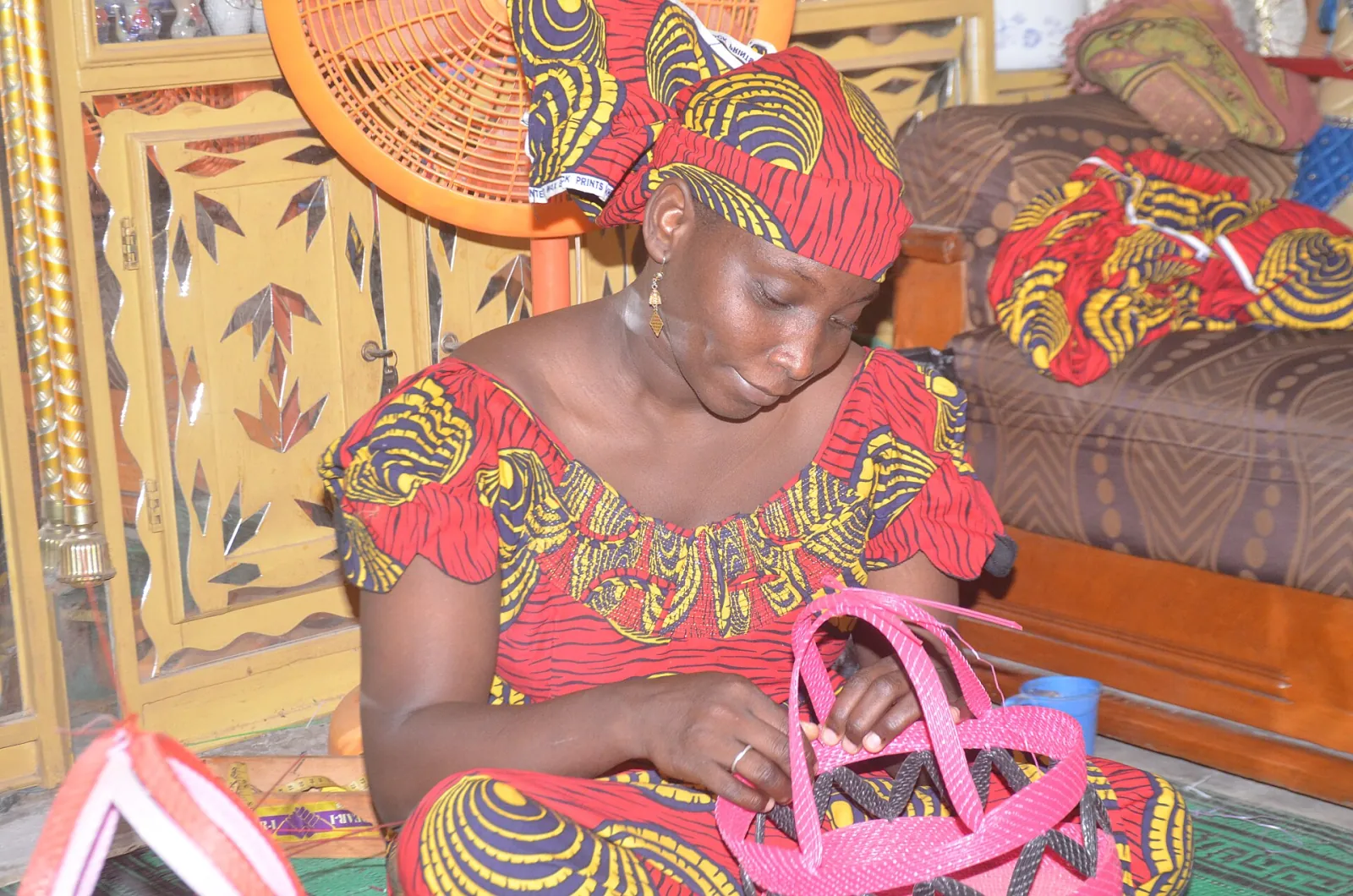
Woman in wax-print clothes weaving a pink bag in a living room

Lost-wax bronzes from Foumban, beaded thrones of the chiefdoms, pottery from Mokolo, raffia basketry, leather from Maroua, masks and statues carved in wood, weaving and indigo dyeing: Cameroonian artistic crafts are among the richest in Central Africa. Each object carries a story, a social function and a skill learned from a master.

Applied arts come under the policy for the development and promotion of the arts, and crafts are among the NDS30 sectors. This page presents the trades, workshops, markets and the label initiative, with key information for producing, selling, exporting and passing on skills.

  • Artistic trades classified by material and by region
  • Workshops open to visitors and apprentices
  • Markets, fairs and a planned quality label
Discover the artistic trades
Art trades

Artistic trades: materials, gestures and know-how

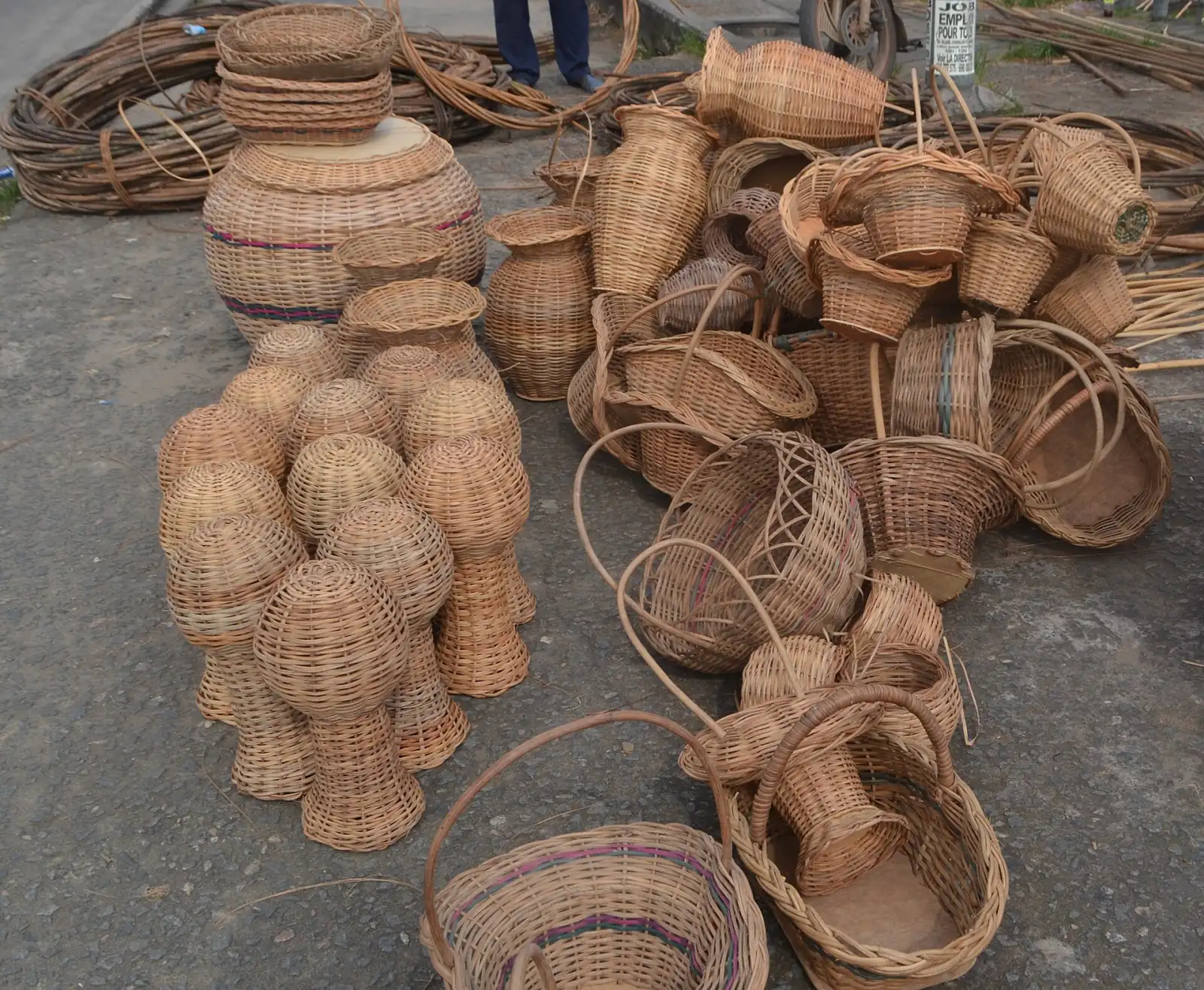
Display of woven rattan baskets and hampers of various shapes

The term artistic crafts groups together the trades that combine technical mastery and aesthetic creation. They are distinguished from service crafts by the artistic dimension of the object, which is often unique or produced in small series.

Woodworking

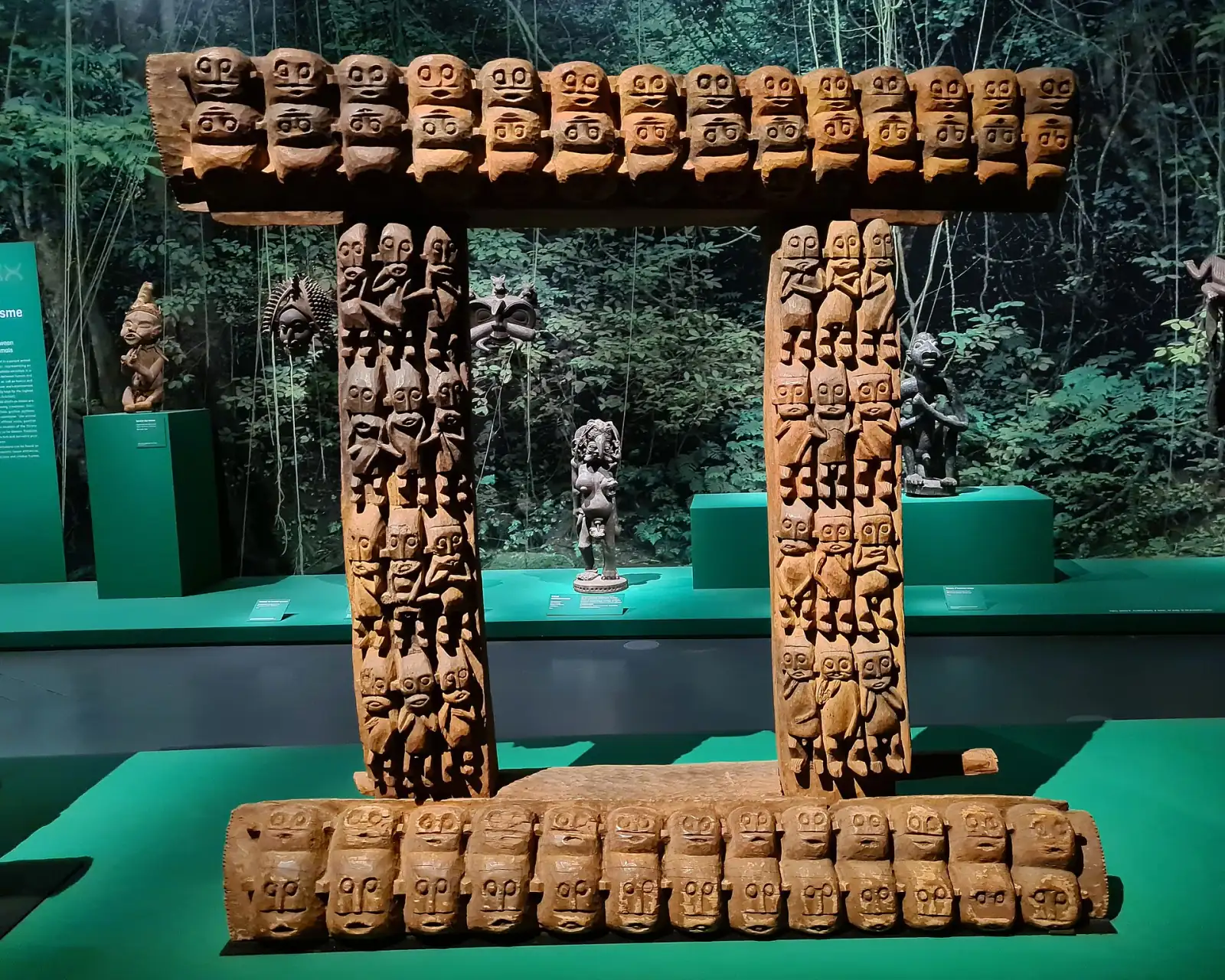
Carvers of masks, statues, house doors, stools and drums: wood (ebony, iroko, kapok, bubinga depending on the region) is shaped with an adze and a chisel, then patinated. The chiefdoms of the West preserve collections of royal sculptures.

Metalwork

In Foumban and in the Grassfields, bronze-casters cast brass using the lost-wax method: a wax model is coated in clay, heated, then filled with molten metal. Blacksmiths also produce tools, instruments and jewellery.

Earth, fibres, leather and beads

  • Pottery shaped by coiling in the Far North and North-West;
  • Basketry in raffia, rattan and bamboo in the West, South and East;
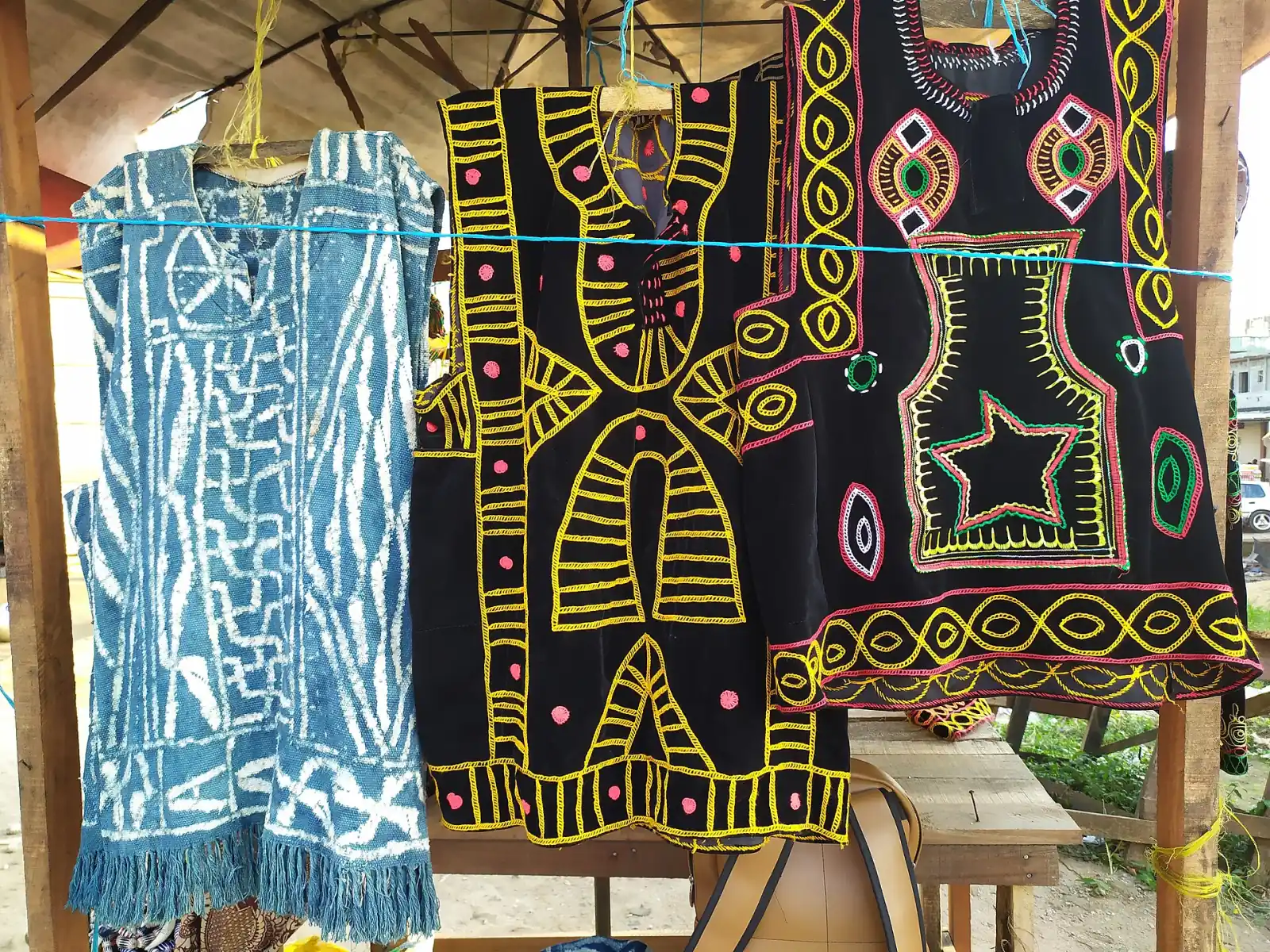
  • Weaving, embroidery and indigo dyeing in the Grassfields;
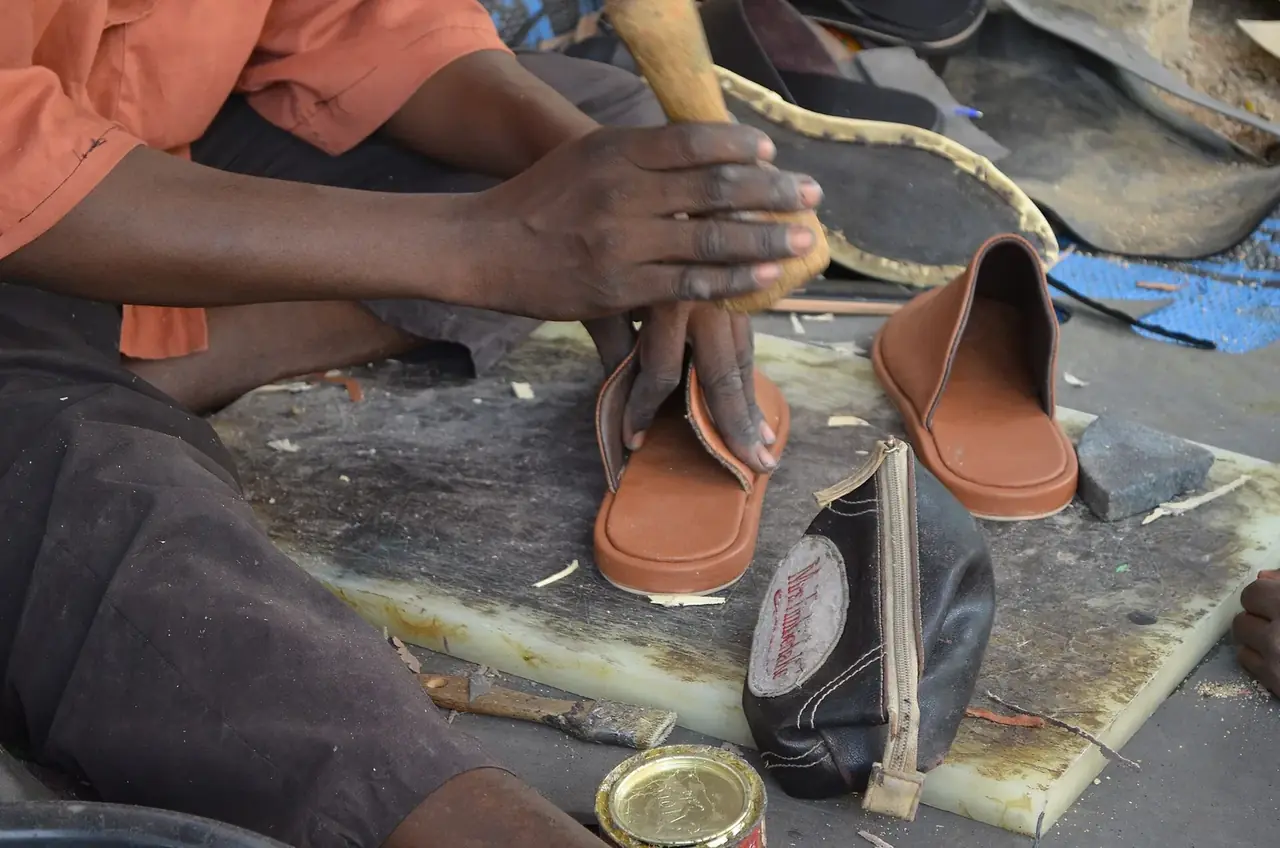
  • Leatherwork from Maroua, dyed and worked leathers;
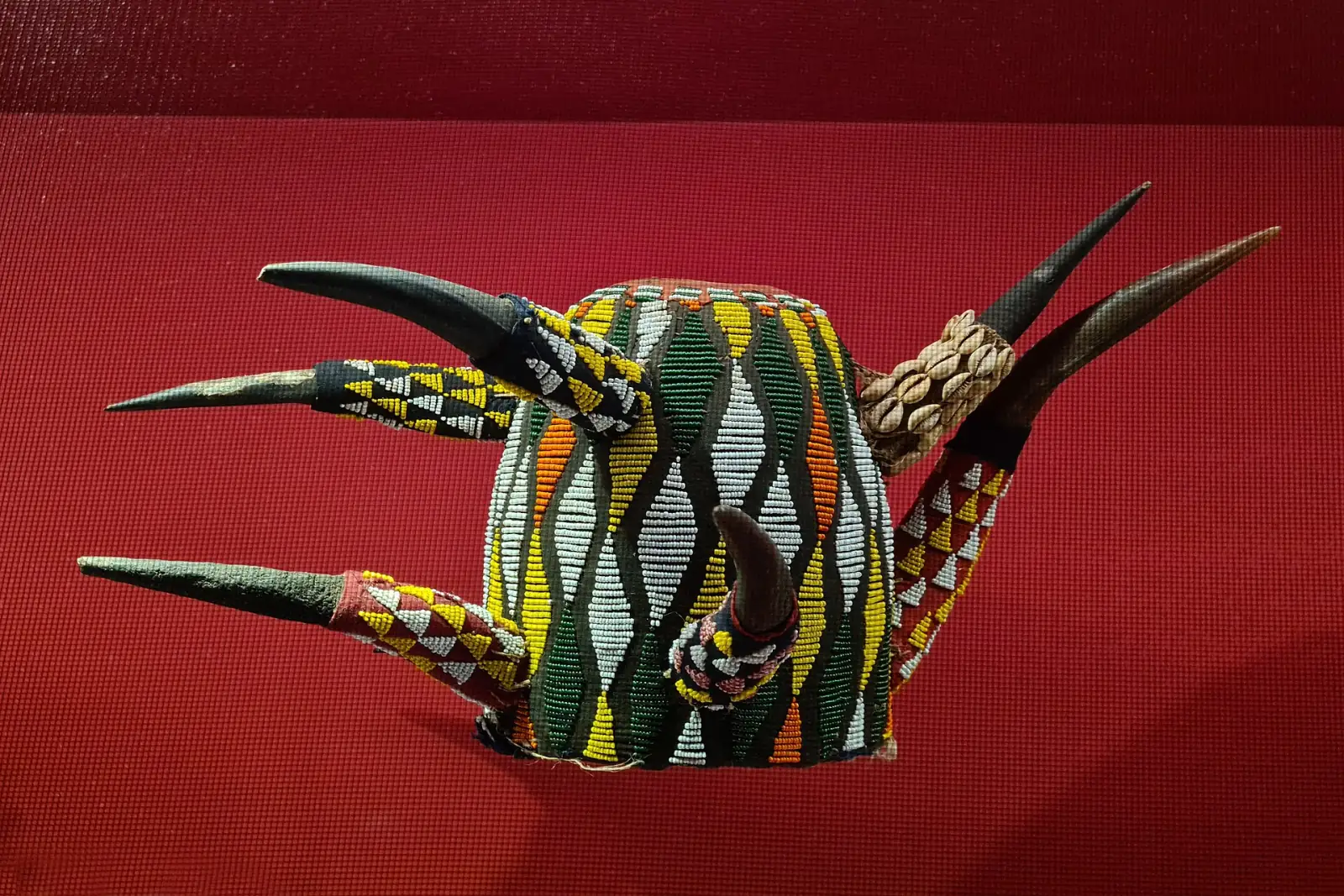
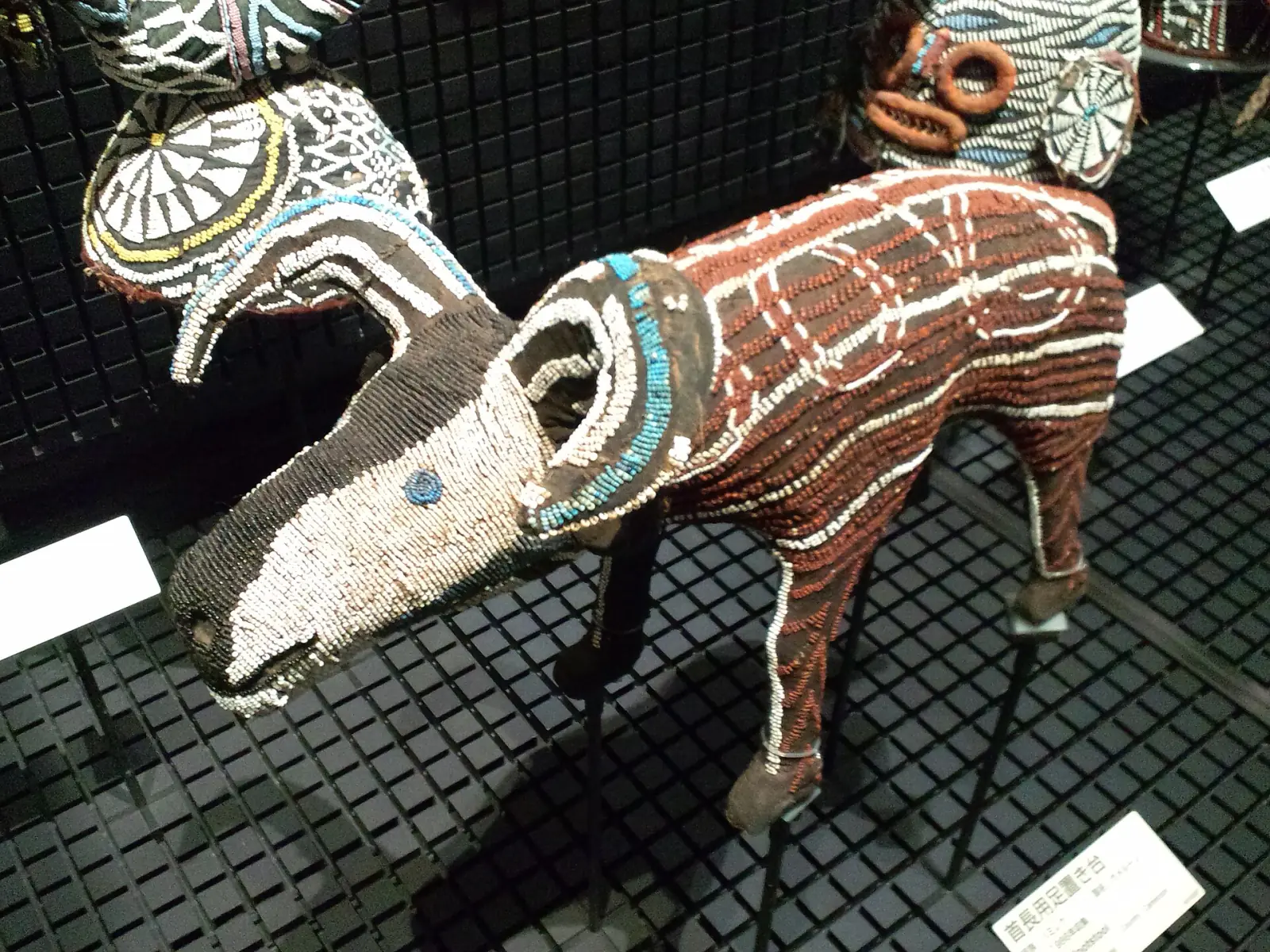
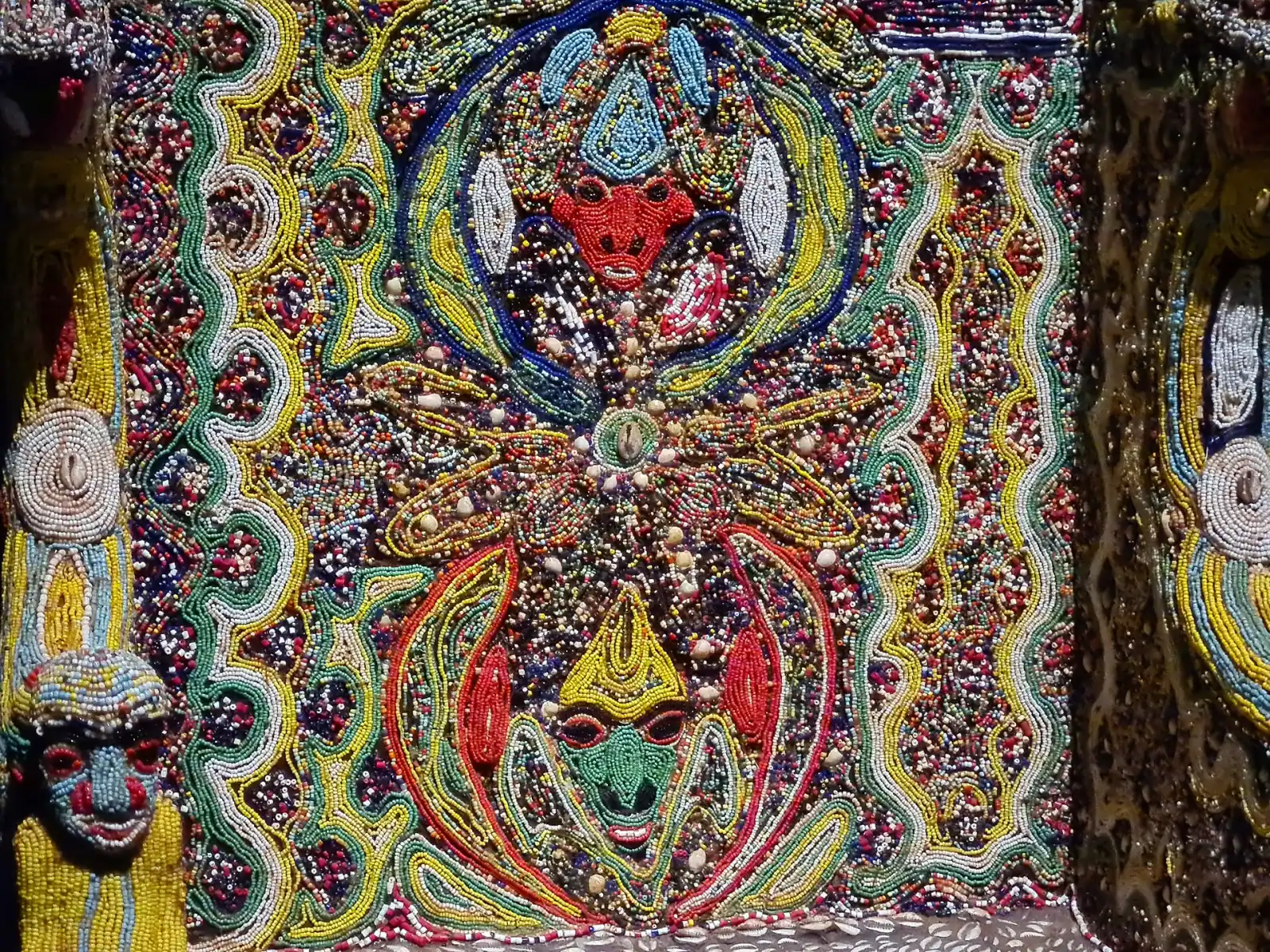
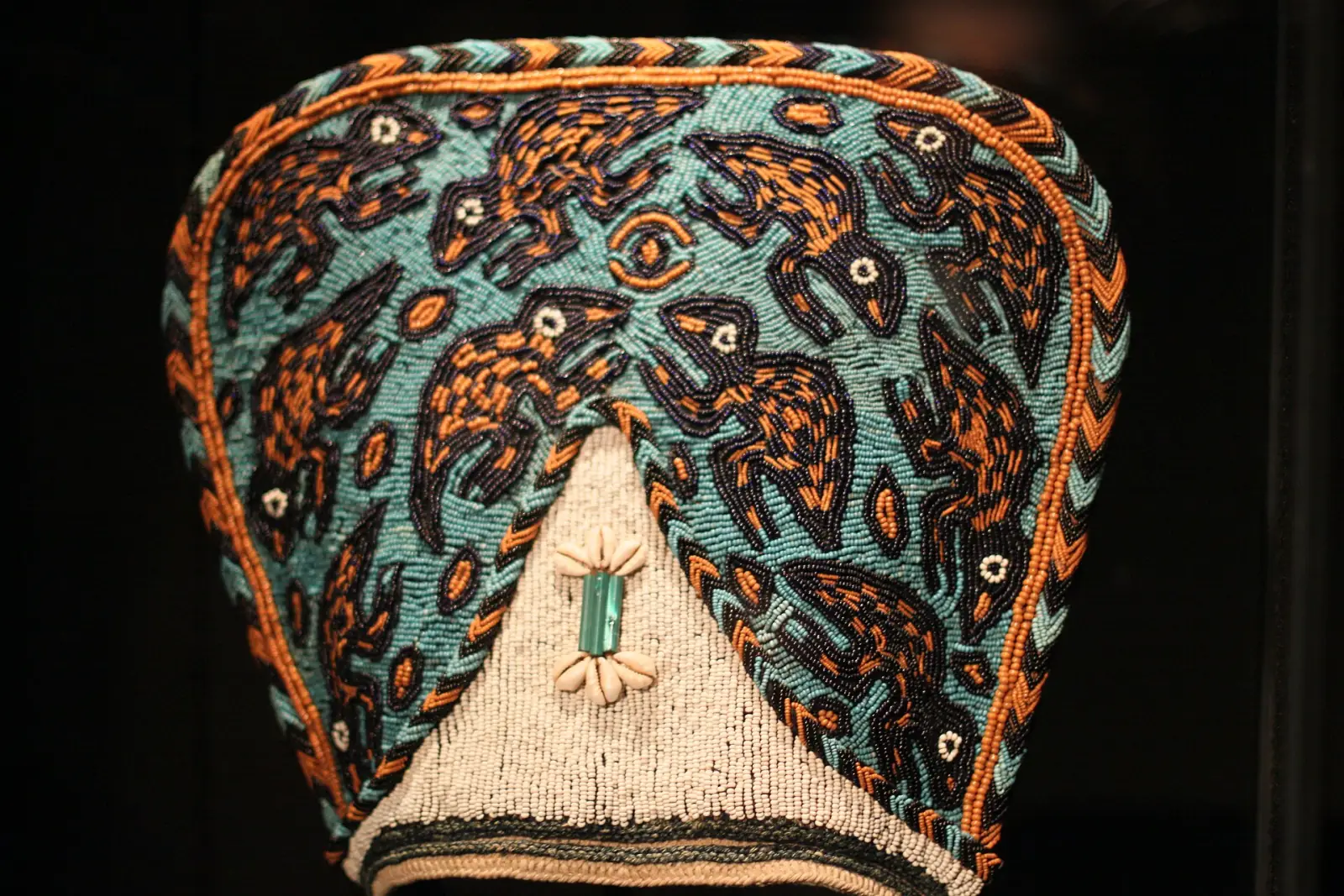
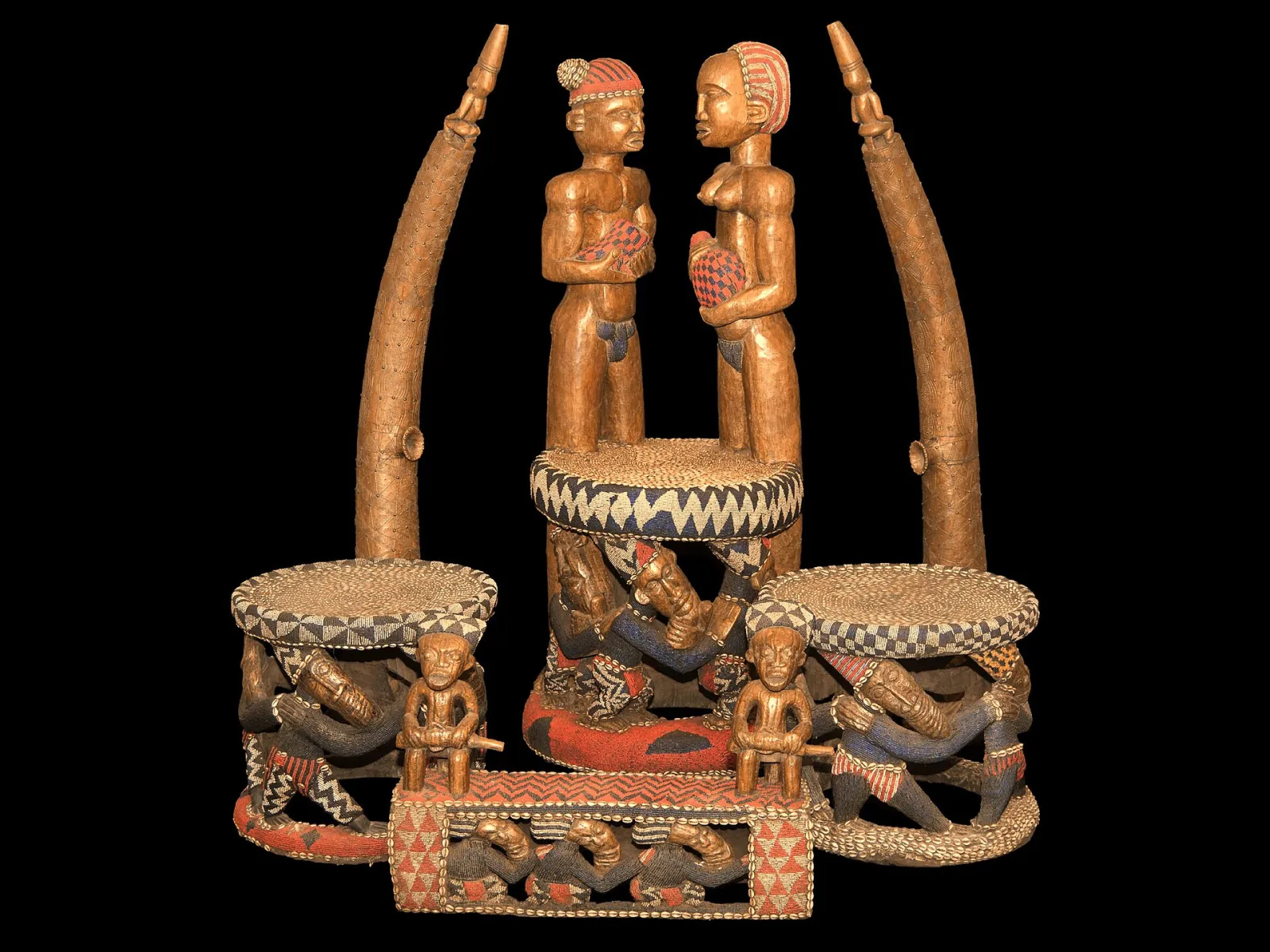
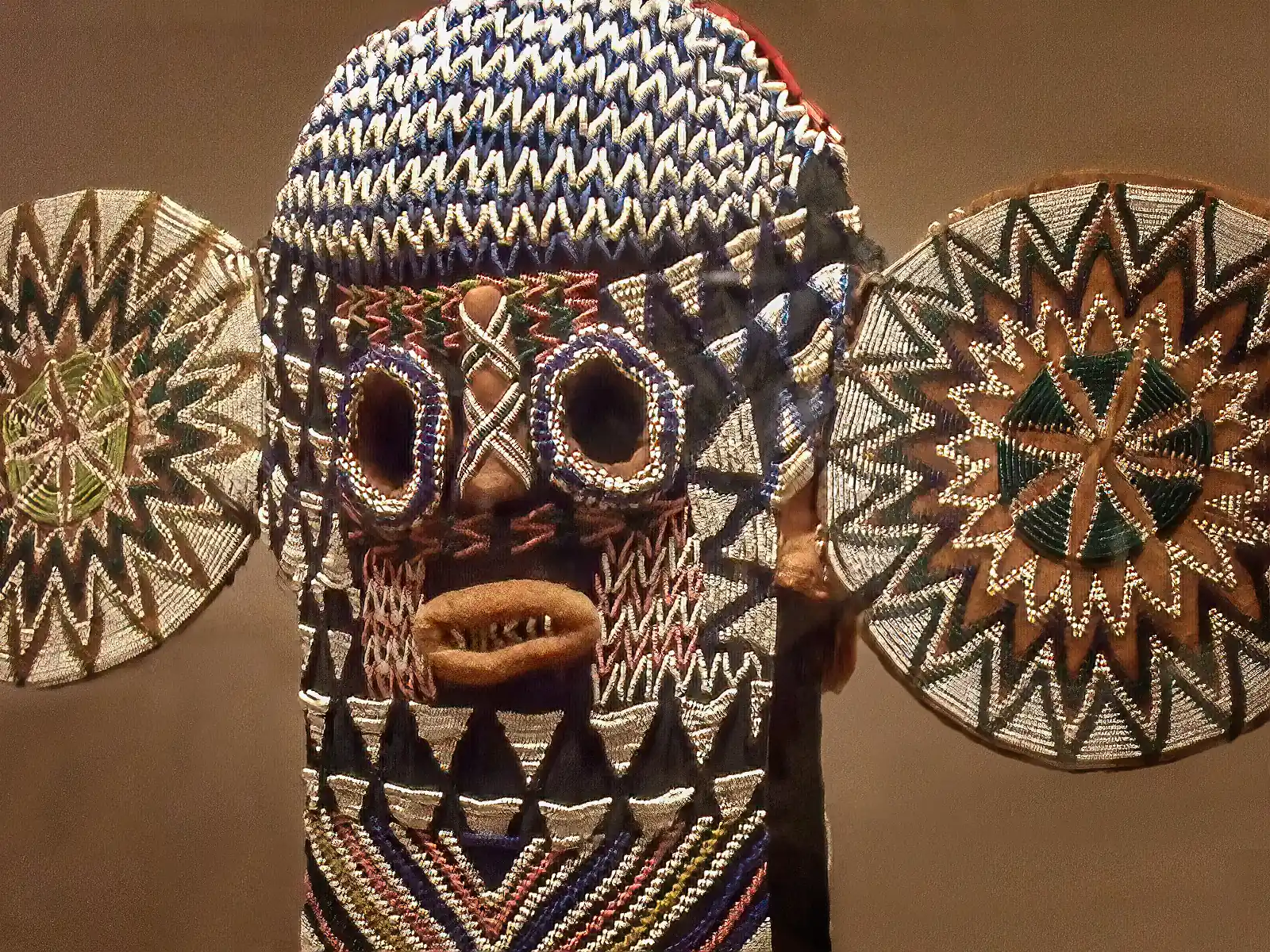
  • Beadwork on thrones, statues and adornments.

Many of these skills belong to traditional know-how and to intangible heritage. The records of the national inventory list their bearers and techniques.

ℹ️
For craftspeople

A craftsperson recognised as a tradition bearer can be entered in the inventory of intangible heritage: contact the regional delegation to compile the record.

Workshops

Workshops: making, teaching, welcoming

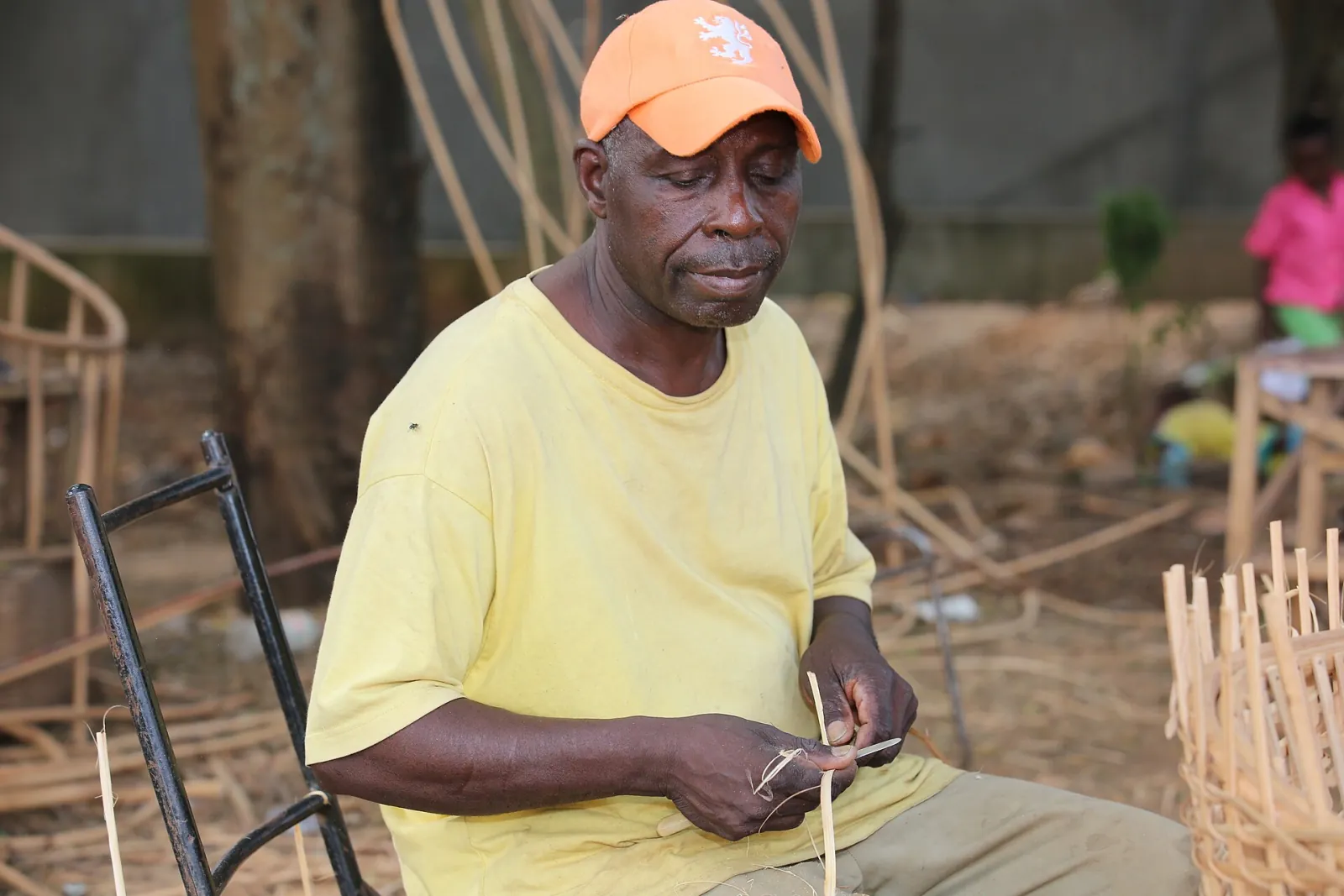
Craftsman in an orange cap weaving rattan strips in an open-air workshop

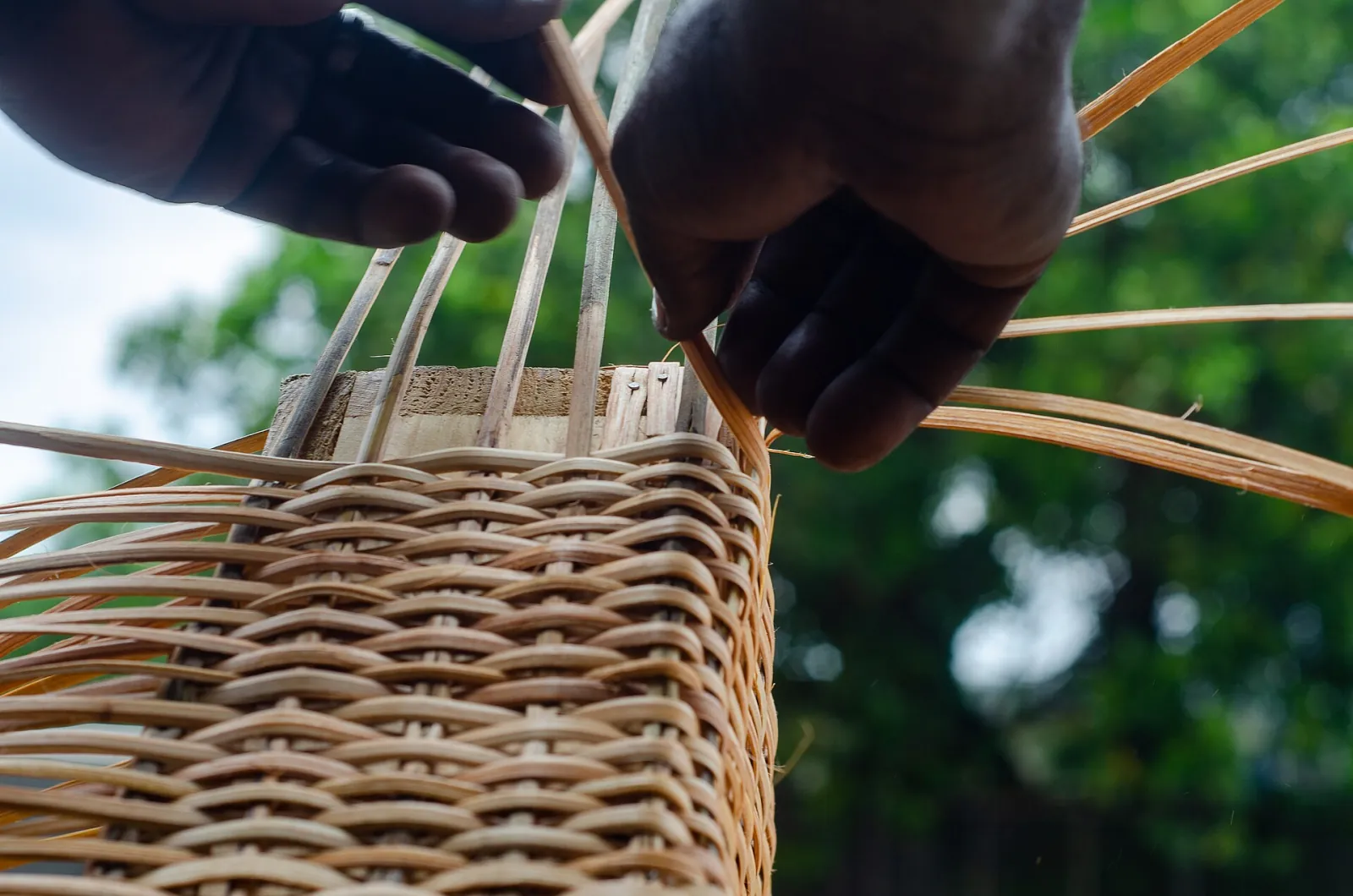
The workshop is where people learn. In most craft families, the child first observes, then helps, then makes their first pieces under the master’s eye. This oral and practical transmission remains the main mode of training, even though training centres and applied arts schools complement it.

Getting structured

A workshop can join a cooperative or an association to buy materials jointly, share exhibition premises and negotiate better prices. Association approval is the first step. The regional delegations direct craftspeople to the existing schemes.

Welcoming apprentices and trainees

A workshop that trains young people can enter into an agreement with a school, set out an apprenticeship timetable and give due value to the end-of-study diploma. Training courses are described in training for cultural professions.

Workshops can be listed in the artists’ directory, with their speciality and contact details.

Markets

Markets, fairs and sales channels

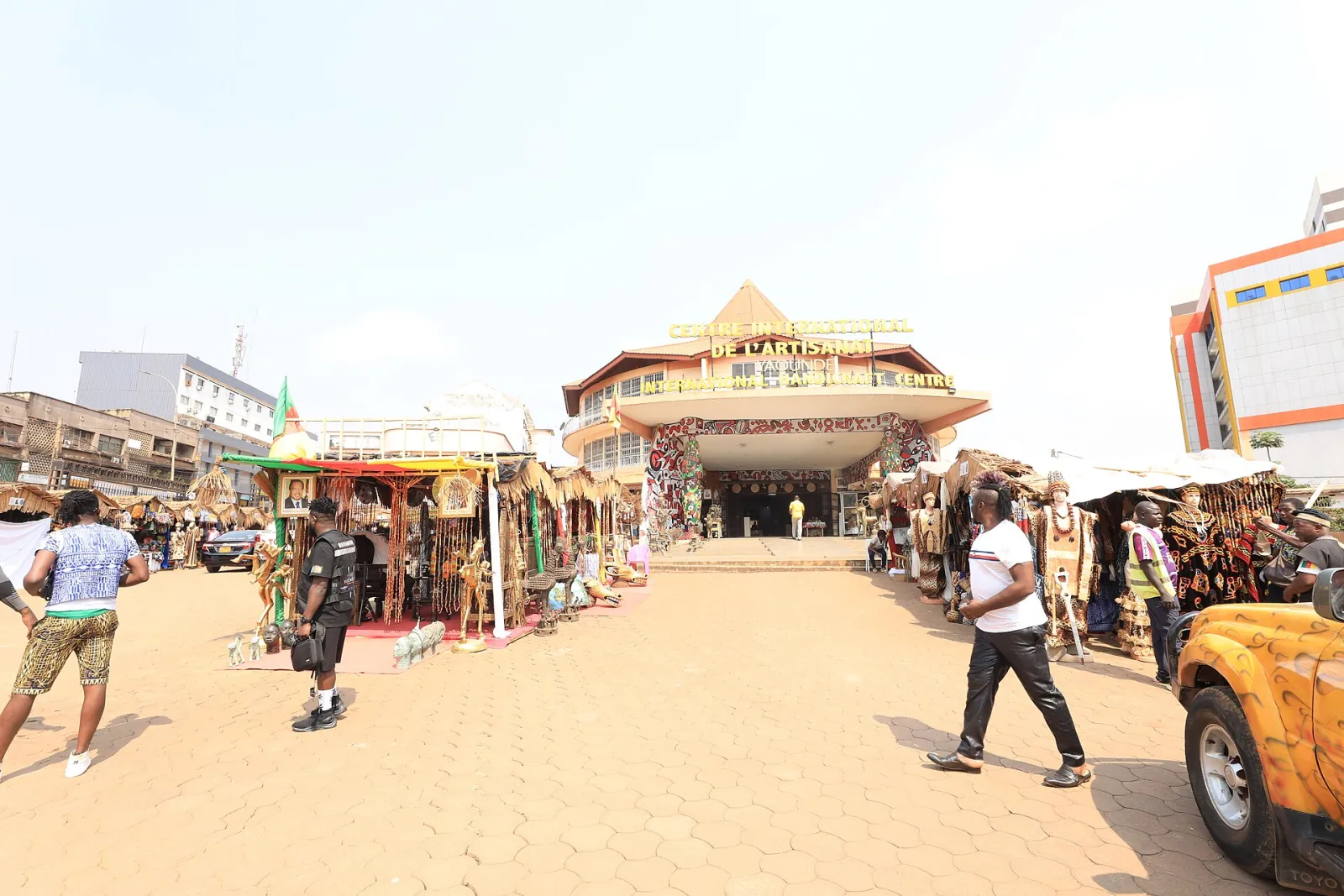
Esplanade of the International Craft Centre in Yaoundé lined with artisans' stalls

Crafts are sold where buyers meet: craft markets in the major cities, museum shops, regional fairs, national shows, galleries, hotels, airports and online platforms. Sales to order, notably for chiefdoms, churches, local authorities and businesses, remain significant.

Setting prices

The price of a piece must cover materials, working time, tools, transport and a margin to replenish stock. A displayed, consistent price, accompanied by a sheet describing the object, reassures the buyer.

ℹ️
Good to know

A new object made for sale is distinct from an old cultural property: if in doubt about the age or nature of a piece, seek advice from the regional delegation before exporting it.

Label

The label of quality for artistic crafts

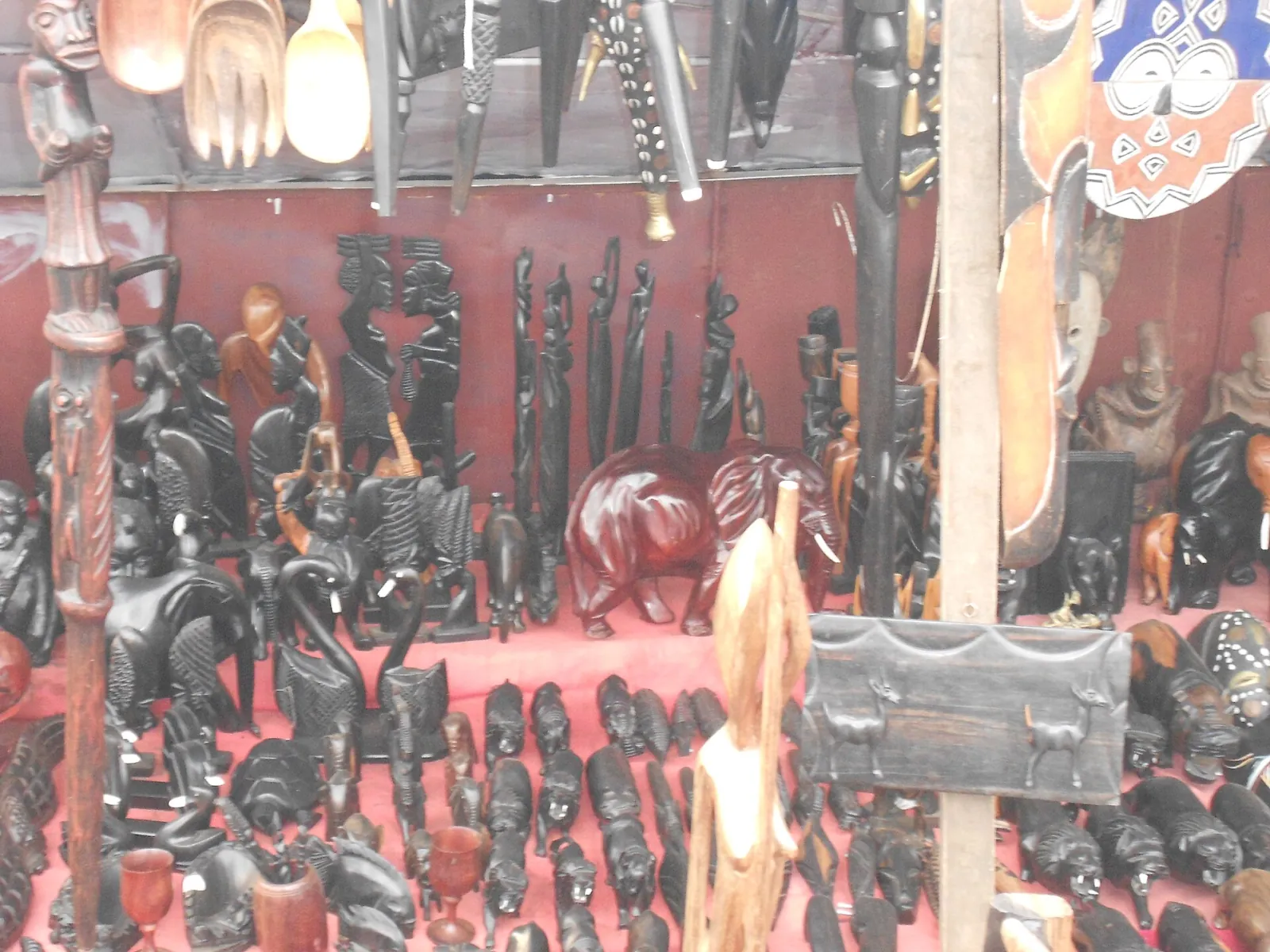
Stall of black wood carvings and masks in a craft shop in Limbe

A label is a collective mark that guarantees the origin, materials and method of manufacture of an object. It reassures the buyer, protects craftspeople against mass imitations and helps to give greater value to manual work. A quality label is planned for Cameroonian artistic crafts, with specifications drawn up with the craftspeople.

What a label could guarantee

  • The geographical origin and the know-how of the workshop;
  • The quality of materials (treated wood, metals, dyes);
  • Compliance with recognised techniques;
  • Respect for the environment and resources, notably wood;
  • Precise labelling accompanying each piece.

How the initiative is built

The label is based on consultations with trade organisations, regional delegations and community chiefs. The aim is to define realistic criteria that do not exclude modest workshops. The guidelines of the sectoral strategy and the crafts sector set the framework.

Economy

The economy of artistic crafts and heritage-related benefits

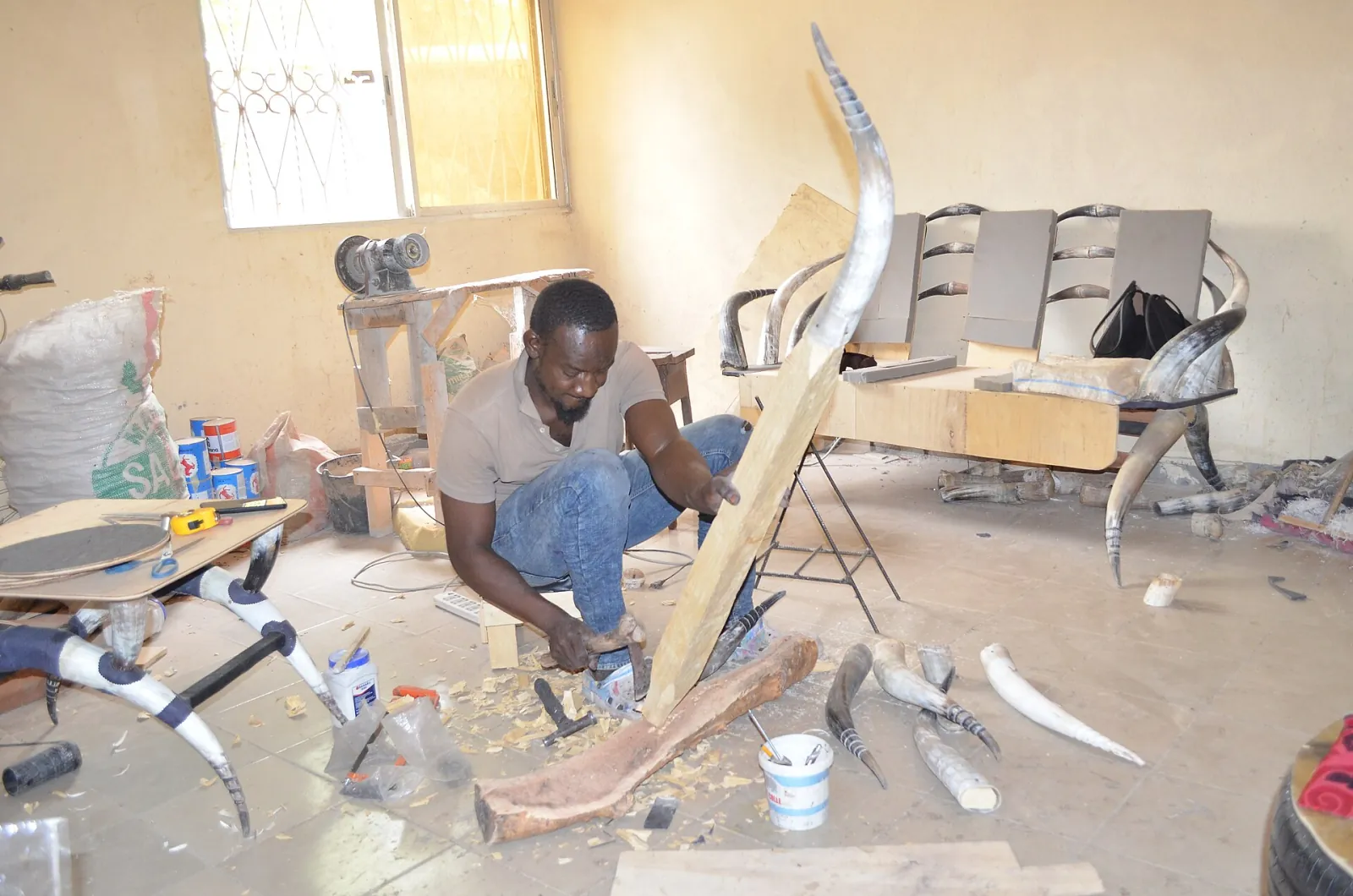
Craftsman polishing ox horns to make a chair at the Maroua craft village

Crafts are one of the country’s leading informal employers and an essential sector of the cultural economy. They sustain families, villages and neighbourhoods. The NDS30 includes them among the sectors to be developed, with design and creative services, in order to make them a source of lasting income and international outreach.

Tax benefits for heritage

Tax benefits are provided in favour of cultural heritage and patronage; they encourage businesses and individuals to support the conservation, restoration and promotion of properties and know-how. The conditions are set out in the legislative texts.

Step by step

From material to market

Choosing and preparing the material

Select the wood, clay, metal, fibres or leather, dry or treat them, and check the legal origin of the resources.

Designing the piece

Draw or model a prototype, set the dimensions, motifs and finish, and note the time required to calculate the price.

Making the object

Make the piece in the workshop with your apprentices, check its solidity and sign or mark the object.

Documenting and protecting

Photograph each piece, write a descriptive sheet, date the creation and declare original models if necessary.

Selling

Present your products at markets, in the workshop, at fairs or online, with a displayed price and careful packaging.

Passing on

Train apprentices, take part in workshop days and join a trade association to keep the know-how alive.

To act

Procedures for the artistic craftsperson

Association accreditation

Group your workshop into an association to share purchases, premises and training.

See the procedure

Subsidy

Support for equipping a workshop, training an apprentice or taking part in a trade show.

Request support

Export of works of art

The formalities to observe before taking art objects out of the territory.

Consult

Artists’ directory

Present your workshop, products and contact details to buyers and museums.

Register
To explore

Crafts in other sections

To download

The artistic craftsperson’s resources

“My hands know what my grandfather showed me, and my apprentices will learn what I show them: that is how tradition stays young.”

A wood carver, West
They shape

Journeys of artistic craftspeople

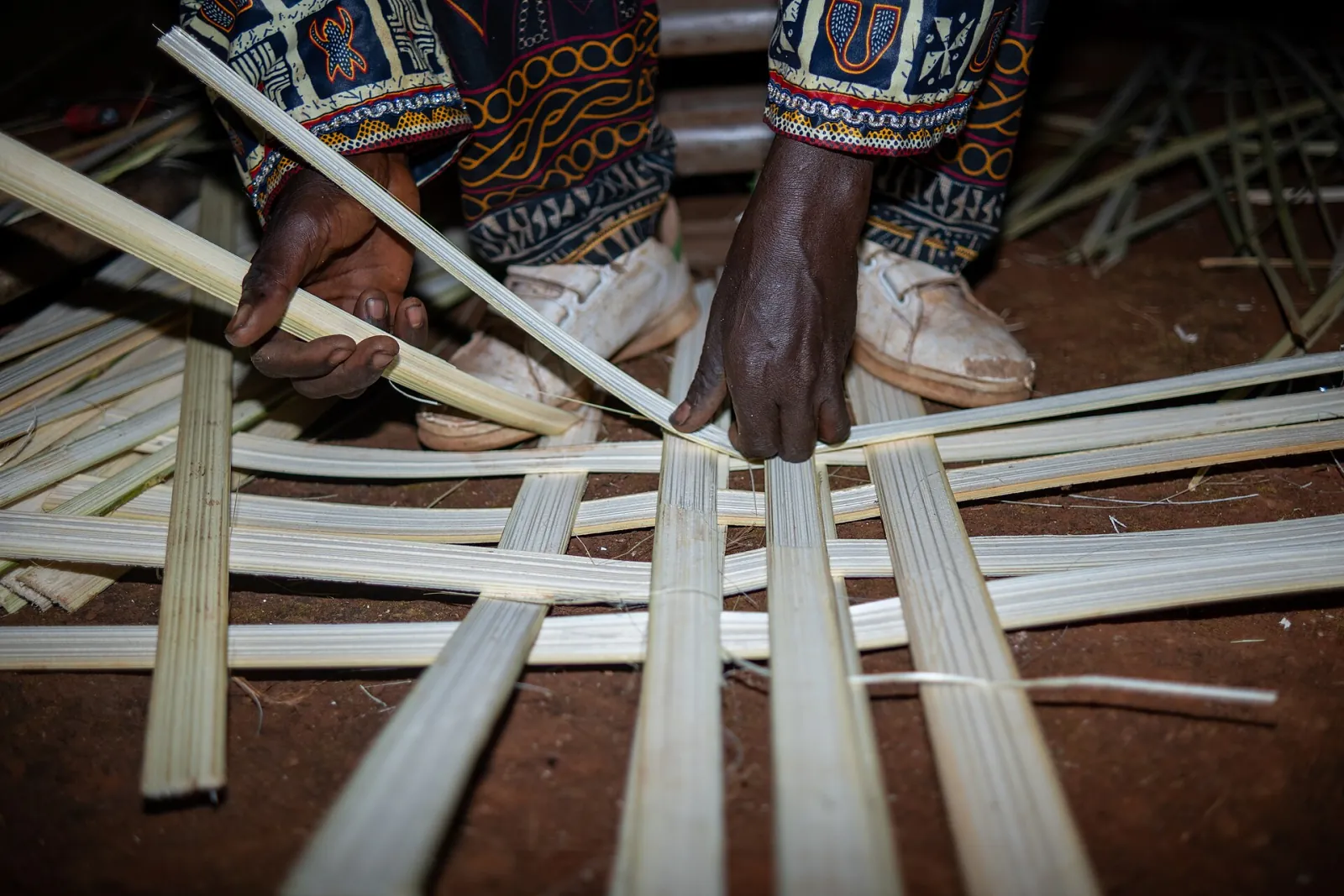
Hands of a craftsman weaving the strips of a rattan basket/ Foumban
A bronze-caster

“We cast brass as our fathers did; each piece is unique because the mould breaks at casting.”

Craftsman interlacing long bamboo strips to weave a basket/ Mokolo
A potter

“I model the clay by coiling and I pass on to my daughters each firing season.”

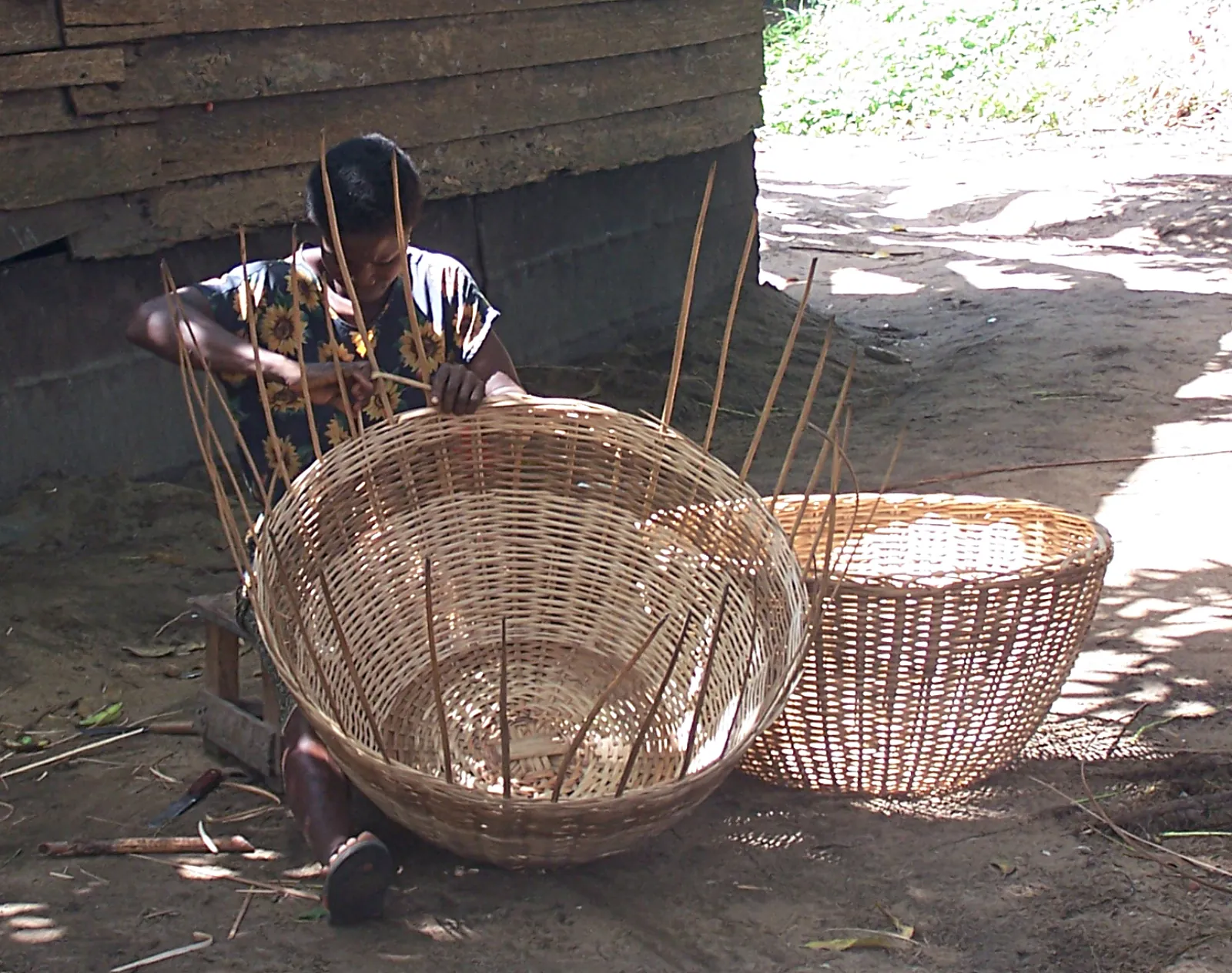
Craftsman weaving a large wicker basket outside a house, a second basket beside him/ Maroua
A leather worker

“Leather takes time; our bags are now shown at trade shows abroad.”

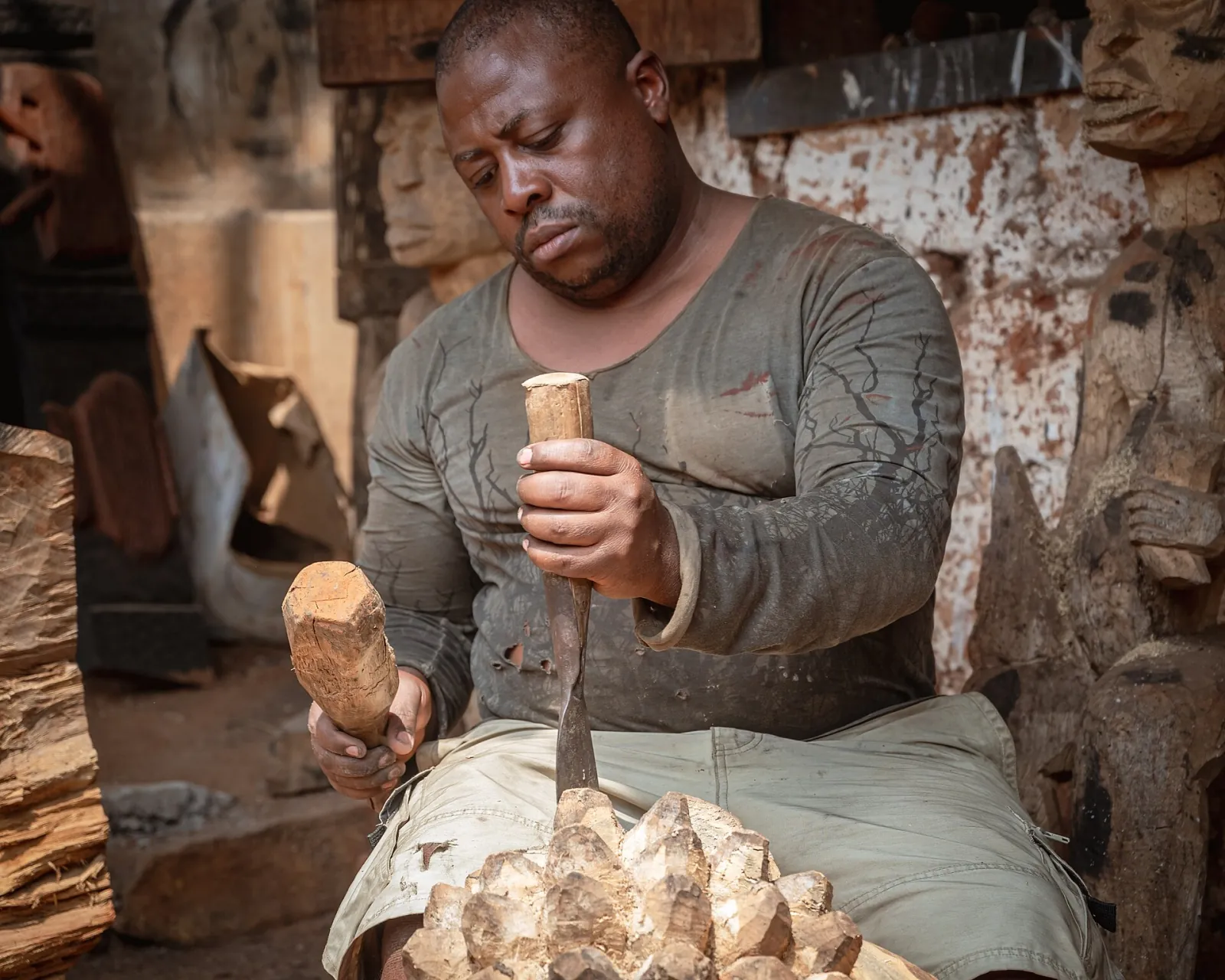
Sculptor carving a block of wood with chisel and mallet in his workshop/ Bafia
A basket maker

“Raffia is harvested, dried and plaited; a basket takes several days of work.”

Key facts

Artistic trades in one table

TradeMaterialTechniquesRenowned regions
SculptorWoodAdze, chisel, patinaWest, North-West, South
Bronze-smithBrass, bronzeLost wax, casting, chasingWest, notably Foumban
PotterClayCoil modelling, pit firingFar North, North-West, Adamawa
Basket makerRaffia, rattan, bambooPlaiting, coilingWest, South, East
WeaverCotton, fibresStrip loom, indigo, embroideryGrassfields, North
Leather workerCattle and goat leatherTanning, dyeing, sewingFar North, North
BeadworkerGlass beadsBeadwork on a wooden or fabric baseGrassfields, West
BlacksmithIronForge, hammeringNorth, Adamawa, East
Glossary

The words of artistic crafts

Applied arts

Arts that combine function and beauty in useful or decorative objects.

Studio

Place of manufacture where the master, journeymen and apprentices work.

Know-how

Body of knowledge and skills passed down from generation to generation.

Label

Collective mark guaranteeing the origin and quality of a product.

Lost-wax casting

Casting technique in which a wax model is replaced by molten metal.

Coiling

Roll of clay coiled in a spiral to build up a vessel without a wheel.

Raffia

Palm whose fibres are used for weaving, plaiting and embroidering.

Indigo

Blue dye of plant origin used for fabrics.

Apprentice

Young person learning a trade from a workshop master.

Cooperative

Group of craftspeople who pool purchases, tools and sales.

Tradition bearer

Holder of a skill recognised by their community.

On the site

Continue exploring artistic crafts on the site

Resources

Useful links for artistic crafts

Stakeholders

Who supports artistic crafts?

History

Cameroonian artistic crafts through the centuries

Before the 19th centuryCourt workshops

In the kingdoms, specialised craftspeople make thrones, masks, drums and adornments for the sovereign and initiatory societies.

Colonial eraNew buyers

Objects leave the chiefdoms, markets develop and some pieces join foreign collections.

1960s-70sCooperatives and schools

Craft centres and cooperatives structure production, and applied arts schools train a new generation.

1990sOpening to tourism

Workshops welcome visitors, art markets multiply in the major cities and products are exported.

2010sHeritage recognition

Know-how is entered in intangible heritage inventories and promoted through exhibitions.

TodayAn NDS30 sector

Crafts are included among the sectors to be developed and a quality label is planned with the craftspeople.

Questions

Your questions about artistic crafts

Where can I sell my craft products?

At craft markets, fairs and shows, in museum and hotel shops, in the workshop and on online platforms. The calendar of shows and the cultural agenda indicate the events where you can hold a stand.

How can I obtain a quality label?

A quality label is planned for artistic crafts. Its specifications are being drawn up with craftspeople and regional delegations. Contact your delegation and your trade organisation to take part in the consultation.

May I export my sculptures or objects?

New objects made for sale can be exported more freely, but any work of art or antique piece requires the formalities of the procedure for exporting works of art. If in doubt about the age of an object, seek advice before shipping.

How can I have my know-how recognised?

Contact the regional delegation: an officer helps describe the technique, the materials, the occasions of use and the bearers, then obtain the community’s consent to add the record to the inventory of intangible heritage.

Are my creations protected?

An original creation is protected by copyright from the moment it is made. Photograph each model, date it and declare the work. Traditional forms belonging to the common heritage fall under a different regime, which is explained in the copyright section.

How can I finance the equipment for my workshop?

You can apply for a grant, join together in a cooperative or an association, and approach a support fund or a patron. Prepare a quotation, a timetable and a description of the impact on employment and transmission.

Can my workshop welcome visitors?

Yes, it is even encouraged. Display your opening hours, offer demonstrations of your techniques and list the workshop in the directory and in the region’s cultural itineraries. For group visits, notify the regional delegation.

Where can I learn an artistic trade?

With a workshop master, at a vocational training centre or at an applied arts school. The artistic education section and the page on training for cultural professions present the pathways and scholarships.

Contact

Tell us about your workshop or project

Describe your trade, your workshop and your region: your message is forwarded to the competent directorate.

Competent directorate

Contact applied arts and crafts

Address

Directorate of the Development and Promotion of the Arts
Ministry of Arts and Culture
Quartier du Lac – Ministerial Zone
P.O. Box 1053 Yaoundé, Centre Region, Cameroon

Reach us

+237 6 51 70 58 41

contact@minac.gov.cm

Opening hours

Monday to Friday, 8 am to 4 pm

Works to export?

Consult the formalities for exporting works of art before shipping your pieces.

See export
WhatsApp