Coat of arms of CameroonMinistry of Arts
and Culture
Republic of Cameroon
My procedures
Home
Minister’s message
News
Press releases
Cultural calendar
Official speeches
Press review
Photo library
Video library
Calls for projects
Job vacancies
Public procurement
Newsletter
Frequently asked questions
Site map
Contact
Press area
Podcast “The Voice of Culture”
Legal notices
Privacy policy
Cookies and trackers
The Ministry
Missions and responsibilities
Organisation
Organisation chart
Minister’s Office (Cabinet)
Management team
General Secretariat
General Inspectorate
Central directorates
Regional Delegations
Institutions under supervision
Legislative texts
Regulatory texts
Sector strategy
Major projects
Budget and reports
Partners
Careers
Archives
Institutional communication
Quality and accessibility
Arts
Visual and plastic arts
Visual arts
Performing arts
Theatre
Dance
Music
Literature and books
Cinema and audiovisual
Photography
Fashion and design
Digital arts
Art crafts
Artists’ directory
Residencies
Prizes and awards
Arts education
Urban arts
Heritage
Tangible heritage
Intangible heritage
UNESCO sites
National museums
Listed monuments
National inventory
Palaces and chiefdoms
Archaeology
Linguistic heritage
Oral traditions
Traditional know-how
Restitution of cultural property
Fight against illicit trafficking
Listing and protection
Conservation and restoration
Heritage Days
Cultural landscapes
Industries
Music and recording
Cinema
Publishing and books
Digital arts
Fashion and creativity
Crafts
Cultural tourism
Funding for culture
Support funds
Incubators
Cultural entrepreneurship
Culture Observatory
Vocational training
Studies and reports
Sector statistics
Export and outreach
Intellectual property
Copyright
Legal framework
Copyright and neighbouring rights
Collective management societies
Register a work
Licences
Private copying
Fight against piracy
Model contracts
Social status of artists
Mediation
Disputes
Training
Fee scales
Register of works
Contact
Digital neighbouring rights
Public domain
Festivals
National calendar
Ngondo
Nguon
Écrans Noirs
Heritage Days
Music Day
Regional festivals
Fairs and exhibitions
Biennials
National competitions
Cultural days
Organise a festival
Event grants
Ticketing
Archives
Volunteering
Diaspora festivals
Regions
Adamawa
Centre
East
Far North
Littoral
North
North-West
West
South
South-West
Cultural map
Regional Delegations
Traditional chiefdoms
National languages
Cultural routes
Decentralised cooperation
Regional observatory
Cooperation
UNESCO
Francophonie (OIF)
African Union
Commonwealth
CEMAC
Bilateral cooperation
Cultural agreements
Professional organisations
Scholarships
Artist exchanges
Cultural years
Diaspora
Funded projects
Embassies
Technical partners
International restitution
International monitoring and calls
Services
Artist card
Show authorisation
Filming authorisation
Festival authorisation
Deposit of a work
Export of works of art
Listing of a property
Grant application
Association accreditation
File tracking
Forms
Fees
Opening hours and addresses
Reporting
Online help
My account
One-Stop Shop
Heritage

Restitution of cultural property

National committee, repatriation files, returns and international cooperation: the framework set by Law No. 2013/003 for bringing back illicitly exported cultural property, together with the communities.

Updated on 6 November 20264 sub-pages
Legal frameworkDomestic and international
Possessor in good faithFair compensation
Return costsBorne by the offender
Cameroon–Colombia missionJuly 2026
Repatriation

Bringing back cultural property

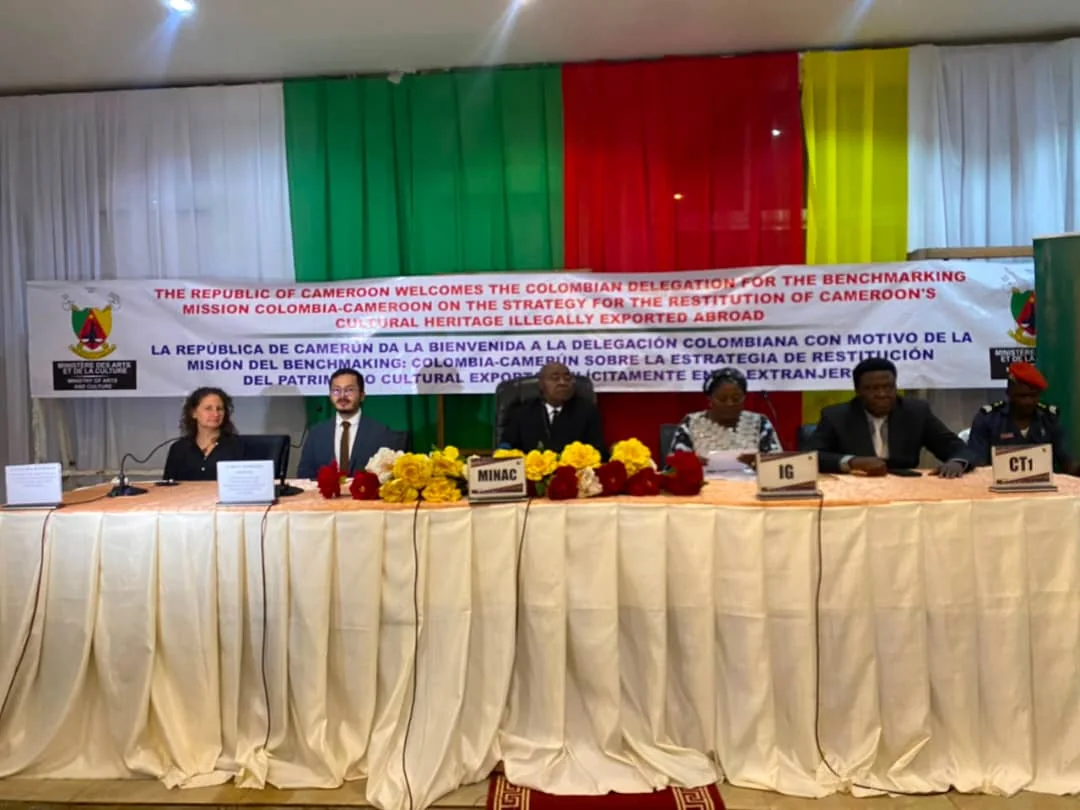
Colombian delegation welcomed by the Ministry on the restitution of cultural property

Chiefdom objects, masks, statues, archaeological pieces and archives have left Cameroon, sometimes by illicit routes, sometimes in complex historical circumstances. Restitution aims to bring them back to the country and, above all, to the communities that are their legitimate custodians.

Law No. 2013/003 of 18 April 2013 on cultural heritage reserves to the State the right to undertake all actions for the repatriation of illicitly exported property, in accordance with domestic and international law. The possessor of stolen property must return it; a good-faith possessor may claim fair compensation; the costs of return are borne by the offender. This page explains the organisation, the stages and the cooperation.

  • An interministerial committee and the Ministry as technical authority
  • Files examined with provenance research and communities
  • International cooperation, including the benchmarking mission with Colombia
Learn about the national committee
Governance

The national repatriation committee

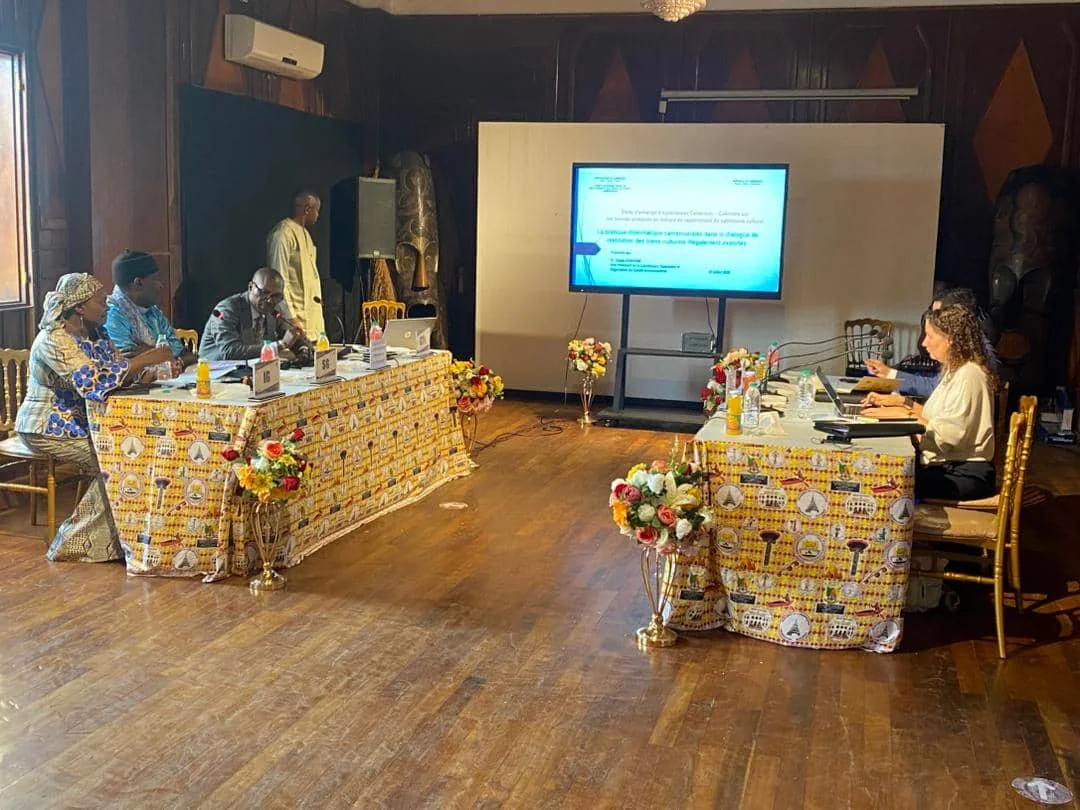
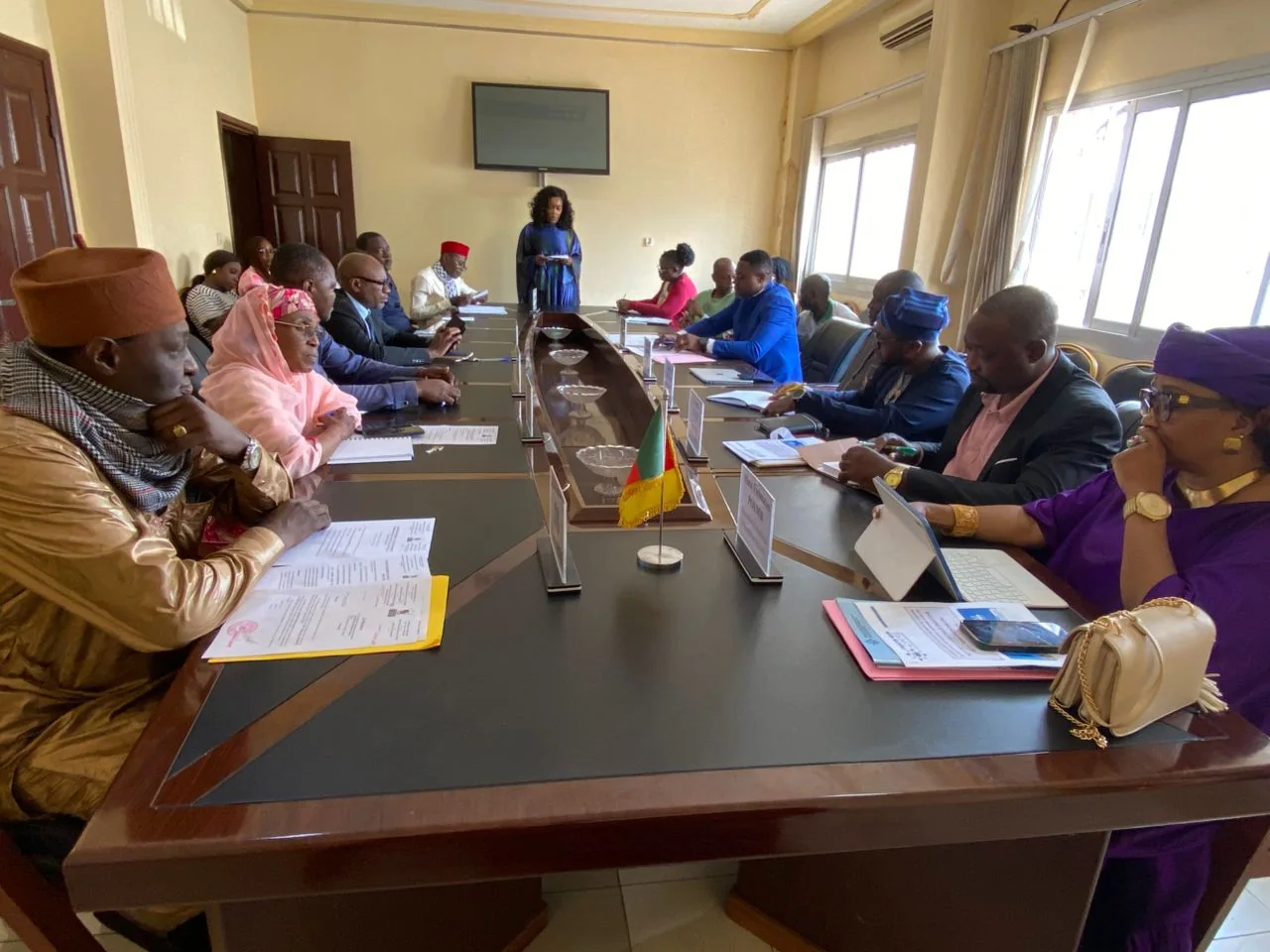
Working meeting around a large table in a Ministry room

The repatriation of cultural property illicitly exported abroad falls under a three-tier national decision-making framework. At the top, an interministerial committee, set up on presidential instruction, brings together the administrations concerned: foreign affairs, justice, finance and customs, territorial administration, communication, as well as the Ministry of Arts and Culture. It sets the guidelines, arbitrates priorities and commits the State in negotiations.

The Ministry, technical authority

The Ministry of Arts and Culture is the technical authority of the process. Its services examine the files: identification of the property, verification of its status, provenance research, expert assessment, cost estimation and preparation of requests. The Directorate of Cultural Heritage, the Directorate of Legal Affairs and the National Museum each contribute to this work.
Specialised commissions

  • a legal commission, responsible for procedures, seizures and evidence;
  • a scientific commission, which carries out provenance research and expert assessment of objects;
  • a communication commission, which ensures that the State speaks with one voice;
  • a financial and logistics commission, which plans the costs and the transport protocol.

This framework is based on the 2013 law and on the international instruments to which the country is a party, detailed in the international restitution section.

ℹ️
Guiding principle

Nothing concerning communities is decided without them: the chiefdoms and families concerned are involved from the opening of a file.

Procedures

Current files: from monitoring to return

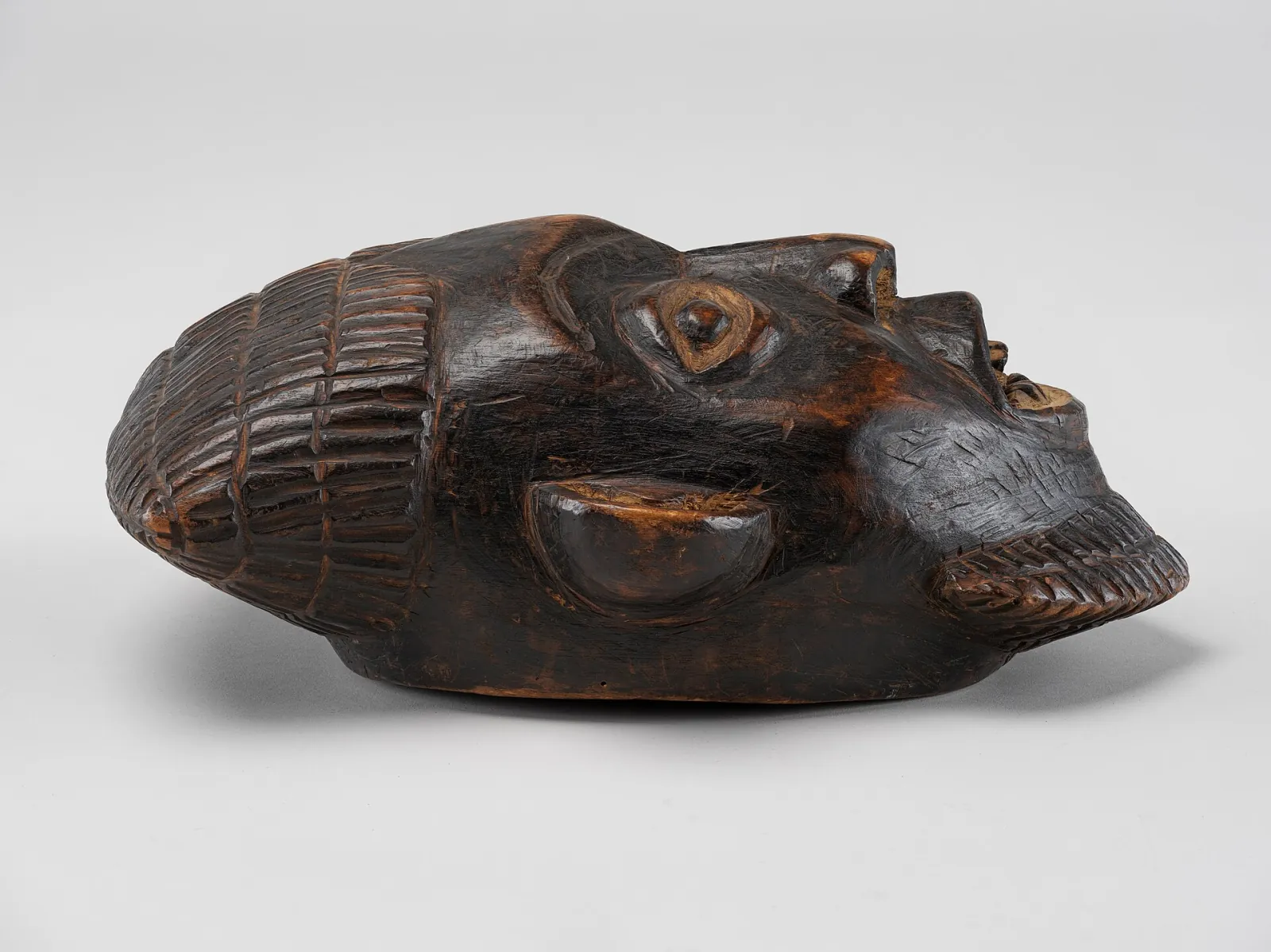
Carved wooden dance helmet mask with a ridged headdress, shown against a neutral background

A repatriation file begins with a piece of information: an object spotted in an auction or a public collection, a report from a community, a customs seizure, an alert from an international partner. It then follows a rigorous path. As a matter of principle, the site announces no file until it has been made public by the authorities: confidentiality protects the negotiations and the security of the property.

Types of files

  • Property stolen or exported in breach of the law, for which judicial proceedings and police cooperation are available;
  • Property held by foreign institutions, including museums, which are the subject of diplomatic and scientific negotiations;
  • Property in private hands, to which the rules on the good-faith possessor and fair compensation apply;
  • Human remains and sacred objects, handled with particular concern for the respect of communities.

Stages of examination

Each file goes through the identification of the object, verification of its status with regard to listing and protection, provenance research, designation of the legitimate recipient, assessment of costs and definition of the timetable. The documentation draws on the national inventory, whose quality determines success: an object that has been photographed, described and inventoried is an object that can be claimed.

Cases are followed up in conjunction with the fight against illicit trafficking and international cooperation.

ℹ️
Do you have information?

A suspicious sale of a property, a photograph in a foreign collection: pass it on via the reporting form.

Returns

Returns made and what follows

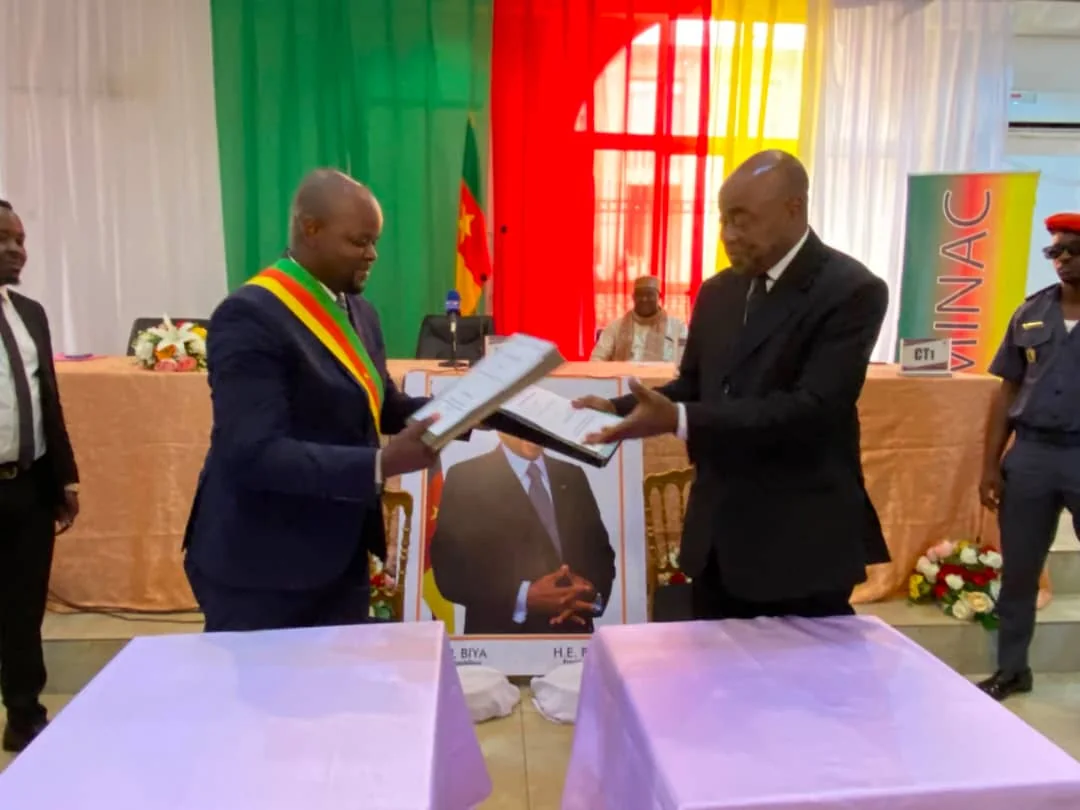
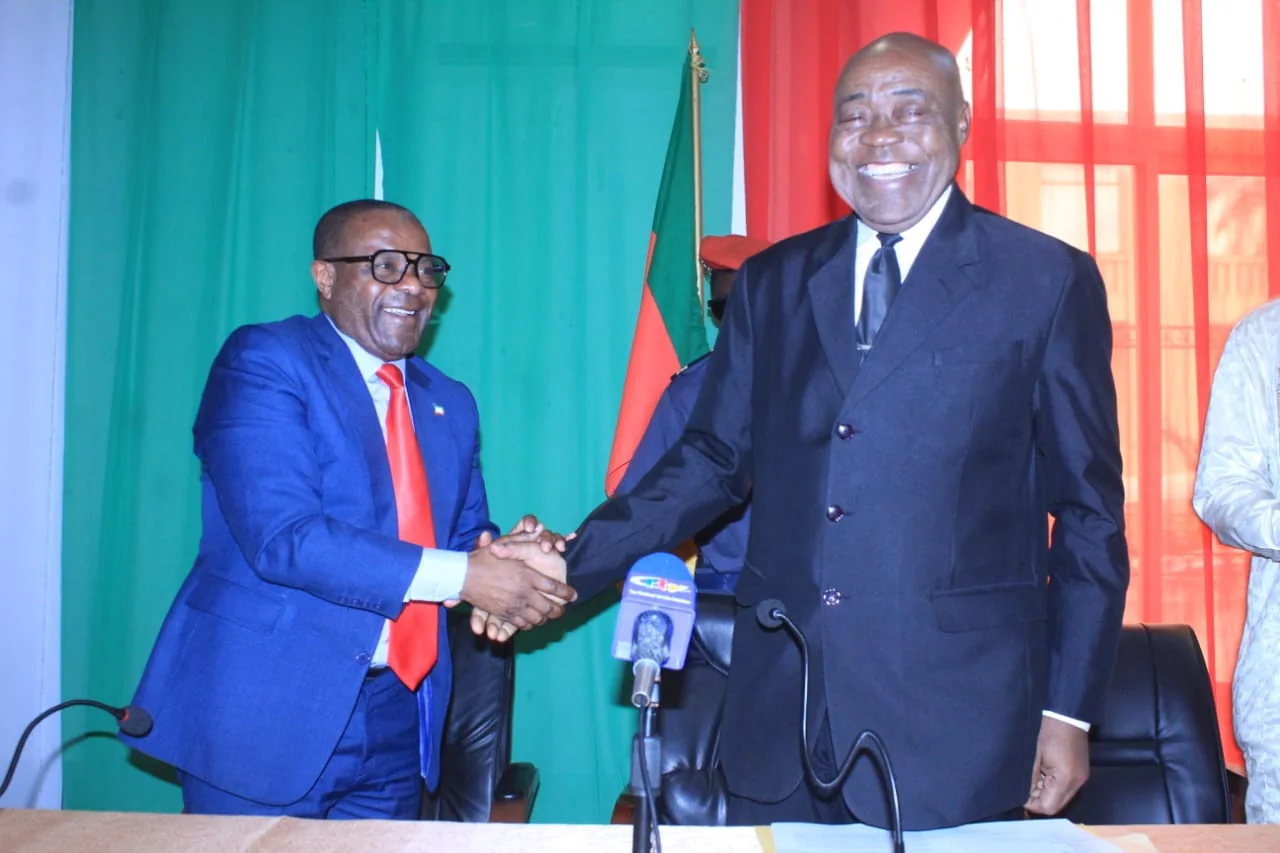
Handshake between the Minister and a partner during an official meeting

A return is not an end but a beginning. When property is repatriated, it follows a precise protocol that guarantees its integrity, its traceability and its reception by the communities. Returns are recorded with their date, provenance, condition on arrival and the decision on allocation: no return is presented without a source or the agreement of the authorities.

From arrival to allocation

  1. Reception at the border, with measures to prevent any holding of the property at customs;
  2. Condition report by conservators, with photographs and a report;
  3. Stabilisation and conservation in storage under controlled conditions, according to the principles of conservation and restoration;
  4. Inventory and registration in the heritage register;
  5. Decision on allocation, in consultation with the community of origin: return to the chiefdom, display in a museum, temporary deposit;
  6. Return ceremony, public or ritual according to custom.
Cooperation

International cooperation and benchmarking

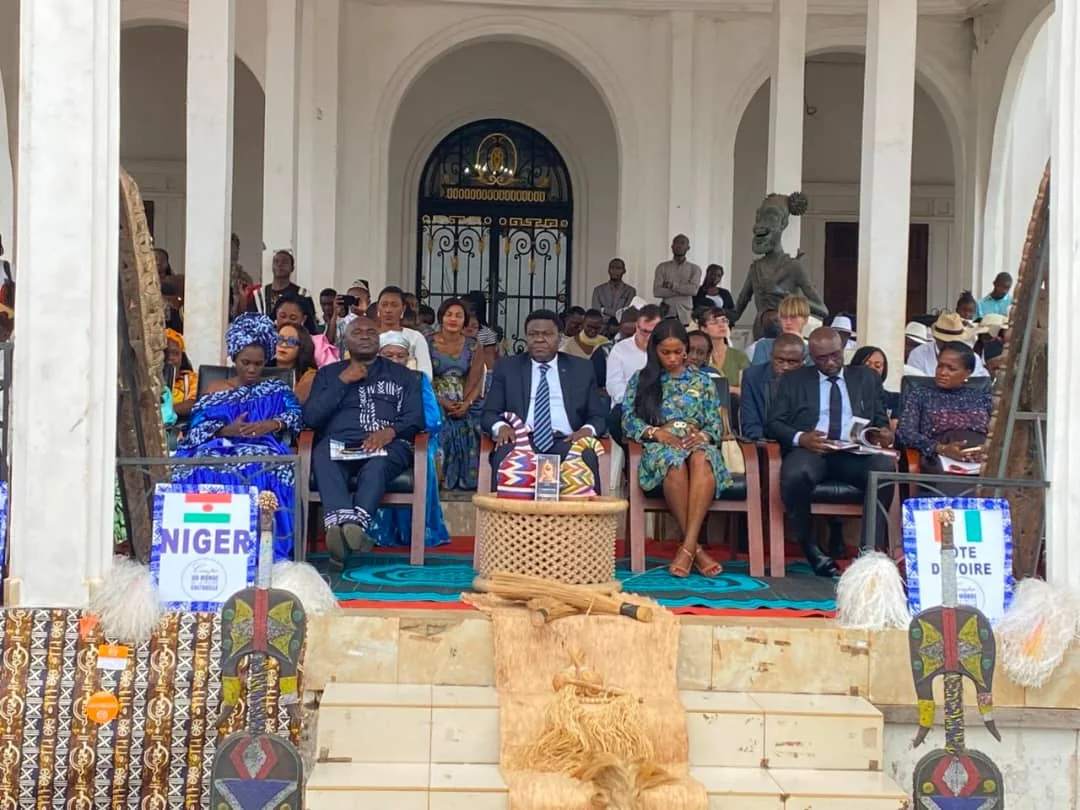
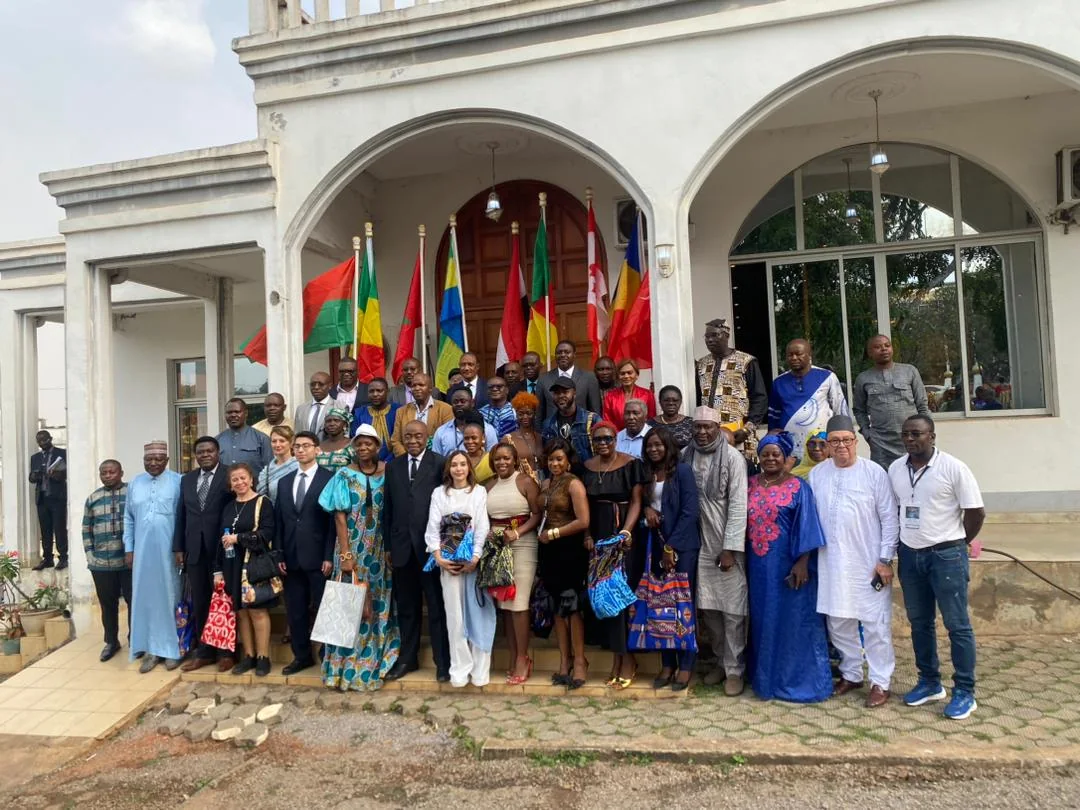
Foreign delegations seated under the Ministry gallery during a ceremony

Restitution is a matter for partners. Cameroon works with the countries, museums, international organisations and experts who can facilitate the identification and return of property. The international framework includes in particular the UNESCO conventions on combating illicit trafficking, cooperation under bilateral cultural agreements and dialogue with the African Union.

The Cameroon–Colombia mission

In early July 2026, a benchmarking mission brought together the Cameroonian committee and its Colombian counterpart responsible for the repatriation of cultural property. The discussions covered three themes: financing and organising repatriation (chain of responsibility and budgetary sovereignty), communicating about illegally exported heritage, and involving communities through the recontextualisation of objects.

  • Cost planning: transport, conservation, courier services and customs;
  • Responsibility of holding countries: Cameroon intends to see them assume their share of the financial burden;
  • Logistics protocol: suitable packaging, chain of responsibility and traceability;
  • Co-financing: a triangular model between the two countries is under study.

A single voice

Communication is a matter of strategy: the State speaks with one voice, to lend credibility to the process with partners and to mobilise public opinion. For the diplomatic dimension, see the page on international restitution and those on UNESCO and bilateral cooperation.

ℹ️
Key points

The Ministry presented these exchanges in its news; the mission is followed up through official channels.

Law and ethics

The legitimate recipient and provenance research

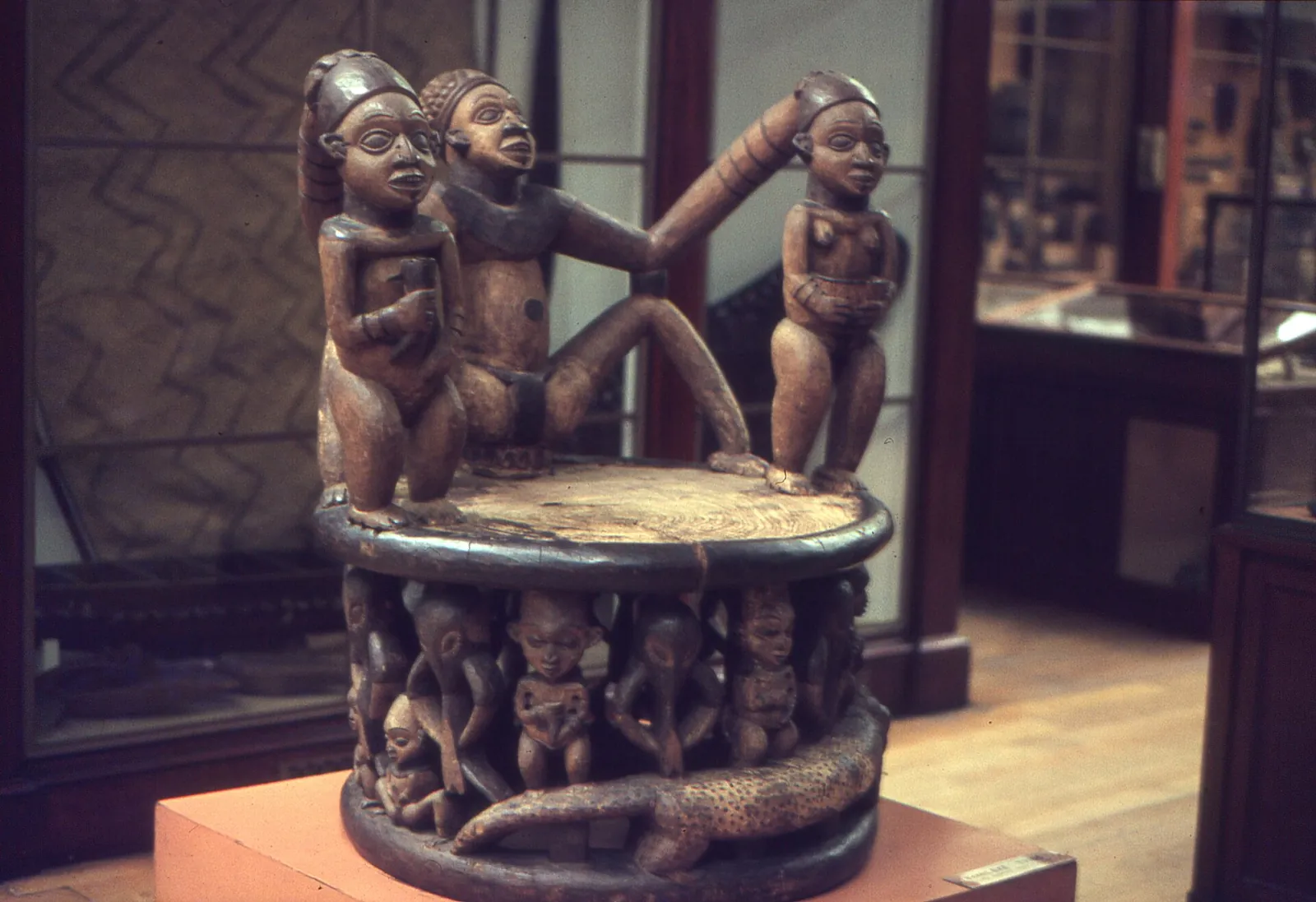
Bamileke chief's stool carved with figures and a crocodile, in a museum case

Knowing to whom an object should return is often harder than finding it. An item may have been made by a workshop, used by a secret society, held by a lineage, given to a notable, then transferred. Provenance research reconstructs this biography: archives, collection registers, old photographs, oral testimonies, comparison with similar objects.

Working with communities

Traditional chiefdoms and families are consulted to establish which community is the custodian of the object and under what rules: some property has a sacred function and cannot be displayed, other items must return to a specific place. Oral traditions are a valuable source for establishing the history of an object.

The historical context

The country’s history, notably under German rule and then under the French and British administrations, produced very diverse circumstances: gifts, purchases, war booty, exchanges, scientific collections. Each file is examined in its context, with jurists, historians and archaeologists, in conjunction with archaeology when it concerns excavated pieces.

The question of the legitimate recipient is shared by many countries, and caution prevents a return from turning into a conflict between communities.

Step by step

The path of a repatriated property

Identify

An object is identified in a sale, a collection or a seizure; the information is passed to the Ministry through official channels.

Document

The services compare it with the inventory, gather photographs, archives and testimonies, and establish the provenance.

Classify

The legal status is verified: recognised or listed, exported without authorisation, stolen, held in good faith or acquired in a disputed context.

Negotiate

The interministerial committee and diplomacy open dialogue with the holder, first amicably and then, if necessary, through the courts.

Organise transport

Costs, packaging, insurance, courier services and customs are planned together with the chain of responsibility.

Receive

Condition report, conservation, inventory and allocation are decided with the community of origin.

Key facts

Situations of possession at a glance

SituationApplicable regimeMain routeReturn costs
Stolen propertyRestitution owed by the possessorLegal action and police cooperationBorne by the offender
Property exported without authorisationPermanent export prohibited for recognised or listed propertySeizure, proceedings and repatriation by the StateBorne by the offender
Possessor in good faithFair compensation possibleAmicable or judicial negotiationAccording to the agreement reached
Property in a foreign collectionInternational law and diplomatic dialogueRequest from State to State or to an institutionShared according to the agreements
Property temporarily taken outPrior authorisation of the MinisterMonitoring of return at the due dateAccording to the conditions of the authorisation
Property put up for saleMonitoring and reportingObjection, alert and dialogue with the auction houseVariable
Property seized at customsDomestic law and conventionsSeizure, expert assessment and repatriationBorne by the offender
Journey

A struggle for memory in five stages

2013The cultural heritage law

Law No. 2013/003 of 18 April 2013 establishes the State’s right to undertake the repatriation of illicitly exported property.

Following yearsInventory and recognition

The survey of property and its legal recognition make it possible to identify what can be claimed.

On presidential instructionThe interministerial committee

An interministerial committee is set up to coordinate actions for the repatriation of illicitly exported property.

Early July 2026Benchmarking mission

The committee holds discussions with the Colombian delegation on financing, logistics, communication and communities.

Since thenA single voice

The State structures its communication and presents its actions in its news and institutional events.

To explore

Restitution in other sections

“To master the narrative is to master the negotiation: in a restitution process, the battle of communication precedes the diplomatic battle.”

A member of the communication commission
Voices

Voices of restitution

“
When a mask comes back, it is not a museum object coming home: it is a relative returning to his house.
A chiefdom notable
West Region
“
We have learned that every old photograph is a piece of evidence: without an inventory, it is impossible to prove that an object belongs to us.
A curator
National Museum
“
The committee listens to the chiefdoms before deciding: that is what makes the process legitimate in the eyes of the communities.
A traditional chief
North-West Region
“
Exchanges between countries of the South help us not to reinvent methods that already exist elsewhere.
A heritage lawyer
Yaoundé
To act

Four actions to protect property

Report a property

Have you spotted a Cameroonian object for sale or in a collection? Report it, stating the source.

Make a report

Have items inventoried

A well-documented object is easier to claim: apply to have your property entered in the inventory.

View the inventory

Request a listing

Listing protects property and prohibits its permanent export.

Request listing

Export temporarily

A loan for an exhibition abroad requires the Minister’s authorisation.

See the procedure
To download

Resources on repatriation

Glossary

The words of restitution

Repatriation

Return to the country of origin of cultural property that was illicitly exported.

Restitution

Handing over of property to its owner or to the legitimate custodian community.

Possessor in good faith

A person who holds property without knowing that it was stolen or illegally exported.

Fair compensation

A reasonable sum that the good-faith possessor may receive upon restitution.

Provenance

The history of an object from its making to its current place of possession.

Recontextualisation

Restoring to an object its social, ritual and community meaning.

Chain of responsibility

The succession of actors who answer for an object during its transport.

Traceability

The ability to follow an object at each stage, with supporting evidence.

Benchmarking

Comparison with the practices of another country in order to draw out methods.

Courier service

Secure transport service for valuable objects.

Temporary export

Removal of property for a limited period, with the Minister’s authorisation.

Technical authority

The administration responsible for examining a file and advising the committee.

On the site

Going further on the memory of objects

Resources

Useful links on restitution

Stakeholders

Who acts for repatriation?

Questions

Your questions on restitution

Who decides to launch a restitution procedure?

The State, which reserves the right to undertake all actions for the repatriation of illicitly exported property. The interministerial committee guides the files and the Ministry of Arts and Culture, as technical authority, examines them with the legal and scientific services.

Must a good-faith possessor return the object?

A good-faith possessor may claim fair compensation. Stolen property must be returned; the compensation takes into account good faith, the circumstances of acquisition and the applicable conventions, and is settled through negotiation or by the court.

Who pays the costs of return?

Under the law, the costs of recovery and return are borne by the offender. For files with no identified offender, Cameroon argues that holding countries should assume their share of responsibility, also relying on co-financing.

What happened during the mission with Colombia?

In early July 2026, the Cameroonian committee held discussions with the Colombian delegation on repatriation funding, communication and the place of communities. The two sides compared their methods of cost planning and logistics.

May I claim an object belonging to my family that is held abroad?

Write to the Ministry with a description, photographs and any document on the history of the object. The file will be examined by the committee, which will tell you the appropriate procedures and the proof of provenance to gather.

How can I tell whether an object was exported illegally?

You need to compare its date of departure from the country, its status (recognised or listed), the export authorisations and the customs documents. An expert from the Ministry can help you establish this chronology.

Are repatriated objects put on display?

Not necessarily. The decision on allocation is taken with the community of origin: return to the chiefdom, museum display, temporary deposit or storage. Some sacred objects are not shown to the public.

How can I help the Ministry with its research?

By sending verifiable information through the reporting form: photograph, place, date, seller, lot number. Never try to acquire the object yourself: you would risk feeding the illicit market.

Where can I follow the progress of restitution actions?

In the Ministry’s news and press releases, which report on missions, meetings and returns. Sensitive files remain confidential while negotiations are under way.

Contact

Write to the Ministry: Restitution of Cultural Property

Specify the property or site concerned.

Competent directorate

Write to the restitution service

Address

Directorate of Cultural Heritage
Ministry of Arts and Culture
Quartier du Lac – Ministerial Zone
P.O. Box 1053 Yaoundé, Centre Region, Cameroon

Reach us

+237 6 51 70 58 41

contact@minac.gov.cm

Opening hours

Monday to Friday, 8 am to 4 pm

Property to report?

A Cameroonian object for sale or in a foreign collection: pass the information to the Ministry.

Make a report
WhatsApp