Coat of arms of CameroonMinistry of Arts
and Culture
Republic of Cameroon
My procedures
Home
Minister’s message
News
Press releases
Cultural calendar
Official speeches
Press review
Photo library
Video library
Calls for projects
Job vacancies
Public procurement
Newsletter
Frequently asked questions
Site map
Contact
Press area
Podcast “The Voice of Culture”
Legal notices
Privacy policy
Cookies and trackers
The Ministry
Missions and responsibilities
Organisation
Organisation chart
Minister’s Office (Cabinet)
Management team
General Secretariat
General Inspectorate
Central directorates
Regional Delegations
Institutions under supervision
Legislative texts
Regulatory texts
Sector strategy
Major projects
Budget and reports
Partners
Careers
Archives
Institutional communication
Quality and accessibility
Arts
Visual and plastic arts
Visual arts
Performing arts
Theatre
Dance
Music
Literature and books
Cinema and audiovisual
Photography
Fashion and design
Digital arts
Art crafts
Artists’ directory
Residencies
Prizes and awards
Arts education
Urban arts
Heritage
Tangible heritage
Intangible heritage
UNESCO sites
National museums
Listed monuments
National inventory
Palaces and chiefdoms
Archaeology
Linguistic heritage
Oral traditions
Traditional know-how
Restitution of cultural property
Fight against illicit trafficking
Listing and protection
Conservation and restoration
Heritage Days
Cultural landscapes
Industries
Music and recording
Cinema
Publishing and books
Digital arts
Fashion and creativity
Crafts
Cultural tourism
Funding for culture
Support funds
Incubators
Cultural entrepreneurship
Culture Observatory
Vocational training
Studies and reports
Sector statistics
Export and outreach
Intellectual property
Copyright
Legal framework
Copyright and neighbouring rights
Collective management societies
Register a work
Licences
Private copying
Fight against piracy
Model contracts
Social status of artists
Mediation
Disputes
Training
Fee scales
Register of works
Contact
Digital neighbouring rights
Public domain
Festivals
National calendar
Ngondo
Nguon
Écrans Noirs
Heritage Days
Music Day
Regional festivals
Fairs and exhibitions
Biennials
National competitions
Cultural days
Organise a festival
Event grants
Ticketing
Archives
Volunteering
Diaspora festivals
Regions
Adamawa
Centre
East
Far North
Littoral
North
North-West
West
South
South-West
Cultural map
Regional Delegations
Traditional chiefdoms
National languages
Cultural routes
Decentralised cooperation
Regional observatory
Cooperation
UNESCO
Francophonie (OIF)
African Union
Commonwealth
CEMAC
Bilateral cooperation
Cultural agreements
Professional organisations
Scholarships
Artist exchanges
Cultural years
Diaspora
Funded projects
Embassies
Technical partners
International restitution
International monitoring and calls
Services
Artist card
Show authorisation
Filming authorisation
Festival authorisation
Deposit of a work
Export of works of art
Listing of a property
Grant application
Association accreditation
File tracking
Forms
Fees
Opening hours and addresses
Reporting
Online help
My account
One-Stop Shop
Copyright

Legal framework

The Law of 19 December 2000, its implementing decrees, international conventions and case law: all the texts that protect creators in Cameroon, explained with practical cases.

Updated on 6 November 20264 sub-pages
Reference law2000/011
Duration of economic rightsLifetime + 50 years
Collective management societies5
Maximum penalty for infringement10 years
The texts

The law that protects creators

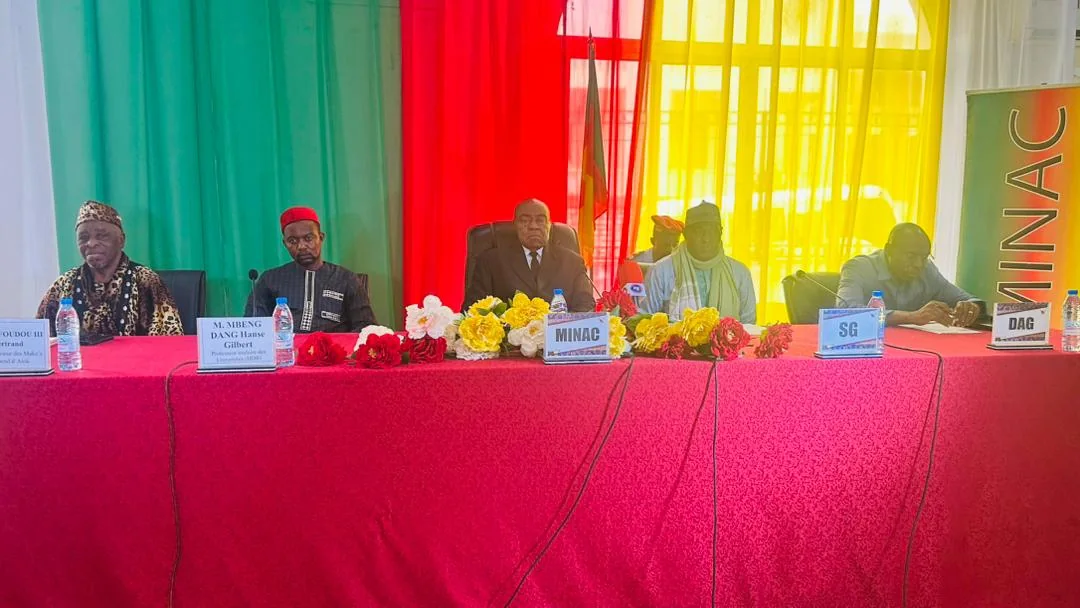
Officials sit behind a long meeting table covered with a red cloth and flowers, in front of curtains in the national colours.

Law No. 2000/011 of 19 December 2000 on copyright and neighbouring rights is the cornerstone of the Cameroonian system. It protects literary and artistic works, grants creators moral and economic rights, regulates contracts, organises private copying and collective management, and penalises infringement.

Around this law, decrees, orders and international conventions specify the practical arrangements: who collects what, how the approved bodies operate, how to settle a disagreement. This page guides you through this legal landscape with practical pointers, for authors and for those who use their works.

  • A reference law dated 19 December 2000
  • Decrees and orders that set out its application
  • International conventions and case law that shed light on it
Read the law
Copyright law

The Law of 19 December 2000 in practice

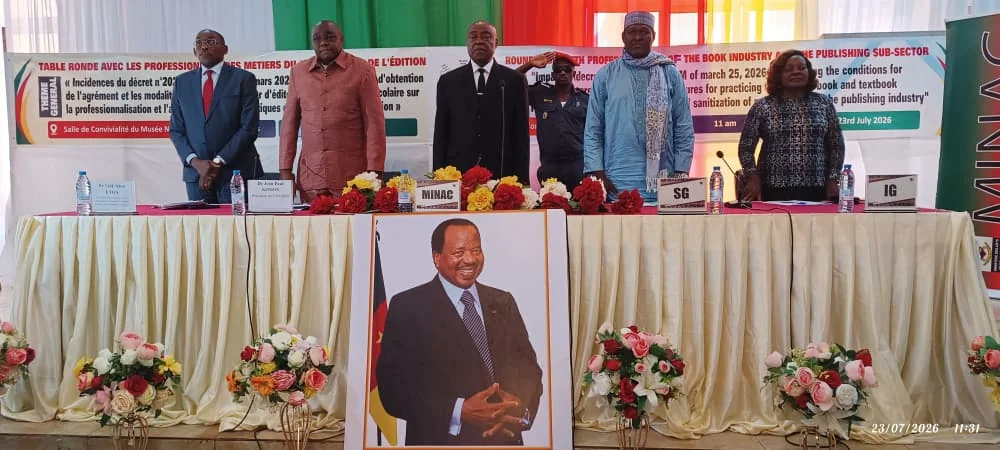
Five officials stand behind a conference table decorated with flowers and a portrait of the Head of State, at a round table on the publishing sector.

Law No. 2000/011 of 19 December 2000 opens with a simple principle: it governs copyright and neighbouring rights in Cameroon. Its full text can be consulted on the Legislative texts page. It is organised into major thematic blocks that you can browse according to your situation.

What the law protects

All works in the literary or artistic field are protected, whatever their mode of expression, value, genre or purpose: books, songs, plays, choreographies, films, photographs, paintings, sculptures, software, databases. Protection arises from creation itself; no formality is required, even though the declaration of a work makes proof easier.
The rights recognised

The author holds moral rights (disclosure, attribution, respect for the work) and economic rights (reproduction, performance, adaptation, exploitation), valid during their lifetime and for fifty years after death. Performers, producers of phonograms and videograms and audiovisual communication enterprises benefit from neighbouring rights.

The economic mechanisms

  • the resale right, set at 5% of the resale price of a graphic or plastic work;
  • remuneration for private copying, including of printed works, set at 5%;
  • the 50% royalty due for the exploitation of works in the public domain;
  • collective management by approved bodies.

Penalties

Infringement is punishable by imprisonment of five to ten years and a fine of 500,000 to 10,000,000 FCFA, under the conditions provided by law. The remedies are described in the fight against piracy and litigation pages.

ℹ️
Reading tip

First read the definitions at the beginning of the law: original work, collaborative work, composite work, commissioned work, folklore. They shed light on everything else. The Ministry’s training programme offers guided reading sessions.

Decrees

The copyright implementing decrees

Ministry panel table during a working meeting

A law sets out the principles; decrees and orders set the arrangements. In copyright matters, the central instrument is Decree No. 2015/3979/CAB/PM of 25 September 2015, which sets the arrangements for applying the 2000 Law. It specifies in particular the commercial exploitation of folklore, the resale right, public domain works, the organisation of shows, private copying and the operation of collective management bodies. All of them are gathered in the Ministry’s regulatory texts.

Two bodies created by the 2015 texts

Decree No. 2015/3978/PM of 25 September 2015 organises the Arbitration Commission, placed under the Minister in charge of culture. It rules finally on disagreements between collective management bodies and persons who use phonograms. Order No. 090/CAB/PM of 29 September 2015 organises the Commission for the Supervision of Collective Management Bodies (CCOGC), which ensures the proper functioning of the approved societies.

What the decrees change for you

  • a show organiser knows which declarations to submit to the competent society before programming protected works;
  • a publisher or an equipment importer knows the rates applicable to private copying;
  • a gallery owner or an auction house applies the resale right to resales of plastic works;
  • an author knows whom to approach when in doubt about the distribution of their rights: mediation, the competent commission or the court.

Rate schedules

Rates and royalties are specified by separate texts, which can be consulted on the rate schedules page. Before signing a licence contract or budgeting for an evening event, always check the rate schedule in force.

ℹ️
Key points

A decree does not replace the law: in case of doubt, the 2000 text prevails and decrees specify its application. For assisted reading, write to the Directorate of Legal Affairs.

Conventions

International conventions and copyright

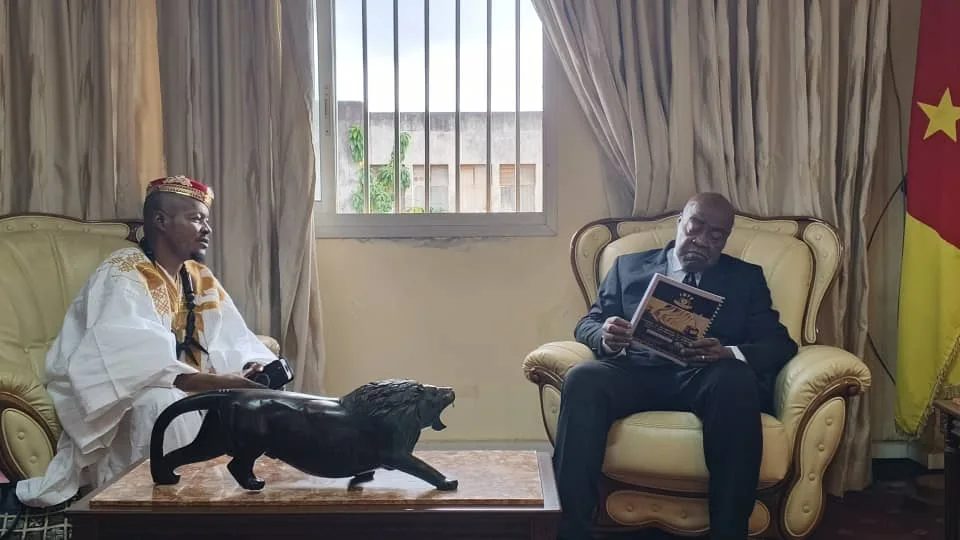
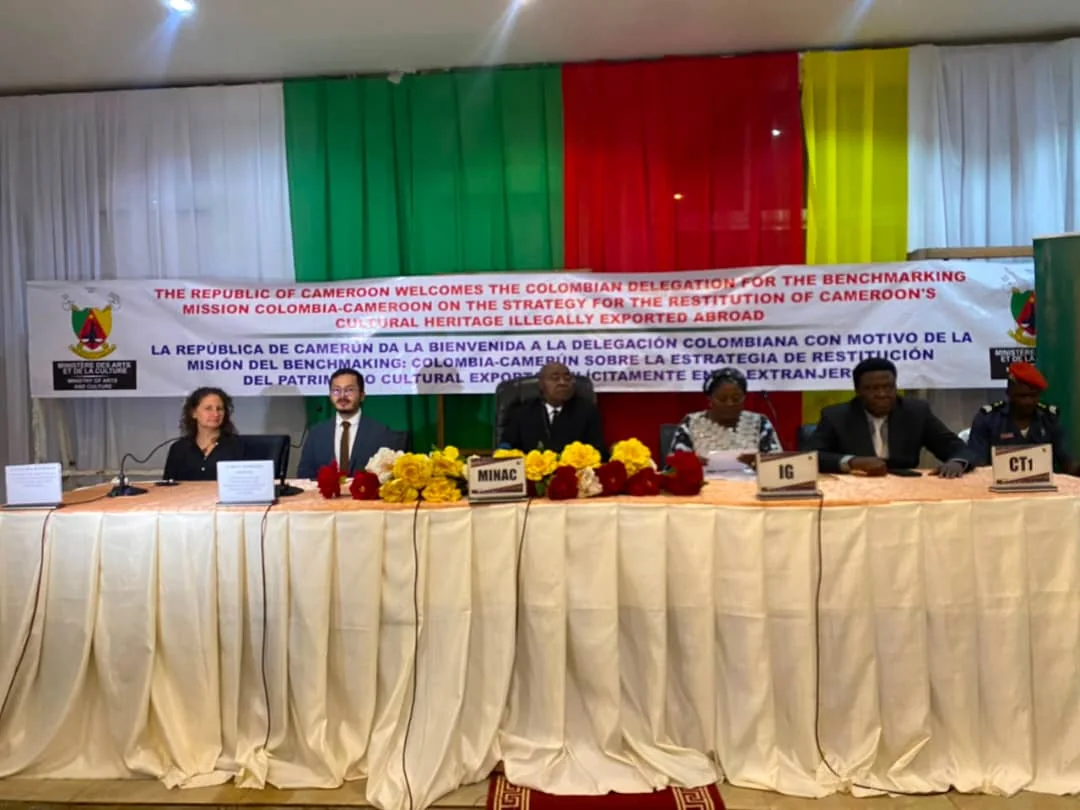
Colombian delegation welcomed by the Ministry on the restitution of cultural property

A Cameroonian work travels: it is performed in Paris, read in Dakar, sold online in Montreal. National law alone is therefore not enough to protect it. Cameroon is part of the international copyright system, of which the Berne Convention is the cornerstone: it establishes the principle of national treatment, that is, a foreign author is protected in a country in the same way as the authors of that country, and vice versa for Cameroonian creators abroad.

OAPI and OMPI

The Minister liaises with the African Intellectual Property Organization (OAPI) and the World Intellectual Property Organization (OMPI) on intellectual property matters. OAPI brings together French-speaking African States around a common industrial property system; OMPI administers the major treaties on copyright and neighbouring rights, including those that adapt protection to the digital environment. The intellectual property section of the Industries area details the boundary between copyright, trademarks, patents and designs.

What this changes in practice

  • a musician who performs abroad can assert their rights with local societies, thanks to reciprocal representation agreements between management societies;
  • a publisher who exports books relies on international protection to combat illicit copies;
  • a foreign broadcasting platform that exploits Cameroonian works must respect their rights, as dealt with on the digital neighbouring rights page.

Where to find information

The up-to-date list of applicable instruments is kept by the Directorate of Legal Affairs; a question can be sent via the copyright contact page. Creators who export their works will also find advice in the export and outreach section.

Case law

Case law: when the judge clarifies the law

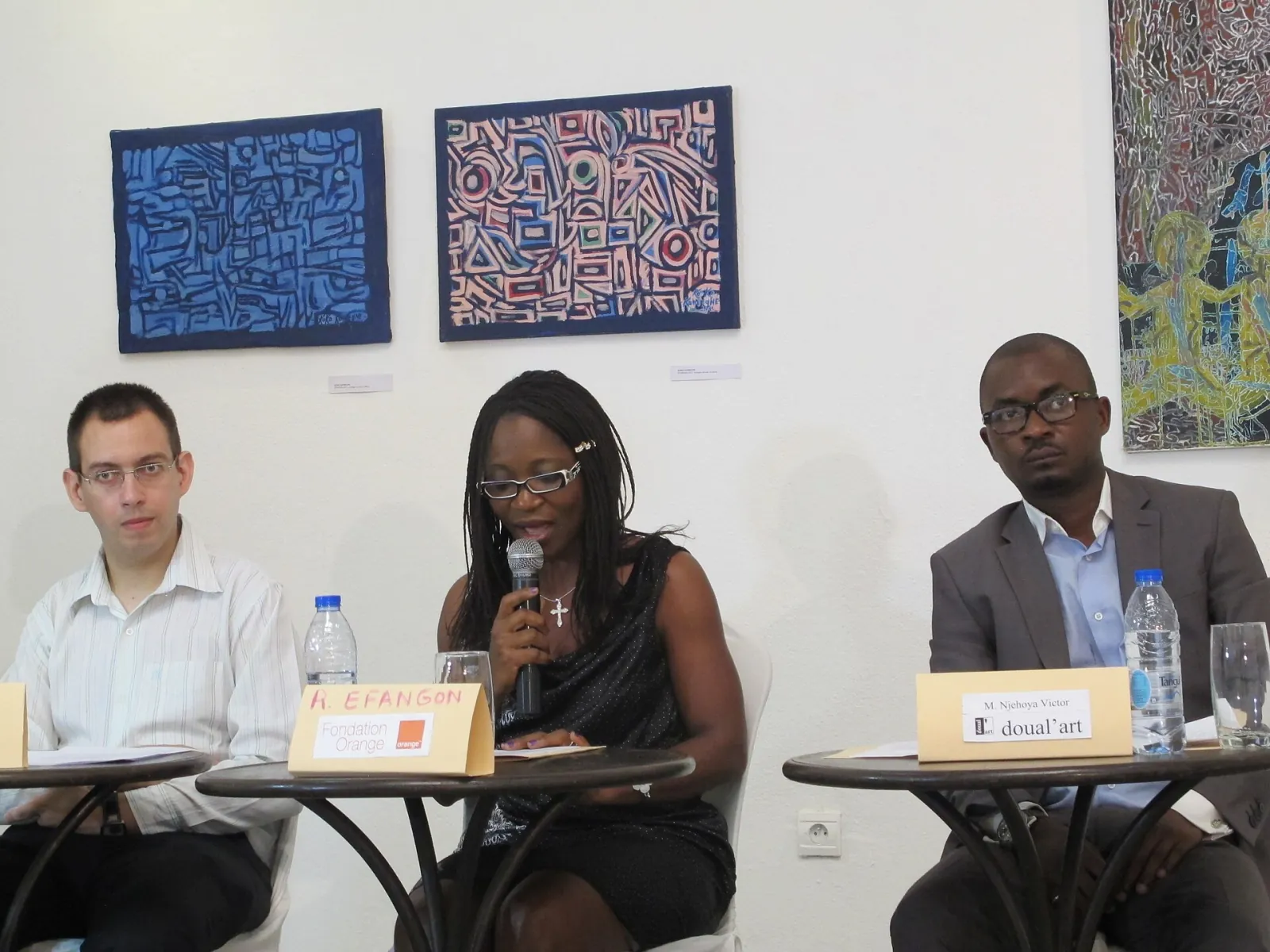
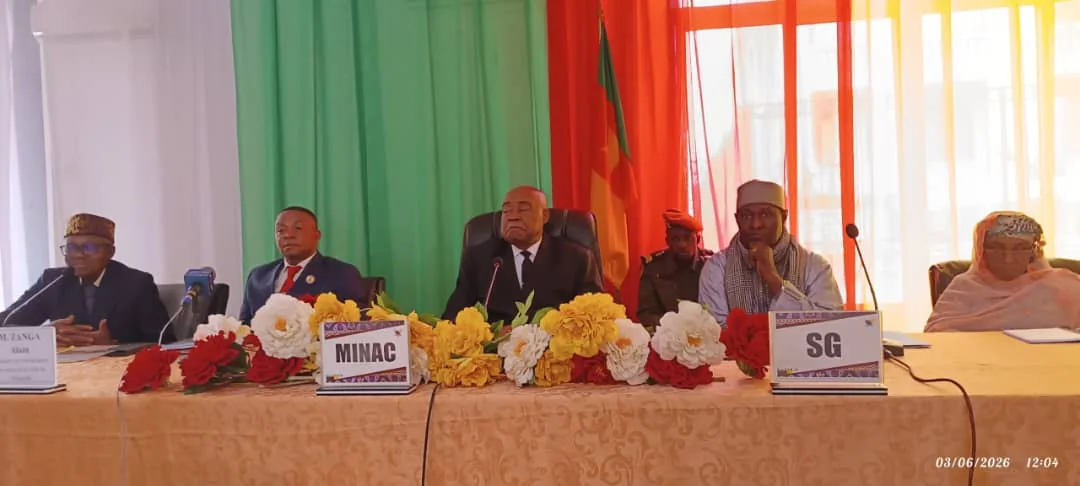
Panel of three speakers at a press-conference table in front of paintings in Douala

Court decisions show how the articles apply to real situations. In copyright, several questions regularly come before Cameroonian courts: the originality of a work, ownership of rights in a commissioned work, proof of authorship, the characterisation of infringement, and compensation for the harm suffered by the author.

Typical disputes

  • Unauthorised reuse of a piece: a record producer reuses an artist’s melody without authorisation; the judge looks at the resemblance, the priority of the work and any bad faith.
  • The commissioned work: a company commissioned a logo or a poster and uses it on other media; everything depends on what the contract provides on the assignment of rights.
  • Broadcasting without a licence: an establishment plays music to its customers without having signed a licence with the competent society.
  • Literary plagiarism: entire passages of a manuscript are reproduced in another publication.

How to prepare for a dispute

Proof matters more than anything: keep your drafts, your dated files, your exchanges with collaborators, and the receipt for the declaration of the work. Before going to court, mediation often makes it possible to find a faster solution; the litigation page describes the courts and the stages.

Accessing decisions

Decisions useful to professionals are circulated with the agreement of the courts concerned, and discussed during the sessions of the copyright training page. Lawyers, bailiffs and collective management societies are also valuable sources.

ℹ️
Good practice

After discovering an illicit copy, have the facts recorded by a bailiff before contacting the infringer: a screenshot alone is rarely sufficient.

Who does what

The authorities and bodies of the legal framework

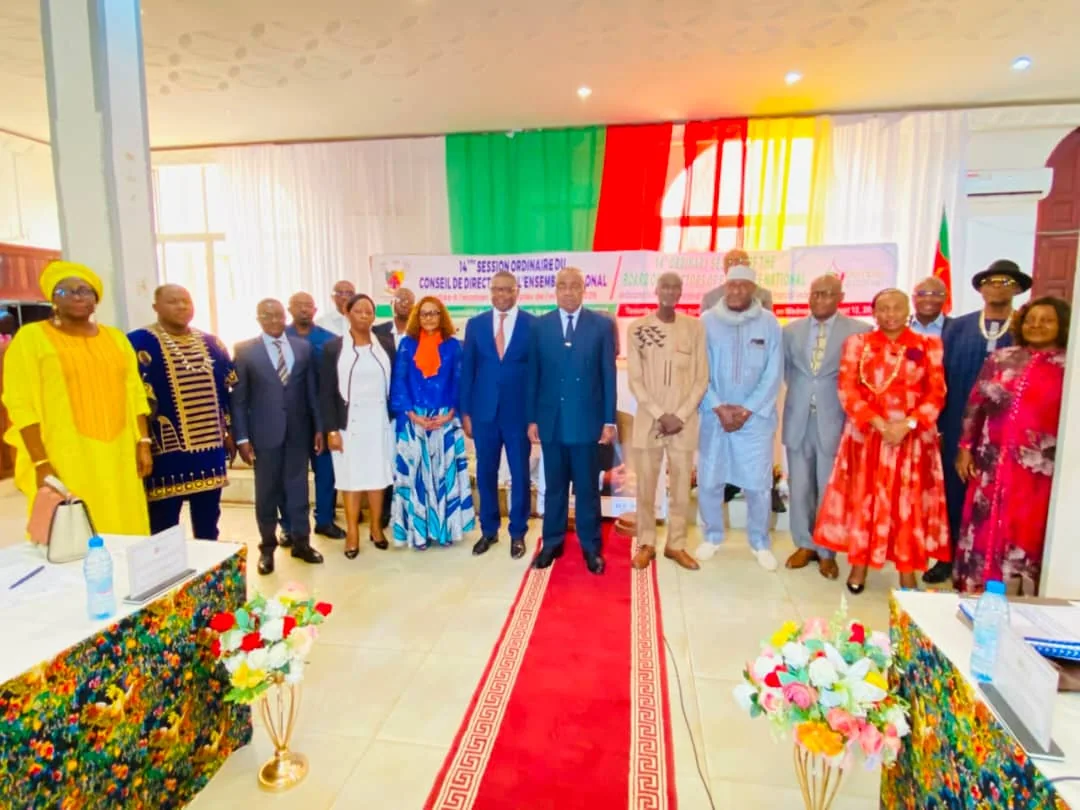
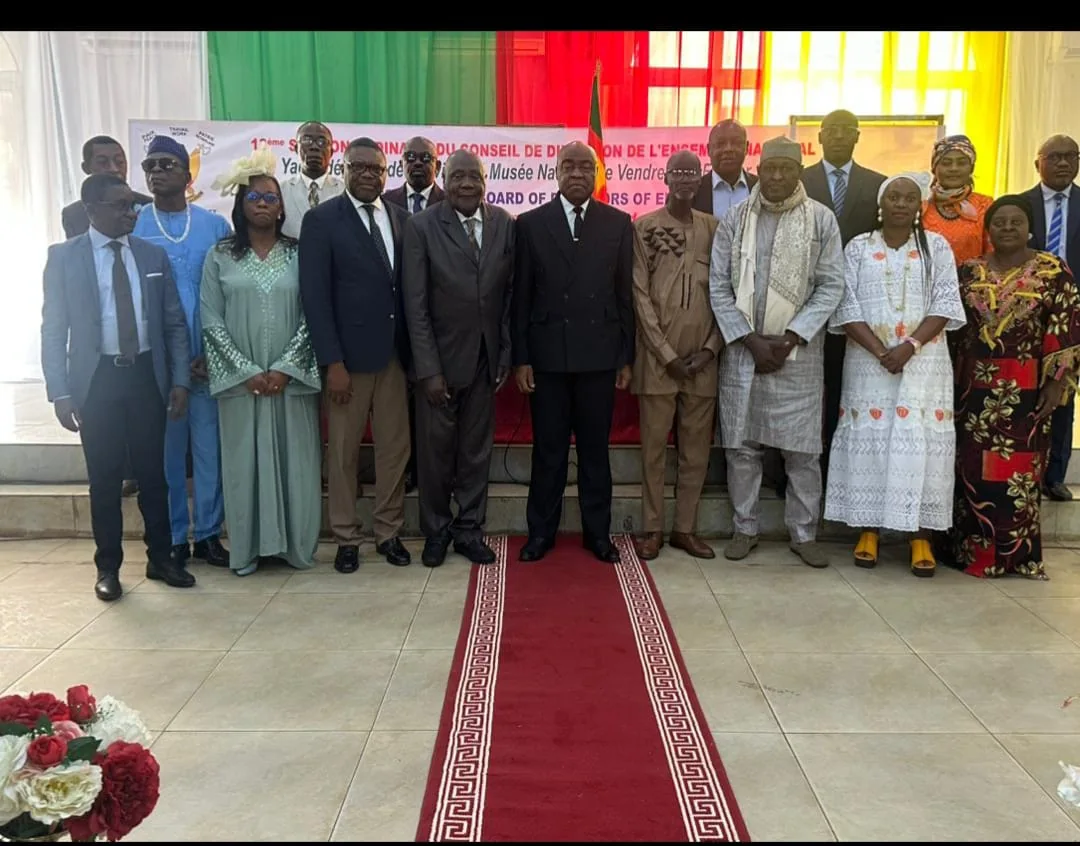
Board session of a Ministry institution, participants posing in the room

The system relies on several players with distinct roles. The Ministry of Arts and Culture develops the sector’s policy, receives declarations of works, examines applications for approval of collective management bodies and conducts awareness-raising actions. It relies on its central directorates, notably the legal services, and on its regional delegations to receive the public.

The regulatory bodies

The Commission for the Supervision of Collective Management Bodies (CCOGC) brings together a chairperson from the services of the Supreme State Audit Office and representatives of the ministries in charge of culture, justice, territorial administration and finance. The Arbitration Commission, chaired by a magistrate of the judicial order, settles disagreements over the use of phonograms. Their members serve a three-year term, renewable once.

The approved bodies

Five societies, presented on the collective management societies page, collect and distribute rights: SCAAP, SONACAM, SOCILADRA, SOCADAP and SCDV.

Officers of the court

Lawyers, bailiffs and judicial police officers intervene when the amicable route fails. For any guidance, the One-Stop Shop indicates the competent contact.

Method

Reading a legal text without being a lawyer

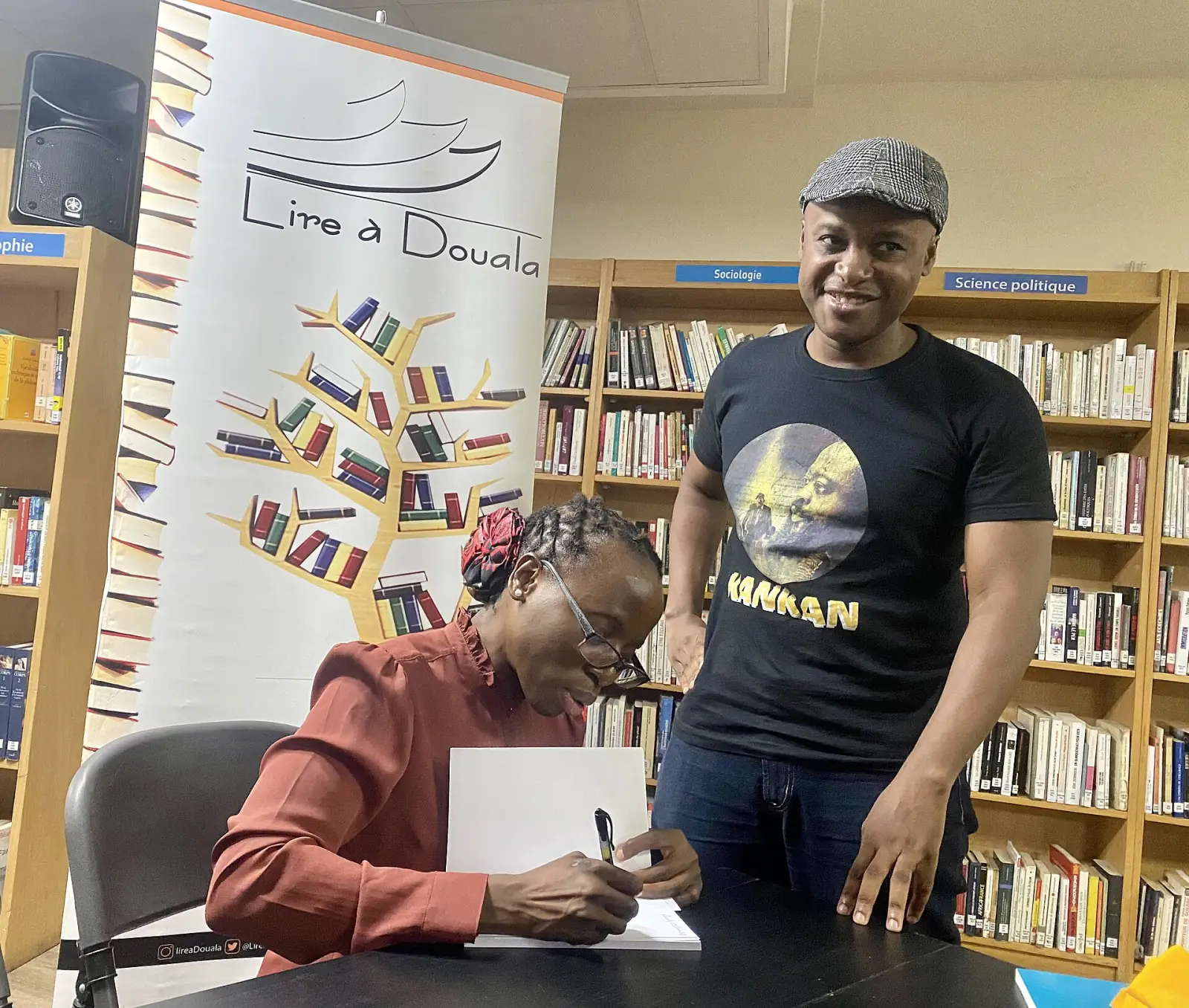
Author signing a book in a Douala bookshop in front of shelves

A legal text is not written to be read like a novel, but a few habits are enough to make it accessible. Start with the table of titles: the Law of 19 December 2000 runs from general provisions to penal provisions, by way of copyright, neighbouring rights, private copying and collective management. Identify the title that answers your question before diving into the details.

Step by step

Asserting your rights in five stages

Identify the work

Establish precisely what was created, by whom and on what date, by gathering drafts, files and proof of publication.

Verify the protection

Check that the work is original, that the term has not expired and that the rights have not been assigned by contract.

Build the evidence

Declare the work at the One-Stop Shop and keep the receipt as well as the exchanges with co-authors.

Choose the means of settlement

Favour negotiation or mediation, then the competent commission, before considering the courts.

Obtain redress

Claim an end to the infringement, damages and, depending on the case, the penalties provided by law.

Journey

From the text of the law to practice

April 2000Legal deposit

The legal deposit law protects the national cultural and intellectual heritage by organising the preservation of published documents.

December 2000The copyright law

Law No. 2000/011 sets out the principles: protected works, moral and economic rights, neighbouring rights, collective management, penalties.

The 2000sSetting up the societies

Collective management bodies are organised by field: music, audiovisual, plastic arts, literature, neighbouring rights.

September 2015Implementing decrees

The implementing decree and the decree on the Arbitration Commission are signed on 25 September 2015.

Late September 2015The Supervisory Commission

The order of 29 September 2015 organises the CCOGC and gives it its permanent secretariat.

TodayA framework in use

Online declarations, licences, mediation and training rely on these texts every day.

To explore

Copyright in the other pages

Feedback from the field

Those who apply the texts

“
Before signing a publishing contract, I had the assignment clauses reviewed; I understood what I was keeping and what I was assigning.
A novelist
Yaoundé
“
The rate schedule enabled us to plan the cost of music rights in our festival budget from the very first meeting.
A festival organiser
Bafoussam
“
Mediation settled in three weeks a dispute over a song cover that threatened to drag on.
A record producer
Douala
“
Thanks to the training, my pupils now know how to cite an author, request authorisation and protect their creations.
A visual arts teacher
Garoua

“Knowing the law is already protecting your work: an informed creator negotiates better, signs better and defends themselves better.”

A lawyer from the Directorate of Legal Affairs
To download

Copyright texts and models

To act

The procedures linked to the legal framework

Register a work

Date your creation and obtain a receipt that serves as proof of authorship.

Deposit a work

Join a society

Choose the society for your field to collect your rights.

See the societies

Report an infringement

Send the evidence to the Ministry to guide your procedure.

Report

Consult the rate schedules

Check the remuneration rates in force before exploiting a work.

See the rate schedules
Glossary

The words of the legal framework

Law

A text passed by Parliament and promulgated by the Head of State, which sets the general rules.

Decree

A text of the executive branch that specifies how a law is to be applied.

Order

A decision of an administrative authority, such as the Prime Minister or a minister, of more limited scope.

National treatment

The principle that a foreign author is protected in the same way as an author of the country.

Commissioned work

A work created for a person, the commissioning party, in return for remuneration.

Composite work

A work that incorporates a pre-existing work without the collaboration of its author.

Infringement

Reproduction or use of a work without the authorisation of its holder.

Damages

A sum awarded by the judge to compensate for the harm suffered.

Case law

All the decisions handed down by the courts on a point of law.

Prior creation

The fact of having created a work before a given date, shown by dated proof.

Rights holder

A person who holds an author’s rights, by inheritance or by contract.

On the site

Extend your reading of the legal framework

Resources

Useful links for the legal framework

Stakeholders

Who applies the legal framework?

Key facts

Copyright texts in one table

TextDateSubjectWhere to consult it
Law No. 2000/01119 December 2000Copyright and neighbouring rightsLegislative texts
Law No. 2000/0517 April 2000Legal deposit of printed, sound, audiovisual and digital documentsLegislative texts
Decree No. 2015/3979/CAB/PM25 September 2015Arrangements for applying the 2000 LawRegulatory texts
Decree No. 2015/3978/PM25 September 2015Organisation of the Arbitration CommissionRegulatory texts
Order No. 090/CAB/PM29 September 2015Organisation of the Commission for the Supervision of Collective Management BodiesRegulatory texts
Rate schedule textsDepending on the caseRates of royalties and remunerationRate schedules page
International conventionsDepending on the instrumentsProtection of works across bordersDirectorate of Legal Affairs
Questions

Your questions about the legal framework

Where can I read the copyright law?

The full text of Law No. 2000/011 of 19 December 2000 appears on the site’s Legislative texts page. The implementing decrees and orders are gathered on the Regulatory texts page, which allows you to consult the whole framework without leaving the site.

Must I deposit my work to be protected?

No. Protection arises from creation, without formality. Declaration at the One-Stop Shop is not compulsory, but it provides a dated receipt that greatly facilitates proof of your authorship if a dispute arises later.

Who applies the law day to day?

The Ministry of Arts and Culture steers the sector’s policy, the five approved societies collect and distribute rights, the supervisory commission oversees their management and the courts settle disputes when an amicable agreement fails.

What is the penalty for infringement?

Infringement is punishable by imprisonment of five to ten years and a fine of 500,000 to 10,000,000 FCFA, or by only one of these two penalties. The penalties are doubled where the offender is the contracting party of the holder of the infringed right.

How long do economic rights last?

The author’s economic rights last for their whole lifetime and extend for fifty years after death. After this period, the work enters the public domain; its exploitation remains subject to respect for moral rights and payment of a 50% royalty.

Who handles a disagreement with a management society?

Depending on its nature, it may be brought before the Commission for the Supervision of Collective Management Bodies, before the Arbitration Commission for disagreements over the use of phonograms, or before the court. Mediation often remains the first reflex.

Are works inspired by folklore protected?

A work inspired by folklore, that is, composed from elements of the national traditional cultural heritage, is governed by the law and its implementing texts. Its commercial exploitation is subject to specific rules, set out in the implementing decree.

How can I obtain a legal opinion from the Ministry?

Write to the copyright service using the contact form, stating your status, the work concerned and the question asked. Your message is forwarded to the Directorate of Legal Affairs, which replies to you or directs you to the competent body.

Where can I train in copyright?

The Ministry offers awareness and training sessions, open to artists, publishers, teachers and organisers. See the Copyright training page for the programme and registration arrangements.

Contact

Write to the Ministry: Legal framework

Ask your question about the legal framework.

Competent directorate

Contact the Directorate of Legal Affairs

Address

Directorate of Legal Affairs
Ministry of Arts and Culture
Quartier du Lac – Ministerial Zone
P.O. Box 1053 Yaoundé, Centre Region, Cameroon

Reach us

+237 6 51 70 58 41

contact@minac.gov.cm

Opening hours

Monday to Friday, 8 am to 4 pm

Read the laws of the sector

Find the full text of the laws and implementing texts on the Ministry’s website.

Legislative texts
WhatsApp