Coat of arms of CameroonMinistry of Arts
and Culture
Republic of Cameroon
My procedures
Home
Minister’s message
News
Press releases
Cultural calendar
Official speeches
Press review
Photo library
Video library
Calls for projects
Job vacancies
Public procurement
Newsletter
Frequently asked questions
Site map
Contact
Press area
Podcast “The Voice of Culture”
Legal notices
Privacy policy
Cookies and trackers
The Ministry
Missions and responsibilities
Organisation
Organisation chart
Minister’s Office (Cabinet)
Management team
General Secretariat
General Inspectorate
Central directorates
Regional Delegations
Institutions under supervision
Legislative texts
Regulatory texts
Sector strategy
Major projects
Budget and reports
Partners
Careers
Archives
Institutional communication
Quality and accessibility
Arts
Visual and plastic arts
Visual arts
Performing arts
Theatre
Dance
Music
Literature and books
Cinema and audiovisual
Photography
Fashion and design
Digital arts
Art crafts
Artists’ directory
Residencies
Prizes and awards
Arts education
Urban arts
Heritage
Tangible heritage
Intangible heritage
UNESCO sites
National museums
Listed monuments
National inventory
Palaces and chiefdoms
Archaeology
Linguistic heritage
Oral traditions
Traditional know-how
Restitution of cultural property
Fight against illicit trafficking
Listing and protection
Conservation and restoration
Heritage Days
Cultural landscapes
Industries
Music and recording
Cinema
Publishing and books
Digital arts
Fashion and creativity
Crafts
Cultural tourism
Funding for culture
Support funds
Incubators
Cultural entrepreneurship
Culture Observatory
Vocational training
Studies and reports
Sector statistics
Export and outreach
Intellectual property
Copyright
Legal framework
Copyright and neighbouring rights
Collective management societies
Register a work
Licences
Private copying
Fight against piracy
Model contracts
Social status of artists
Mediation
Disputes
Training
Fee scales
Register of works
Contact
Digital neighbouring rights
Public domain
Festivals
National calendar
Ngondo
Nguon
Écrans Noirs
Heritage Days
Music Day
Regional festivals
Fairs and exhibitions
Biennials
National competitions
Cultural days
Organise a festival
Event grants
Ticketing
Archives
Volunteering
Diaspora festivals
Regions
Adamawa
Centre
East
Far North
Littoral
North
North-West
West
South
South-West
Cultural map
Regional Delegations
Traditional chiefdoms
National languages
Cultural routes
Decentralised cooperation
Regional observatory
Cooperation
UNESCO
Francophonie (OIF)
African Union
Commonwealth
CEMAC
Bilateral cooperation
Cultural agreements
Professional organisations
Scholarships
Artist exchanges
Cultural years
Diaspora
Funded projects
Embassies
Technical partners
International restitution
International monitoring and calls
Services
Artist card
Show authorisation
Filming authorisation
Festival authorisation
Deposit of a work
Export of works of art
Listing of a property
Grant application
Association accreditation
File tracking
Forms
Fees
Opening hours and addresses
Reporting
Online help
My account
One-Stop Shop
Heritage

Traditional know-how

Basketry, forging, weaving, pottery and sculpture: Cameroon’s traditional know-how, its masters, its transmission and the support available to set up, gain recognition for and promote a workshop.

Updated on 6 November 20264 sub-pages
Crafts presented5
Mode of transmissionFamily-based and through apprenticeship
Benefits provided for by lawTax and customs
SectorArt crafts
Know-how

Hands that pass on knowledge

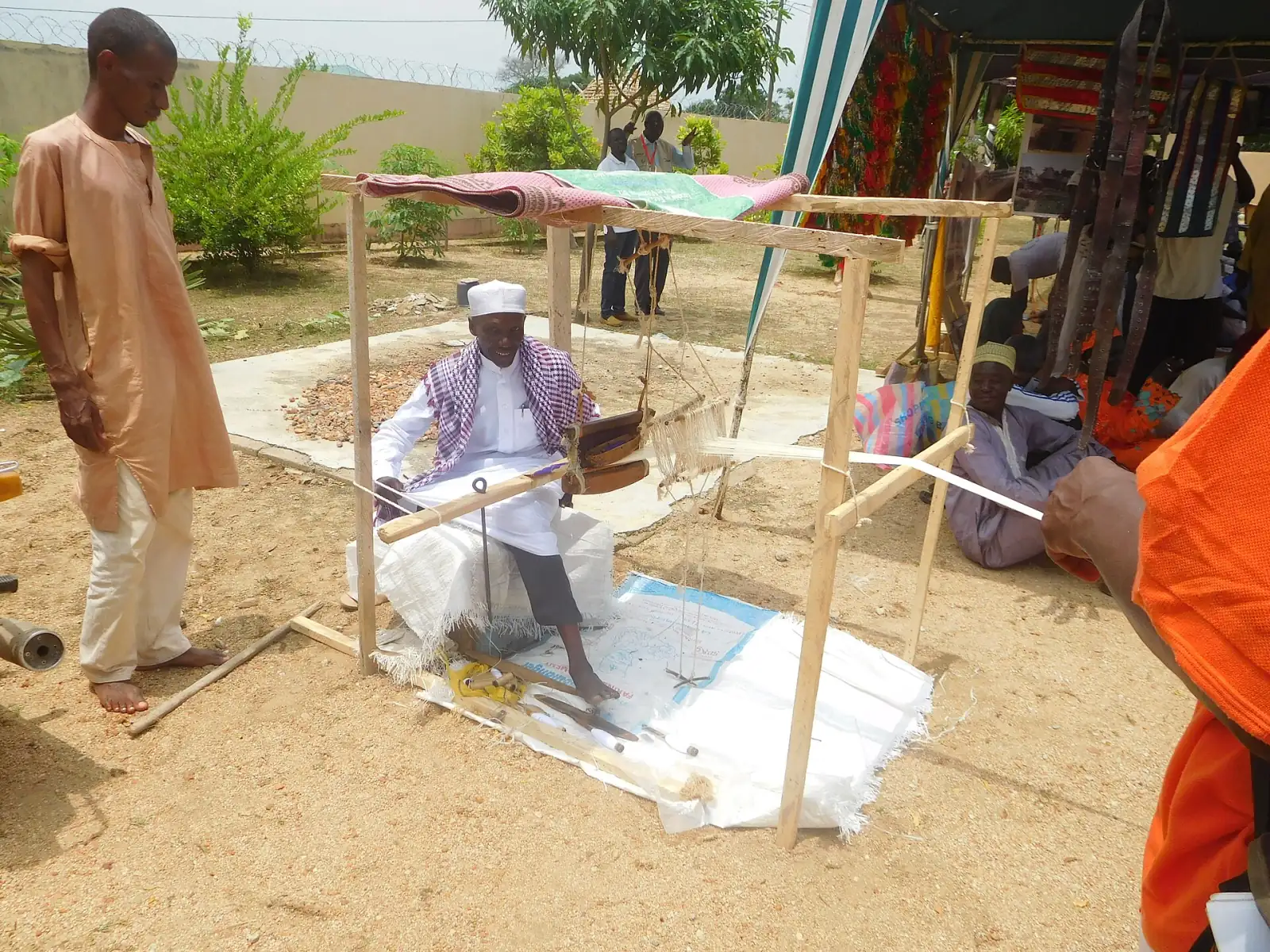
Weaver in a robe working at a large wooden loom set up in a courtyard

Woven baskets in the markets of the North-West, bellows in the forges of the Mandara Mountains, bronzes cast in Foumban, fabrics dyed with indigo: Cameroon’s traditional know-how is both an intangible heritage and a living economic activity. It rests on gestures, tools and workshop secrets that only practice can pass on.

The Ministry of Arts and Culture recognises them as an element of intangible heritage, and the law provides tax and customs benefits for heritage promotion activities. This page presents the crafts, the places, the transmission and the schemes for setting up or gaining recognition for a workshop.
  • Basketry, forging, weaving, pottery and sculpture presented craft by craft
  • Transmission from master to apprentice at the heart of safeguarding
  • Support for workshops: training, recognition, outlets
Discover basketry
Basketry

Basketry: fibres and gestures

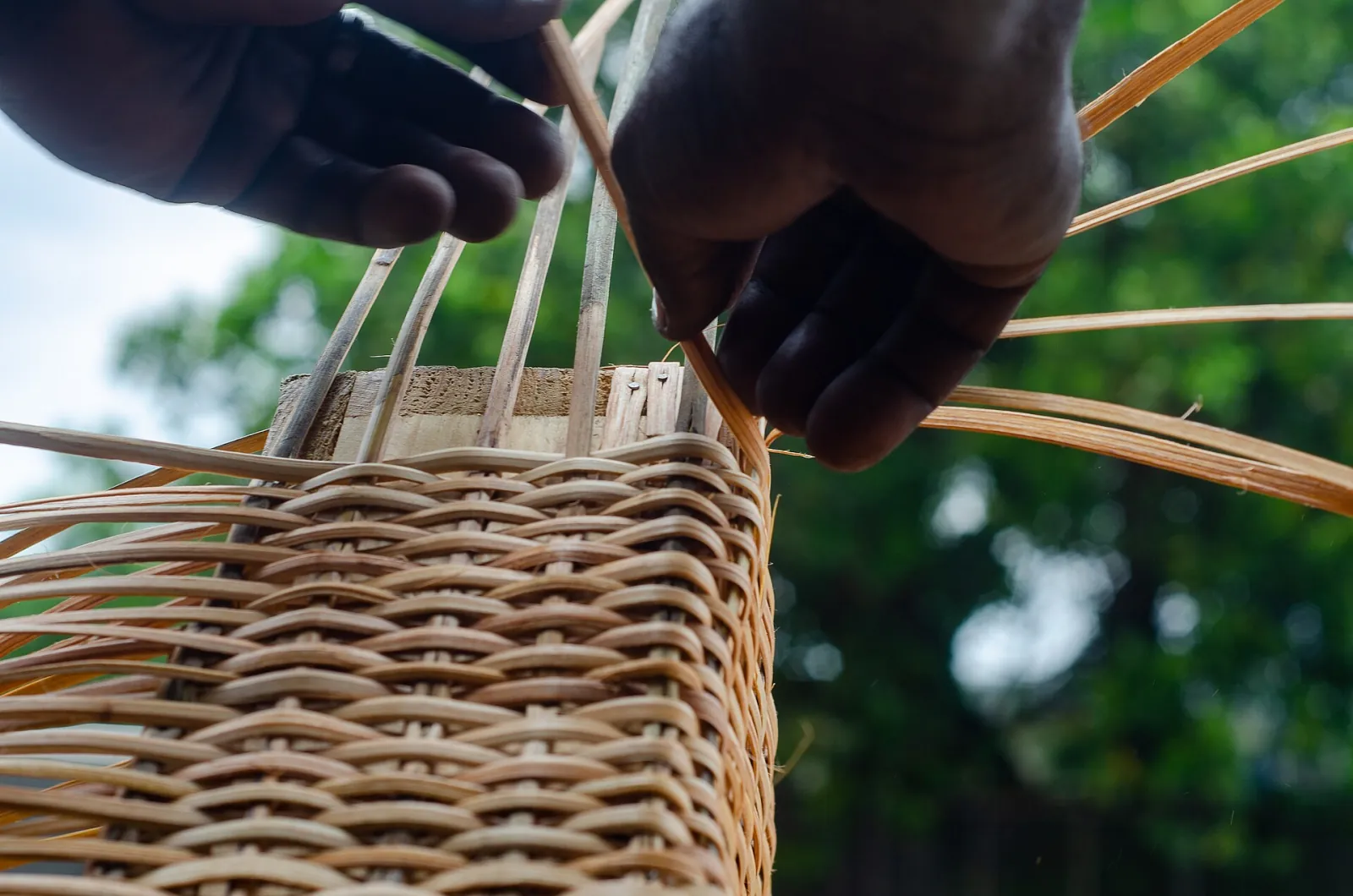
Hands of a craftsman weaving the strips of a rattan basket

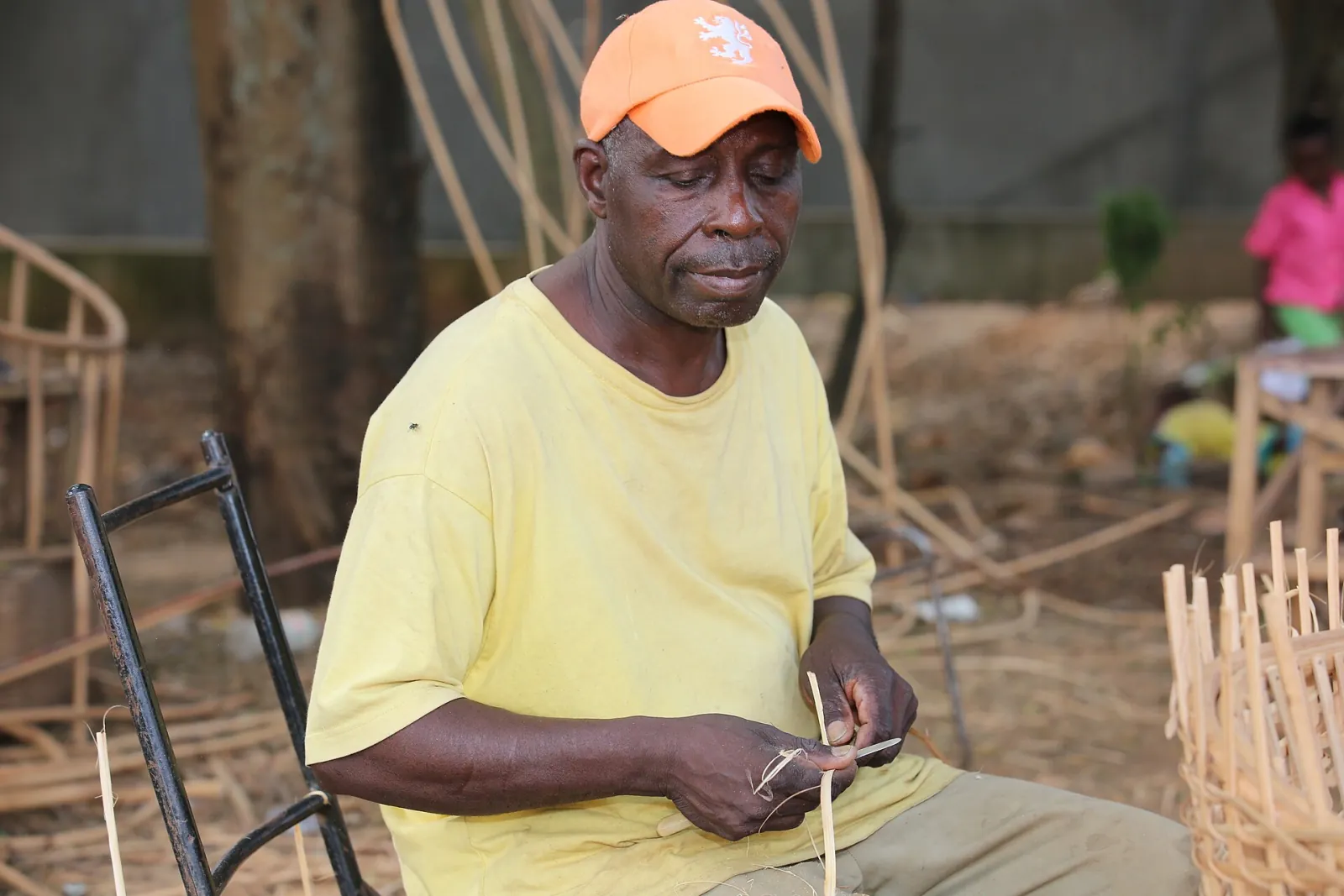
Basketry is probably the most widespread know-how in the country. Raffia, rattan, bamboo, savannah grasses, palm stems, forest vines: each region works the fibre available to it and makes from it a range of objects that are both useful and decorative.

Objects for every use

  • Harvest baskets, carrying baskets and hampers for the fields and markets;
  • Mats, partitions and racks for the home;
  • Fish traps and snares for fishing on rivers and lakes;
  • Hats, bags, caskets and ceremonial objects;
  • Rattan furniture, now prized by decorators.

A patient craft

Preparing the fibre (harvesting, drying, splitting, dyeing) takes as much time as the weaving itself. The patterns, geometric and repeated, often indicate the craftsperson’s origin. In several regions, it is mainly women who weave mats and baskets, while men make furniture and large pieces.

Basketry is one of the flagship trades of arts and crafts and of the crafts sector, with outlets in cultural tourism and trade fairs. The question of resources (sustainable management of palm groves and bamboo groves) is monitored with the local authorities.

ℹ️
For basket makers

Basket makers can have their workshop recognised and obtain the artist card when they practise an expressive art.

Forging

Forging and metalworking

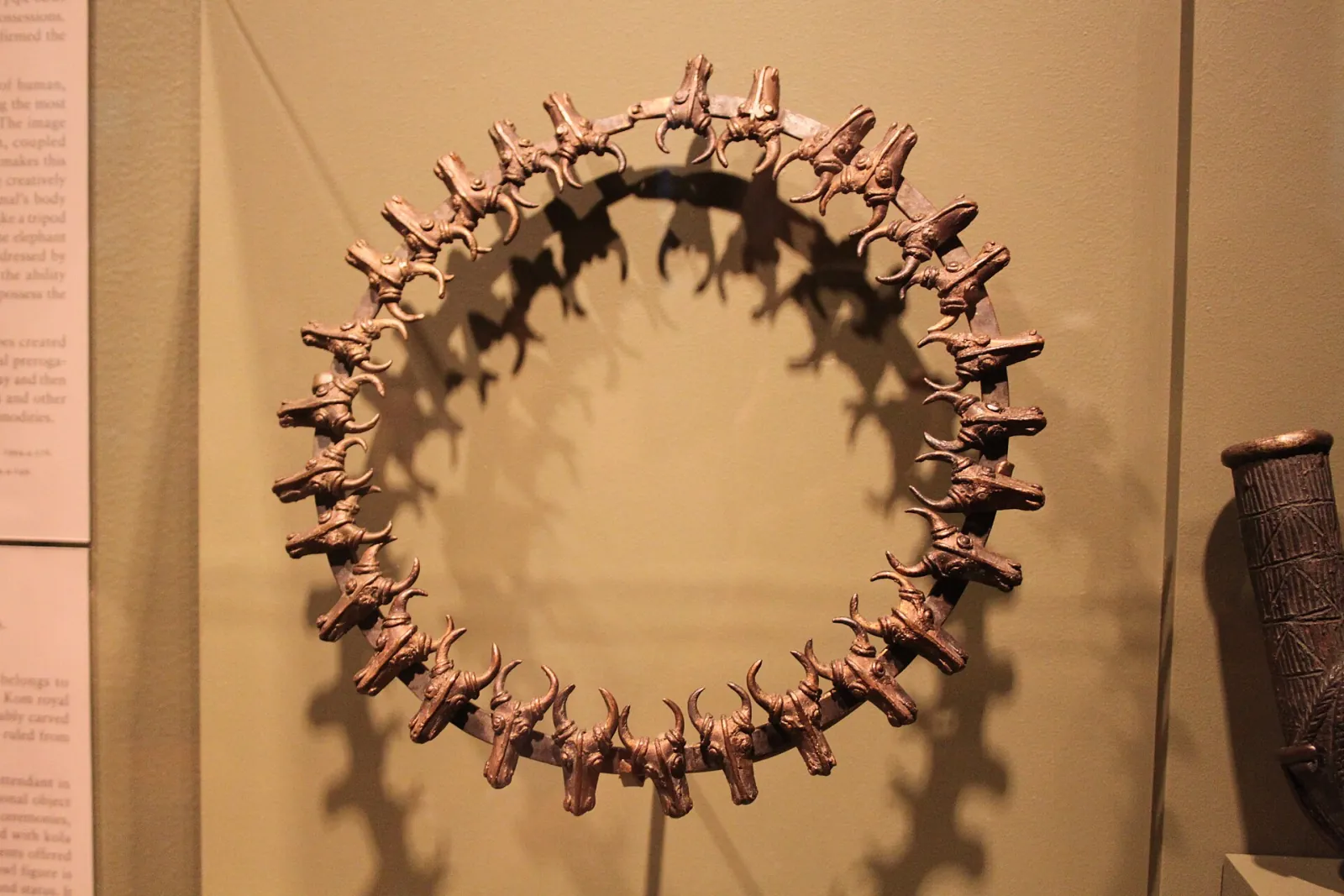
Bronze prestige collar decorated with small figures, displayed in a museum case

The blacksmith holds a place apart in many Central African societies. Master of fire and iron, he makes the tools that feed the community (hoes, machetes, axes), hunting weapons, prestige objects and sometimes musical instruments. In several communities, he also plays a ritual role, during initiations, enthronements or reconciliation ceremonies.

A chain of operations

Traditional forging involves obtaining iron or scrap metal, a charcoal fire fanned by bellows, hammering on the anvil and quenching. The forges of the Mandara Mountains, Adamawa and the Grassfields each have their own tools and forms. In Foumban and the chiefdoms of the West, lost-wax casting makes it possible to cast court pieces in bronze and brass: pipes, statuettes, drums, thrones.

Weaving

Weaving and dyeing

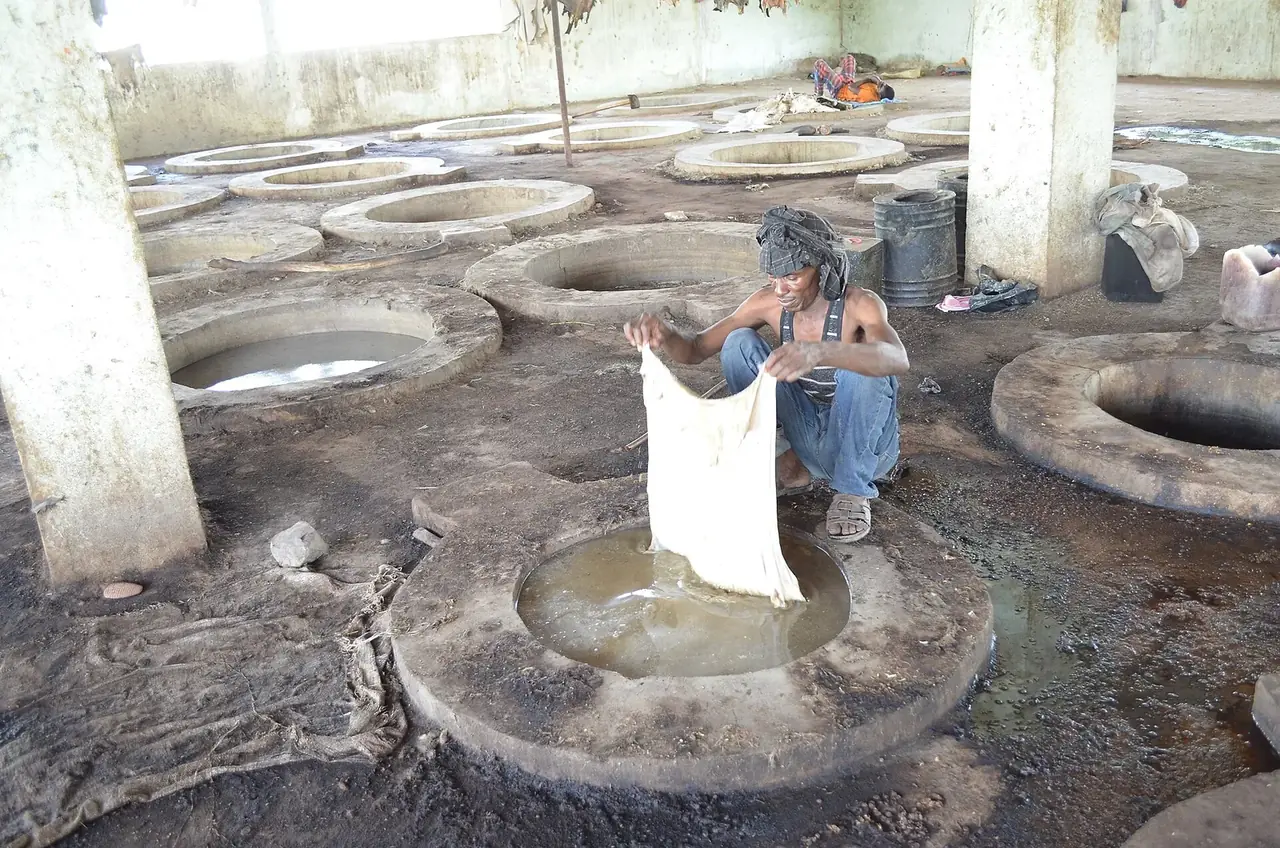
Traditional dyeing of sheepskins

Fabrics woven on narrow-strip looms, raffia cloth, cotton fabrics dyed with indigo, embroidery and beadwork: traditional textiles tell of social hierarchy, celebration and mourning. In the Grassfields, certain resist-dyed fabrics with reserved patterns are reserved for notables and major ceremonies. In the North-West, fabrics embroidered with coloured motifs dress weddings and court dances. In the North, cotton woven in strips is sewn into large ceremonial garments.

The stages of the craft

  • Growing and spinning cotton, or harvesting and preparing raffia;
  • Setting up the warp on the loom and weaving the strips;
  • Dyeing with dye plants, indigo or earths;
  • Assembly, embroidery, beadwork and finishing.
ℹ️
Authenticity

Weavers who wish to protect a pattern or a brand can enquire at the intellectual property service.

Transmission

The transmission of crafts

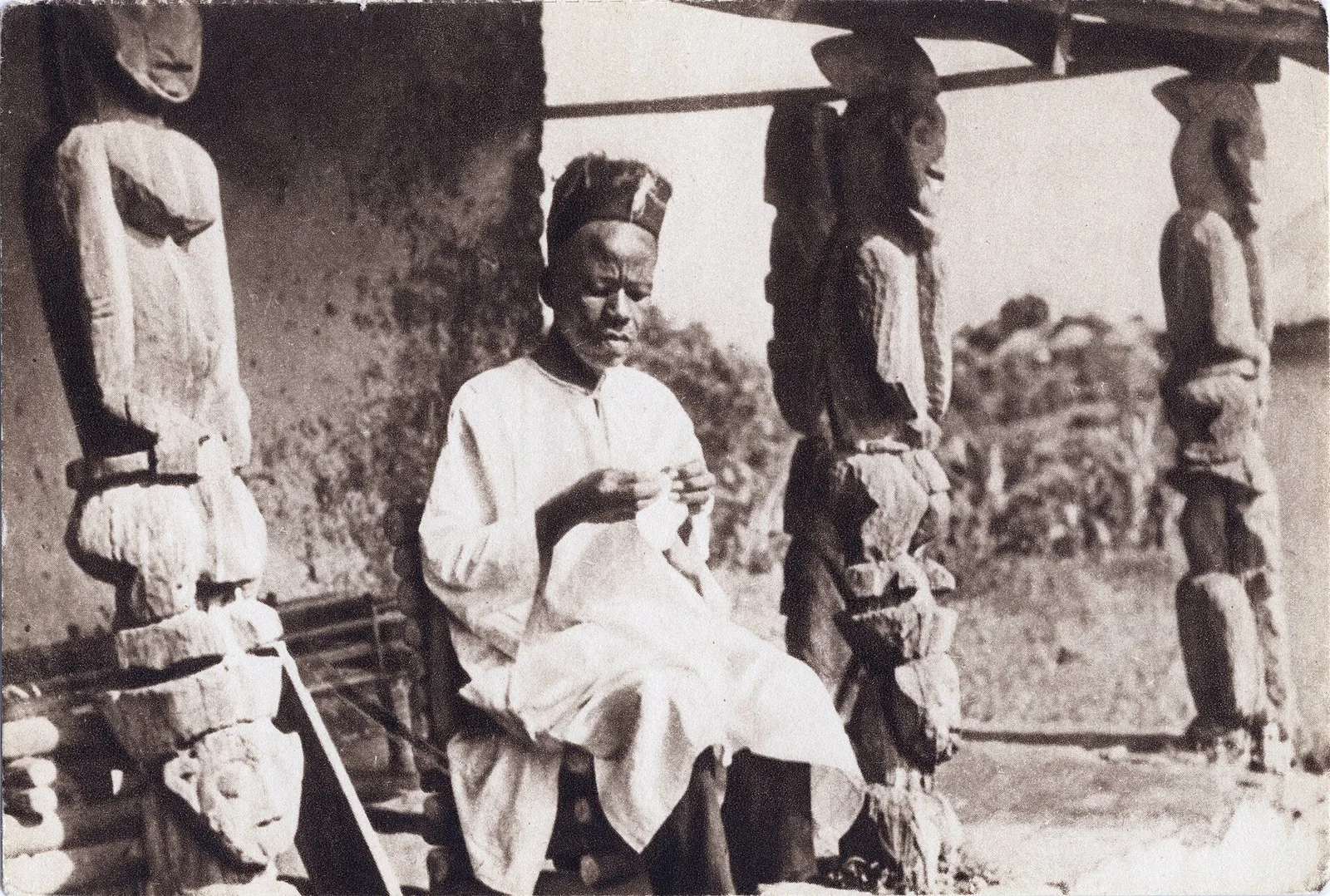
Bamoun craftsman carving in front of his works, old photograph

Know-how exists only as long as it is practised. Its safeguarding therefore rests, above all, on the chain of transmission: from master to apprentice, from father to child, from mother to daughter, from elders to the young people of a neighbourhood.

Routes to learning

  • The family: the craft is passed on in the workshop of the father or uncle, often from childhood;
  • Apprenticeship with a master, over several years, with a ceremony marking the end of apprenticeship in some trades;
  • Training in a centre: craft training centres, art schools and workshops of the training programmes for cultural professions;
  • Neighbourhood workshops open to schoolchildren, as part of arts education.

The threats

Young people leaving for the cities, competition from imported products, the growing scarcity of certain raw materials and a lack of recognition weaken transmission. Several crafts now have only a few masters left.

The Ministry’s responses

The Ministry supports master craftspeople as holders of know-how, funds transmission workshops, facilitates access to trade fairs and helps craftspeople organise into cooperatives or associations through association approval. The regional delegations are the workshops’ first point of contact, and the cultural entrepreneurship schemes help to launch an activity.

ℹ️
Master craftspeople

A master craftsperson may apply to be recognised as a tradition bearer. The regional delegation helps to prepare the file.

Other crafts

Pottery, sculpture and other crafts

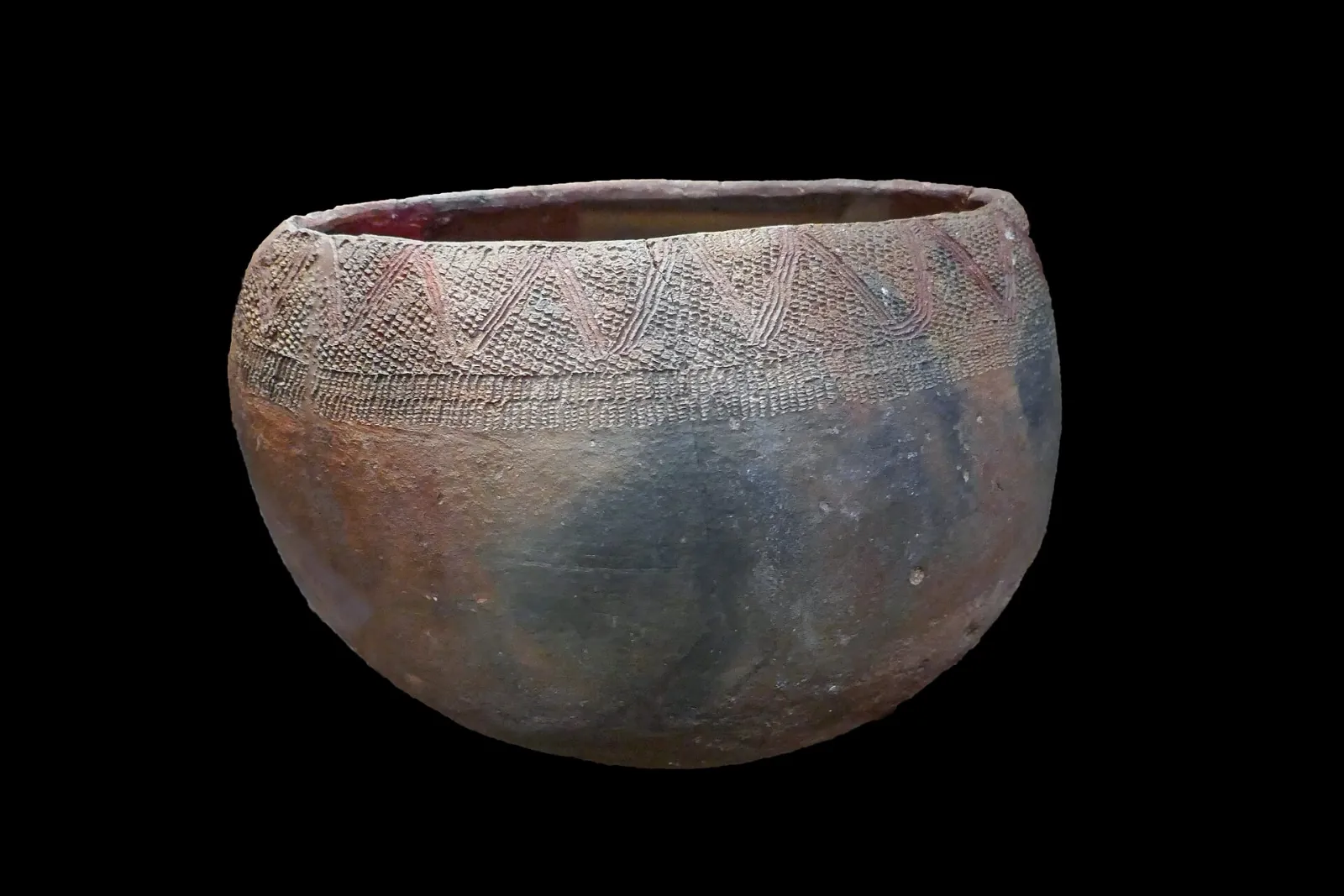
Fali clay bowl with an incised decorative band, against a black background

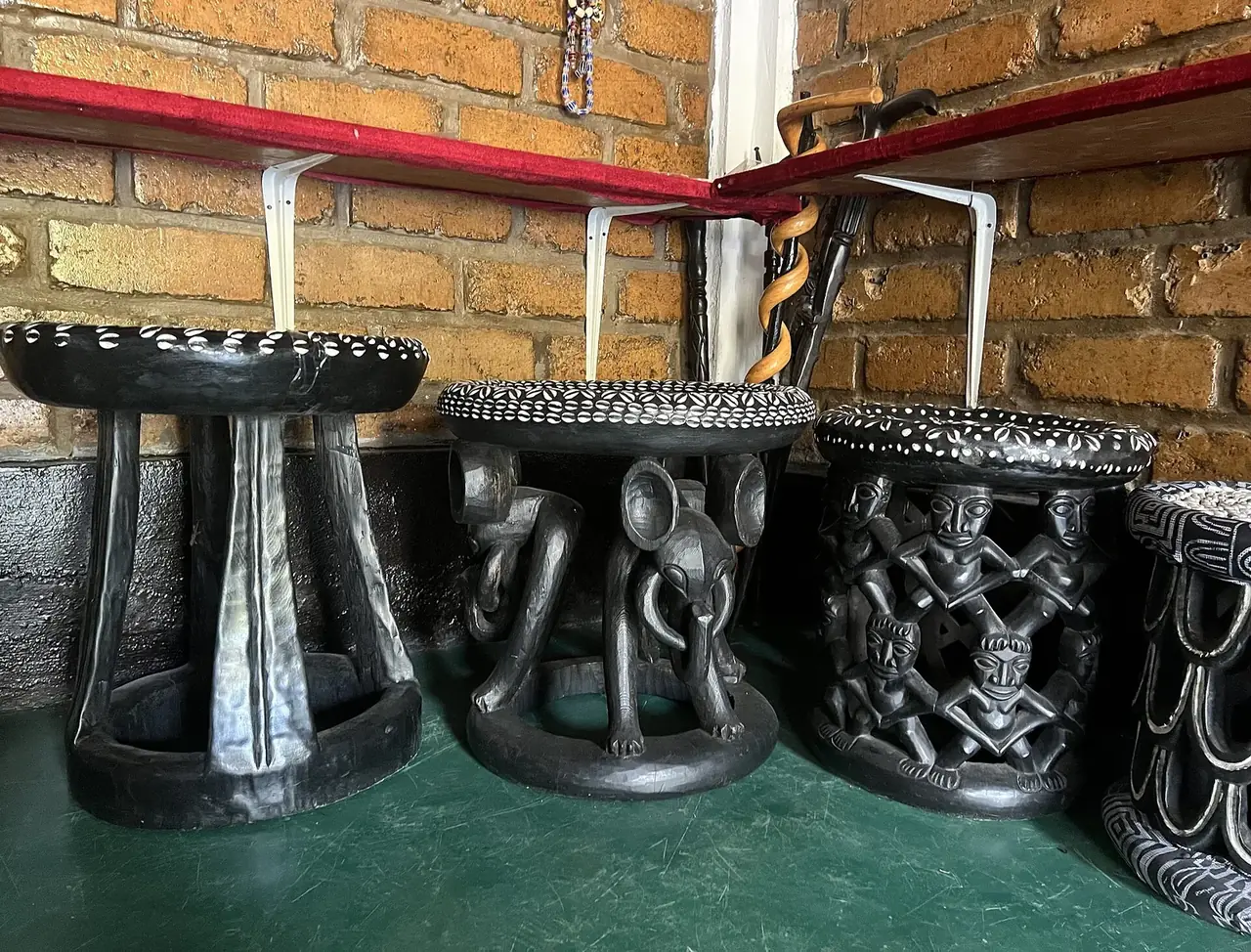
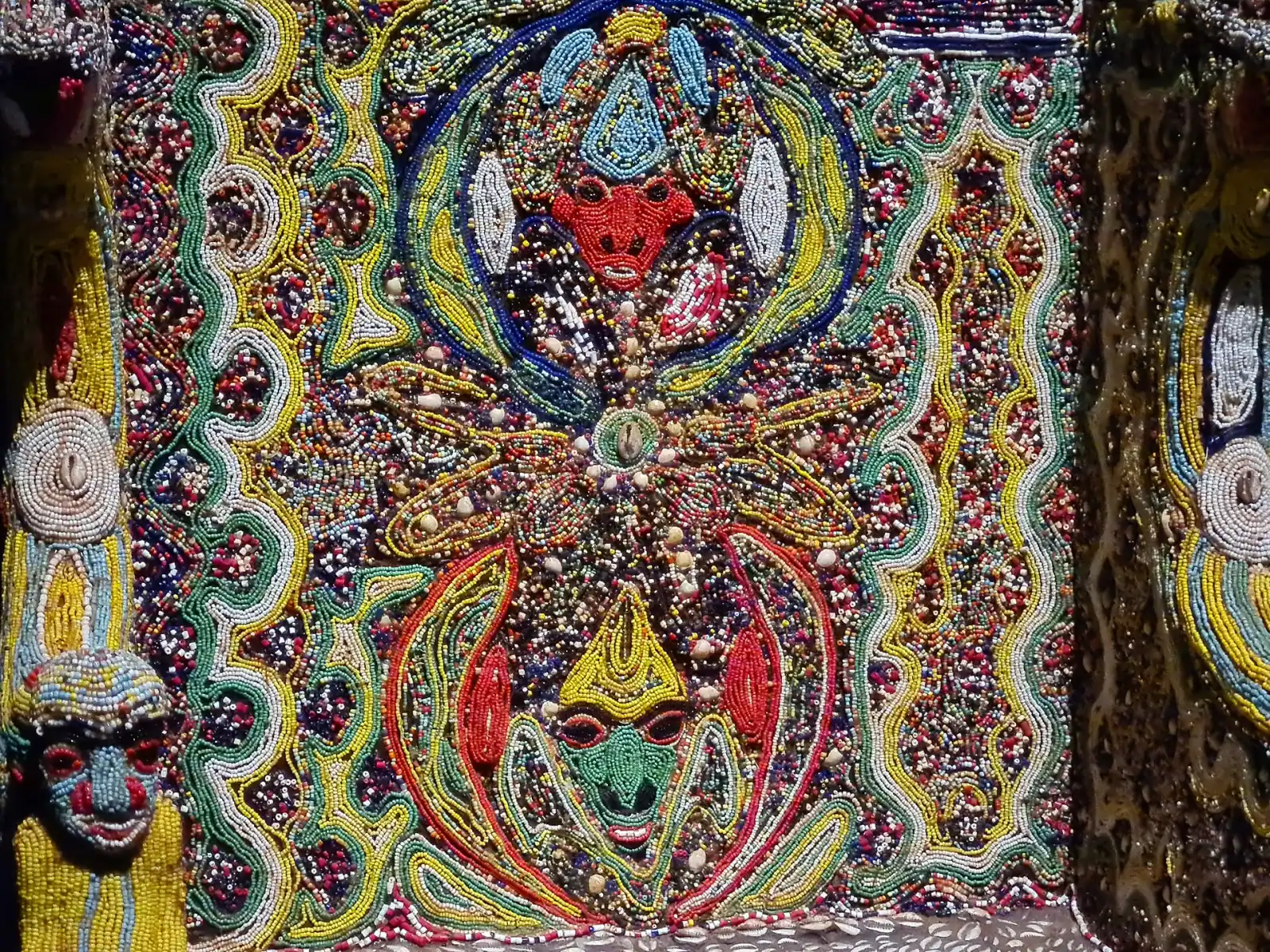
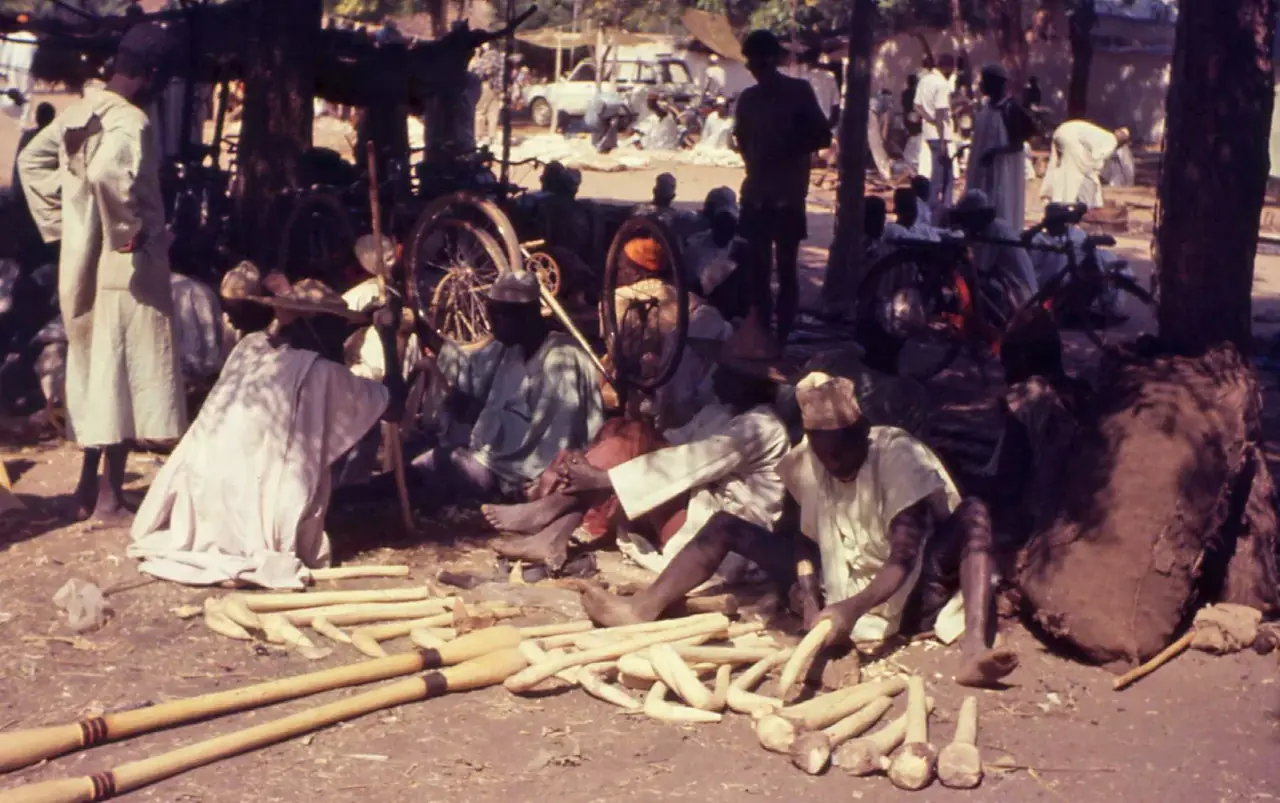
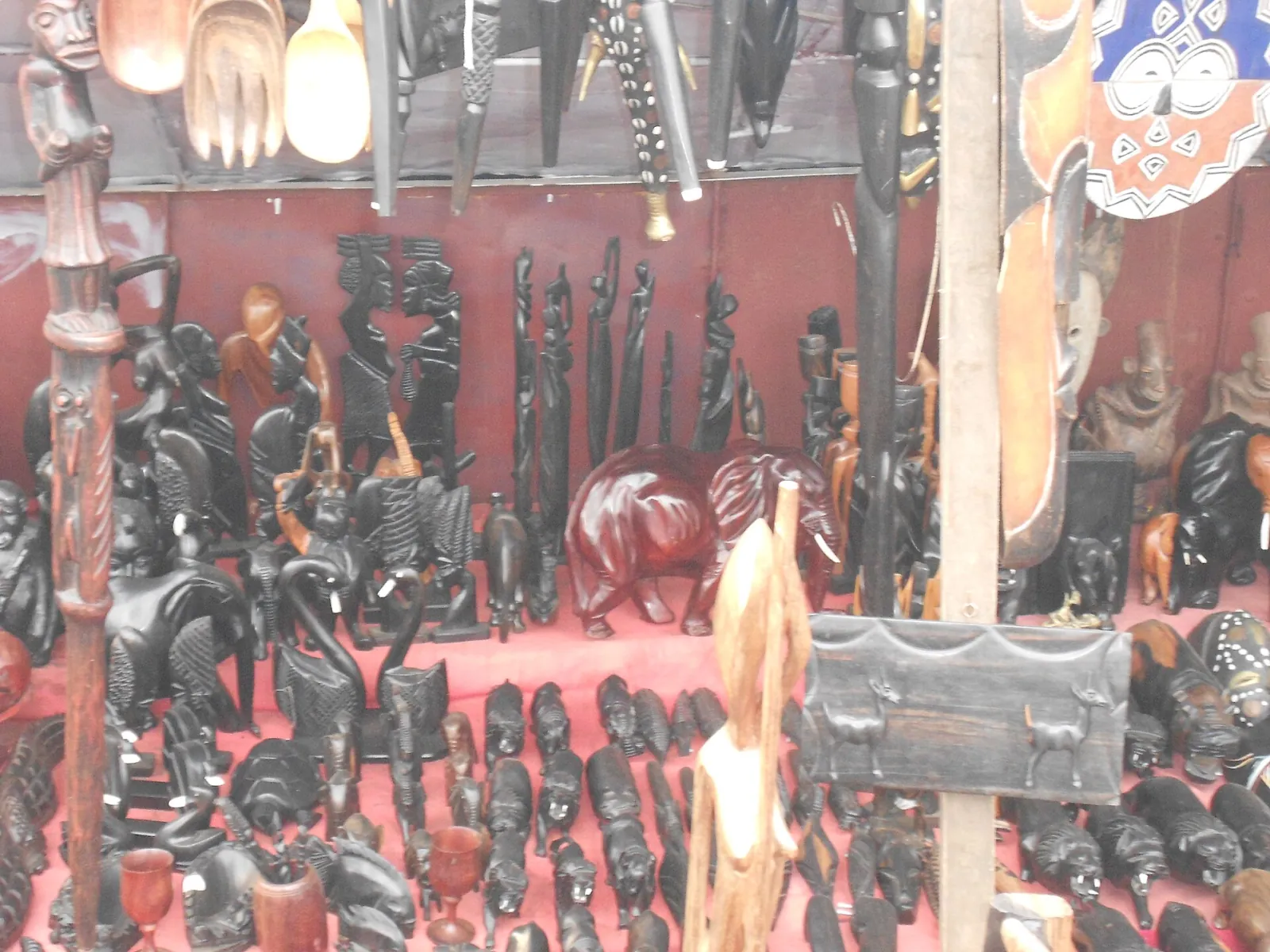
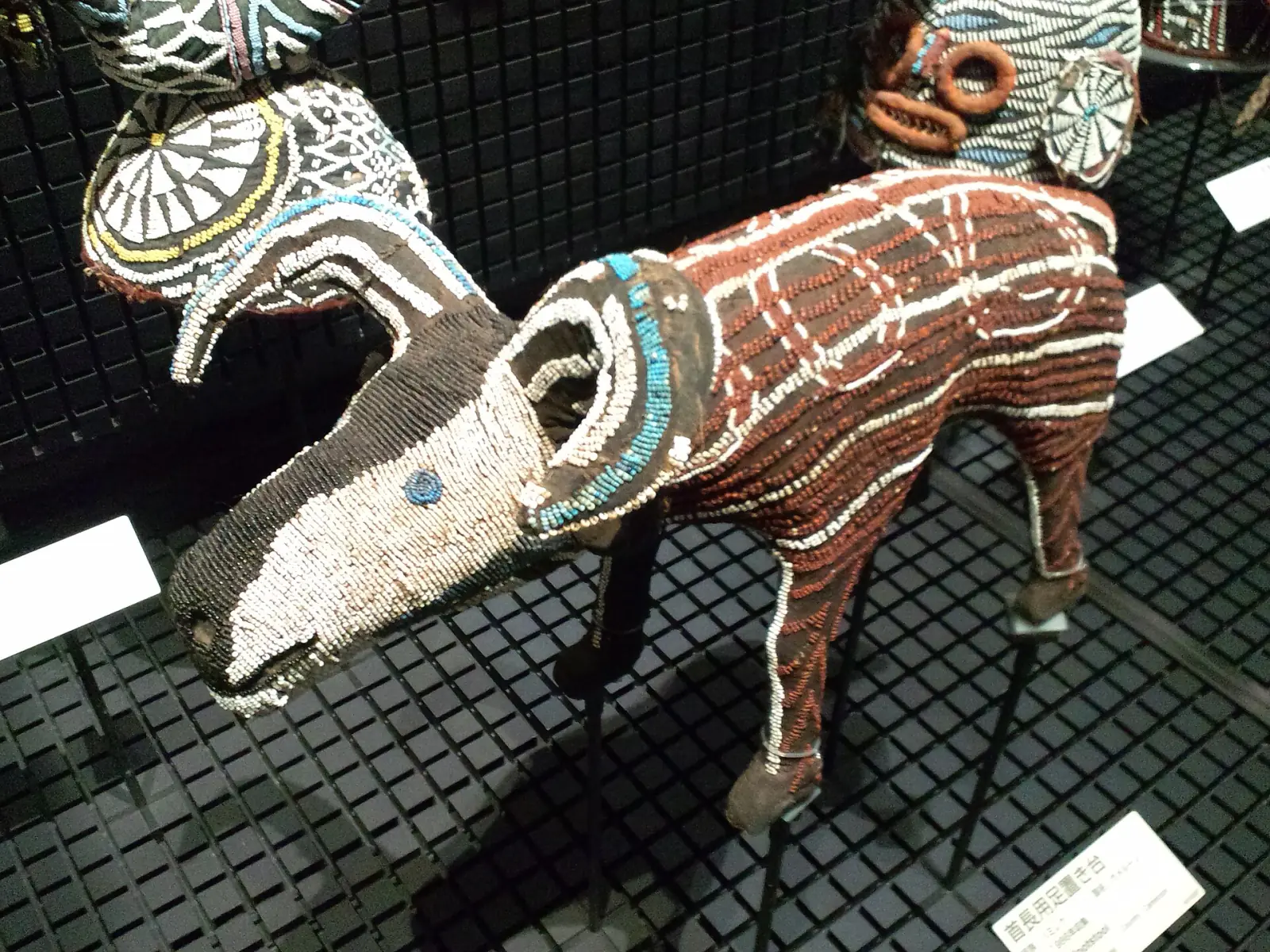
Alongside basketry, forging and weaving, many other forms of know-how make up Cameroon’s craft mosaic. Pottery, hand-modelled by women in the North, Adamawa and several forest regions, produces jars, cooking pots and water pots. Wood sculpture, very much alive in the West, North-West and Centre, shapes hut doors, notables’ stools, masks and statues. Beadwork adorns the thrones, costumes and royal objects of the chiefdoms.

Step by step

Gaining recognition for a traditional workshop

Describe the know-how

Note the craft, the materials, the tools, the stages of production, the places and the people who practise it.

Bring the community together

Obtain the agreement of the workshop, the family or the chiefdom before documenting the skills or disseminating them.

Contact the delegation

Submit the file to the regional delegation, which will advise you and forward it to the heritage services.

Document

Take photographs, make films and conduct interviews with the masters, then write the descriptive record for the inventory.

Getting structured

Form an association or a cooperative, have its statutes approved and open an account to receive support.

Promote

Present your pieces at a trade fair, in a museum shop or at a festival, and open the workshop to pupils.

To act

Support for workshops

Recognise a master

Have a master craftsperson registered as a holder of know-how in the heritage inventory.

View the inventory

Create a cooperative

Bring together the craftspeople of your village and have your statutes approved to access support.

Apply for approval

Fund a workshop

Submit a subsidy application for a tool, premises or apprentice training.

Request support

Exhibit your pieces

Present your creations at a trade show, fair or exhibition of the cultural network.

View the trade shows
To explore

Know-how in other sections

Voices

Voices of craftspeople

“
I wove my first basket at seven, sitting beside my grandmother; today I teach twenty girls in the village.
A basket maker
North-West Region
“
We cast bronze by the lost-wax method like our fathers, but we now supply hotels and art galleries.
An art founder
West Region
“
The cooperative allows us to buy cotton together and sell at better prices at trade fairs.
A weaver
North Region
“
The training centre gave me the diploma, but it is the master’s workshop that gave me the skill.
A young sculptor
Centre Region

“Forging is not learned from books: you learn by blowing the fire, taking the sparks and watching the master’s hands.”

A blacksmith, Far North
To download

The craftsperson’s resources

Key facts

Traditional crafts at a glance

TradeMaterialsRegions where it is strongly rootedTypical products
BasketryRaffia, rattan, bamboo, grassesWest, North-West, South-West, CentreBaskets, mats, fish traps, furniture
ForgingIron, bronze, brassMandara, Adamawa, WestTools, weapons, court pieces
WeavingCotton, raffia, indigoNorth, North-West, WestWoven strips, ceremonial garments
PotteryClay, slipsNorth, Far North, AdamawaJars, cooking pots, water pots
SculptureWood, vegetable ivoryWest, North-West, CentreMasks, stools, carved doors
BeadworkGlass beads, cowriesWest, North-WestThrones, necklaces, costumes
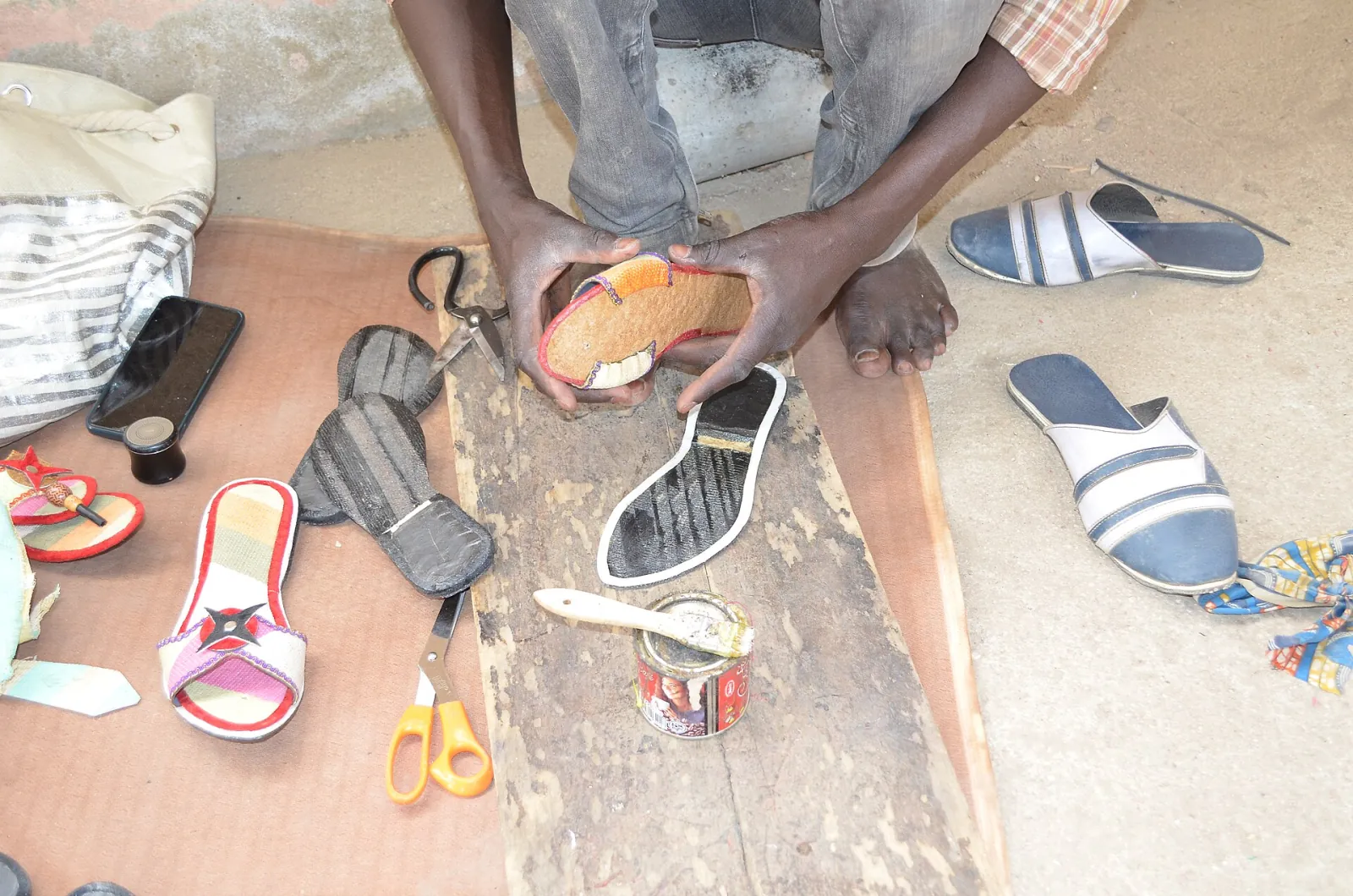
Leather and leatherworkHides, plant dyesNorth, Far NorthBags, saddles, sandals
Glossary

The words of the workshop

Apprentice

A person who learns a trade from a master, often over several years.

Lost-wax casting

A casting technique in which a wax model is replaced by molten metal in a mould.

Raffia

A palm whose fibres are used for weaving and basketry.

Rattan

A sturdy vine used for furniture and baskets.

Indigo

A blue dye of plant origin used for traditional fabrics.

Bellows

The blacksmith’s tool that fans the charcoal fire.

Loom

A frame on which the warp threads are mounted to weave strips.

Master craftsperson

A recognised practitioner who trains apprentices and embodies a skill.

Cooperative

A group of craftspeople who buy and sell together.

Slip

A thin layer of coloured clay applied to pottery before firing.

Beadwork

The art of covering objects with glass beads or cowries.

Tradition bearer

A person recognised for practising and passing on a skill.

On the site

Visit the workshops of the country

Resources

Useful links for craftspeople

Stakeholders

Who supports know-how?

Journey

Arts and crafts over time

Before the 19th centuryCourt workshops

In the kingdoms and chiefdoms, craftspeople work for the court and are given a special status.

Colonial eraArts and crafts schools

Training centres are opened, but they are often detached from the masters and traditional knowledge.

1970s-1990sCooperatives

Craftspeople group together in cooperatives to sell their basketry, textiles and sculptures together in the markets.

2013The heritage law

Law No. 2013/003 provides tax and customs benefits for heritage promotion activities.

2020-2026Digital technology

Online sales, videos of skills, mapping of workshops: craftspeople are reaching new audiences.

Questions

Your questions about know-how

How can I have my workshop recognised as a holder of know-how?

Contact the regional delegation with a description of the craft, photographs and the agreement of your family or community. The record is examined by the heritage services before being added to the inventory.

Are there tax benefits for craftspeople?

The heritage law provides tax and customs benefits for cultural heritage promotion activities. The precise conditions should be checked with the competent services and the regional delegation.

Can I sell my objects abroad?

Yes for most craft products, after completing the export formalities for works of art. Recognised or listed property, however, cannot be permanently exported, and its temporary export requires the Minister’s authorisation.

How can I find a master to learn a trade from?

Contact the regional delegation, a craftspeople’s cooperative or a training centre. Recognised masters take on apprentices according to their own customs: duration, accommodation, contribution to costs.

Is a cooperative compulsory?

No, but it makes it easier to buy raw materials, sell collectively and access support. An association of craftspeople may apply for approval and submit subsidy applications.

Can my patterns be protected?

A model, a design or a trademark can be protected. For an ancient pattern belonging to a community, protection comes through collective recognition; seek advice from the intellectual property service.

How can I take part in a crafts fair?

Respond to the organisers’ calls with a presentation of your workshop, photographs of your pieces and your stand requirements. The calendar of fairs is in the Festivals section of the site.

Can my workshop welcome visitors?

Yes. Many workshops open their doors during the heritage days or on tourist routes. Notify your workshop to the regional delegation so that it appears in the cultural routes.

Can young people train free of charge?

Some transmission workshops supported by the Ministry are free; others ask for a contribution. Training centres and regional delegations can provide information on open sessions.

Contact

Write to the Ministry: Traditional Know-How

Specify the property or site concerned.

Competent directorate

Contact the know-how services

Address

Directorate of Cultural Heritage
Ministry of Arts and Culture
Quartier du Lac – Ministerial Zone
P.O. Box 1053 Yaoundé, Centre Region, Cameroon

Reach us

+237 6 51 70 58 41

contact@minac.gov.cm

Opening hours

Monday to Friday, 8 am to 4 pm

A workshop to make known?

Contact your regional delegation to have your know-how recorded and to access the support schemes.

Find my delegation
WhatsApp