Coat of arms of CameroonMinistry of Arts
and Culture
Republic of Cameroon
My procedures
Home
Minister’s message
News
Press releases
Cultural calendar
Official speeches
Press review
Photo library
Video library
Calls for projects
Job vacancies
Public procurement
Newsletter
Frequently asked questions
Site map
Contact
Press area
Podcast “The Voice of Culture”
Legal notices
Privacy policy
Cookies and trackers
The Ministry
Missions and responsibilities
Organisation
Organisation chart
Minister’s Office (Cabinet)
Management team
General Secretariat
General Inspectorate
Central directorates
Regional Delegations
Institutions under supervision
Legislative texts
Regulatory texts
Sector strategy
Major projects
Budget and reports
Partners
Careers
Archives
Institutional communication
Quality and accessibility
Arts
Visual and plastic arts
Visual arts
Performing arts
Theatre
Dance
Music
Literature and books
Cinema and audiovisual
Photography
Fashion and design
Digital arts
Art crafts
Artists’ directory
Residencies
Prizes and awards
Arts education
Urban arts
Heritage
Tangible heritage
Intangible heritage
UNESCO sites
National museums
Listed monuments
National inventory
Palaces and chiefdoms
Archaeology
Linguistic heritage
Oral traditions
Traditional know-how
Restitution of cultural property
Fight against illicit trafficking
Listing and protection
Conservation and restoration
Heritage Days
Cultural landscapes
Industries
Music and recording
Cinema
Publishing and books
Digital arts
Fashion and creativity
Crafts
Cultural tourism
Funding for culture
Support funds
Incubators
Cultural entrepreneurship
Culture Observatory
Vocational training
Studies and reports
Sector statistics
Export and outreach
Intellectual property
Copyright
Legal framework
Copyright and neighbouring rights
Collective management societies
Register a work
Licences
Private copying
Fight against piracy
Model contracts
Social status of artists
Mediation
Disputes
Training
Fee scales
Register of works
Contact
Digital neighbouring rights
Public domain
Festivals
National calendar
Ngondo
Nguon
Écrans Noirs
Heritage Days
Music Day
Regional festivals
Fairs and exhibitions
Biennials
National competitions
Cultural days
Organise a festival
Event grants
Ticketing
Archives
Volunteering
Diaspora festivals
Regions
Adamawa
Centre
East
Far North
Littoral
North
North-West
West
South
South-West
Cultural map
Regional Delegations
Traditional chiefdoms
National languages
Cultural routes
Decentralised cooperation
Regional observatory
Cooperation
UNESCO
Francophonie (OIF)
African Union
Commonwealth
CEMAC
Bilateral cooperation
Cultural agreements
Professional organisations
Scholarships
Artist exchanges
Cultural years
Diaspora
Funded projects
Embassies
Technical partners
International restitution
International monitoring and calls
Services
Artist card
Show authorisation
Filming authorisation
Festival authorisation
Deposit of a work
Export of works of art
Listing of a property
Grant application
Association accreditation
File tracking
Forms
Fees
Opening hours and addresses
Reporting
Online help
My account
One-Stop Shop
Industries

Publishing and books

Publishers, bookshops, support and statistics: how the book chain works in Cameroon, from author to reader, and how the Directorate of Books and Reading supports professionals.

Updated on 6 November 20264 sub-pages
SIILY edition4e (2026)
Law on legal depositn° 2000/05
Monitoring hubsLiterary and publishing
Supervising directorateDLL
Publishing and books

A book chain from author to reader

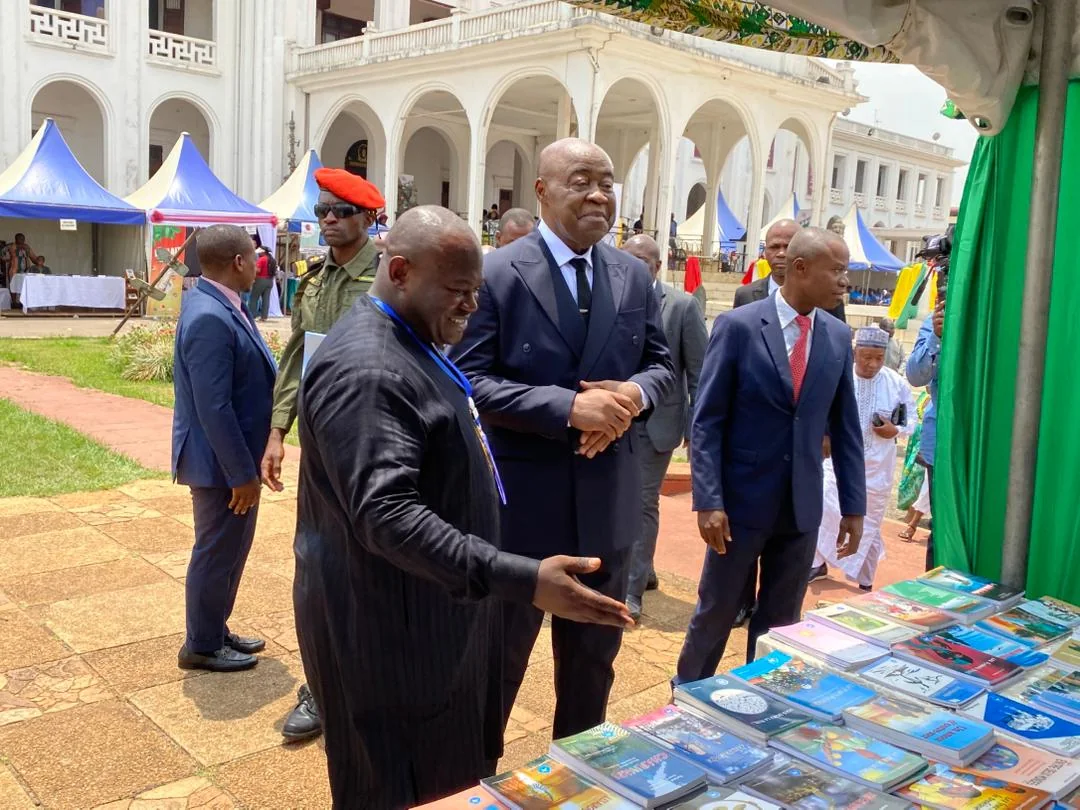
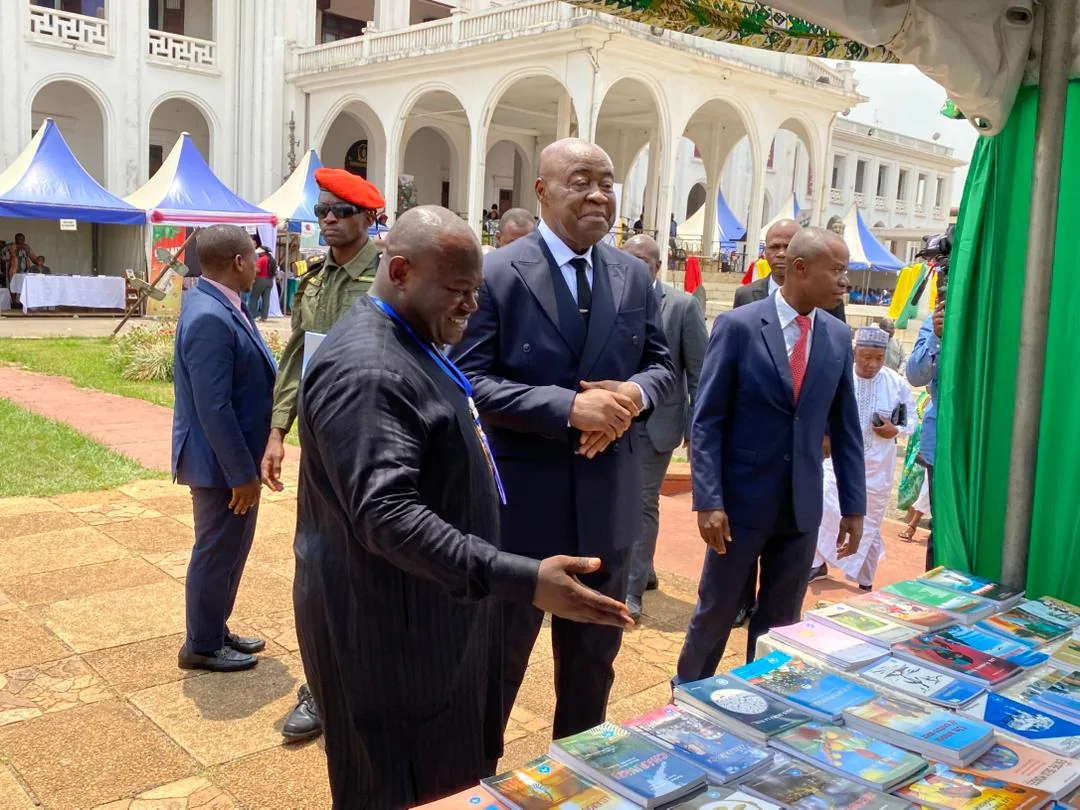
The Minister and officials in front of books displayed on a stand in the courtyard of a colonial-style building

A book is born from a manuscript, but it reaches a reader’s hands only at the end of a chain: the author, the agent if any, the publisher, the printer, the disseminator, the bookseller or the library, and finally the reader. Each link has its skills, its contracts and its revenue, and the strength of the whole determines the place of the Cameroonian book in the economy and in cultural life.

This page describes the economics of the sector: how publishing houses and bookshops operate, what support exists, which indicators track the sector, and what role is played by the Directorate of Books and Reading, which develops Government policy in this area and oversees its implementation.

  • Publishers, printers, disseminators and booksellers
  • Legal deposit governed by Law No. 2000/05
  • Yaoundé International Book Industry Fair
Discover the publishers
Publishers

Publishers and book production

The Minister presenting books displayed on a stand, alongside officials

The publisher chooses texts, works on them with the authors, finances their production and bears the commercial risk of publication. They hire a proofreader, a layout artist and an illustrator, negotiate with a printer, organise dissemination and handle promotion. The typical Cameroonian publishing house is a small independent business of two to eight people, publishing between five and twenty titles a year in general literature, school books, religious works, children’s books or the humanities.

The publishing contract

The author assigns to the publisher the right to reproduce and disseminate their work for a given duration and territory, in return for remuneration proportional to sales, sometimes accompanied by an advance. The model publishing contract sets out the essential clauses: scope of the assignment, print run, deadlines, rendering of accounts, fate of unsold copies and reversion of rights.


Other forms of publishing

  • Publisher-funded publishing, where the house finances production;
  • Author-funded publishing, where the author pays themselves, not to be confused with the previous one;
  • Self-publishing, assisted or not, which is growing with print on demand and digital;
  • Electronic and audio publishing, which broadens outlets.

The literature and books section presents genres and authors, while the intellectual property section details the protection of texts. Legal deposit of each title remains an obligation for the publisher and the printer.

ℹ️
Legal deposit

Law No. 2000/05 on legal deposit protects the national cultural and intellectual heritage: printed, graphic, sound and audiovisual documents, software and databases made available to the public are subject to it.

Bookshops

Bookshops and sales channels

Author signing a book in a Douala bookshop in front of shelves

The bookshop is where the book meets its public. It selects titles, advises readers, organises meetings and signings, and manages a stock that ties up substantial cash. General bookshops are concentrated in the large cities; stationery bookshops, which also sell school supplies, ensure the presence of books in many medium-sized towns.

The commercial circuit

The bookseller buys from a disseminator-distributor or directly from the publisher, with a discount that covers their costs and profit. They may buy outright or take the books on deposit. Back-to-school sales are a high point: textbooks and set works account for a large share of turnover.

Other points of sale

Books are also sold at kiosks, in markets, at fairs and trade shows, and increasingly online. Fairs and trade shows circulate titles and bring publishers, booksellers and readers together.

Reading everywhere

The Directorate of Books and Reading develops and coordinates the national network of public libraries and reading centres. The Ministry works to create reading centres in order to bring books closer to communities, in liaison with the regional delegations and local authorities. Booksellers and libraries are listed in the map of publishing houses, bookshops and libraries drawn up by the directorate.

Support schemes

Support for publishing and books

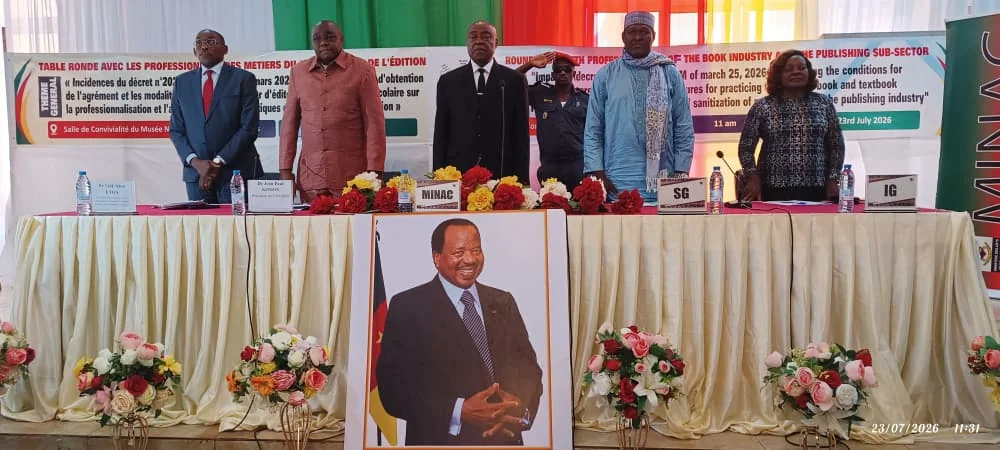
Guests and officials seated during an official ceremony

The book is a cultural good with a narrow margin: short print runs, high printing costs, a scattered sales network. Several levers can lighten the burden on publishers and booksellers, even though the scheme needs to be better known and used.

The Ministry’s support

The Directorate of Books and Reading supports the production, dissemination and distribution of books. It promotes the Cameroonian book, organises fairs and trade shows and advises the book chain. Two hubs have been created, one literary and the other devoted to publishing, to monitor, promote and support the players. Publishing projects may be submitted through the grant application and the support funds.

Other sources

  • Patronage and sponsorship, governed by the law on patronage and sponsorship;
  • Crowdfunding, useful for a first print run;
  • Institutional purchases: libraries, schools, local authorities;
  • Calls for projects from international partners, announced in the calls for projects section.

Putting together a good file

A publishing support file includes the manuscript or an extract, the author’s presentation, a printer’s quote, a dissemination plan and a balanced budget. Financing culture offers a full overview of the funding sources available.

Statistics

Statistics of the book sector

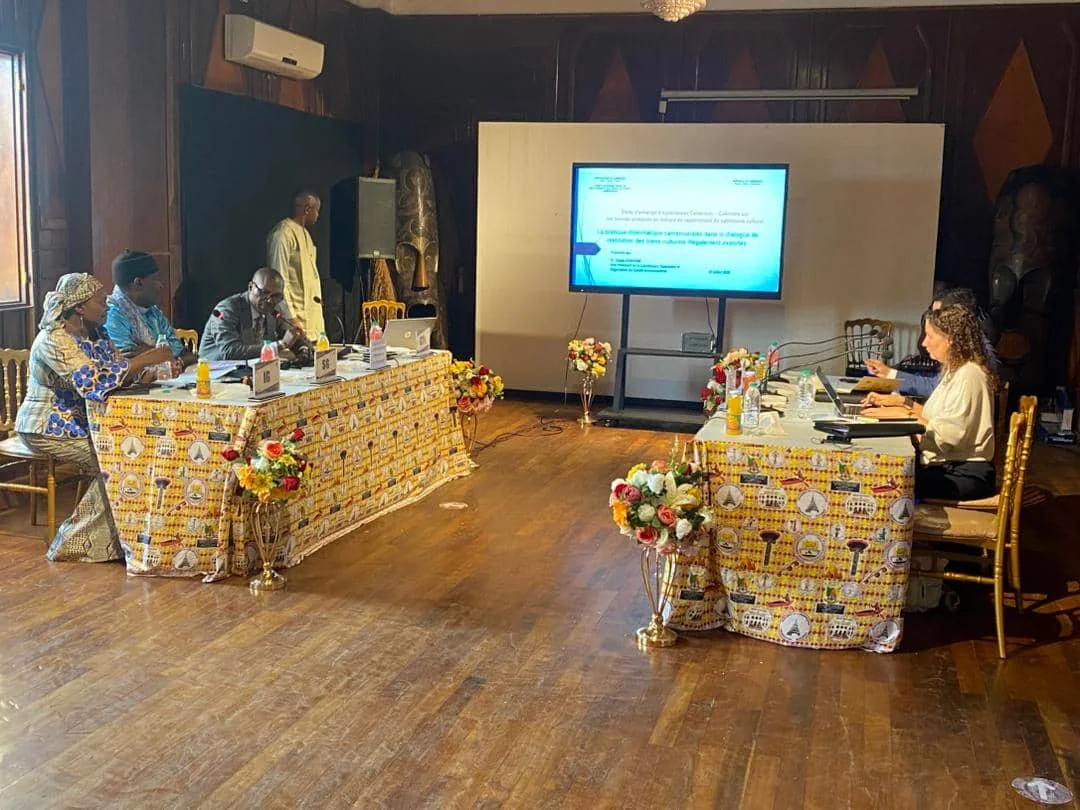
Meeting room with a projection screen during a Ministry workshop

Steering a book policy requires measuring the sector: how many active publishing houses, how many titles published each year, what print runs, how many bookshops, what library attendance. The Directorate of Books and Reading carries out studies and research on reading and the book economy, and draws up the map of publishing houses, bookshops and libraries.

The sources

Legal deposit feeds the national bibliography: every title deposited is a title recorded. Publishers’ declarations, surveys of booksellers, fair reports and library registers complete the picture. The publications of the culture observatory and of the sector statistics section bring this data together.

Useful indicators

  • Number of titles published by genre and by year;
  • Average print run and reprint rate;
  • Share of school books in turnover;
  • Density of bookshops and libraries by region;
  • Employment in publishing, printing and sales;
  • Attendance at book fairs.

The Yaoundé International Book Industry Fair (SIILY) contributes to this reading: its fourth edition, opened in March 2026 on the esplanade of the National Museum, brought together book chain players from several countries around the theme “The book in the face of artificial intelligence”. The studies and reports take up its lessons.

Fair

SIILY and book fairs

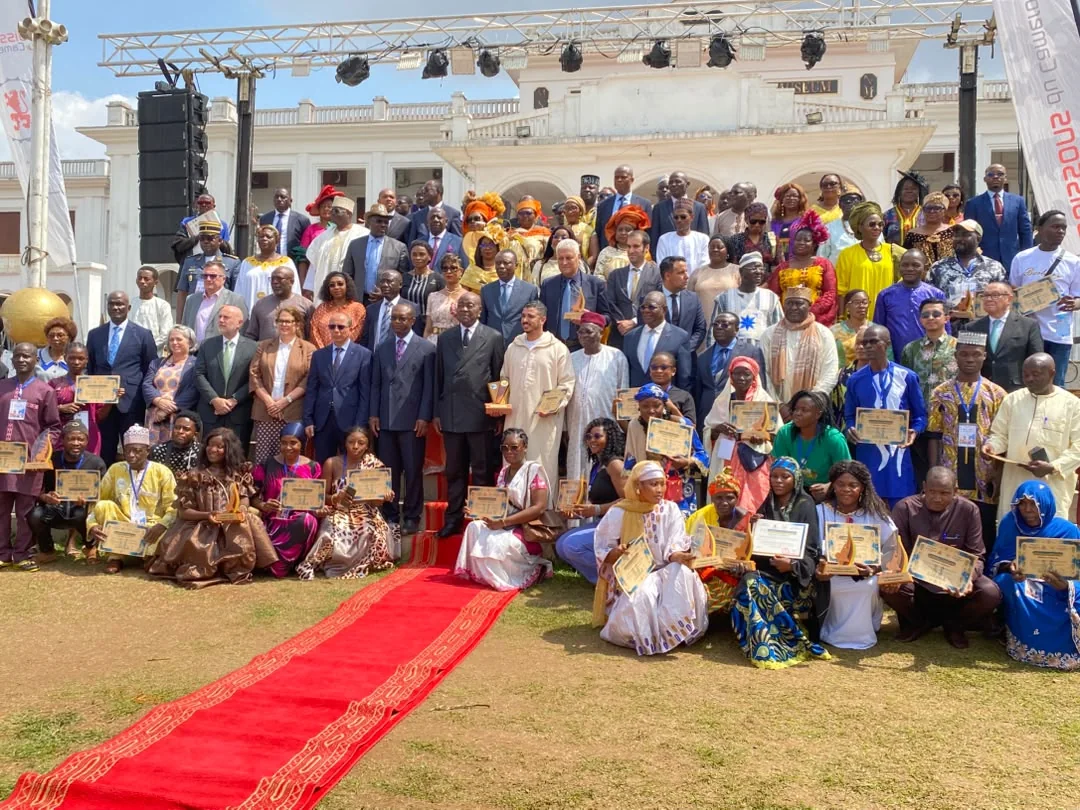
Award winners gathered on the lawn during a national ceremony

The Yaoundé International Book Industry Fair is the sector’s professional event. Run by the Association of Book Industry Promoters, it was held for the fourth time in March 2026 on the esplanade of the National Museum, under the patronage of the Minister of Arts and Culture, who presided over the opening ceremony on 11 March. The next day, a delegation led by the promoter of the fair and made up of about ten participants from several countries was received in audience by the Minister, who reiterated the Ministry’s commitment to supporting the promoters.

Why a fair matters

A fair brings together publishers, authors, booksellers, printers, librarians, teachers and readers in one place. It makes it possible to sell, to sign dissemination contracts, to negotiate rights assignments, to spot authors and to forge co-productions. Professional conferences and training workshops sit alongside signings and activities for young people.

Take part

An exhibitor prepares a stand, an up-to-date catalogue, clear commercial terms and a sales team. An author plans a programme of signings and readings. The calendar of fairs and trade shows and the cultural agenda announce the dates and calls for exhibitors.

Careers

Book professions, from pen to library

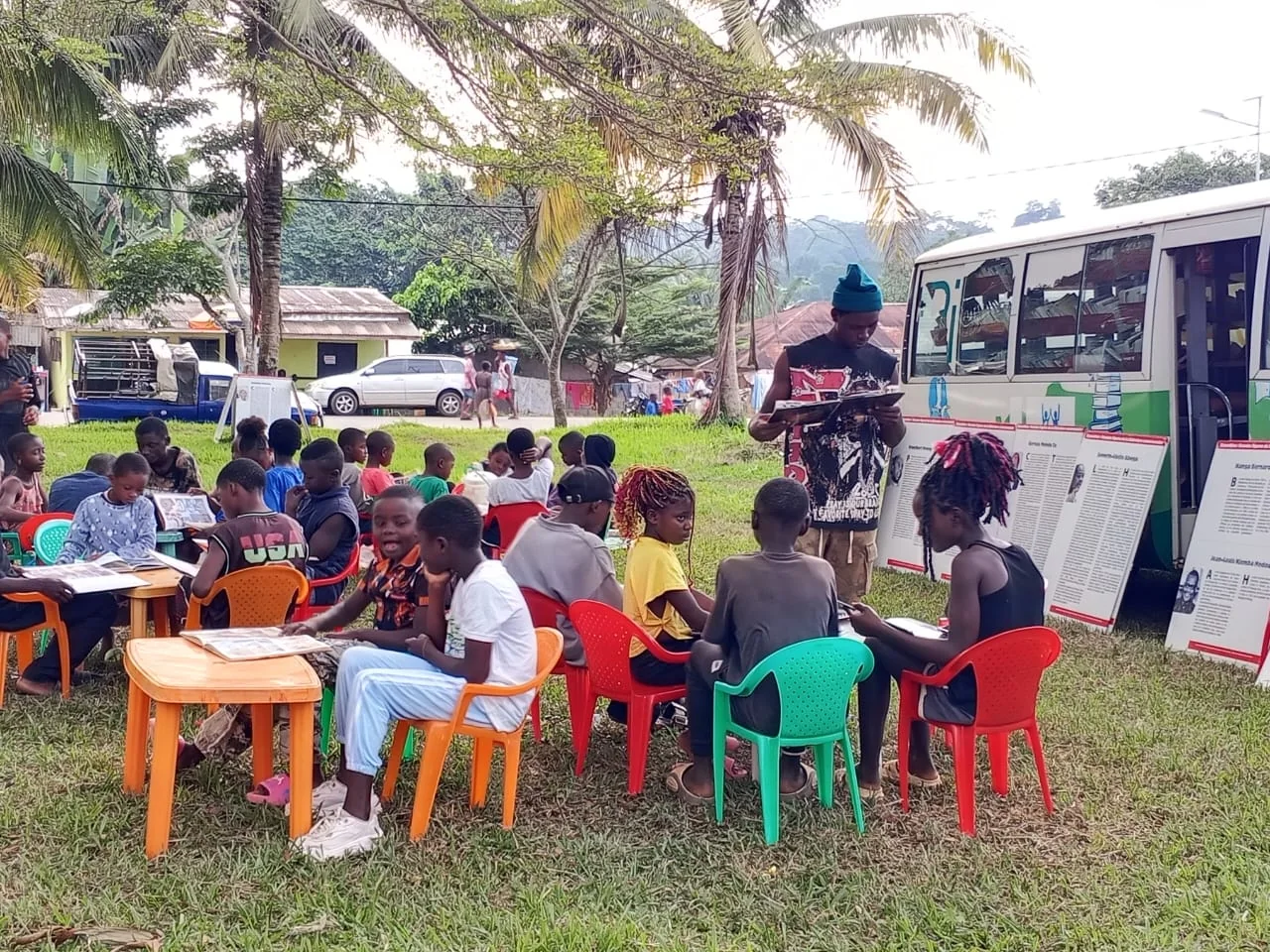
Children reading and writing at colourful tables on a lawn, next to a library bus

The book chain brings together very varied professions: author, translator, illustrator, publisher, series editor, proofreader, layout artist, printer, disseminator, distributor, bookseller, librarian, documentalist, book mediator and reading facilitator. The Directorate of Books and Reading promotes these professions and monitors the training, upskilling and integration of professionals.

Career paths

A proofreader trains in language practice and typographic standards. A layout artist learns page-layout software. A bookseller learns stock management and advising customers. A librarian follows training in information science. These courses are presented in the vocational training section.

Typical businesses

A publishing house in Yaoundé specialising in children’s books works with freelance illustrators and sells to schools. A printing works in Douala produces short print runs for several publishers. A stationery bookshop in Bamenda combines books, supplies and online reservations. A disseminator in Bafoussam supplies some thirty points of sale in the West and North-West.

For authors, the social status of the artist specifies social protection and taxation, and the register of works makes it possible to date a manuscript.

Step by step

Publishing a book from manuscript to bookshop

Finalise the manuscript

Proofread, have it proofread and prepare a presentation of the book, a short biography and a summary for publishers.

Choose the publishing mode

Submit to publishers, compare the offers and decide between publisher-funded publishing, co-publishing or self-publishing.

Sign the contract

Check the duration, the territory, the royalty percentage, the sales statements and the conditions for reversion of rights.

Produce

Go through proofreading, layout, the cover and the choice of print run, then request several printer’s quotes.

Deposit and disseminate

Carry out the legal deposit, declare the work, entrust the stock to a disseminator and prepare the bookshop release.

Promote

Organise a launch, signings, fairs and an online presence, then track sales and returns every quarter.

Key facts

The links in the book chain at a glance

LinkStakeholdersIncomeFramework or procedure
CreationAuthors, translatorsProportional royalties, advancesPublishing contract, copyright
PublishingPublishing housesSale of copiesLegal deposit, publishing support
ProductionPrinters, layout artistsBilling for servicesQuotes, service contracts
Dissemination and distributionDisseminators, wholesalersDiscount on the retail priceDissemination contract
SaleBookshops, kiosks, online salesTrade marginDiscounts, returns
Public readingLibraries, reading centresPublic budgetsMap of libraries
EducationEducational publishers, schoolsInstitutional salesOfficial curricula
PromotionFairs, prizes, mediaStand revenueSIILY, fairs and trade shows
Journey

Books in Cameroon through the decades

1960s-70sThe first national houses

Publishers bring out the first novels, poetry collections and textbooks, in a context of strong school demand.

1980s-90sThe book crisis

Falling incomes and the cost of paper reduce print runs; bookshops become scarce and libraries lack resources.

2000The legal deposit law

Law No. 2000/05 establishes compulsory deposit to protect the cultural and intellectual heritage and feed the national bibliography.

2010sRenewal of publishing

Young independent publishers, print on demand and social media revive the publication of novels, comics and children’s books.

2026SIILY and artificial intelligence

The fair’s fourth edition reflects on the place of the book in the face of artificial intelligence; two hubs monitor literature and publishing.

TomorrowReading everywhere

The development of reading centres and digital libraries brings books closer to every community.

To explore

The book in other sections

“A book that is not disseminated remains a printed manuscript: all the value of a publishing house is decided between the printing works and the bookshop.”

An independent publisher, Yaoundé
They make the book

Voices from the book chain

“
We publish few titles, but we support them for a long time: launch, book signings, meetings in secondary schools. It is this follow-up that builds a catalogue.
A publisher, Yaoundé
Centre
“
The back-to-school season accounts for more than half of my turnover: literary books help me keep readers all year round.
A bookseller, Douala
Littoral
“
Since the reading centre opened, the neighbourhood children have come every Wednesday. The book has finally become a meeting place.
A librarian, Maroua
Far North
“
At the fair, I met a distributor and signed three consignment agreements on the same day. Contacts are worth as much as sales.
An author-publisher, Bamenda
North-West
To act

The procedures for book professionals

Deposit of a work

Date your manuscript or publication and prepare the protection of your rights.

Deposit the work

Grant application

Submit an editorial project or a reading programme to the support schemes.

Request support

Association accreditation

Associations of authors, readers and publishers obtain their official recognition here.

Submit the file

Artist card

Authors, illustrators and translators can assert their professional status.

Apply
To download

The resources for publishers and booksellers

Glossary

The vocabulary of publishing and books

Publisher

A company that selects, produces and sells books while bearing the financial risk.

Disseminator

A company that represents a catalogue of publishers to booksellers and takes orders.

Distributor

A company that stores, delivers and invoices copies to points of sale.

Legal deposit

Mandatory submission of copies of a published document in order to build the national bibliography.

Print

Number of copies printed of a single edition of a work.

Presentation

Reduction on the retail price granted to the bookseller to cover costs and margin.

Copyright

Percentage of the selling price paid to the author for each copy sold.

Self-publishing

Publication handled directly by the author, without a publishing house.

Advance

Advance paid to the author and deducted from future royalties.

Book fair

Event bringing together publishers, authors, booksellers and readers to sell and exchange.

Reading centre

Local venue offering books, activities and access to information.

ISBN

International number that uniquely identifies each edition of a book.

On the site

Continue reading on publishing and books

Resources

Useful links for publishing and books

Stakeholders

Who supports the book sector?

Questions

Your questions on publishing and books

What is legal deposit and who must comply?

Established by Law No. 2000/05, legal deposit is the mandatory submission of copies of documents made available to the public: printed matter, graphics, photographs, sound recordings, audiovisual works, software and databases. It protects cultural and intellectual heritage and feeds the national bibliography.

How do I find a publisher for my manuscript?

Prepare a short file: summary, biography, extract and target readership. Send it to several houses whose editorial line matches your genre. Book fairs are also good places to meet publishers directly.

What is the difference between publisher-funded and self-funded publishing?

In publisher-funded publishing, the house finances production and pays you royalties on sales. In self-funded publishing, you pay for the printing yourself: this is a service, not publishing. Read the contract carefully before signing.

Is there support for publishers and booksellers?

The Directorate of Books and Reading supports the production, dissemination and distribution of books. Projects are processed through the grant application and the support funds, as well as through the calls for projects published on the site.

What is SIILY?

The Yaoundé International Book Industry Fair is a professional event run by the association of book industry promoters. Its fourth edition was held in March 2026 on the esplanade of the National Museum, on the theme “The book in the face of artificial intelligence”.

How do I open a library or a reading centre?

Contact the regional delegation and the Directorate of Books and Reading, which coordinate the national network of public libraries and reading centres. Prepare suitable premises, an initial collection and an outreach programme.

Is my book automatically protected?

Yes, every original work is protected by copyright from the moment of its creation. Deposit and declaration date the creation and make it easier to prove authorship in the event of a dispute or piracy.

Where can I find figures on the book sector?

The Directorate of Books and Reading carries out studies on the book economy and draws up the map of publishing houses, bookshops and libraries. Summaries are available in the studies and reports and sector statistics sections.

Contact

Write to the Ministry: Publishing and books

Describe your activity or your project.

Competent directorate

Contact the Directorate of Books and Reading

Address

Directorate of Books and Reading
Ministry of Arts and Culture
Quartier du Lac – Ministerial Zone
P.O. Box 1053 Yaoundé, Centre Region, Cameroon

Reach us

+237 6 51 70 58 41

contact@minac.gov.cm

Opening hours

Monday to Friday, 8 am to 4 pm

A book to deposit?

Have your work registered online and keep your deposit receipt.

Deposit a work
WhatsApp