Coat of arms of CameroonMinistry of Arts
and Culture
Republic of Cameroon
My procedures
Home
Minister’s message
News
Press releases
Cultural calendar
Official speeches
Press review
Photo library
Video library
Calls for projects
Job vacancies
Public procurement
Newsletter
Frequently asked questions
Site map
Contact
Press area
Podcast “The Voice of Culture”
Legal notices
Privacy policy
Cookies and trackers
The Ministry
Missions and responsibilities
Organisation
Organisation chart
Minister’s Office (Cabinet)
Management team
General Secretariat
General Inspectorate
Central directorates
Regional Delegations
Institutions under supervision
Legislative texts
Regulatory texts
Sector strategy
Major projects
Budget and reports
Partners
Careers
Archives
Institutional communication
Quality and accessibility
Arts
Visual and plastic arts
Visual arts
Performing arts
Theatre
Dance
Music
Literature and books
Cinema and audiovisual
Photography
Fashion and design
Digital arts
Art crafts
Artists’ directory
Residencies
Prizes and awards
Arts education
Urban arts
Heritage
Tangible heritage
Intangible heritage
UNESCO sites
National museums
Listed monuments
National inventory
Palaces and chiefdoms
Archaeology
Linguistic heritage
Oral traditions
Traditional know-how
Restitution of cultural property
Fight against illicit trafficking
Listing and protection
Conservation and restoration
Heritage Days
Cultural landscapes
Industries
Music and recording
Cinema
Publishing and books
Digital arts
Fashion and creativity
Crafts
Cultural tourism
Funding for culture
Support funds
Incubators
Cultural entrepreneurship
Culture Observatory
Vocational training
Studies and reports
Sector statistics
Export and outreach
Intellectual property
Copyright
Legal framework
Copyright and neighbouring rights
Collective management societies
Register a work
Licences
Private copying
Fight against piracy
Model contracts
Social status of artists
Mediation
Disputes
Training
Fee scales
Register of works
Contact
Digital neighbouring rights
Public domain
Festivals
National calendar
Ngondo
Nguon
Écrans Noirs
Heritage Days
Music Day
Regional festivals
Fairs and exhibitions
Biennials
National competitions
Cultural days
Organise a festival
Event grants
Ticketing
Archives
Volunteering
Diaspora festivals
Regions
Adamawa
Centre
East
Far North
Littoral
North
North-West
West
South
South-West
Cultural map
Regional Delegations
Traditional chiefdoms
National languages
Cultural routes
Decentralised cooperation
Regional observatory
Cooperation
UNESCO
Francophonie (OIF)
African Union
Commonwealth
CEMAC
Bilateral cooperation
Cultural agreements
Professional organisations
Scholarships
Artist exchanges
Cultural years
Diaspora
Funded projects
Embassies
Technical partners
International restitution
International monitoring and calls
Services
Artist card
Show authorisation
Filming authorisation
Festival authorisation
Deposit of a work
Export of works of art
Listing of a property
Grant application
Association accreditation
File tracking
Forms
Fees
Opening hours and addresses
Reporting
Online help
My account
One-Stop Shop
Festivals

Regional festivals

From Mbam’Art to Ngul Be Mvamba, from the Ngondo to the Nguon and the fantasias of the North, discover the festivals of each region of Cameroon, how they are organised and the procedures for supporting them or creating a new one.

Updated on 6 November 20264 sub-pages
Festivals relayed in 202610
Mbam’Art12th edition
Ka’a Ndeh Mu’nka6th edition
Ya Jazz26th edition
Regions

Festivals in every region

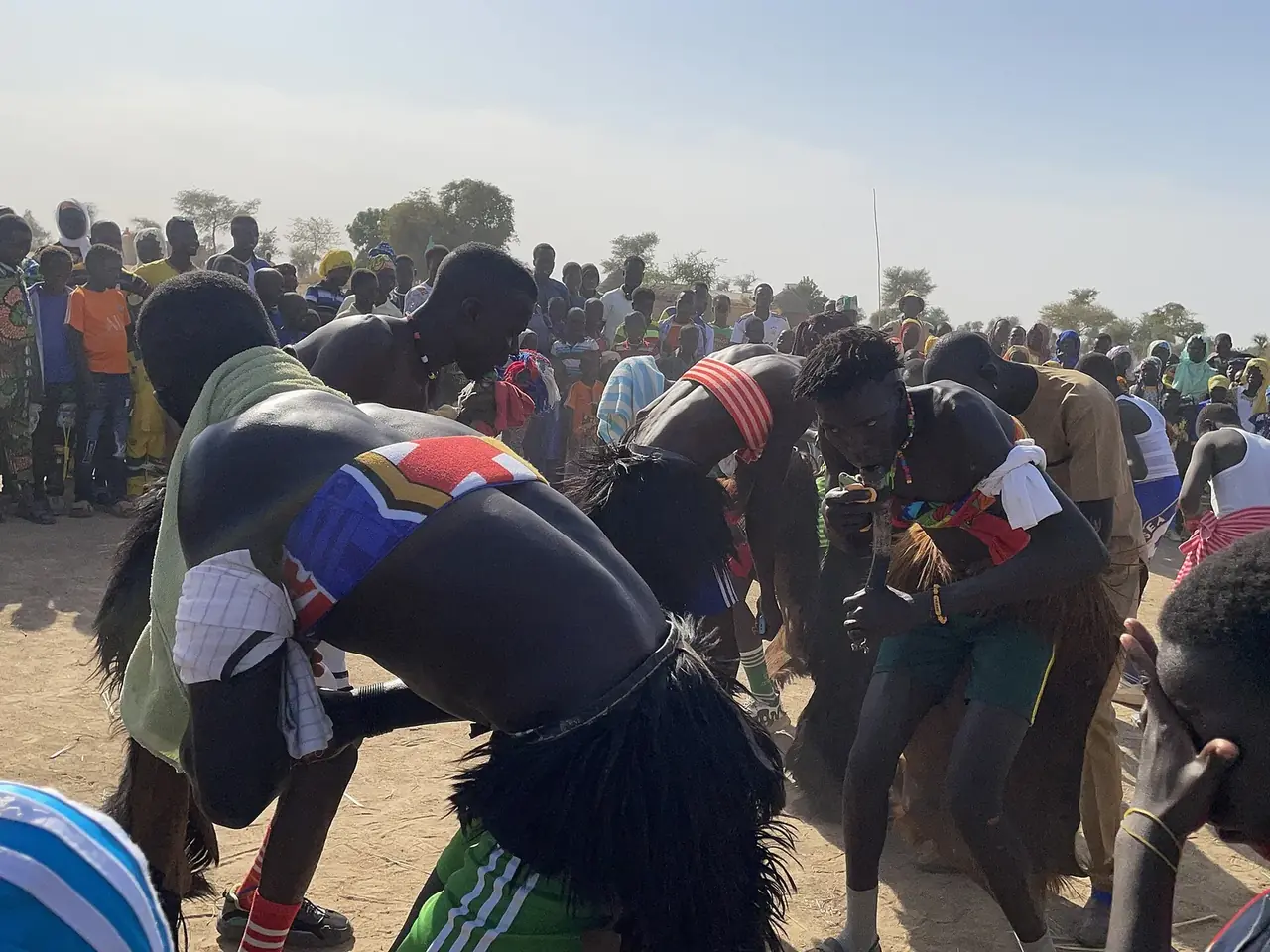
Dancers at a cultural festival in Nouldayna, Far North

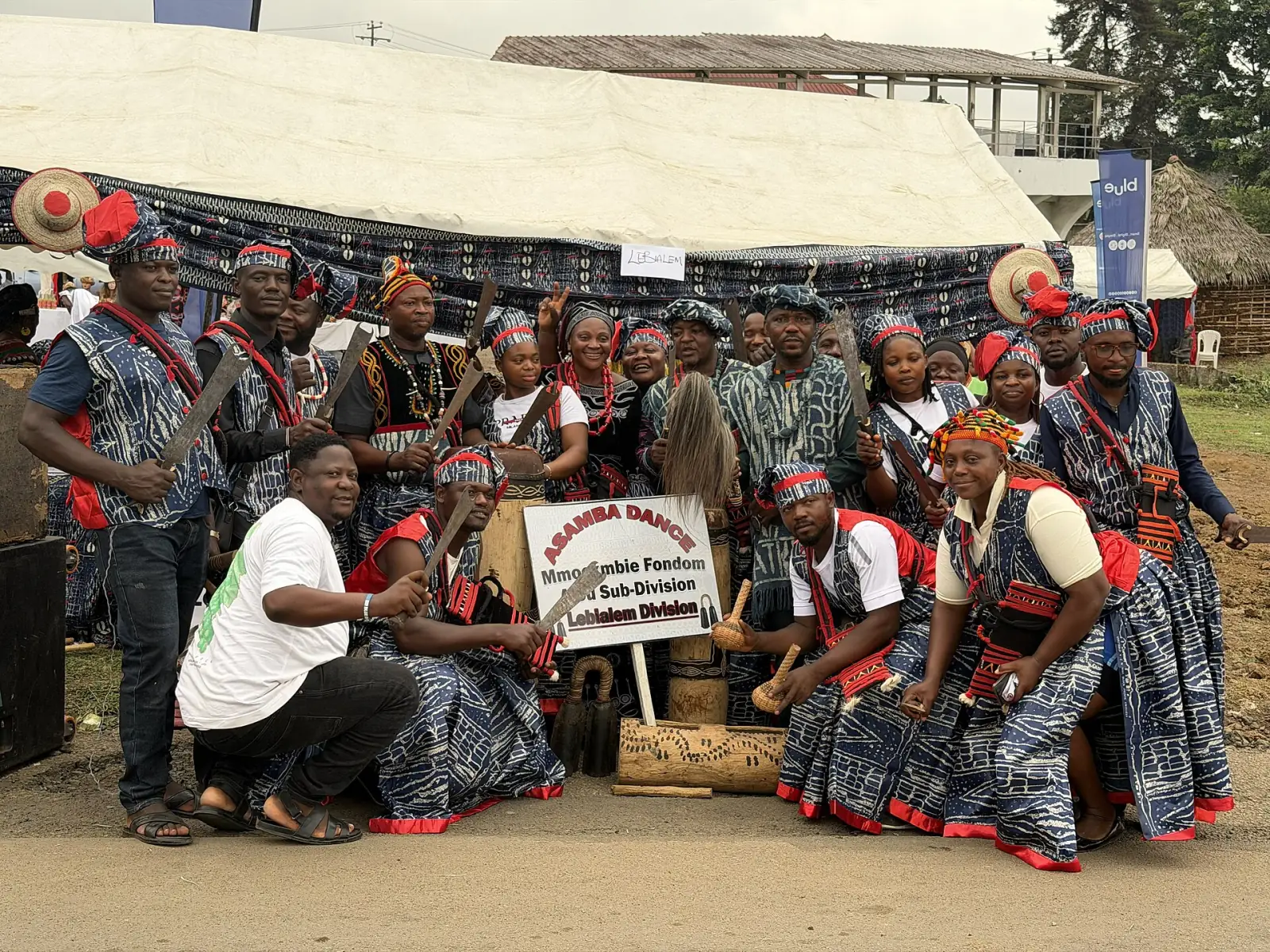
From the Grand Mbam to the banks of the Wouri, from the Grassfields to the savannahs of the North, every region of Cameroon has its own events, born of the history of a people, a chiefdom, a town or the initiative of an association. In 2026, the Ministry relayed several of them: Mbam’Art (12th edition), Ka’a Ndeh Mu’nka (6th edition), the Bia So Mengong International Festival, Tokna Massana, the South West Cultural Festival, Ya Jazz (26th edition) and the “Ngul Be Mvamba” Patriarchs’ Days.

This page presents these festivals by region, recalls what distinguishes them, describes how they are organised and sets out the procedures to follow to create one or to obtain the Ministry’s support.

  • Mbam’Art, Ngul Be Mvamba, South West Cultural Festival
  • Traditional events and contemporary festivals
  • Ministry support for organisers
See the festivals of the Centre
Centre

Festivals of the Centre: Grand Mbam and Yaoundé

Panorama of Yaoundé at sunset from the Reunification Monument

The Centre region brings together two worlds: the lands of the Mbam, where the Tikar, Babouté, Yambassa and their neighbours maintain a rich heritage of dances and songs, and the capital Yaoundé, a hub of contemporary creation.

Mbam’Art, the Grand Mbam festival

The Grand Mbam arts and culture festival, Mbam’Art, reaches its 12th edition in 2026. For several days, the local population and visitors enjoy concerts, parades of dance groups, craft exhibitions, local cooking competitions and lectures on the history and languages of the Mbam. Neighbouring villages send their delegations, making the festival a great celebration of shared memory.
Yaoundé and jazz

In the capital, the Ya Jazz festival has reached its 26th edition, proof of a long-established music scene: Cameroonian jazz, world music, meetings between musicians from several Central African countries and workshops for young instrumentalists. Other events fill the calendar, such as Music Day and the Yaoundé International Book Industry Fair.

For the sites and languages of the region, see the Centre region page.

ℹ️
Taking part in Mbam’Art

Dance groups, craftspeople and cooks from Grand Mbam register with the organising committee through the regional delegation.

Littoral

Festivals of the Littoral: river, coast and major cities

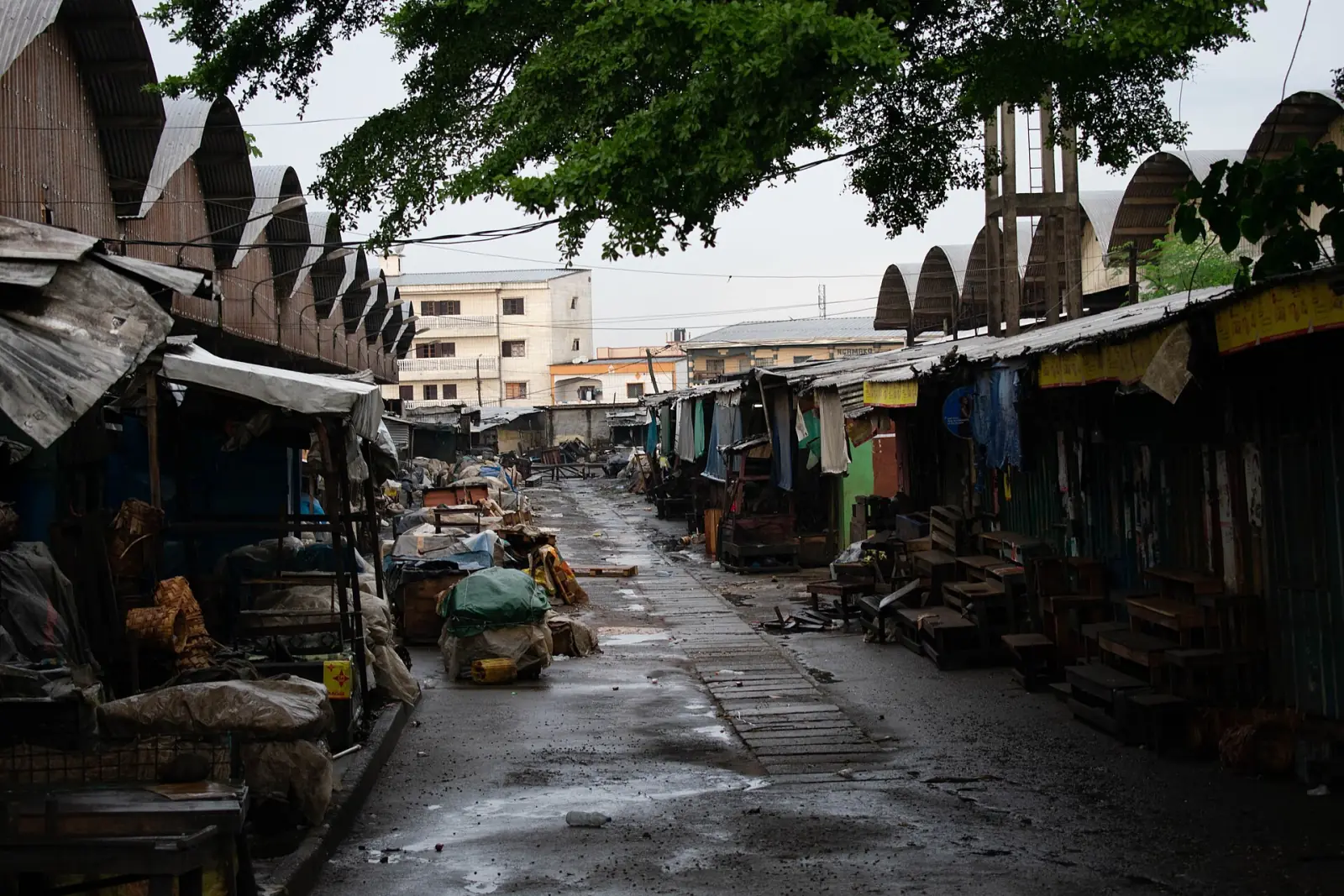
Covered lane of Madagascar market in Douala after rain, between stalls and market halls

The Littoral is the region of great waters: the Wouri, the Mungo, the Atlantic coast. Its festivals reflect this culture of the river and the port, blended by centuries of exchange.

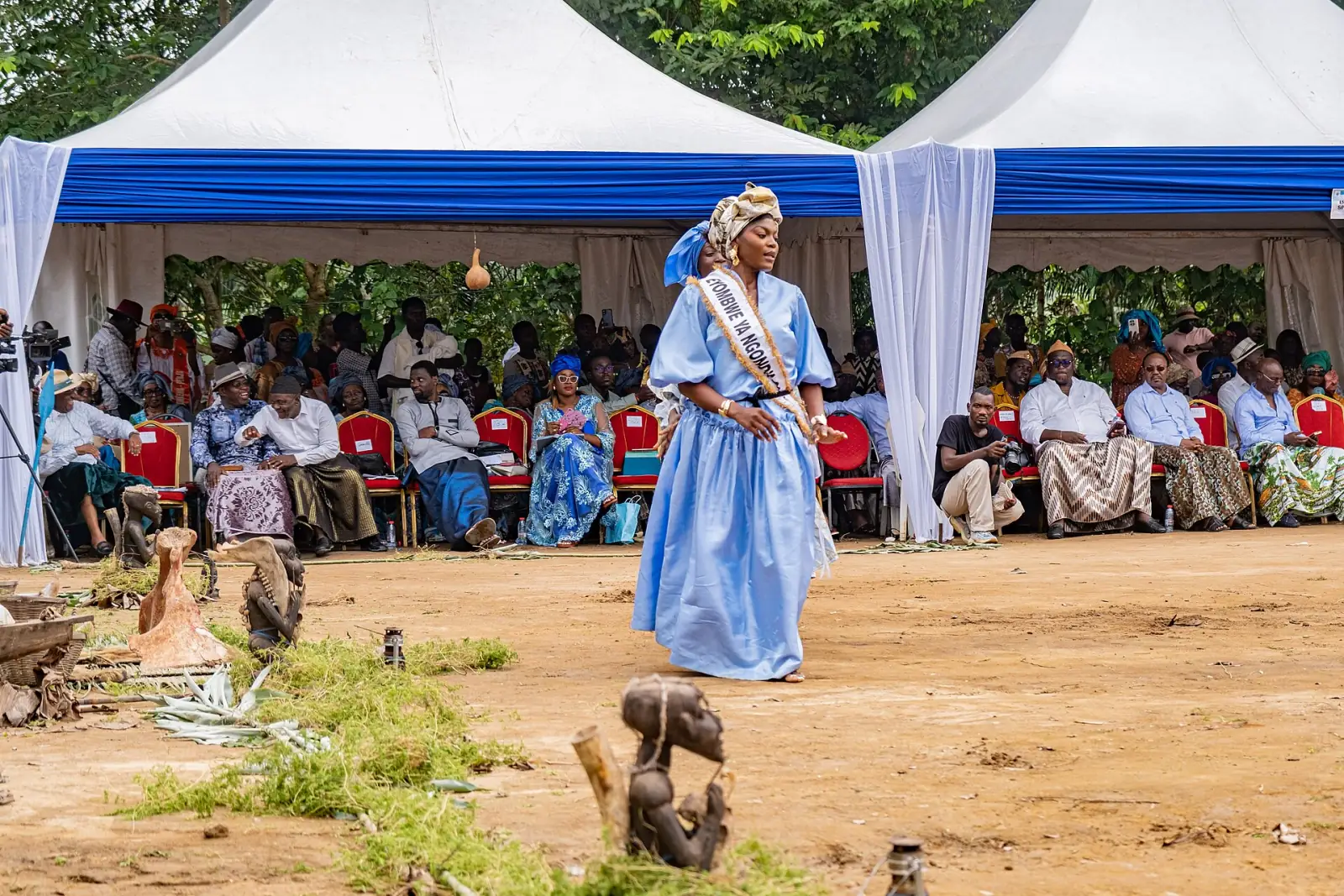
The Ngondo, gathering of the Sawa people

The Ngondo is one of the major events of the Littoral. A traditional assembly of the Sawa people, it brings together notables, heads of families and the public in Douala around rites on the river, canoe races, dances and a great popular celebration. It demonstrates the vitality of a tradition passed down from generation to generation.

A flourishing urban scene

Douala, the economic capital, also hosts music, film, fashion and visual arts festivals. The music of the coast – makossa, bend skin, assiko – rubs shoulders there with hip-hop and electronic music. The streets become galleries during the urban arts meetings.

Landing stages and coastal towns

Further afield, the towns of Nkongsamba, Édéa and Limbé host their own events, often linked to fishing festivals and agricultural seasons. Find the sites, museums and festivals of the region on the Littoral region page.

West

Festivals of the West: kingdoms and chiefdoms

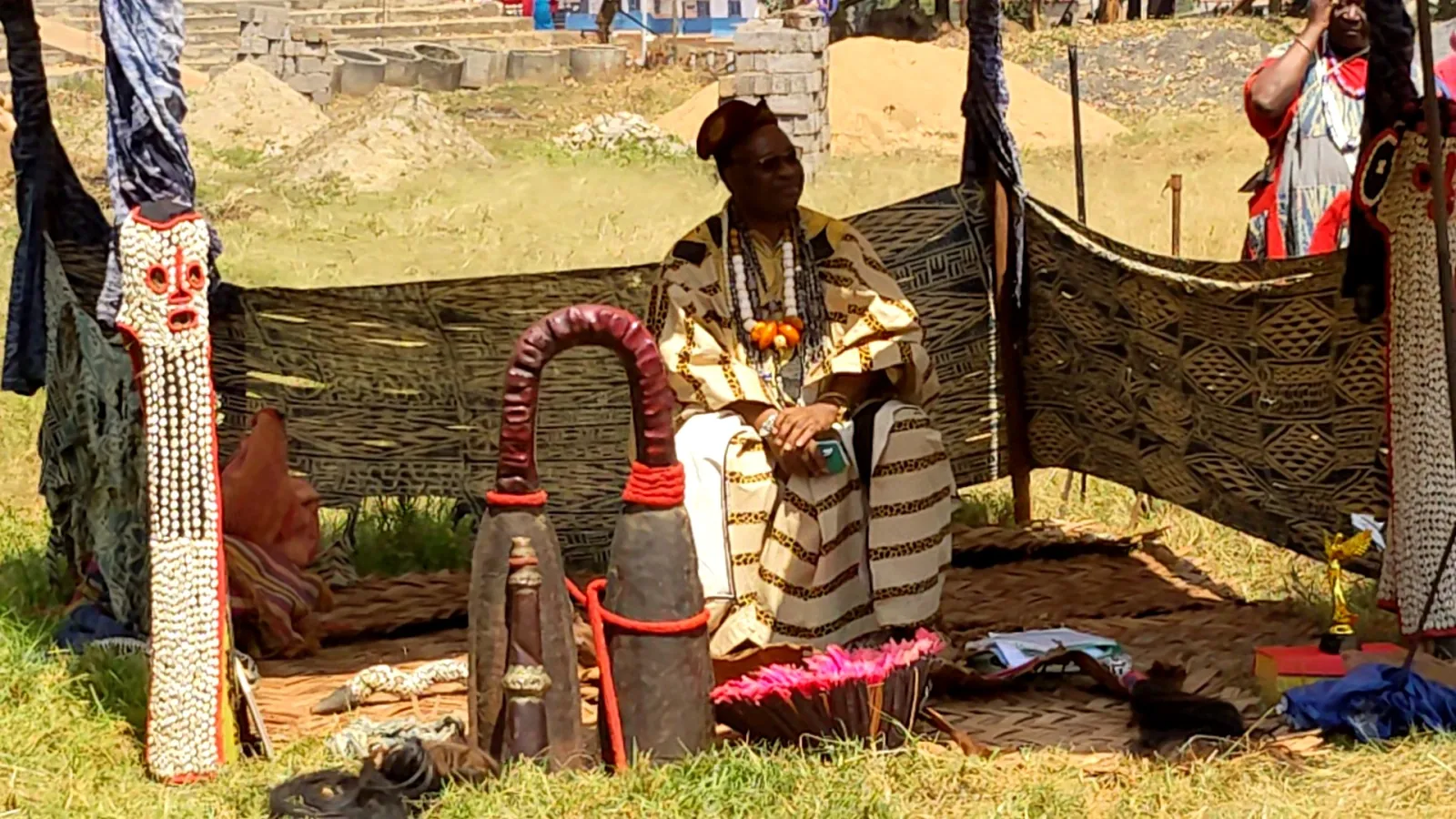
Bamileke chief of Bafoussam seated in a shelter decorated with masks during a festival

The highlands of the West are home to one of the densest groups of chiefdoms in Africa. Each kingdom has its ceremonies, masks, court dances and ritual calendars, which set the rhythm of village life.

The Nguon, the great Bamoun festival

The Nguon of Foumban is the great festival of the Bamoun kingdom. Ceremonies at the palace, parades, court dances, exhibitions of copper crafts and weaving: the event attracts visitors, researchers and members of the diaspora every year. It is linked to the palaces and chiefdoms and to the history of a kingdom whose heritage is known worldwide.

Ka’a Ndeh Mu’nka, 6th edition

The Ka’a Ndeh Mu’nka festival is in its 6th edition. It brings together dances, songs, exhibitions and lectures to make the values of a people known, pass its languages on to young people and invite the public to discover local know-how.

Chiefdoms as festival hosts

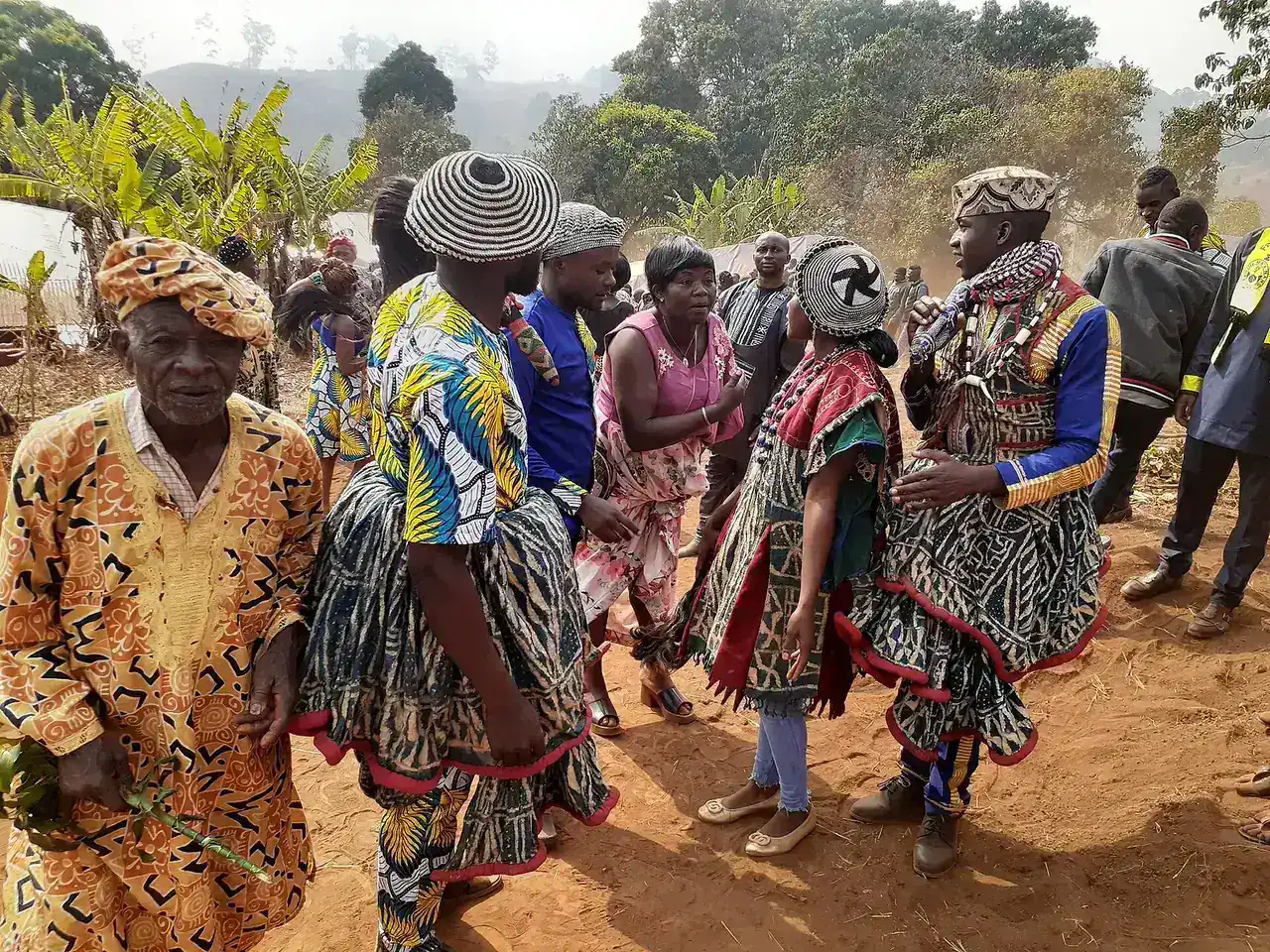
Many chiefdoms in the West and North-West hold annual festivals of society dances and masks. They contribute to the chiefdoms route described in the cultural itineraries, and to the West region page.

North

Festivals of the North: lamidates, savannahs and the Mandara Mountains

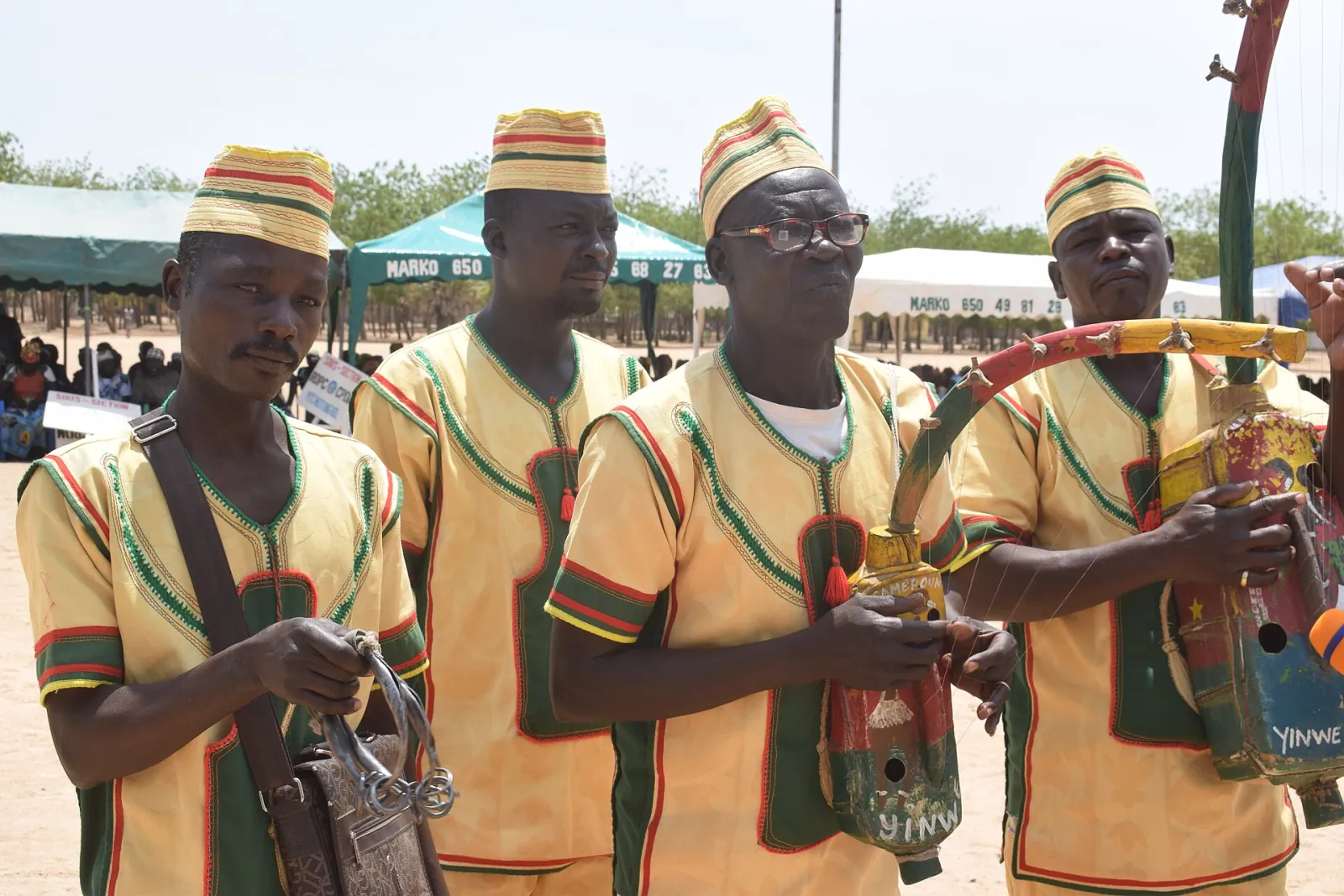
Griots in matching tunics playing stringed instruments at a public event

The three northern regions – Adamawa, North and Far North – share a culture of lamidates, livestock rearing, pottery and string and wind music. Their events are at once religious, martial and festive.

Fantasias and lamidate festivals

The great end-of-year and end-of-Ramadan festivals give rise to fantasias: horsemen in ceremonial dress, royal drums, trumpets and songs of praise before the lamido. These ceremonies take place notably around the lamidates presented in the traditional chiefdoms section and in the palace of Rey-Bouba.

Fairs, markets and harvest festivals

In the Mandara Mountains and the plains of the Far North, harvest festivals and weekly markets are extended with dances, songs and demonstrations of know-how. The craft fairs of Garoua and Maroua present leatherwork, pottery and jewellery.

A potential to be structured

The Ministry supports organisers in the North in structuring more regular festivals, documenting local music and training venue managers. The North region, Adamawa and Far North pages detail the languages and sites.

ℹ️
Announcing a festival in the North

Organisers in the North: write to the regional delegation to have your festival entered in the national calendar and to request logistical support.

South and South-West

Festivals of the South and South-West: patriarchs and cultural camp

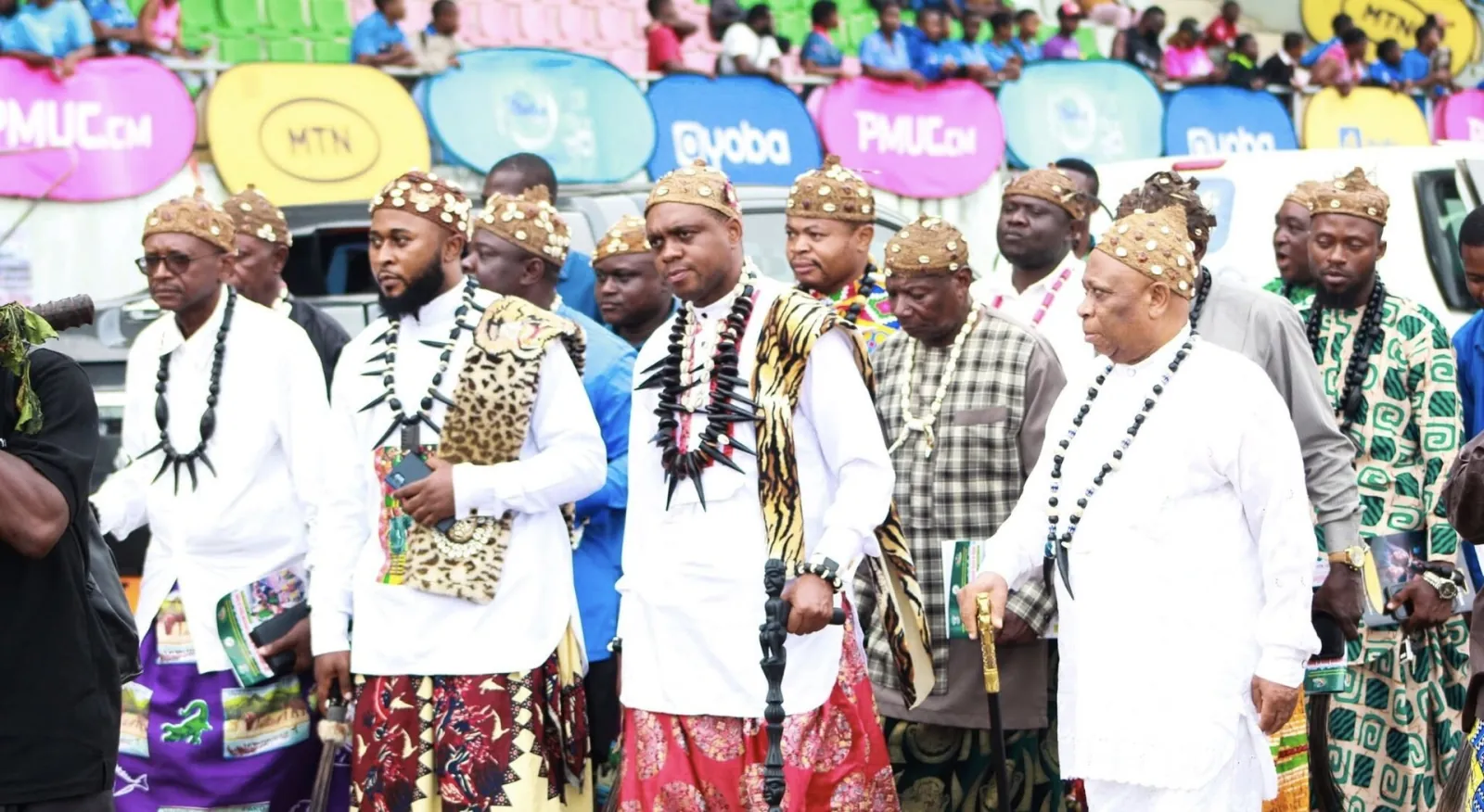
Bakweri chiefs in traditional dress at the Mount Cameroon Race of Hope in Buea

The South and South-West marked the 2026 calendar with two important events. In the South, the “Ngul Be Mvamba” Patriarchs’ Days closed on 8 August 2026 in Essinguili, in the Ebolowa 2 sub-division (Mvila division). They brought together elders, notables and young people for lectures, rites, tales and ceremonies of transmission.

In the South-West, the South West Cultural Festival was accompanied by a cultural camp entitled “Rzehwa”, which closed on 13 August 2026. The camp brought young people together for workshops in dance, crafts, singing and local languages. The Ministry also relayed the Bia So Mengong International Festival and the Tokna Massana festival. For details of languages and sites, see South region and South-West region.

History

A history of celebrations: from rites to contemporary festivals

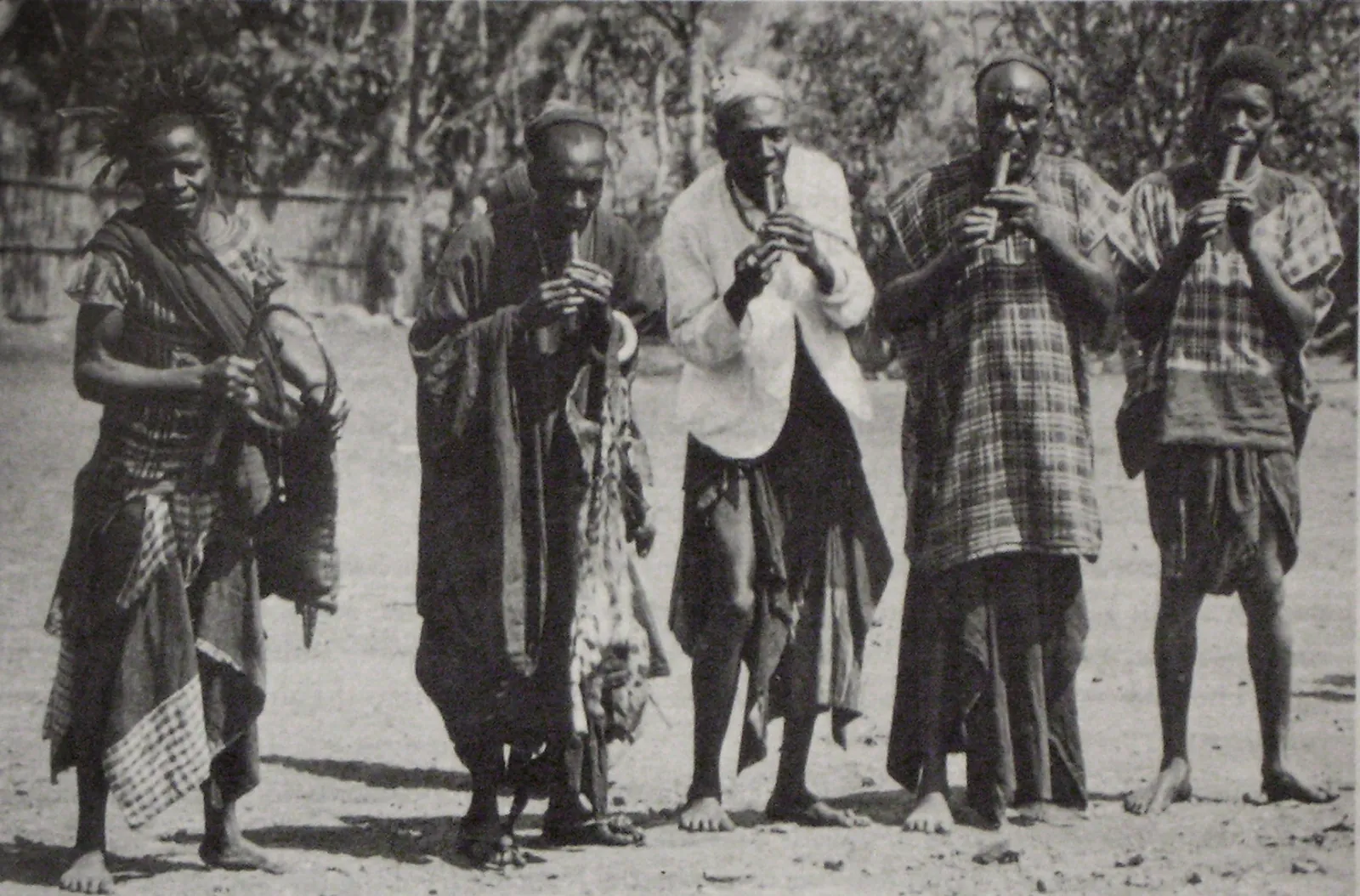
Four men playing sacred lela flutes in Bali, historic black and white photograph

Regional festivals have their roots in rites of passage, agricultural celebrations and royal ceremonies. What is new is their staging: a fixed calendar, an organising committee, a printed programme, ticketing, partnerships and economic spin-offs.

From the 1990s, the liberalisation of the cultural sector and the implementation of Law 2004/001 on the regime governing shows framed the organisation of these events. “Imported” festivals became established alongside traditional celebrations, and many association-led initiatives have grown in scale. The festival archives keep the record of these successive editions.

Step by step

Setting up a regional festival

Define the identity

Choose the theme, period, duration and venue in consultation with the community, traditional chiefs and local authorities.

Form the committee

Bring together a president, a treasurer, an artistic director, a logistics manager and contacts in the villages.

Close the budget

Estimate expenses, approach local authorities, patrons and event grants.

Obtain authorisation

Submit the festival authorisation application to the One-Stop Shop, several weeks before opening.

Prepare the welcome

Arrange accommodation, security, first aid, ticketing, signage and public information.

Evaluate and archive

Write a report, deposit photos and videos in the archives and prepare the next edition.

To explore

Festivals in the other sections

They organise

Voices of organisers and festival-goers

“
In the first year, we were three volunteers; today more than a hundred people prepare the festival with us throughout the year.
A committee president
Grand Mbam
“
The festival is the only time when the young people of the village and the elders dance together on the same square.
A notable
South
“
For my pottery workshop, festival week accounts for a third of my annual turnover.
A potter
West
“
We learned how to put together an authorisation file and a budget: that is what has allowed us to last.
An artistic director
South-West
To download

The resources of the regional organiser

“Each region has its festival, each festival its memory, and it is by putting them end to end that the face of the country is reconstituted.”

A festival director, Centre
Glossary

The words of regional festivals

Regional festival

A periodic event that showcases the arts and culture of a region.

Patriarch

A respected elder of a community, keeper of memory and guardian of customs.

Publishing

An annual or periodic occurrence of a festival, numbered from the first.

Grand Mbam

A group of lands in the Centre region around the Mbam river, cradle of several peoples.

Lamidate

A chiefdom of Fulani tradition in the North, led by a lamido.

Fantasia

A parade of horsemen in ceremonial dress, accompanied by drums and songs of praise.

Cultural camp

A stay that brings young people together around workshops in art, dance and local languages.

Organising committee

The team responsible for preparing, funding and running a festival.

Programming

The selection and sequence of the shows, workshops and lectures of a festival.

Spin-offs

The economic, social and cultural effects of a festival on the area.

To act

The schemes for organisers

Organise a festival

A complete guide to building the team, budget, security and communication of a festival.

Read the guide

Festival authorisation

A compulsory procedure before opening to the public; it is submitted online.

Apply

Event grants

Support for recognised festivals with logistics, security and interpretation.

See the criteria

National calendar

Have your festival registered to reach the public in all regions.

Consult
On the site

Extend your discovery of the regions

Resources

Useful links for regional festivals

Stakeholders

Who supports regional festivals?

Key facts

Festivals at a glance

FestivalRegionDistinctive featureEdition or date 2026
Mbam’ArtCentre, Grand MbamArts and culture of the Grand Mbam12th edition
Ya JazzCentre, YaoundéJazz and world music festival26th edition
NgondoLittoral, DoualaAssembly and festival of the Sawa peopleAnnual event
NguonWest, FoumbanGreat festival of the Bamoun kingdomAnnual event
Ka’a Ndeh Mu’nkaWestDances, songs and knowledge6th edition
Ngul Be MvambaSouth, MvilaPatriarchs’ Days in EssinguiliClosing on 8 August
South West Cultural Festival and Rzehwa campSouth-WestFestival and cultural camp for young peopleClosing on 13 August
Bia So Mengong and Tokna MassanaSeveral regionsInternational festival and cultural festivalRelayed by the Ministry
Journey

A year of festivals in 2026

February 2026Preparing Mbam’Art

The Grand Mbam committees are finalising the 12th edition with the chiefdoms, schools and dance groups.

March 2026Book fair

SIILY holds its 4th edition in Yaoundé, opened under the chairmanship of the Ministry, and opens the cultural season.

June 2026Relayed festivals

Tokna Massana, the South West Cultural Festival and other events benefit from the Ministry’s presence.

August 2026Patriarchs’ Days

The closing of Ngul Be Mvamba takes place on 8 August in Essinguili; the Rzehwa camp ends on 13 August in the South-West.

End of the yearTraditional celebrations

The Ngondo, the Nguon and lamidate festivals punctuate the last months, with their rites and crowds.

Questions

Your questions about regional festivals

Where can I see the festival calendar?

The calendar can be consulted in the cultural agenda and in the national festival calendar, which can be filtered by month, region and discipline. Organisers can have their event entered by writing to the regional delegation.

Does the Ministry support regional festivals?

Yes, through attendance at ceremonies, logistical support and, in some cases, event grants. The criteria, the file and the review calendar are given in the section dedicated to grants.

How do I announce my festival?

Write to the regional delegation, stating the name, dates, venue and programme. Your festival may be relayed in the cultural agenda, in press releases and on the Ministry’s social networks.

What authorisation is needed to create a festival?

Law 2004/001 and its implementing decree require a show authorisation for public performances and, for a large-scale event, a festival authorisation. For venues, a prior declaration is required.

Can the chiefdoms be visited during the festivals?

Often yes, but access depends on the ceremonial calendar and the chiefdom’s rules. Contact the site keeper or the regional delegation to find out the visiting conditions.

How do villages take part?

Each village sends a dance group, craftspeople or storytellers through the organising committee. Traditional chiefs coordinate the delegations and ensure that customs are respected.

Where can I find photos of previous editions?

The festival archives bring together photographs, videos and award lists of previous editions. Organisers can deposit their documents there by contacting the competent directorate.

Can a festival call for volunteers?

Yes. Festivals may use volunteers for reception, logistics and information. A charter sets out the volunteers’ duties, training and rights, detailed on the dedicated page.

Contact

Write to the Ministry about a regional festival

Specify the festival, region and edition concerned: your message will be forwarded to the competent directorate.

Competent directorate

Contact the festivals team

Address

Directorate of Shows and Creative Industries
Ministry of Arts and Culture
Quartier du Lac – Ministerial Zone
P.O. Box 1053 Yaoundé, Centre Region, Cameroon

Reach us

+237 6 51 70 58 41

contact@minac.gov.cm

Opening hours

Monday to Friday, 8 am to 4 pm

See the calendar

Find all the festivals of the year, region by region, and plan your travel.

National calendar
WhatsApp