Coat of arms of CameroonMinistry of Arts
and Culture
Republic of Cameroon
My procedures
Home
Minister’s message
News
Press releases
Cultural calendar
Official speeches
Press review
Photo library
Video library
Calls for projects
Job vacancies
Public procurement
Newsletter
Frequently asked questions
Site map
Contact
Press area
Podcast “The Voice of Culture”
Legal notices
Privacy policy
Cookies and trackers
The Ministry
Missions and responsibilities
Organisation
Organisation chart
Minister’s Office (Cabinet)
Management team
General Secretariat
General Inspectorate
Central directorates
Regional Delegations
Institutions under supervision
Legislative texts
Regulatory texts
Sector strategy
Major projects
Budget and reports
Partners
Careers
Archives
Institutional communication
Quality and accessibility
Arts
Visual and plastic arts
Visual arts
Performing arts
Theatre
Dance
Music
Literature and books
Cinema and audiovisual
Photography
Fashion and design
Digital arts
Art crafts
Artists’ directory
Residencies
Prizes and awards
Arts education
Urban arts
Heritage
Tangible heritage
Intangible heritage
UNESCO sites
National museums
Listed monuments
National inventory
Palaces and chiefdoms
Archaeology
Linguistic heritage
Oral traditions
Traditional know-how
Restitution of cultural property
Fight against illicit trafficking
Listing and protection
Conservation and restoration
Heritage Days
Cultural landscapes
Industries
Music and recording
Cinema
Publishing and books
Digital arts
Fashion and creativity
Crafts
Cultural tourism
Funding for culture
Support funds
Incubators
Cultural entrepreneurship
Culture Observatory
Vocational training
Studies and reports
Sector statistics
Export and outreach
Intellectual property
Copyright
Legal framework
Copyright and neighbouring rights
Collective management societies
Register a work
Licences
Private copying
Fight against piracy
Model contracts
Social status of artists
Mediation
Disputes
Training
Fee scales
Register of works
Contact
Digital neighbouring rights
Public domain
Festivals
National calendar
Ngondo
Nguon
Écrans Noirs
Heritage Days
Music Day
Regional festivals
Fairs and exhibitions
Biennials
National competitions
Cultural days
Organise a festival
Event grants
Ticketing
Archives
Volunteering
Diaspora festivals
Regions
Adamawa
Centre
East
Far North
Littoral
North
North-West
West
South
South-West
Cultural map
Regional Delegations
Traditional chiefdoms
National languages
Cultural routes
Decentralised cooperation
Regional observatory
Cooperation
UNESCO
Francophonie (OIF)
African Union
Commonwealth
CEMAC
Bilateral cooperation
Cultural agreements
Professional organisations
Scholarships
Artist exchanges
Cultural years
Diaspora
Funded projects
Embassies
Technical partners
International restitution
International monitoring and calls
Services
Artist card
Show authorisation
Filming authorisation
Festival authorisation
Deposit of a work
Export of works of art
Listing of a property
Grant application
Association accreditation
File tracking
Forms
Fees
Opening hours and addresses
Reporting
Online help
My account
One-Stop Shop
Section

Cooperation

UNESCO, La Francophonie, African Union, Commonwealth, CEMAC, bilateral relations in 2026, scholarships, artist exchanges and restitution of cultural property: all of Cameroon’s cultural cooperation.

17 sub-menus68 thematic pagesUpdated on 7 November 2026
Pages in this section17
Audiences and missions in 20266
Regional and international organisations5
Jeux de la FrancophonieYerevan
Cultural cooperation

Culture beyond borders

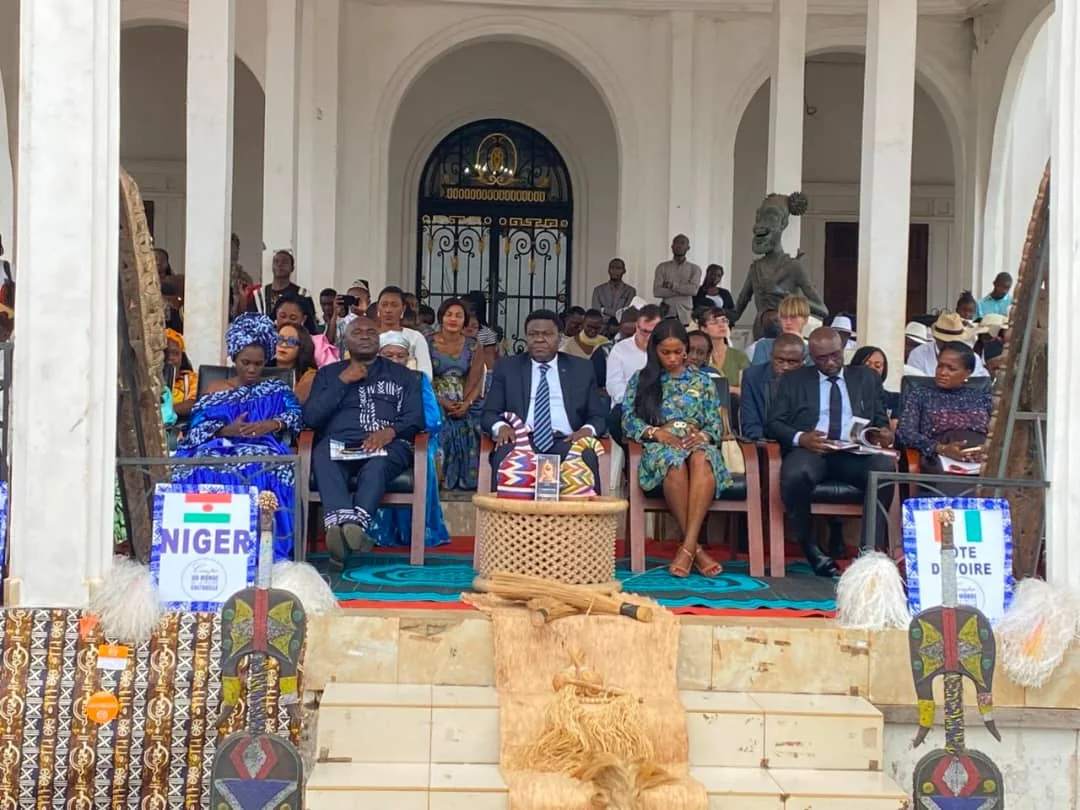
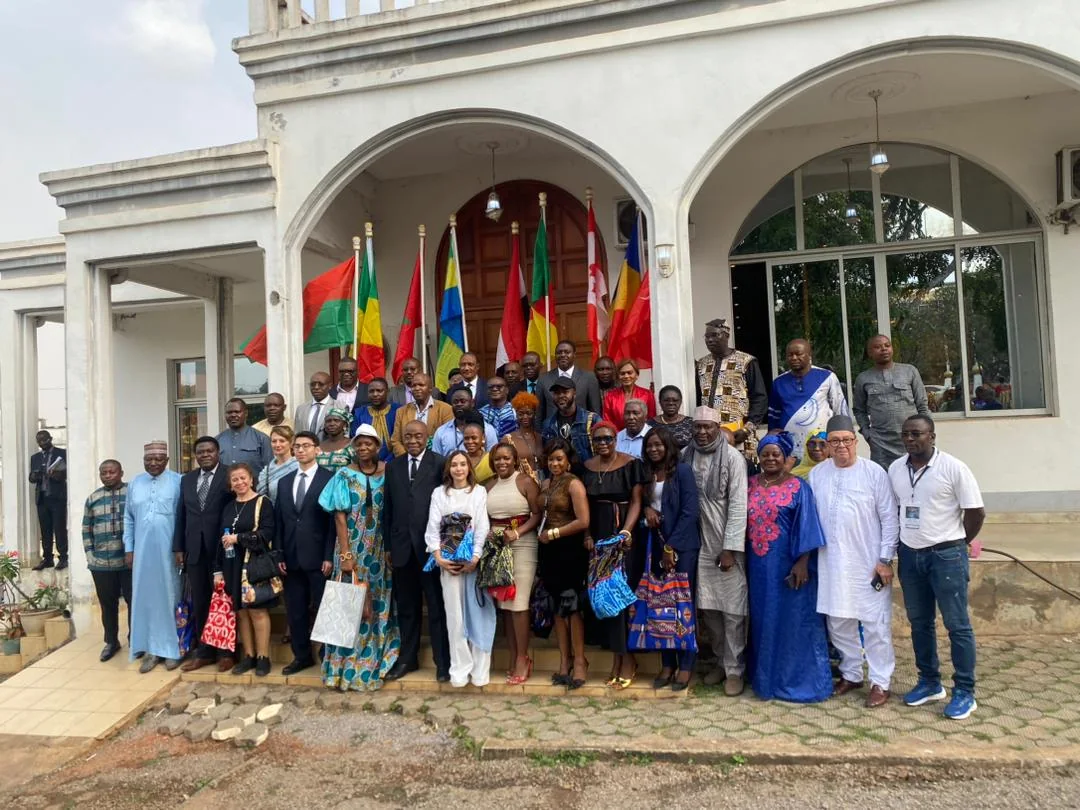
Participants in an international meeting in front of the flags, on the Ministry steps

The Minister of Arts and Culture acts as the link between the Government and the international organisations working in art and culture: UNESCO, OAPI, OMPI and, in 2026, the IIPO for indigenous heritage. The Minister receives ambassadors, concludes agreements, supports artists who travel and defends the country’s interests when it comes to protecting or bringing back its cultural property.

In 2026, audiences multiplied: Morocco, Japan, Equatorial Guinea and India, while a benchmarking mission with Colombia focused on repatriation. This section brings together the multilateral frameworks, bilateral relations, scholarships, artist exchanges, the diaspora and the international calls watch.

  • Multilateral frameworks for acting together
  • Active bilateral relations in 2026
  • Scholarships, exchanges and calls for artists
Explore the section
All pages

Seventeen pages for cooperating

Each page presents an organisation, a country or a cooperation scheme: choose the one that matches your need.

Multilateral

The multilateral frameworks of cultural cooperation

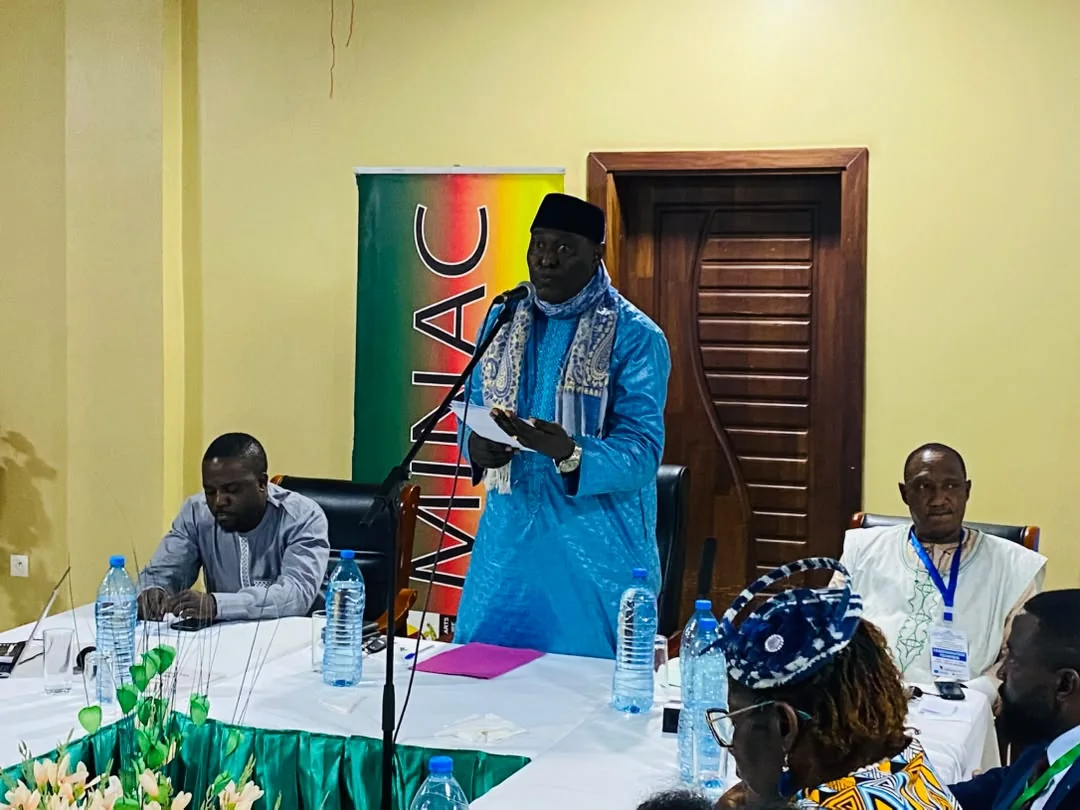
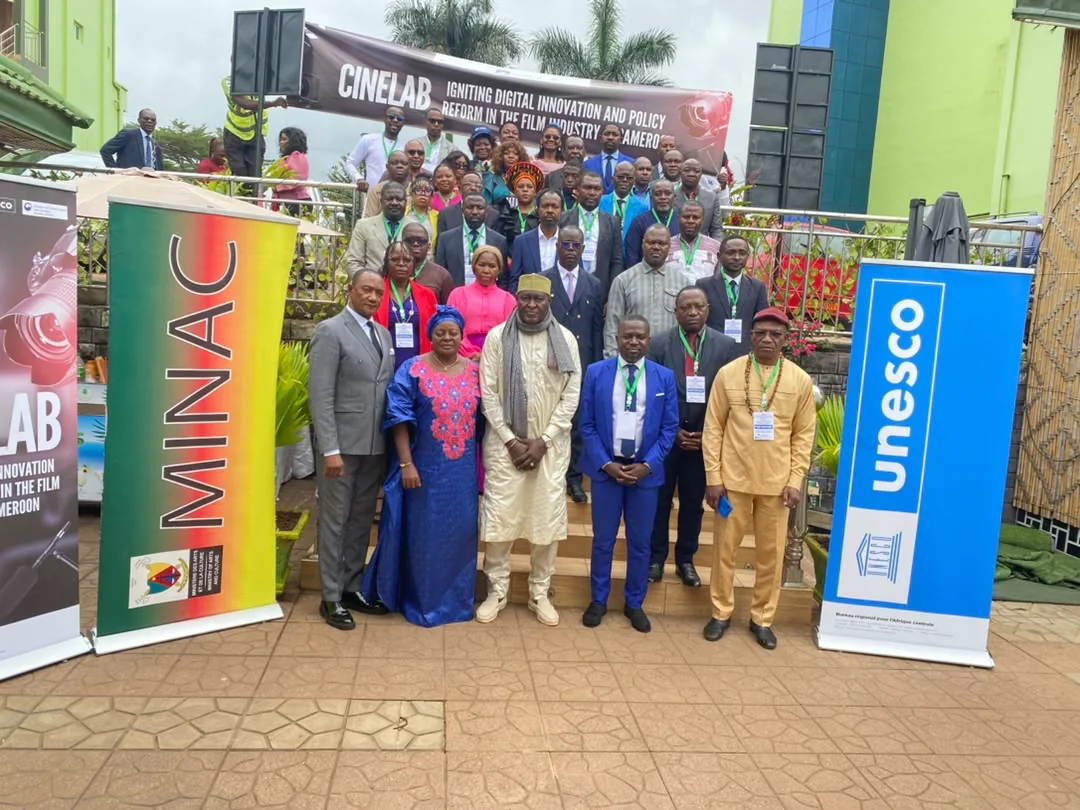
CINELAB workshop participants in front of the Ministry and UNESCO banners

Cameroon is a member of several organisations that set rules and fund programmes in the cultural field. Each has its own specific character, and the Ministry coordinates the country’s presence in their bodies.

Global organisations

UNESCO is the reference for the conventions on world heritage, intangible heritage, the diversity of cultural expressions and the fight against illicit trafficking in cultural property. The Minister is in contact with it, as with OAPI and OMPI for intellectual property, a subject covered by the legal framework and intellectual property pages.
Linguistic and continental spaces

  • La Francophonie, with its programmes supporting cultural industries and its games, including the Yerevan edition in October 2026;
  • The African Union and its Charter for African Cultural Renaissance;
  • The Commonwealth, notably for exchanges with the English-speaking part of the country;
  • CEMAC, for cultural integration in Central Africa.

Complementary frameworks

These frameworks are not in opposition: a project can draw on a UNESCO convention, Francophonie funding and a regional platform. The Ministry advises project holders on the most suitable combination, and professional organisations extend this action to the trades.

Bilateral

Cameroon’s bilateral relations in 2026

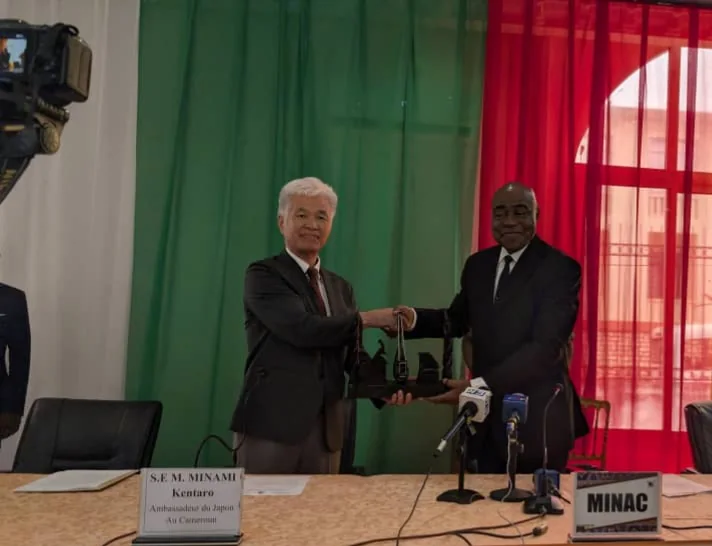
Exchange of gifts with the Ambassador of Japan during a meeting at the Ministry

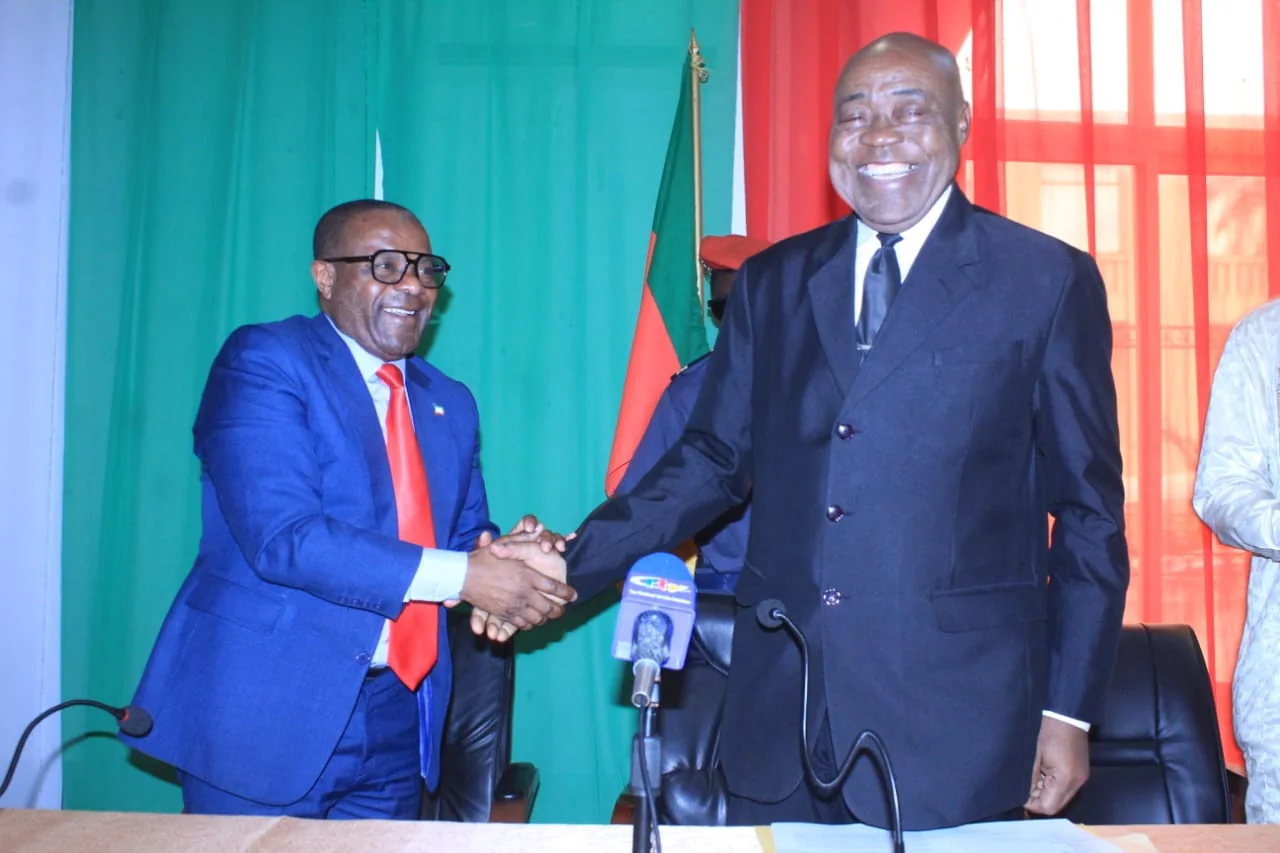
Beyond international organisations, cooperation is played out country by country. In 2026, the Minister received the ambassadors of Morocco, Japan and Equatorial Guinea, and India was also the subject of an audience. Each of these meetings opened up concrete prospects for work, presented on the bilateral cooperation page.

Audiences, then programmes

An audience is not an end in itself: it serves to identify areas of common interest (heritage, training, creative industries, artist exchanges), to designate the lead services and to set a timetable. The resulting agreements are recorded in the cultural agreements page.

Areas of work

  • Training and scholarships for students and cultural managers;
  • Support for the conservation and restoration of heritage;
  • Cross cultural years and artist tours;
  • Support for creative industries and cultural entrepreneurship.

The role of embassies

Cameroon’s embassies abroad and foreign embassies in Yaoundé are essential relays: they forward requests, host exhibitions and facilitate artists’ visas. Artist exchanges and cultural years owe them a great deal.

Schemes

Schemes open to artists and institutions

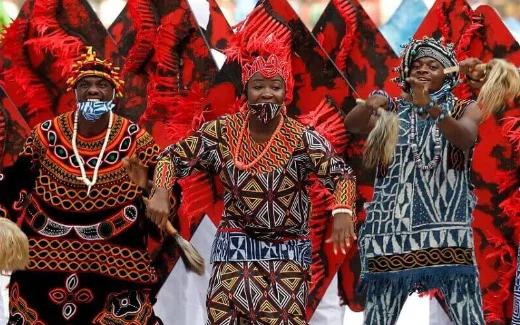
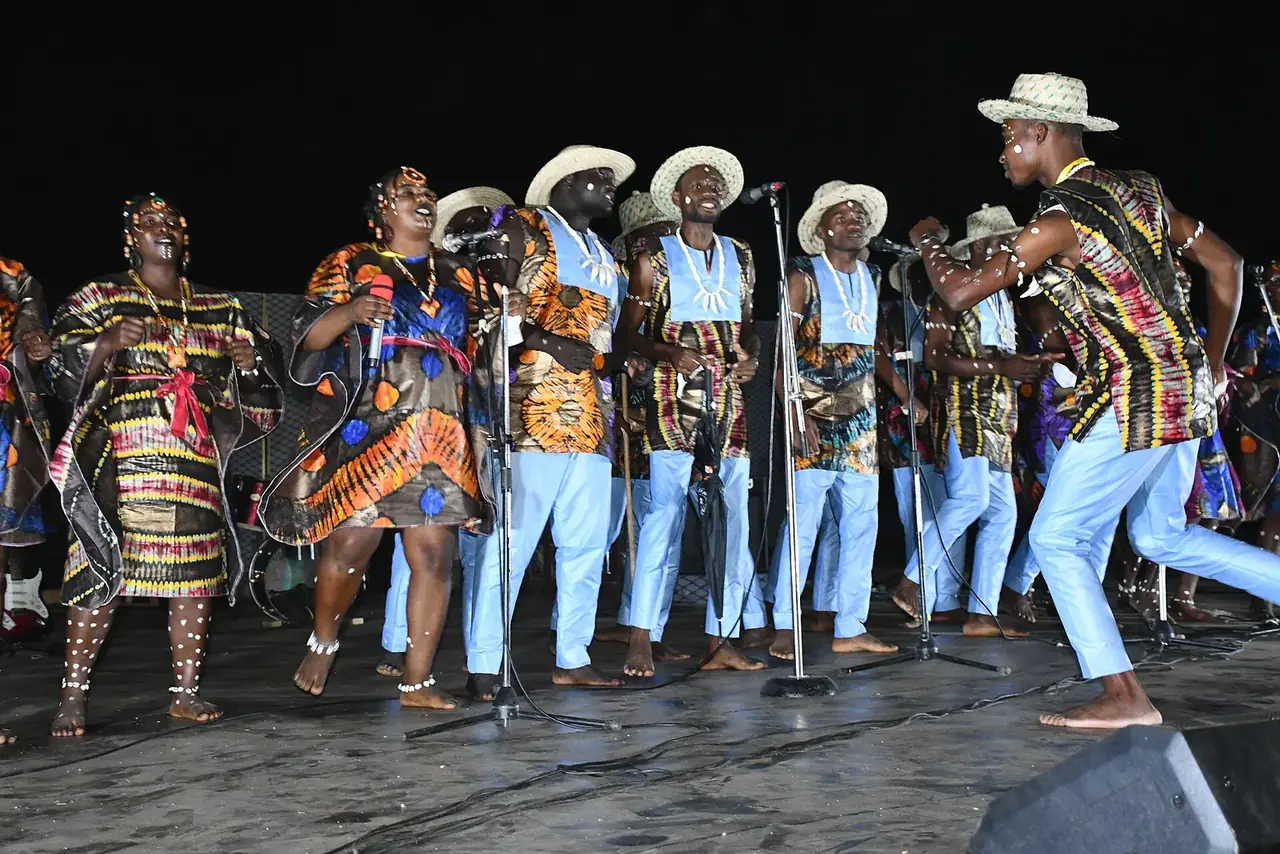
Troupe in colourful outfits on stage at the Maroua cultural festival

Cooperation is not reserved for diplomats. Several schemes allow an artist, a student, an institution or an association to benefit concretely from the Ministry’s partnerships.

To train

National and overseas scholarships support artistic studies, internships and research. They are relayed with the deadlines and the documents to be provided.

To travel and create

Artist exchanges cover tours, residencies, visas and funding options. The diaspora offers valuable relays for hosting a performance or an exhibition abroad.

How to choose?

Start by defining your objective: learn, create, distribute, protect or repatriate. Each need leads to a page in the section, and the contact form lets you put a specific question to the Minister’s Office (Cabinet) or the cooperation unit.

Heritage

Restitution and protection: cooperation in the service of cultural property

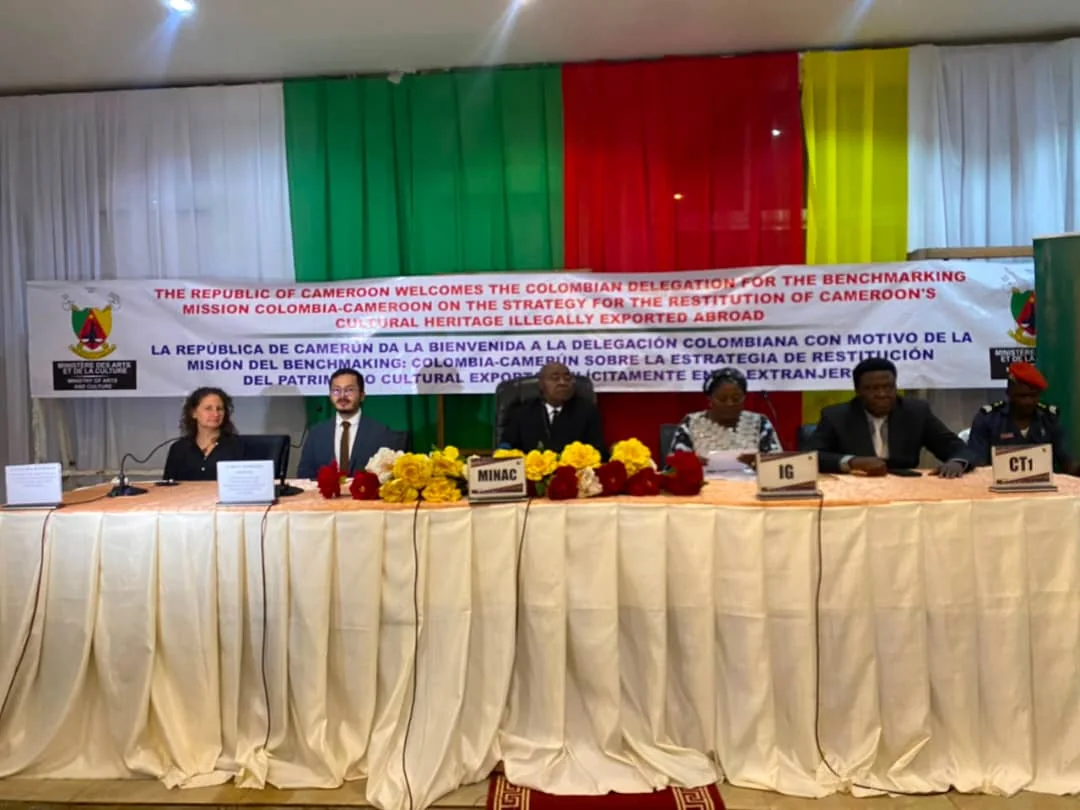
Colombian delegation welcomed by the Ministry on the restitution of cultural property

Cultural cooperation also serves to protect and recover heritage. In early July 2026, a committee in charge of the repatriation of illicitly exported cultural property carried out a benchmarking mission with Colombia. The sessions covered the financing of repatriation: cost planning (transport, conservation, courier, customs), financial responsibility of the holding countries, logistics protocol and chain of responsibility.

Heritage that travels without being lost

Cooperation also helps to promote Cameroonian heritage: inscription of sites on the World Heritage List (see the UNESCO sites), loans of objects between museums, partnerships with the IIPO on indigenous heritage. Cameroon upholds the idea that those who hold property resulting from illicit export bear their share of responsibility.

By need

An entry point for every stakeholder

International organisations

UNESCO, La Francophonie, African Union, Commonwealth, CEMAC: conventions, programmes and regional meetings, with the entry points for operators.

UNESCOAfrican UnionCEMAC

Countries and embassies

Agreements, audiences, cultural years and embassy contact details to launch or strengthen a bilateral partnership.

Bilateral cooperationEmbassiesCultural agreements

Artists and students

Scholarships, tours, residencies, visas and diaspora networks to train and distribute one’s work abroad.

ScholarshipsArtist exchangesDiaspora

Experts and institutions

Technical partners, restitution of cultural property, funded projects and the international calls watch for institutions.

Technical partnersInternational restitutionWatch and calls
Headlines

Featured cooperation pages

By need

I want to cooperate

“A new lease of life for a long-standing and mutually beneficial cooperation.”

The Minister, on Morocco
Deadlines

Cooperation events

Key facts

The 2026 partners in one table

PartnerNature of the relationshipPage to consult
UNESCOWorld heritage, conventions, cultural diversityUNESCO
OAPI and OMPIIntellectual property and copyrightIntellectual property
MoroccoAmbassador’s audience and revival of a long-standing cooperationBilateral cooperation
JapanAmbassador’s audience, heritage and exchangesBilateral cooperation
Equatorial GuineaAmbassador’s audience, neighbouring country and Central AfricaBilateral cooperation
IndiaAudience and avenues for cultural cooperationBilateral cooperation
ColombiaBenchmarking mission on repatriationInternational restitution
IIPOIndigenous heritageTechnical partners
Method

From an audience to lasting cooperation

AudienceThe first contact

The Minister receives an ambassador or an organisation’s representative, listens to their proposals and identifies areas of common interest.

AssignmentThe technical exchange

Experts meet and compare their practices, as during the mission to Colombia, and clarify the needs on both sides.

AgreementThe written framework

An agreement or convention sets out the commitments, the timetable, the persons responsible and the monitoring arrangements.

ProgrammeImplementation

Scholarships, residencies, tours, training courses or heritage projects are launched with the services concerned.

ReviewEvaluation

The results are measured and published, and used to decide whether to renew or expand the partnership.

Stakeholders

The stakeholders of cultural cooperation

Glossary

The words of cultural cooperation

Bilateral

Describes a relationship or an agreement between two States only.

Multilateral

Describes a relationship or a framework bringing together several States within an organisation.

Benchmarking

Methodical comparison of one’s own practices with those of a partner in order to improve.

Repatriation

Return of a cultural property to the country from which it was illicitly exported.

Convention

International text by which States commit to common rules.

Cultural agreement

Treaty or protocol setting the areas and arrangements for cooperation between two countries.

Audience

Official meeting granted by the Minister to an ambassador or a delegation.

IIPO

Ministry partner in 2026 on indigenous heritage.

OAPI

African Intellectual Property Organization, of which Cameroon is a member.

Cultural year

Cross programme of events organised with a guest country over twelve months.

References

The resources of cultural cooperation

References

The texts of cultural cooperation

Questions

Your questions on cultural cooperation

How can I propose a partnership to the Ministry?

Write to the Minister’s Office (Cabinet) or the cooperation unit using the contact form, by e-mail at contact@minac.gov.cm or by telephone on +237 6 51 70 58 41. Present your institution, the planned project, the timetable and what you expect from the Ministry. Your request is directed to the competent directorate.

Where can I find scholarships?

On the Scholarships page of the Cooperation section, which distinguishes between national and overseas scholarships, details the conditions and the application timetable, and presents the recipients. New offers are also announced in the newsletter and on the calls for projects page.

Which countries were received in 2026?

In 2026, the Minister received the ambassadors of Morocco, Japan and Equatorial Guinea, and an audience also concerned India. A benchmarking mission with Colombia also focused on the repatriation of cultural property. The details are on the bilateral cooperation page.

What happened with Colombia?

In early July 2026, a committee in charge of the repatriation of illicitly exported cultural property carried out a benchmarking mission. The sessions covered the financing of repatriation, cost planning, the responsibility of the holding countries, the logistics protocol and the chain of responsibility.

Does Cameroon take part in the Francophonie Games?

Yes. The Minister’s agenda mentions the Francophonie Games in Yerevan, Armenia, on 28 October 2026. The Francophonie page presents the organisation’s programmes, the cultural disciplines of the games and the procedures useful to artists who wish to represent the country there.

How can an artist go on tour abroad?

They prepare their artistic file, look for a host partner, deal with visas and insurance, and apply for a performance authorisation and, where necessary, an export authorisation for works. The Artist exchanges page details these steps and the funding options, from residencies to regional support.

Who is the Ministry’s contact for UNESCO?

The Minister acts as the link with international organisations such as UNESCO, OAPI and OMPI. On a day-to-day basis, the Unit for Studies, Planning and Cooperation coordinates files with the technical directorates. The UNESCO page presents the conventions, world heritage and the programmes.

Can the cultural agreements be consulted?

The Cultural Agreements page presents the list of agreements, how they are implemented and the negotiations under way. The official texts are kept by the Ministry. To obtain a copy of a specific agreement, send a written request to the Minister’s Office (Cabinet) stating the country and the period concerned.

Assistance

A contact for your projects

Minister’s Office

Propose a partnership, request an audience or present a cooperation project to the Minister.

Write

Calls

Follow international opportunities: calls, competitions, professional networks and monthly watch newsletter.

See the calls

Online help

Step-by-step guides and answers to common questions about procedures, forms and schemes.

Online help

Press

Journalists: accreditation, press releases and contacts for covering international meetings.

Press area
Contact

Contact the cooperation unit

Address

Unit for Studies, Planning and Cooperation
Ministry of Arts and Culture
Quartier du Lac – Ministerial Zone
P.O. Box 1053 Yaoundé, Centre Region, Cameroon

Reach us

+237 6 51 70 58 41

contact@minac.gov.cm

Opening hours

Monday to Friday, 8 am to 4 pm

Continue the visit

Return to the other sections

Propose a cooperation?

Write to the Minister’s Office (Cabinet), presenting your institution and your project.

Contacting the Ministry
WhatsApp