Coat of arms of CameroonMinistry of Arts
and Culture
Republic of Cameroon
My procedures
Home
Minister’s message
News
Press releases
Cultural calendar
Official speeches
Press review
Photo library
Video library
Calls for projects
Job vacancies
Public procurement
Newsletter
Frequently asked questions
Site map
Contact
Press area
Podcast “The Voice of Culture”
Legal notices
Privacy policy
Cookies and trackers
The Ministry
Missions and responsibilities
Organisation
Organisation chart
Minister’s Office (Cabinet)
Management team
General Secretariat
General Inspectorate
Central directorates
Regional Delegations
Institutions under supervision
Legislative texts
Regulatory texts
Sector strategy
Major projects
Budget and reports
Partners
Careers
Archives
Institutional communication
Quality and accessibility
Arts
Visual and plastic arts
Visual arts
Performing arts
Theatre
Dance
Music
Literature and books
Cinema and audiovisual
Photography
Fashion and design
Digital arts
Art crafts
Artists’ directory
Residencies
Prizes and awards
Arts education
Urban arts
Heritage
Tangible heritage
Intangible heritage
UNESCO sites
National museums
Listed monuments
National inventory
Palaces and chiefdoms
Archaeology
Linguistic heritage
Oral traditions
Traditional know-how
Restitution of cultural property
Fight against illicit trafficking
Listing and protection
Conservation and restoration
Heritage Days
Cultural landscapes
Industries
Music and recording
Cinema
Publishing and books
Digital arts
Fashion and creativity
Crafts
Cultural tourism
Funding for culture
Support funds
Incubators
Cultural entrepreneurship
Culture Observatory
Vocational training
Studies and reports
Sector statistics
Export and outreach
Intellectual property
Copyright
Legal framework
Copyright and neighbouring rights
Collective management societies
Register a work
Licences
Private copying
Fight against piracy
Model contracts
Social status of artists
Mediation
Disputes
Training
Fee scales
Register of works
Contact
Digital neighbouring rights
Public domain
Festivals
National calendar
Ngondo
Nguon
Écrans Noirs
Heritage Days
Music Day
Regional festivals
Fairs and exhibitions
Biennials
National competitions
Cultural days
Organise a festival
Event grants
Ticketing
Archives
Volunteering
Diaspora festivals
Regions
Adamawa
Centre
East
Far North
Littoral
North
North-West
West
South
South-West
Cultural map
Regional Delegations
Traditional chiefdoms
National languages
Cultural routes
Decentralised cooperation
Regional observatory
Cooperation
UNESCO
Francophonie (OIF)
African Union
Commonwealth
CEMAC
Bilateral cooperation
Cultural agreements
Professional organisations
Scholarships
Artist exchanges
Cultural years
Diaspora
Funded projects
Embassies
Technical partners
International restitution
International monitoring and calls
Services
Artist card
Show authorisation
Filming authorisation
Festival authorisation
Deposit of a work
Export of works of art
Listing of a property
Grant application
Association accreditation
File tracking
Forms
Fees
Opening hours and addresses
Reporting
Online help
My account
One-Stop Shop
Heritage

National museums

Yaoundé, Dschang, Foumban: the national museums, their collections, exhibitions, opening hours, educational programmes and how to organise your visit.

Updated on 6 November 20264 sub-pages
Museums mentioned3
Status of the National MuseumManagement autonomy
Organisation decree30 April 2014
School visits per year120+
Museums

Entering the national collections

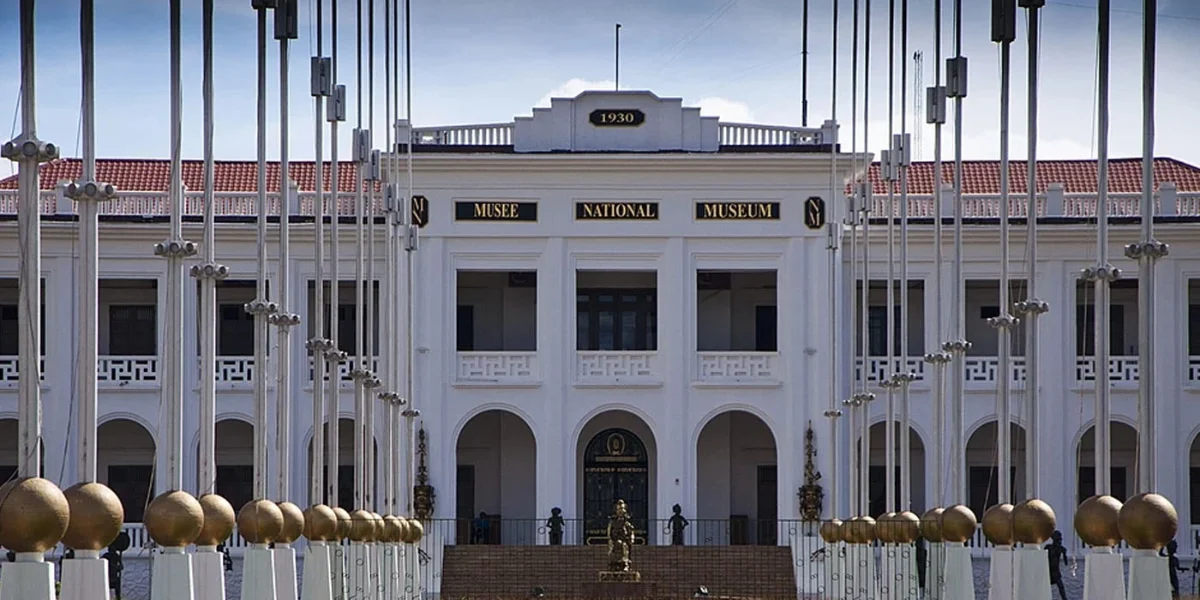
Façade of the National Museum and its avenue of flagpoles

A museum is a permanent, non-profit institution in the service of society and its development, open to the public, which carries out research on the material evidence of people and their environment, acquires, conserves, communicates and exhibits it for the purposes of study, education and enjoyment. The National Museum is governed by a Decree of 30 April 2014 on its organisation and functioning.

This page accompanies you to Yaoundé, Dschang and Foumban: the history of the places, the major collections, exhibitions, opening hours, accessibility, school visits, loans of objects and museum professions. It is intended for visitors, teachers, researchers, collectors and artists.
  • Three places, three collection identities
  • School visits and workshops all year round
  • An institution run by a board of directors
Visit the Yaoundé museum
Yaoundé

The Yaoundé museum: the National Museum

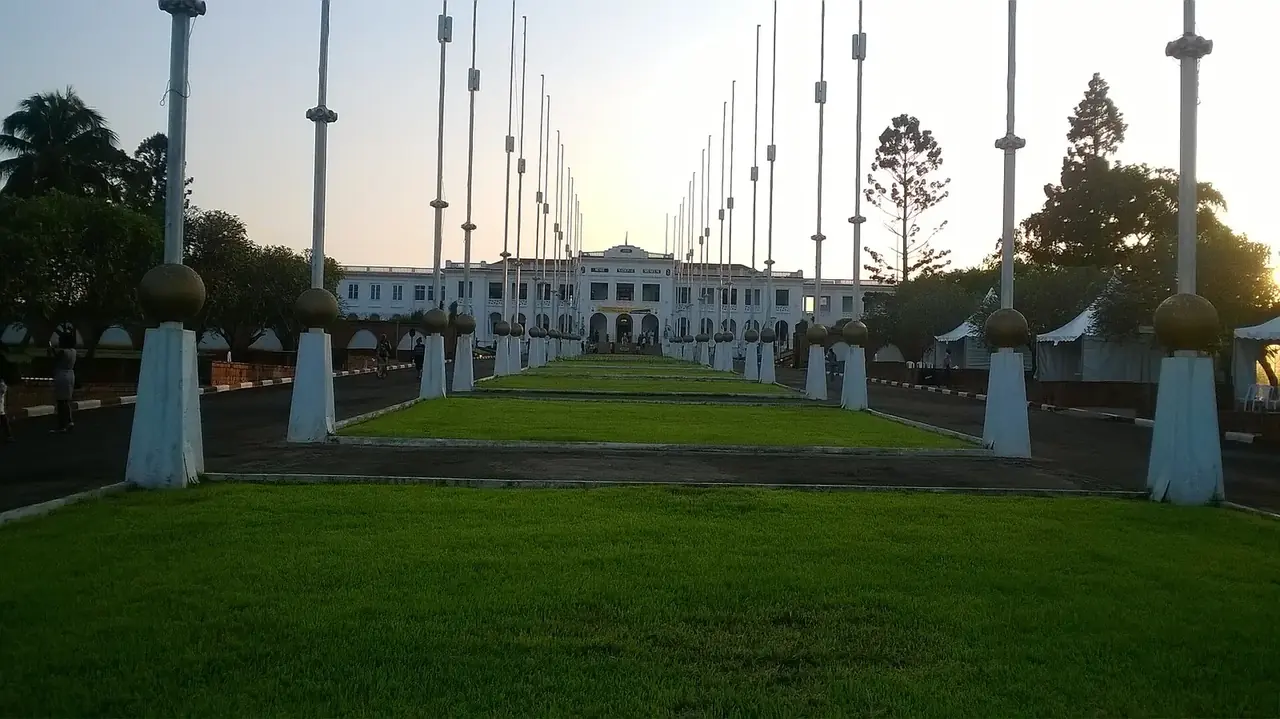
Avenue of flagpoles leading to the National Museum in Yaoundé at sunset

The National Museum, whose seat is fixed in Yaoundé, is a service attached to the Ministry in charge of cultural heritage and has management autonomy. It holds historical and artistic collections; its organisation is set by decree. Its missions are to acquire, gather, classify, conserve and present to the public collections of works of historical, scientific, technical and artistic interest.

The main galleries

  • The hall of kingdoms: thrones, court stools, masks and regalia from the chiefdoms of the West and North-West;
  • The forest hall: initiation society objects, instruments, statuettes and tools of the peoples of the Centre, South and East;
  • The coast and river hall: dugout canoes, regattas, objects of Atlantic trade;
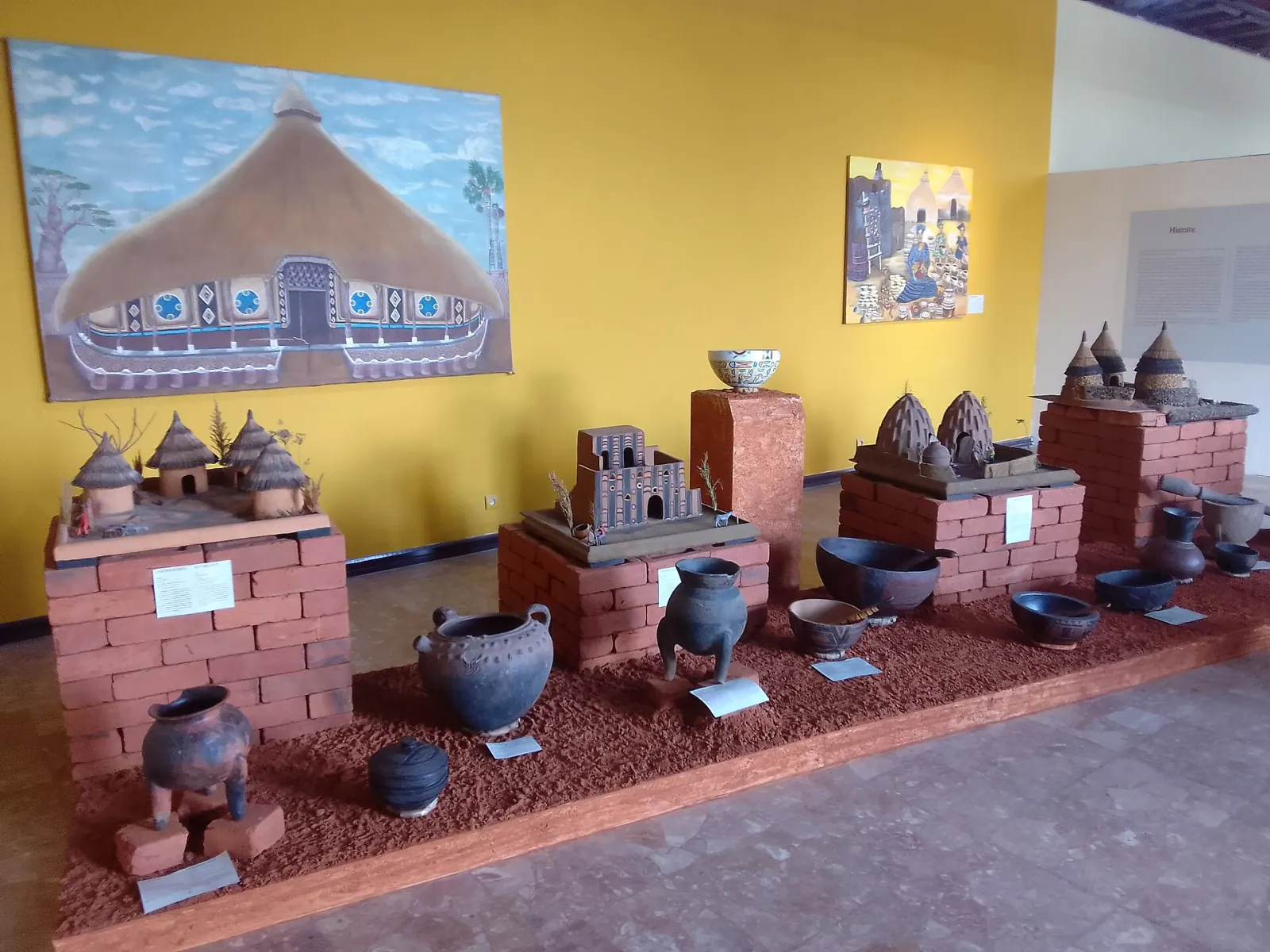
  • The savannah and mountain hall: weapons, pottery, jewellery and leatherwork from the North and Far North;
  • The contemporary gallery: paintings, sculptures and installations by Cameroonian artists.

A place of research and training

The museum contributes to education, training and research in art history, archaeology and museography. Its storerooms host trainees in arts education and archaeology students, in connection with the work described on the archaeology page.

The museum is one of the showcases of the policy for institutions under supervision; its temporary exhibitions also accompany the cultural calendar.

ℹ️
Institution

The National Museum is administered by a board of directors chaired by the Minister or his representative, and by a directorate responsible for day-to-day management.

Dschang

The Dschang museum: the civilisations of the highlands

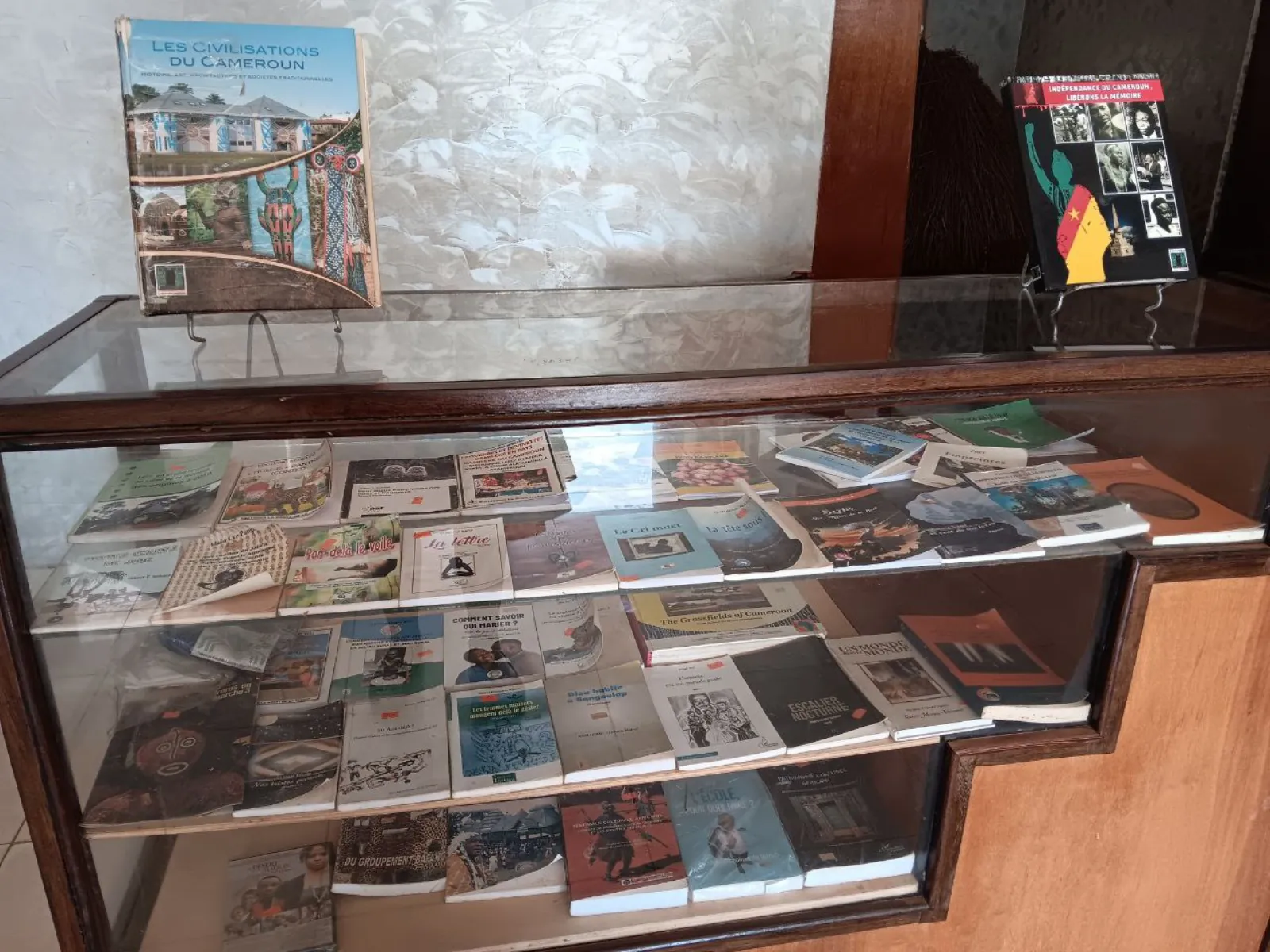
Display case of books and booklets in the library area of the Dschang civilisations museum

Located in the university town of Dschang, in the heart of the western highlands, this museum presents the civilisations of the Grassfields and the Bamileke plateaux. Its position, between the chiefdoms and the higher education institutions, gives it a particular vocation for research and outreach.

Collections of royalty and society

The collections include ancestor statues, elephant and panther masks, beaded stools, drinking horns, carved pipes, textiles and musical instruments. They are presented by theme: the king and his court, societies of notables, the arts of festivals, daily life and agricultural knowledge. Dioramas and recorded films show the dances and rites that the objects accompanied.

An outreach laboratory

  • “Young visitor” trails with treasure hunts and modelling workshops;
  • Meetings with craftspeople and sculptors of the region;
  • Temporary exhibitions co-produced with neighbouring chiefdoms;
  • Lectures by researchers and masters of tradition.

The museum works with the West Region and with the traditional chiefdoms to ensure that the stories associated with the objects are carried by the communities from which they come. It also cooperates with local traditional know-how.

ℹ️
School groups

Class visits must be booked several weeks in advance. An educational pack is given to the teacher before the visit.

Foumban

The Foumban museum: the memory of the Bamoun kingdom

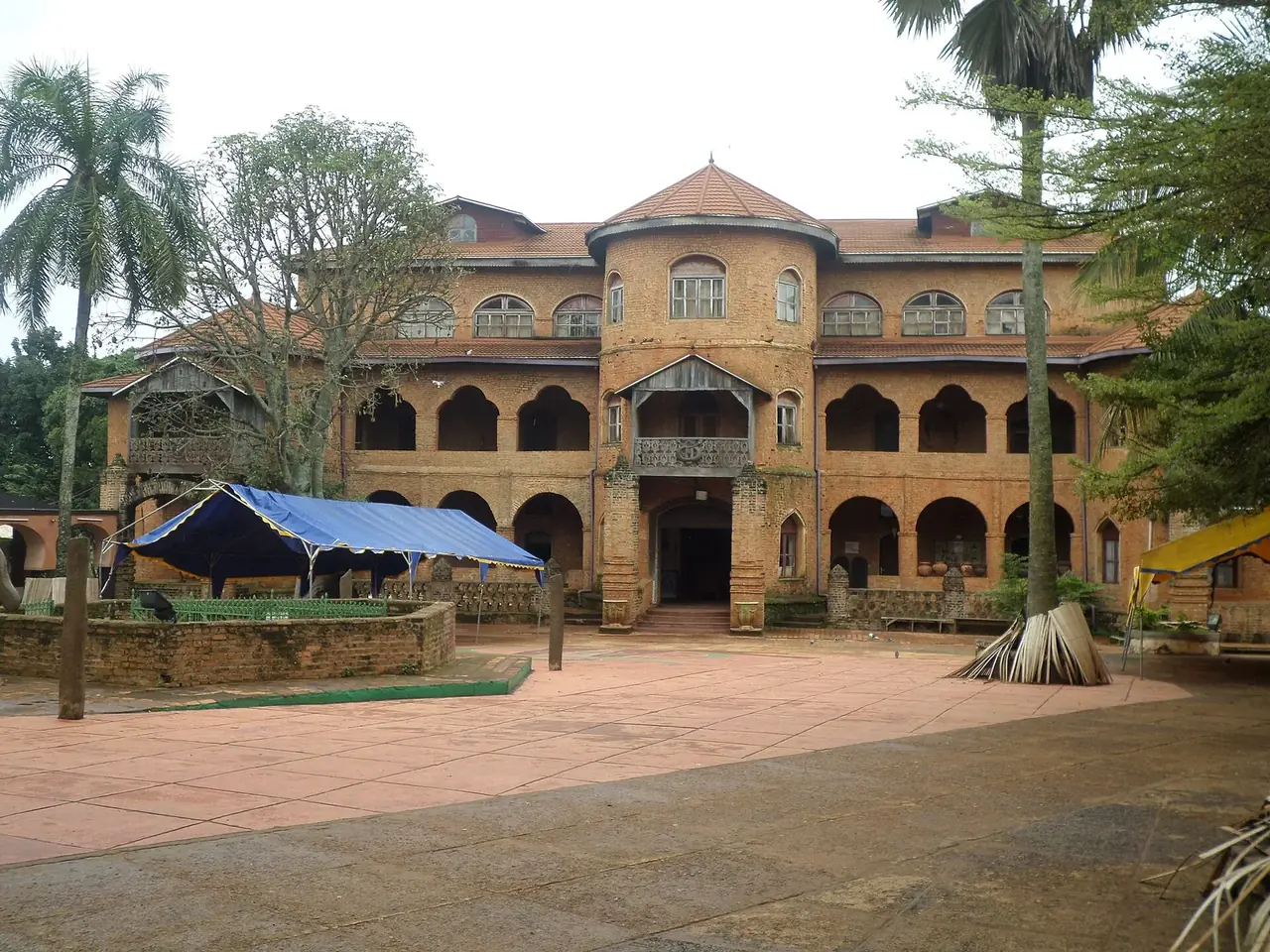
Façade of the Foumban sultans’ palace

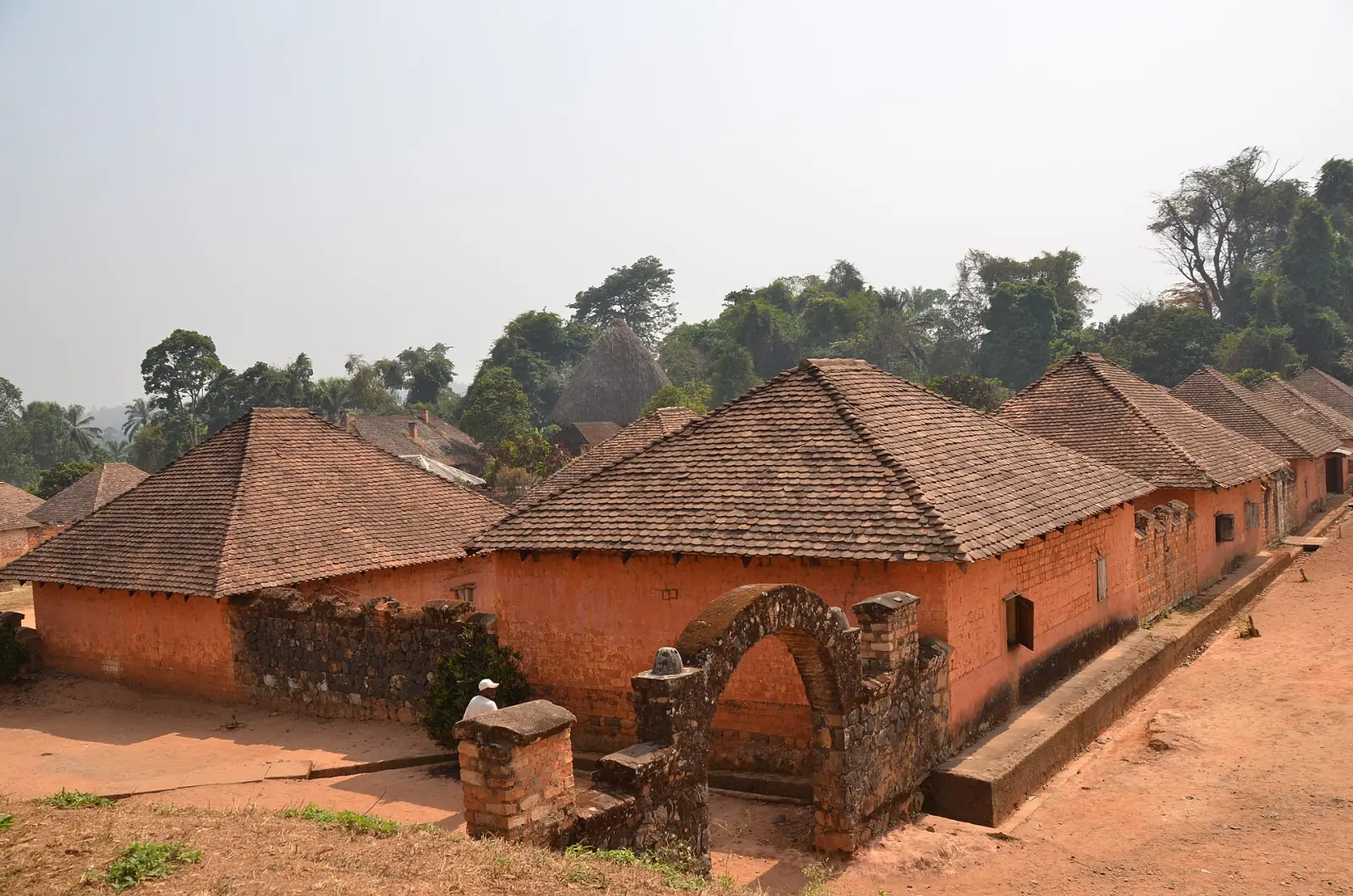
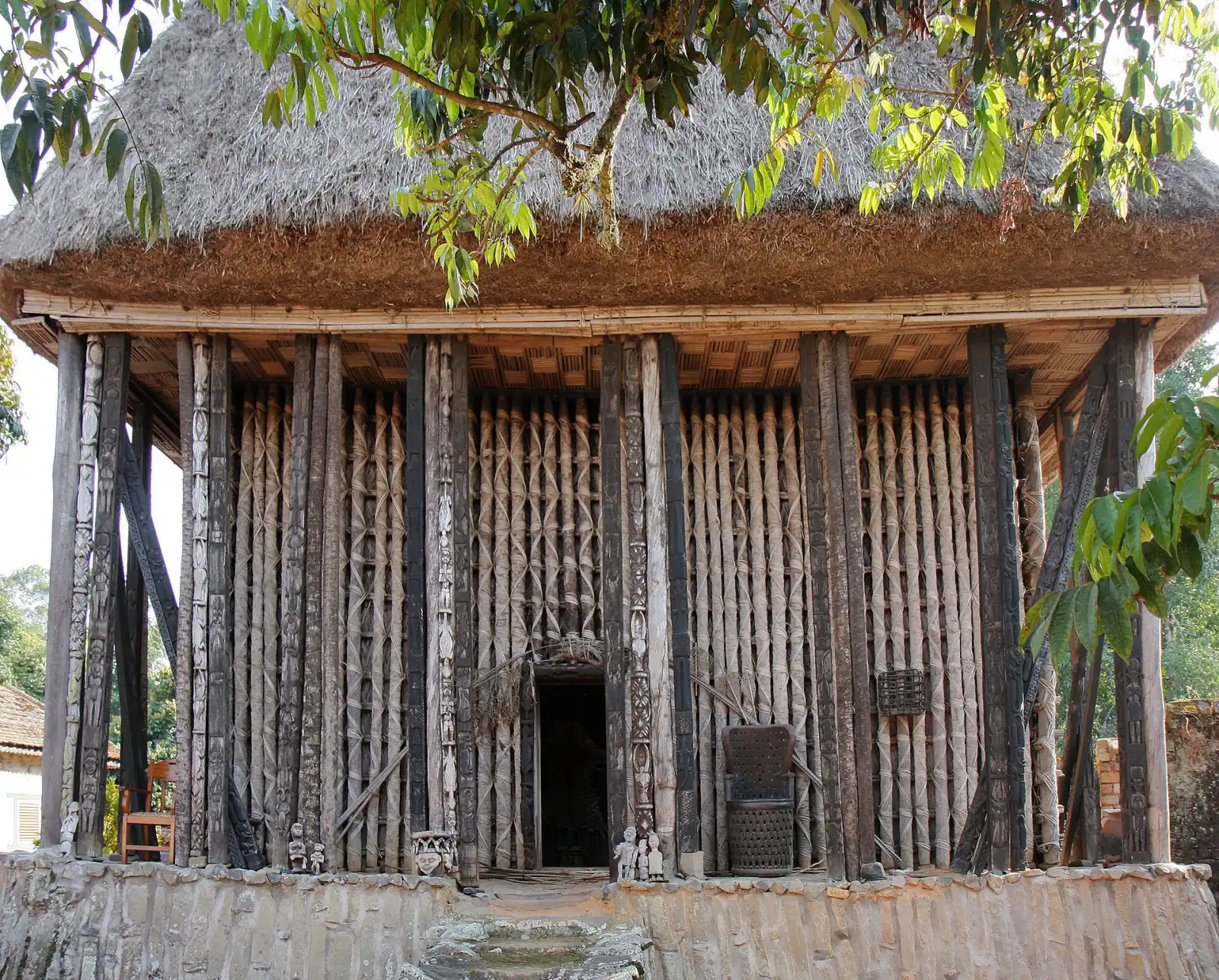
Foumban, capital of the Bamoun kingdom, is home to one of the best-known sites in the country. The palace museum presents the history of the kingdom, the script invented by a Bamoun king, court arts, costumes, objects of power and the instruments of royal music. The architecture of the palace, its inner courtyards and its audience halls are part of the visit.

What you will discover

  • Thrones, sceptres and ceremonial dress;
  • Manuscripts and tablets showing the Bamoun script;
  • Objects of court life: pipes, calabashes, beads, textiles;
  • Instruments: drums, bells, horns and court xylophones;
  • Models, maps and photographic archives on the history of the kingdom.

A living heritage

The museum is inseparable from palace life: annual festivals, ceremonies and the workshops of sculptors, founders and embroiderers surround the visit. The kingdom’s festival is described on the Nguon page and court arts on palaces and chiefdoms.

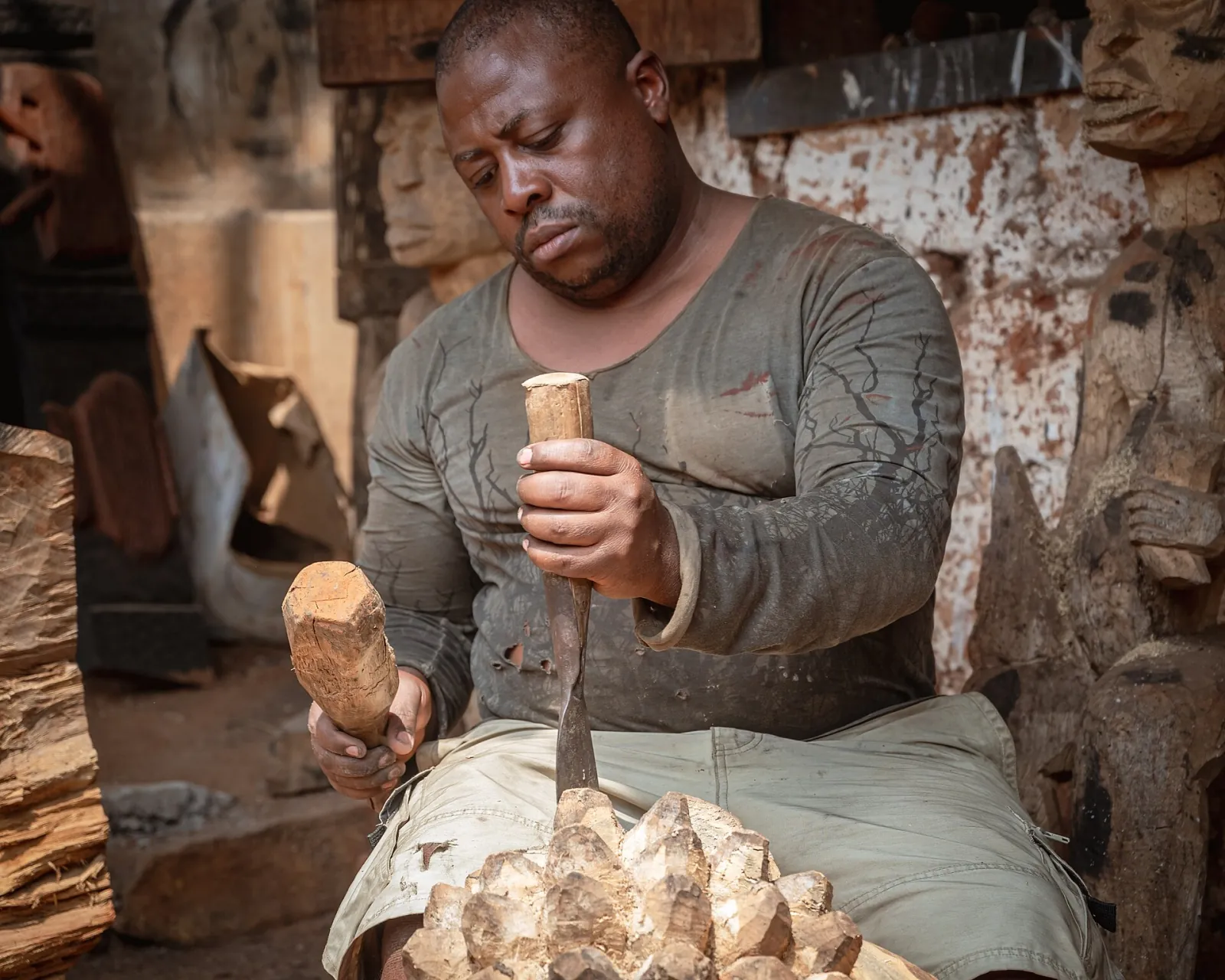
The craftspeople of Foumban, renowned for their lost-wax bronzes, beads and weaving, exhibit and sell their creations around the museum, see art crafts.

ℹ️
Respect the place

Certain rooms have special access rules; follow the guide’s instructions and do not touch the objects on display.

Opening hours and fees

Opening hours and fees: planning your visit

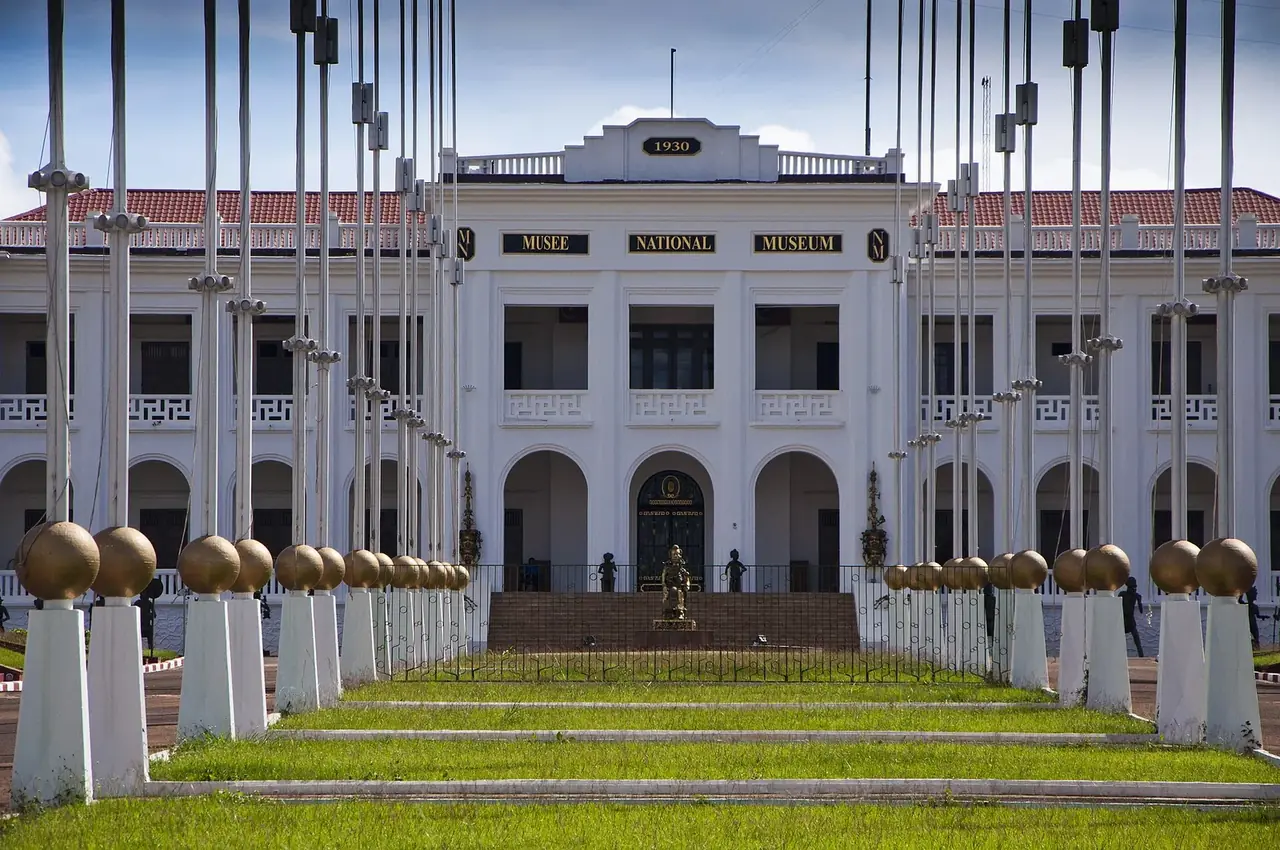
Entrance of the National Museum of Cameroon in Yaoundé

The national museums welcome the public from Tuesday to Sunday, generally from 9 a.m. to 5 p.m., closing on Monday for room maintenance and conservation work. Special openings are organised during heritage days and museum nights.

Fees

Entrance fees are set by order and displayed at the reception of each institution. Reductions are available for school groups, students, researchers and people with disabilities, and the full scale can be consulted on the fees page. The addresses and opening hours of each service are gathered in opening hours and addresses.

Accessibility and advice

  • Ramps, lifts and adapted routes in the main rooms;
  • Guided tours in French, English and national languages on request;
  • Photography without flash permitted in most rooms, unless otherwise indicated;
  • Cloakroom at reception for bulky bags.

The Ministry’s accessibility policy is presented on the quality and accessibility page.

ℹ️
Groups

For a group visit of more than ten people, book in advance by writing to the museum directorate.

Governance

The National Museum: missions, board of directors and collections

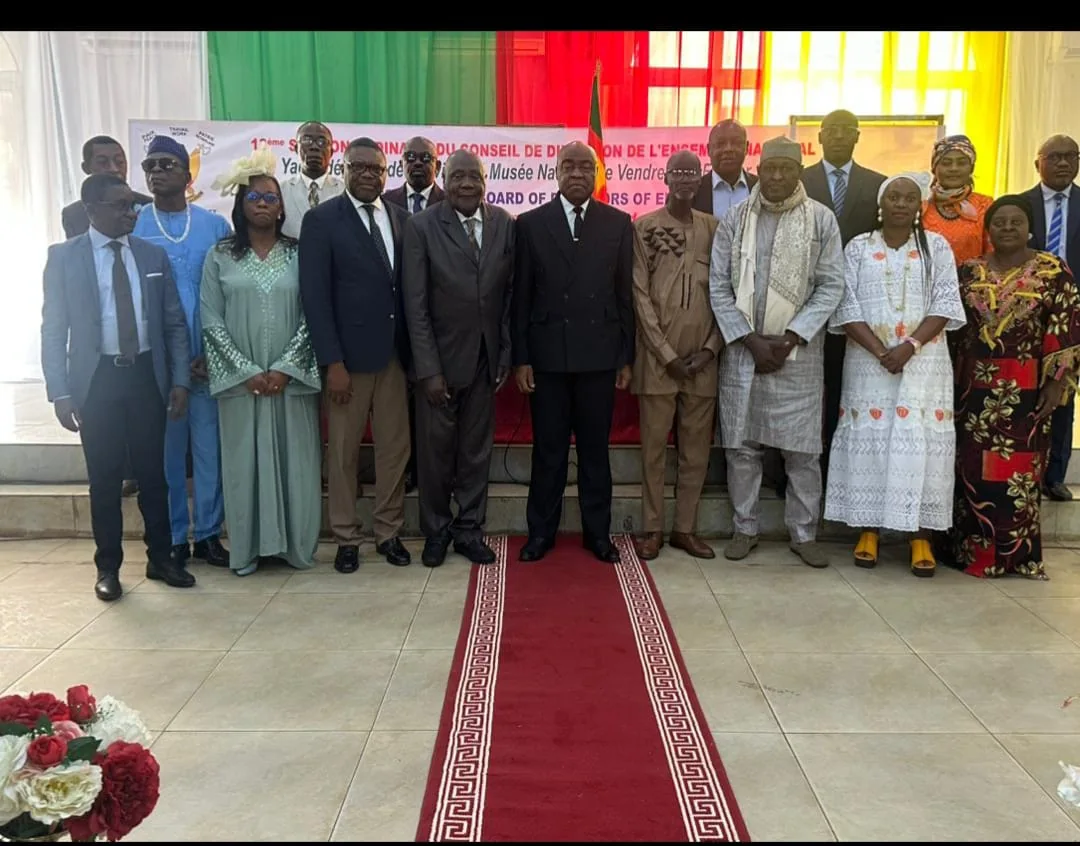
Board members posing on a red carpet at the National Museum

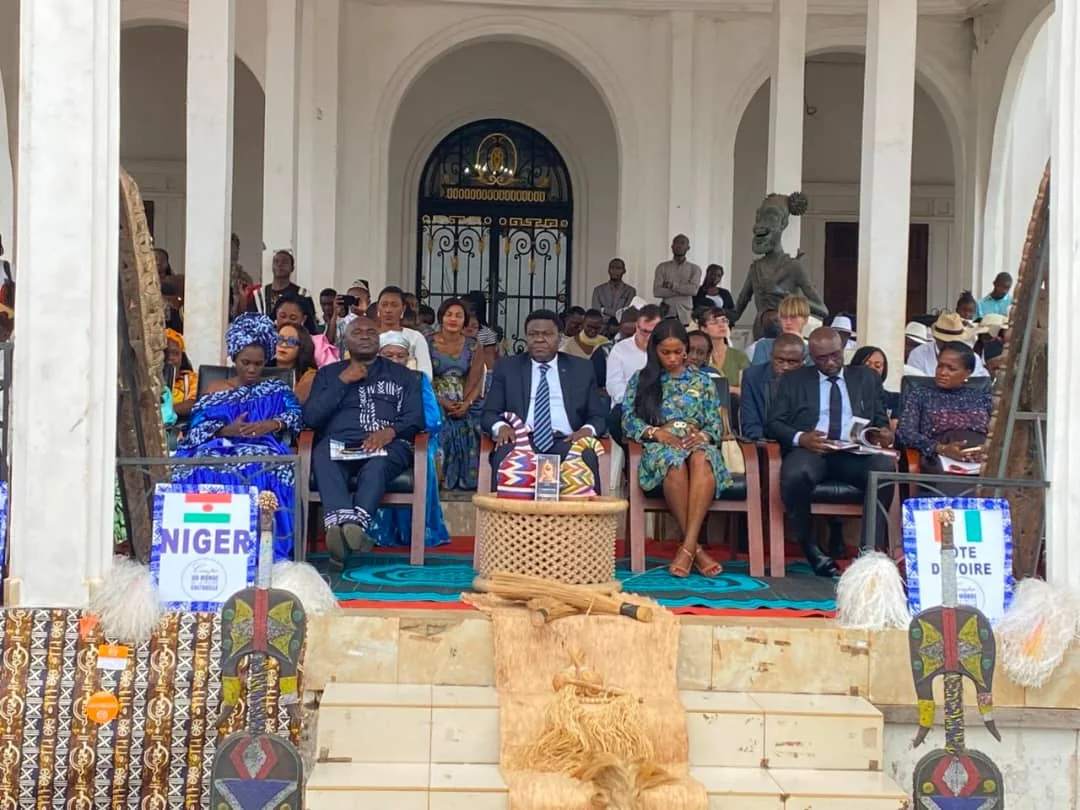
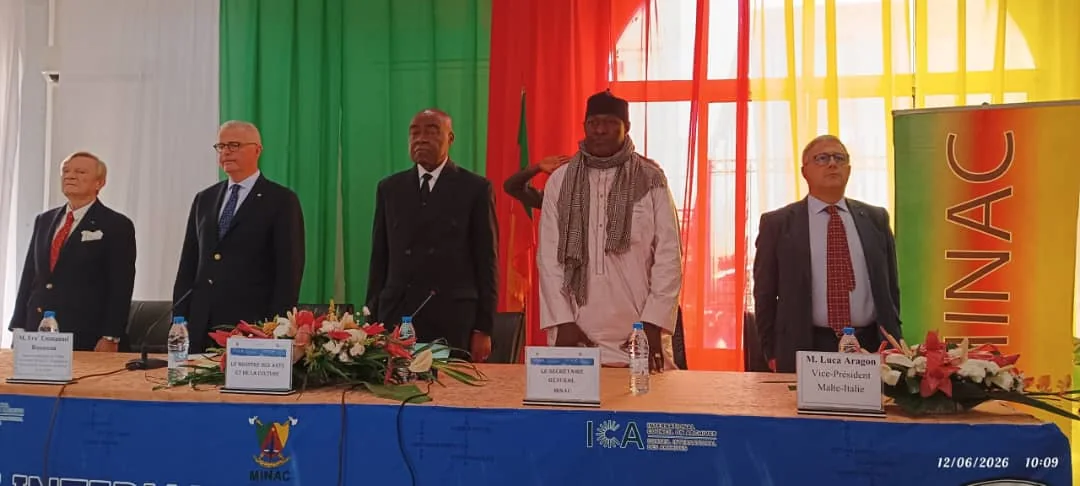
The Decree of 30 April 2014 sets the management bodies of the National Museum: the board of directors and the directorate. The board is chaired by the Minister in charge of cultural heritage or his representative; it brings together representatives of the Presidency of the Republic, the Prime Minister’s Services, and the ministries in charge of heritage, finance, tourism and crafts, as well as a staff representative. Members are appointed for a three-year term, renewable once.

Collections

Collections, storerooms and permanent exhibition

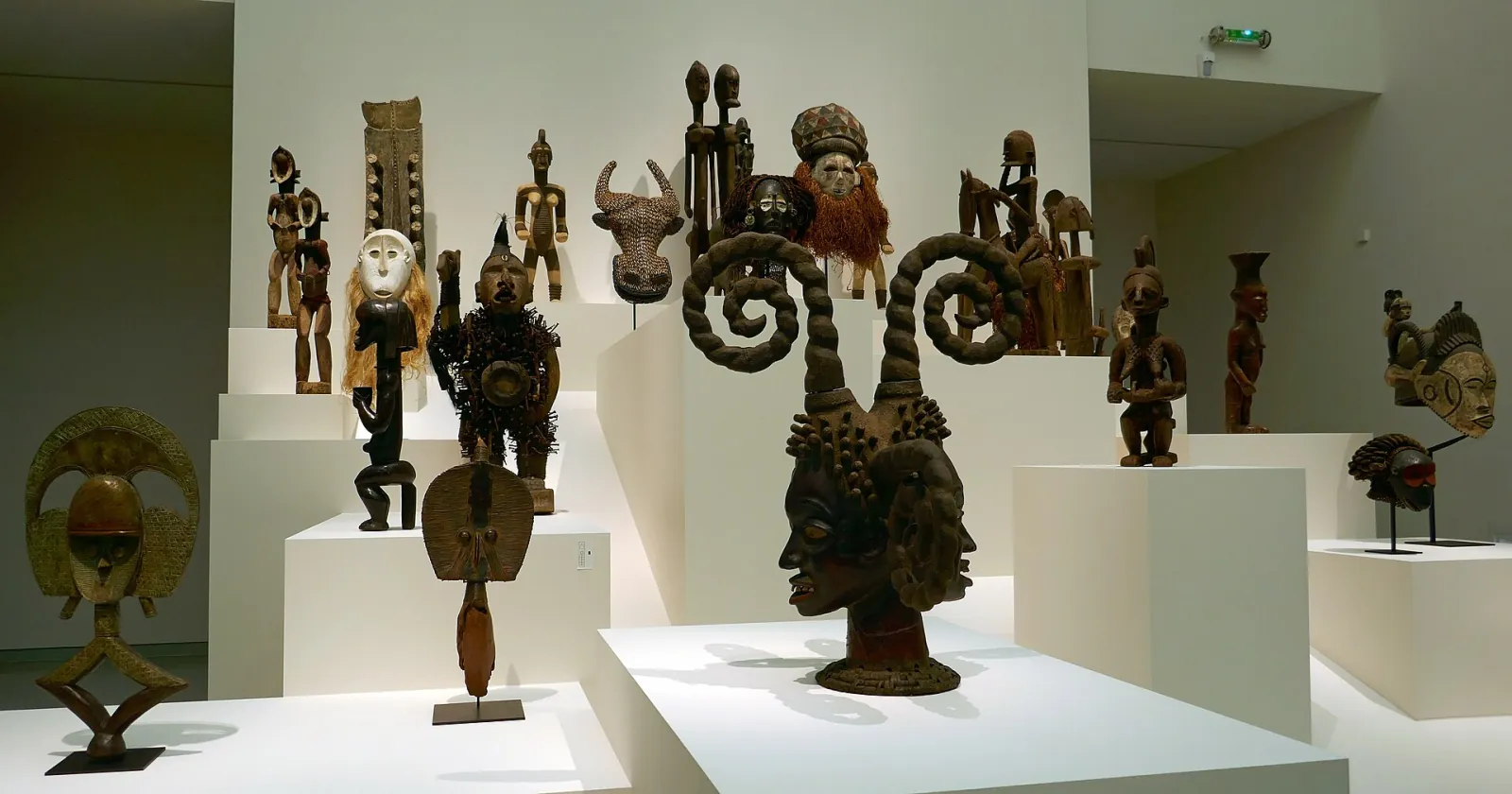
Museum gallery showing statues, masks and headdresses from Central Africa on white plinths

A museum shows fewer pieces than it keeps. The collections are organised into major families: ethnography, contemporary art, archaeology, history, decorative arts and natural sciences. Each object receives an inventory number, a documentation file, a location and a condition report.

Exhibitions

Temporary exhibitions and museum education

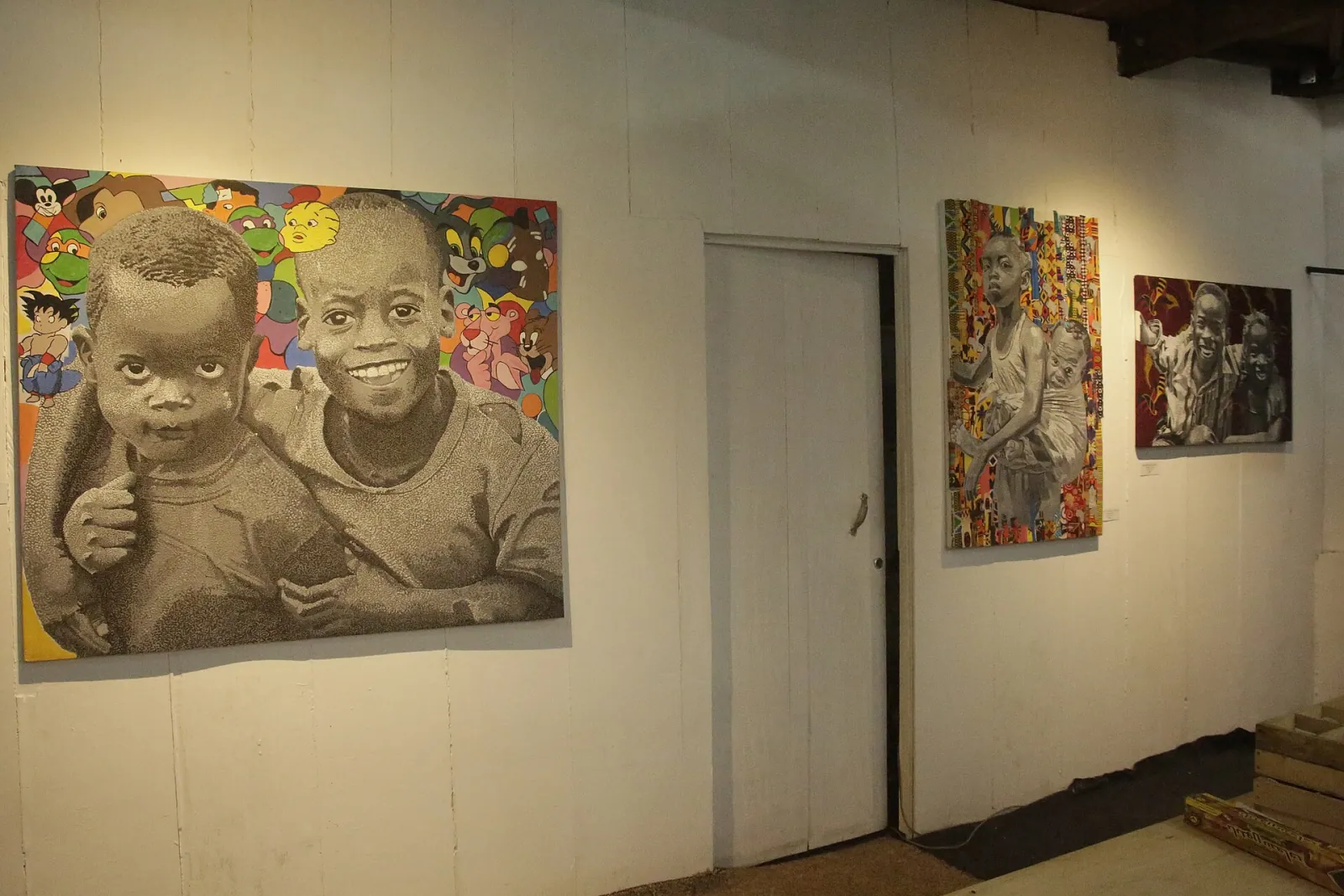
Portrait paintings of children hung in an exhibition room

Each year, the museums present several temporary exhibitions: thematic, monographic, or co-produced with artists, universities or chiefdoms. They renew the visit experience and showcase pieces kept in storage. Among the planned cycles are “Objects of Power, Objects of Peace”, “The River and the Coast”, “The Voices of Cloth” and “The Forest Told Through Its Tools”.

Step by step

Organising a group visit to the museum

Choose the museum

Yaoundé for an overview, Dschang for the highlands, Foumban for the Bamoun kingdom; check the opening days.

Book

Write to the museum directorate at least three weeks in advance, stating the group size, the age of the visitors and the desired theme.

Prepare the class

Request the teaching pack, present the objects to be observed and prepare with the pupils a few questions to ask the facilitator.

Arrive and visit

Report to reception, leave bags in the cloakroom and follow the suggested route, with breaks and time for discussion.

Take part in a workshop

After the visit, a modelling, drawing or storytelling workshop extends the discovery and allows pupils to handle reproductions.

Follow up in class

A return to the classroom, an exhibition panel or a visit notebook helps to keep a record of the outing.

To explore

The museums in the section

To download

The guides to the national museums

Glossary

The words of the museum

Museum

A permanent, non-profit institution open to the public that conserves, studies and displays the material evidence of humankind.

Museography

The set of techniques for designing and laying out exhibitions and museum spaces.

Museology

The science that studies the role, history and organisation of museums.

Storage

A secure storage space where objects not on display are kept.

Inventory

A register that identifies and describes each piece in a collection with its number and condition.

Curator

The scientific head of a museum or collection, responsible for studying, conserving and presenting the works.

Production stage manager

A professional who organises the movement, loan, packing and security of works.

Mediator

A professional who accompanies visitors and makes the collections accessible to all audiences.

Temporary exhibition

A time-limited presentation devoted to a theme, an artist or a group of objects.

Loan

The making available of an object to another institution, governed by an agreement.

Provenance

The history of an object, from its creation to its entry into the collection.

At the museum

Those who bring the collections to life

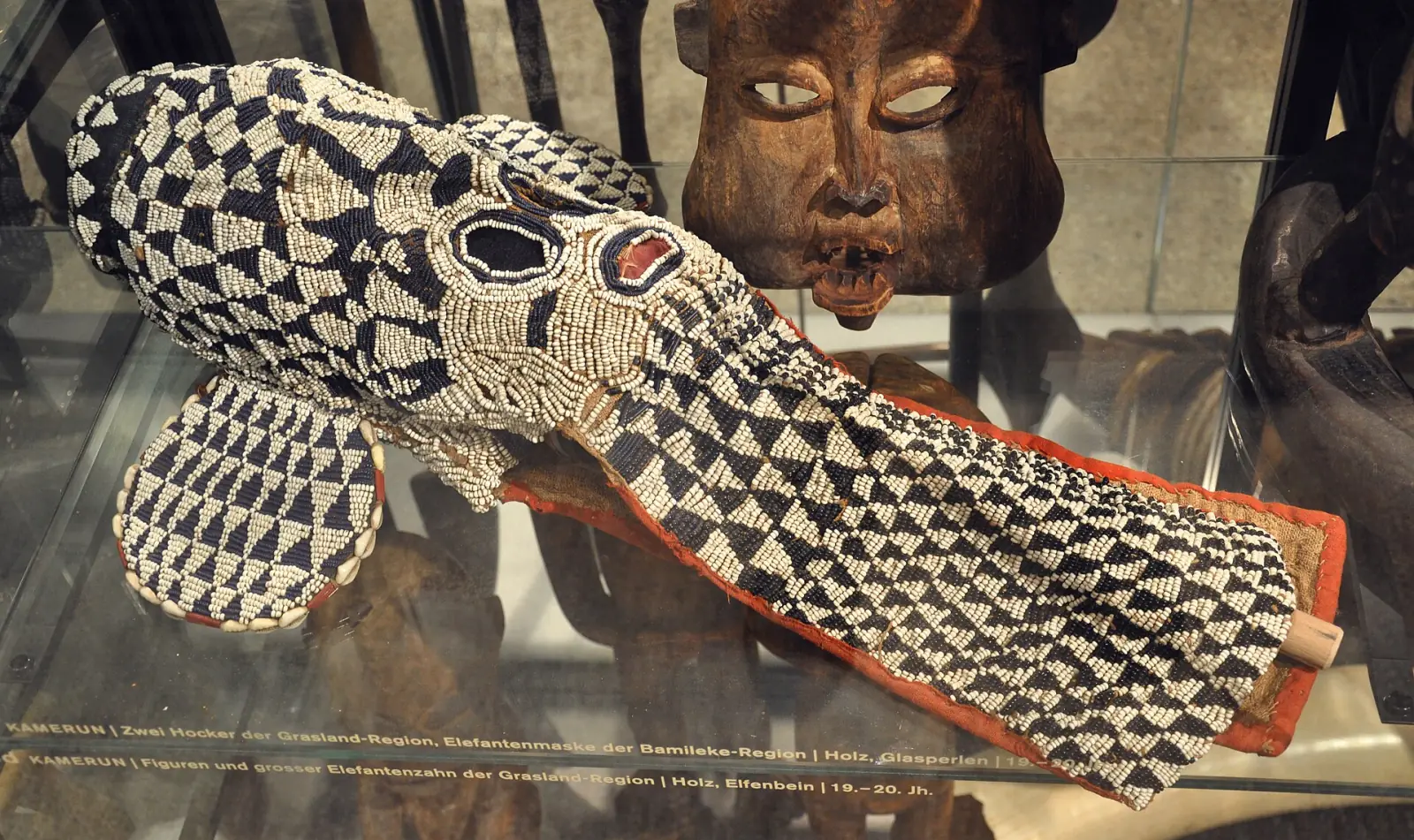
Beaded mask with black and white checkerboard patterns, in a museum display case/ Yaoundé
A curator

“Each object tells me about a place and a gesture; my job is to enable it to last and to speak again.”

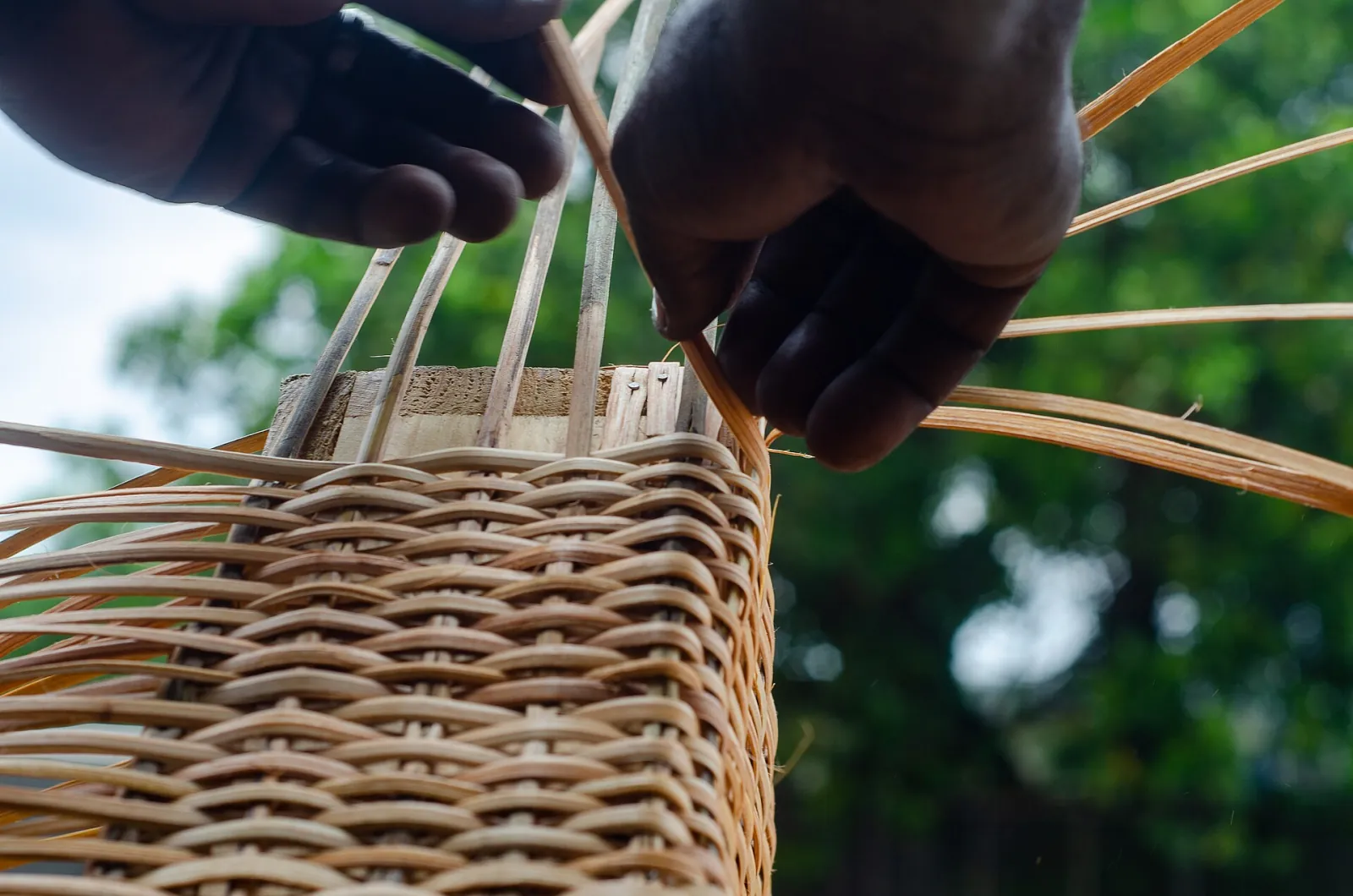
Hands of a craftsman weaving the strips of a rattan basket/ Dschang
A wood restorer

“I do not reinvent the object: I remove the oldest damage and prepare for the next half-century.”

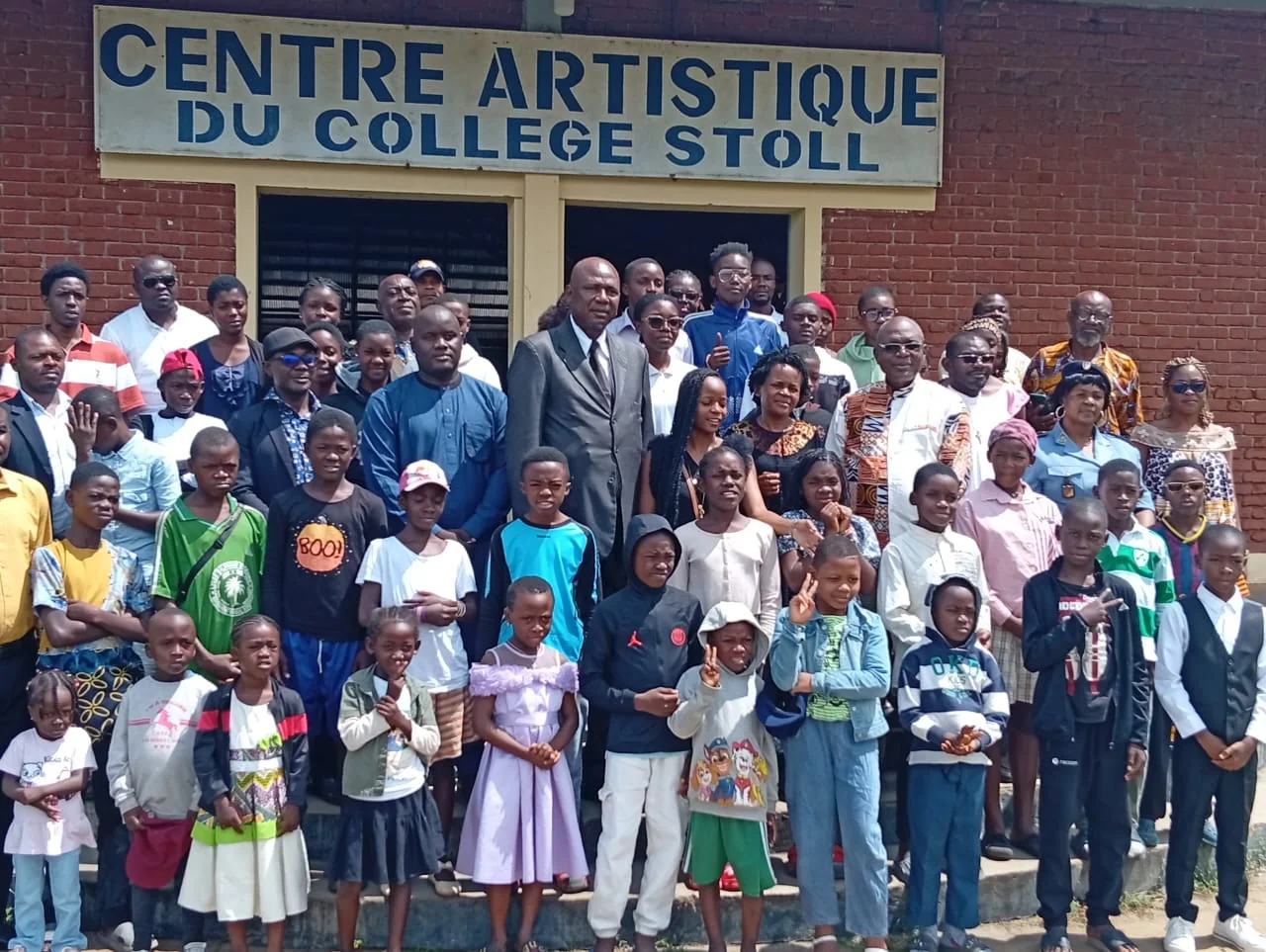
Pupils and staff posing in front of the entrance of the Stoll College arts centre/ Yaoundé
A school facilitator

“When a child recognises a mask they have seen in the village, they start telling stories, and the whole class listens.”

Former royal hut of Bafut with wooden posts and a thatched roof/ Foumban
A palace guide

“We tell the story of the kingdom with the very objects that were used in the ceremonies.”

To act

Services for visitors and professionals

Book a visit

Groups, classes and associations write to the directorate to set a date and receive the teaching pack.

Write to the museum

Lend or donate an object

A collector may offer a loan or a donation; the acquisition committee examines the provenance and condition of the object.

See the listing of a property

Film in a museum

A shoot, a news report or a professional photography session requires special authorisation.

Request authorisation
On the site

To extend your visit to the museums

Resources

Useful links for museums

Stakeholders

Who supports the museums?

Key facts

The national museums at a glance

MuseumCity and regionMain collectionsPublic and programmes
National MuseumYaoundé, CentreNational ethnography, art, history, archaeologySchool groups, researchers, tourists; temporary exhibitions
Dschang MuseumDschang, WestKingdoms of the West, societies of notables, festive artsStudents, families; workshops and meetings with craftspeople
Foumban MuseumFoumban, WestBamoun script, court objects, royal instrumentsPalace visitors; annual festivals and workshops
Yaoundé storeroomsYaoundé, CentreObjects not on display, archives, documentationResearchers by appointment
Restoration workshopYaoundé, CentreWood, textiles, metals, paperTrainees and heritage professionals
Educational spaceEach museumMediation kits, reproductions, gamesSchools, associations, leisure centres
Journey

The museums through history

1960sThe first public collections

After independence, collections of objects were gathered in administrative premises that would become the core of the national collections.

1980sStructuring of the museums

The teams become more professional, inventories become widespread and the first temporary exhibitions appear.

2013The cultural heritage law

The law of 18 April 2013 defines the museum, collections, management and protection of cultural property.

2014Decree on the National Museum

The decree of 30 April 2014 sets out the organisation and functioning of the National Museum, its missions and its board.

TodayTowards a network of museums

School visits, the digitisation of collections and cooperation with chiefdoms strengthen the country’s museum network.

Questions

Your questions about the national museums

Where is the National Museum located?

The seat of the National Museum is fixed in Yaoundé by the decree of 30 April 2014. The precise addresses and opening hours of each museum are given on the page devoted to the opening hours and addresses of the Ministry’s services.

What are the opening days and hours?

The national museums generally welcome the public from Tuesday to Sunday, from 9 a.m. to 5 p.m., and are closed on Monday. Exceptional openings take place during heritage days; check the dates on the cultural calendar before travelling.

How much does admission cost?

Admission fees are set by order and displayed at the reception of each institution. Reductions are available for school groups, students and persons with disabilities. See the site’s fees page for the full schedule.

Can the works be photographed?

Photography without flash is tolerated in most rooms for private use. Certain fragile or sensitive items may not be photographed, and any professional shooting requires a filming or reproduction authorisation.

How do I organise a school visit?

The teacher writes to the museum directorate three weeks before the visit, specifying the class level, the number of pupils and the desired theme. An educational pack and a guide are provided, and a workshop can complement the outing.

Can a private individual donate or lend an object?

Yes. An acquisitions committee examines the object’s provenance, condition and interest. Only property lawfully acquired, with the agreement of the authorities of the country of origin, may enter the collections. A loan is covered by an insurance agreement.

Can the storerooms or archives be consulted?

Researchers may request access to the storerooms or documentation by appointment, stating the subject and duration. Consultation takes place under the supervision of a collections manager and in compliance with conservation rules.

How can I become a volunteer or trainee at the museum?

Students of art history, archaeology or museology may submit an application for a traineeship to the directorate. The museum also welcomes volunteers for reception, workshops and special days, according to the needs of each season.

Contact

Write to the Ministry: National Museums

Specify the property or site concerned.

Competent directorate

Contact the museums directorate

Address

Directorate of Cultural Heritage
Ministry of Arts and Culture
Quartier du Lac – Ministerial Zone
P.O. Box 1053 Yaoundé, Centre Region, Cameroon

Reach us

+237 6 51 70 58 41

contact@minac.gov.cm

Opening hours

Monday to Friday, 8 am to 4 pm

A visit to organise?

Write to the museum directorate to book a group visit or obtain a teaching pack.

Write to the Ministry
WhatsApp