Coat of arms of CameroonMinistry of Arts
and Culture
Republic of Cameroon
My procedures
Home
Minister’s message
News
Press releases
Cultural calendar
Official speeches
Press review
Photo library
Video library
Calls for projects
Job vacancies
Public procurement
Newsletter
Frequently asked questions
Site map
Contact
Press area
Podcast “The Voice of Culture”
Legal notices
Privacy policy
Cookies and trackers
The Ministry
Missions and responsibilities
Organisation
Organisation chart
Minister’s Office (Cabinet)
Management team
General Secretariat
General Inspectorate
Central directorates
Regional Delegations
Institutions under supervision
Legislative texts
Regulatory texts
Sector strategy
Major projects
Budget and reports
Partners
Careers
Archives
Institutional communication
Quality and accessibility
Arts
Visual and plastic arts
Visual arts
Performing arts
Theatre
Dance
Music
Literature and books
Cinema and audiovisual
Photography
Fashion and design
Digital arts
Art crafts
Artists’ directory
Residencies
Prizes and awards
Arts education
Urban arts
Heritage
Tangible heritage
Intangible heritage
UNESCO sites
National museums
Listed monuments
National inventory
Palaces and chiefdoms
Archaeology
Linguistic heritage
Oral traditions
Traditional know-how
Restitution of cultural property
Fight against illicit trafficking
Listing and protection
Conservation and restoration
Heritage Days
Cultural landscapes
Industries
Music and recording
Cinema
Publishing and books
Digital arts
Fashion and creativity
Crafts
Cultural tourism
Funding for culture
Support funds
Incubators
Cultural entrepreneurship
Culture Observatory
Vocational training
Studies and reports
Sector statistics
Export and outreach
Intellectual property
Copyright
Legal framework
Copyright and neighbouring rights
Collective management societies
Register a work
Licences
Private copying
Fight against piracy
Model contracts
Social status of artists
Mediation
Disputes
Training
Fee scales
Register of works
Contact
Digital neighbouring rights
Public domain
Festivals
National calendar
Ngondo
Nguon
Écrans Noirs
Heritage Days
Music Day
Regional festivals
Fairs and exhibitions
Biennials
National competitions
Cultural days
Organise a festival
Event grants
Ticketing
Archives
Volunteering
Diaspora festivals
Regions
Adamawa
Centre
East
Far North
Littoral
North
North-West
West
South
South-West
Cultural map
Regional Delegations
Traditional chiefdoms
National languages
Cultural routes
Decentralised cooperation
Regional observatory
Cooperation
UNESCO
Francophonie (OIF)
African Union
Commonwealth
CEMAC
Bilateral cooperation
Cultural agreements
Professional organisations
Scholarships
Artist exchanges
Cultural years
Diaspora
Funded projects
Embassies
Technical partners
International restitution
International monitoring and calls
Services
Artist card
Show authorisation
Filming authorisation
Festival authorisation
Deposit of a work
Export of works of art
Listing of a property
Grant application
Association accreditation
File tracking
Forms
Fees
Opening hours and addresses
Reporting
Online help
My account
One-Stop Shop
Copyright

Collective management societies

The five collective management societies for copyright and neighbouring rights, the commission that supervises them, how to join them and how fees flow, explained with practical cases.

Updated on 6 November 20264 sub-pages
Approved societies5
Supervisory Commission (CCOGC)1
Reference law2000/011
Management fee cap20 %
Getting paid

Collecting your rights

Female singer in blue on stage in front of a lit screen, joined by a dancer

An author cannot monitor every radio station, cabaret, bookshop and website that uses their works. This is why the law of 19 December 2000 provides for collective management: approved societies authorise uses, collect fees from users and distribute them among their members.

Five societies cover the main fields of creation — SCAAP, SONACAM, SOCILADRA, SOCADAP and SCDV — and a Supervisory Commission for Collective Management Organisations (CCOGC) oversees their proper functioning. This page explains who does what, how to join, how money circulates and how the societies are supervised.

  • Five societies organised by field of creation
  • A supervisory commission independent of the societies
  • A framework set by Law No. 2000/011 of 19 December 2000
See the five societies
The five societies

The five societies for collective management, field by field

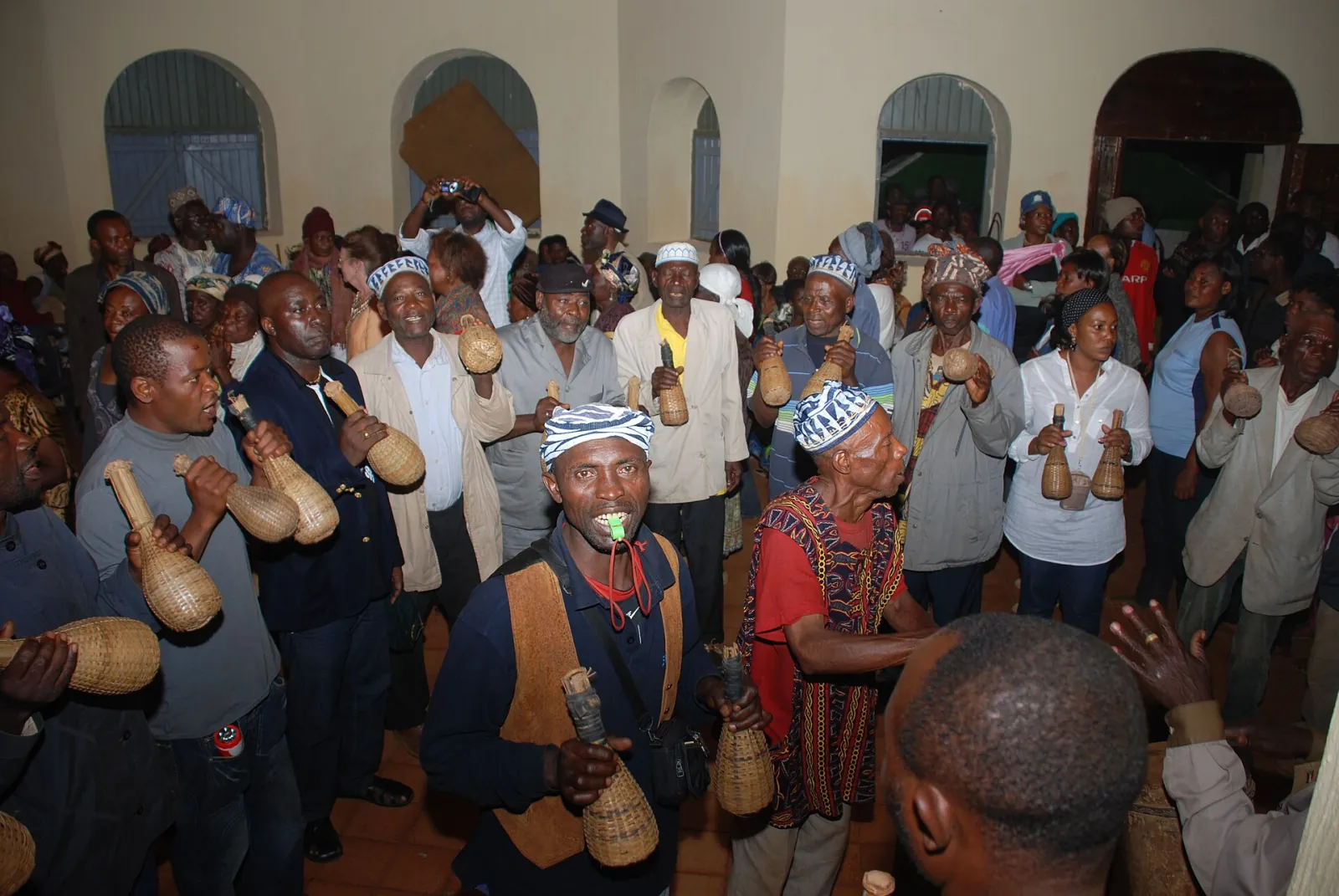
Crowd of musicians playing resonant gourds in a large hall

Each society is competent in a specific field. Knowing which one to choose is the first question for every creator or performer; the table and directory that follow give you the essential reference points.

Music: SONACAM

The Cameroonian National Society of Musical Art manages the rights of composers, lyricists and music publishers. It issues authorisations to radio stations, television channels, venues, bars, hotels and concert organisers. See also the music page.

Audiovisual and photography: SCAAP

The Civil Society of Audiovisual and Photographic Arts represents directors, screenwriters, photographers and other authors of audiovisual works. It acts in cases of screenings, television broadcasts and public uses of images. See cinema and audiovisual and photography.

Literature and dramatic arts: SOCILADRA

The Civil Society for the Rights of Literature and Dramatic Arts welcomes writers, playwrights, translators and authors of stage texts. It deals with publishers, theatres, companies and educational institutions. See literature and books and theatre.

Visual and graphic arts: SOCADAP

The Cameroonian Copyright Society for Visual and Graphic Arts defends painters, sculptors, illustrators and graphic designers. It monitors in particular the 5% resale right on resales. See visual arts.

Neighbouring rights: SCDV

The Cameroonian Society for Neighbouring Rights manages the rights of performers, phonogram and videogram producers, and audiovisual communication enterprises. See copyright and neighbouring rights.

ℹ️
Dual membership?

A singer-songwriter is both author and performer: they may belong to two societies, SONACAM for composition and SCDV for performance.

The societies

The five approved societies

Audiovisual and photography · Cameroon

SCAAP — Civil Society of Audiovisual and Photographic Arts

Collective management society for audiovisual and photography: it represents directors, screenwriters, photographers and other authors of audiovisual works, issues broadcast and public screening authorisations and distributes the fees collected among its members.

Music · Cameroon

SONACAM — National Cameroonian Society of Musical Art

Collective management society for music: it manages the rights of composers, lyricists and publishers, authorises radio stations, television channels, venues, bars and concert organisers to use its repertoire and distributes fees to its members.

Literature and dramatic arts · Cameroon

SOCILADRA — Civil Society for the Rights of Literature and Dramatic Arts

Collective management society for literature and dramatic arts: it supports writers, playwrights and translators, negotiates with publishers, theatres and educational institutions, and pays authors the fees collected on their texts.

Visual and graphic arts · Cameroon

SOCADAP — Cameroonian Copyright Society for Visual and Graphic Arts

Collective management society for visual and graphic arts: it defends the rights of painters, sculptors, illustrators and graphic designers, monitors the 5% resale right on resales of works and ensures respect for artists’ moral rights.

Neighbouring rights · Cameroon

SCDV — Cameroonian Society for Neighbouring Rights

Collective management society for neighbouring rights: it represents performers, phonogram and videogram producers and audiovisual communication enterprises, collects the remuneration due for the use of recordings and distributes it among rights holders.

Join

Joining a society: conditions, documents and good questions to ask

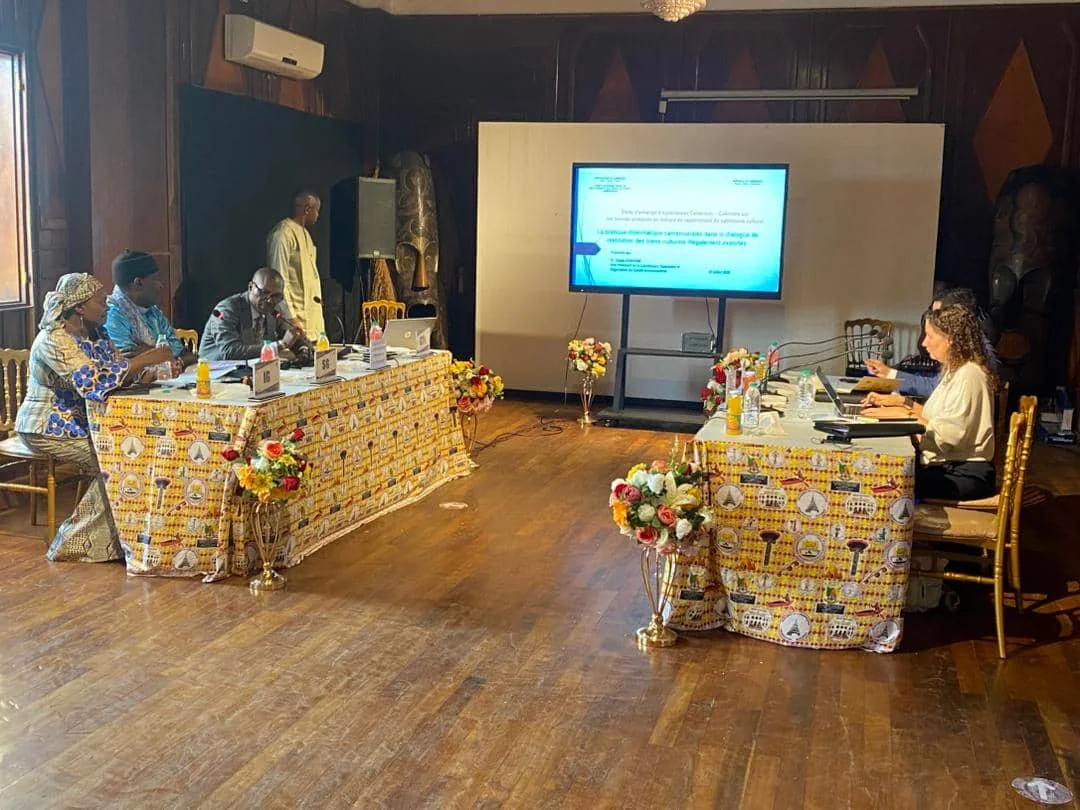
Meeting room with a projection screen during a Ministry workshop

Authors, performers, phonogram and videogram producers and publishers, as well as their successors in title, may be members of a collective management organisation. The membership agreement constitutes a mandate: unless otherwise agreed, the member entrusts the society with all acts of collective management, such as authorising exploitation, collection and distribution.

The steps to join

  1. identify the society for your field using the table above;
  2. request the membership file and the statutes from the society;
  3. gather proof of identity, evidence of your works or performances (receipt for the declaration of a work, contracts, programmes, recordings) and your payment details;
  4. declare your works to the society’s repertoire;
  5. sign the membership agreement and keep your copy.

Questions to ask before signing

  • Which rights does the society manage exactly, and in which territory?
  • What are the management fees? They are capped at 20% of revenue, or 35% during the first three full financial years following approval.
  • How often are distributions made, and what statement will you receive?
  • How can you take part in the general assembly and vote?

A protective rule

An authorisation given for all of your future works is void, unless it is granted in favour of a collective management organisation. For specific rights, therefore, negotiate tailor-made licences, using the model contracts.

ℹ️
Register first

Declaring your works to the Ministry before joining secures the date and authorship. Submission is made online through the One-Stop Shop.

Distribution of royalties

How rights are distributed among rights holders

Artists performing at a music festival in Douala

The societies collect fees from users of works: broadcasters, show organisers, hotels, restaurants, businesses and public institutions. They then distribute them among their members according to their rules, which are framed by law and supervised by the CCOGC.

The journey of a fee

  1. Authorisation: the user requests authorisation to broadcast or perform works from the repertoire;
  2. Declaration: they provide the exact programmes of the uses (playlists, venue programmes);
  3. Collection: they pay the fee according to the tariff;
  4. Distribution: the society deducts its management fees, then distributes the balance to rights holders according to the uses declared.

Management fees

The society’s operating costs are capped at 20% of revenue, the remainder being intended for distributions. During the first three full financial years following approval, this cap is raised to 35%.

Sources of income

  • broadcast and performance authorisations;
  • remuneration for private copying: that on phonograms and videograms is shared equally among authors, performers, producers and the cultural policy support fund; that on printed works among authors, publishers and the support fund, at a rate of 5%;
  • the 5% resale right on resales of visual works;
  • the 50% fee on the exploitation of the public domain, paid into the cultural policy support account.
ℹ️
Checking your statement

Keep your distribution statements. In case of disagreement, mediation is the first recourse; the supervisory commission may also be approached.

Review board

The Supervisory Commission (CCOGC): composition, role and referral

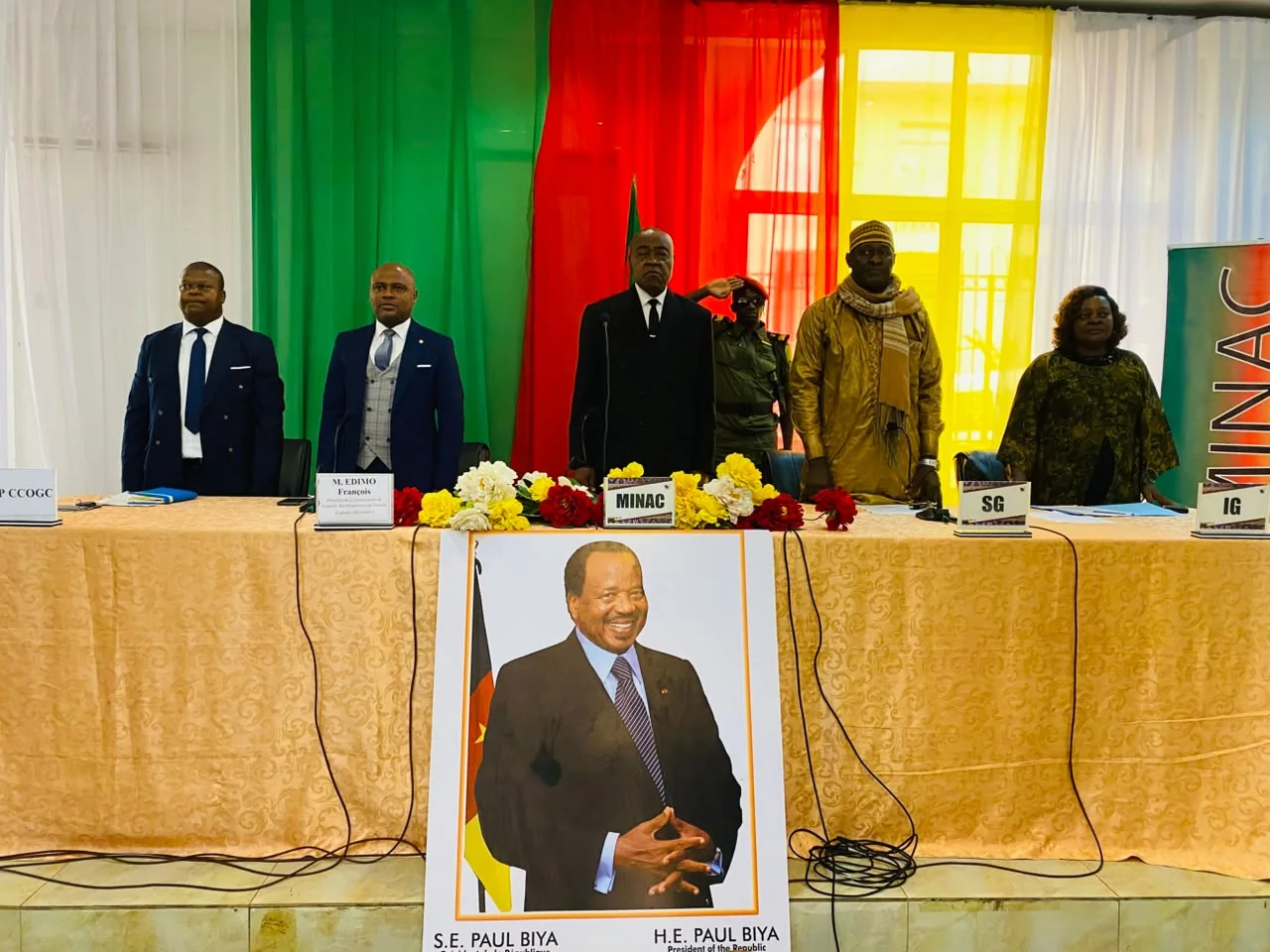
Opening session with the portrait of the Head of State in front of the panel table

The Supervisory Commission for Collective Management Organisations is organised by Order No. 090/CAB/PM of 29 September 2015, issued by the Prime Minister pursuant to the implementing decree of the 2000 law. It is the arbiter of transparency: it checks that the societies act in the interest of their members and in compliance with the law.

Who sits on it?

The commission is chaired by a State Inspector from the services responsible for the higher control of the State, appointed by order of the Prime Minister. It comprises a representative of the ministry responsible for culture, a representative of the ministry responsible for justice, a representative of the ministry responsible for territorial administration and a representative of the ministry responsible for finance. The term of office of the chair and members is three years, renewable once.

What it does

  • it gives an opinion on approval applications: the file, submitted to the Ministry against a receipt with a copy to the commission, is referred to it within ten days;
  • it monitors the functioning of collective management organisations;
  • it assists the societies in their relations, when they request it;
  • it may invite any competent person to its proceedings, in a consultative capacity.

A permanent secretariat

The commission has a permanent secretariat that prepares its sessions, examines technical files, follows up the implementation of its deliberations and prepares its budget. For any question, go through the copyright service contact. See also the regulatory texts.

ℹ️
Not to be confused with

The Arbitration Commission, created by Decree No. 2015/3978/PM, rules on disputes between collective management organisations and persons who use phonograms; it is chaired by a magistrate.

Oversight

Commission for the Oversight of Collective Management Bodies

Official text in French. The English version will be added from the Official Gazette.

Arrêté n° 090/CAB/PM du 29 septembre 2015 portant organisation et fonctionnement de la commission de contrôle des organismes de gestion collective · site officiel du Ministère

Président de la Commission de Contrôle des Organismes de Gestion Collective, Pr. EDIMO

ARRÊTÉ N° 090/CAB/PM DU 29 SEPTEMBRE 2015 PORTANT ORGANISATION ET FONCTIONNEMENT DE LA COMMISSION DE CONTRÔLE DES ORGANISMES DE GESTION COLLECTIVE

Le Premier Ministre, Chef du Gouvernement,

Vu la Constitution ;

Vu la loi n° 2000/011 du 19 Décembre 2000 relative au droit d’auteur et aux droits voisins ;

Vu le décret n° 92/089 du 04 Mai 1992 précisant les attributions du Premier

Ministre, modifié et complété par le décret n°95/145-bis du 04 Août 1995 ;

Vu le décret n°2011/408 du 09 Septembre 2011 portant organisation du

Gouvernement ;

Vu le décret n° 2011/409 du 09 Décembre 2011 portant nomination d’un Premier

Ministre, Chef du Gouvernement ;

Vu le décret n°2015/ 3979/ CAB/PM du 25 Septembre 2015 fixant les modalités d’application de la loi n° 2000/011 du 19 Décembre 2000 relative au droit d’auteur et aux droits voisins,

Arrête :

CHAPITRE I : DISPOSITIONS GÉNÉRALES

Article 1er.- (1) Le présent arrêté porte organisation et fonctionnement de la Commission de Contrôle des Organismes de Gestion Collective, ci-après désignée la « Commission ».

(2) Il est pris en application des dispositions de l’article 22 du décret n° 2015/3979/CAB/PM du 25 Septembre 2015 susvisé.

CHAPITRE II : DE L’ORGANISATION

Article 2.- (1) La Commission est composée ainsi qu’il suit :

Président : Un Inspecteur d’Etat des Services chargés du Contrôle Supérieur de l’Etat, nommé par arrêté du Premier Ministre.

Membres :

  • Un (01) représentant du Ministère en charge de la culture ;
  • Un (01) représentant du Ministère en charge de la justice ;
  • Un (01) représentant du Ministère en charge de l’administration territoriale ;
  • Un (01) représentant du Ministère en charge des finances.

(2) Les membres de la Commission sont désignés par les Administrations qu’ils représentent.

(3) La composition de la Commission est constatée par décision du Ministre chargé de la culture.

Article3.- (1) Le Président peut inviter toute personne physique ou morale, en raison de ses compétences sur les questions inscrites à l’ordre du jour, à prendre part aux travaux de la Commission ou du Secrétariat Technique avec voix consultative.

(2) Le Président peut, en outre, inviter les représentants des organismes de gestion collective à prendre part aux travaux de la Commission, avec voix consultative, lorsque l’intérêt de leur société est en cause.

Article4.- (1) Le mandat du Président et des membres de la Commission est de trois (03) ans renouvelable une (01) fois.

(2) Le mandat de membre de la Commission prend fin suite à la perte de la qualité ayant motivé sa désignation.

Article 5.- (1) Pour l’accomplissement de ses missions, la Commission dispose d’un Secrétariat Permanent.

(2) Le Secrétariat Permanent est chargé :

  • de préparer les sessions de la Commission et mettre en état les dossiers soumis à son examen ;
  • d’assurer le secrétariat des travaux et activités de la Commission ;
  • d’exécuter et/ou de suivre la mise en œuvre des délibérations de la

Commission ;

  • d’instruire les dossiers techniques soumis à l’examen de la Commission ;
  • de préparer le budget de la Commission et de le soumettre à son adoption ;
  • de suivre le fonctionnement des organismes de gestion collective ;
  • de mener toute autre mission à lui confier par la Commission.
CHAPITRE III : DU FONCTIONNEMENT DE LA COMMISSION

Article 6.- La Commission peut être sollicitée par les organismes de gestion collective pour les accompagner dans leurs interactions.

A ce titre, la Commission peut :

  • procéder à l’organisation et à la supervision des concertations et des négociations entre les organismes de gestion collective du droit d’auteur et des droits voisins ou entre ces dernières et les tiers ;
  • œuvrer à obtenir une convergence de vues lors des différentes négociations ;
  • procéder en cas de désaccord entre les parties concernées, à une tentative de conciliation ;
  • servir, en tant que de besoin, d’interface entre les diverses parties prenantes dans la gestion collective du droit d’auteur et droits voisins ;
  • organiser et superviser des concertations et les négociations entre les organismes de gestion collective ou avec les tiers ;
  • procéder à un règlement à l’amiable des différends lorsqu’elle est saisie d’accord parties, sans préjudice des compétences reconnues à la Commission d’Arbitrage prévue à l’article 62 alinéa 2 de la loi n° 2000/011 du 19 décembre

2000 relative au droit d’auteur et aux droits voisins ;

  • s’assurer du respect des clés de répartition des redevances fixées et de la régularité des opérations de facturation, de perception et de répartition ;
  • apporter tout autre concours et appui nécessaires aux organismes de gestion collective lorsqu’elle est sollicitée à cet effet.

Article 7.- Dans l’accomplissement de sa mission, la Commission peut :

  • exiger des organismes de gestion collective toute information ou documents sur leur gestion ;
  • procéder à des contrôles sur pièces et sur place afin de formuler des recommandations tendant à corriger les irrégularités éventuellement constatées et en cas de refus, de saisir le Conseil d’Administration de l’organisme de gestion collective concerné et informer le Ministre en charge de la culture ;
  • mettre en demeure l’organisme concerné aux fins de correction des irrégularités constatées dans l’exercice de ses missions, et saisir, en cas de refus d’obtempérer ou de récidive, le Ministre chargé de la culture dans un délai d’un (01) mois, avec copie au Premier Ministre ;
  • solliciter en tant que de besoin tout concours nécessaire à l’accomplissement de ses missions.

Article 8.- Nonobstant les dispositions de l’article 6 ci-dessus, les organismes de gestion collective sont tenus :

  • de signaler à la Commission toute modification de statuts, textes particuliers ou tarifs ;
  • de communiquer à la Commission toutes décisions prises par leurs organes statutaires internes ;
  • de transmettre à la Commission toute décision de justice les concernant ;
  • de présenter à la Commission à la fin de chaque exercice des copies du bilan, des comptes, du rapport d’activité et des observations des commissaires aux comptes ;
  • d’informer la Commission de la désignation ou de la révocation des administrateurs ;
  • d’informer la Commission des conventions passées avec les organismes étrangers ;
  • de tenir à jour et à disposition de toute réquisition les registres complets de leurs membres.

Article 9.- (1) La Commission se réunit en tant que de besoin, sur convocation de son Président.

(2) Les convocations accompagnées de l’ordre du jour ainsi que les documents de travail sont adressés aux membres sept (7) jours au moins avant la date de la réunion.

(3) La Commission ne peut valablement délibérer qu’en présence d’au moins la moitié de ses membres. Si le quorum n’est pas atteint, il est passé outre à la prochaine réunion.

(4) Les délibérations de la Commission sont prises à la majorité simple de ses membres présents. En cas d’égalité des voix, celle du Président est prépondérante.

(5) A l’issue de chaque réunion, un compte-rendu circonstancié est adressé au

Ministre chargé de la culture, avec copie au Premier Ministre.

CHAPITRE IV :

DU FONCTIONNEMENT DU SECRÉTARIAT PERMANENT

Article 10.- (1) Placé sous l’autorité du Président de la Commission, le Secrétariat Permanent est dirigé par un Secrétaire Permanent, nommé par arrêté du Ministre chargé de la culture.

(2) Le Secrétaire Permanent est chargé de la coordination des activités du

Secrétariat Permanent.

A ce titre, il :

  • est responsable de sa bonne marche et de l’exécution de ses missions ;
  • assiste aux travaux de la Commission avec voix consultative ;
  • peut recevoir délégation de signature du Président de la Commission.

Article 11.- (1) Le Secrétariat Permanent dispose d’un personnel dédié et mis à sa disposition par le Ministre chargé de la culture.

(2) Le personnel du Secrétariat Permanent ne peut excéder un effectif de six (06)

personnes.

CHAPITRE V :

DISPOSITIONS DIVERSES, TRANSITOIRES ET FINALES

Article 12.- (1) Le Président, les membres de la Commission, les personnes invitées à titre consultatif ainsi que les membres du Secrétariat Permanent bénéficient des indemnités de session conformément à la réglementation en vigueur. Ils peuvent en outre prétendre au remboursement des frais occasionnés par la tenue des sessions de la Commission, sur présentation des pièces justificatives.

(2) Les avantages et indemnités du personnel du Secrétariat Permanent sont fixés par décision du Ministre chargé de la culture, sur proposition du Président de la Commission.

Article 13.- Les ressources de la Commission sont constituées :

  • d’un prélèvement annuel sur le Compte d’Affectation Spéciale pour le Soutien de la Politique Culturelle ;
  • d’une dotation inscrite annuellement sur le budget du Ministère chargé de la culture.

Article14.- (1) Le Président est l’ordonnateur du budget de la Commission.

(2) Il désigne pour les besoins un Régisseur chargé des opérations comptables.

Article 15.- La Commission est tenue de présenter un rapport d’activités administratif, financier et comptable au Ministre chargé de la culture, avec copie au Premier Ministre, au plus tard trois (03) mois après la fin de l’exercice budgétaire, à la diligence de son Président.

Article 16.- Les biens acquis par ou pour le compte de la Commission Permanente de Médiation et de Contrôle des Organismes de Gestion Collective du droit d’auteur et des droits voisins créée par Décision n° 004/017/MINCULT/CAB du 03 juin

2004 sont transférés à la Commission dans un délai de trois (03) mois à compter de la date de signature du présent arrêté.

Article 17.- Sont abrogées toutes les dispositions antérieures contraires, notamment la Décision n° 004/017/MINCULT/CAB du 03 juin 2004 portant création, organisation et fonctionnement de la Commission Permanente de Médiation et de Contrôle des Organismes de Gestion Collective du droit d’auteur et des droits voisins ainsi que tous ses modificatifs subséquents.

Article 18.- Le Ministre de la Culture est chargé de l’application du présent arrêté qui sera enregistré, publié suivant la procédure d’urgence, puis inséré au Journal Officiel en français et en anglais.

Yaoundé, le 29 Septembre 2015

Le premier Ministre, Chef du Gouvernement, philemon YANG

Good governance

Overseeing your society: members’ rights and good practice

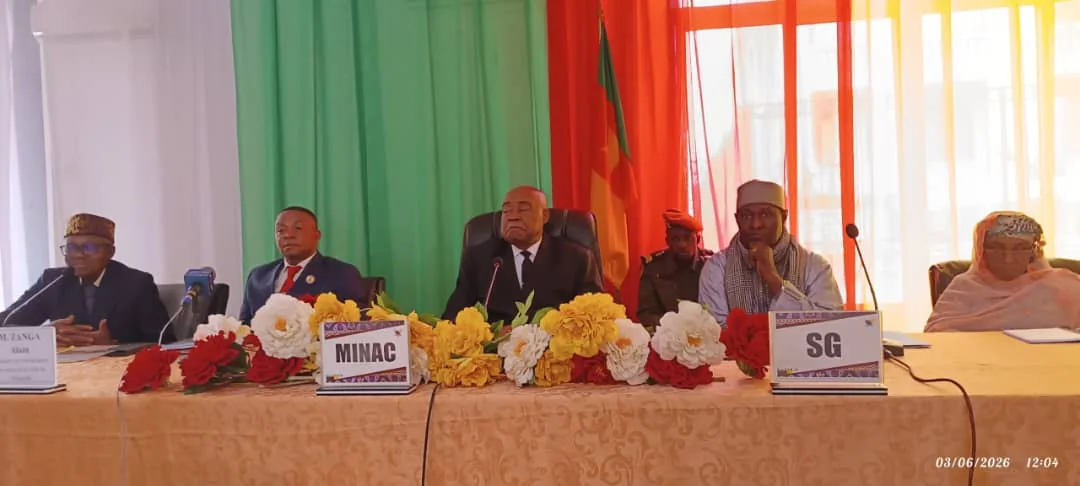
Ministry panel table during a working meeting

A collective management society belongs to its members. Taking part in its democratic life is therefore the best way to defend your rights. Three tools are available to you.

The general assembly

It approves the accounts, elects the officers and sets the main directions. Ask for the notice of meeting, the financial report and the draft resolutions, and vote or give a proxy.

Documents to request

  • the statutes and the distribution rules;
  • the annual report and the balance sheet;
  • the detail of management fees, measured against the cap set by law;
  • the individual statement of works and sums distributed.

Remedies

A member who considers that their rights have been disregarded first approaches their society, then mediation, the supervisory commission, and finally the judge: see the litigation page. The sessions of the copyright training explain how to read a distribution statement.

Step by step

From creation to remuneration

Creating

Your work or performance is protected from the moment it exists, without any formality.

Register

Register the work with the Ministry to date the creation and obtain a numbered receipt.

Choose the society

Identify the one for your field: music, audiovisual, literature, visual arts or neighbouring rights.

Join

Sign the membership agreement and declare your works to the society’s repertoire.

Let it manage

The society authorises uses, collects fees and monitors broadcasts.

Get paid

You receive the distribution with a detailed statement, after deduction of management fees.

Journey

Setting up the collective management system

December 2000The law sets the principle

Law No. 2000/011 allows rights holders to create collective management organisations and sets out their main rules.

Following yearsThe societies are formed

Each field of creation has its own society: music, audiovisual, literature, visual arts, neighbouring rights.

25 September 2015Implementing decrees

The decrees set the terms of application of the law and organise the Arbitration Commission.

29 September 2015The CCOGC is organised

The Prime Minister’s order defines the composition, term of office and permanent secretariat of the supervisory commission.

TodayRegular supervision

The societies report to their members and to the commission, and continue to raise users’ awareness.

To explore

Collective management on other pages

Feedback from the field

Those who receive their rights

“
Since I joined, I receive a detailed statement of my broadcasts; for the first time, I know where my songs go.
A composer
Douala
“
As a hotel manager, I signed an annual authorisation: my guests listen to music perfectly legally and my budget is predictable.
A hotelier
Kribi
“
Our troupe has learned to submit the exact programme of its shows; the distribution among authors has become fairer.
A theatre company director
Yaoundé
“
My work was resold twice in a gallery: the resale right was paid to me, which convinced me to join the society.
A sculptor
Foumban

“A management society is not a counter: it is the collective voice of those who create, and each of its members is responsible for it.”

A director of a collective management society
To download

Collective management documents

To act

Collective management procedures

Declare your works

Obtain a dated receipt before joining the society for your field.

Deposit a work

Contact the service

Ask your questions about membership, distribution or supervision of the societies.

Write to the service

Consult the rate schedules

Calculate the fees due before organising a concert or a broadcast.

See the rate schedules

Training

Learn how to read a distribution statement and take part in a general assembly.

See the training
Glossary

Collective management glossary

Collective management

Collection and distribution of rights by an approved society on behalf of its members.

Approval

Official authorisation granted to an organisation to carry out collective management.

Levy

Sum due by the user of a work or a recording.

Distribution of royalties

Distribution of the sums collected among rights holders, according to the uses made.

Repertoire

All the works whose rights the society manages.

Membership agreement

Membership contract that gives the society a mandate to manage the rights.

Management fees

Share of revenue retained by the society for its operation.

Neighbouring rights

Rights of performers, producers and broadcasting organisations.

Private copying

Copy for personal use, which gives rise to a collected remuneration.

Resale right

The percentage of the resale price of a plastic work paid to the artist.

Arbitration

Procedure by which a commission definitively settles a disagreement.

On the site

Continue with copyright

Resources

Useful links on collective management

Stakeholders

Who oversees collective management?

Key facts

Who manages what, and for whom?

AcronymSocietyFieldMain members
SONACAMNational Cameroonian Society of Musical ArtMusicComposers, lyricists, music publishers
SCAAPCivil Society of Audiovisual and Photographic ArtsAudiovisual and photographyDirectors, screenwriters, photographers
SOCILADRACivil Society for the Rights of Literature and Dramatic ArtsLiterature and dramatic artsWriters, playwrights, translators
SOCADAPCameroonian Copyright Society for Visual and Graphic ArtsVisual and graphic artsPainters, sculptors, graphic designers
SCDVCameroonian Society for Neighbouring RightsNeighbouring rightsPerformers, producers, broadcasters
CCOGCCommission for the Supervision of Collective Management OrganisationsSupervision of societiesAdministrations represented
Arbitration CommissionPlaced under the Minister responsible for cultureDisagreements over the use of phonogramsMagistrate and State representatives
Questions

Managing your rights: your questions

Which society should I choose?

The one for your field: SONACAM for music, SCAAP for audiovisual and photography, SOCILADRA for literature and dramatic arts, SOCADAP for visual and graphic arts, SCDV for neighbouring rights. A multidisciplinary artist may belong to several societies.

Is membership compulsory?

It is not a condition of protection, which arises from creation, but it is necessary for your society to manage and collect your rights. Without membership, you must negotiate and monitor each use of your works yourself.

Who oversees the societies?

The Supervisory Commission for Collective Management Organisations, organised by the order of 29 September 2015. It is chaired by a State Inspector and includes representatives of the ministries responsible for culture, justice, territorial administration and finance.

What share do the societies keep?

Their operating costs are capped at 20% of revenue, the remainder being reserved for distributions. The cap is 35% during the first three full financial years following approval for collective management.

How can I challenge a distribution?

First ask your society for the detail of the calculation. If the disagreement persists, try mediation, refer the matter to the supervisory commission or, as a last resort, to the competent court. Keep statements, contracts and broadcast programmes to support your claim.

Must a show organiser pay?

Yes: any public use of protected works requires the authorisation of the competent society and payment of the fee set out in the tariff. The organiser provides the exact programme of works performed so that the distribution is correct.

A disagreement over the use of phonograms: what should I do?

The Arbitration Commission, placed under the Minister responsible for culture, rules definitively on disagreements between collective management organisations and persons who use phonograms. It is chaired by a magistrate of the judiciary.

How do I create a new society?

The complete file is submitted to the Ministry against a receipt, with a copy to the supervisory commission, which examines it and gives its opinion. The statutes, human resources and planned activities must be included.

Where can I find the contact details of the societies?

Write to the copyright service using the contact form or call +237 6 51 70 58 41; the team will direct you to the society for your field and tell you which documents to prepare for membership.

Question

A question about collective management?

Indicate your field of creation.

Copyright

Contact the Ministry

Address

Directorate of Legal Affairs
Ministry of Arts and Culture
Quartier du Lac – Ministerial Zone
P.O. Box 1053 Yaoundé, Centre Region, Cameroon

Reach us

+237 6 51 70 58 41

contact@minac.gov.cm

Opening hours

Monday to Friday, 8 am to 4 pm

A work to register?

Date your creation at the One-Stop Shop before joining the society for your field.

Deposit a work
WhatsApp