Coat of arms of CameroonMinistry of Arts
and Culture
Republic of Cameroon
My procedures
Home
Minister’s message
News
Press releases
Cultural calendar
Official speeches
Press review
Photo library
Video library
Calls for projects
Job vacancies
Public procurement
Newsletter
Frequently asked questions
Site map
Contact
Press area
Podcast “The Voice of Culture”
Legal notices
Privacy policy
Cookies and trackers
The Ministry
Missions and responsibilities
Organisation
Organisation chart
Minister’s Office (Cabinet)
Management team
General Secretariat
General Inspectorate
Central directorates
Regional Delegations
Institutions under supervision
Legislative texts
Regulatory texts
Sector strategy
Major projects
Budget and reports
Partners
Careers
Archives
Institutional communication
Quality and accessibility
Arts
Visual and plastic arts
Visual arts
Performing arts
Theatre
Dance
Music
Literature and books
Cinema and audiovisual
Photography
Fashion and design
Digital arts
Art crafts
Artists’ directory
Residencies
Prizes and awards
Arts education
Urban arts
Heritage
Tangible heritage
Intangible heritage
UNESCO sites
National museums
Listed monuments
National inventory
Palaces and chiefdoms
Archaeology
Linguistic heritage
Oral traditions
Traditional know-how
Restitution of cultural property
Fight against illicit trafficking
Listing and protection
Conservation and restoration
Heritage Days
Cultural landscapes
Industries
Music and recording
Cinema
Publishing and books
Digital arts
Fashion and creativity
Crafts
Cultural tourism
Funding for culture
Support funds
Incubators
Cultural entrepreneurship
Culture Observatory
Vocational training
Studies and reports
Sector statistics
Export and outreach
Intellectual property
Copyright
Legal framework
Copyright and neighbouring rights
Collective management societies
Register a work
Licences
Private copying
Fight against piracy
Model contracts
Social status of artists
Mediation
Disputes
Training
Fee scales
Register of works
Contact
Digital neighbouring rights
Public domain
Festivals
National calendar
Ngondo
Nguon
Écrans Noirs
Heritage Days
Music Day
Regional festivals
Fairs and exhibitions
Biennials
National competitions
Cultural days
Organise a festival
Event grants
Ticketing
Archives
Volunteering
Diaspora festivals
Regions
Adamawa
Centre
East
Far North
Littoral
North
North-West
West
South
South-West
Cultural map
Regional Delegations
Traditional chiefdoms
National languages
Cultural routes
Decentralised cooperation
Regional observatory
Cooperation
UNESCO
Francophonie (OIF)
African Union
Commonwealth
CEMAC
Bilateral cooperation
Cultural agreements
Professional organisations
Scholarships
Artist exchanges
Cultural years
Diaspora
Funded projects
Embassies
Technical partners
International restitution
International monitoring and calls
Services
Artist card
Show authorisation
Filming authorisation
Festival authorisation
Deposit of a work
Export of works of art
Listing of a property
Grant application
Association accreditation
File tracking
Forms
Fees
Opening hours and addresses
Reporting
Online help
My account
One-Stop Shop
Heritage

Tangible heritage

Monuments, sites, objects and collections: everything about the cultural property that can be seen or touched in Cameroon, its legal regime, its conservation and the procedures to protect it.

Updated on 6 November 20264 sub-pages
Reference law2013/003
Protection classes3
Regions concerned10
Categories of tangible property2
Cultural property

What can be seen and touched

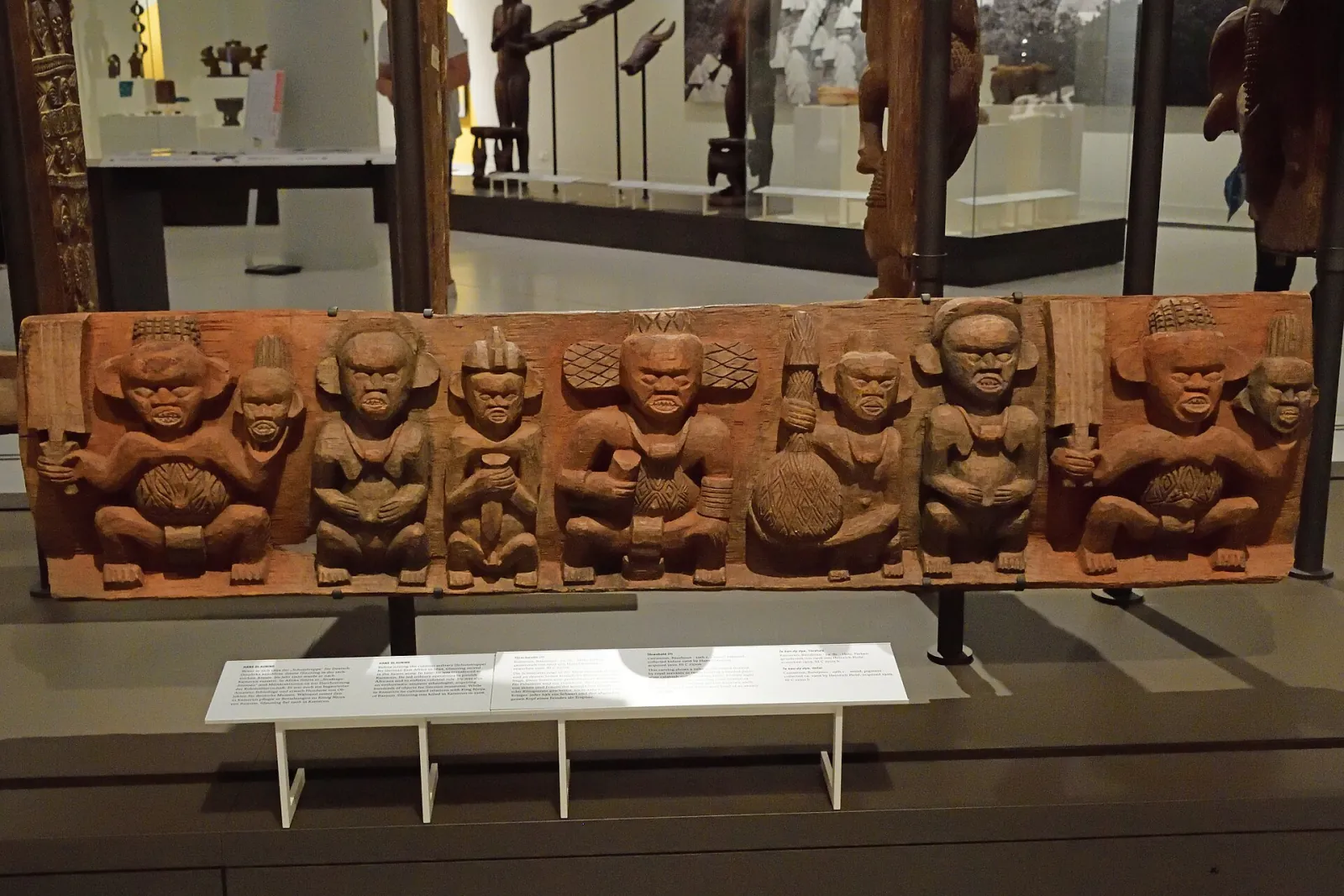
Wooden threshold lintel carved with a row of seated figures, in a museum display

Law No. 2013/003 of 18 April 2013 governs cultural heritage in Cameroon: knowledge, conservation, protection, enhancement, promotion and transmission. It distinguishes tangible heritage, which can be seen or touched, from intangible heritage, carried by the practices and knowledge of communities.

A tangible cultural property is either a movable object, which can be moved without damage, or a fixed immovable: monument, building, ruin, site or landscape. This page presents the country’s monuments, sites, objects and collections, their legal regime, the trades that maintain them and the procedures to know.

  • Movable and immovable property, owned by the State or by private individuals
  • Monuments, sites, objects and collections
  • Inventory, listing and protection of each property
Explore the monuments
Monuments

The monuments of Cameroon

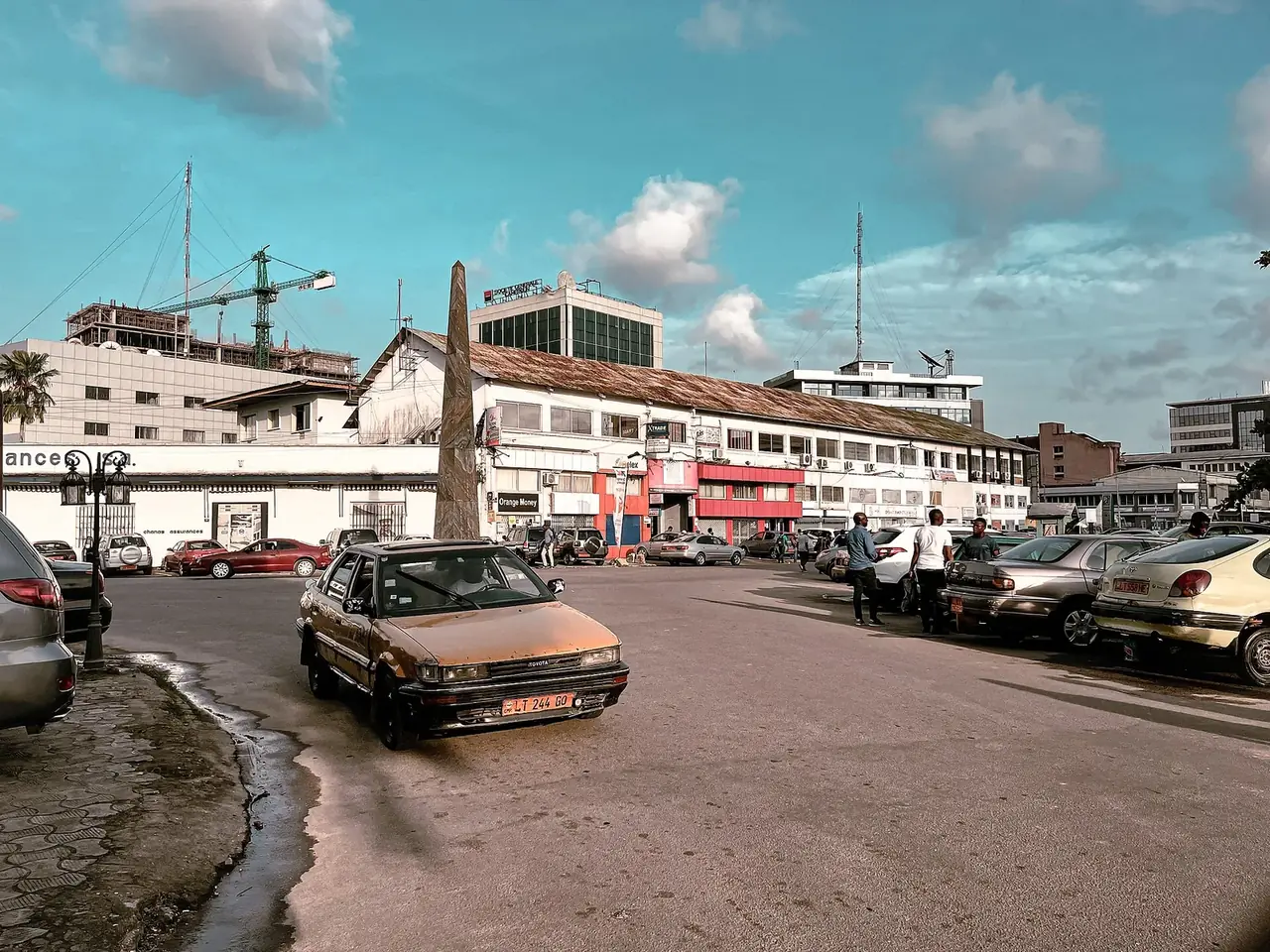
Bonanjo monument in Douala

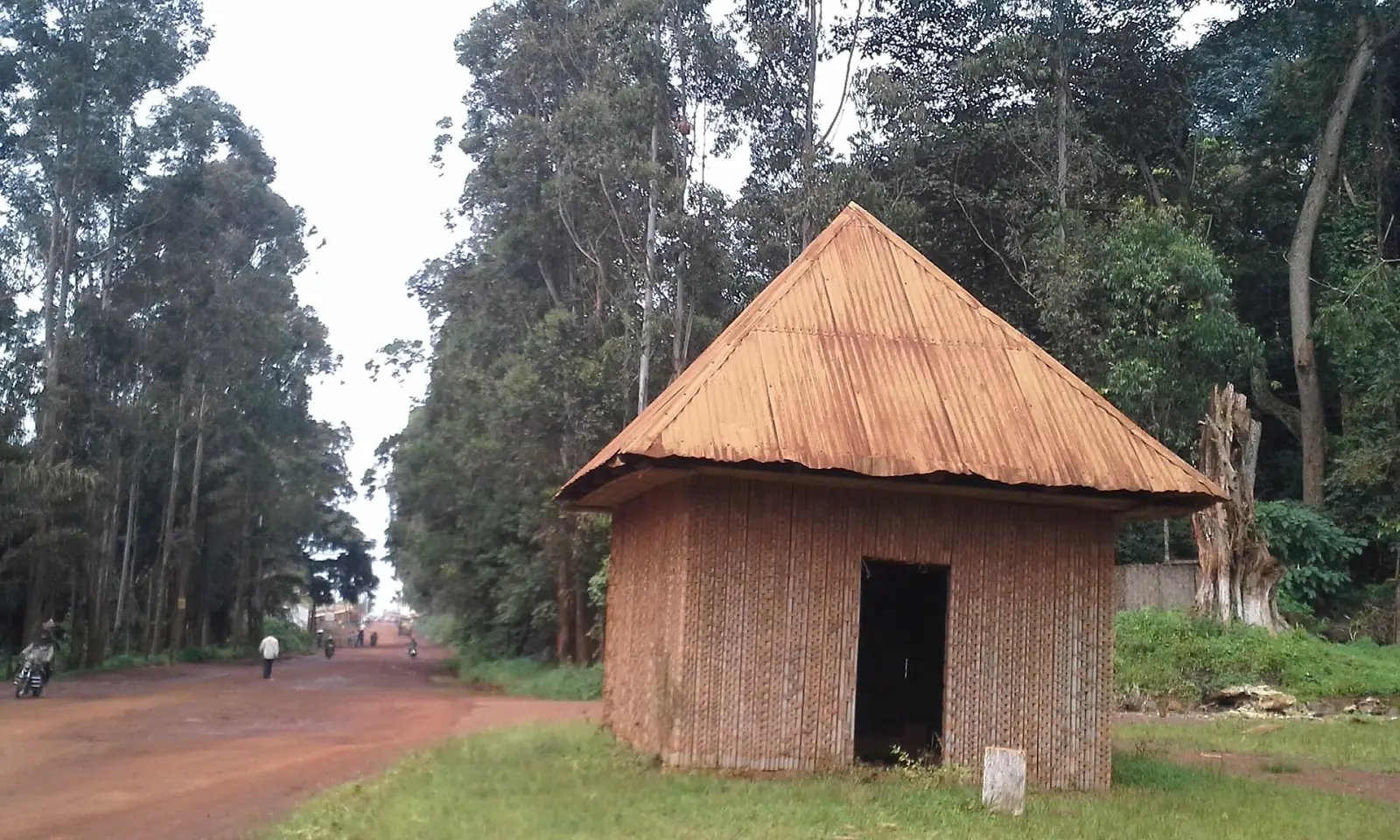
Within the meaning of the law, a heritage monument is a fixed architectural work, a cave (including inscriptions), or a commemorative sculpture or painting that has heritage value. The country has them from every period: earth-and-fibre architecture of the Grassfields, multi-storey huts of the Far North, lamibé residences of the Grand Nord, colonial buildings of the coast, old mosques, missionary churches, and commemorative statues and steles in towns.

Families of monuments

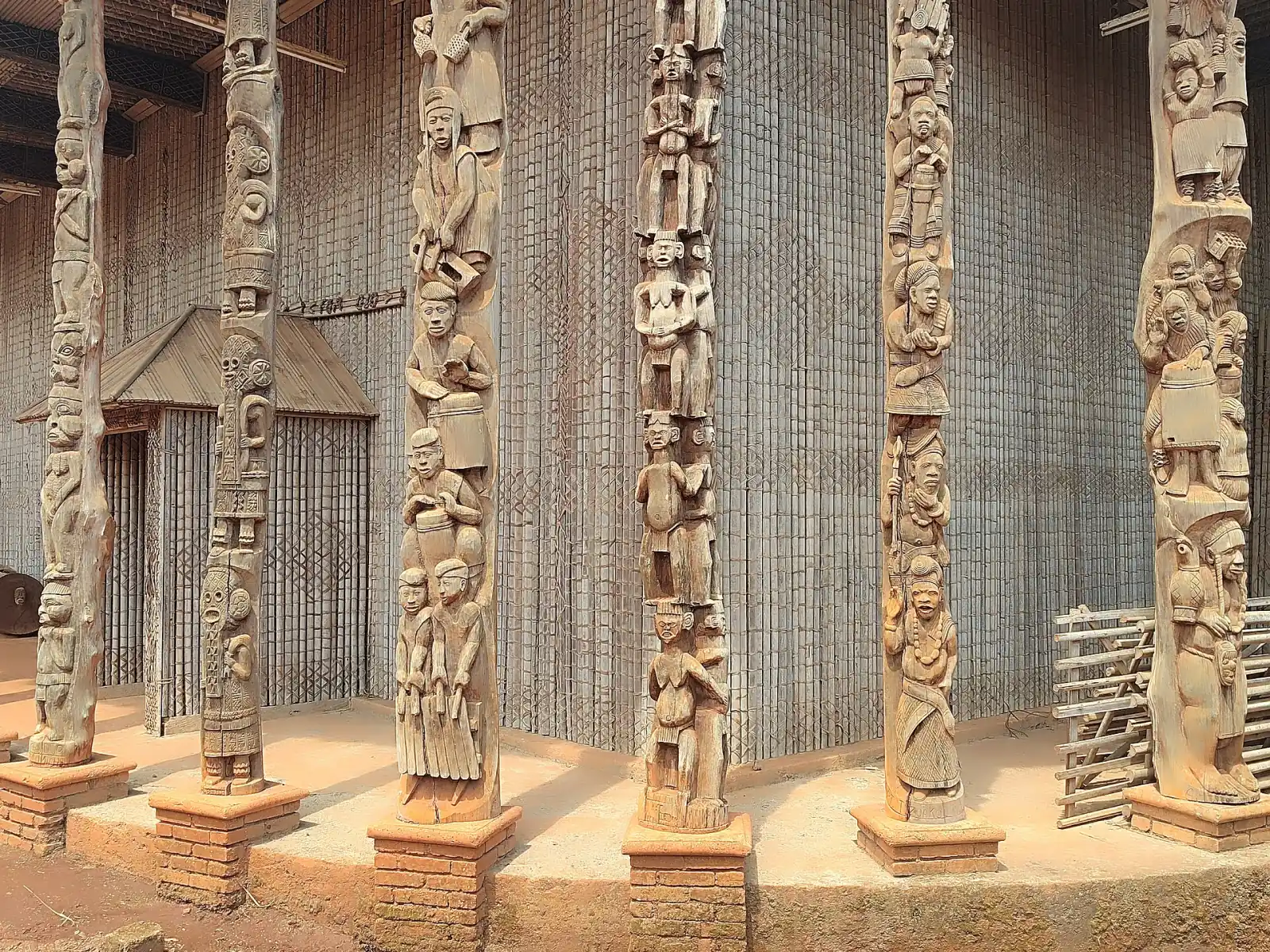
  • Chiefdom architecture: meeting huts, carved portals, throne rooms and palace enclosures, described on the palaces and chiefdoms page;
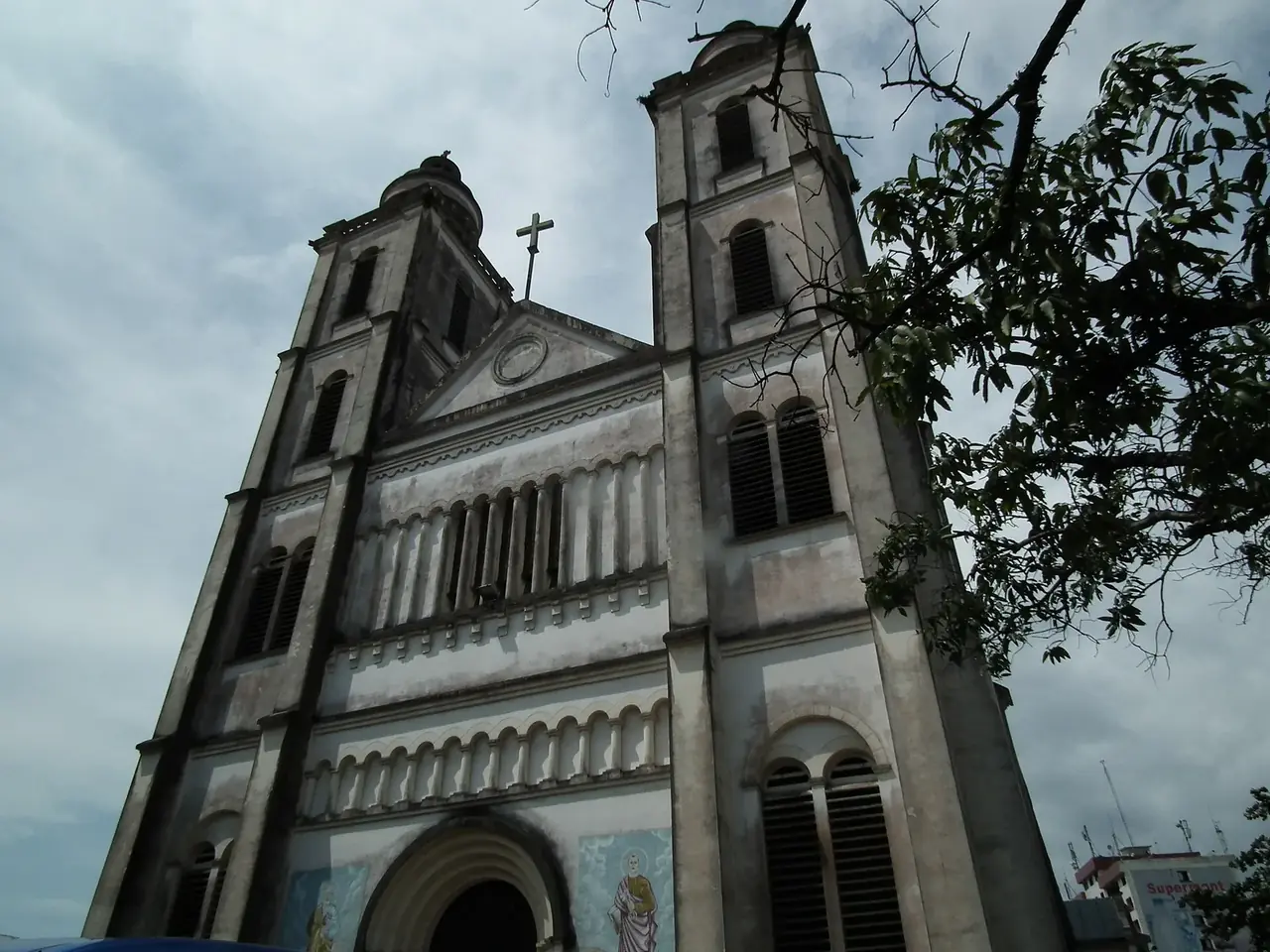
  • Religious buildings: brick mosques, twentieth-century churches and cathedrals, traditional places of worship;
  • Administrative and industrial buildings: railway stations, bridges, lighthouses, post offices and former trading posts on the coast;
  • Commemorative monuments: war memorials, reunification steles, independence squares.

What gives a monument its value

The law speaks of heritage value: a set of historical, artistic, technical, spiritual, social or educational qualities that make a property memorable for a community, a region or the country. A modest monument that is dear to a whole neighbourhood can thus be as precious as a monumental building. The official list is presented on the listed monuments page, and the protection rules on listing and protection.

ℹ️
Owner of a monument?

Does your building have historical or architectural interest? Report it to the regional delegation: it initiates the recognition or listing process.

Sites

Heritage sites: places, ruins and landscapes

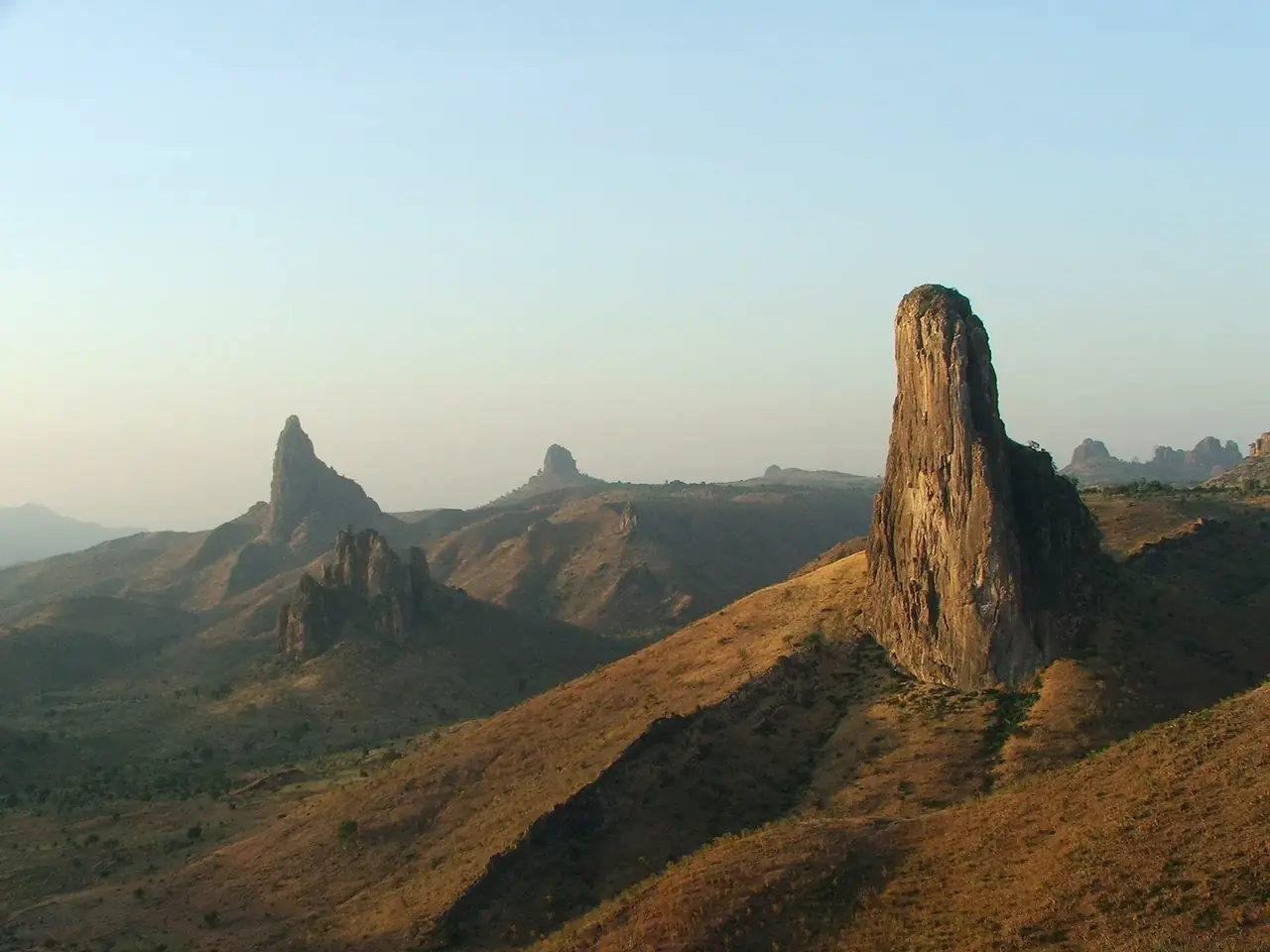
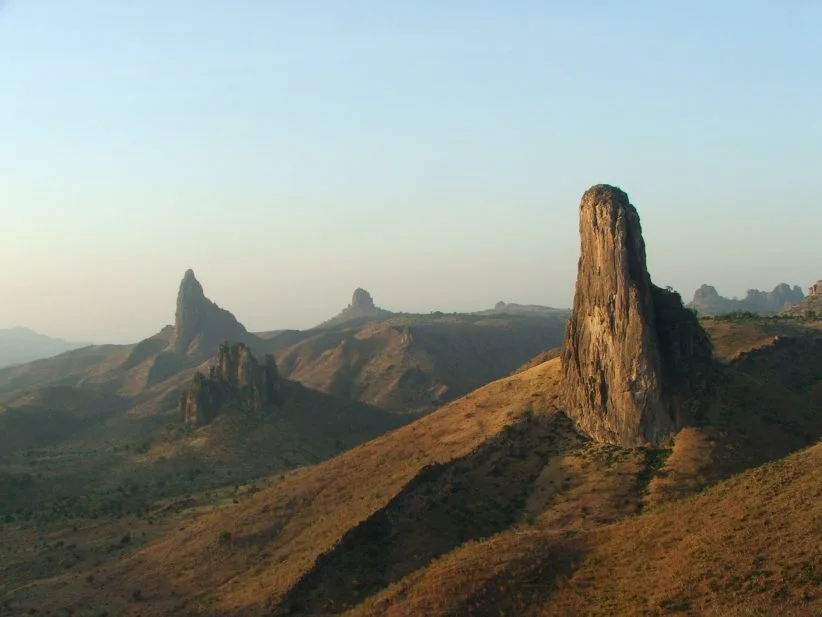
Rhumsiki peak in the Mandara Mountains

A heritage or cultural site is a place, territory or area that constitutes a cultural property or houses a group of cultural properties. The law includes archaeological sites, rock art sites, rare palaeontological and mineralogical deposits, caves, sacred forests and groves, ruins and terrestrial or marine cultural landscapes.

Sites of every type

In the Mokolo plain as in the cliffs of Bamenda, rock shelters preserve ancient paintings. Excavations on the Sanaga and Haute-Sanaga have revealed settlement and early metallurgy sites, presented on the archaeology page. In the West, earthen ramparts and former defensive layouts of chiefdoms bear witness to a military and political history. On the coast, ruins of trading posts and wrecks recall Atlantic trade.

Cultural landscapes

A cultural landscape arises from the meeting of nature and human labour: cultivated terraces of the Mandara Mountains, sacred groves of the West, palm groves of Adamaoua. They receive particular attention, detailed on the cultural landscapes page, and some appear on the World Heritage List: see the UNESCO sites.

Visit without causing damage

  • Stay on marked paths and respect local prohibitions;
  • Do not remove or move anything: a potsherd out of context loses its scientific value; instead, plan your route with the cultural itineraries;
  • Report any discovery or damage using the reporting form;
  • Ask the site’s guardians for permission before taking any photograph in a place of worship.
ℹ️
Chance finds

A discovery made during works or ploughing must be declared without delay to the authorities: under the law, it belongs to the State.

Objects

Movable heritage objects

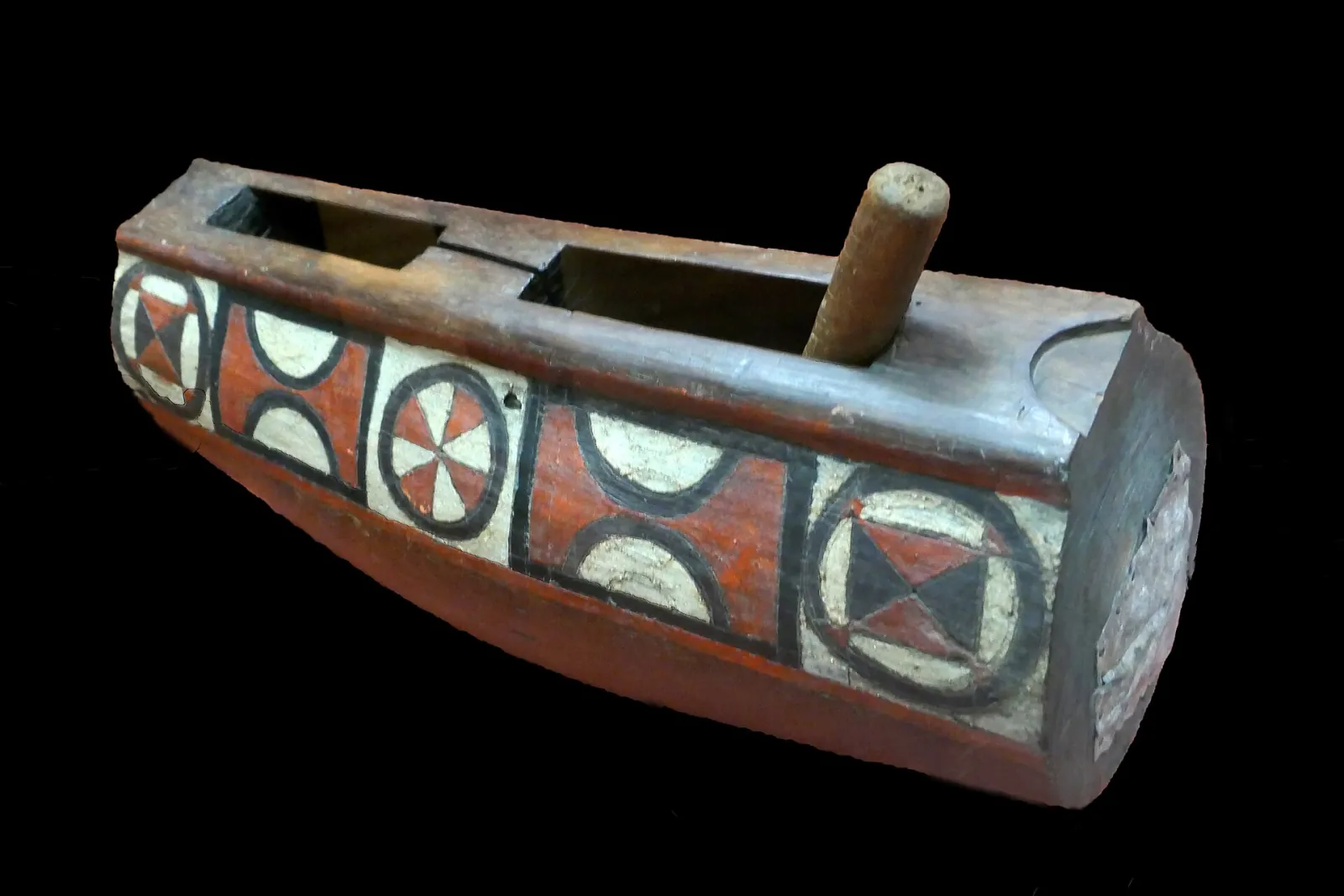
Slit drum painted with red and white geometric patterns, on a black background

A heritage object is a movable property other than a document, including movable archaeological property, that has heritage value: artwork, musical instrument, furnishings, artefact. Heritage documents (archives, books, photographs, sound recordings, films) form the other branch of movable property.

A great variety of objects

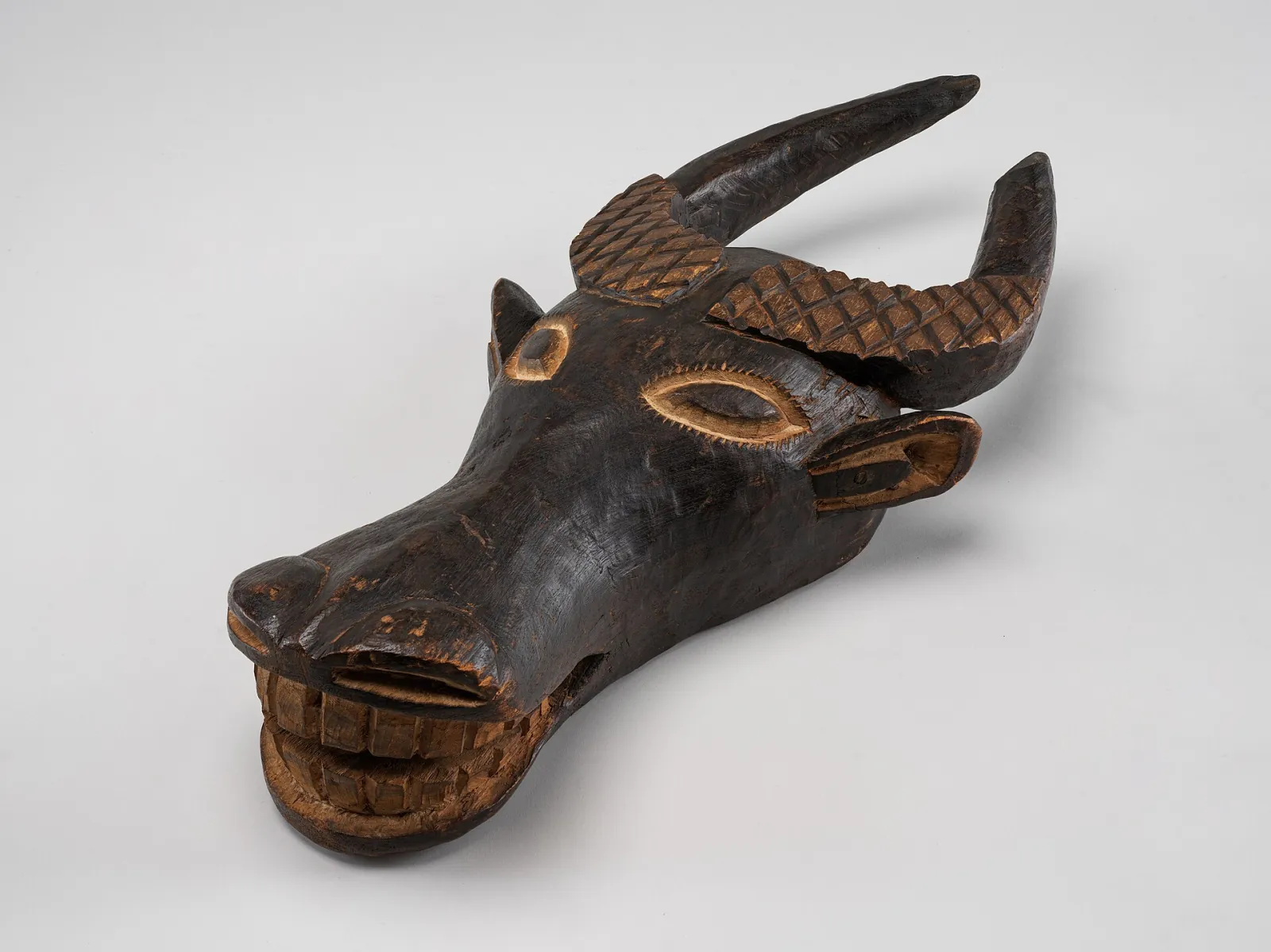
  • Sculptures and masks: fertility statues, secret society masks, thrones and court stools, chiefdom pipes;
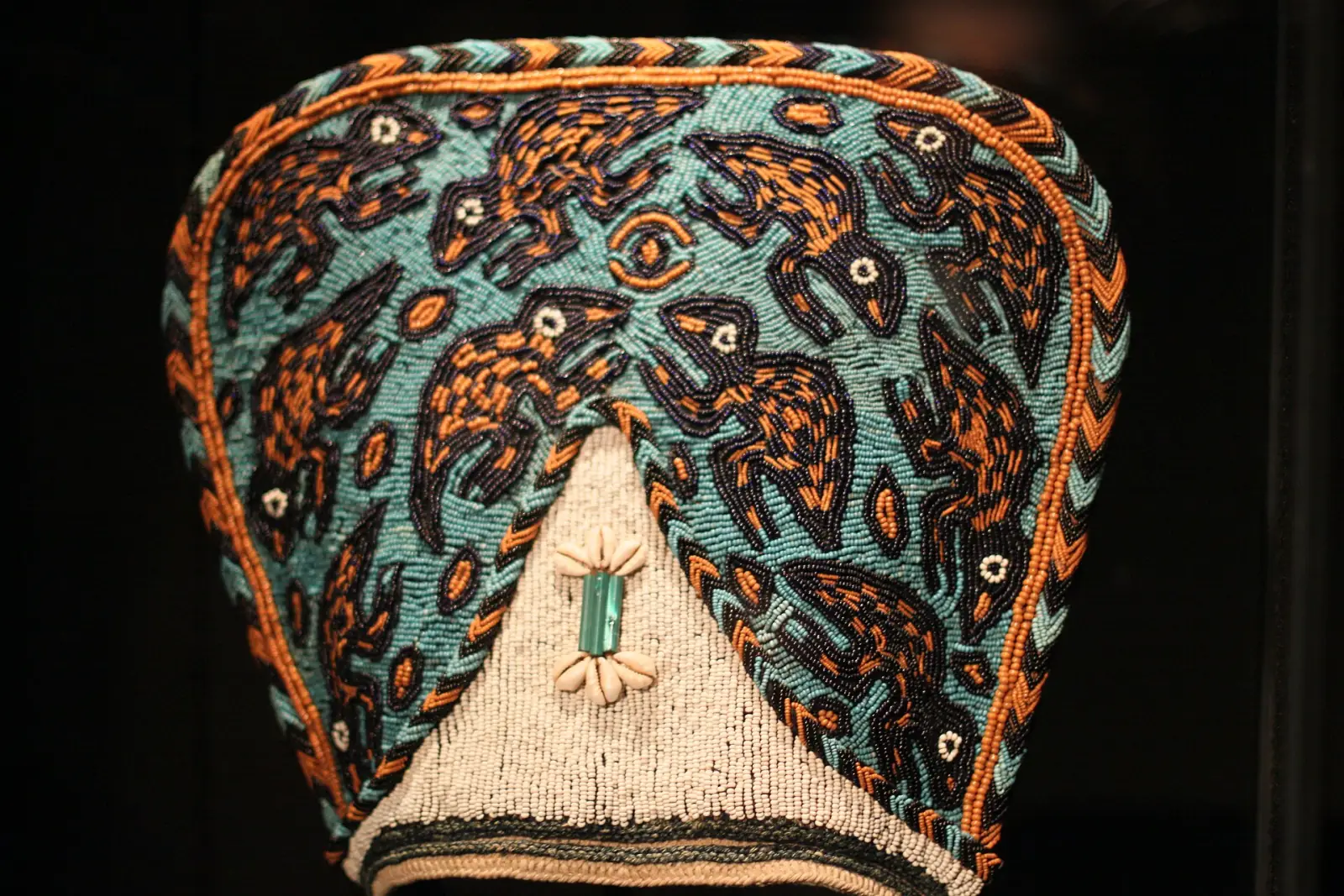
  • Adornments and textiles: beads, cowries, bronze bracelets, ndop fabrics, embroidered garments, headdresses;
  • Instruments: slit drums, balafons, horns, harp-lutes, trumpets;
  • Tools and weapons: forges, hoes, spears, shields, measuring weights, traditional currencies;
  • Everyday and ritual objects: pottery, decorated calabashes, divination objects, pharmacopoeia.

Protection regimes

The law divides cultural property into three protection classes, A, B and C, according to their vulnerability and rarity. Class A properties are fully protected: they cannot be sold or exported, and their study or reproduction requires special authorisation from the Minister. Class B properties may be exhibited or exported temporarily after authorisation. Class C comes under partial protection, governed by regulation.

Any removal of an old object from the territory requires prior procedure: see the export of artworks. Trafficking is punished, as explained on the page on the fight against illicit trafficking, and requests for the return of objects are dealt with in restitution of cultural property.

Collections

Public and private collections

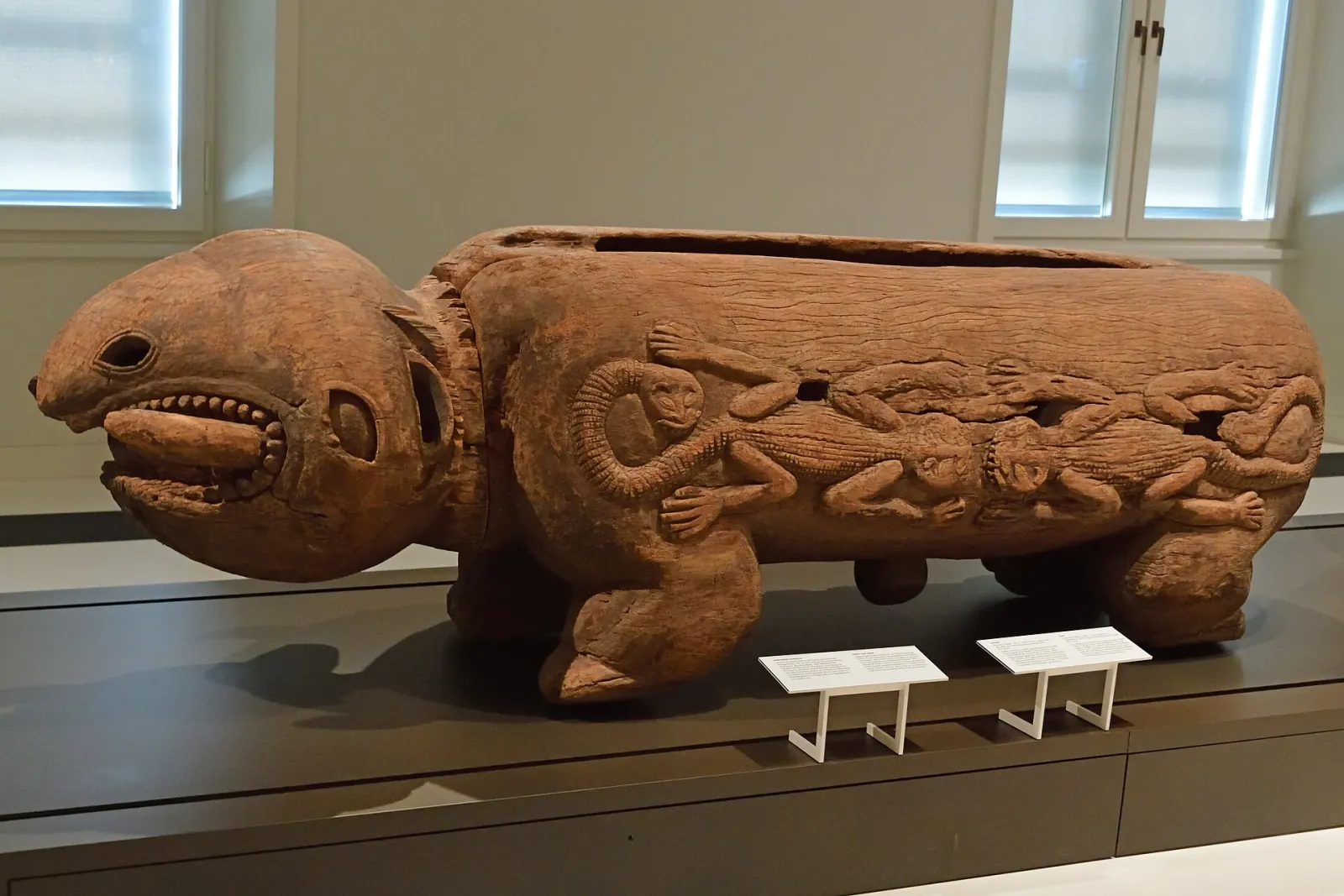
Large trough drum shaped like an animal and carved with figures, displayed in a museum

A collection brings together cultural property gathered according to a scientific, historical or aesthetic criterion. It may belong to the State, a local authority, an institution, a family or an individual: the law recognises everyone’s ownership of their property, while allowing the State to establish public-interest easements, such as the authorities’ right of inspection or occasional opening to the public.

The main categories of collections

  • Museum collections: ethnography, art, history, archaeology, natural sciences, presented in the national museums;
  • Archive and library holdings: manuscripts, old photographs, recordings of music and stories;
  • Chiefdom collections: regalia, thrones, adornments and ritual objects kept in the palaces;
  • Family and enthusiast collections: textiles, instruments, coins, postcards.

Documenting a collection

State museums come under the institutions under supervision; the oral knowledge that accompanies the objects is gathered with the oral traditions. Each piece receives an inventory number, a descriptive sheet (origin, materials, dimensions, condition, history), photographs and, where possible, a recording of the associated uses. Private owners may have their collection entered in the national inventory without losing ownership; in return they receive conservation advice and official recognition.

ℹ️
Loans and exhibitions

A piece may be lent to a museum for a temporary exhibition under an agreement specifying insurance, transport and the duration of the loan.

Law

Ownership, inventory and listing of tangible property

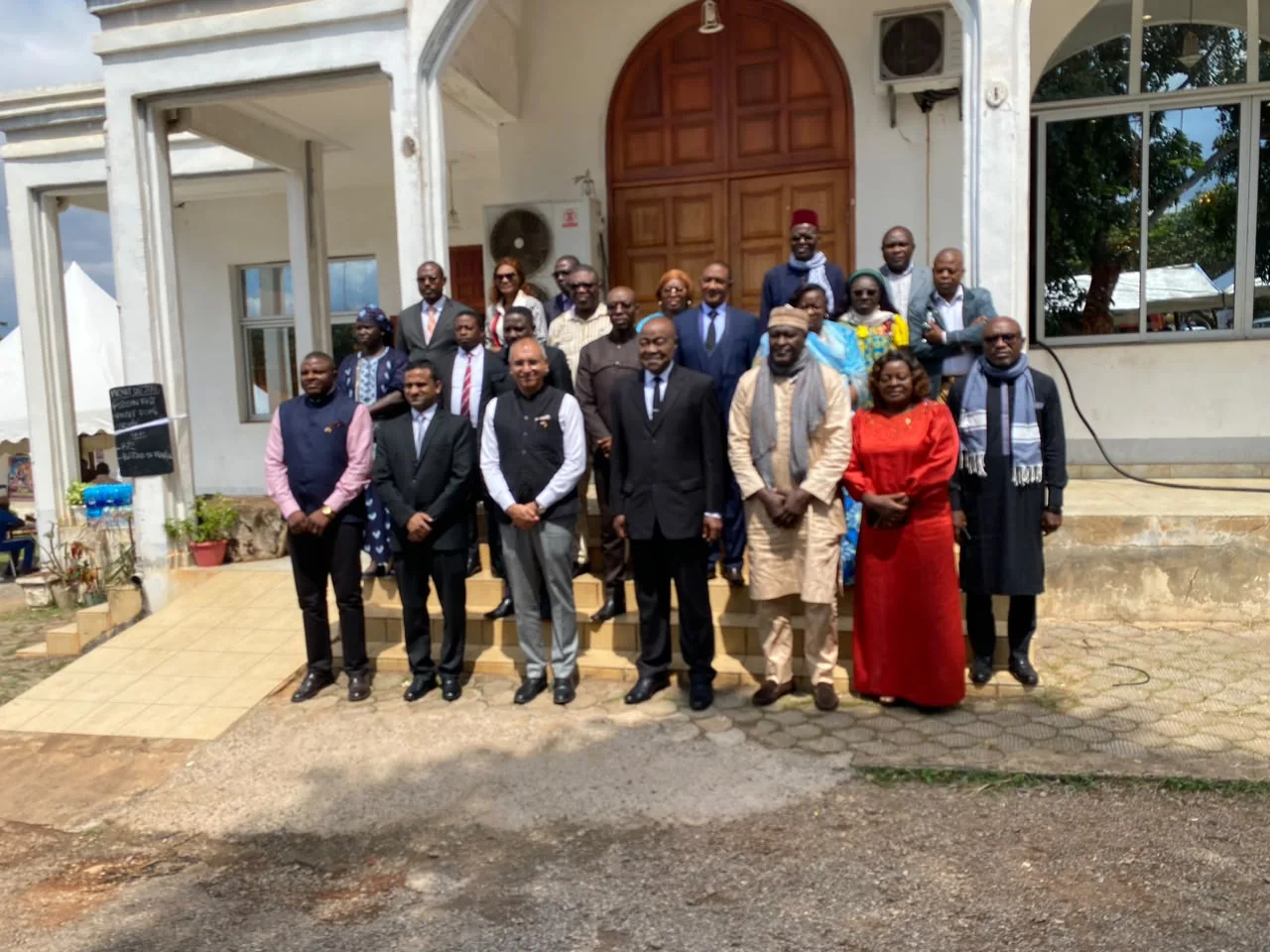
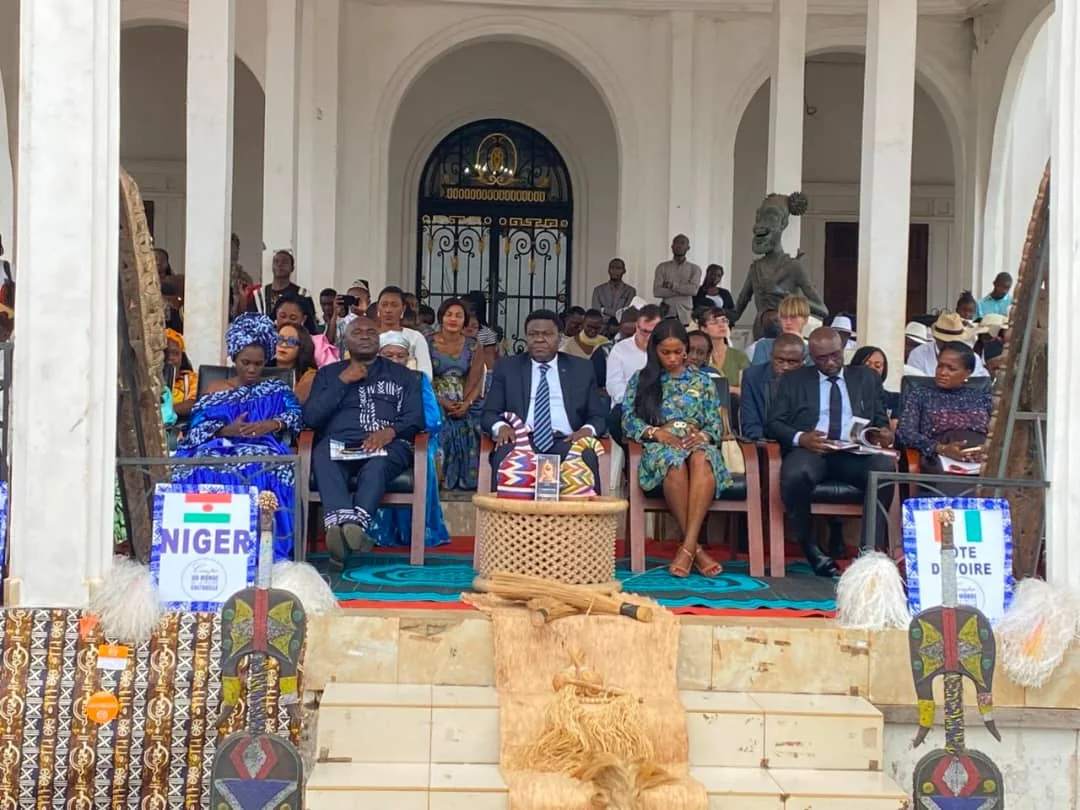
Group of guests in front of the Ministry steps

The law of 18 April 2013 sets out a simple principle: all heritage property is subject to inventory, recognition and/or listing. Cultural property belongs either to the State and public authorities, or to private individuals, natural persons or legal entities under private law, whether Cameroonian, foreign or stateless and resident in the territory.

Who owns a property?

The following belong to the State: property created on the initiative of an administration, property discovered in the soil, subsoil or waters during excavations, and property received free of charge or lawfully acquired. The following belong to private individuals: property resulting from their individual or collective genius, and property lawfully received, exchanged or purchased.

Three acts to distinguish

  • The inventory: a permanent act of sovereignty that records, studies and publicises the elements of heritage;
  • Recognition: legal acceptance of the existence of a cultural property;
  • Listing: the process by which the State grants heritage value to a property. It may be followed by delisting, which removes that value.

A register kept at the Ministry records all the elements inventoried, recognised or listed. To request the listing of a property, use the online procedure listing of a property; the texts can be consulted on the legislative texts page.

Conservation

Conserving and restoring tangible property

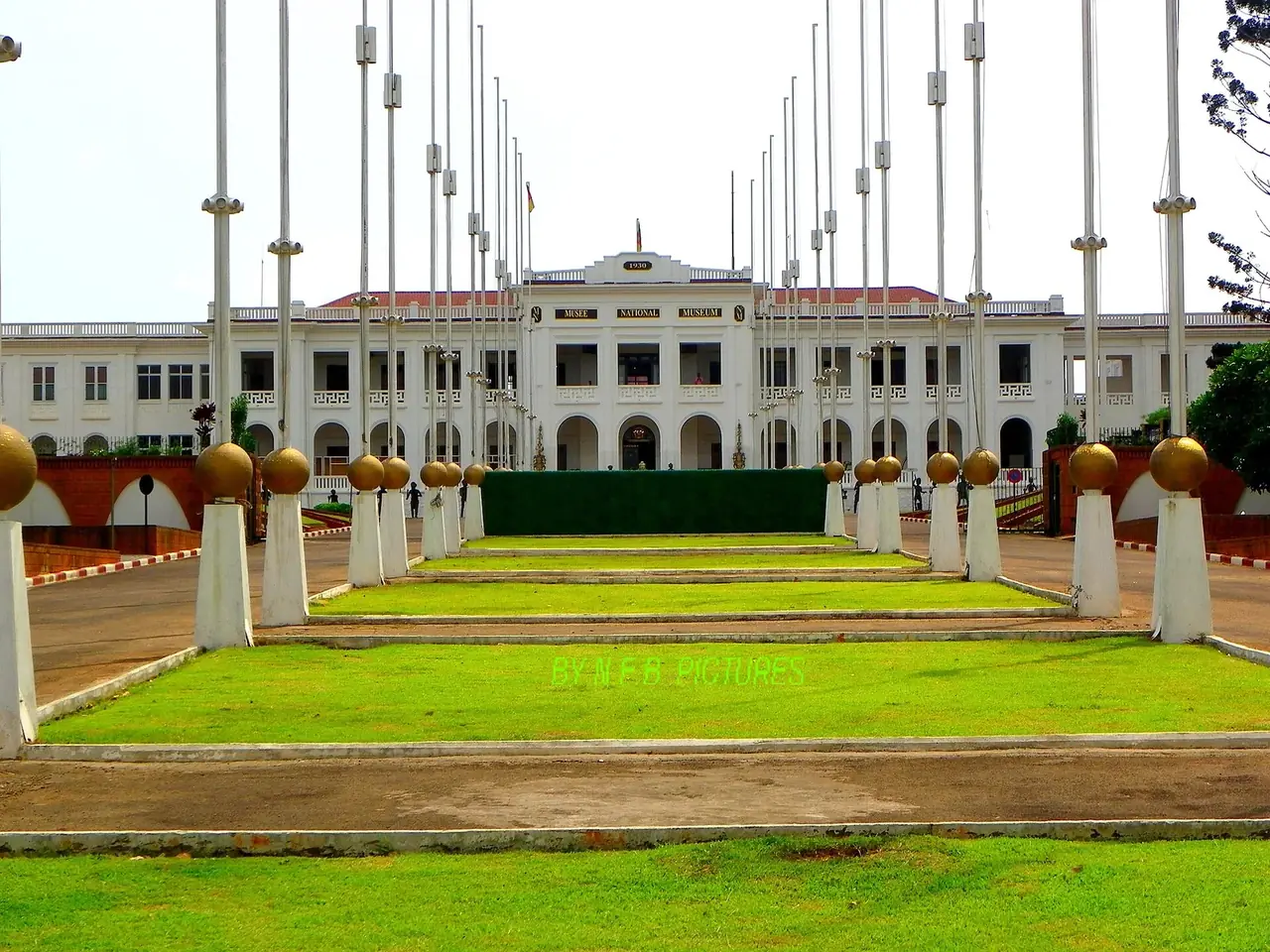
Façade of the National Museum in Yaoundé

The law distinguishes preventive conservation, which creates the optimal conditions to preserve a property from deterioration due to nature or human action, from restoration, or curative conservation, which removes later additions and replaces them with better materials to recover the original state without harming the property’s integrity.

Preventive conservation measures

  • Control humidity, temperature and light in storage rooms;
  • Combat wood-boring insects and mould through regular inspections;
  • Handle objects with gloves, on suitable supports;
  • Prevent fire and theft with alarms and exit registers.

Conservation trades

Curators, wood, textile and metal restorers, collection managers, documentation photographers, site technicians: these professionals train in Cameroon and abroad, notably through training for cultural professions. For buildings, restoration masons master the raw earth, thatch and wood techniques that give traditional architecture its strength.

Each year, the heritage days open the worksites to the public, and cooperation with UNESCO supports safeguarding projects. Well-maintained sites also feed cultural tourism; works funding is relayed by calls for projects. The worksites and protocols are detailed on the conservation and restoration page.

Step by step

Having a tangible cultural property recognised

Identify the property

Describe the property, its location, its owner and its condition. A few dated photographs and a sketch are enough to open a file.

Gather the evidence

Collect testimonies, archive documents, plans, title deeds and agreements from custodians; the history of the property strengthens its heritage value.

Refer to the delegation

Submit the file to the regional delegation, which checks its admissibility and plans an on-site visit with a heritage officer.

Obtain inventory registration

After examination, the property is entered in the cultural heritage register, which entitles it to conservation advice.

Request listing

If the property is rare or threatened, a listing request is processed, with determination of its protection class A, B or C.

Monitor and maintain

The owner complies with conservation requirements, reports any works and welcomes inspection visits.

Journey

The history of the protection of tangible property

Ancient timesProtection by custom

Palaces, sacred groves and ritual objects are protected by prohibitions, guardians and rules passed down in families.

Early twentieth centuryFirst inventories

Administrations and missions describe and collect objects; several collections left the country at this time.

1960sBirth of institutions

The first heritage services and public museums are created after independence to preserve the national collections.

2013The cultural heritage law

The law of 18 April 2013 defines cultural property, its ownership, management and listing, and the applicable penalties.

TodayContinuous inventory

Regional delegations record properties with communities, digitise the sheets and monitor restoration works.

To explore

Tangible heritage in the section

Voices from the field

Those who guard the properties

“
Our meeting hut has been entered in the inventory; since then, masons from the region have come to teach us how to renew the roofing in the traditional way.
A chiefdom notable
West
“
Each object in the storeroom has its record, its photograph and its location. When a school visit arrives, everything is ready to tell its story.
A collections manager
Yaoundé
“
I have been collecting old textiles for thirty years; registration in the inventory gave me advice on how to protect them from damp.
A private collector
Douala
“
When a villager found shards in his field, he alerted the delegation: we were able to protect the site before the works began.
A regional delegation official
East

“A tangible heritage property is a book of stone, wood or earth: each generation has a duty to read it, maintain it and pass it on.”

A heritage curator
To download

Forms for tangible heritage

To act

Procedures for tangible heritage

List a property

Submit an online application for the listing of a monument, site or object that belongs to you or is dear to you.

Request listing

Export a work

Before any ancient work leaves the national territory, authorisation is compulsory; submit your application in advance.

See the procedure

Report damage

Looting, destruction, theft or suspicious sale: alert the Ministry’s services using the dedicated form.

Report
Glossary

Key terms of tangible heritage

Movable cultural property

Property that can be seen or touched, moved or transported without damage to itself or its environment.

Immovable cultural property

Property that can be seen or touched but cannot be moved: a monument, building, ruin, site or landscape.

Listing

Legal process by which the State grants heritage value to a cultural property.

Delisting

Legal process by which the State removes the heritage value of a listed property.

Inventory

Permanent sovereign operation that records, studies and publicises the elements of heritage.

Recognition

Acceptance, from a legal point of view, of the existence of a cultural property.

Preventive conservation

Set of actions creating the optimal conditions to protect a property from natural or human deterioration.

Restoration

Operation that removes later additions and reconstitutes the original state of an object without harming its integrity.

Heritage ruin

Construction or group of constructions almost completely deteriorated but possessing heritage value.

Cultural landscape

Territory with remarkable characteristics, resulting from the interaction between natural and human factors.

Promotion

Set of measures that increase the heritage value of a property without harming it.

On the site

Extend your visit to tangible heritage

Resources

Useful links for tangible heritage

Stakeholders

Who protects tangible heritage?

Key facts

Some tangible properties region by region

RegionType of propertyRepresentative propertyHeritage interest
Far NorthLandscape and habitatMulti-storey huts and terraces of the Mandara MountainsDry-stone and earth architecture
NorthLamidate residenceEarth-brick palace and audience courtyardsMemory of the Fulani lamidates
WestChiefdomCarved portals, meeting huts, throne roomsCourt art of the Grassfields
North-WestChiefdom palace and museumRegalia, masks and ndop fabricsRoyal collections
CentreArchaeological siteAncient settlements and metallurgy workshopsSettlement of the forest
SouthCave and shelterRock paintings and engravingsPrehistoric art
LittoralColonial and port buildingsWarehouses, lighthouses, quays, cathedralHistory of Atlantic trade
South-WestBuildings and wrecksOld residences, plantation remainsMemory of coastal exchanges
Questions

Your questions about tangible heritage

What is the difference between movable and immovable property?

Movable property can be moved or transported without damage: an object, instrument or document. Immovable property is fixed: a monument, building, ruin, deposit, site or cultural landscape. The protection regime and the procedures differ, but the inventory applies to both.

Will an old object that belongs to me be confiscated if I declare it?

No. The law recognises the ownership of private individuals over property resulting from their own creation, or received, exchanged or purchased lawfully. Registration in the inventory does not change the owner; it only allows you to benefit from advice and official recognition.

What happens if I discover remains in my field?

Stop the work, do not move anything and alert the regional delegation or the heritage service. Property discovered in the ground belongs to the State; a team will come to assess the site and decide on excavations.

Can an old work of art be exported?

Not without authorisation. Class A properties can never be exported; class B only temporarily, after authorisation from the Minister. Submit your application in advance through the dedicated online procedure, with photographs and proof of origin.

How do I have a monument listed?

The owner, a commune or an association sends a request to the competent directorate, with a description, photographs, history and plans. After a visit and examination, the property is listed and assigned a protection class A, B or C.

Who pays for the restoration of a listed property?

The owner remains responsible for routine maintenance. For major works, technical support and co-financing may be sought from the State, local authorities or partners. An estimate and a work programme must be validated before any works begin.

Can a class A property be photographed?

The reproduction and photography of class A property are in principle prohibited. Only partial reproductions, for study or publication, are possible with a special authorisation issued by the Minister in charge of cultural heritage.

What are the penalties for the destruction or trafficking of cultural property?

The law provides for criminal and administrative penalties against the damage, sale or illicit export of cultural property. The details are set out in the legislative texts; if in doubt, seek the Ministry’s advice before any operation.

Contact

Write to the Ministry: Tangible heritage

Specify the property or site concerned.

Competent directorate

Contact tangible heritage

Address

Directorate of Cultural Heritage
Ministry of Arts and Culture
Quartier du Lac – Ministerial Zone
P.O. Box 1053 Yaoundé, Centre Region, Cameroon

Reach us

+237 6 51 70 58 41

contact@minac.gov.cm

Opening hours

Monday to Friday, 8 am to 4 pm

A property to protect?

Report it or apply online for its listing: a heritage officer will contact you.

Request listing
WhatsApp