Coat of arms of CameroonMinistry of Arts
and Culture
Republic of Cameroon
My procedures
Home
Minister’s message
News
Press releases
Cultural calendar
Official speeches
Press review
Photo library
Video library
Calls for projects
Job vacancies
Public procurement
Newsletter
Frequently asked questions
Site map
Contact
Press area
Podcast “The Voice of Culture”
Legal notices
Privacy policy
Cookies and trackers
The Ministry
Missions and responsibilities
Organisation
Organisation chart
Minister’s Office (Cabinet)
Management team
General Secretariat
General Inspectorate
Central directorates
Regional Delegations
Institutions under supervision
Legislative texts
Regulatory texts
Sector strategy
Major projects
Budget and reports
Partners
Careers
Archives
Institutional communication
Quality and accessibility
Arts
Visual and plastic arts
Visual arts
Performing arts
Theatre
Dance
Music
Literature and books
Cinema and audiovisual
Photography
Fashion and design
Digital arts
Art crafts
Artists’ directory
Residencies
Prizes and awards
Arts education
Urban arts
Heritage
Tangible heritage
Intangible heritage
UNESCO sites
National museums
Listed monuments
National inventory
Palaces and chiefdoms
Archaeology
Linguistic heritage
Oral traditions
Traditional know-how
Restitution of cultural property
Fight against illicit trafficking
Listing and protection
Conservation and restoration
Heritage Days
Cultural landscapes
Industries
Music and recording
Cinema
Publishing and books
Digital arts
Fashion and creativity
Crafts
Cultural tourism
Funding for culture
Support funds
Incubators
Cultural entrepreneurship
Culture Observatory
Vocational training
Studies and reports
Sector statistics
Export and outreach
Intellectual property
Copyright
Legal framework
Copyright and neighbouring rights
Collective management societies
Register a work
Licences
Private copying
Fight against piracy
Model contracts
Social status of artists
Mediation
Disputes
Training
Fee scales
Register of works
Contact
Digital neighbouring rights
Public domain
Festivals
National calendar
Ngondo
Nguon
Écrans Noirs
Heritage Days
Music Day
Regional festivals
Fairs and exhibitions
Biennials
National competitions
Cultural days
Organise a festival
Event grants
Ticketing
Archives
Volunteering
Diaspora festivals
Regions
Adamawa
Centre
East
Far North
Littoral
North
North-West
West
South
South-West
Cultural map
Regional Delegations
Traditional chiefdoms
National languages
Cultural routes
Decentralised cooperation
Regional observatory
Cooperation
UNESCO
Francophonie (OIF)
African Union
Commonwealth
CEMAC
Bilateral cooperation
Cultural agreements
Professional organisations
Scholarships
Artist exchanges
Cultural years
Diaspora
Funded projects
Embassies
Technical partners
International restitution
International monitoring and calls
Services
Artist card
Show authorisation
Filming authorisation
Festival authorisation
Deposit of a work
Export of works of art
Listing of a property
Grant application
Association accreditation
File tracking
Forms
Fees
Opening hours and addresses
Reporting
Online help
My account
One-Stop Shop
Arts

Visual and plastic arts

Painting, sculpture, galleries and exhibitions: everything you need to know to create, exhibit and protect your works in Cameroon, with the 5% resale right and the support of the directorate responsible for the arts.

Updated on 6 November 20264 sub-pages
Resale right5 %
DisciplinesPainting, sculpture, applied arts
ManagementDDPA
Key venueNational Museum
Creation

Paint, sculpt, exhibit

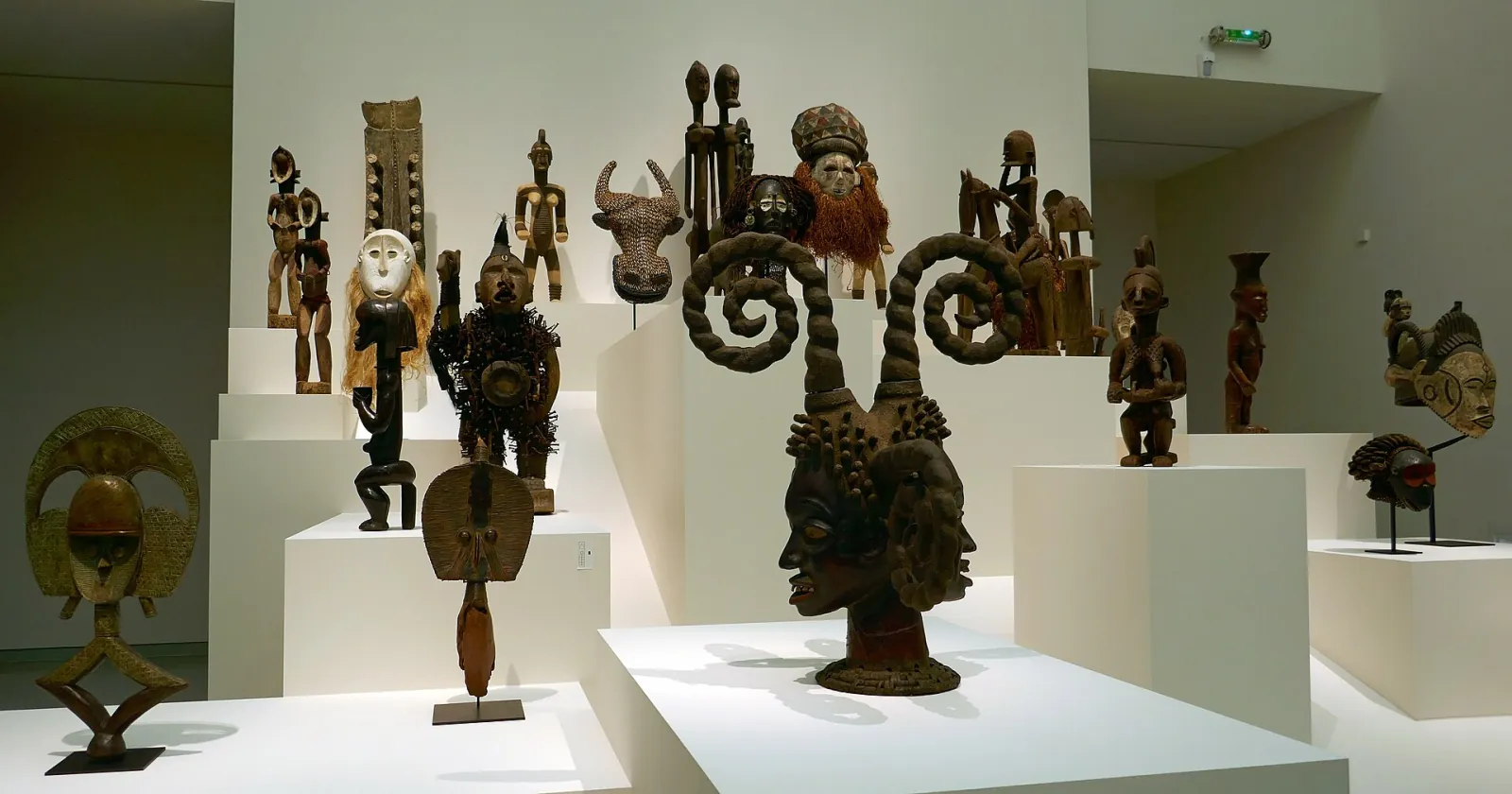
Museum gallery showing statues, masks and headdresses from Central Africa on white plinths

From the mural paintings of the chiefdoms of the West to the canvases of Douala’s studios, from the bronzes of Foumban to the carved woods of the South-West, Cameroonian fine arts form a continuous tradition, in which yesterday’s ritual object is in dialogue with today’s creation. Painters, sculptors, visual artists and art craftspeople find a field of expression of rare variety here.

Through its Directorate of the Development and Promotion of the Arts, the Ministry of Arts and Culture encourages the creation and dissemination of these works, regulates their circulation and guarantees the artist, through the resale right, a 5% share of the resale price of their original works. This page brings together the key information, addresses and procedures.

  • Painting and sculpture, from studios to galleries
  • Supported exhibitions and dissemination channels
  • 5% resale right on every resale
Discover painting
Painting

Cameroonian painting

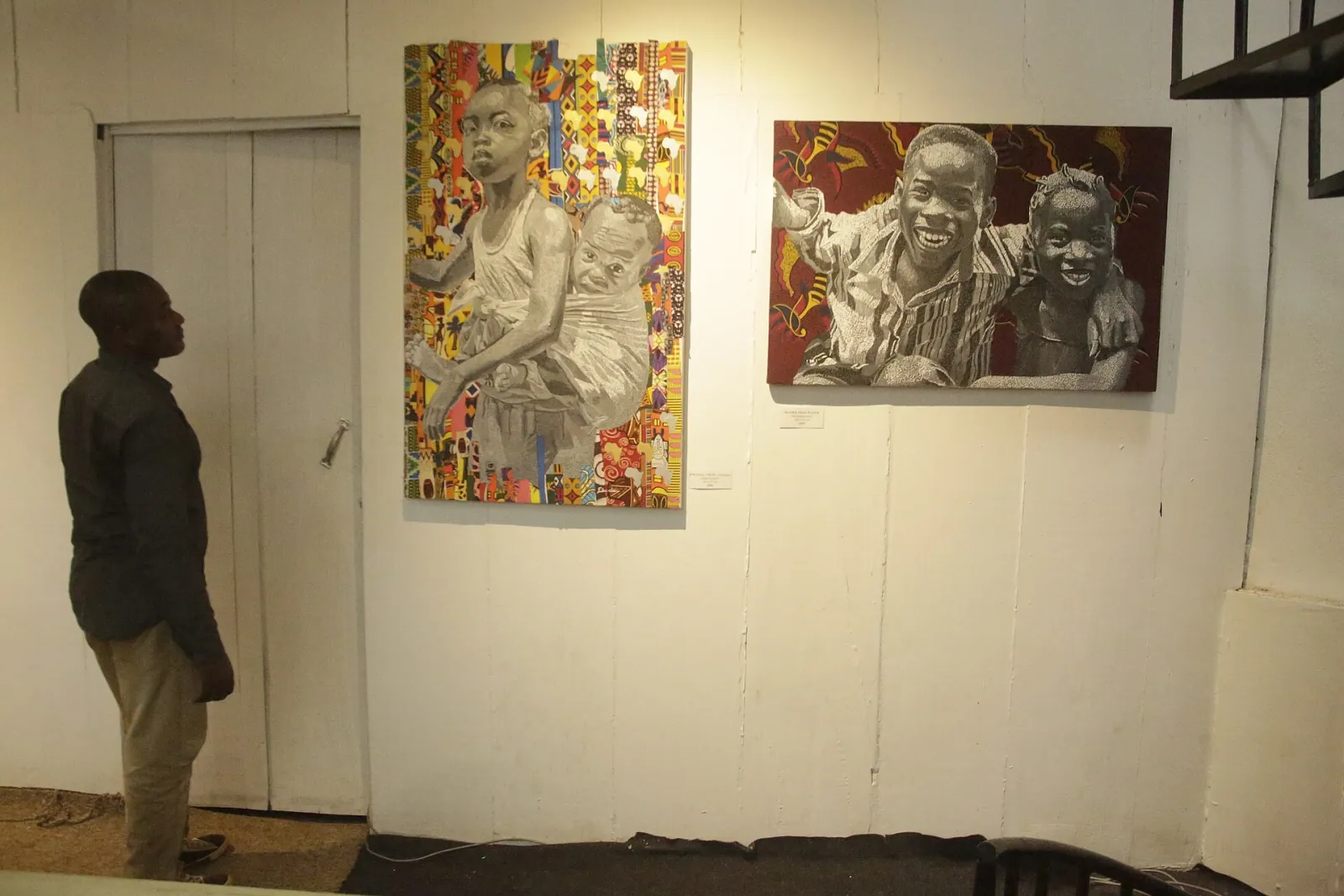
Visitor looking at colourful paintings hung in an exhibition room

Cameroonian painting draws on several sources. In the chiefdoms of the Grassfields, the façades, doors and walls of meeting huts bear geometric motifs and symbolic figures painted with natural pigments. On the coast, canvas painting developed through contact with port cities, while painters in Douala, Yaoundé and Bafoussam have, since the second half of the 20th century, developed their own figurative, abstract or narrative style.

Techniques and materials

One finds oil and acrylic on canvas or panel, watercolour, ink, pastel, but also mixed techniques combining sand, fibres, dyed fabrics, earth pigments and found objects. Studios readily use local fabrics, such as ndop or raffia, as supports or motifs. Reverse glass painting and sign painting, very present in popular neighbourhoods, form a current in their own right.
From amateur painter to professional

Professional and amateur painters can apply for the artist card and present their works in exhibitions supported by the Ministry. To be noticed, it is useful to appear in the artists’ directory, build a press kit and archive each painting with its photograph, dimensions, date and price.

  • Keep an inventory sheet for each work;
  • Sign and date paintings, on the back as well as the front;
  • Photograph works in natural light, against a neutral background;
  • Keep a written record of any sale or commission.
ℹ️
For young painters

The arts education workshops and the courses of the National Institute of Arts and Culture offer introductions to drawing, colour and composition.

Sculpture

Sculpture, the art of matter

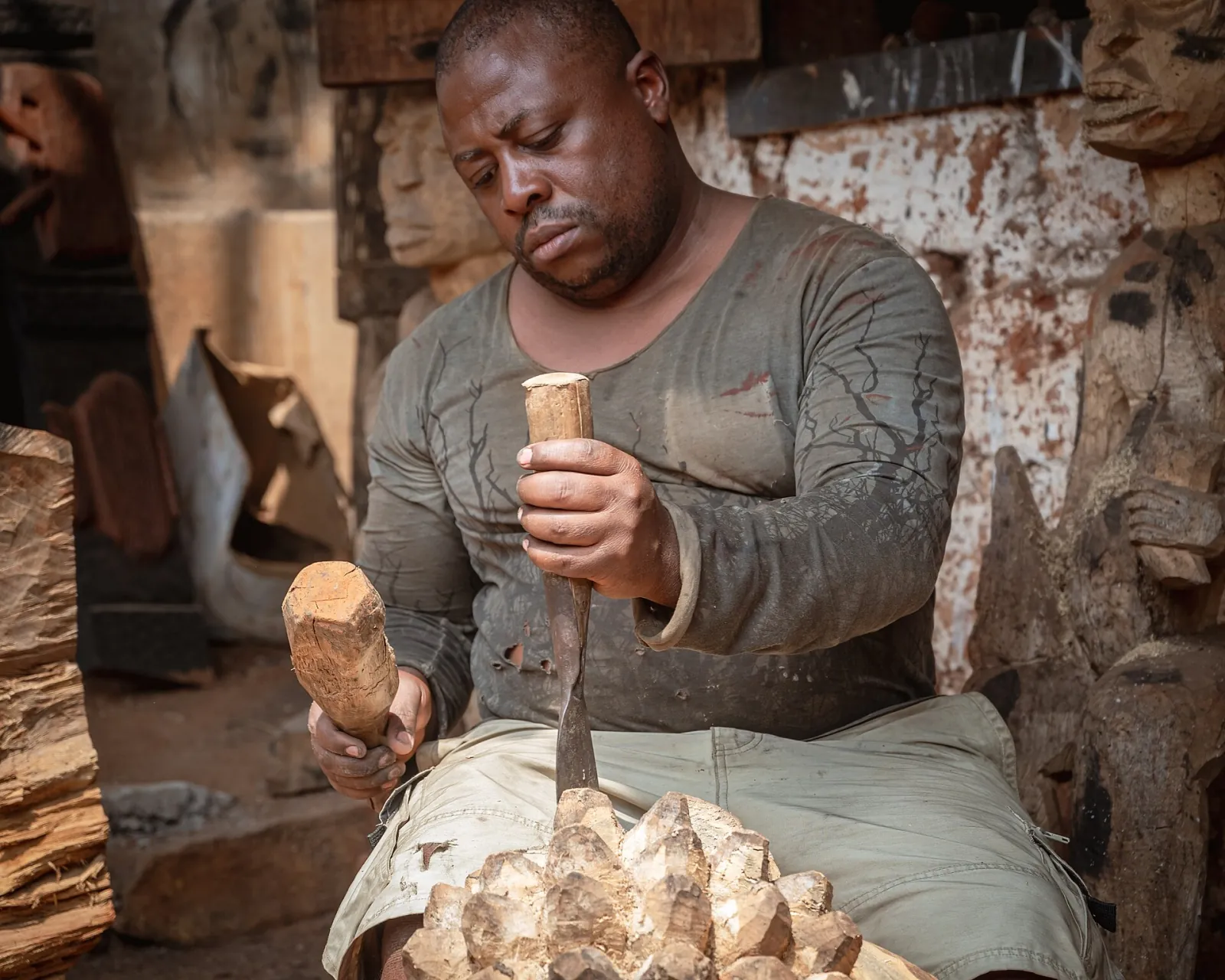
Sculptor carving a block of wood with chisel and mallet in his workshop

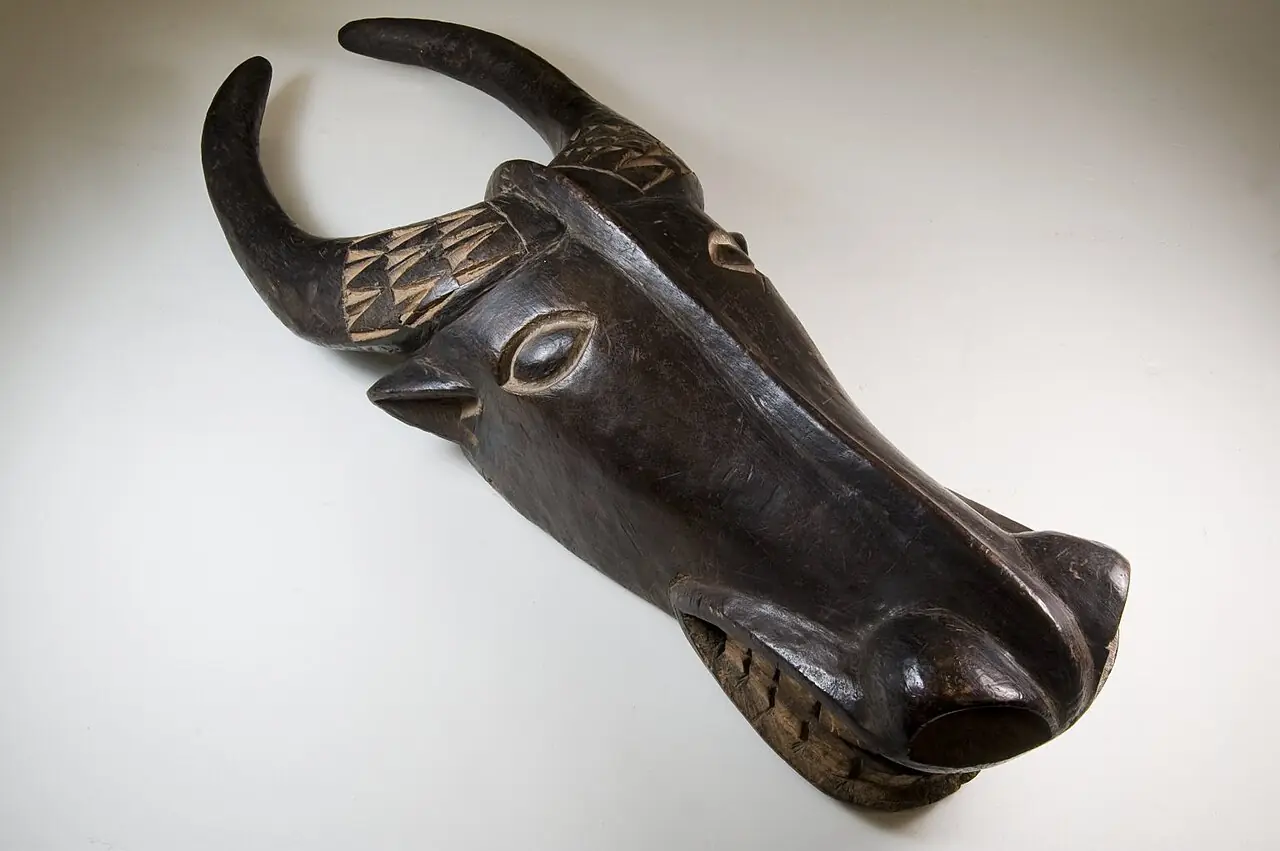
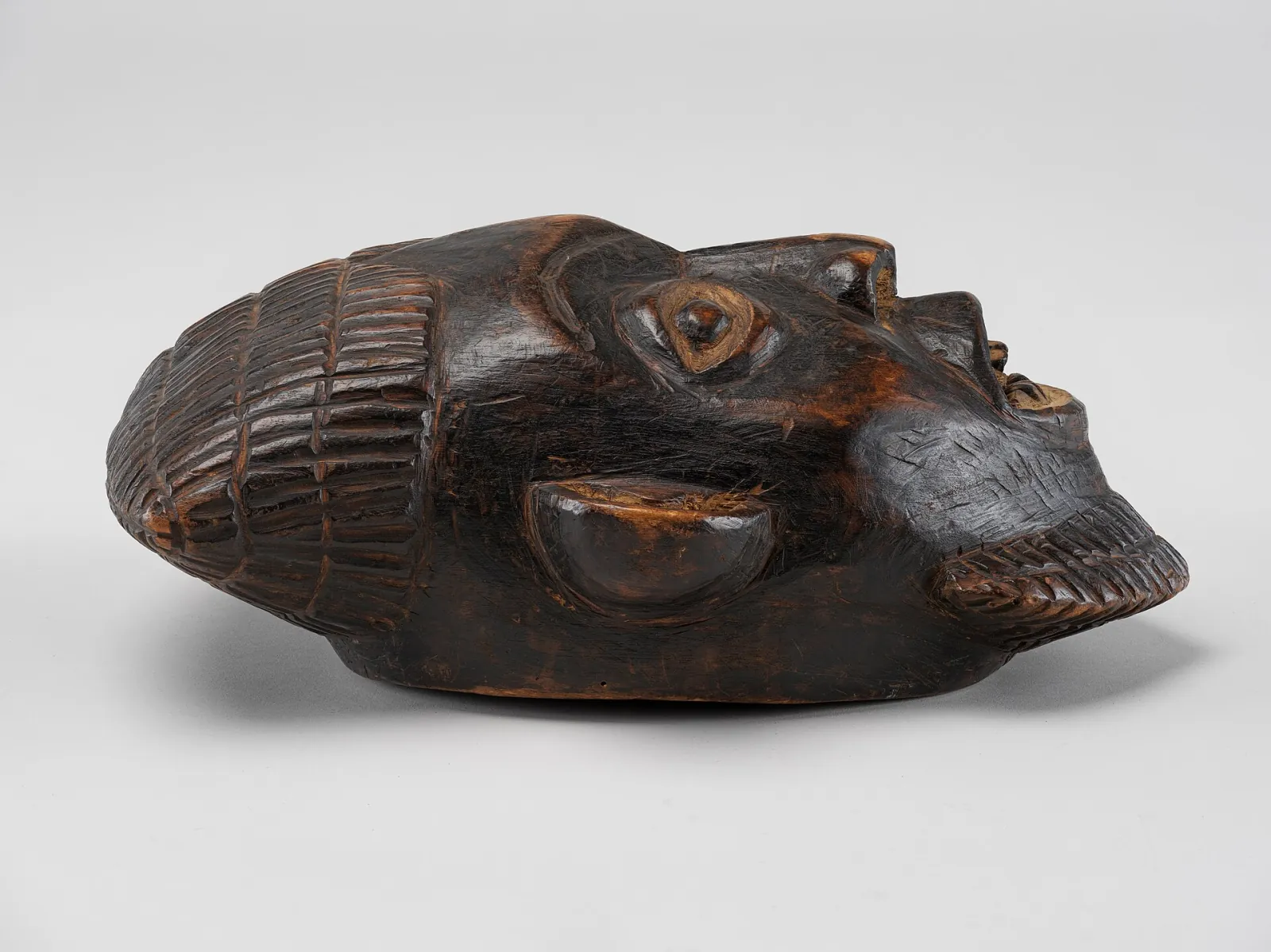
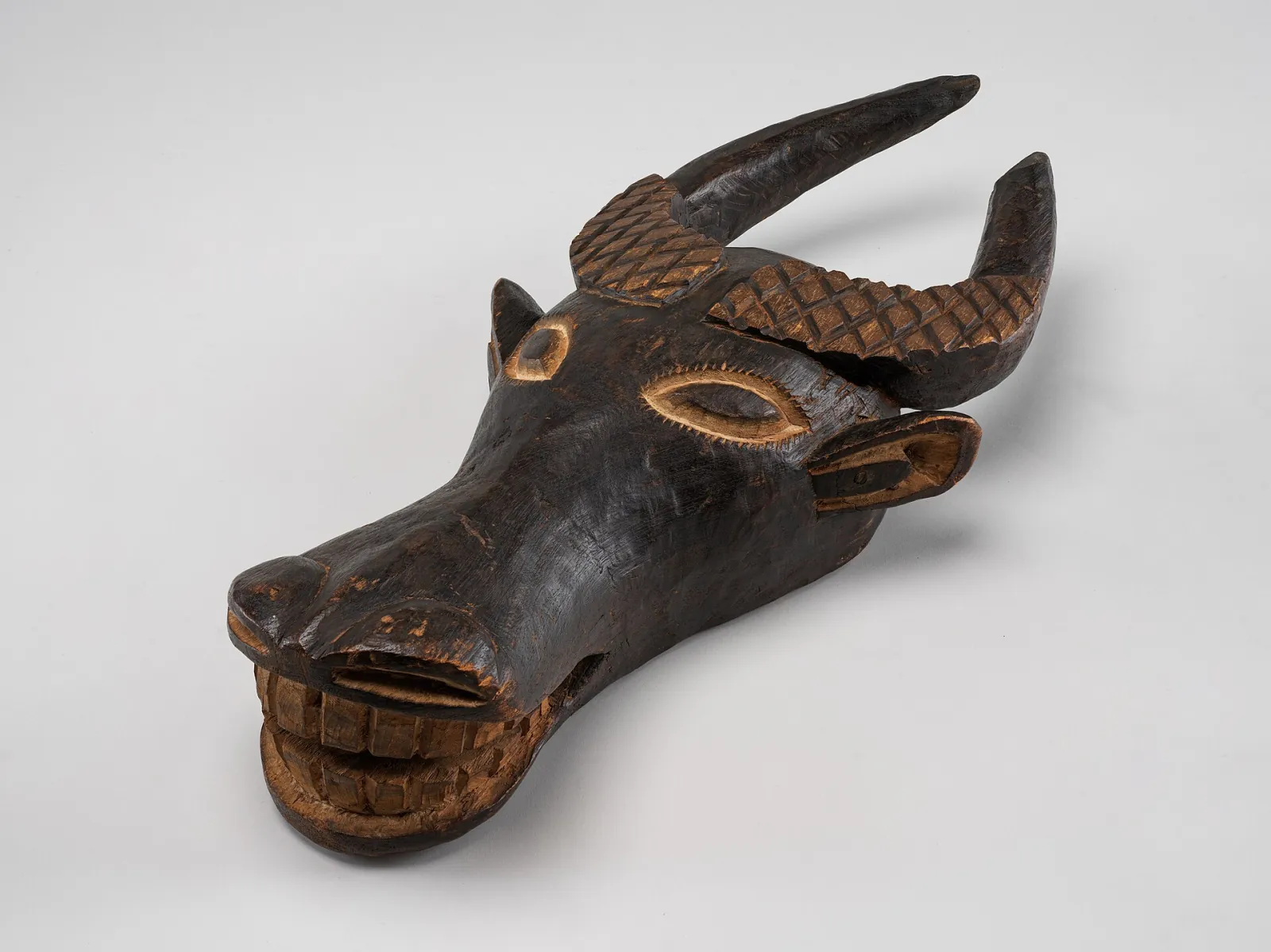
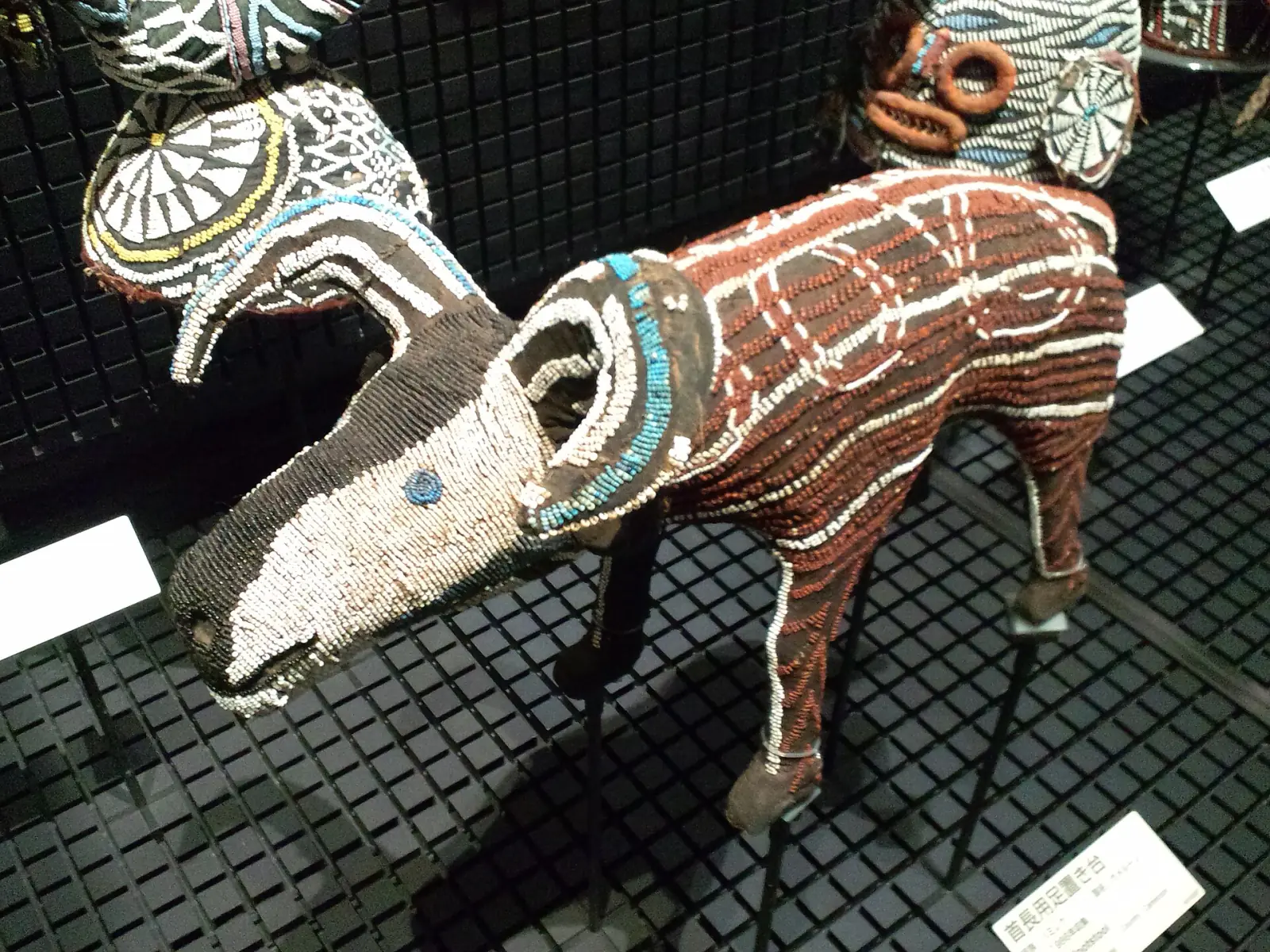
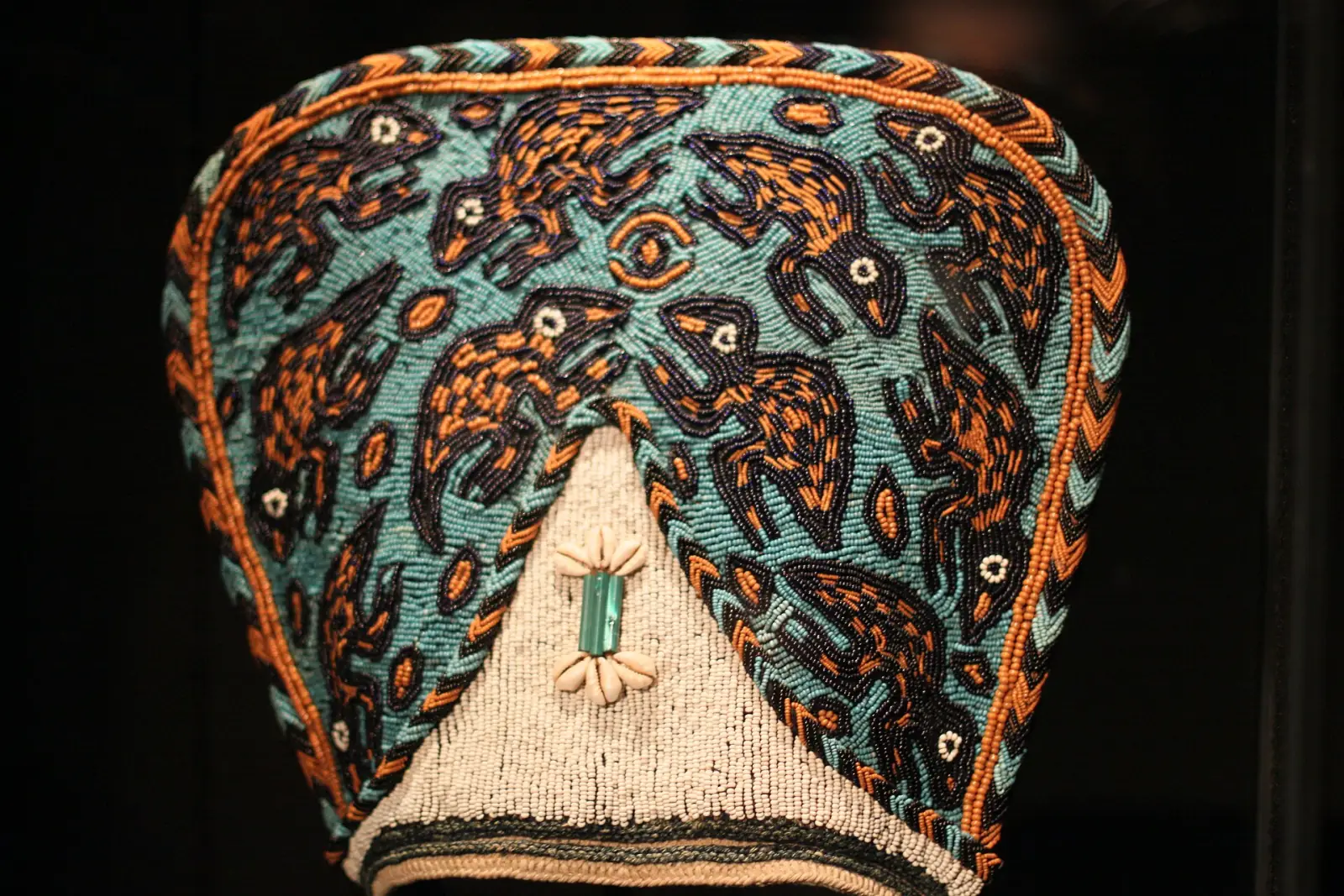
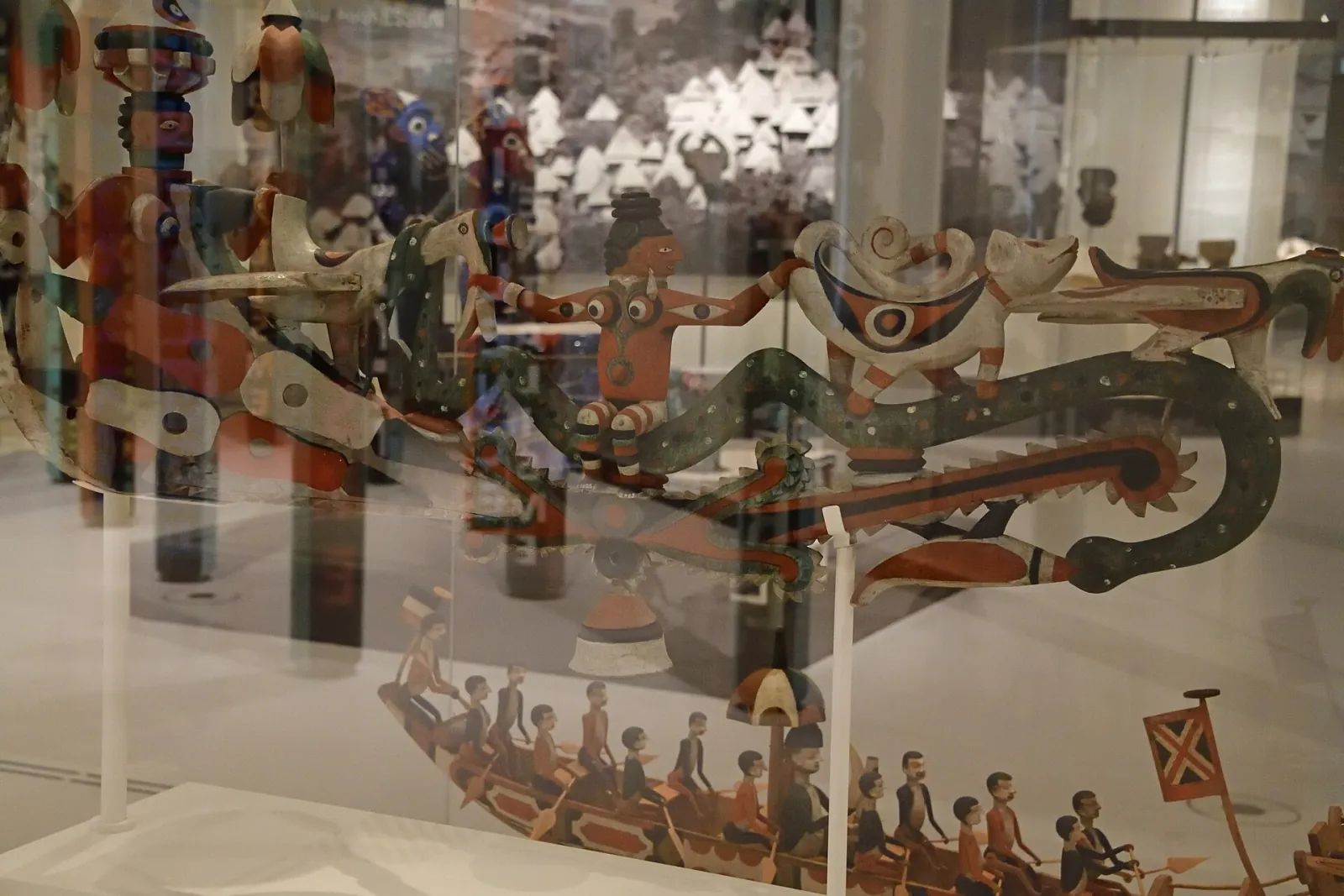
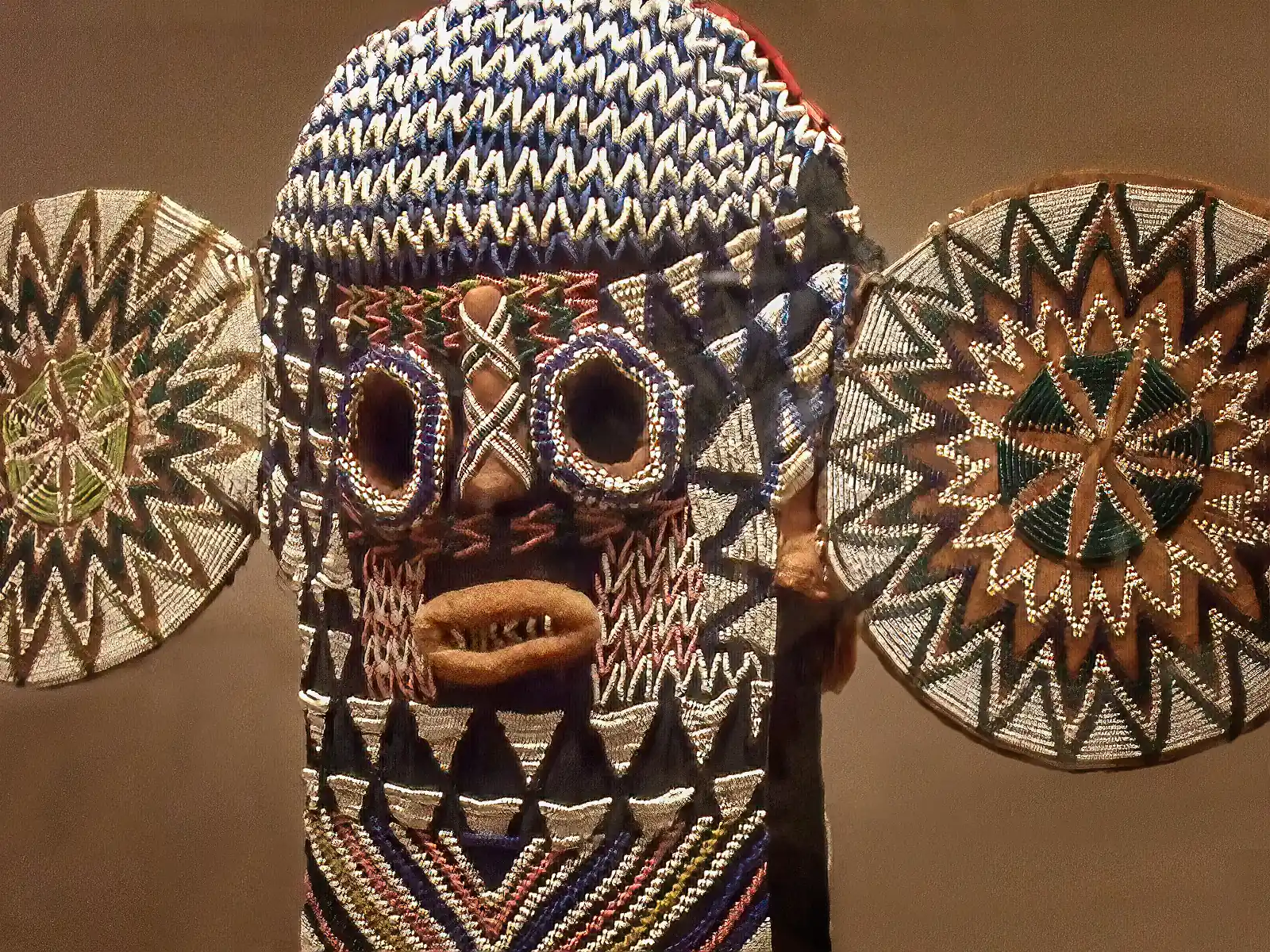
Cameroon has one of the richest sculpture traditions in Central Africa. The thrones, masks, beaded works and court statues of the Bamoun kingdom and the chiefdoms of the Grassfield are recognised well beyond the country. In the South and East, wood bears ancestor figures and objects of ritual life; on the coast, canoe prows and commemorative statues recall the importance of water; in the North, pottery, forging and lost-wax brass casting continue age-old skills.

Wood, bronze, clay and stone

Sculptors work wood (iroko, ebony, kapok, bubinga), brass and bronze cast by the lost-wax method, terracotta, soft stone and, increasingly, welded scrap metal. Each material imposes its method: direct carving, assembly, modelling or casting. Knowledge is passed on through family workshops or guilds where the apprentice works for several years with a master.

Listed works and export

Listed works or works intended for export are subject to specific procedures. Before any sculpture, mask or ancient object leaves the country, an art export application is mandatory, and the fight against illicit trafficking applies to any object of heritage value. Contemporary sculptures circulate more freely, but must be documented.

For ritual objects and listed property, consult the page on listing and protection.

ℹ️
Know-how

The techniques of forging, weaving and basketry are presented in the traditional know-how section.

Galleries

Galleries, a link between artists and the public

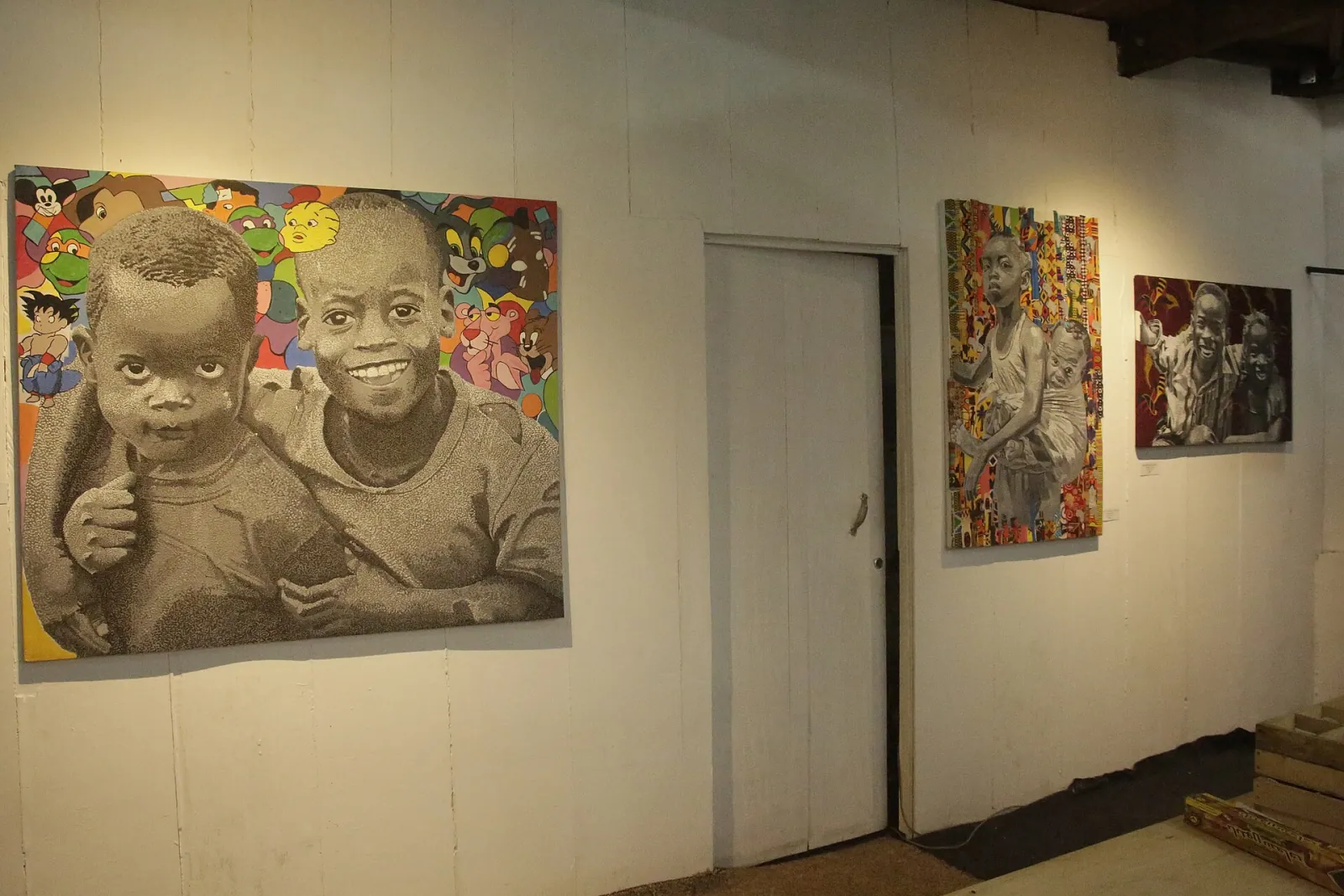
Portrait paintings of children hung in an exhibition room

Galleries are indispensable links between the artist and their public. They spot talent, organise hangings, publish catalogues, advise collectors and handle sales. They are found mainly in Yaoundé and Douala, but also in Bafoussam, Buea, Garoua and several medium-sized towns, where association spaces and gallery-cafés play the same role.

Three gallery models

The commercial gallery lives from sales and takes a commission on each work. The association art centre hosts exhibitions, workshops and meetings with a more educational purpose. The artist space, run by a visual artist or a collective, first presents the work of its organisers. Houses of Culture and foreign cultural centres complete this landscape.

Working with a gallery

An artist who wishes to be represented submits a file: artist statement, biography, twenty images, list of exhibitions. A written contract sets the duration, the commission rate, the sharing of framing and insurance costs, and the fate of unsold works. The model contracts help to set these conditions.

  • Request a written mandate for any deposit of works;
  • Have a signed deposit slip drawn up on handover;
  • Check the insurance against theft and damage;
  • Agree on payment within a set period after the sale.

The map of galleries is kept up to date by the directorate and by the regional delegations; organisations can be listed by contacting the Ministry.

Exhibitions

Exhibitions, from opening to sale

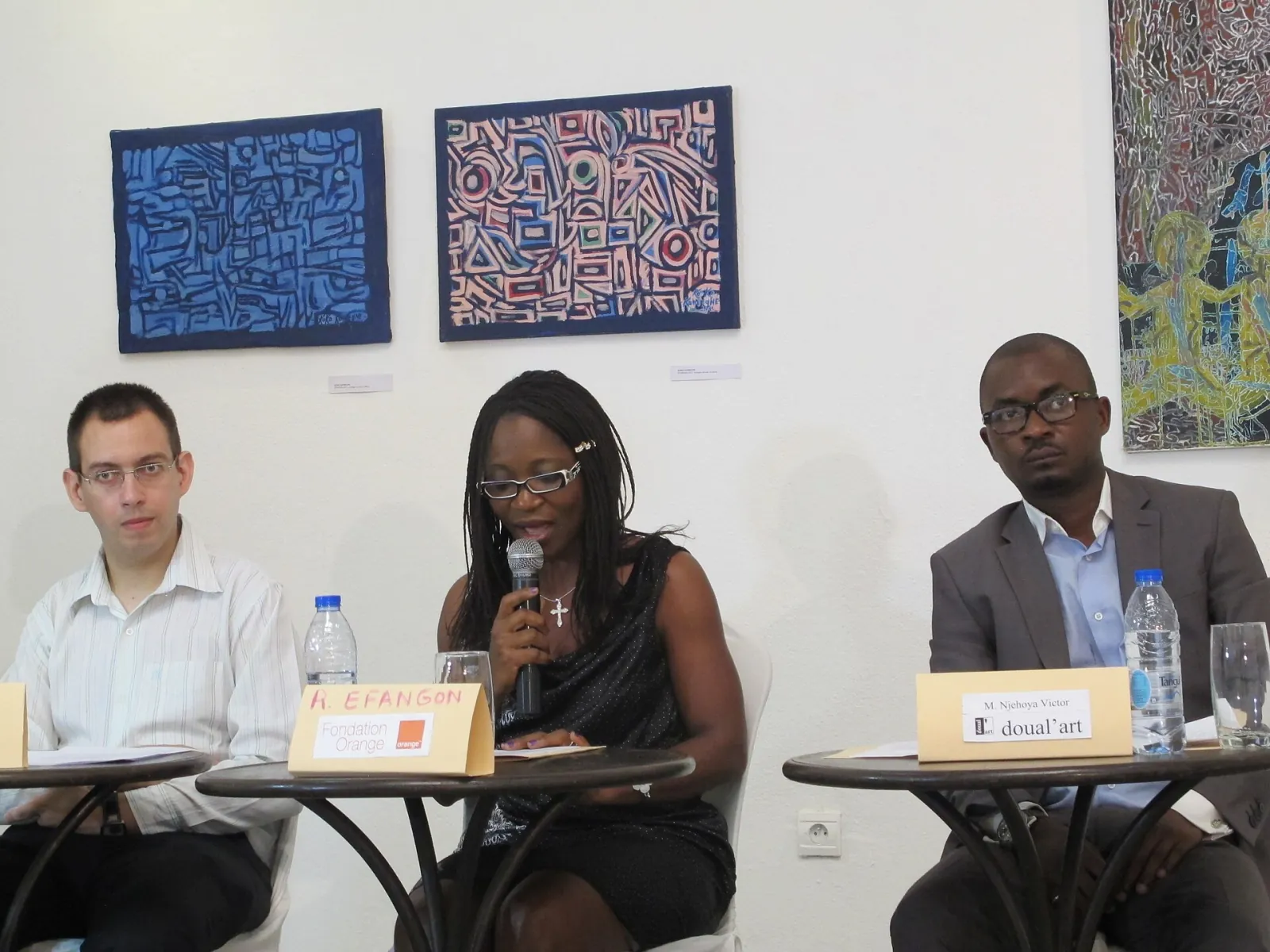
Panel of three speakers at a press-conference table in front of paintings in Douala

The exhibition is the moment when the work meets the public. It takes the form of a solo exhibition, a group hanging, a city trail or an exhibition in a museum. The National Museum in Yaoundé, its salons and its temporary exhibition rooms are among the reference venues, together with the museums of Dschang and Foumban and private galleries.

Preparing an exhibition

An exhibition is prepared several months in advance: choice of venue, theme, selection of works, hanging schedule, transport, insurance, lighting, labels, invitation, communication. The works are photographed, measured and listed in a condition report signed by the artist and the host venue. The opening brings together the press, collectors and neighbours; a booklet or catalogue keeps a record of the event.

Following the agenda

The cultural agenda lists the exhibitions under way and scheduled in each region, and artists can propose an event there. The calls for projects flag open applications for fairs, residencies and supported group exhibitions.

After the exhibition

Once the hanging is over, the works must still be taken down in good conditions, unsold works returned with an exit report, sales settled and the file kept: photographs of the hanging, press review, guestbook. These archives feed the next application.

ℹ️
Resale right

On each resale of an original work, the artist receives 5% of the resale price. See copyright and neighbouring rights.

Rights

The resale right and the protection of works

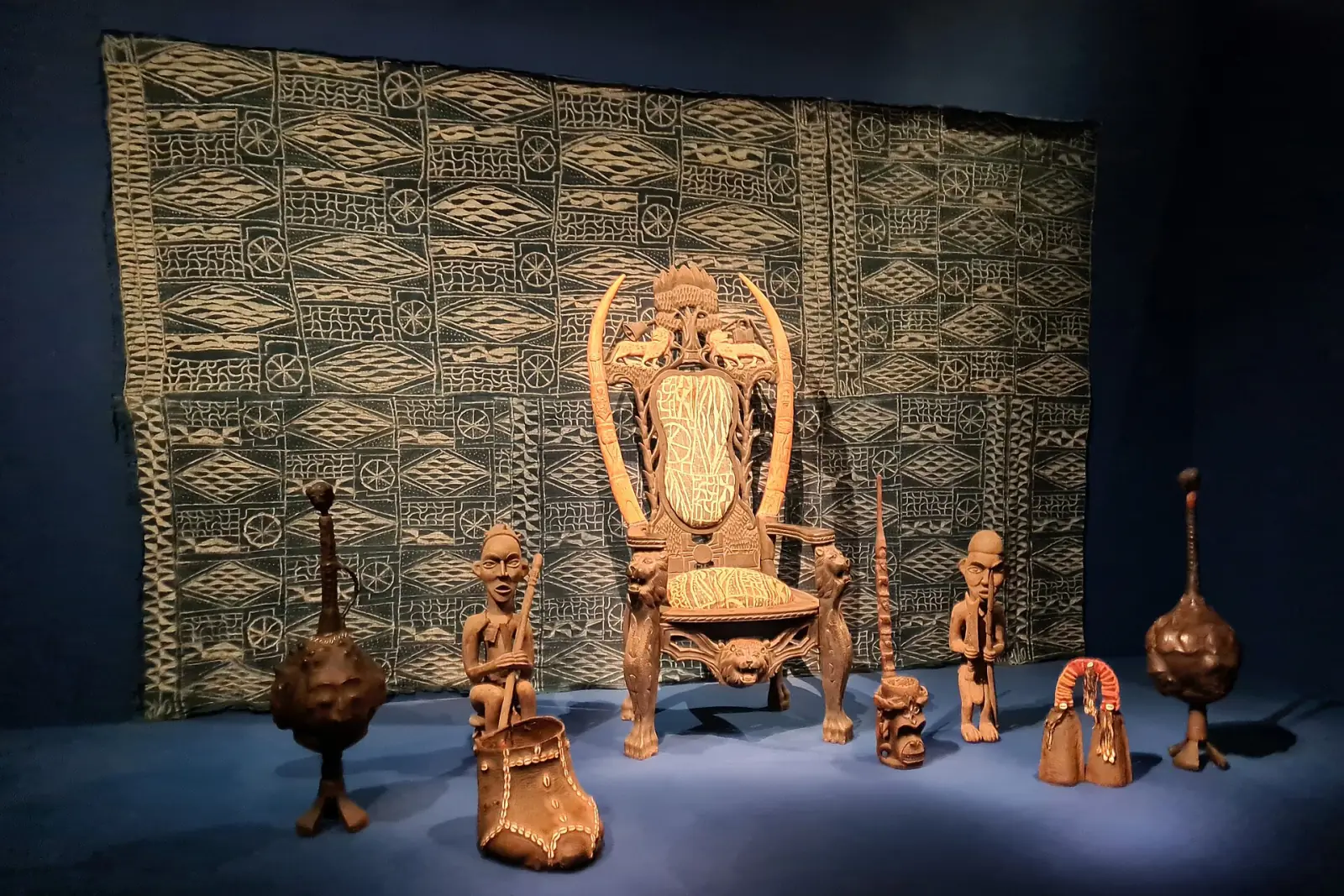
Carved wooden throne in front of a large textile, surrounded by statuettes and royal objects

The resale right guarantees the artist a share of the resales of their original works: it is set at 5% of the resale price. It applies to resales involving an art market professional (gallery, auction house, broker) and follows the work throughout its commercial life. This right is attached to the person of the artist and, after them, to their heirs for the period of protection provided by the copyright law.

Economy

Making a living from your art: prizes, commissions and the market

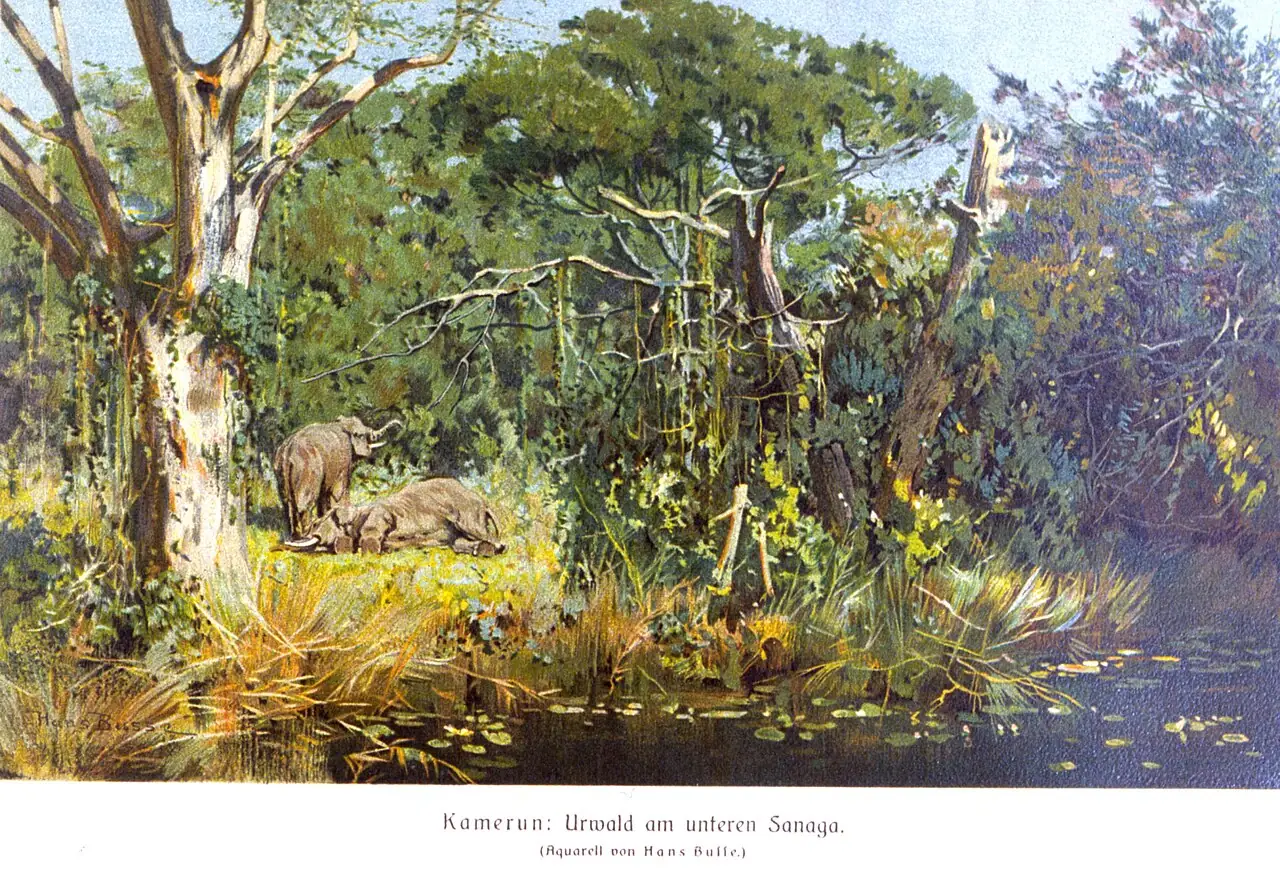
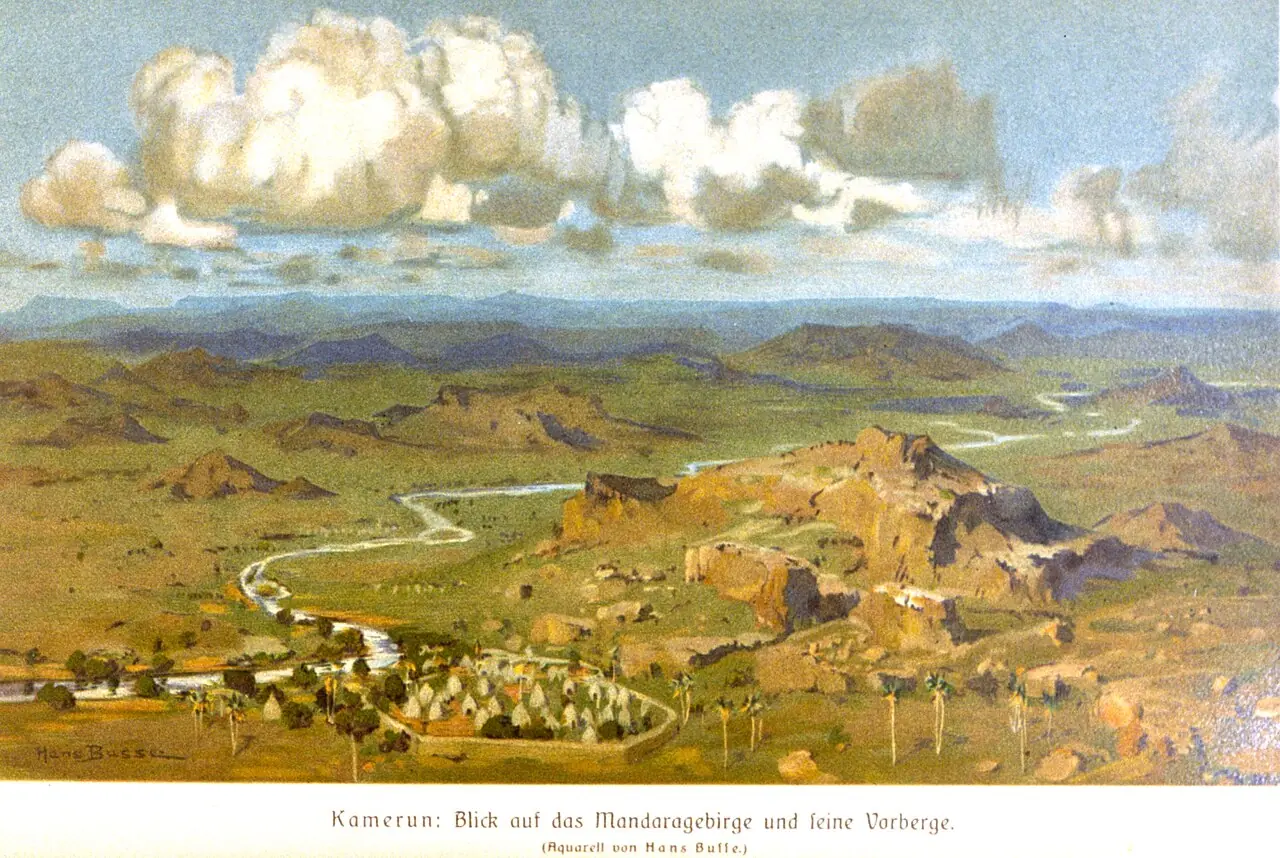
Old watercolour of a Cameroonian forest with elephants

The Cameroonian art market rests on four channels: direct sale at the studio, the gallery, public or private commissions, and fairs or salons. Prices depend on reputation, format, technique and rarity; they are set more reliably when the artist keeps a consistent price scale and an exhibition history.

Commissions (murals, monuments, institutional décor) keep many sculptors and visual artists in work, and a growing number of companies buy works as patronage. The status of cultural entrepreneur and the social protection of the artist help to stabilise an often irregular activity.

Step by step

From the first painting to the first exhibition

Build a body of work

Gather about fifteen coherent works, dated, signed and photographed, with their dimensions, technique and an indicative price.

Write the artist statement

Write a page on your work, its sources and its method, then a short biography listing training and exhibitions.

Obtain the artist card

Submit your application online with evidence of practice; the card recognises your status with partners.

Choose the venue

Contact a gallery, a cultural centre or a House of Culture, and propose a dated project with a clear budget.

Mount the exhibition

Organise transport, hanging, insurance, the invitation and the opening, with a condition report for each work.

Follow the sales

Keep a sales register, retain the invoices and remind the buyer of the resale right rule in the event of resale.

Key facts

The players in the visual arts at a glance

StakeholderRoleHow to contact themWhat they offer
ArtistCreates and exhibits their worksDirectory of artists, artist cardOriginal works, procedure, resale right
GalleryPromotes, advises and sellsDirect contact, calls from the galleryNetwork of collectors, communication, commission on sales
National MuseumPreserves and displays heritage and creationMuseum directorate, programmingExhibition rooms, conservation expertise, mediation
Directorate of Arts Development and PromotionDevelops policy, oversees disseminationLetter or form on the siteSupport for exhibitions, training programmes, studies
Regional DelegationRelays policy in the regionsDelegation of the region concernedLocal information, networking, follow-up of files
Collective management societyCollects and distributes rightsOnline membership or by appointmentRights collection, distribution, legal advice
Journey

The visual arts through time

Before the 20th centuryCourt and ritual art

Sculptors, casters and chiefdom painters produce thrones, masks and decorations, some of which are now held in the country’s museums.

1950s-1960sThe first modern studios

Artists trained in the city and abroad introduce the easel, the canvas and easel painting into a production that had until then been mainly ritual.

1980sGalleries and collectives

Yaoundé and Douala see the emergence of galleries, collectives and salons that give visual artists their first regular showcases.

The 2000sInternational outreach

Cameroonian visual artists are invited to biennales and residencies, and the contemporary scene becomes organised into networks.

2010s-2020sInstitutional structuring

Resale right, the artist card and the directory give the profession a framework; supported exhibitions are multiplying in the regions.

To explore

The visual arts in the other sections

“The resale right is set at five per cent of the resale price of the original.”

Implementing decree of Law 2000/011
They create

Career paths of visual artists

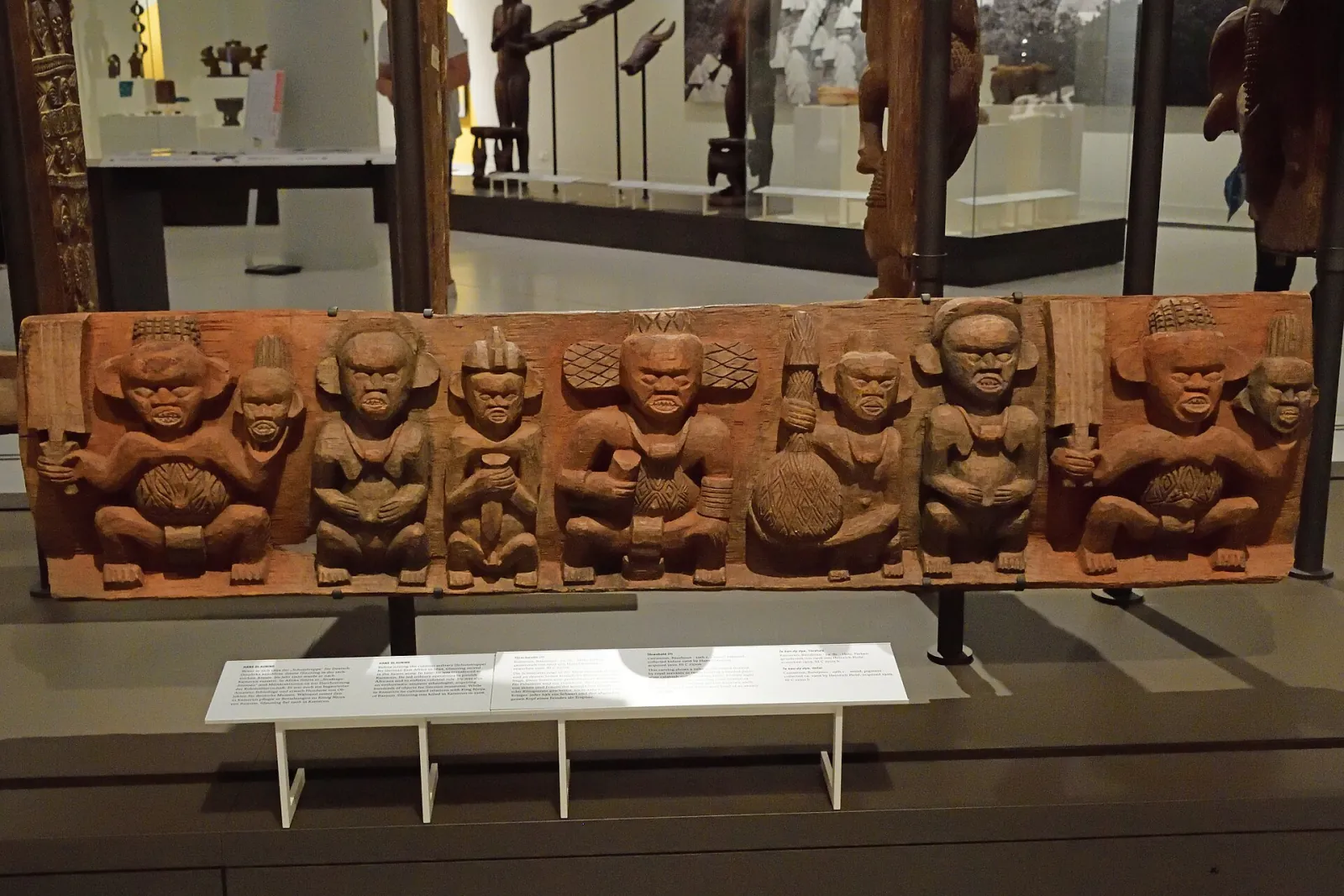
Wooden threshold lintel carved with a row of seated figures, in a museum display/ Douala
A painter

“My canvases tell the stories of the port districts; the group exhibition made me known beyond the city.”

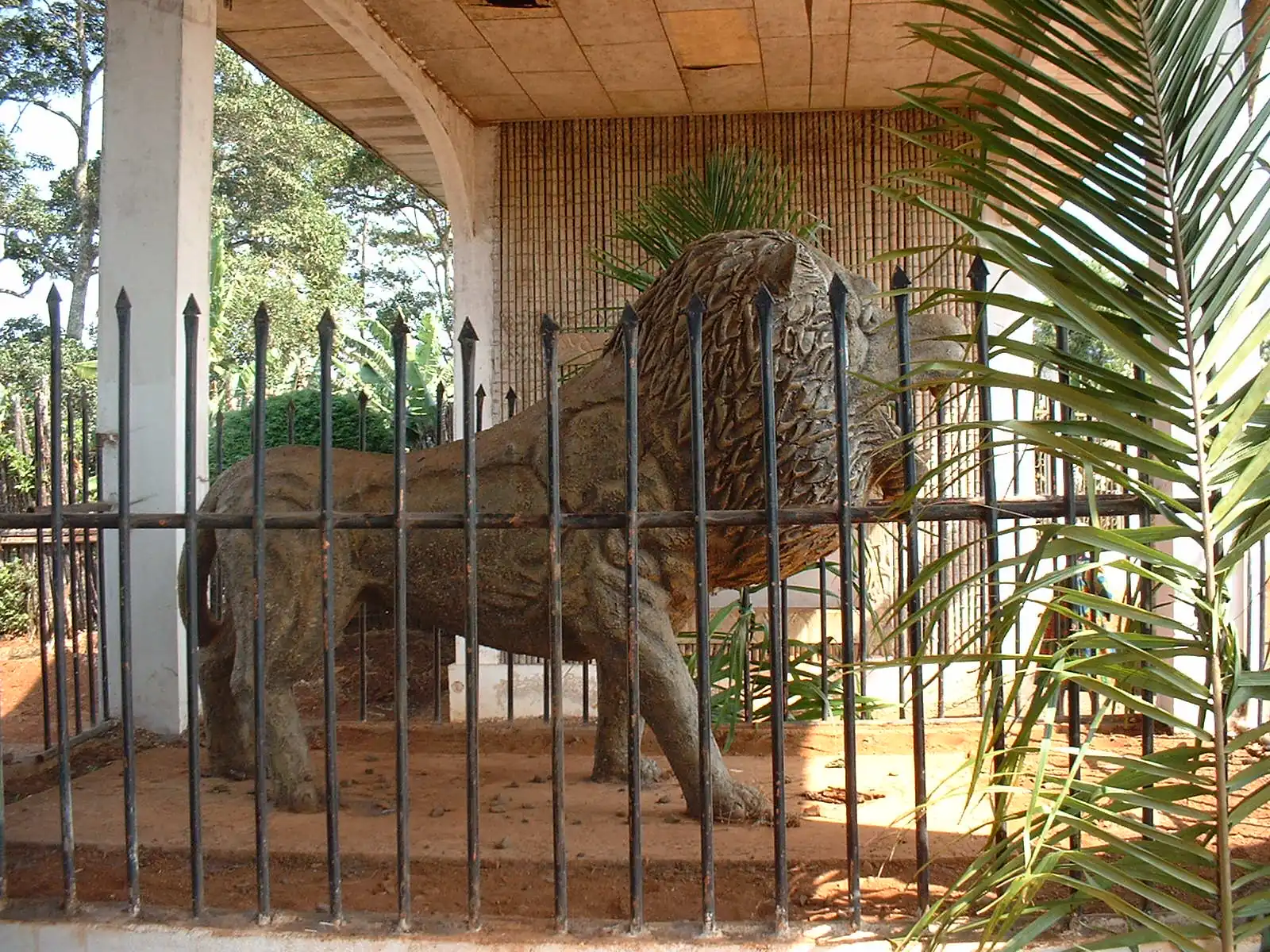
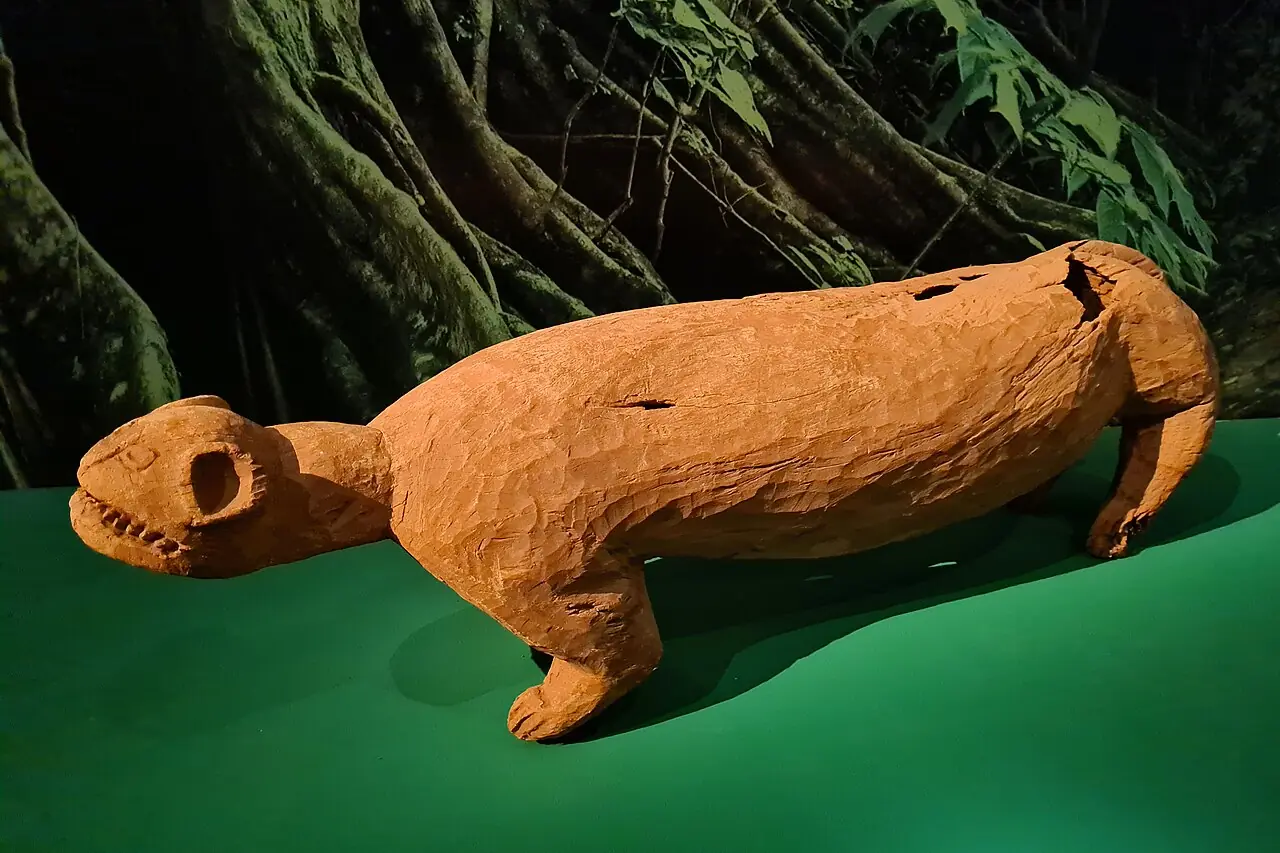
Totemic panther statue from Baha country, terracotta sculpture/ Bafoussam
A wood sculptor

“My studio trains four apprentices; the artist card opened up public decoration contracts for us.”

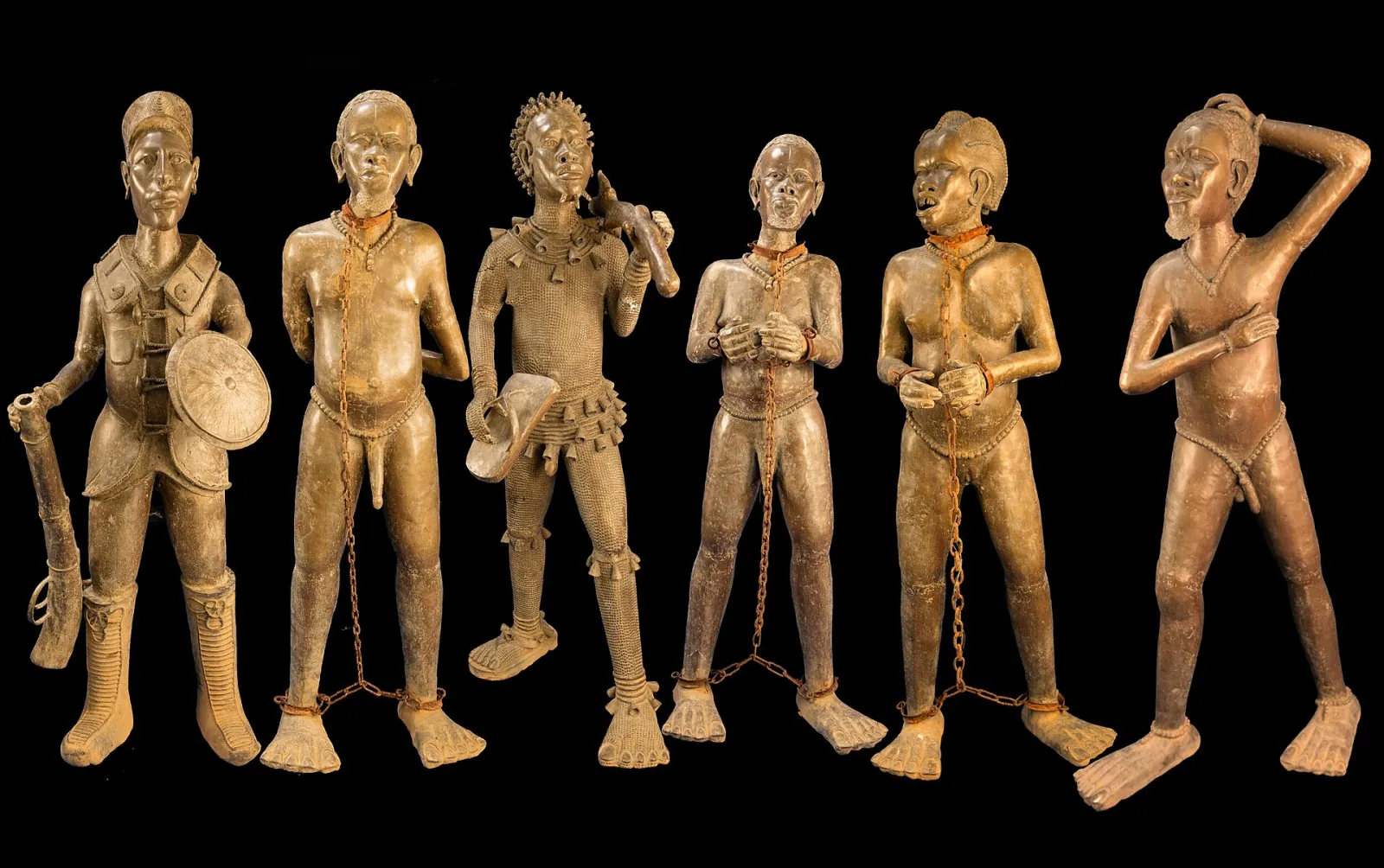
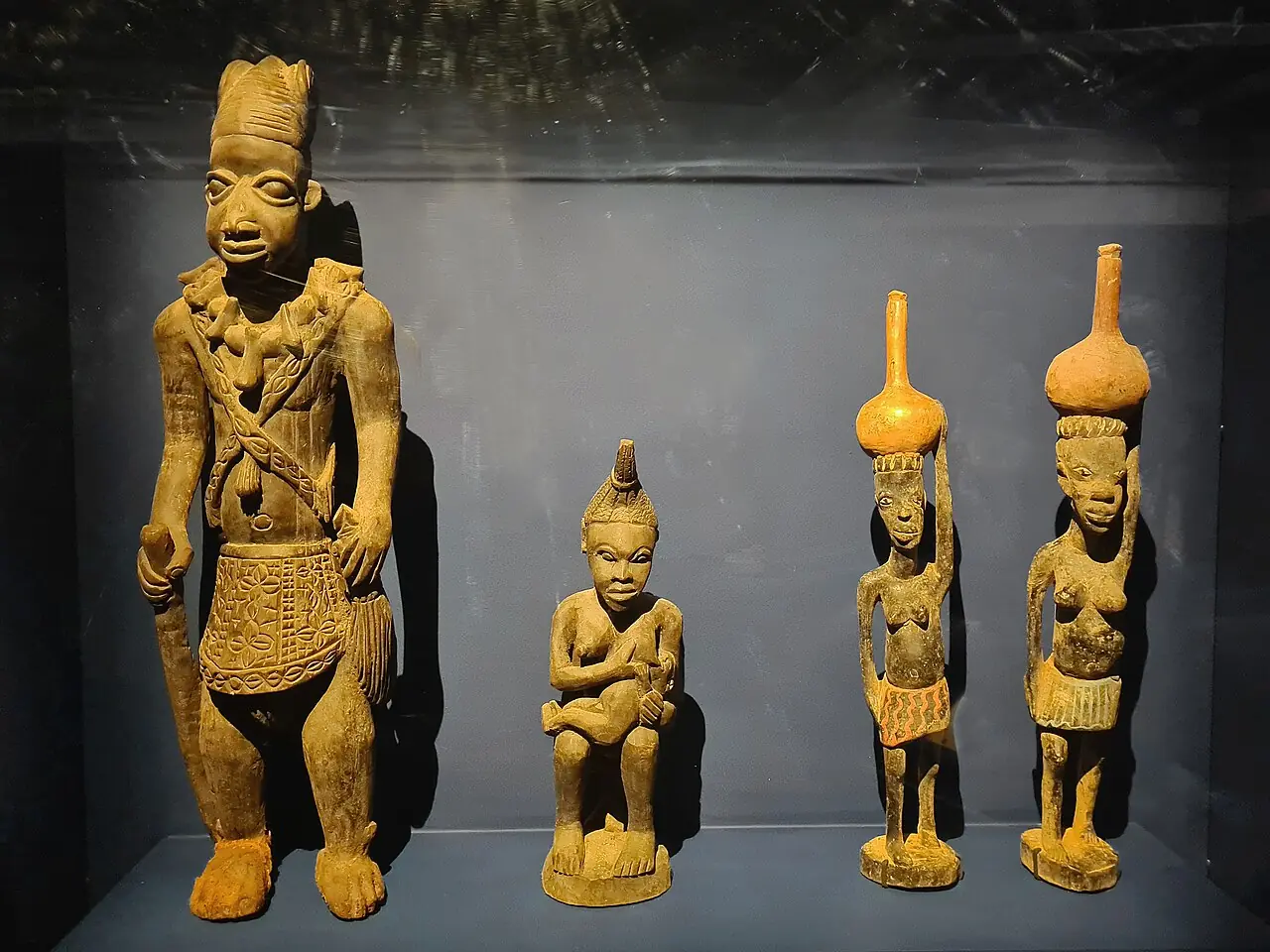
Carved wooden Bati-style statuettes displayed in a showcase/ Foumban
A brass caster

“Lost-wax casting is a patience that is passed on; I show my pieces during heritage days.”

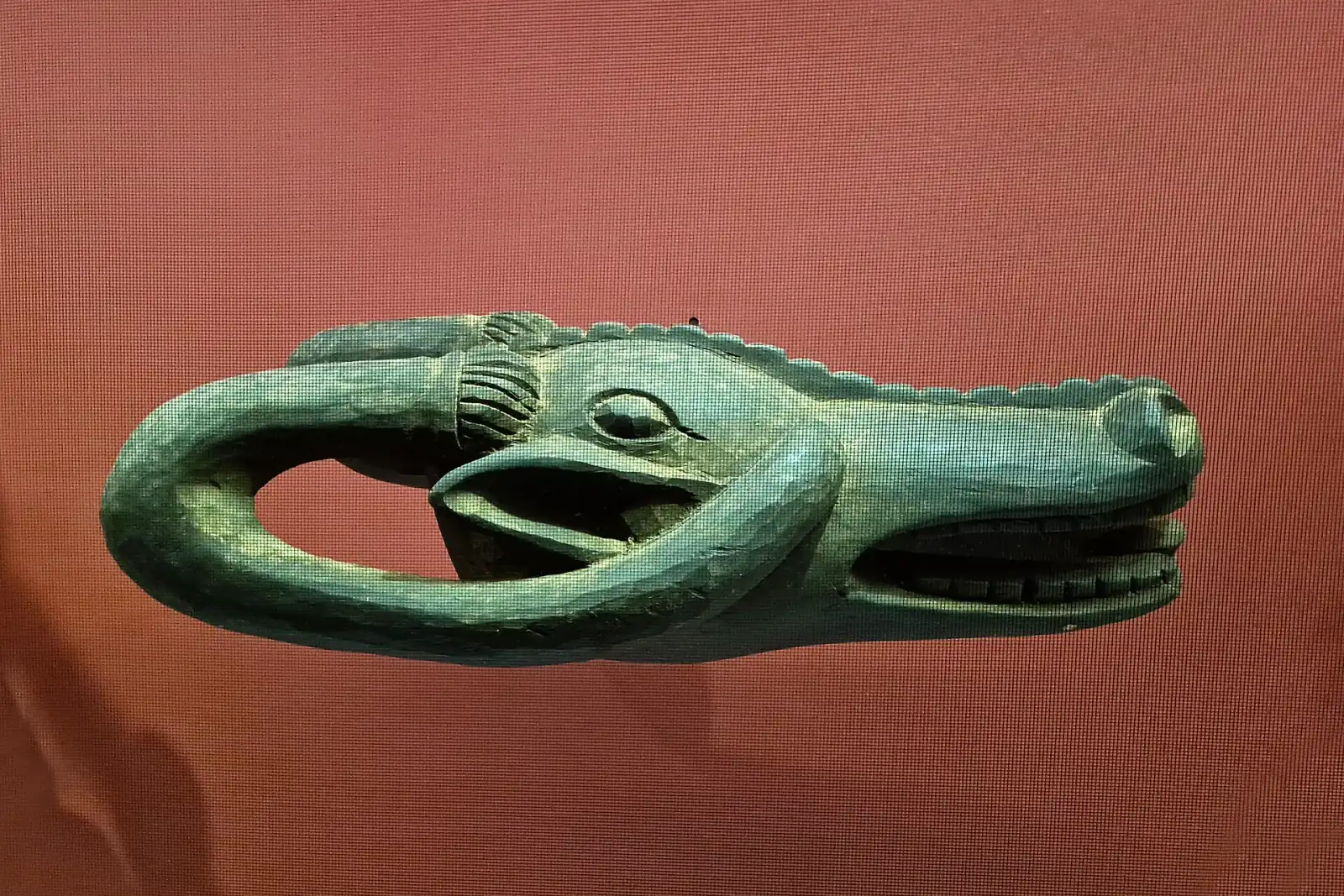
Carved wooden buffalo-head mask with horns/ Yaoundé
A gallery owner

“We present six artists a year and support each of them up to their first sale.”

To act

The schemes to know about

Artist card

Have your status as a professional painter, sculptor or visual artist recognised by partners.

Apply

Export of works

A mandatory procedure before sending a work abroad for an exhibition or a sale.

See the procedure

Exhibition grant

Support to fund the transport, framing and promotion of an exhibition.

Request support

Artist residencies

A creative stay in Cameroon or abroad, with a studio and support.

See the residencies
To download

The resources for visual artists

Glossary

The words of the visual arts

Resale right

A 5% share of the resale price paid to the artist on each resale of an original work.

Original work

Work executed by the artist personally or under their supervision, unique or in a limited number.

Private view

Opening evening of an exhibition, reserved for guests, the press and the artist’s friends.

Gallery

A place for showing and selling works, which represents artists in return for a commission.

Label

Label placed next to a work with the artist’s name, the title, the technique and the date.

Lost-wax casting

Metal casting technique using a wax model, which is replaced by molten metal.

Condition report

Document describing the condition of a work when it leaves and when it returns from an exhibition.

Curator

Person responsible for the content and layout of an exhibition.

Mixed media

Work combining several materials or processes, such as painting and collage.

Ndop

Indigo-dyed cloth from the kingdoms of the West, used for ceremonies and in creative work.

On the site

Going further: discovering the visual arts

Resources

Useful links for visual artists

Stakeholders

Who supports the visual arts?

Questions

Your questions about the visual arts

How can I exhibit my works?

Contact a gallery or a cultural centre with an artist file, or apply to calls for projects. The Ministry supports certain exhibitions through a grant; the file sets out the venue, dates, budget and expected audience.

What resale right applies?

Each time an original work is resold with the involvement of an art market professional, the artist receives 5% of the resale price. This right cannot be transferred by contract and follows the work throughout its commercial life.

Where can I see works?

At the National Museum in Yaoundé, in the museums of Dschang and Foumban, in galleries and cultural centres, and during salons and heritage days. The cultural agenda gives the dates region by region.

Can I send a sculpture abroad?

Yes, after an art export application submitted online. Ancient or ritual objects may be listed and their departure refused. Photograph the work and state its origin, material and destination.

How do I obtain the artist card?

Submit the application to the One-Stop Shop with an identity document, evidence of your practice (catalogues, articles, invoices) and a short artist statement. The file is examined by the competent services, then tracked with a number.

How do I set the price of my works?

Take into account the format, the technique, the time spent, your local reputation and the prices charged by comparable artists. A consistent price scale, kept in writing, reassures gallery owners and collectors.

My work has been copied: what should I do?

Gather your evidence (dated photographs, work declaration, invoices), contact the copyist and then refer the matter to mediation. If that fails, legal action remains open, with the support of a collective management society.

Where can I train in painting or sculpture?

In master artists’ studios, cultural centres, art schools and the courses of the National Institute of Arts and Culture, which the directorate designs together with the institution for the applied arts.

Contact

Write to the Ministry: Visual arts

Specify your question or your project.

Competent directorate

Write to the visual arts

Address

Directorate of the Development and Promotion of the Arts
Ministry of Arts and Culture
Quartier du Lac – Ministerial Zone
P.O. Box 1053 Yaoundé, Centre Region, Cameroon

Reach us

+237 6 51 70 58 41

contact@minac.gov.cm

Opening hours

Monday to Friday, 8 am to 4 pm

A work to exhibit?

Consult the visual arts, residencies and calls for projects to present your work.

See the visual arts
WhatsApp