Coat of arms of CameroonMinistry of Arts
and Culture
Republic of Cameroon
My procedures
Home
Minister’s message
News
Press releases
Cultural calendar
Official speeches
Press review
Photo library
Video library
Calls for projects
Job vacancies
Public procurement
Newsletter
Frequently asked questions
Site map
Contact
Press area
Podcast “The Voice of Culture”
Legal notices
Privacy policy
Cookies and trackers
The Ministry
Missions and responsibilities
Organisation
Organisation chart
Minister’s Office (Cabinet)
Management team
General Secretariat
General Inspectorate
Central directorates
Regional Delegations
Institutions under supervision
Legislative texts
Regulatory texts
Sector strategy
Major projects
Budget and reports
Partners
Careers
Archives
Institutional communication
Quality and accessibility
Arts
Visual and plastic arts
Visual arts
Performing arts
Theatre
Dance
Music
Literature and books
Cinema and audiovisual
Photography
Fashion and design
Digital arts
Art crafts
Artists’ directory
Residencies
Prizes and awards
Arts education
Urban arts
Heritage
Tangible heritage
Intangible heritage
UNESCO sites
National museums
Listed monuments
National inventory
Palaces and chiefdoms
Archaeology
Linguistic heritage
Oral traditions
Traditional know-how
Restitution of cultural property
Fight against illicit trafficking
Listing and protection
Conservation and restoration
Heritage Days
Cultural landscapes
Industries
Music and recording
Cinema
Publishing and books
Digital arts
Fashion and creativity
Crafts
Cultural tourism
Funding for culture
Support funds
Incubators
Cultural entrepreneurship
Culture Observatory
Vocational training
Studies and reports
Sector statistics
Export and outreach
Intellectual property
Copyright
Legal framework
Copyright and neighbouring rights
Collective management societies
Register a work
Licences
Private copying
Fight against piracy
Model contracts
Social status of artists
Mediation
Disputes
Training
Fee scales
Register of works
Contact
Digital neighbouring rights
Public domain
Festivals
National calendar
Ngondo
Nguon
Écrans Noirs
Heritage Days
Music Day
Regional festivals
Fairs and exhibitions
Biennials
National competitions
Cultural days
Organise a festival
Event grants
Ticketing
Archives
Volunteering
Diaspora festivals
Regions
Adamawa
Centre
East
Far North
Littoral
North
North-West
West
South
South-West
Cultural map
Regional Delegations
Traditional chiefdoms
National languages
Cultural routes
Decentralised cooperation
Regional observatory
Cooperation
UNESCO
Francophonie (OIF)
African Union
Commonwealth
CEMAC
Bilateral cooperation
Cultural agreements
Professional organisations
Scholarships
Artist exchanges
Cultural years
Diaspora
Funded projects
Embassies
Technical partners
International restitution
International monitoring and calls
Services
Artist card
Show authorisation
Filming authorisation
Festival authorisation
Deposit of a work
Export of works of art
Listing of a property
Grant application
Association accreditation
File tracking
Forms
Fees
Opening hours and addresses
Reporting
Online help
My account
One-Stop Shop
Services

Export of works of art

The export of a work of art or cultural property is regulated in order to protect heritage: find out about the conditions, documents, form, tracking, special cases, mistakes to avoid and available appeals.

Updated on 6 November 20264 sub-pages
SubmissionOnline
File documents5
Conditions3
TrackingBy file number
Circulation of cultural property

Everything about exporting an artwork

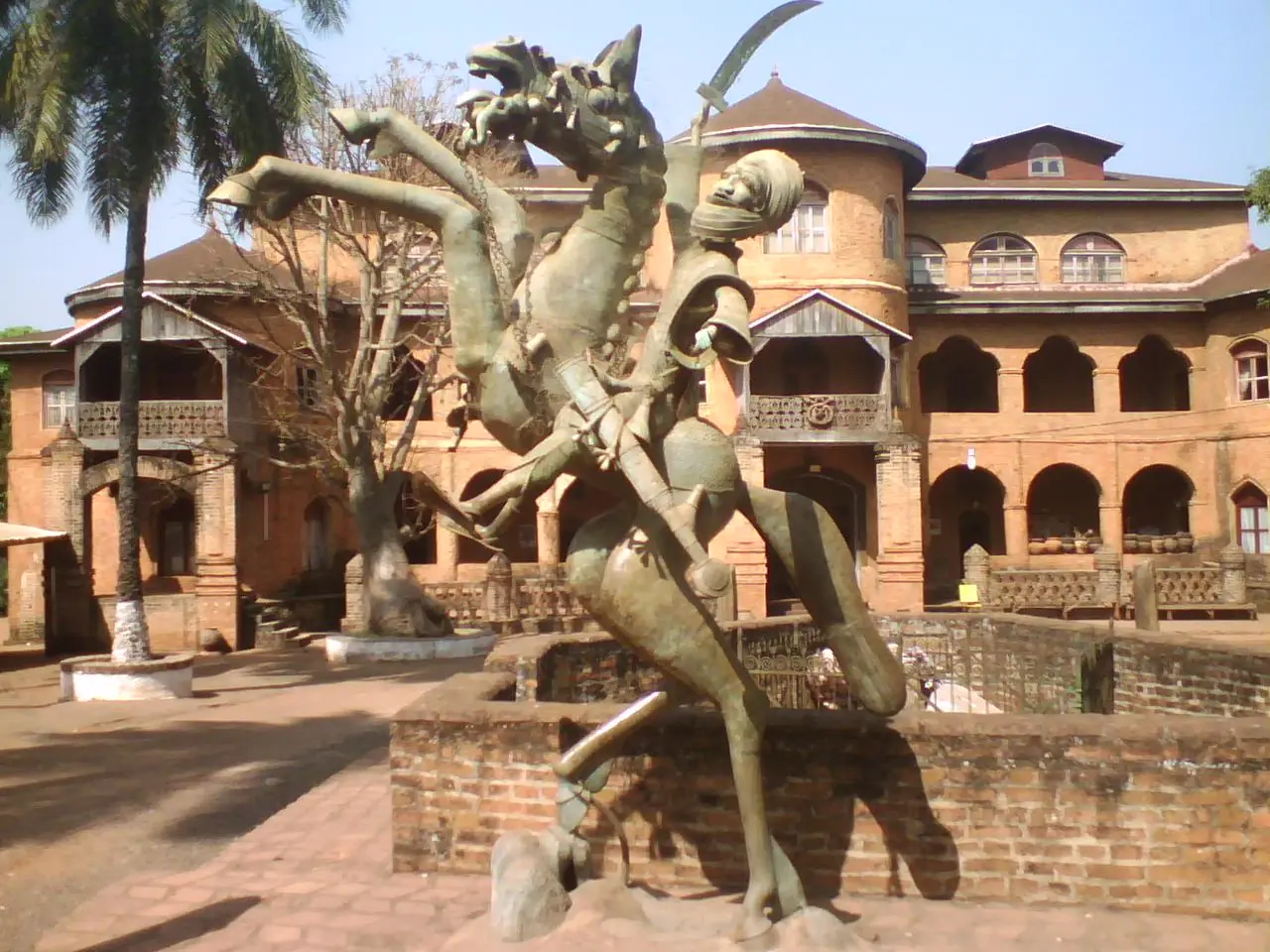
Bronze statue of a warrior horseman in front of the Foumban palace

A visual artist invited to exhibit abroad, a gallery owner shipping a series of canvases to a fair, a collector who is moving, a university lending objects for a study: each wonders whether the work may leave the territory, on what conditions and with what papers. The answer depends on the nature of the property. A contemporary creation is not treated like an old object, and a recognised or listed property is subject to strict rules.

The law of 18 April 2013 governing cultural heritage organises this circulation: recognised or listed property may not be permanently exported, and any departure of such property is subject to the prior authorisation of the Minister in charge of cultural heritage. This page guides you from the initial sorting of your documents to the issue of the authorisation.

  • A procedure online or at a regional delegation
  • An examination that protects heritage without hindering creation
  • A One-Stop Shop officer to guide you
See the conditions
One-Stop Shop

Apply online: Export of artworks

Open your file from this page: any applicable fee is displayed before any payment, submission is possible at any hour and you immediately obtain a file number. Keep it safe, as you will need it to follow the examination, to reply to a request for additional documents and to collect the authorisation before the work leaves. If in doubt about the nature of the property, seek advice from the regional delegation.

Fee payable 50,000 FCFA Online payment: Orange Money, MTN Mobile Money or bank card.
Submission Online, 24 hours a day You receive a file number to keep for tracking.
Before you begin

The conditions for exporting a work of art

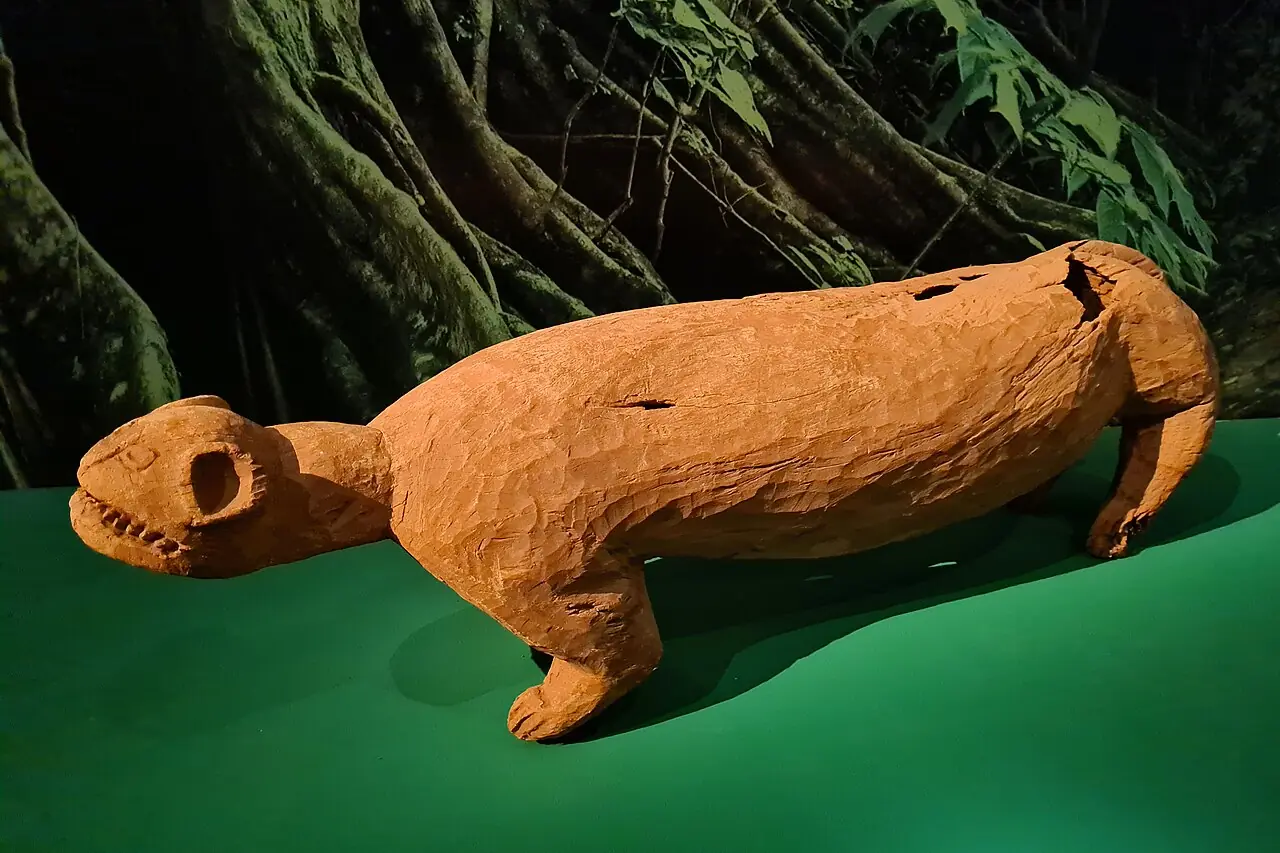
Totemic panther statue from Baha country, terracotta sculpture

Three conditions structure the examination: the work or object must be precisely identified; its origin and ownership must be established; and finally, the export must not breach the prohibitions that the law sets for heritage property.

Identify the property

Each item is described by its title or designation, its author or origin, its technique, its dimensions, its condition and its declared value. Several items shipped together are listed one by one: a batch of ten canvases is treated as ten separate lines, not as “an exhibition”.

Establishing origin and ownership

The applicant shows that they are the owner, or are mandated by the owner: invoice, deed of gift, certificate of authenticity issued by the artist, deposit contract with a gallery. An object whose provenance remains unclear is examined more closely, as the law allows the State to act for the repatriation of illicitly exported property.

Complying with the prohibitions

Cultural property that is recognised or listed may not be permanently exported. It may leave only temporarily, with the Minister’s authorisation, in particular for an exhibition or a study abroad. See the listing of a property and the listing and protection page. Objects from excavations fall under the legislation on archaeology.

ℹ️
Key points

In doubt about the status of an old object? Submit an application first: the examination determines whether it can leave, under what conditions and for how long.

Prepare the file

The documents in the file for exporting a work of art

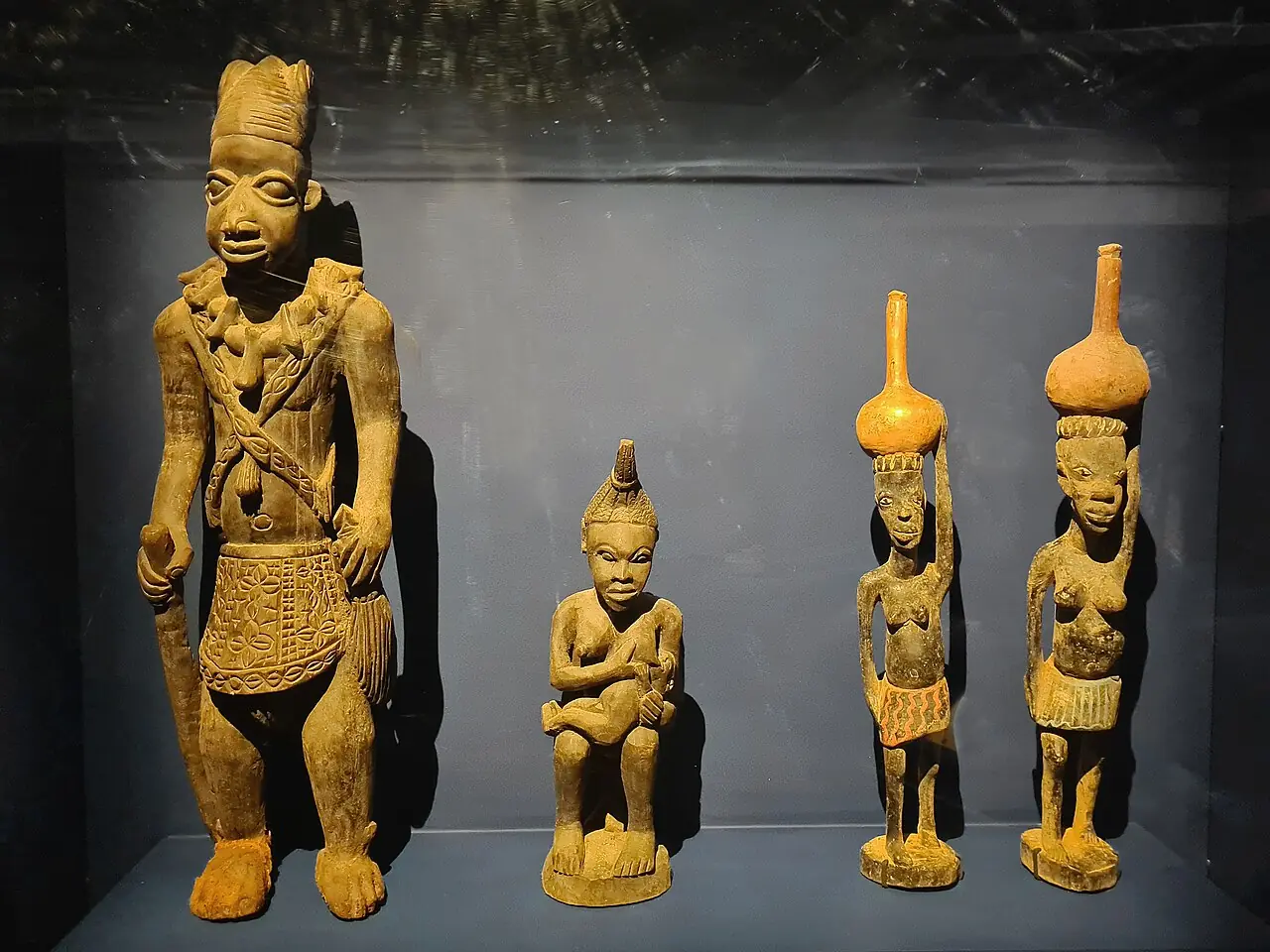
Carved wooden Bati-style statuettes displayed in a showcase

Five documents make up the file, whatever the reason for the departure.

  1. The export application form, available on the forms page;
  2. Photographs and a detailed description of each work;
  3. Proof of ownership: invoice, deed of gift, certificate of authenticity or the owner’s mandate;
  4. The destination, duration and reason for the export;
  5. The identity document of the applicant or, for an organisation, its statutes and its representative’s mandate.

Taking care over the photographs

Photograph each item from the front, back and in detail (signature, inventory number, signs of wear) against a neutral background, with a visible scale. These images are used for the examination, but also to record the condition of the work on its return in the case of a temporary export.

Documents according to the reason

For an exhibition, add the organiser’s invitation and the loan agreement. For a sale, the pro forma invoice or the gallery’s mandate. For a scientific study, the letter from the host institution. The agreements on artist exchanges and the international outreach programmes often provide templates for these documents.

Completing it without errors

The export application form, section by section

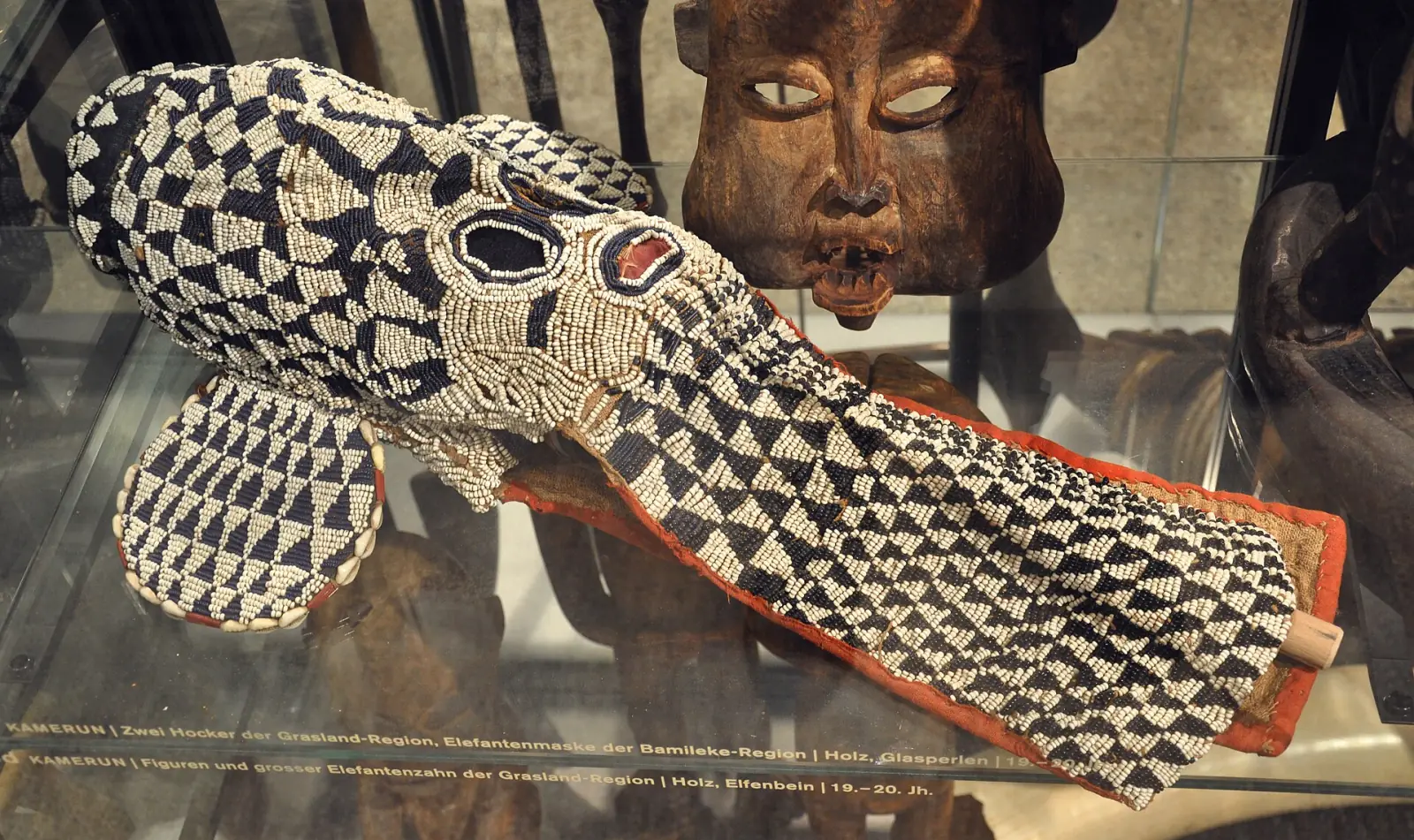
Beaded mask with black and white checkerboard patterns, in a museum display case

The form is completed online from your user account or with the help of an officer at a delegation. It comprises four blocks.

The applicant

Full identity, capacity (artist, owner, gallery owner, agent, institution), contact details and e-mail address. If you act for a third party, attach the mandate: the authorisation is issued in the owner’s name.

Details of the works

A table lets you add one line per item, with the designation, author, date, technique, dimensions, approximate weight and declared value. The declared value must be truthful: it is also used to calculate the royalty when the export forms part of a regular commercial activity.

The export project

Reason (exhibition, sale, study, loan), country and city of destination, address of the organiser or buyer, departure and return dates, carrier and insurance. For a temporary departure, a return date is essential.

The declarations

You attest to the accuracy of the information and undertake to comply with the return conditions. Technical terms are explained in the online help guide; the amount of fees is announced before payment and detailed in the fees.

ℹ️
Tip

Prepare a single file bringing together the photographs of each item, named with the title of the work: you will save time at submission.

After submission

Track the application for exporting a work of art

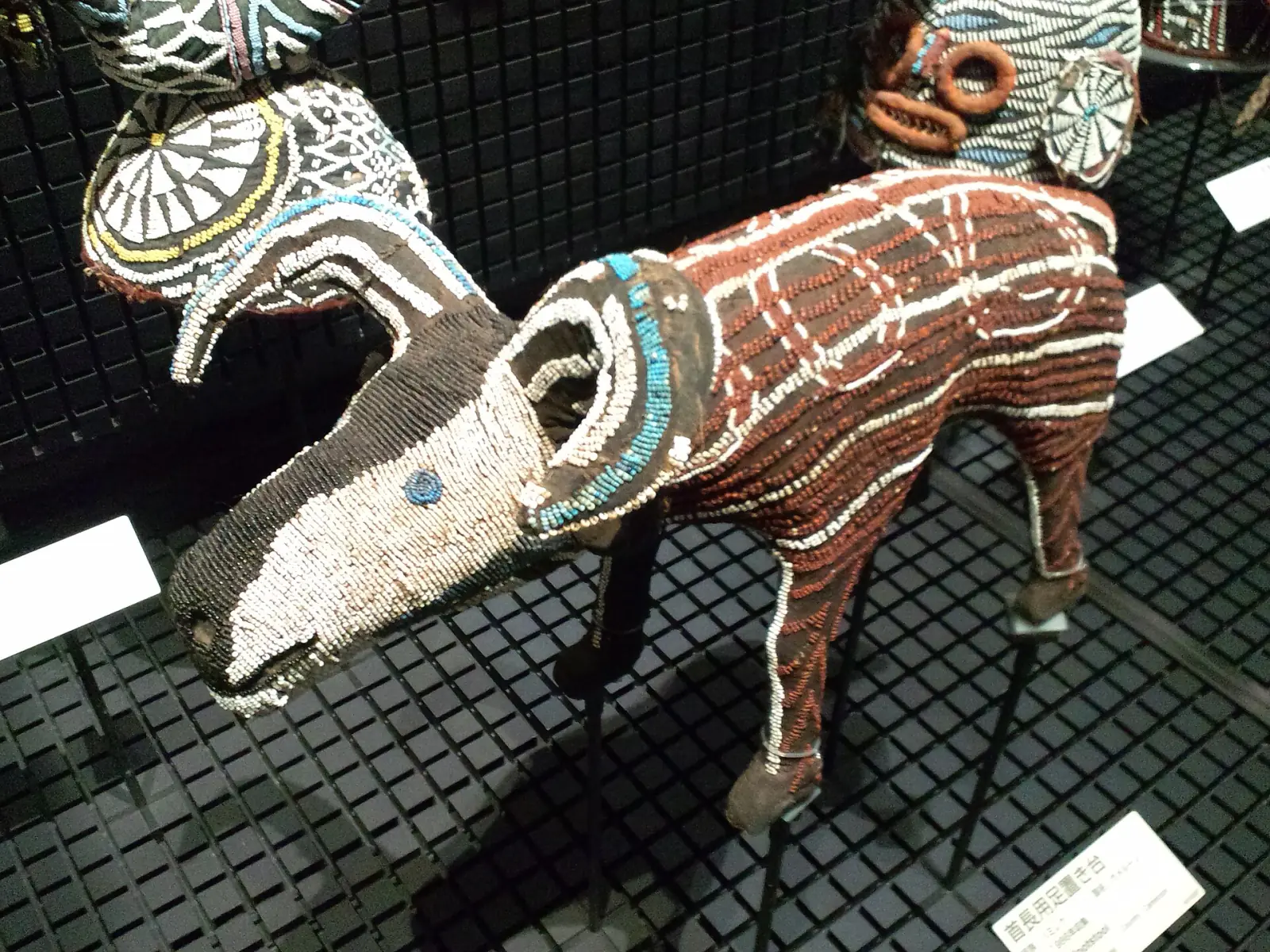
Beaded animal figure on a frame, a Bamileke art object displayed in a case

Once confirmed, an acknowledgement of receipt and a file number are assigned to you. With your e-mail address, they open the file tracking page where the current step appears: receipt, checking of documents, examination by the competent service, decision, issue of the authorisation.

What the administration examines

The officers check that the documents are complete, that the property is neither recognised nor listed — or that, if it is, the application is limited to a temporary departure —, that its provenance is consistent and that the return conditions are realistic. A paper-based examination is sufficient for most contemporary works; an old object may require an on-site expert examination, with the property presented to a curator.

Possible decisions

The authorisation is granted for a permanent departure (contemporary work or copy), for a temporary departure with a return date, or refused with reasons. For property subject to the legislation on tangible heritage, the decision lies with the Minister.

When the work returns

For a temporary export, notify the delegation of the property’s return; it records its condition and closes the file. Plan ahead: submit the application well before the departure date, as no transport may leave without the authorisation in hand.

Who it is for

Who is concerned by the export of artworks, and in which special cases?

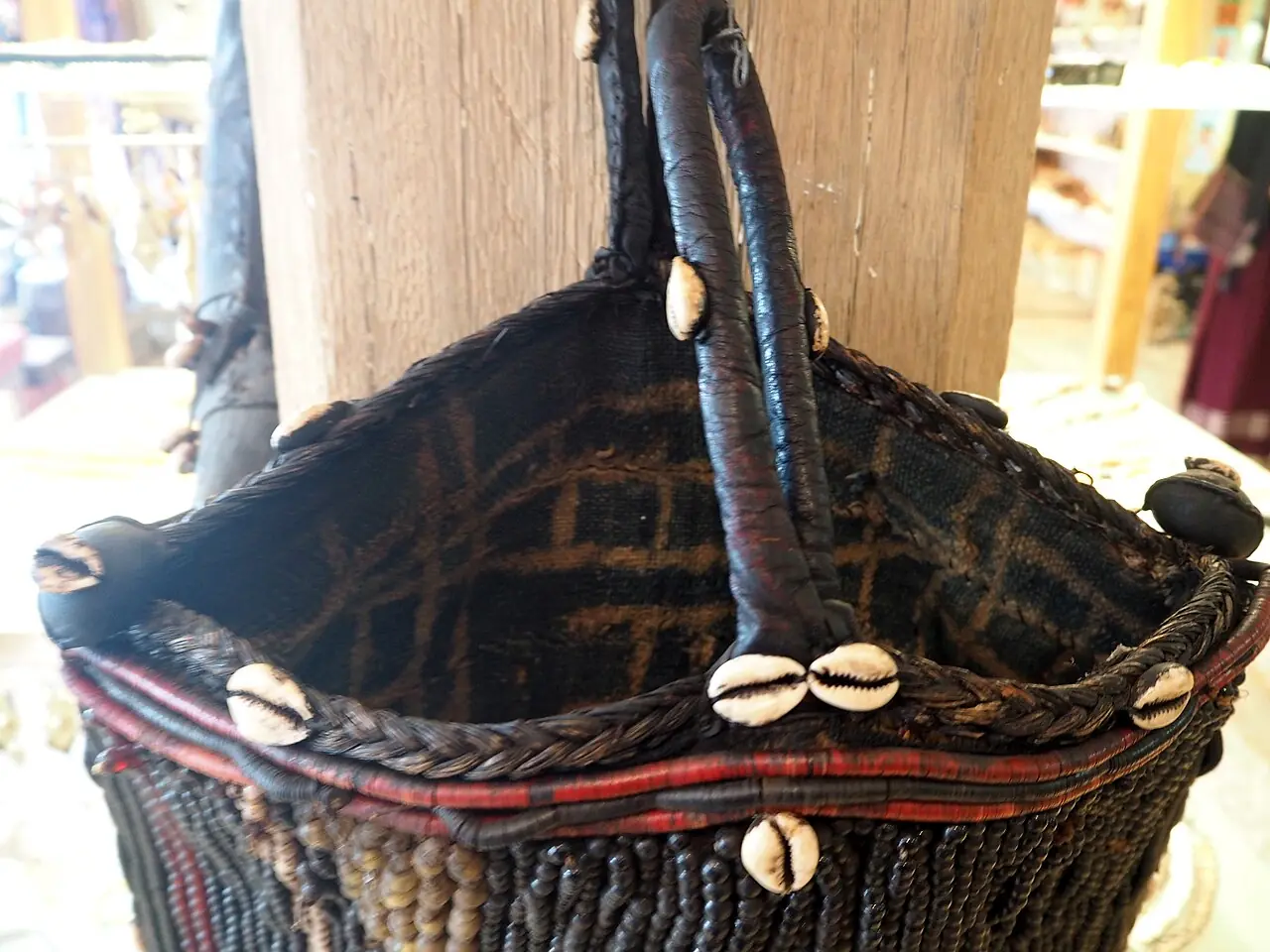
Bamileke woven bag decorated with cowrie shells

Artists, gallery owners, collectors, cultural institutions, universities, carriers and exhibition curators who wish to take a work or art object out of the territory, temporarily or permanently.

To avoid

Common mistakes before exporting a work of art

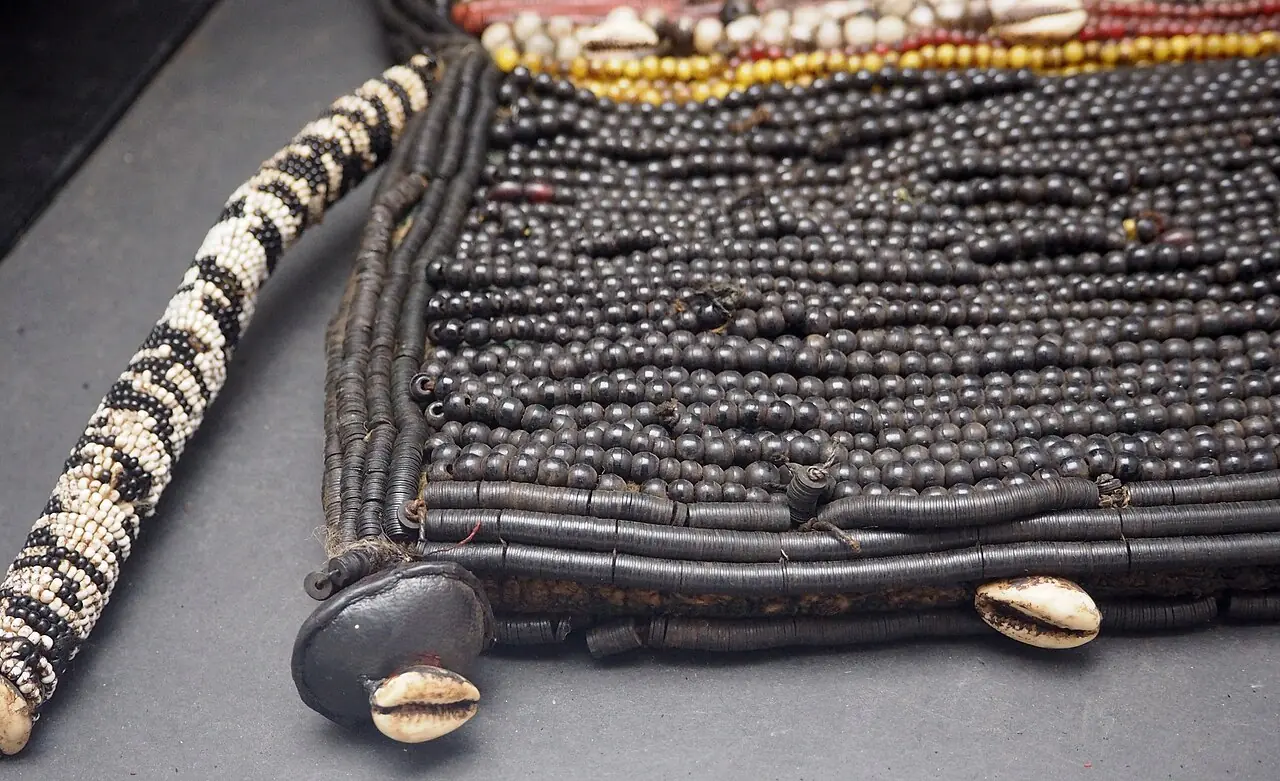
Detail of a Bamileke piece embroidered with beads and cowrie shells

The most common is to entrust the work to a carrier before obtaining the authorisation, thinking that “everything gets sorted out at the airport”. Without papers, the parcel may be held, or even seized, and irregular export exposes the sender to penalties. The second mistake is to under-declare the value to reduce fees or the insurance premium: in the event of loss or inspection, the discrepancy turns against the declarant.

Other pitfalls: listing a “collection” without detailing each item; not providing for a return date for a temporary departure; forgetting the mandate when acting on behalf of an owner; neglecting the status of an old object that might be classed as recognised property; confusing the export of a work with sending a digital sample. In the event of suspected trafficking, the page on combating illicit trafficking explains everyone’s obligations, and the restitution of cultural property recalls why these rules exist.

Step by step

Export a work of art in six steps

Qualify the property

Determine whether it is a contemporary creation, an old object or property liable to be recognised or listed, and gather the supporting documents.

Document each item

Photograph, measure and describe each work; prepare the invoice or the artist’s certificate of authenticity.

Complete the application

State the reason, destination, departure and return dates, carrier and declared value.

Submit and track

Confirm the file, note the number assigned and monitor the tracking; reply quickly to any request for additional documents.

Collect the authorisation

Once the decision is issued, download the authorisation or collect it at the delegation, and give a copy to the carrier.

Close the file

For a temporary departure, notify the return of the work so that its condition is recorded and the file is closed.

At a glance

Timeframes, cost and submission: export in brief

QuestionAnswerDetails
Where do I apply?At the One-Stop Shop or at a regional delegationOnline submission is possible at any hour from your account
How much does it cost?Any applicable fee is indicated before paymentSee the fees; a royalty may be added for a regular commercial activity
How long does it take?Varies according to the nature of the propertyShorter for a contemporary work, longer if an on-site expert examination is useful
How do I track it?With the file number and e-mail addressA notification is sent at each change of step
What do you receive?An authorisation or a reasoned decisionTo be presented to the carrier and, if necessary, to the customs services
And on return?A condition report at the delegationCompulsory for a temporary export, in order to close the file
The file from start to finish

The journey of a file for exporting a work

SubmissionAcknowledgement and number

You receive an acknowledgement of receipt and a file number, which allow you to follow the examination from your account.

VerificationDocuments and provenance

The service ensures that the five documents are present and that the origin of the property is convincingly established.

ReviewStatus of the property

The service determines whether the property is recognised, listed or liable to be, and consults the heritage directorate where necessary.

ExpertiseOn-site examination

For an old object, a curator may ask to see the property and record its condition before any decision.

DecisionAuthorisation or refusal

The decision is reasoned; the authorisation specifies whether it is a permanent or temporary departure and the return date.

ReturnClosure of the file

On the return of a loaned work, its condition is recorded and the file is closed, which facilitates your future applications.

Close to you

Submit your artwork export application in your region

Each region has a Ministry delegation that welcomes you and receives your file.

User situations

They exported their works

“
The examination of my file was clear: the service explained to me the conditions for the work’s return and the date not to be exceeded.
A gallery owner
Douala
“
The certificate of authenticity speeded up the procedure; I was able to ship my canvases for a biennale within the planned timeframe.
A visual artist
Yaoundé
“
For the loan of masks to a partner museum, the delegation directed us to the temporary export procedure from the outset.
A university curator
Dschang
“
I was coming back with a lawfully acquired collection: the customs receipt allowed me to re-export it without difficulty.
A collector
Bafoussam
If your file stalls

Refusal, delay, seizure: appeals in matters of artwork export

Bamileke elephant mask of beads, cloth and fibres with large circular ears

If the file is incomplete, the service specifies the document expected and suspends the examination until you reply. In the event of refusal, the decision is reasoned: recognised or listed property whose permanent departure is prohibited, unestablished provenance, insufficient return conditions. You can then complete the file, modify the project (a temporary departure instead of a permanent one) or contest.

For all audiences

Exporting a work of art accessible to all: support and accessibility

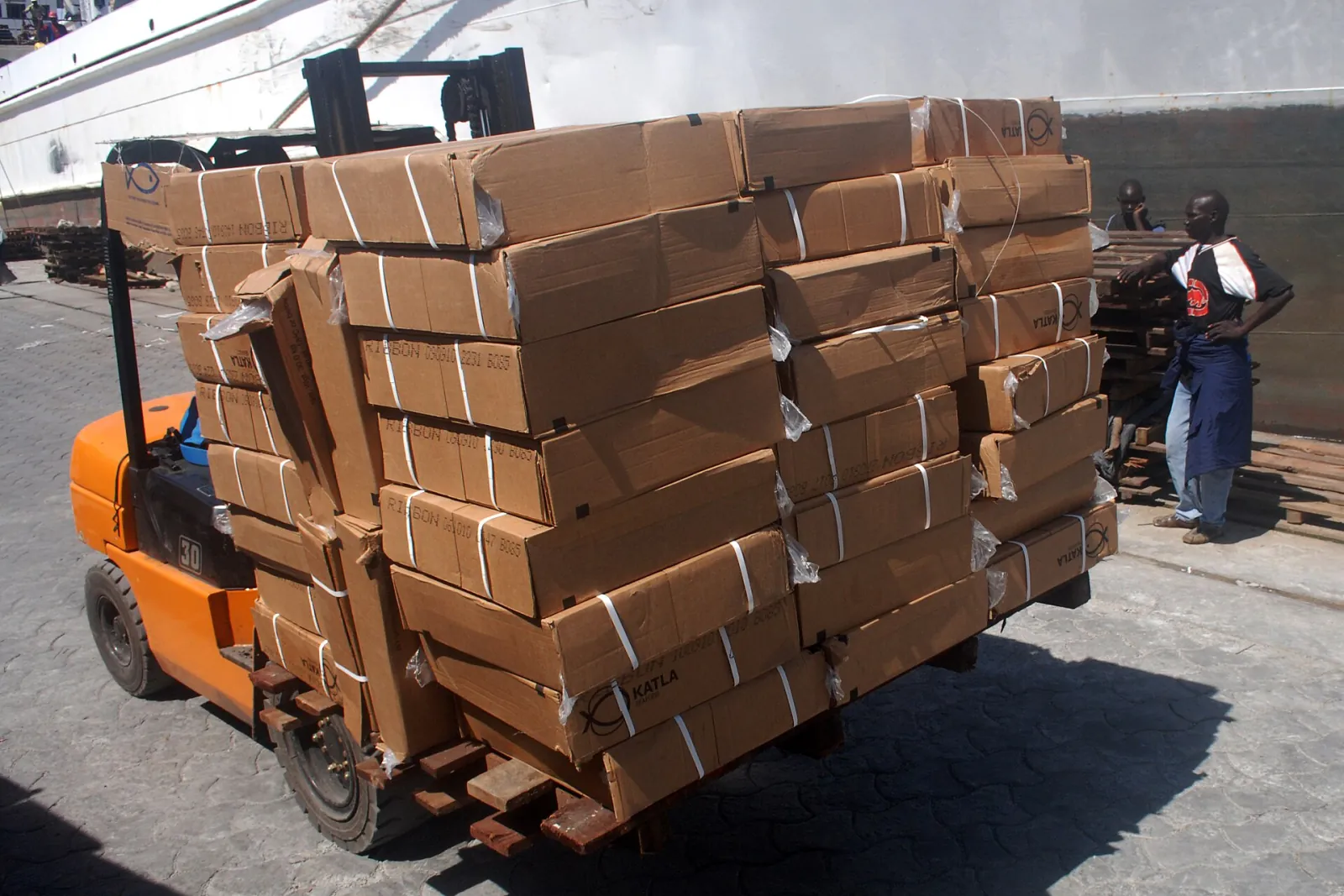
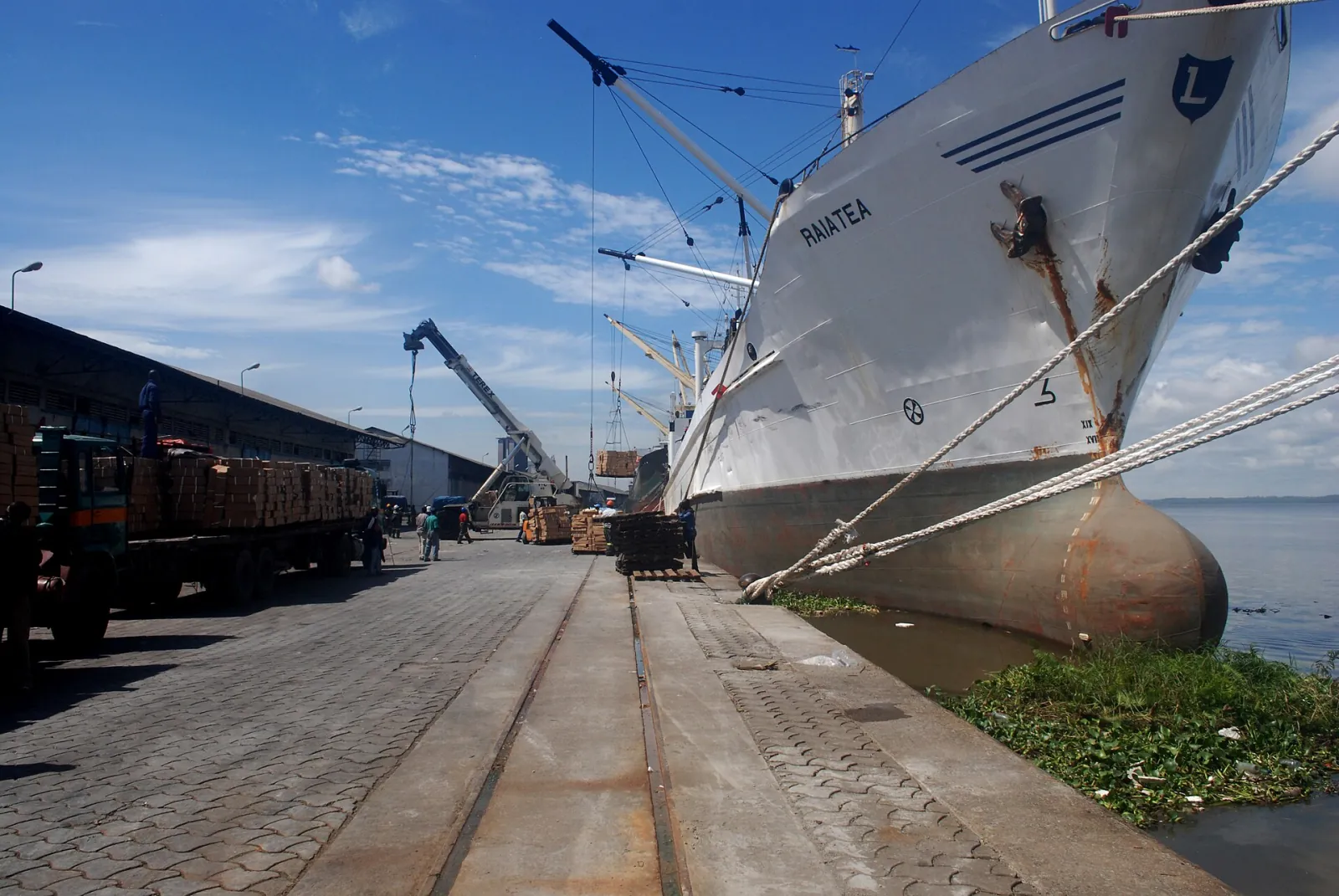
Forklift carrying a stack of cardboard boxes on the quay of the port of Douala

Artists far from the large cities must not be penalised: the regional delegations receive the file, help photograph and describe the works, and forward the documents to the central service. The site complies with accessibility rules (keyboard navigation, screen reader, contrasts), and officers can explain the procedure in a national language where possible.

People with disabilities can request an adapted appointment or remote assistance. The Ministry’s quality commitments are set out in Quality and accessibility; addresses, days and hours are in Hours and addresses. Museums and institutions can also rely on the national museums for the conservation of items in transit.

To download

The documents for exporting a work of art

Glossary

The terms of exporting a work of art

Cultural property

Object, monument, site or practice that has heritage value for a community, a region or the country.

Recognised property

Property whose belonging to cultural heritage has been legally admitted; it may subsequently be listed.

Listed property

Property to which the State grants heritage value and enhanced protection, which prohibits its permanent departure.

Certificate of authenticity

Document certifying the origin and the author of a work.

Temporary export

Departure of a work subject to an obligation to return on a set date.

Permanent export

Departure without return, impossible for recognised or listed property.

Provenance

History of the ownership and movements of an object.

Levy

Sum due for the export of cultural property in a regular commercial activity, capped by law.

Repatriation

Action by the State to bring back property that was illicitly exported.

Temporary admission

Customs regime that allows equipment to be imported for a limited time without paying duties.

Copy

Reproduction of a cultural property; its export is subject to a separate authorisation.

Customs receipt

Document issued on entry of lawfully imported property, which is authoritative on re-export.

On the site

Around export: protection and circulation

Resources

Useful links for exporting a work of art

To act

We support you in exporting a work

Need for prior advice

In doubt about the status of an object? Ask the delegation before incurring transport costs.

Find my delegation

Create your account

An account keeps your files, authorisations and exchanges with the service.

Open an account

Online help

A guide details the form fields and the documents expected.

Open the help

Report trafficking

Are you aware of a suspicious departure of objects? Report it in complete confidence.

Report
Questions

Your questions about exporting a work of art

Is a contemporary work affected?

Yes, an application is generally necessary. The procedure is quicker when the artist is the applicant and provides a certificate of authenticity, photographs and the reason for the departure. The service mainly checks that the work is not a heritage property.

Can listed property leave the territory?

Not permanently: the law prohibits the permanent export of recognised or listed property. A temporary departure remains possible with the Minister’s authorisation, in particular for an exhibition or studies abroad, with a return date and guarantees.

What is the risk of exporting without authorisation?

Irregular export may result in the property being held or seized and in penalties. The State may also undertake repatriation actions for property that left illicitly. It is better to submit the application well before departure.

How can I prove ownership of a work?

By an invoice, a deed of gift, a certificate of authenticity from the artist or a deposit contract with a gallery. For an old object, attach any available evidence of provenance: old photographs, a family statement, a collection inventory.

Is authorisation required for a loan to a foreign museum?

Yes. Property exported for an exhibition, a study or in the context of loans and exchanges with foreign institutions may leave only with the authorisation of the Minister in charge of heritage, with conditions for return and insurance.

Can a copy or reproduction of a heritage property be exported?

Its export remains subject to prior authorisation. Where it is established that the object is a copy, a definitive export authorisation may be granted. Attach a document certifying the manufacture of the copy.

Do I have to pay to export a work?

The fee for the procedure is announced before payment and appears on the fees page. Where the export forms part of a regular commercial activity, the law additionally provides for a capped royalty, set by joint order.

I imported a work: can I re-export it?

Yes, if it was lawfully imported and declared to customs. The receipt issued on entry is authoritative and must be produced on re-export. Keep it with the purchase documents.

Whom should I contact if my file is not progressing?

To the regional delegation that received the application, quoting your file number, and then to the central Cultural Property Circulation Service. The Ministry’s mediator may be contacted if the blockage persists.

Competent service

Contact cultural property circulation

Address

Cultural Property Circulation Service
Ministry of Arts and Culture
Quartier du Lac – Ministerial Zone
P.O. Box 1053 Yaoundé, Centre Region, Cameroon

Reach us

+237 6 51 70 58 41

contact@minac.gov.cm

Opening hours

Monday to Friday, 8 am to 4 pm

An artwork to send abroad

Online deposit takes a few minutes; you receive a file number immediately.

Submit online
WhatsApp