
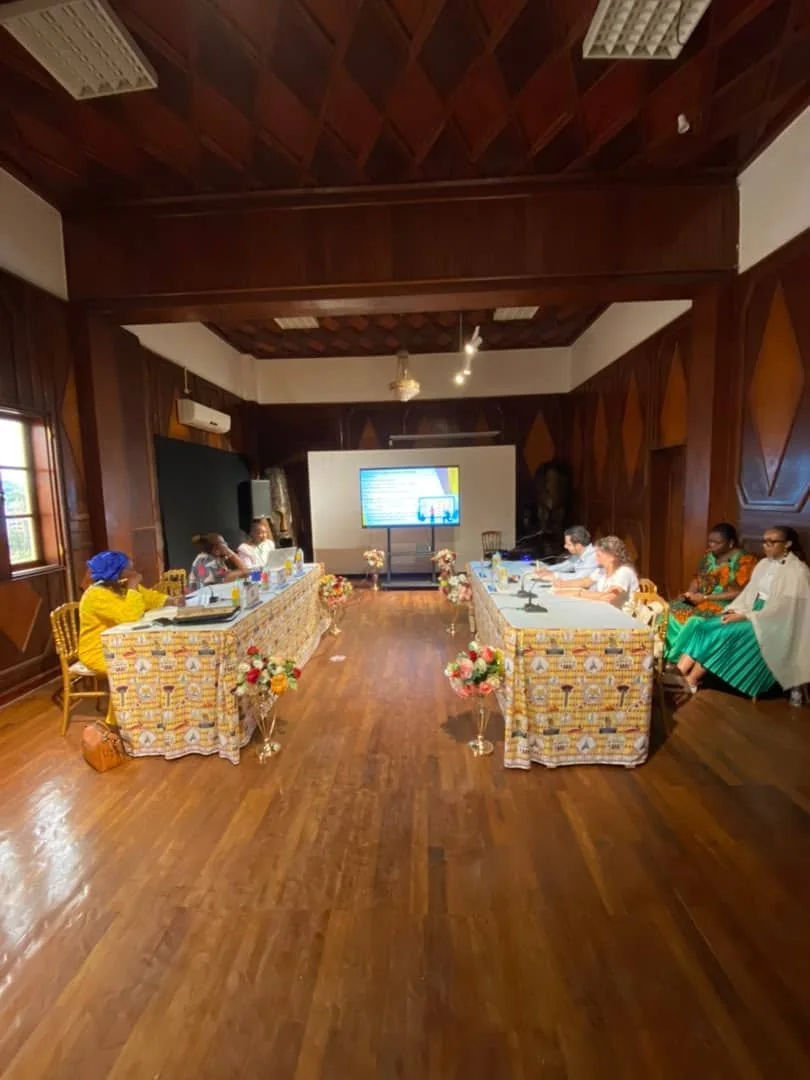
The Cameroon-Colombia benchmarking mission continued today with an eighth presentation by Mrs Marie Thierry EDJOA, Director of Cultural Heritage. The presentation focused on the theme: Digital tools, databases and interoperability. From these exchanges, it emerged that the fight against illicit trafficking is no longer waged solely with physical and material resources but also with digital technology. Digital technology has today become the best weapon for traceability and proof. Cameroon has chosen a digital transition for its heritage. This digital strategy is structured around three axes, namely:
Digitise: create the identity card of each item (before protecting, one must know)
Here we have the mass digitisation of 3 collections:
- 3D descriptive record: HD photo, 3D scan, digital dimensions, materials, state of conservation.
- cultural context: to determine which community the object belongs to, its use and its custodians.
- geolocation: museums, chiefdoms or archaeological sites.
Centralise: the national heritage database (digitising without centralising is scattering)
MINAC plans to develop a centralised national database with 3 key functions:
- inventory: record 100% of listed public and private movable heritage
- certification: issue the mandatory export certificate
- alert: automatically flag any wanted/stolen/missing object
In time, this secure, State-managed database will become Cameroon’s “bank of evidence”. When we claim an object abroad, we attach its record from this database.
Interoperability: connect Cameroon to the world (a national database alone is not enough)
- Interpol Psyche: so that as soon as an object is seized abroad, we are alerted in real time
- the UNESCO database: to publish our red lists and our search notices
- foreign museum platforms: to cross-check our inventories against other collections
- the ICOM Red List (the International Council of Museums)
In short, digital technology does not replace humans but protects them. With digitisation tools, Cameroon is equipping itself with 21st-century means to protect its memory.