
Permit for works on a listed property
This procedure obtains the Ministry’s prior approval before undertaking repair, restoration or development works on a listed monument or property.
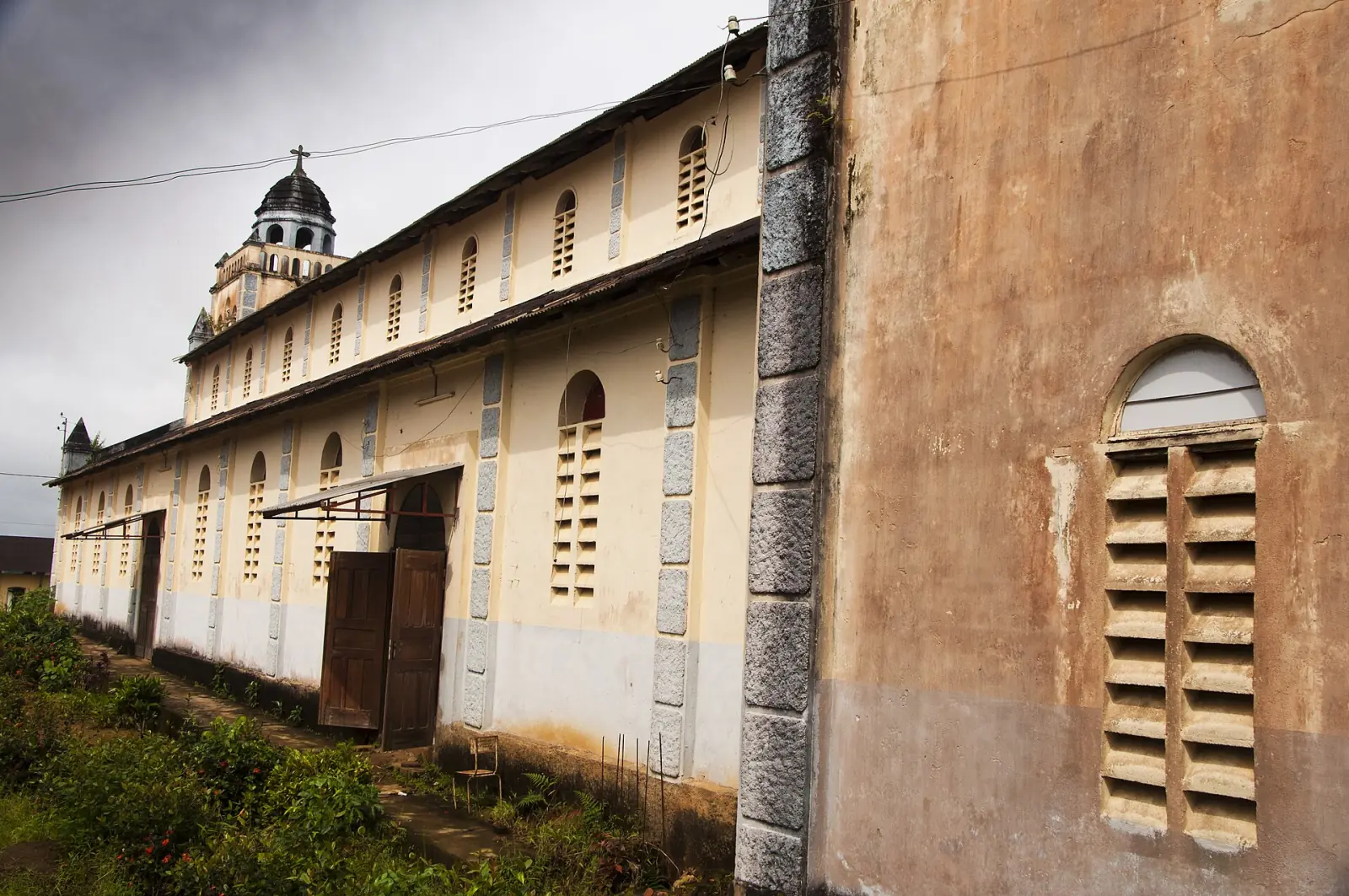
A listed property, whether a chiefdom hut, a palace, a colonial church or an object, may not be modified without the Ministry’s approval. The works authorisation governs interventions so that they respect the original materials, techniques and appearance. You receive a written decision that approves the project, specifies the requirements to be followed and designates the officer in charge of monitoring. This procedure protects the owner in the event of an inspection, avoids irreversible damage and gives access to free technical advice from the Directorate of Cultural Heritage.
Documents to provide
- Works authorisation application form completed online
- Copy of the listing order or the certificate of entry in the register
- Detailed description of the works, with plans and sketches before and after the intervention
- Recent photographs of the condition of the property and the areas to be treated
- Estimate and schedule for the execution of the works
- References or qualifications of the company, architect or craftspeople carrying out the works
- Title deed, power of attorney or management mandate of the applicant
- Proof of payment of the processing fee
Before you begin
- The property must be listed, and the applicant must state the listing number shown on the order or in the register of listed properties.
- The works must be described precisely: nature, extent, materials used, techniques, schedule and the company or craftspeople selected.
- The company or craftspeople must demonstrate suitable competence, in particular for traditional materials such as rammed earth, carved wood or thatch.
- The applicant must undertake to suspend the works and notify the Ministry in the event of an unforeseen discovery or damage noted during the works.
- Fee payable
- 30,000 FCFA
- Turnaround
- The authorisation is issued within 20 to 30 working days of receipt of a complete file
- Validity
- Valid for 12 months from notification, renewable once if the works have begun
- Documents to provide
- 8
Step by step
- File submissionThe file is submitted online with the plans, photographs and description. Processing begins after the file has been checked for completeness.
- Preliminary visitAn officer of the regional delegation visits the site to record the condition of the property and check that the project fits the premises.
- Technical opinionThe Directorate of Cultural Heritage assesses the method, materials and risks of alteration. It may propose requirements or modifications.
- Authorisation decisionThe Minister issues the authorisation, subject to requirements, or notifies a reasoned refusal. The decision is attached to the applicant’s space.
- Monitoring and acceptanceAn officer follows the works and draws up a report of acceptance of the works. It is sent to the owner and added to the property file.
Who is this procedure for?
The application is submitted by the owner of the listed property, their representative, the manager, or the company carrying out the works with a power of attorney. It also concerns communities that maintain a listed chiefdom, and local authorities responsible for protected public buildings.
Processing time. The authorisation is issued within 20 to 30 working days of receipt of a complete file. Emergency works may be given an accelerated opinion justified by a risk of collapse.
Special cases
In the case of a collapsed roof or a safety risk, a protective authorisation may be granted within a few days to make the building weatherproof. The full project then follows the ordinary procedure.
The file specifies the community craftspeople and the construction techniques used. The officer ensures that know-how is preserved by relying on it rather than on modern materials.
Electrical installation, sanitary facilities or air conditioning: the work must be reversible and must not affect original elements. The Ministry may require a trial on a test area.
Useful templates and documents
- Condition report on a workMinutes
- Restoration certificateCertificate
- Preventive conservation planReport
- Restoration reportReport
Frequently asked questions
Can I carry out minor works without authorisation?
Even minor works, such as plastering or repairing a door, alter the appearance of the property and must be declared. The officer will tell you whether a simplified procedure applies.
Who bears the cost of the works?
The owner is responsible, but the Ministry may grant technical support or financial assistance depending on available resources and the interest of the property. This aid is the subject of a separate application.
What happens if the works have already begun?
The works must be suspended immediately and declared. Regularisation may be considered, but penalties and restoration to the original state may be imposed if the works have altered the property.
Does the works authorisation replace a building permit?
No. It is in addition to the planning permissions required by the texts in force. The two procedures are to be pursued in parallel, and each administration gives its decision separately.
Reference texts
- Law No. 2013/003 of 18 April 2013 governing cultural heritage in CameroonLaw
- Texts in force relating to works on listed monumentsText
- User guide: restoring a listed propertyGuide
Services that process the file
- Directorate of Cultural Heritage
- Listing and Protection Service
- Regional Delegations
Conseil. Joignez des photographies annotées de chaque zone à traiter : l’agent pourra juger le projet sans visite supplémentaire et la décision sera rendue plus rapidement.
Submit the file
Fee payable: 30,000 FCFA
Have an account? Sign in to pre-fill the form and attach your documents.