
Art craftsperson card
Recognises the skills of artisans who make traditional or contemporary art objects and facilitates their access to markets, fairs and the Ministry’s support schemes.
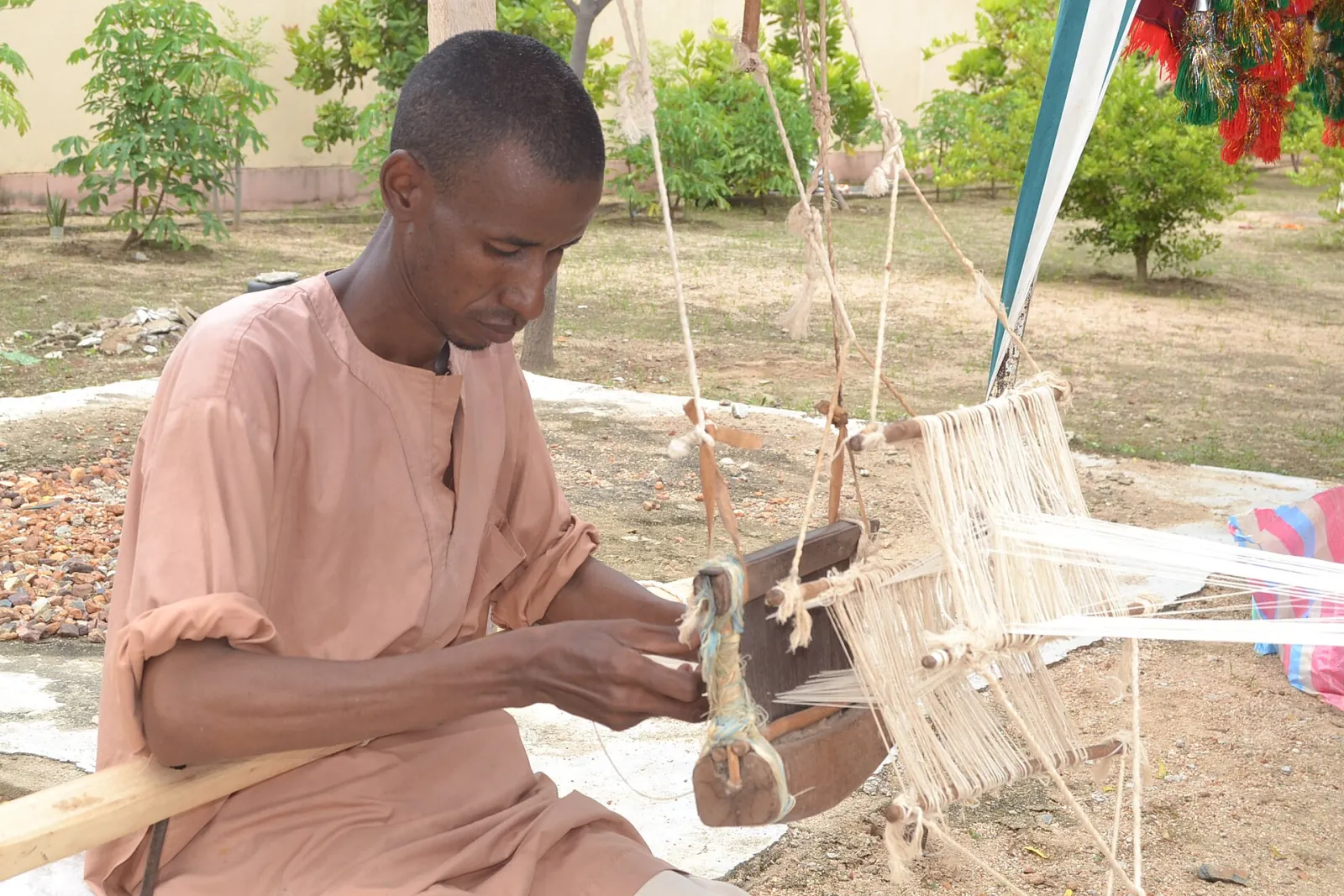
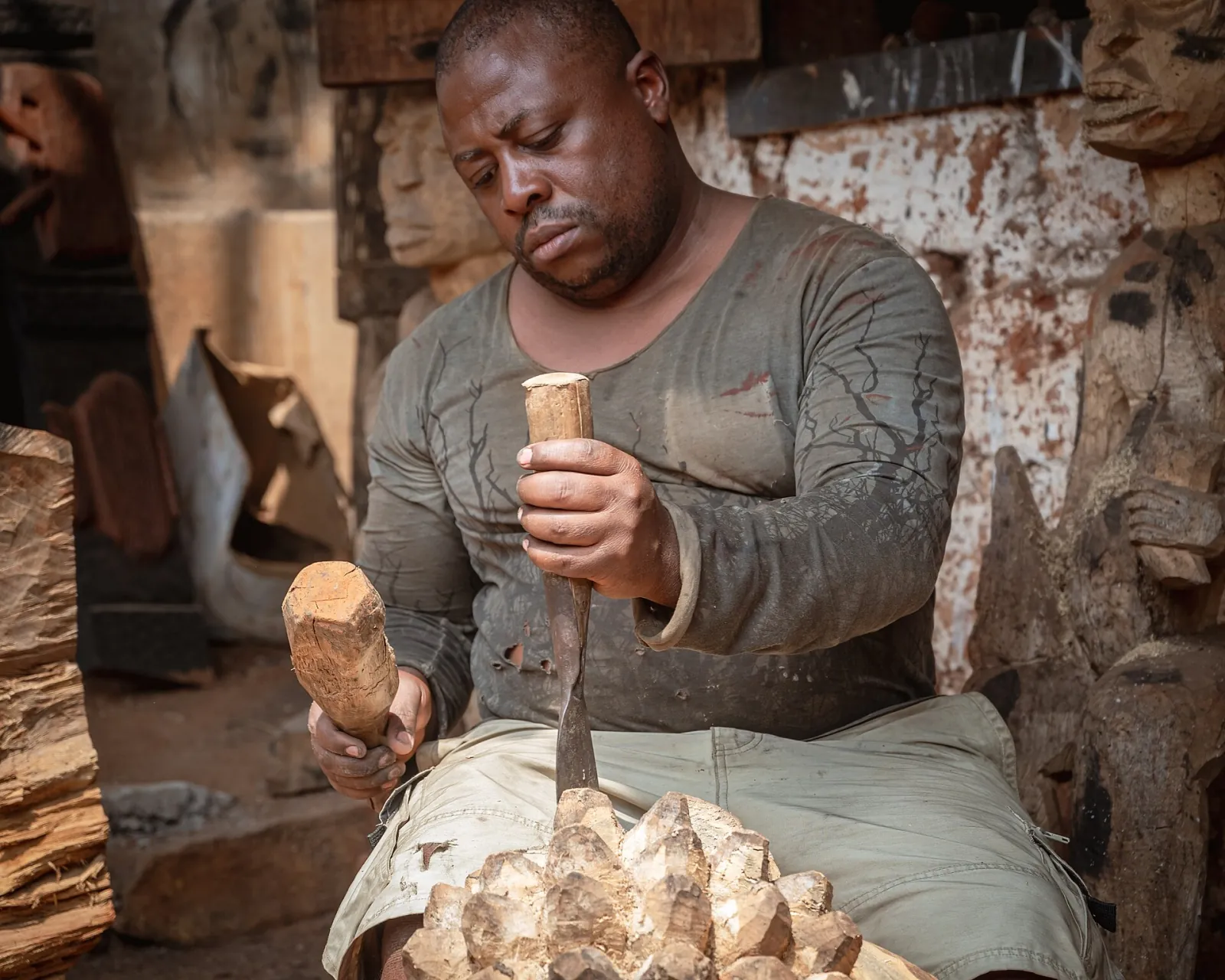
The art artisan card distinguishes artisans who produce objects of aesthetic and cultural value: wood carving, Foumban bronze, pottery, weaving, basketry, beadwork, dyeing, leatherwork. It certifies that the production is personal, derives from inherited or acquired know-how, and is not merely industrial. It opens access to fairs, calls for projects and specialised sales channels, and may be requested by buyers and exporters. Processing is based on verification of a workshop or of actual works, sometimes in liaison with the nearest Regional Delegation.
Step by step
- Identification of the tradeChoose your speciality in the online form and describe your techniques and materials.
- File submissionUpload photographs of the workshop and of your pieces, together with certificates and proof of activity.
- Payment of the feeThe fee payable is displayed before payment; the receipt is added to the file.
- Verification on documents or on siteThe Cultural Property Circulation Service, together with the Regional Delegation, may visit the workshop or ask for a demonstration of your skills.
- Issue of the cardThe card states your speciality and is handed to you at the One-Stop Shop or the Regional Delegation.
- Fee payable
- 8,000 FCFA
- Turnaround
- Processing takes 15 to 25 working days
- Validity
- Valid for 3 years, renewable.
- Documents to provide
- 7
Documents to provide
- Copy of the national identity card
- Recent photographs of the workshop and of the manufacturing process
- Photographic portfolio of six to ten works, captioned with materials and dimensions
- Certificate from a master artisan, a chamber of trades, a cooperative or a village chief
- Proof of activity: orders, invoices, participation in fairs or markets
- Certificate of the workshop’s address or authorisation to occupy the premises
- Two recent passport-size photographs
Before you begin
- Personally practise an identified art craft, producing objects whose manufacture relies on recognised manual know-how.
- Have a workshop, production site or identifiable workspace, which may be shared within a cooperative.
- Show at least two years of practice through works, orders, sales or a master artisan’s certificate.
- Not limit one’s activity to reselling objects made by third parties or importing finished objects.
Who is this procedure for?
Any artisan, self-employed or a member of a workshop or cooperative, who habitually makes art or applied art objects. It is of particular interest to the sculptors of Foumban, the potters of the Far North and the weavers of the West. Mere resellers of objects made by others are not eligible.
Processing time. Processing takes 15 to 25 working days. A workshop visit in a remote region or an insufficient photographic portfolio may extend this time.
Frequently asked questions
Do I need to be an artist to obtain this card?
No. The art artisan card concerns manual creative trades. A sculptor who exhibits in galleries under their own name may also apply for the artist card if they meet its conditions.
Does the card allow me to export my objects?
It attests to the artisanal origin and facilitates certain formalities. For pieces of heritage value, an authorisation for the circulation of cultural property is still required.
Will my workshop be visited?
Not systematically. A visit is planned only if the photographic portfolio is not sufficient or if there is doubt about the authenticity of the production. You will be notified in advance.
Can I use the card at markets?
Yes, you may show it to organisers of art fairs and markets, and to buyers, to demonstrate the artisanal and personal nature of your work.
Special cases
In a potters’ cooperative, each woman potter submits her own application, but the workshop can be described just once in a joint certificate signed by the manager.
A master sculptor who trains apprentices may mention this. Students do not receive the card until they have a verified independent production.
An artisan who combines traditional techniques with salvaged materials remains eligible if the file demonstrates the manual work and artistic value.
Useful templates and documents
- Pro forma invoiceInvoice
- Artist fileProfile
- Standardised inventory sheetProfile
Reference texts
- Law No. 2013/003 of 18 April 2013 governing cultural heritage in CameroonLaw
- Decree on the organisation of the Ministry of Arts and CultureDecree
- User guide to the art craftsGuide
Services that process the file
- Directorate of Cultural Heritage
- Regional Delegations
Conseil. Photographiez vos pièces à la lumière du jour sur un fond neutre, avec une règle ou un repère de taille visible : les images nettes accélèrent l’examen.
Submit the file
Fee payable: 8,000 FCFA
Have an account? Sign in to pre-fill the form and attach your documents.