
Art craft workshop approval
Recognises an arts and crafts workshop that produces creative or traditional objects, so that it benefits from official recognition and promotion schemes.
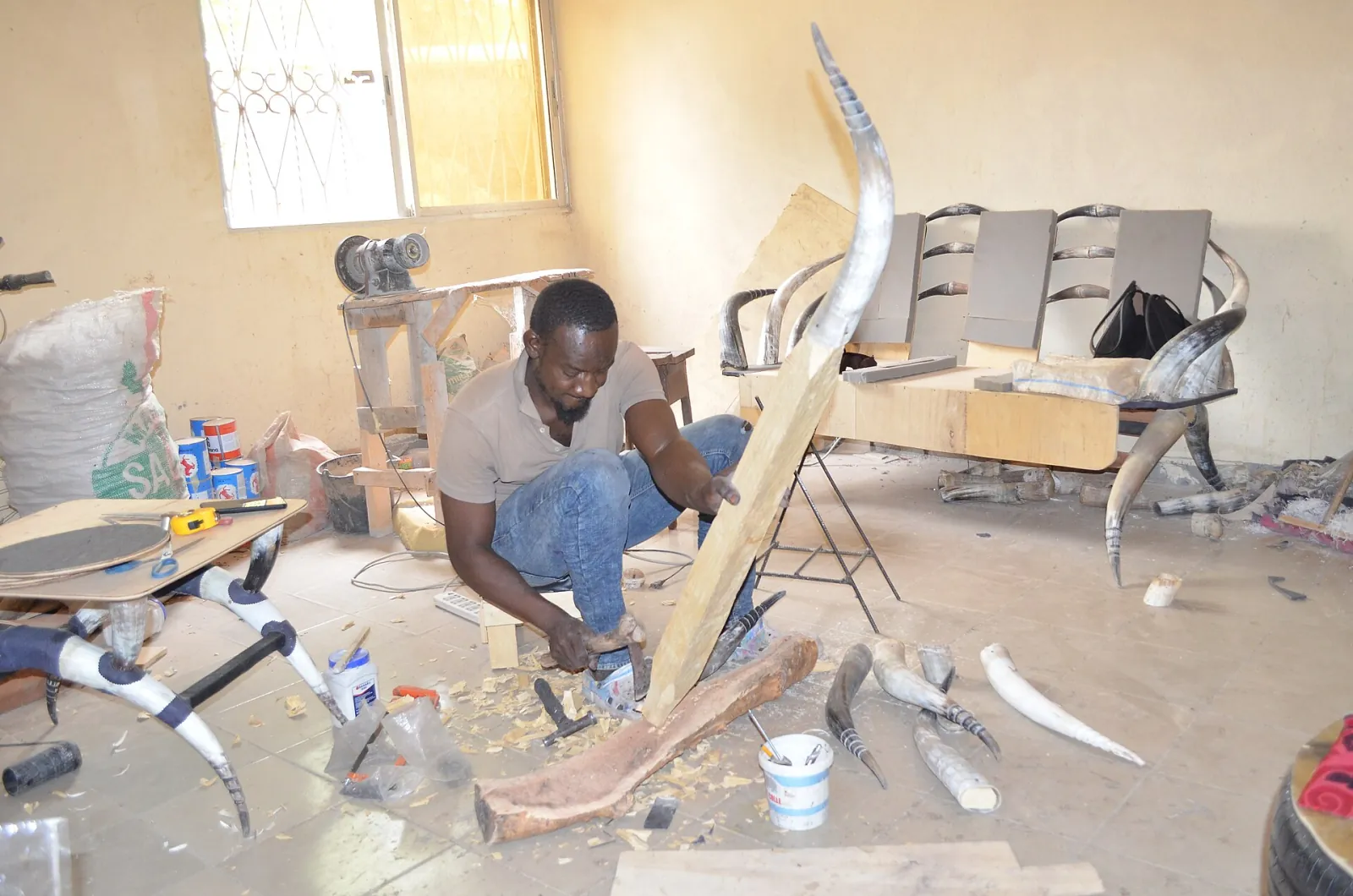
Wood carving in Foumban, bronze in Bamenda, basketry in Adamaoua, weaving or beadwork: arts and crafts rest on skills that deserve to be recognised and protected. MINAC approval certifies that your workshop makes authentic pieces, respecting techniques and materials. It allows you to display the approved workshop wording, to take part in fairs and to support your exports with a recognised supporting document.
Documents to provide
- Approval application signed by the craftsperson or manager
- Copy of identity document
- Proof of activity: craftsperson’s card, register or certificate from the chamber or municipality
- Photographs of the workshop, the tools and at least ten pieces made
- Description of the techniques, materials and origin of supplies
- Certificate from a master craftsperson, a traditional chief or a craftspeople’s organisation
- Title or certificate of occupancy of the workplace
- List of customers, shops or fairs where the pieces have been presented
Before you begin
- The workshop must make its pieces itself, using identifiable manual or semi-manual techniques specific to the skill presented.
- The manager must prove their experience through an apprenticeship record, references of commissions or certificates from master craftspeople.
- The materials used must be lawful, in particular timber, substitute ivory and hides, with their origin declared.
- The workshop must have a specific workplace, minimum safety conditions and a regular production capacity throughout the year.
- Fee payable
- 30,000 FCFA
- Turnaround
- Processing generally takes 25 to 35 working days from a complete file
- Validity
- Valid for 5 years, renewable on presentation of a new production file
- Documents to provide
- 8
Step by step
- Document your skillsPhotograph the stages of making a piece, from raw material to finishing. Describe the technique and its origin.
- Gather the supporting documentsAttach your certificate of activity and the letter from a master craftsperson or an organisation that recognises your work.
- Submit the fileSubmit it on the One-Stop Shop and pay the fee shown before payment.
- Workshop visitAn officer from the regional delegation visits the workshop, observes production and checks the origin of the declared materials.
- Approval decisionThe approval specifies the speciality, the name of the workshop and the authorised marks or hallmarks.
Who is this procedure for?
Craftspeople, whether working alone, as a family or in a cooperative, may submit the application for their workshop. Regular production, an identified place of manufacture and demonstrated mastery of the technique are required. Resellers of products made by third parties are not covered.
Processing time. Processing generally takes 25 to 35 working days from a complete file. The remoteness of the visit location, notably in rural areas, or materials to be substantiated may extend the period.
Special cases
A cooperative submits a single file with the list of its members and their specialities. The approval covers the collective workshop and not each craftsperson separately.
Attach proof of the lawful origin of the timber and, where applicable, the felling permit. Without these documents, the file cannot be processed.
Specify the role of each member and the transmission of knowledge. A workshop where several generations work together is valued in the assessment.
Useful templates and documents
- Certificate of authenticityCertificate
- Work identification sheetProfile
- Export certificateCertificate
- Merchandising contractContract
Frequently asked questions
Can my workshop sell pieces by other craftspeople?
It may display them on consignment, provided the name of their maker is clearly shown. Only the workshop’s own production comes under the approval. If you are unsure about your situation, the Directorate of Cultural Heritage will answer you before submission, which avoids the file being rejected for a missing document.
Can an antique piece be sold under approval?
Approval concerns contemporary creation. Antique objects fall under the regulations on cultural heritage, with their own rules on circulation and sale. The Directorate of Cultural Heritage can tell you in writing which documents to complete; the One-Stop Shop keeps the history of your exchanges.
Does approval make exporting easier?
Yes, it is a useful supporting document for the movement of pieces. Exports nevertheless require their own authorisations, depending on the nature of the objects.
Should pieces be signed?
It is not compulsory, but a hallmark or workshop signature is recommended. Approval allows you to declare its design.
Reference texts
- Law No. 2013/003 of 18 April 2013 governing cultural heritage in CameroonLaw
- Decree on the organisation of the Ministry of Arts and CultureDecree
Services that process the file
- Directorate of Cultural Heritage
- Regional Delegations
Conseil. Prenez des photographies en lumière naturelle, sur fond neutre, et ajoutez les dimensions de chaque pièce : cela facilite l’examen de la qualité du travail.
Submit the file
Fee payable: 30,000 FCFA
Have an account? Sign in to pre-fill the form and attach your documents.