
Request to borrow museum objects
This procedure enables an institution, exhibition organiser or researcher to request the loan of objects held in a museum in order to display or study them.
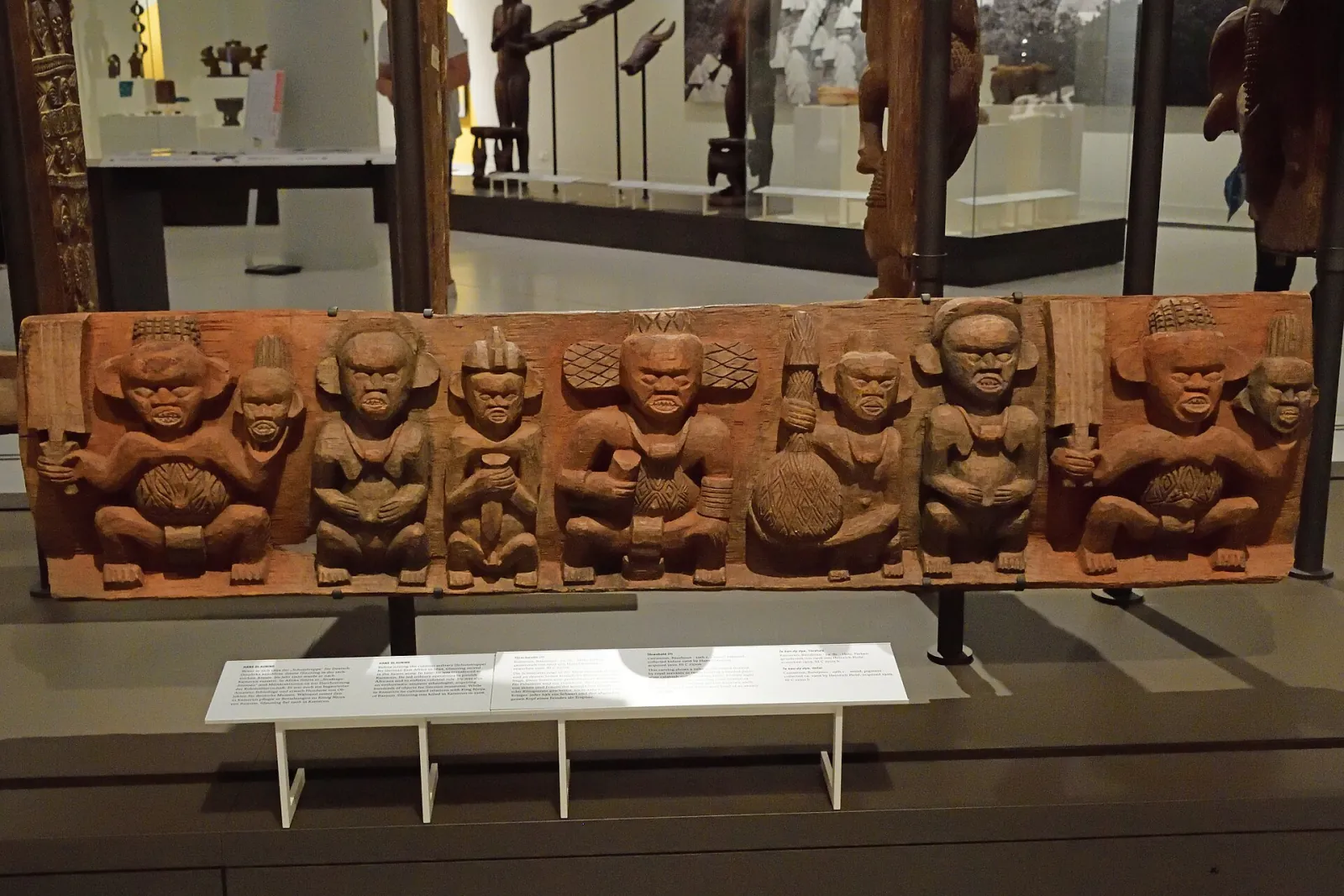
An exhibition in Yaoundé, a festival in Bafoussam or a research project may need objects from a museum’s collections. The loan request allows you to obtain the agreement of the museum and the Ministry, define the conditions of transport, insurance and display, and set the length of the loan. You obtain a loan agreement that specifies the objects concerned, their condition, their insured value, the security obligations and the return date. The loan is temporary, with no transfer of ownership, and may be refused if the fragility of an object so requires.
- Fee payable
- 25,000 FCFA
- Turnaround
- Processing takes 20 to 30 working days, plus the time needed to prepare the objects
- Validity
- Valid for the length of the loan set in the agreement, for a maximum of 6 months, renewable once
- Documents to provide
- 8
Who is this procedure for?
The application is submitted by a museum, university, cultural institution, local authority, association or exhibition organiser. Individuals cannot borrow directly. Requests from abroad are examined with the Directorate of Cultural Heritage and may go through a partner institution.
Processing time. Processing takes 20 to 30 working days, plus the time needed to prepare the objects. It takes longer if an object requires prior restoration or if the insurance is slow to be provided.
Before you begin
- The borrower must be a responsible organisation with premises suited to the objects requested, meeting the required security, climate-control and surveillance rules.
- The exhibition or research project must be of cultural or scientific interest, with a clear link to the objects requested.
- The borrower must take out “nail-to-nail” insurance covering the objects during transport, installation, display and return.
- The loan must not exceed the period set in the agreement, and no fragile object or object declared non-lendable may be requested.
Documents to provide
- Museum object loan application form completed online
- Presentation of the project: theme, dates, venue, expected audience, partners
- List of objects requested with inventory references, if known
- Description of the exhibition venue: plans, climate conditions, security, access
- “Nail-to-nail” insurance certificate or undertaking to take out insurance
- Transport and packing plan, with name of the carrier
- Articles of association of the borrowing organisation and identity document of its representative
- Proof of payment of the processing fee
Step by step
- Initial contactThe borrower sends its request with the list of desired objects. The lending museum is informed and checks the availability of the items.
- Feasibility studyThe museum curator assesses the condition of the objects, the transport risks and the conditions of the exhibition venue. They may request adjustments.
- Opinion of the MinistryThe Directorate of Cultural Heritage gives its opinion and authorises the objects to leave the museum, subject to any conditions.
- Signing of the agreementThe loan agreement is signed between the museum and the borrower. It includes the condition reports, the insured value and the schedule.
- Transport and returnThe objects are packed and transported with a condition report. At the end of the loan, they are returned and checked. A return report is drawn up.
Special cases
The schedule of stages and the conditions of each venue are attached. A letter of agreement is required from each host organisation, and the insurance covers all movements.
The loan is limited to study on site or in an approved laboratory. The researcher undertakes to return the results and to credit the lending museum.
It requires a temporary exit licence and the agreement of the Directorate of Cultural Heritage. A museum representative may accompany the objects, at the borrower’s expense.
Frequently asked questions
Can a museum refuse a loan?
Yes. It may refuse if the object is too fragile, if the hosting conditions are inadequate or if the object is essential to its permanent display. The refusal is justified in writing.
Who pays for transport and insurance?
The borrower bears the cost of transport, packing, insurance and any prior restoration. These items are specified in the loan agreement before signing.
Can I photograph the loaned objects?
Yes, for documentation and the exhibition catalogue, unless a restriction is stated in the agreement. Any other use, in particular commercial use, must be authorised by the lending museum.
What happens if an object is damaged?
The borrower must report it immediately. A report is drawn up, the insurance is activated and the museum decides on restoration measures. Responsibilities are determined according to the agreement.
Useful templates and documents
- Exhibition contractContract
- Artwork loan contractContract
- Condition report on a workMinutes
- Exhibition agreementContract
- Inventory sheet of exhibited worksProfile
- Condition report on entry to the exhibitionMinutes
- “Nail to nail” insurance certificateCertificate
- Damage reportMinutes
- Storage deposit agreementContract
- Deposit receiptCertificate
- Museum loan agreementContract
- Inventory check sheetProfile
Reference texts
- Law No. 2013/003 of 18 April 2013 governing cultural heritage in CameroonLaw
- Decree on the organisation of the Ministry of Arts and CultureDecree
- User guide: borrowing museum objectsGuide
Services that process the file
- Directorate of Cultural Heritage
- Cultural Property Circulation Service
Conseil. Demandez un constat d’état photographique à l’aller et au retour des objets : c’est la meilleure protection pour l’emprunteur comme pour le musée en cas de désaccord sur un dommage.
Submit the file
Fee payable: 25,000 FCFA
Have an account? Sign in to pre-fill the form and attach your documents.