
Insurance value assessment
This procedure allows you to obtain an official valuation of a work or collection, intended to set the amount of insurance, transport or a guarantee.
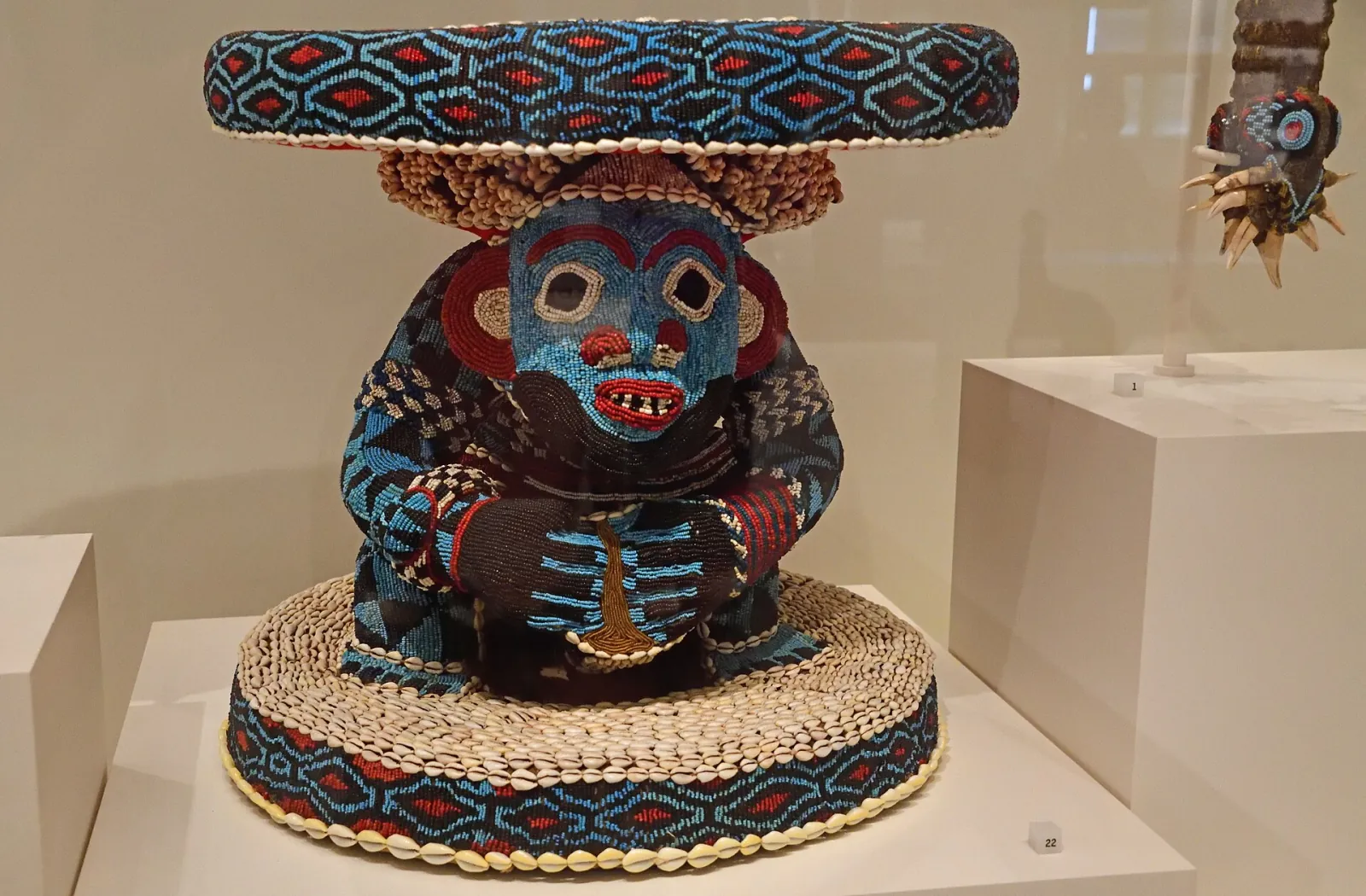
Insuring a work without knowing its value exposes you to two risks: an unnecessarily high premium or insufficient compensation in the event of a loss. The insurance value assessment meets this need. An expert estimates the piece on criteria of market, condition, rarity and replacement, and issues a certificate with figures. This document is required by insurers for valuable works, by museums for loans and by exhibition organisers. It is also useful for a wealth declaration or for international transport.
- Fee payable
- 40,000 FCFA
- Turnaround
- Allow 15 to 25 working days for an average collection
- Validity
- Valid for 3 years, unless there is a significant change in the market or in the condition of the work
- Documents to provide
- 8
Who is this procedure for?
Private owners, collectors, galleries, museums, foundations and exhibition organisers who need to insure or guarantee works. The file is submitted by the owner or by the body responsible for the works. Insurers and brokers may also use it, with the owner’s agreement.
Processing time. Allow 15 to 25 working days for an average collection. A large number of works, rare pieces without market references or works deposited with a third party may lengthen this period.
Before you begin
- The works to be valued must be identified by a detailed sheet and accessible for direct examination or, failing that, for a study based on precise photographs.
- The applicant must specify the purpose of the valuation: collection insurance, transport, loan, bank deposit, succession or declaration to an insurer.
- A work whose authenticity is disputed cannot be valued until that question has been settled by an attestation or an appraisal.
- The valuation is drawn up at a specific date and must be updated when the market changes significantly or when the condition of the work changes.
Documents to provide
- Signed application form for an insurance value assessment
- Identity document or registration extract of the owner
- List of works with title, artist, date, dimensions, technique and condition
- Complete and detailed photographs of each work
- Proof of acquisition: invoices, sale catalogues, previous purchase prices
- Certificate of authenticity or previous expert report, if available
- Current insurance contract or proposal, with the clauses relating to the works
- Precise indication of the purpose of the valuation and of where the works are kept
Step by step
- Submission of the applicationYou submit the list of works, their supporting documents and the purpose of the valuation to the One-Stop Shop.
- Choice of the valuerThe service appoints a valuer competent for the type of works: painting, sculpture, jewellery, ethnographic objects or furniture.
- Examination and comparisonThe valuer inspects the works, compares them with comparable sales and takes into account condition, rarity and replacement cost.
- Payment and draftingThe fee payable is displayed before payment. The valuer then draws up a certificate with figures, work by work, giving the reasons.
- Issue of the certificateThe certificate is handed to the owner, who passes it to the insurer. An update may be requested at any time.
Special cases
For a large collection, the valuation is done in batches, with a site visit. A prior inventory of the collection is required and greatly eases the work.
The insurance value is reproduced in the loan agreement and in the nail-to-nail certificate. It must be consistent across all documents to avoid a dispute in the event of a loss.
If the work belongs to several heirs, all must be named. The valuation then serves as a basis for a division or a joint decision on cover.
Frequently asked questions
Is the insurance value equal to the sale value?
Not necessarily. The insurance value reflects the cost of replacing the work on the market, which may be higher than the price it would fetch in a quick sale.
Can my insurer refuse your valuation?
It may ask for confirmation, but a certificate issued by an approved expert is generally accepted. In case of disagreement, a second valuation may be carried out.
Must I revalue regularly?
Yes, it is advisable to do so every 3 to 5 years, or after a major event: restoration, a sharp rise in the artist’s market rating or a change of storage location.
Can the works of my gallery owner in Bafoussam be valued?
Yes, if they belong to him or her or if he or she holds a deposit mandate. Works on consignment remain valued in the name of their original owner.
Useful templates and documents
- Expert reportReport
- Transport insurance certificateCertificate
- Inventory sheet of exhibited worksProfile
- Exhibition insurance contractContract
- Art insurance policyContract
- “Nail to nail” insurance certificateCertificate
- Claim notificationStatement
- Standardised inventory sheetProfile
Reference texts
- Law No. 2013/003 of 18 April 2013 governing cultural heritage in CameroonLaw
- Texts in force relating to the insurance of cultural propertyText
- MINAC One-Stop Shop user guideGuide
Services that process the file
- Directorate of Cultural Heritage
- Cultural Property Circulation Service
Conseil. Transmettez à votre assureur le certificat dès réception et demandez un avenant écrit : une valeur non reprise dans le contrat n’est pas garantie en cas de sinistre.
Submit the file
Fee payable: 40,000 FCFA
Have an account? Sign in to pre-fill the form and attach your documents.