
Request for a certificate of provenance
This procedure allows you to obtain an official certificate tracing the origin and history of an object or work, useful for its sale, insurance or export.
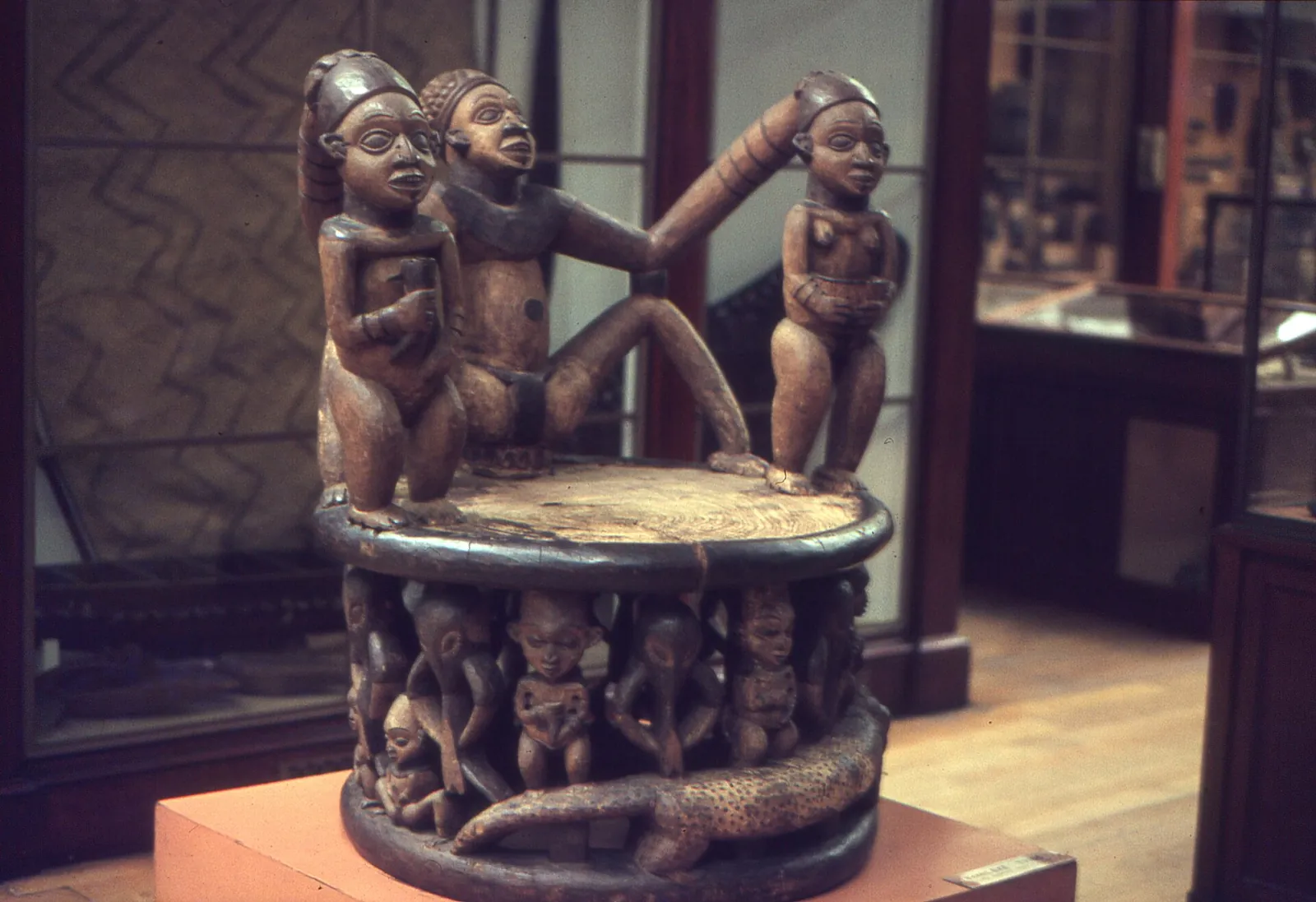
The provenance certificate traces the path of a work or object from its known origin to its current owner. It is drawn up by the administration on the basis of the documents and statements you provide and after checks in the Ministry’s records. It reassures a buyer, accompanies an export application, supports an insurance file or helps dispel doubt about the origin of a piece. It does not guarantee the authenticity of the work but documents its past.
- Fee payable
- 10,000 FCFA
- Turnaround
- Allow fifteen to twenty-five working days for a well-documented piece
- Validity
- Valid without time limit as long as the object and its owner do not change
- Documents to provide
- 8
Who is this procedure for?
The owner of an art object, an item of old craftwork or a contemporary work who wishes to establish its provenance: collector, gallery owner, family holding an inherited object, antique dealer, or community leader who is custodian of an old piece. The heirs of a deceased holder may act with the succession deed.
Processing time. Allow fifteen to twenty-five working days for a well-documented piece. An expert appraisal, archive research or the hearing of witnesses may extend the processing to forty days.
Before you begin
- Be the owner of the property or hold a written mandate from the owner to submit the application on their behalf.
- Present the object itself or photographs precise enough to allow them to be matched with the documents provided.
- Provide at least one documentary item on its origin: invoice, catalogue, old photograph, deed of transfer or statement.
- Accept that the administration consults its records and, where necessary, seeks the opinion of an approved expert.
Documents to provide
- Provenance certificate application form completed and signed
- Copy of the identity document of the owner or agent, with the power of attorney
- Photographs of the object: front, back, details, marks, signature and old labels
- Object identification sheet: nature, material, dimensions, estimated period
- Written history of ownership, with dates and names of successive holders
- Invoices, exhibition catalogues, old photographs or deeds of transfer supporting this history
- Signed statements from people who knew the object, with a copy of their identity document
- Expert report or certificate of authenticity where one exists
Step by step
- Compiling the fileYou describe the object, write up its known history and upload all the documents that support it. The fee payable is displayed before payment.
- Matching of documentsThe processing service checks the consistency between the object, the photographs and the supporting documents, and consults the Ministry’s records.
- Consultation of an expertWhere the origin is uncertain, an approved expert gives a written opinion on the period, the region of manufacture and the compatibility of the documents.
- Drawing up of the certificateThe service drafts the certificate, stating the points established and those that remain assumed, with separate wording for each.
- IssuanceThe signed certificate is made available in your account. A paper original can be collected from the Regional Delegation.
Special cases
In the absence of invoices, you present family photographs and two statements from elders. The certificate will then state a family provenance with no precise date of acquisition.
You attach the seller’s documents and the proof of import. The certificate traces the path outside the territory to the extent that it is documented.
The artist or their gallery can confirm the creation and sale in writing. Provenance is then established quickly, without an appraisal, on the basis of this confirmation.
Frequently asked questions
Is a provenance certificate equivalent to a certificate of authenticity?
No. It traces the path of the object, whereas the certificate of authenticity guarantees that it is by the hand or from the period stated. The two documents complement each other and are often requested together.
What if the provenance is doubtful?
The certificate will state the points that are not established. Where there are signs of trafficking, the file may be passed to the service responsible for protection, which may lead to a report or a seizure.
Can I use the certificate for insurance?
Yes, this is a common use. It documents the existence and origin of the object, which facilitates the valuation of its worth and compensation in the event of loss.
Must the object be presented in person?
Not necessarily. Detailed photographs are enough in most cases. However, presentation of the object may be requested if the images do not allow a decision.
Useful templates and documents
- Contract for the sale of a work of artContract
- Certificate of authenticityCertificate
- Expert reportReport
- Work identification sheetProfile
- Certificate of provenanceCertificate
- Certificate of ownershipCertificate
- Certificate of originCertificate
- Stolen object report sheetProfile
- Restitution request letterNewsletter
Reference texts
- Law No. 2013/003 of 18 April 2013 governing cultural heritage in CameroonLaw
- Guide to the provenance of cultural property, MINAC One-Stop ShopGuide
Services that process the file
- Cultural Property Circulation Service
- Directorate of Cultural Heritage
Conseil. Notez par écrit tout ce que vous savez de l’objet tant que vos informateurs sont vivants : noms, lieux, dates, usages. Ces notes valent souvent plus qu’une facture perdue.
Submit the file
Fee payable: 10,000 FCFA
Have an account? Sign in to pre-fill the form and attach your documents.